Six months ago, a brand owner from Denver sat in my conference room and told me a story that made my stomach turn. He had found a supplier on a B2B platform with a beautiful showroom, a slick website, and a long list of claimed clients including two major US department stores. The supplier provided three reference emails. All three responded with glowing praise. He placed a $45,000 order. The goods arrived six weeks late, with fabric that did not match the sample, and half the units had labeling errors. When he tried to contact the references again, all three emails bounced. They were fake. The entire supplier profile was a carefully constructed mirage. He did not lose $45,000. He lost $120,000 when you factor in lost sales, chargebacks from his own retail accounts, and the cost of liquidating defective inventory at a loss.
You can reliably verify a supplier's export history and past client references by cross-referencing independent shipping records through customs databases, conducting reverse image searches on their claimed portfolio, and contacting references through multiple channels to confirm they are real businesses with genuine relationships. Verbal claims and emailed reference lists are not verification. They are the starting point of an investigation, not the conclusion. Reliable verification requires triangulating data from independent, unfakeable sources.
In garment sourcing, the past is the only reliable predictor of the future. A factory that has successfully shipped 50 containers of women's apparel to the US over five years has a verifiable track record. A factory that claims to have done so but cannot provide independent evidence is lying until proven otherwise. At Shanghai Fumao, we actively encourage prospective clients to verify us. We provide shipping records, customs data, and client references willingly. A factory that resists this scrutiny is a factory with something to hide. Let me show you exactly how to conduct this verification, step by step.
How Can US Import Records Independently Confirm a Factory's Export Activity?
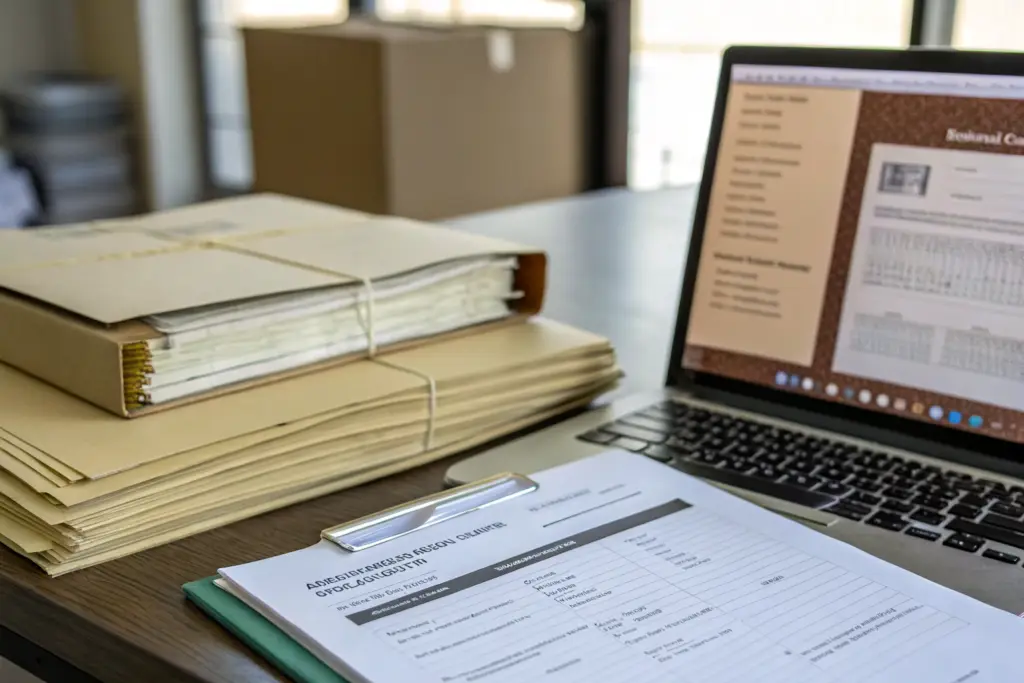
The United States government maintains a public record of virtually every container that enters the country. This data is a goldmine for supplier verification, but most brand owners never use it. They do not know it exists, or they think it is too complicated to access. It is neither. US import records are searchable through several commercial databases that compile data from the Customs and Border Protection's Automated Manifest System. These records show the shipper's name, the consignee's name, the product description, the quantity, the port of entry, and the date of arrival. They do not lie. A factory either shipped those containers, or they did not.
US import records independently confirm a factory's export activity by showing the exact shipping history under the factory's legal business name. You can see the volume, frequency, and destination of their shipments, as well as the identity of their US customers. If a factory claims to ship regularly to the US but has no corresponding import records, they are either lying about their export history or shipping through an undisclosed third party, which is a significant red flag.
The process is straightforward. You need the factory's full legal business name as it appears on their export license. This is critical. Many factories operate under multiple trade names. The legal name is what appears on the Bill of Lading and in the customs database. Once you have that name, you can access the records.
Which Free and Paid Databases Track Supplier Shipping Histories?
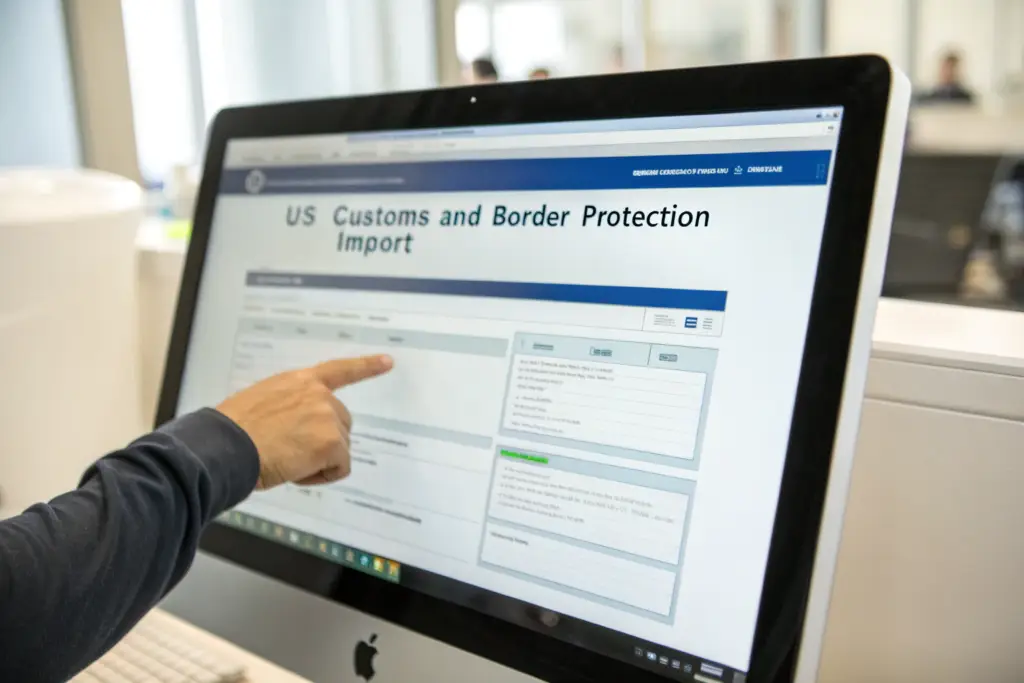
There are several options for accessing US import data, ranging from free government tools to paid commercial platforms with user-friendly interfaces. The free option is the US Customs and Border Protection's own data portal, but it is not designed for easy commercial querying. It is raw data. For most brand owners, the commercial platforms are worth the investment.
The two most widely used commercial databases are ImportGenius and Panjiva, which is now part of S&P Global. Both allow you to search by supplier name, buyer name, product description, and HS code. You can see the supplier's shipment history over multiple years. You can see their major customers. You can see patterns, like whether they ship consistently or sporadically.
A small subscription to one of these databases costs a few hundred dollars. That is a tiny insurance premium against a $50,000 shipment failure. I tell every brand owner I meet: if you are placing an order worth more than $10,000, spend the $300 on a database search. It is the highest-return investment you will make in your sourcing process.
We had a prospective client who was considering a supplier that claimed to have shipped 200 containers to the US in the previous year. He ran the supplier's name through a customs database. The result was zero records. The supplier's explanation was that they "shipped through a trading company." The client asked for the trading company's name. The supplier went silent. The database search saved him from a near-certain fraud. The tools exist. Use them. For more detailed guidance on trade data analysis, resources like ImportGenius provide accessible entry points for buyers new to shipment verification.
How Can You Spot a "Phantom Shipper" with No Real Export Footprint?
A phantom shipper is a company that presents itself as a manufacturer but has no actual export activity under its own name. They operate entirely through intermediaries, or they falsify their claimed history. Spotting one requires looking for specific discrepancies between their marketing claims and the independent data.
The first test is the name match. Check the legal business name on the supplier's export license against the name on the customs database. If the license says "Shanghai ABC Garment Co., Ltd." but the database shows no records for that entity, that is a problem. A legitimate exporter ships under their own name.
The second test is the volume match. If the supplier claims to have shipped 100 containers to the US last year, but the database shows ten, the claimed volume is a fabrication. The supplier may argue that the database is incomplete. It is not. US customs data captures the manifest for every sea freight container entering the country. The coverage is comprehensive.
The third test is the client match. If the supplier claims a major US brand as a long-term client, that brand's name should appear in the supplier's shipment records as a consignee. If it does not, the claimed relationship is either fake or the brand is buying through a complex intermediary, which the supplier should be able to explain clearly and document. Opacity on this point is a deal-breaker. A real supplier with real clients has nothing to hide.
What Reference Check Techniques Expose Fabricated Client Testimonials?
A reference list is a marketing document. The supplier controls it completely. They choose which clients to list. They write the glowing quotes. They provide the contact email addresses. A fraudulent supplier will create fake references with the same effort they put into their fake product photos. The reference will be a Gmail address, not a corporate domain. The person will respond quickly with scripted praise. The response will be vague, lacking any specific product details, order volumes, or timeline. It will sound like a sales pitch, not a real business conversation.
Exposing fabricated client testimonials requires going beyond the provided email address. You must independently find the referenced company through their official website or LinkedIn, and contact a different person within that organization to confirm the relationship. A genuine reference can be verified through multiple independent channels. A fake reference exists only in the single email address the supplier gave you.
The key principle is: never trust a reference channel the supplier has curated. They curated it to present a specific picture. You need to find your own channel. If the supplier tells you they work with "XYZ Brand," go to XYZ Brand's website. Find their sourcing or production manager on LinkedIn. Send them a polite message asking if they are willing to briefly confirm their experience with the supplier. A real business relationship will survive this independent check. A fake one will collapse immediately.

Why Should You Search LinkedIn for the Real Sourcing Manager, Not Just the Given Reference?
The reference email provided by a supplier will always go to a person who is prepared to speak positively about them. This person may be genuine, or they may be the supplier's cousin using a fake name. You cannot know the difference from an email exchange alone. LinkedIn, by contrast, is a professional identity platform. It is much harder to fake a detailed LinkedIn profile with a genuine work history, connections, and activity over multiple years.
Search for the company name on LinkedIn. Look for people with titles like "Sourcing Manager," "Production Director," "Supply Chain Manager," or "Founder." These are the people who would have direct experience with the supplier if the relationship is real. Send a connection request with a brief, professional note: "Hi [Name], I am considering working with [Supplier Name] and understand your company may have experience with them. Would you be open to a brief, confidential chat about your experience? I would greatly appreciate your perspective."
A genuine sourcing manager will often respond. They understand the challenges of supplier verification. They may give you a positive review, a mixed review, or a warning. All three are valuable. A fake reference, by contrast, has no corresponding LinkedIn profile, or the profile is obviously fabricated, with few connections, a recent creation date, and a stock photo headshot.
I once recommended this technique to a brand owner who was about to place a large order. He found the sourcing manager of the referenced brand on LinkedIn. The manager replied, "I have never heard of that supplier. They are not on our approved vendor list. I think someone is using our brand name fraudulently." The brand owner canceled the order. The LinkedIn search cost him ten minutes and saved him $38,000. This technique, using professional verification platforms, is a practical application of the kind of sourcing due diligence widely recommended by supply chain integrity organizations.
What Specific Questions Reveal the Depth of a Real Client Relationship?
When you do get a real reference on the phone or on a video call, the questions you ask determine the value of the conversation. Vague questions generate vague answers. "Are you happy with the supplier?" will produce a "Yes, they're great." That tells you nothing. You need to ask questions that require specific, detailed answers based on direct personal experience.
Ask about a specific product: "What specific garment category did they produce for you? Can you describe the fabric and construction?" A real client will answer instantly with details. "They made our women's linen blazers, the 200 GSM washed linen with the horn buttons." A fake reference will hesitate and give a generic answer. "Oh, various things, clothes, you know, good quality."
Ask about a specific problem: "Tell me about a time something went wrong with an order, and how the supplier handled it." Every real manufacturing relationship has problems. A real reference will tell you a specific story about a delayed fabric lot or a QC issue and how the supplier resolved it. A fake reference will say, "No, everything was always perfect." Perfection is a fiction. A reference who claims it is lying.
Ask about the logistics: "What were the specific Incoterms you used? Which port did they ship to? Did you use their forwarder or your own?" These are concrete operational details. A real importer knows the answers immediately. A fake one will fumble. These questions, when asked conversationally, reveal the authenticity of the relationship within the first two minutes of the call.
How Can On-Site Audit Photos and Videos Be Authenticated?
A factory's website and catalog are filled with photos of immaculate production floors, smiling workers in fresh uniforms, and perfect product samples. These images are often stock photography, or they were taken years ago during a one-time professional shoot. They show the factory as it wishes to be seen, not as it is. Real, authenticatable photos and videos are different. They are not polished. They contain verifiable, time-bound details that prove they were taken recently, in the specific factory, for the specific purpose of your order.
Authenticating on-site audit photos and videos requires looking for live, non-repeatable elements: a handwritten note with today's date and your company name held in front of the camera, a live walkthrough that responds to your specific verbal instructions, and metadata verification of the image file. A supplier who can only provide static, curated images is hiding the current reality of their production floor.
The technology to fake images and videos is advancing. AI-generated imagery is becoming more convincing. But there are still simple, low-tech verification techniques that are extremely difficult to fake convincingly in real-time. These techniques rely on the principle of live interaction. The supplier must respond to an unpredictable prompt from you, in real-time, and the response must be internally consistent with the physical environment.
What Is a "Live Verification Handshake" and How Does It Work?
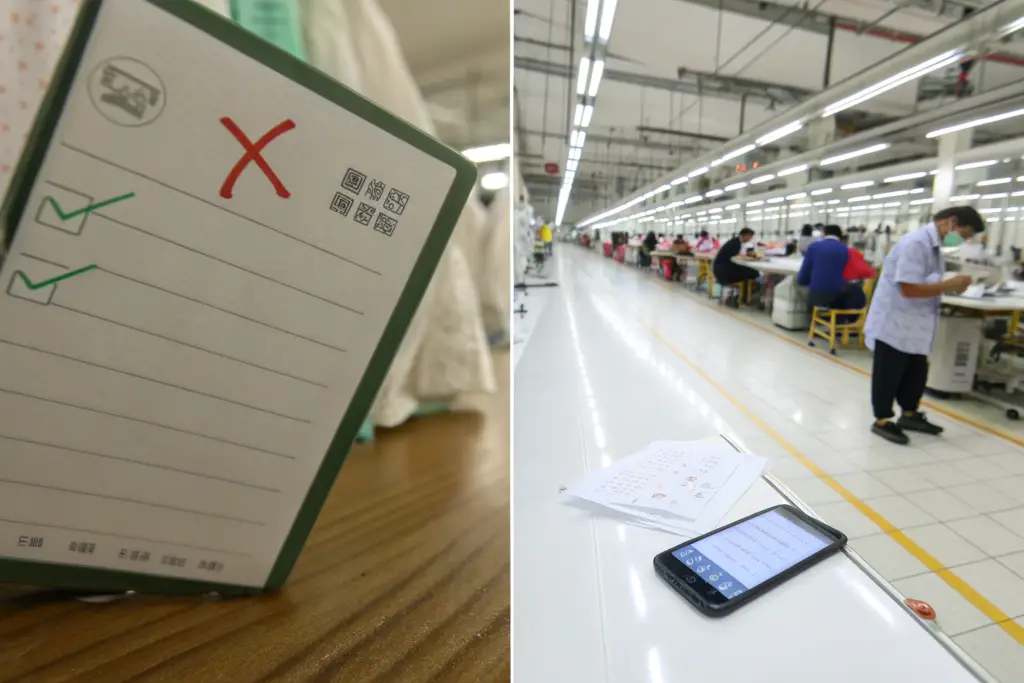
The live verification handshake is a specific protocol we use with new clients who want to verify our production floor before placing an order. It is a video call, usually via WhatsApp or Zoom, where the client directs the action in real-time. It is not a pre-arranged tour. It is an interactive inspection.
The protocol works like this. The client gets on a video call with our factory manager. The client asks the manager to walk to a specific location on the floor, perhaps the cutting table for their specific order, or the finished goods area. The client then asks the manager to show a specific, unpredictable detail. "Please pick up the third carton from the left in the finished goods stack, open it, and show me the care label inside the garment." Or "Please write the word 'Blue Sky' on a piece of paper, hold it next to the fabric roll for my order, and show me both on camera."
This is impossible to fake in real-time. The manager is responding to a unique, on-the-spot instruction. The response demonstrates physical presence in the actual factory, with access to the specific materials for the client's order. It is the gold standard of remote verification. A factory that can perform a live verification handshake is a factory that is operating transparently.
How Can Image Metadata and Reverse Search Uncover Stolen Portfolio Photos?
Many fraudulent suppliers populate their websites and catalogs with images stolen from legitimate factories or brands. They download photos of beautiful garments and clean production floors and pass them off as their own. These stolen images are a powerful deception tool because the products look excellent, and the factory looks professional. The problem is that the factory does not exist as pictured.
You can unmask stolen images with two simple techniques. The first is a reverse image search. Take a screenshot of a product photo or a factory photo from the supplier's website. Upload it to Google Images, TinEye, or another reverse image search engine. The search will show you where else that image appears on the internet. If the image appears on another factory's website, or on a brand's e-commerce site, or on a stock photography platform, you have caught the fraud. The supplier stole the image.
The second technique is metadata analysis. Digital photos contain hidden data, called EXIF data, that records the camera type, the date the photo was taken, and sometimes the GPS location. You can use free online EXIF viewers to check this data. If a supplier sends you a photo of "their factory" and the EXIF data shows it was taken five years ago with a camera model that does not match their claimed timeline, or the GPS coordinates show a different city than their claimed location, you have strong evidence of deception. The supplier may clear the EXIF data before sending, which is itself a red flag. An honest supplier has no reason to strip metadata from a factory photo. The TinEye reverse image search engine is a free, essential tool for any brand owner conducting supplier due diligence.
What Role Do Third-Party Inspection and Certification Bodies Play in Verification?
There is a limit to what you can verify remotely. You can check shipping records, authenticate references, and conduct live video walkthroughs. But you cannot physically inspect the fabric, measure the seam tolerances, or audit the chemical management system through a screen. For these deeper layers of verification, you need boots on the ground that are not the supplier's own boots. You need an independent third party whose business model is accuracy, not sales commission.
Third-party inspection bodies like SGS, Bureau Veritas, and Intertek provide independent, on-the-ground verification of a factory's physical reality, quality systems, and compliance status. Their reports carry legal weight and are extremely difficult to falsify because they include unique report numbers that can be verified directly on the issuing body's website. A supplier with a genuine, current third-party audit report has submitted to external scrutiny that most fraudulent operators will avoid at all costs.
The key distinction is between a self-declared certification and a third-party certification. A self-declared certificate is a document the factory creates and prints. It is worth the paper it is printed on. A third-party certification is issued by an independent organization that sends its own auditors to the factory, takes its own samples, and generates its own reports. The report number is traceable. The auditor is accountable to their employer, not to the factory owner.

How Can You Directly Verify a Supplier's ISO or WRAP Certificate Number?
As we discussed in the context of OEKO-TEX, every genuine third-party certification has a unique certificate number that is registered in a public database maintained by the issuing body. This applies to quality management certifications like ISO 9001 and ethical certifications like WRAP. The verification process is identical.
Take the certificate number from the supplier's document. Go to the website of the certification body. Find the certificate verification tool. Enter the number. The database will return the name of the certified company, the scope of the certification, the issue date, and the expiry date. If the name on the database does not match the name of your supplier exactly, the certificate is fraudulent or has been altered. If the certificate has expired, the supplier is not currently certified. If the number is not found, the certificate is a complete fabrication.
This verification takes less than five minutes per certificate. There is absolutely no excuse for a brand owner to accept a certificate at face value without checking the database. A supplier who provides a fake certificate is committing fraud. They will not hesitate to commit other frauds, like substituting fabric or using unauthorized subcontractors. The certificate check is a character test. A supplier that passes it has demonstrated a baseline commitment to honesty.
What Is an "AQL On-Site Witness Test" and When Should You Request One?
AQL stands for Acceptable Quality Limit. It is the statistical sampling standard used to determine whether a batch of garments meets the agreed quality specifications. A standard AQL 2.5 inspection means that no more than 2.5% of the inspected units can have major defects. Most third-party inspection companies offer AQL inspection services.
An "on-site witness test" is a level above a standard inspection. It means that a representative from the inspection company is physically present at the factory while the testing is being conducted. They watch the lab technician perform the fabric strength test. They watch the seam strength test. They ensure the samples are drawn randomly and the results are recorded accurately. They then issue a witnessed test report with their own observations.
You should request an AQL on-site witness test when you are placing a very large order, or when you are working with a supplier for the first time and the financial stakes are high. The cost is higher than a standard inspection, typically between $1,000 and $2,000 depending on the scope, but it provides the highest level of assurance short of your own full-time employee being on-site. The inspection companies that offer this service, such as SGS, have established protocols for witnessed testing that are recognized globally. A supplier that agrees to a witness test is demonstrating extreme confidence in their quality systems. A supplier that resists or makes excuses is revealing their fear of independent scrutiny.
Conclusion
Verifying a supplier's export history and client references is not an act of distrust. It is an act of professional prudence. The industry is filled with honest, hardworking factories that ship quality garments on time. It is also filled with fabricators who have mastered the art of appearing legitimate while delivering nothing but broken promises and defective goods. The tools to distinguish between the two are available to every brand owner. They do not require a law degree or a private investigator. They require diligence, a healthy skepticism, and the willingness to spend a few hundred dollars and a few hours on verification before committing tens of thousands of dollars to an order.
We have covered the four pillars of reliable verification. US import records, searched through databases like ImportGenius, provide the unfakeable evidence of actual shipping activity. Reference checks, conducted through independent LinkedIn outreach and specific, detailed questioning, separate genuine partnerships from scripted testimonials. Live verification handshakes and forensic image analysis authenticate the factory's physical reality and portfolio. And third-party certifications and inspections provide an independent, legally weighty seal of approval from organizations with their own reputations to protect.
At Shanghai Fumao, we do not ask our clients to trust us blindly. We provide them with the tools to verify us completely. We share our shipping records. We facilitate direct conversations with our existing clients. We welcome live video walkthroughs with real-time interaction. Our certifications are current and verifiable on the issuing bodies' databases. We operate this way not because verification is easy, but because it is the foundation of a supply chain partnership that can withstand the pressures of real business.
If you are evaluating suppliers and want to experience a verification process with a factory that has nothing to hide, I invite you to contact our Business Director, Elaine. She can provide you with our US import record summary, connect you with a current client for a reference call, and schedule a live verification handshake of our production floor. Reach Elaine at elaine@fumaoclothing.com. Verify us. Scrutinize us. And then let us earn your business with a track record that stands up to the hardest questions.