In the autumn of 2024, a brand owner from Toronto sent me a frustrated email. He had been working with a factory through a sales representative for two seasons. The relationship had started well. The sales rep was responsive, friendly, and always available on WeChat. But when production problems arose, a delayed fabric delivery, a color matching issue on a reorder, a question about seam construction on a revised tech pack, the sales rep would respond quickly but with the same phrase: "Let me check with production." Each query took 24 to 48 hours to resolve, not because the production team was slow, but because every question and answer passed through an intermediary. The brand owner felt like he was communicating through a curtain. He was right. He asked me, "How do I get to the person who actually knows the answer?"
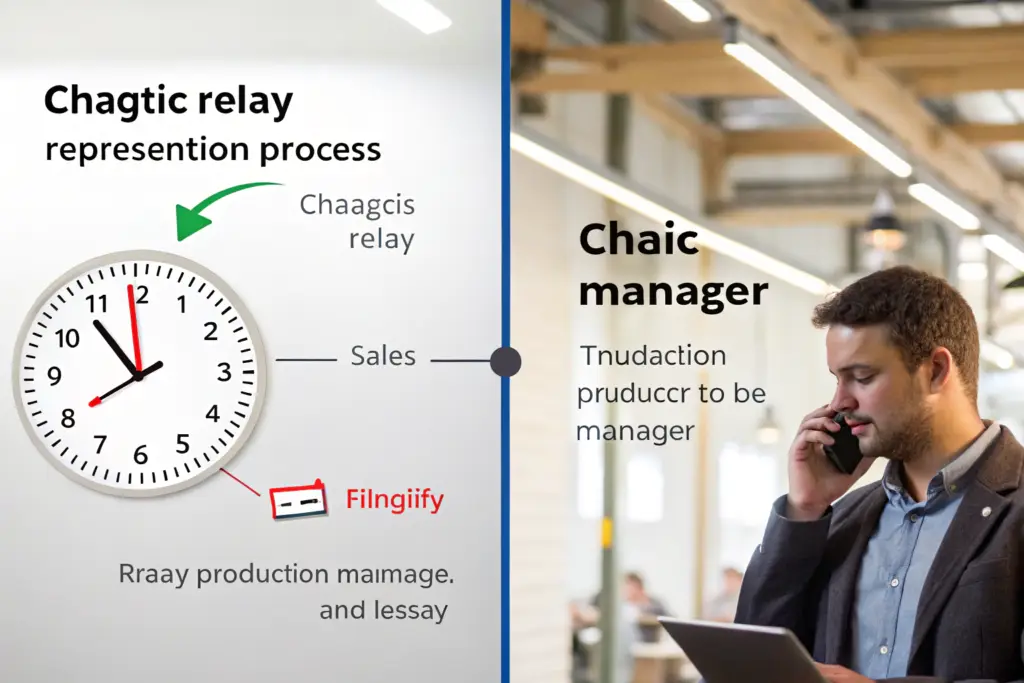
Direct communication with a production manager is faster than communicating through a sales representative because it eliminates the information relay. A sales representative is a communicator, not a producer. When a buyer asks a technical question about fabric shrinkage, stitch density, or production scheduling, the sales rep must forward the question to the production team, wait for an answer, translate the answer into commercial language, and relay it back to the buyer. Each relay cycle adds hours or days to the resolution time. A production manager who communicates directly with the buyer answers the question in a single exchange. The time saved per query is measured in hours. The cumulative time saved over a production season is measured in weeks.
At Shanghai Fumao, I do not place a sales rep between our brand partners and our production team. The brand owner who needs to know why a dye lot is delayed speaks directly with our fabric sourcing manager. The designer who wants to understand why a specific seam finish is not working on a sample speaks directly with our sample room supervisor. The production manager who is responsible for delivering the order is the person who answers the questions about the order. This is not the standard model in the industry. It is a deliberate choice I made because I have seen how the sales rep relay model damages trust, delays timelines, and degrades quality. Let me explain why the sales rep model exists, why it fails, and how the direct model works in practice.
What Is the Traditional Sales Rep Model and Why Does It Create Delays?
The sales representative model in Chinese garment manufacturing developed for a specific historical reason. Thirty years ago, when Western brands began sourcing from China in significant volumes, language barriers were high. Factory owners and production managers rarely spoke English. Western buyers rarely spoke Mandarin. The sales representative emerged as the bilingual bridge. The rep's job was to translate commercial communication, negotiate prices, and manage the buyer relationship. The rep was the buyer's window into the factory.
The traditional sales rep model creates structural delays because the sales rep is a mandatory waypoint for all communication between the buyer and the production team. The sales rep typically manages multiple accounts, sometimes dozens, and triages inquiries based on urgency, order value, or relationship pressure. A technical question that requires the production manager's input enters a queue. The rep forwards it when time allows. The production manager answers when production allows. The rep receives the answer, translates it, and forwards it to the buyer. The minimum turnaround time for a non-trivial query in this model is 24 hours. The realistic turnaround time during peak production periods is 48 to 72 hours. For a brand operating on a seasonal calendar with fixed delivery windows, this communication latency is a direct threat to on-time delivery.
The sales rep model also introduces a quality degradation in the information. The rep is not a technical expert. When a buyer asks a detailed question about seam slippage on a specific fabric, the rep may not fully understand the question. The rep simplifies the question before forwarding it to production. The production manager answers the simplified question. The rep simplifies the answer before forwarding it to the buyer. Information is lost at each simplification step. The buyer receives an answer that is technically incomplete or subtly incorrect. Decisions are made on incomplete information. Errors propagate into production. The communication delay is not just a time cost. It is a quality cost. Here is why the language barrier explanation no longer justifies the relay model and what information is lost in translation.
Why Does the "Language Barrier" No Longer Justify the Relay Model?
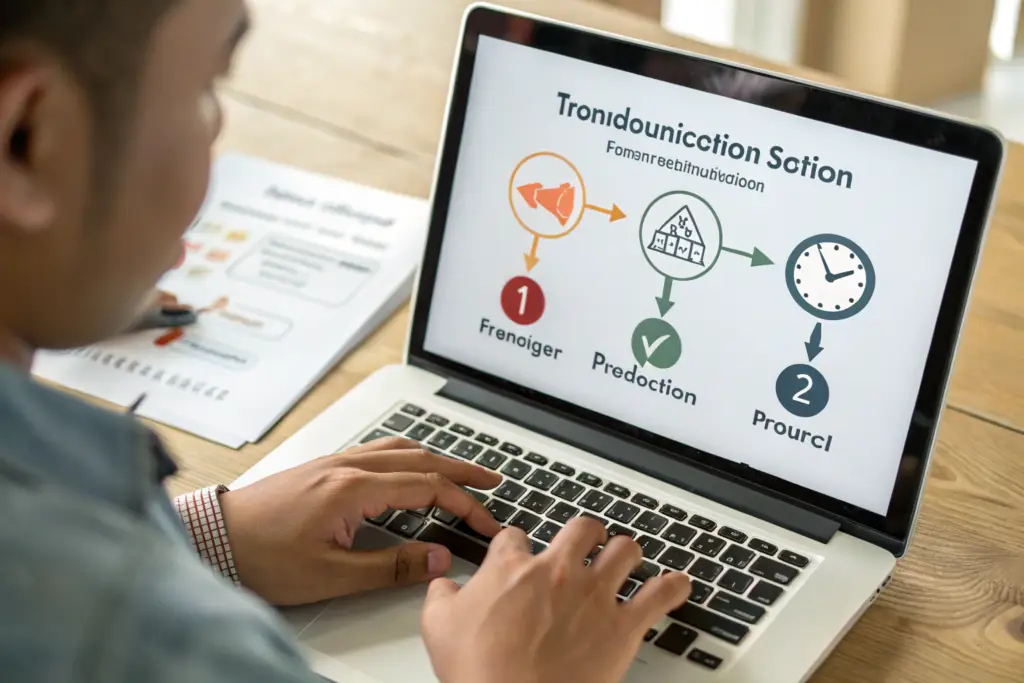
The language barrier that created the sales rep role has significantly eroded. A generation of Chinese production managers, engineers, and technicians has entered the workforce with functional English skills. They may not speak with native fluency, but they can read and write technical English, understand specification sheets, and communicate clearly in written form. Email and messaging platforms allow for asynchronous written communication that eliminates the pressure of real-time spoken conversation.
The language gap that remains is narrow enough that simple tools bridge it effectively. Technical terms are standardized. A "GSM" is a GSM in any language. An "AQL 2.5" means the same thing in Shanghai and in Chicago. Visual communication, annotated photos, marked-up spec sheets, short video clips of a production process, further reduces the language dependency. A production manager can photograph a seam issue, circle the problem area, and write "This pulling because tension too high. Adjusting now." The message is clear. The language is functional. The value of direct access far exceeds the remaining language friction.
What Information Gets Lost in Sales Rep Translation?
When a buyer asks, "Why is the sleeve pitch off by 3 degrees on the second prototype?" the question contains specific technical information. The sales rep, who is not a pattern maker, may not understand what "sleeve pitch" means. The rep translates the question as, "The buyer says the sleeve looks wrong." The production manager receives a vague complaint. The manager adjusts something, perhaps the wrong thing, and sends a revised sample. The buyer receives a sample where the sleeve pitch is unchanged but the armhole depth is different. The communication loop has failed.
This information degradation is not the rep's fault. The rep is not trained in pattern engineering, fabric science, or production scheduling. The rep is trained in sales. The rep is being asked to translate technical information from a domain they do not understand. The same degradation happens in reverse. When the production manager explains, "The pitch issue is caused by the cap height being too shallow for the shoulder slope on the grade," the rep may translate this as, "The factory says the size grading caused the problem." The nuance is lost. The buyer does not understand the root cause. The root cause is not addressed. The problem recurs on the next order.
How Does Direct Access to Production Managers Accelerate Problem Resolution?
The speed advantage of direct communication is most visible during active production. A problem emerges on the sewing floor. A seam is puckering on a new fabric batch. The inline quality inspector flags it. In a traditional model, the inspector tells the production manager. The production manager tells the sales rep. The sales rep emails the buyer. The buyer reads the email the next morning. The buyer responds. The sales rep forwards the response. The production manager receives the instruction 36 hours after the problem was first identified. Meanwhile, production continues, and the defective seam is sewn into 800 units that will now require rework.
Direct communication collapses the problem-resolution cycle from days to minutes. The production manager identifies the seam puckering issue, photographs the defect, and sends the photo directly to the buyer via WeChat or WhatsApp with a brief description and a proposed solution. The buyer reviews the photo, confirms the proposed solution or suggests an alternative, and responds within the hour. The production manager implements the fix immediately. Production resumes with the corrected process. The total elapsed time from problem identification to corrective action is measured in minutes or hours, not days. The number of defective units produced before the fix is minimized. The rework cost is minimized. The delivery timeline is protected.
This speed is not a luxury. It is a necessity for brands operating on tight seasonal calendars. A 36-hour delay in resolving a production issue can mean the difference between an on-time shipment and a missed delivery window. Over a production season with multiple issues, the cumulative time saved by direct communication can be the difference between a brand that hits every retail delivery date and a brand that is perpetually chasing late shipments. Here is how real-time messaging platforms enable this speed and how direct feedback improves sample development.
How Do Real-Time Platforms Enable Immediate Technical Feedback?
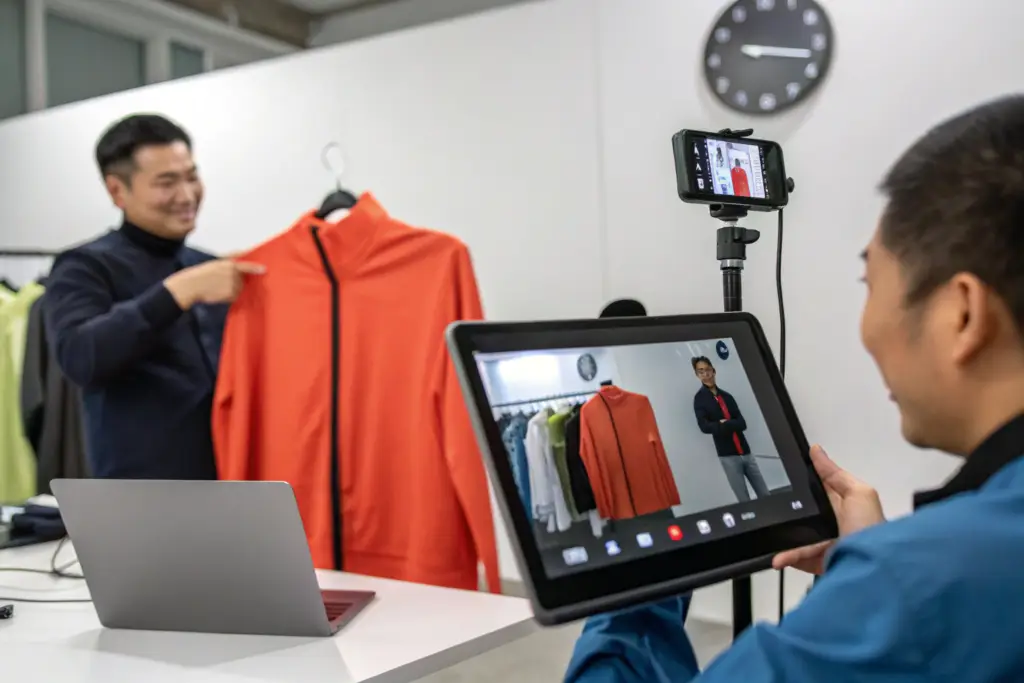
WeChat and WhatsApp are the dominant communication platforms in the garment industry. They are instant, they support high-resolution photo and video sharing, and they are always in the pocket of every production manager. When a production manager needs a quick decision, a photo of a fabric shade variation, a video of a sewing machine issue, a question about a measurement tolerance, they send it via WeChat. The buyer receives it on their phone, reviews it between meetings or after hours, and responds.
This real-time, informal communication channel is faster than email by an order of magnitude. Email is asynchronous and formal. A buyer might check email twice a day. A WeChat message is synchronous and immediate. The buyer sees it and responds. The production manager receives the response and acts. The platform itself creates the speed. The direct relationship creates the trust that makes the platform usable for real-time decision-making. A buyer and a production manager who communicate directly via WeChat can resolve five to ten small issues per day that would each have taken 24 hours through the sales rep relay. The cumulative time savings are enormous.
What Role Does Direct Feedback Play in Reducing Sample Iterations?
Sample development is an iterative process. The first sample is rarely perfect. The buyer provides fit comments. The factory produces a second sample. The cycle repeats until the sample is approved. Each iteration consumes time, fabric, and labor. The number of iterations required is directly related to the quality of the feedback communication between the buyer and the sample room.
When feedback passes through a sales rep, it is often vague. "The buyer says the fit is off" does not tell the pattern maker what to adjust. When feedback comes directly from the buyer to the pattern maker, it can be specific. "The shoulder seam needs to move forward 1 centimeter. The bicep circumference needs an additional 2 centimeters of ease. The body length is correct." This level of specificity allows the pattern maker to make the correct adjustments on the first revision. The number of sample iterations drops from an average of three or four to an average of one or two. The development timeline compresses by one to three weeks. The brand reaches the market faster. The factory spends less on sampling labor and fabric. Both sides benefit.
How to Transition from a Sales Rep to a Production Manager Relationship?
The transition from a sales-rep-mediated relationship to a direct production manager relationship is a sensitive process. The sales rep may perceive the transition as a threat to their role or their commission. The production manager may be hesitant to add direct buyer communication to their already full workload. The factory owner may have structured the business around the sales rep model and may resist changing it. The transition must be managed diplomatically, with clear benefits articulated for all parties.
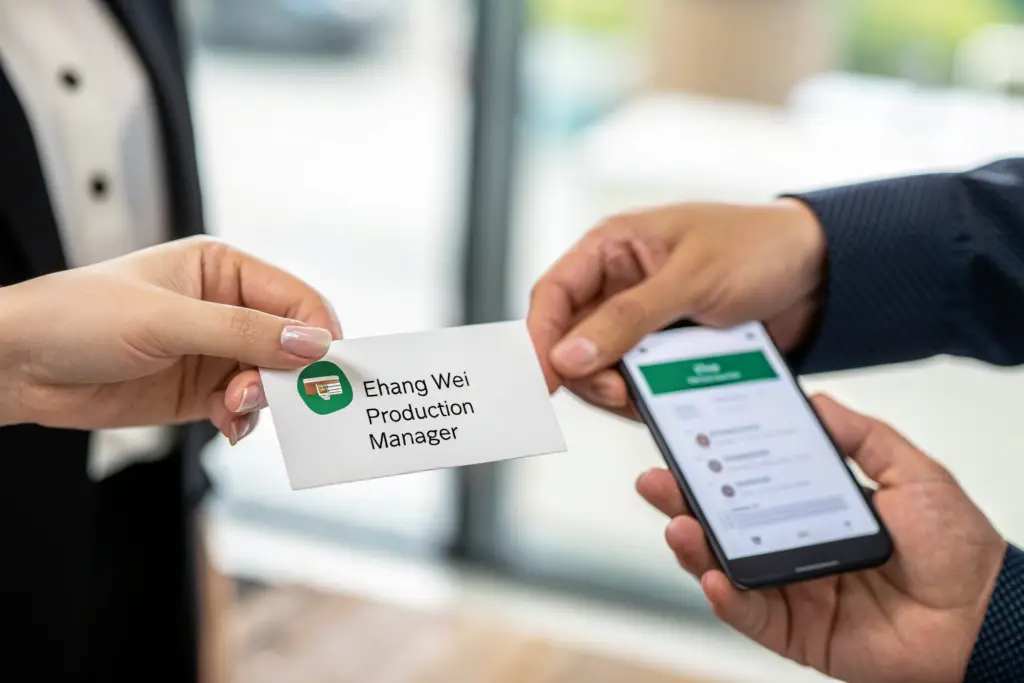
The transition begins with a conversation, not a demand. The buyer explains to the factory owner or senior management that the brand's product complexity requires direct technical communication. The buyer proposes a trial period during which the production manager is included on technical communications, with the sales rep remaining on copy for commercial matters. This phased approach demonstrates that the sales rep's role is evolving, not being eliminated. The rep remains the owner of the commercial relationship, pricing, order placement, payment. The production manager becomes the owner of the technical relationship, specifications, quality, timeline. Both roles have value. Both roles are respected.
I have guided several of our brand partners through this transition, both within our own organization where we operate a direct model by default, and in their relationships with other suppliers. The brands that make the transition successfully report faster problem resolution, fewer quality issues, and stronger long-term supplier relationships. The brands that fail to make the transition often fail to scale, because the sales rep relay model cannot support the communication volume that a growing, multi-style, multi-season brand requires. Here is how to structure the initial conversation and how to maintain a productive, respectful communication cadence.
How to Initiate the Conversation Without Offending the Sales Rep?
The key to the conversation is to frame it as an evolution of the partnership, not a demotion of the sales rep. The sales rep has value. They sourced the factory relationship. They negotiated the initial pricing. They managed the early orders. The brand should acknowledge this value explicitly.
A sample conversation starter: "We have reached a scale where our technical communication volume is increasing. To avoid delays and errors, we would like to establish a direct technical communication line with your production manager for specification, quality, and timeline matters. You will remain our primary contact for commercial matters, pricing, contracts, and new product categories. This will free you from technical relay work and allow you to focus on what you do best, which is growing our business together." This framing positions the sales rep as a strategic partner being elevated, not a gatekeeper being bypassed. The production manager is introduced as a technical resource, not a replacement. Most sales reps will accept this framing if it is delivered sincerely and if their commercial role is genuinely preserved.
What Communication Cadence Maintains a Productive Direct Relationship?
Direct access does not mean constant access. A production manager who receives dozens of buyer messages every day will eventually slow their response time because they also have a factory to run. The brand and the production manager should agree on a communication cadence that respects both parties' time.
I recommend a structure of scheduled check-ins plus urgent issue escalation. A standing 30-minute video call once per week, same time, same day, to review open purchase orders, discuss upcoming deadlines, and address any unresolved issues. Between these scheduled calls, the production manager is available for time-sensitive production issues via WeChat, with the understanding that non-urgent questions will be batched for the weekly call. This structure gives the brand reliable, predictable access while protecting the production manager from constant interruptions. The sales rep is included on the weekly call or receives a summary afterwards, maintaining the commercial visibility they need. The system works because it is structured, not because it is ad-hoc.
What Are the Long-Term Quality Benefits of Direct Technical Communication?
The long-term value of direct communication is not just faster email responses. It is a structural improvement in product quality that compounds over multiple seasons. When a buyer and a production manager communicate directly, they build a shared understanding of the brand's quality standards, the brand's customer expectations, and the factory's production capabilities. This shared understanding cannot be built through a sales rep intermediary because the rep does not possess the technical knowledge to internalize either side's perspective.
Direct technical communication builds institutional knowledge between the brand and the factory. The production manager learns the brand's specific quality tolerances, the buyer's preferred communication style, and the recurring issues that require proactive attention. The buyer learns the factory's equipment capabilities, the production manager's problem-solving approach, and the realistic lead times for different product categories. This mutual learning reduces the defect rate season over season because the production manager anticipates issues before they occur. The quality improvement is measurable, sustainable, and directly attributable to the removal of the communication intermediary.
At Shanghai Fumao, I have observed this compounding quality effect with our long-term brand partners. A partner who has worked directly with our production team for six seasons experiences a defect rate that is 50% to 70% lower in season six than it was in season one. The reduction is not because our production capability improved dramatically. It improved incrementally. The dramatic improvement is because the production team learned exactly what that specific brand considers a major defect, a minor defect, an acceptable variation. They internalized the brand's standards so deeply that they catch issues before the buyer ever sees them. Here is how product consistency improves and why pattern makers benefit from designer access.
How Does Direct Communication Improve Product Consistency Across Reorders?
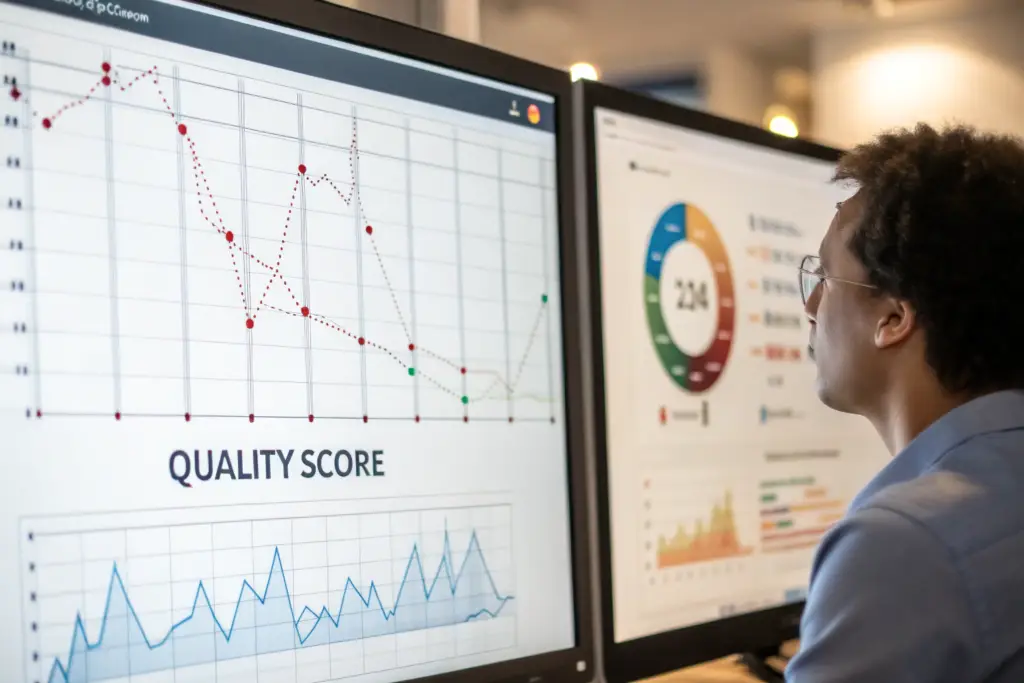
A reorder should be identical to the original order. The same fabric, the same measurements, the same color, the same construction. In practice, reorders often drift. The fabric mill changes a yarn source. The dye house produces a slightly different shade. The cutting team uses a slightly different marker. These drifts are not intentional, but they accumulate into a reorder that is subtly different from the original, and the brand's customer notices.
When the buyer and the production manager communicate directly, the production manager understands which variables are most sensitive for the brand. If the brand's customer is extremely sensitive to color consistency, the production manager knows to pull the original lab dip and the original bulk lot reference from the archive before approving the reorder dye lot. If the brand's customer is sensitive to hand feel, the production manager knows to request a hand feel approval swatch from the mill before cutting. This proactive attention to the brand's specific sensitivities prevents the drift that occurs when a sales rep simply places a reorder without the contextual knowledge of what matters most.
Why Do Pattern Makers Produce Better Results with Direct Designer Access?
A pattern maker translates a two-dimensional design sketch into a three-dimensional garment. The quality of that translation depends on the pattern maker's understanding of the designer's intent. When the designer and the pattern maker communicate through a sales rep, the designer's intent is filtered. The rep describes what the designer wants. The pattern maker interprets the description. The result is often technically correct but aesthetically wrong, the measurements match the spec, but the drape is not what the designer envisioned.
When the designer and the pattern maker communicate directly, the conversation is richer. The designer can say, "I want this sleeve to feel relaxed, not slouchy. It should hang straight from the shoulder but not pull when the arm is raised." The pattern maker can respond, "To achieve that, I need to lower the armhole by 1 centimeter and increase the cap ease by 2%. I will send you a revised sample with those adjustments." The designer understands the technical trade-off. The pattern maker understands the aesthetic goal. The sample is closer to the target on the first iteration. The production garment captures the designer's intent. The direct relationship between designer and pattern maker is the bridge between creative vision and technical execution.
Conclusion
The sales representative model served the garment industry well for decades. It bridged language gaps, cultural gaps, and knowledge gaps. But the gaps have narrowed. The industry has matured. The brand that insists on communicating through a sales rep in 2026 is choosing to add time, cost, and error to its supply chain. The brand that establishes direct communication with its production team removes the relay, accelerates problem resolution, reduces sample iterations, and builds the institutional knowledge that drives quality improvement season after season.
At Shanghai Fumao, direct communication is not a premium service. It is our standard operating model. When a brand partner places an order, they are introduced to the production manager who will oversee their production, the pattern maker who will develop their samples, the quality manager who will inspect their goods, and the logistics coordinator who will manage their shipment. These are the people who make the garments. They are the people the brand should talk to.
If you are currently communicating with your factory through a sales rep and you are experiencing the delays, the errors, and the frustration that the relay model produces, consider what a direct relationship would do for your supply chain. If you are looking for a manufacturing partner that gives you direct access to the production team from day one, reach out to our Business Director, Elaine, at elaine@fumaoclothing.com. The person who knows the answer to your question should be the person who answers your question. That is not a radical idea. It is just good manufacturing.