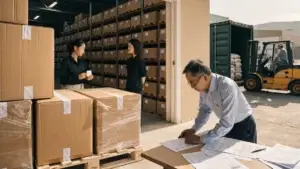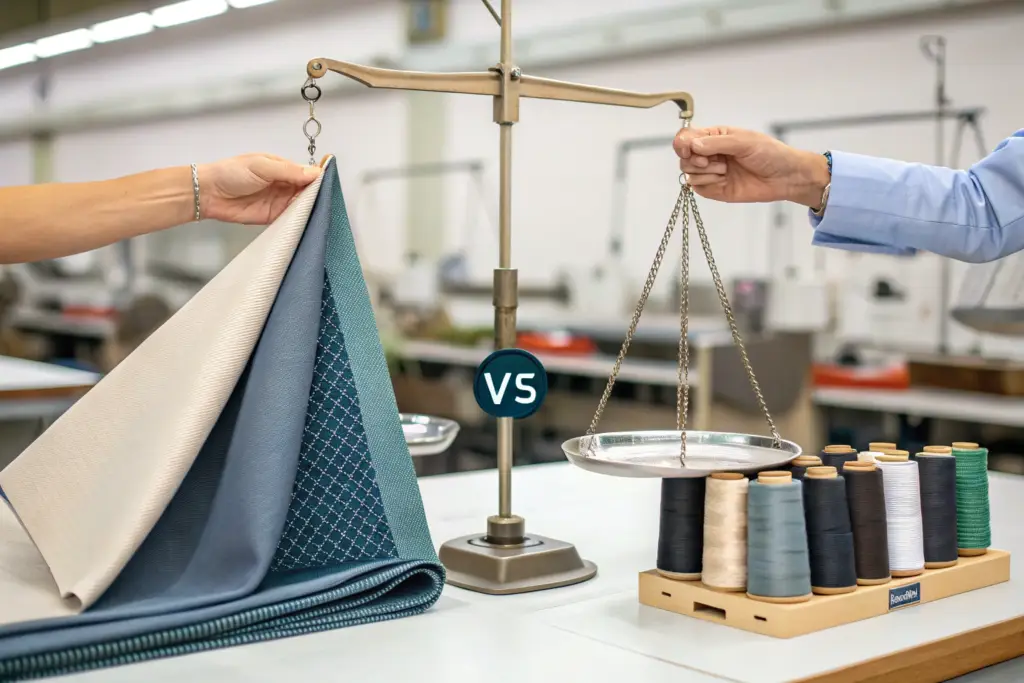
In the spring of 2025, a mid-size womenswear brand owner from Chicago sat in my office with a cost sheet from a competing factory. The sheet quoted a price for a 100% organic cotton French terry hoodie that was 18% lower than our quote. The brand owner had been working with Shanghai Fumao for two seasons. She loved our quality. She trusted our delivery. But she was under pressure from her own retail buyers to reduce her cost of goods sold. She asked me directly, "If your fabric is premium and your labor standards are high, how can I justify paying your price when a competitor offers the same spec for less?" I asked her to send me the competitor's fabric swatch. When it arrived, I laid it next to our approved swatch under the D65 light booth. The competitor's fabric was lighter in weight, lower in stitch density, and the organic certification was from an unaccredited body. The hoodie was not the same product. The price was lower because the product was lower. She kept her production with us.
Shanghai Fumao maintains competitive pricing while using premium fabrics by eliminating the hidden costs that fragmented supply chains pass on to the buyer. Our vertically integrated model captures the margins that would otherwise go to separate fabric agents, cutting contractors, and finishing houses. Our direct, long-term relationships with accredited fabric mills secure premium materials at below-market rates through volume commitments and prompt payment terms. Our production efficiency, driven by in-house pattern engineering, automated cutting, and cross-trained sewing teams, reduces the per-unit labor cost without reducing the per-hour worker wage. The price the brand pays is competitive because the waste, the markups, and the rework that inflate costs in a non-integrated model are engineered out of our process.
The question of how a factory can offer both premium fabric and competitive pricing is the right question. It is the question that sophisticated buyers ask when they have been burned by cheap pricing that delivered cheap product. The answer is not a single tactic. It is a system. A factory that sources premium fabric but wastes 12% of it in the cutting room cannot offer a competitive price. A factory that buys premium fabric at a 20% agent markup cannot offer a competitive price. A factory that produces premium fabric with a 15% defect rate that requires rework cannot offer a competitive price. Our pricing is competitive because we have systematically removed these inefficiencies. Let me explain how each piece of the system works.
How Does Vertical Integration Eliminate Hidden Markups?
The traditional garment supply chain is a chain of markups. A fabric agent buys fabric from a mill and sells it to the factory at a 5% to 10% markup. A cutting contractor cuts the fabric and charges a markup on labor and overhead. An embroidery house applies the logo and charges a markup. A finishing contractor washes, presses, and packs the garments and charges a markup. Each markup is a cost that the brand pays but that adds zero value to the garment. The fabric is not better because an agent touched it. The cutting is not more precise because a separate contractor did it. The only thing that increased was the price.
Vertical integration eliminates markup stacking by bringing every production process under one roof and one management structure. The fabric is sourced directly from the mill by our procurement team. The cutting, sewing, printing, embroidery, finishing, and packing are all performed by our employees in our facility. There is no agent markup on fabric. There is no subcontractor markup on cutting. There is no separate profit margin charged by a finishing house. The brand pays for the actual cost of production plus a single, transparent manufacturing margin. The savings from eliminated markups are shared between the brand, in the form of a competitive price, and the factory, in the form of a sustainable business.
I built Shanghai Fumao as a vertically integrated facility because I saw how the markup model distorts pricing and quality. A non-integrated factory that receives a price pressure request from a brand does not absorb the pressure itself. It pushes the pressure upstream to its subcontractors, who then cut corners on fabric quality, stitch density, or worker wages. The brand thinks it saved money on the garment price, but it actually bought a degraded product. In our model, when a brand and I discuss pricing, we are discussing the real cost of production. There is no hidden margin being extracted by a chain of middlemen. The transparency of the integrated model is itself a source of competitive advantage.
What Markups Do Traditional Fabric Sourcing Models Add to the BOM?
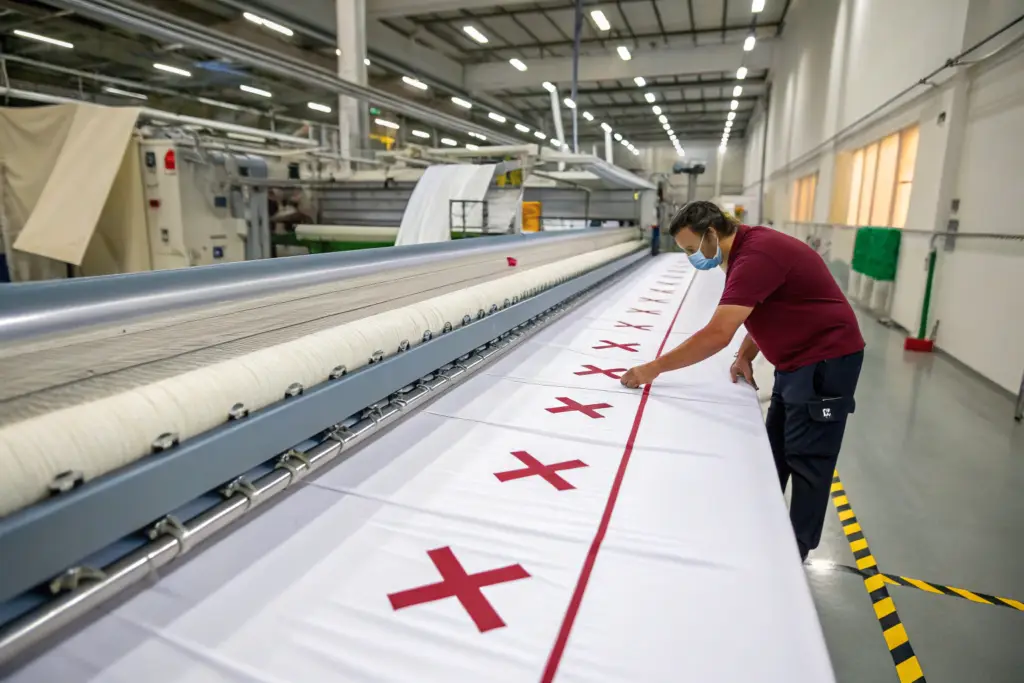
The bill of materials for a garment in a traditional sourcing model includes costs that are not material. The fabric itself costs a certain amount from the mill. The agent who connects the mill to the factory adds a commission, typically 5% to 10% of the fabric cost. If the agent also handles logistics and quality claims, the commission may be higher. The factory then marks up the fabric cost again, typically 5% to 8%, to cover its own procurement overhead and to create a cushion against fabric price fluctuations.
A fabric that costs $4.50 per yard from the mill can become $5.20 per yard on the factory's cost sheet by the time the agent and the factory procurement markup are added. That is a 15.5% increase that buys nothing except intermediation. In a vertically integrated model, our procurement team buys directly from the mill at the mill's price. The fabric enters our facility at $4.50 per yard. The $0.70 per yard markup that a traditional model would have added is eliminated. On a garment that uses 1.5 yards of fabric, that is a $1.05 per unit savings. On a 10,000-unit order, that is $10,500. The savings are real, and they flow to the brand's landed cost.
How Does In-House Cutting and Finishing Reduce Cost Per Unit?
Cutting and finishing are two of the most commonly subcontracted operations in garment manufacturing. A factory that subcontracts cutting pays the cutting contractor's labor cost, overhead, and profit margin. The cutting contractor has no incentive to maximize fabric utilization because they are paid by the cut piece, not by the yard of fabric saved. If the cutting contractor achieves 78% marker efficiency instead of 84%, the factory pays for the wasted fabric, and the brand pays the factory.
In our in-house cutting room, the cutting team is incentived on fabric utilization. We track marker efficiency by style and by order. Our average marker efficiency across all product categories is 84%, compared to an industry average of 78% to 80% for subcontracted cutting. The six-percentage-point difference in efficiency translates to a 6% reduction in fabric cost per garment. On a fabric that costs $4.50 per yard and a garment that uses 1.5 yards, the in-house cutting efficiency saves $0.41 per unit. The same logic applies to in-house finishing, where we control the washing, pressing, and packing quality and cost directly.
What Role Do Long-Term Mill Relationships Play in Fabric Cost?
Fabric is the single largest cost component in a garment, typically 50% to 60% of the total production cost. A factory's ability to source premium fabric at a competitive price is the single largest determinant of the final garment price. Spot buying, purchasing fabric on the open market as needed for each order, is the most expensive way to source. The factory pays the market price, which fluctuates with cotton futures, dye supply, and seasonal demand. A factory that buys fabric this way cannot offer both premium quality and competitive pricing. It must sacrifice one or the other.
Long-term mill relationships allow Shanghai Fumao to secure premium fabric at prices below the spot market rate through three mechanisms: volume commitments that give the mill predictable production scheduling and reduce their per-yard cost, prompt payment terms that provide the mill with favorable cash flow and earn us a discount, and collaborative quality development that reduces the mill's sampling and failure costs. The price advantage from these relationship mechanisms is 8% to 15% compared to spot-market pricing for an equivalent quality fabric. This advantage is the difference between a premium fabric that is commercially viable and one that prices the garment out of the brand's target retail range.
I have been working with some of our core fabric mills for over fifteen years. They are not vendors. They are partners. When cotton prices spike, they hold our price longer than they hold a spot buyer's price because they value the predictability of our volume. When we need a custom color developed urgently, they prioritize our lab dip because we have given them consistent business. The relationship reduces transaction costs on both sides. Here is how the volume and payment mechanisms work specifically.
How Do Volume Commitments Lower Per-Yard Fabric Pricing?
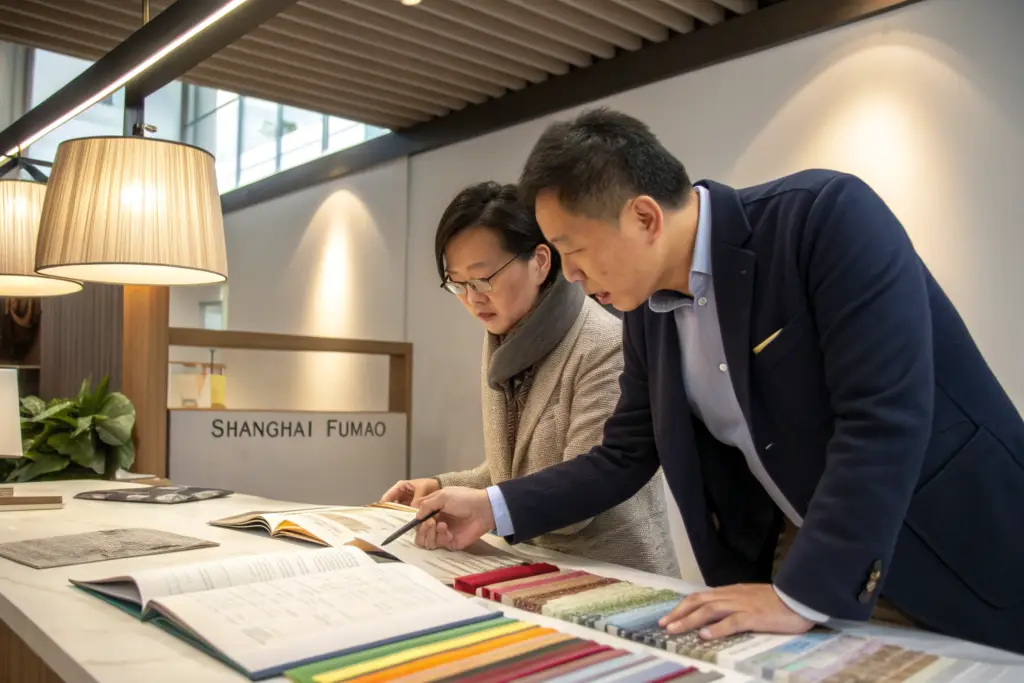
A fabric mill incurs significant fixed costs for each production run. Setting up the loom, loading the yarn, calibrating the dye bath. These setup costs are the same whether the run is 500 yards or 5,000 yards. A mill that produces 500 yards for a spot buyer spreads the setup cost over a small yardage, resulting in a high per-yard price. A mill that produces 5,000 yards for a committed buyer spreads the same setup cost over ten times the yardage, resulting in a lower per-yard price.
We provide our core mills with a six-month rolling fabric forecast. The forecast commits us to a minimum volume across our core fabric qualities. The mill can plan its production schedule, combine our orders with other customers' orders for the same base fabric, and run longer, more efficient production batches. The per-yard cost savings from longer runs are shared with us in the form of a volume discount. The discount is not a negotiation tactic. It is an operational reality of textile production. The mill's cost to produce the fabric goes down, and our purchase price goes down with it. The brand benefits from a fabric price that reflects efficient production, not fragmented spot buying.
Why Do Payment Terms Affect the Price of Premium Fabric?
A fabric mill is a capital-intensive business. It must purchase raw cotton or yarn, pay for energy and labor, and finance the working capital gap between production and payment. When a mill sells fabric to a spot buyer on 60-day or 90-day payment terms, the mill is effectively lending the buyer money. The mill finances that loan through its own working capital or through bank borrowing, both of which carry a cost.
We pay our core mills on net 30-day terms or earlier. This prompt payment reduces the mill's working capital burden. The mill, in turn, offers us a better price because the cost of financing the receivable is removed from the transaction. The price advantage from prompt payment is typically 1% to 3% of the fabric cost. It is a small percentage, but on a $100,000 annual fabric spend, it is meaningful. More importantly, prompt payment builds the relationship goodwill that gives us priority access to limited-availability premium fabrics and faster lab dip turnaround. The financial discipline of paying suppliers promptly is a source of competitive advantage that costs nothing and returns significant value.
How Does Production Efficiency Offset Higher Raw Material Costs?
Premium fabric costs more per yard than standard fabric. A GOTS-certified organic cotton French terry costs perhaps $5.80 per yard, while a conventional cotton French terry of similar weight costs $4.20. That is a $1.60 per yard premium. On a garment using 1.5 yards, the raw material cost premium is $2.40 per unit. If the factory simply passes that $2.40 to the brand, the brand's landed cost increases, the retail price increases, and the garment becomes less competitive. The factory must find $2.40 in production efficiency to offset the fabric premium and keep the final price competitive.
Production efficiency offsets higher raw material costs through three primary levers: fabric utilization efficiency, which reduces the amount of fabric consumed per garment, labor efficiency, which reduces the time required to sew each unit, and quality efficiency, which reduces the number of units that require rework or are rejected. A factory that achieves best-in-class performance on all three levers can absorb a significant raw material cost premium and still deliver a competitive finished garment price to the brand.
Our production efficiency is not a vague claim. It is measured daily against specific targets and reported to our production management team. We know our marker efficiency by style, our standard allowed minute by operation, and our first-pass quality yield by line. These metrics are reviewed every morning. A line that falls below target receives immediate attention. A line that exceeds target is studied to understand what it is doing right so the practice can be shared. This continuous improvement culture is the engine that makes premium fabric commercially viable. Here is how the specific efficiency levers work.
How Does Marker Efficiency Directly Reduce Fabric Consumption?
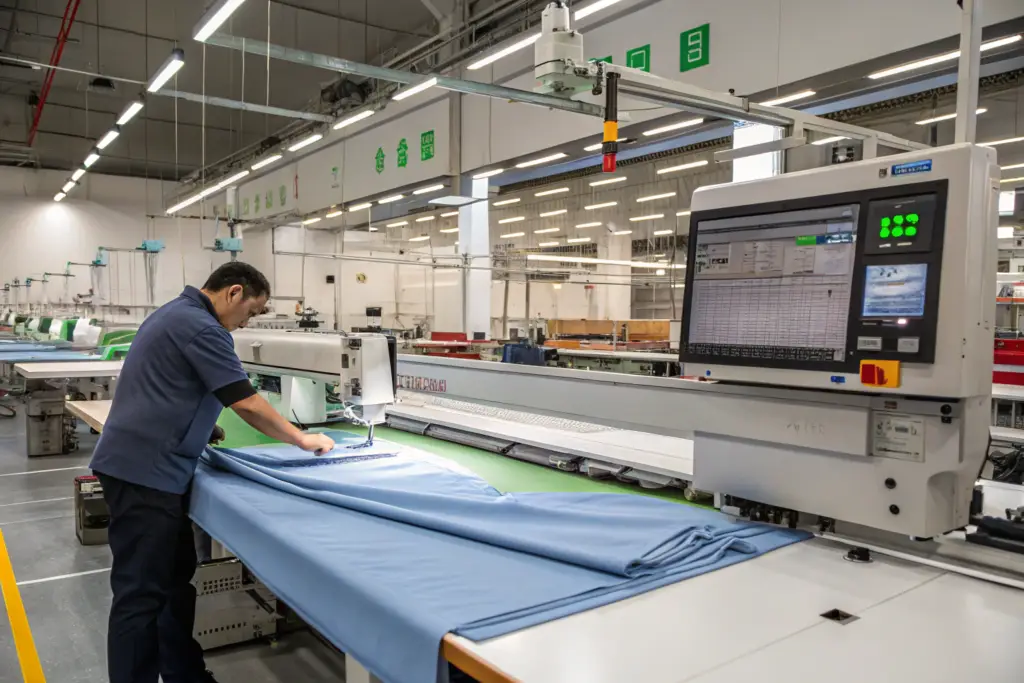
Marker efficiency is the percentage of fabric that actually becomes garment pieces, versus the percentage that falls as waste between the pattern pieces. A marker efficiency of 80% means that 20% of the fabric is waste. A marker efficiency of 85% means that only 15% is waste. The five-percentage-point improvement reduces the fabric required for a garment by approximately 6%.
We achieve high marker efficiency through several practices. First, our pattern makers are trained to design pattern pieces that nest efficiently, with complementary curves and angles that fit together like a puzzle. Second, we use CAD marker-making software that automatically tests thousands of nesting arrangements and selects the one with the highest efficiency. Third, we group multiple sizes into a single marker to fill the width of the fabric more completely. Fourth, we maintain a library of proven efficient markers for repeat styles, so we do not re-engineer the wheel each season. The cumulative effect of these practices is a fabric cost per garment that is meaningfully lower than the industry average, even though the fabric itself is premium.
What Does "Right-First-Time" Manufacturing Mean for Cost Control?
"Right-first-time" manufacturing means that a garment passes quality inspection on the first pass, without requiring rework. Rework is the enemy of competitive pricing. A garment that must be returned to the sewing line to fix a seam consumes additional labor. It disrupts the production flow. It may require re-pressing or re-inspection. All of this costs money that must be absorbed by the factory's margin or passed on to the brand.
Our first-pass quality yield consistently exceeds 93%. This means fewer than 7% of units require any rework, and most of those require only minor corrections. The industry average for comparable product categories is closer to 85% to 88% first-pass yield. Our higher yield means we spend less on rework labor, less on re-inspection, and less on the management time required to track and resolve quality issues. The savings from a high first-pass yield flow directly to the bottom line and enable us to maintain competitive pricing while using premium materials that, if reworked heavily, would erode the margin.
How Does Direct-to-Brand Sales Remove Intermediary Costs?
The traditional garment export model involves a trading company or an export agent who sits between the factory and the brand. The agent's business model is to buy from the factory at one price and sell to the brand at a higher price, capturing the spread. The agent may provide value in the form of language translation, quality inspection, or logistics coordination. But the agent's margin, typically 8% to 15% of the FOB price, is a cost that the brand pays and that does not improve the garment.
Shanghai Fumao's direct-to-brand sales model eliminates the intermediary margin by connecting the brand owner directly with the factory's account management, product development, and production teams. The brand communicates directly with the people who are making the garments. The price the brand pays is the factory's price, not a trading company's marked-up price. The savings from the eliminated intermediary margin are substantial enough to cover a significant portion of the premium fabric cost differential, allowing the brand to upgrade its fabric quality without upgrading its retail price.
The direct-to-brand model requires the factory to invest in capabilities that a trading company would normally provide. We employ English-speaking account managers who understand the US market. We have an in-house quality team that manages inspection and compliance. We coordinate logistics directly with freight forwarders. These capabilities cost us money to maintain, but the cost is far less than the 10% to 15% agent margin that a traditional model would charge. The brand gets the same services at a lower total cost, and the factory captures a higher margin than it would through an agent. Both sides win.

What Services Do Agents Typically Mark Up That a Direct Factory Provides?
A trading agent typically marks up fabric sourcing, sample development, quality inspection, and logistics coordination. The agent charges the brand a consolidated FOB price that includes the factory's price plus the agent's margin for each of these services. The brand may not see the breakdown.
In our direct model, fabric sourcing is included in our production service. Sample development is included. Quality inspection is performed by our in-house team, not by an agent's subcontracted inspector. Logistics coordination is managed by our shipping department in collaboration with the brand's nominated forwarder. None of these services carry a separate markup. They are part of our manufacturing service. The brand pays for the actual cost of production, not the cost of production plus the cost of intermediation. The transparency of the direct model allows the brand to see exactly where their money is going, fabric, labor, trim, logistics, and to make informed decisions about where to invest and where to save.
How Does Direct Communication Improve Cost Accuracy and Reduce Errors?
Every intermediary in the communication chain is a potential source of error. The brand describes a design requirement to the agent. The agent translates it to the factory. The factory asks a clarifying question. The agent translates it back to the brand. The brand answers. The agent translates the answer back to the factory. At each translation step, information can be lost, simplified, or misunderstood.
Direct communication eliminates these translation errors. The brand's designer speaks directly with our pattern maker. The brand's production manager speaks directly with our production planner. If there is a question about a seam construction, it is answered in one email, not in a chain of forwarded messages. The reduction in errors reduces the cost of sampling rework, the cost of production errors, and the cost of post-production disputes. These error-related costs are hidden in the traditional model. They appear as a higher defect rate, a longer development timeline, and a higher rate of chargebacks. In the direct model, these costs are minimized, and the savings contribute to our ability to offer competitive pricing.
Conclusion
The question of how Shanghai Fumao maintains competitive pricing while using premium fabrics has a single answer: we have built a system in which every unnecessary cost is removed, and every remaining cost is managed for efficiency. The unnecessary costs are the markups of agents, subcontractors, and intermediaries. The managed costs are fabric, sourced through long-term mill relationships that reward volume and prompt payment, and labor, organized for maximum productivity without compromising worker wages or working conditions.
The result is a price to the brand that is competitive with factories that use lower-quality materials and fragmented production models, because our efficiency offsets the material premium. The brand gets a premium fabric garment at a price that allows a healthy margin at a competitive retail price point. The consumer gets a garment that feels better, lasts longer, and justifies its price. The factory earns a sustainable margin that allows continued investment in machinery, training, and compliance. This is not a pricing trick. It is a business model.
If you have been quoted a price for premium fabric garments that seems unattainable, or if you have been quoted a competitive price but the fabric quality does not meet your standard, let us provide a cost breakdown for your specific design. We can show you, line by line, how our model delivers premium quality at a competitive price. Reach out to our Business Director, Elaine, at elaine@fumaoclothing.com. A premium fabric garment at a fair price is not a contradiction. It is an engineering problem, and we have solved it.