You walk through a department store or scroll through a major online retailer. The big labels dominate with massive marketing budgets, celebrity endorsements, and prime retail placement. Your brand cannot outspend them. You cannot out-distribute them. You cannot compete on price because their economies of scale drive costs down to levels you cannot match. But as you examine their products closely, you notice something. Their garments are well-made but generic. The fabrics are standard mill offerings. The fits are safe and averaged. The details are unremarkable. These products are designed for the mass market, and they look like it. This is their vulnerability. This is your opportunity.
Smaller brand buyers leverage factory customization to compete with big labels by transforming the manufacturing supply chain from a commodity input into a strategic differentiator. Big labels optimize for consistency and scale across thousands of units and hundreds of retail doors. This scale requirement limits their ability to customize. Smaller brands, with lower volumes and more flexible production models, can access customization dimensions that big labels cannot economically pursue: exclusive fabric development in small batches, signature silhouette engineering that creates a recognizable brand identity, artisanal construction and finishing details that communicate quality and care, rapid response to emerging trends through compressed development timelines, and hyper-personalized branding touchpoints from custom hardware to unique packaging. Each customized element is a reason for a consumer to choose the smaller brand's product over the big label's generic alternative.
At Shanghai Fumao, we work with both large established brands and smaller emerging labels. We have observed how the smaller brands that compete effectively use factory customization as their primary competitive weapon. Let me walk you through the specific customization strategies that level the playing field, how to access them with small-brand volumes and budgets, and how to build a factory partnership that treats your brand's differentiation as seriously as you do.
How Can Custom Fabric Development Give Small Brands a Tactile Competitive Edge?
The most powerful differentiator in apparel is the one the consumer experiences most directly: the fabric. A garment's hand feel, drape, weight, and surface interest are perceived immediately upon touching the garment and continuously while wearing it. Big labels typically source fabrics from large mills' standard collections. These fabrics are excellent quality but they are available to any brand with a purchase order. A consumer who touches a big label's cotton poplin shirt and a small brand's custom-developed cotton-slub shirt feels the difference instantly. The fabric communicates that the small brand's product is special in a way the big label's is not.
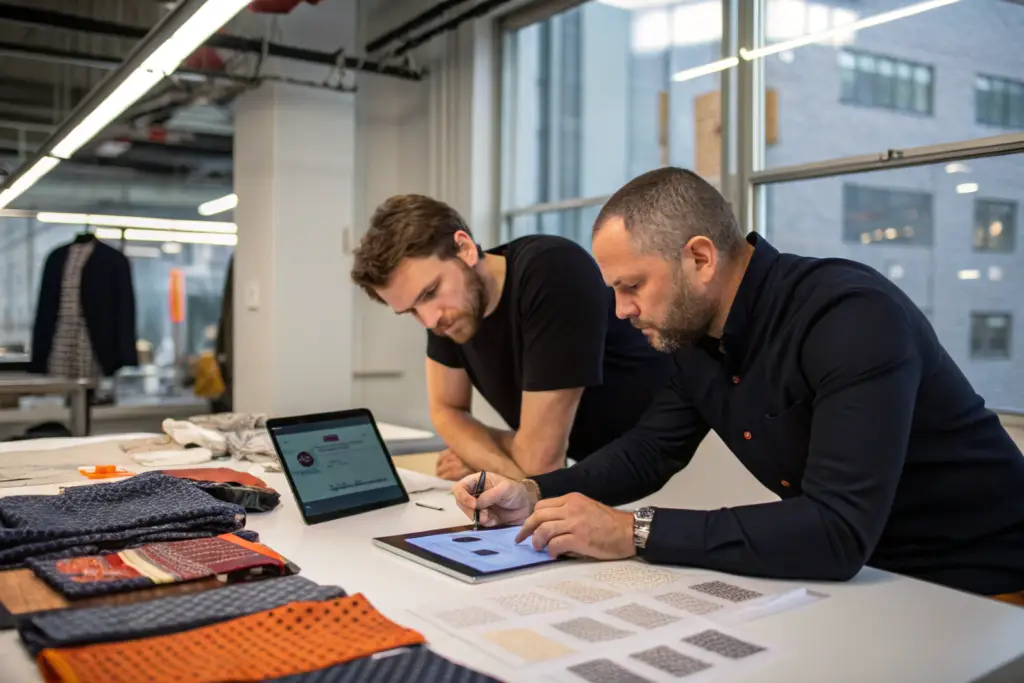
Custom fabric development is accessible to small brands through three pathways: small-batch custom dyeing where the factory's greige inventory is piece-dyed to a brand-specific color, creating color exclusivity without mill minimums for custom weaving; custom finishing where standard base fabrics are treated with specialty washes, brushing, or coating to create a unique hand feel and appearance; and collaborative minimum-sharing where the factory pools the small brand's fabric order with other compatible orders to meet mill minimums for custom weaving or knitting. These approaches provide fabric differentiation at small-brand volumes and budgets.
How Does Small-Batch Custom Dyeing Create Color Exclusivity?
A big label's color palette for the season is chosen from the mill's standard color card. The same "Dusty Rose" or "Deep Navy" is available to every brand that buys from that mill. The consumer sees similar colors across multiple brands and cannot distinguish one from another on color alone. A small brand that develops a custom color—a specific shade created only for them—owns that color in the consumer's mind.
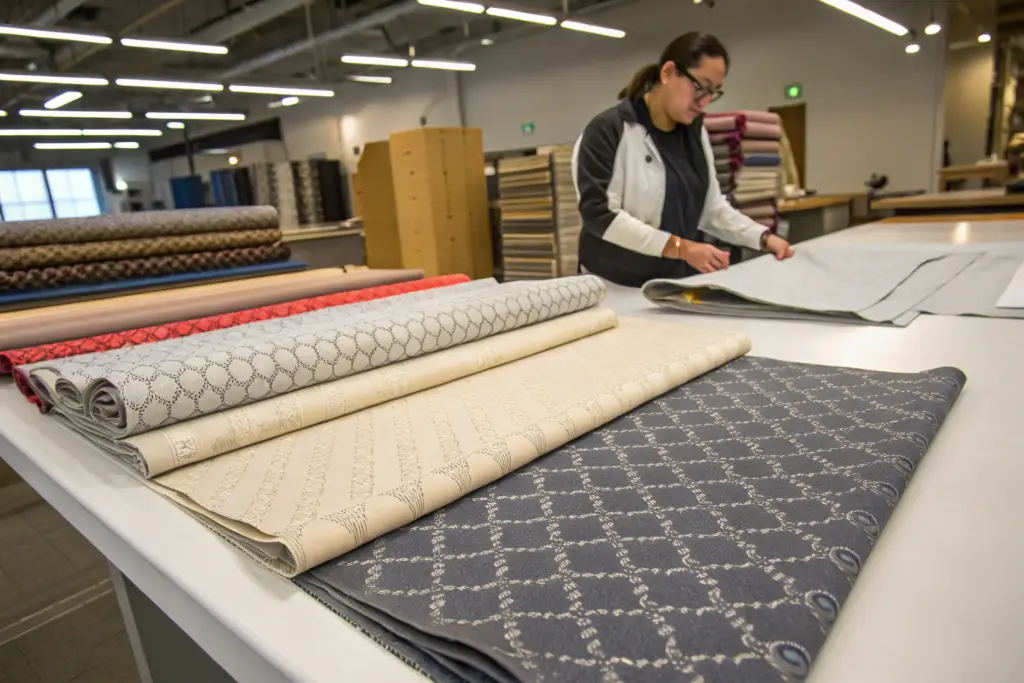
Custom dyeing for small batches is achieved through the factory's greige inventory. The factory stocks undyed base fabrics—cotton jersey, poplin, twill, fleece—in their most popular weights. When a small brand wants a custom color, a small batch of the greige fabric is piece-dyed to the brand's specific shade. The dye run minimum is typically 50-100 meters, which supports production runs as small as 100-200 units depending on the garment. The per-meter cost is higher than a bulk dye lot, but the incremental cost per garment is modest—often $0.50 to $1.50—and buys a level of color exclusivity that big labels cannot match across their massive production volumes. A women's brand we work with has built their identity around a specific shade of terracotta that we custom-dye for them each season. Their customers recognize the color instantly. It has become a brand signature that no competitor can replicate. This small-batch custom fabric dyeing for apparel brands is a powerful differentiation tool accessible at small-brand volumes.
What Is Collaborative Minimum-Sharing and How Does It Enable Custom Weaving?
Custom weaving or knitting—creating a fabric from scratch to a brand's specification—typically requires high minimum order quantities from the mill. A custom jacquard might require 1,000 meters minimum. For a small brand producing 200 shirts, ordering 1,000 meters of custom fabric is financially prohibitive. Collaborative minimum-sharing solves this problem.
Under this approach, the factory aggregates fabric orders from multiple compatible brands to meet the mill's minimum. The fabric base is the same—a specific yarn blend, weave structure, weight—but each brand receives the fabric in their own custom color or with their own custom finish. The mill sees a single, minimum-meeting order. The brands each receive a portion of the production in their unique specification. The per-meter cost is higher than a standard stock fabric but significantly lower than if each brand attempted to meet the minimum independently. We facilitate these collaborative programs for our small-brand partners, grouping compatible orders by fabric type and production timeline. A group of three small menswear brands recently collaborated through our factory to develop a custom brushed cotton twill for their shirting programs. Each brand received the fabric in their exclusive color. Each brand paid approximately 40% less than if they had attempted to meet the mill minimum alone. This collaborative fabric development for small brands is a model that turns the factory's multi-brand client base into a collective purchasing cooperative for custom development.
What Signature Silhouette Strategies Help Small Brands Stand Out on the Rack?
Before a consumer touches a fabric or reads a label, they see a silhouette. The shape of a garment on a hanger or a mannequin is the first communication. Big labels, serving broad demographics across diverse retail channels, gravitate toward safe, averaged silhouettes. Their blazers have standard shoulders. Their dresses have conventional waistlines. Their trousers have predictable leg widths. These silhouettes are designed to offend no one and flatter the broadest possible customer base. They are also invisible on a crowded rack.
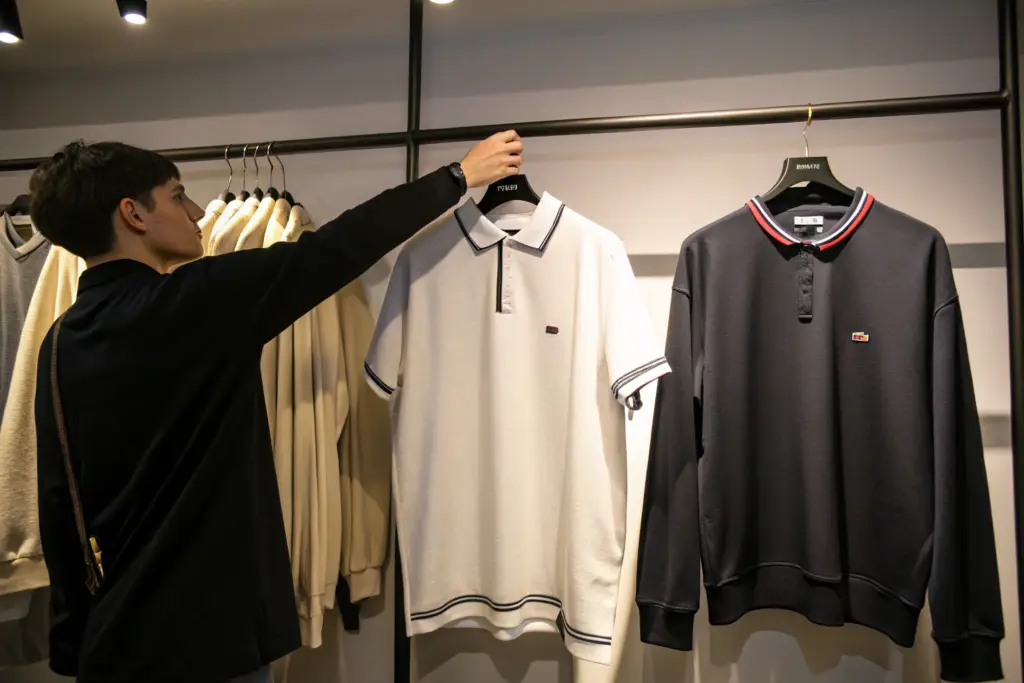
Small brands can develop signature silhouettes that create instant visual recognition through four approaches: exaggerated but wearable proportions where one element—a shoulder, a sleeve, a lapel, a hem—is amplified beyond standard dimensions while the rest of the garment remains balanced, distinctive seam line placement where structural seams become design features rather than hidden construction, hybrid garment typologies where elements of different garment categories are combined into a single piece, and engineered fit where the garment is patterned for a specific body type or style preference rather than the averaged proportions of mass-market sizing. These silhouette strategies create garments that look like the brand's garments, not like every other garment on the rack.
How Does Pattern Engineering Create a Signature Silhouette Without Custom Fabric Costs?
Custom fabric development adds cost. Signature silhouette engineering, achieved through pattern making rather than material development, is a lower-cost path to visual differentiation. The pattern is the intellectual property. Once developed, it can be applied to standard fabrics, creating a distinctive look without material premiums.
A small brand we work with built their identity around a specific sleeve silhouette: a set-in sleeve with a curved seam that creates a subtle sculptural volume at the shoulder, tapering to a fitted cuff. The sleeve shape is the signature. The fabrics change each season—cotton poplin for spring, wool crepe for fall—but the silhouette remains consistent. The pattern engineering was a one-time development investment. The fabrics are standard stock qualities. The resulting garment is unmistakably theirs, and the production cost is only marginally higher than a standard sleeve construction. This signature silhouette pattern engineering approach is the most cost-effective form of visual differentiation available to small brands. It requires a factory with advanced pattern-making capability and a willingness to invest development time in a small-brand partner.
How Can Construction Details Become Signature Brand Identifiers?
A signature does not need to be a dramatic silhouette. It can be a construction detail, consistently applied across collections, that becomes recognizable to consumers and retail buyers. A specific seam finish, a particular pocket shape, a distinctive button placement, or an unusual closure method can become a brand's visual signature.
A small menswear brand we partner with uses a signature triple-needle topstitch in a contrast thread color on all their casual shirts. The topstitching follows the shoulder seam, the armhole, and the side seam. It is visible but subtle. A consumer who owns one shirt recognizes the detail on all the brand's other shirts. A retail buyer scanning a rack of shirts from multiple brands spots the contrast topstitching and identifies the brand instantly. The construction detail costs approximately $0.40 per shirt in additional thread and labor. It is a small investment with significant brand-recognition returns. This signature construction details for brand identity is a low-cost, high-impact customization strategy that is accessible to any small brand with a factory partner willing to develop and consistently execute the detail.
How Does Rapid Trend Response Allow Small Brands to Outmaneuver Big Labels?
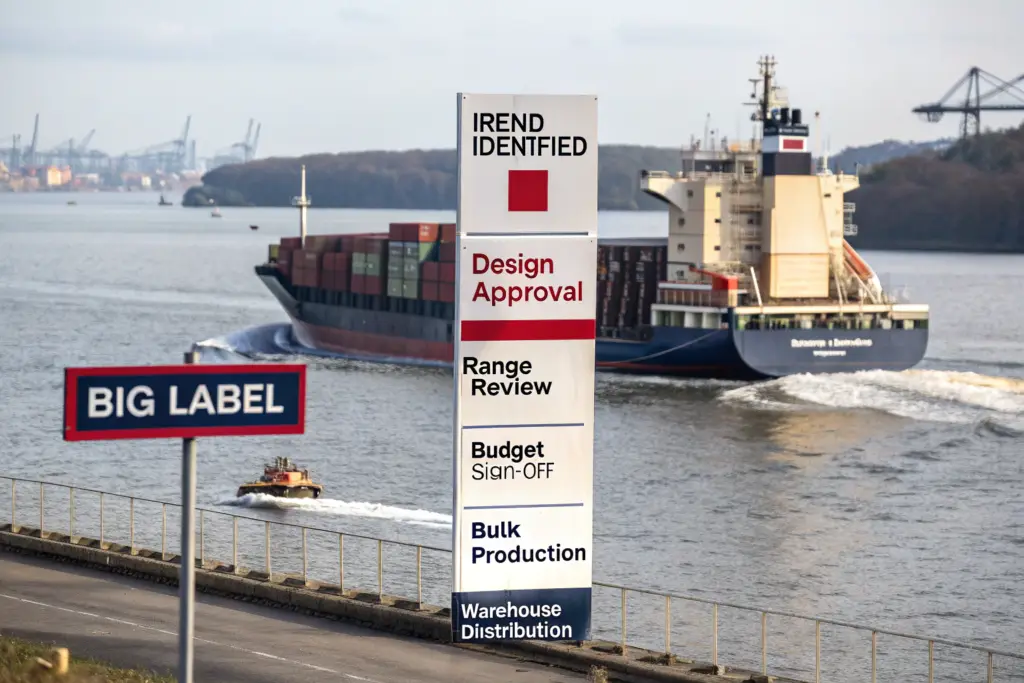
A big label identifies a trend. The design team develops concepts. The concepts go through internal review, merchandising approval, budget sign-off, and range finalization. Samples are produced. The line is sold to wholesale accounts or prepared for DTC launch. The production order is placed—typically thousands of units. The goods are manufactured, shipped, warehoused, and distributed. The time from trend identification to product on the sales floor is typically 9-12 months. By the time the product reaches the consumer, the trend may have peaked or passed.
A small brand identifies the same trend. The owner makes a design decision the same day. A tech pack is prepared within a week. The factory, operating under a flexible partnership model, produces samples within two weeks and a test order of 150-300 units within four weeks. The product is live on the brand's website and in their boutique accounts within 8-10 weeks of trend identification. The small brand captures the trend while it is ascending, not after it has peaked.
Rapid trend response capability is a structural advantage of the small brand-flexible factory partnership. It is enabled by shortened development timelines where design decisions are made by the owner, not a committee, and sampling is fast-tracked, small-batch test production where the initial order is sized to validate demand without overcommitting, flexible factory capacity where the manufacturing partner has reserved or reconfigurable capacity for rapid-turnaround orders, and direct-to-consumer sales channels where product goes live on the brand's website immediately upon receipt, bypassing the wholesale selling cycle. Big labels are structurally incapable of matching this speed.
What Factory Capabilities Enable Rapid Sampling and Test Production for Small Brands?
Rapid trend response begins with rapid sampling. A factory that takes four weeks to produce a development sample for a new style has already consumed half of the small brand's speed advantage. A factory with a dedicated sample room, digital pattern-making capability, and a streamlined approval process can produce a development sample in 5-10 business days.
Our sample room operates on a dedicated capacity model. A portion of our sample room's capacity is reserved specifically for our small-brand partners' development needs. When a small brand sends a new design concept, the sample enters the workflow immediately rather than queuing behind larger brands' development projects. Digital pattern-making and 3D simulation allow the brand to review silhouette and proportion on a digital sample within days, before physical cutting begins. The physical sample follows and ships within the week. This rapid sampling for small fashion brands capability is what converts a trend insight into a testable product before the trend window closes.
How Does the Test-and-Scale Model Enable Trend Chasing Without Overcommitment?
The big label's trend response is constrained by their volume requirements. They must commit to thousands of units before they know whether the trend has genuine consumer traction. If the trend fizzles, they are left with markdown inventory. If the trend explodes, they cannot reorder quickly enough to capture the peak demand. Their scale model forces them to be either too late or overcommitted.
The small brand's test-and-scale model avoids both traps. The initial test order of 150-300 units is small enough that even a complete failure is manageable. The test order gets the product in front of real consumers quickly. If the product sells, the brand captures real-time sell-through data and places a scaled reorder. The factory, which has prepositioned greige fabric and reserved capacity under the partnership, produces the reorder within 3-4 weeks. If the product does not sell, the brand's exposure is minimal. This test-and-scale production model for small brands is the agile operational model that big labels envy but cannot replicate because their supply chains are optimized for efficiency at scale, not flexibility at speed.
What Branding and Detail Customizations Create a Premium Perception That Justifies Higher Prices?
A consumer evaluates a garment's value through a combination of the visible and the tactile. The fabric, the fit, and the silhouette are the primary value signals. But the secondary signals—the label, the buttons, the packaging, the hangtag, the internal finishing—collectively shape the perception of quality and justify the price. Big labels, with their cost pressures and procurement standardization, often default to standard trims. Their buttons are from the supplier's standard catalog. Their labels are basic. Their packaging is functional. These standard details are missed opportunities to communicate value.
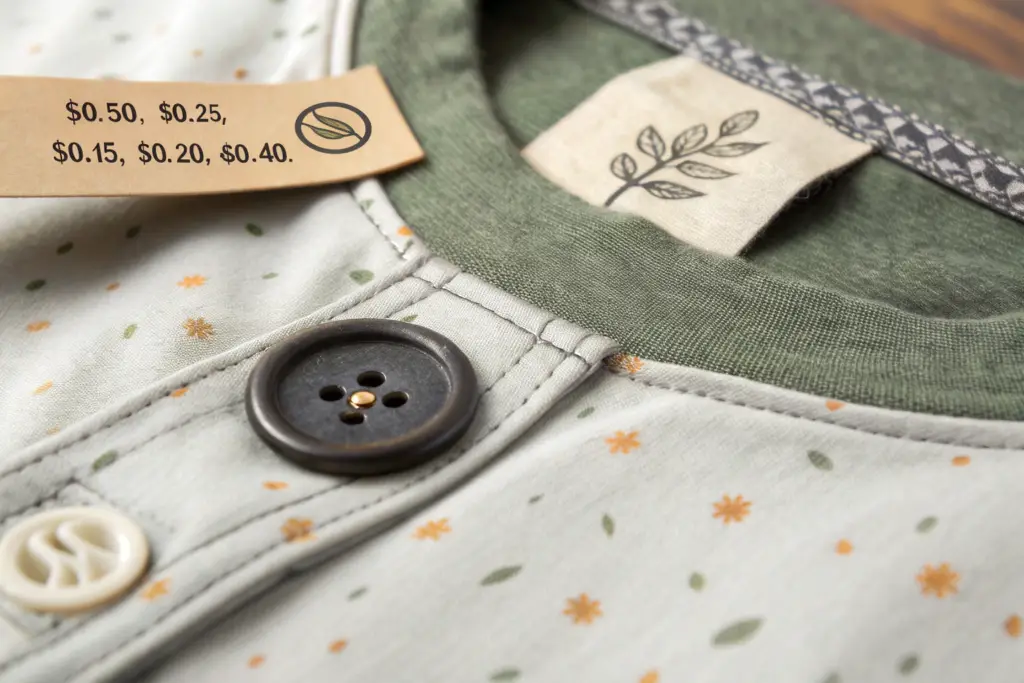
Small brands can create a premium perception that justifies higher retail prices through affordable custom details: custom buttons and hardware developed in small batches with unique shapes, finishes, or materials that differentiate from standard catalog options; premium labels and branding elements including woven labels with specialty yarns, printed neck tapes with brand messaging, and hangtags with unique materials and stories; elevated packaging including custom-printed polybags, tissue paper with brand patterns, and stickers or postcards that add an unboxing experience; and visible quality construction details including contrast binding on internal seams, bar-tack reinforcements in visible locations, and hand-finished hems. Each detail costs pennies or dimes per unit. Together, they create a perception of quality that supports a $68 price point instead of a $48 price point.
How Can Small Brands Source Custom Trims Without the High Minimums?
Traditional trim suppliers impose high minimum order quantities. A custom button mold might require 5,000 pieces minimum. A custom woven label might require 2,000 pieces. For a small brand producing 300 units per style, these minimums mean ordering a multi-year supply of trims, tying up capital and storage space, or being unable to access custom options.
The factory's role in solving this problem is to aggregate trim orders across multiple small-brand partners. If three small brands each need 500 custom buttons, the factory places a single 1,500-piece order with the trim supplier, meeting the minimum while providing each brand their unique design. The factory also invests in in-house trim production capabilities for certain categories. Our in-house digital label printer produces custom printed labels with no minimum quantity. Our relationships with specialist trim suppliers allow us to negotiate lower minimums for our brand partners than a brand could obtain independently. This low-MOQ custom trim sourcing for small brands is a factory-enabled capability that makes custom branding accessible at small-brand volumes.
What Is the Cumulative Impact of Multiple Small Custom Details?
A single custom detail—a unique button, for instance—is a nice touch but does not transform the consumer's perception of the garment. The cumulative impact of multiple small custom details, applied consistently across the garment and the packaging, is transformative. The consumer does not consciously itemize each detail. They experience the garment holistically as "high quality" or "special" or "worth the price."
A small women's brand we work with applies this cumulative approach. Their garments feature custom corozo buttons with a subtle brand icon shape, woven labels with a signature metallic thread, printed inside-neck tape with a brand message, recycled paper hangtags with a QR code linking to the garment's supply chain story, custom-printed tissue paper inside the polybag, and a small branded sticker sealing the package. The incremental cost of all these details combined is approximately $1.20 per garment. The brand's average retail price is $95, compared to a market average of $65 for comparable garments without the custom details. The $1.20 investment generates an additional $30 in retail price, which at standard wholesale margins translates to approximately $15 in additional wholesale revenue per unit. The return on the customization investment is extraordinary. This premium branding details for apparel brands approach is a repeatable model for small brands competing on perceived value rather than price.
Conclusion
Smaller brand buyers can leverage factory customization to compete with big labels by transforming their size from a liability into an advantage. Big labels are optimized for scale, consistency, and efficiency across massive production volumes. This optimization limits their ability to customize. Small brands, with lower volumes and more flexible production models, can access customization dimensions that big labels cannot economically pursue: exclusive fabrics, signature silhouettes, artisanal details, rapid trend response, and premium branding touchpoints. Each customized element is a reason for a consumer to choose the small brand's product over the big label's generic alternative.
The key to accessing these customization advantages is the factory partnership. A small brand needs a manufacturing partner who offers the capabilities—custom fabric development, advanced pattern engineering, artisanal embellishment, custom trim sourcing, flexible production lines—and who treats the small brand's differentiation with the same seriousness as a large brand's volume. The factory that serves small brands as collaborative development partners, aggregating their needs to meet minimums and reserving flexible capacity for their rapid-turnaround orders, is the factory that enables small brands to punch above their weight.
At Shanghai Fumao, we have structured our services specifically to empower smaller brands to compete through customization. Our greige inventory enables small-batch custom dyeing. Our collaborative minimum-sharing programs enable custom fabric development at accessible volumes. Our flexible line supports test-and-scale production. Our in-house trim capabilities and aggregated supplier relationships make custom branding affordable at small quantities. We do not treat small brands as less important than large ones. We treat them as partners whose differentiation is their greatest asset, and our job is to help them realize it.
If you are a small brand buyer looking to leverage factory customization to compete more effectively against larger competitors, let us discuss your differentiation strategy. Contact our Business Director, Elaine, at elaine@fumaoclothing.com. Share your brand vision, your product categories, and the customization elements you want to explore. We will provide a feasibility assessment and a customization plan that fits your volumes and your budget. Let us show you how your size can be your competitive advantage.