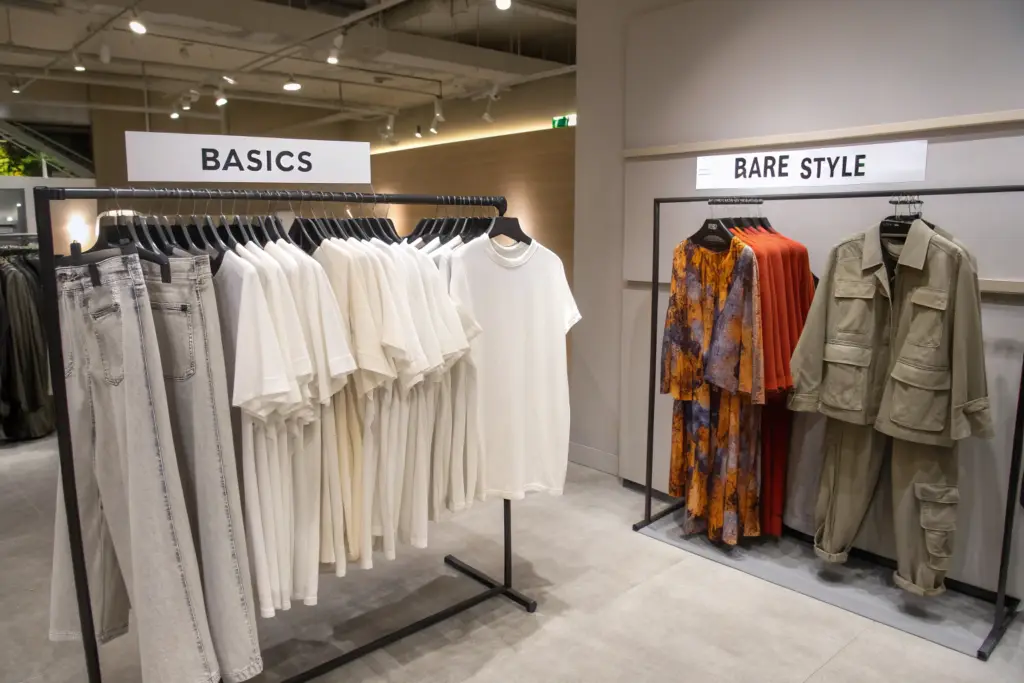
Your wholesale showroom appointment is in two weeks. Last season, your line was built around elevated basics—the perfect T-shirt, the essential chino, the classic button-down. The quality was excellent. The pricing was sharp. But the buyers who visited your booth walked past the basics, spent ten minutes examining a single sculptural jacket with an asymmetrical closure and a hand-embroidered detail, and wrote an order for that one piece. They told you, politely, that they could source basics from anywhere. They came to you for something they could not find elsewhere. The basics that had been the backbone of your business had become invisible. The rare styles you had developed as a creative statement had become your commercial future.
Rare style pieces are outselling basic designs in the US wholesale market because of a structural shift in retail buyer behavior driven by the end consumer's saturation with commodity apparel. When consumers can purchase a basic T-shirt from dozens of brands at every price point, both online and in-store, the wholesale buyer's competitive advantage shifts from price and availability to exclusivity and differentiation. A rare style piece—defined by unique silhouette, unexpected fabric combination, artisanal construction detail, or limited production—provides the wholesale buyer with three things a basic garment cannot: a reason for the consumer to choose their store over competitors, a higher perceived value that supports full-price selling and healthier margins, and a social media-worthy product that generates organic marketing through consumer sharing. The basic garment has become a utility. The rare style piece has become the reason a consumer walks into a store.
At Shanghai Fumao, we have observed this shift firsthand through the evolving order patterns of our US wholesale and distributor partners. Three years ago, their orders were 70% basics and 30% fashion-forward styles. Today, that ratio has inverted. Let me explain the market forces driving this shift, what defines a commercially viable rare style piece, and how your brand can develop and source these high-demand products.
What Market Forces Are Driving the Shift from Basics to Rare Styles?
The consumer who walks into a boutique or browses a curated online store in 2026 is not the same consumer who shopped in 2019. Their closet is already full of basics. They can purchase a decent-quality T-shirt for $12 from a dozen direct-to-consumer brands, on Amazon, or at Target. They do not need another basic. What they need—what motivates them to spend disposable income on apparel rather than experiences or other categories—is a garment that feels special. A garment that expresses individuality. A garment that photographs well for social media. A garment that cannot be found at every other store in the mall or on every other website in their feed.
Three structural market forces are driving the shift from basics to rare styles: consumer closet saturation, where years of accessible, inexpensive basics have filled consumers' wardrobes with the essentials, shifting their spending toward distinctive pieces that add variety rather than utility; social media amplification, where unique, photogenic garments generate organic sharing and discovery, while basic garments are invisible in the feed; and wholesale buyer risk calculus, where a basic garment represents inventory risk—it must compete on price and availability—while a rare style represents margin opportunity—it can sell at full price because the consumer cannot easily comparison-shop a unique piece. The basic garment is now a defensive purchase. The rare style piece is an offensive opportunity.
How Has the Direct-to-Consumer Basics Boom Reshaped Wholesale Demand?
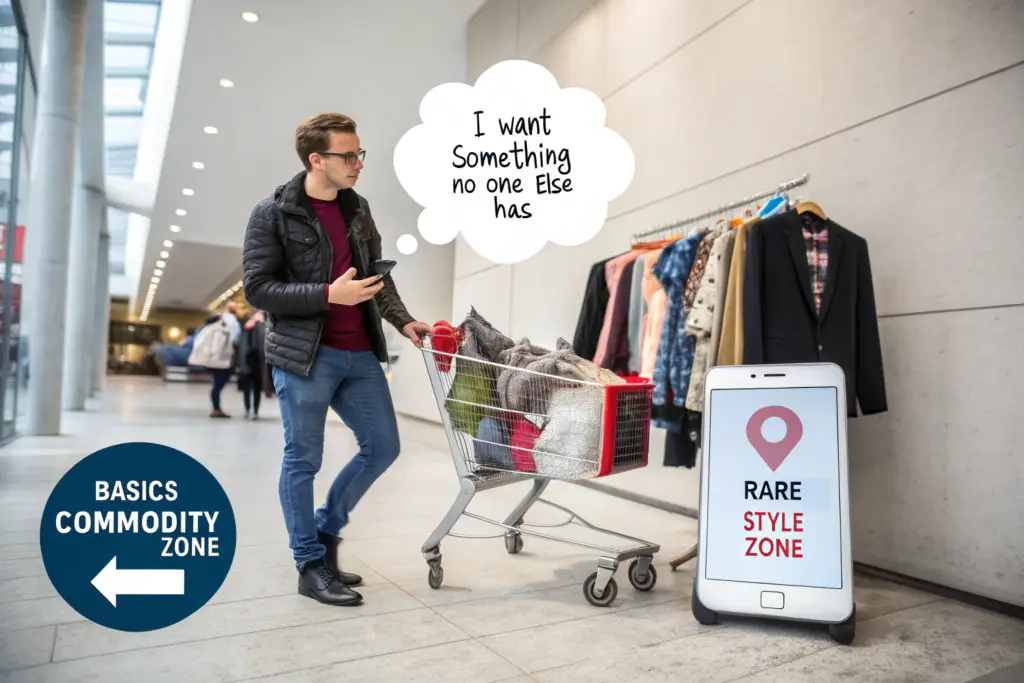
Between 2015 and 2025, the direct-to-consumer apparel revolution was built on basics. Brands like Everlane, Buck Mason, and Mott & Bow built substantial businesses by selling premium basics directly to consumers, cutting out the wholesale markup and offering better quality at lower prices than department store equivalents. The consumer who once bought their wardrobe staples from a boutique or department store now has a subscription to a basics brand, or a saved search on Amazon, or a go-to DTC site.
This structural shift has permanently altered the role of basics in wholesale. The boutique buyer who once stocked basic T-shirts and chinos because their customers needed them now recognizes that those customers have already sourced their basics elsewhere. The boutique's competitive advantage is not in providing what the consumer can easily find online. It is in providing what the consumer cannot find online: a curated, surprising, distinctive product that justifies the trip to the store and the premium price. A wholesale buyer at a recent trade show told me, "I don't even look at basics anymore. My customers can buy a white T-shirt anywhere. They come to me for the piece that makes them feel something." This impact of DTC basics on wholesale apparel structural shift is permanent. The wholesale market has ceded basics to DTC. It is competing on differentiation.
What Role Does Social Media Play in Amplifying Rare Style Demand?
A basic garment is invisible on social media. A beige T-shirt, however beautifully made, does not stop a thumb scrolling through Instagram. A sculptural jacket with an unexpected volume, a dress with an artisanal hand-smocked detail, or a shirt with a custom-developed jacquard fabric stops the scroll. The consumer pauses, engages, saves, shares, and searches for where to buy it. The garment generates its own marketing.
This social media dynamic has fundamentally altered the wholesale buyer's product selection criteria. A buyer evaluating a garment in a showroom is not just assessing its quality and price. They are assessing its "Instagrammability." Will this garment generate organic social content? Will a consumer who purchases it post a photo wearing it? Will that post drive their followers to ask "Where did you get that?" and come to the store? A rare style piece that photographs well is not just a product. It is a customer acquisition tool. The wholesale buyer who stocks such pieces benefits from marketing they did not pay for. This social media impact on fashion wholesale buying dynamic disproportionately benefits rare styles over basics and accelerates the shift in wholesale buying patterns.
What Defines a Commercially Viable Rare Style Piece?
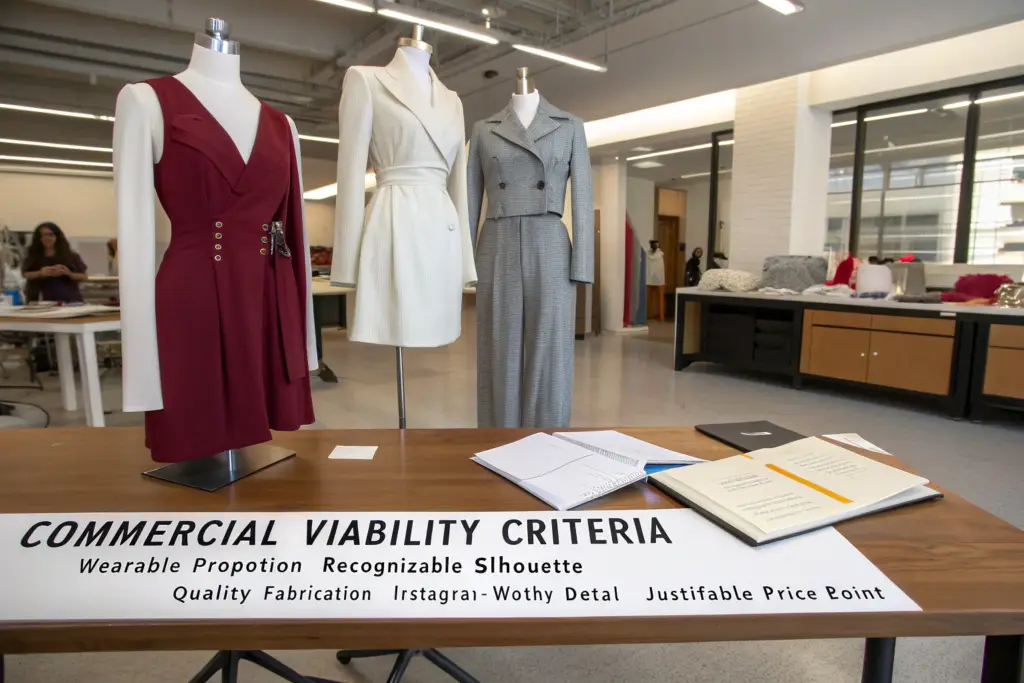
Rare style does not mean unwearable. The most commercially successful rare style pieces are not the extreme runway looks that appear in editorial spreads and never on actual consumers. They are garments that occupy a sweet spot between distinctive and wearable. They contain one or two memorable, differentiating elements—a silhouette, a fabric, a detail—while remaining functional clothing that a consumer can incorporate into their wardrobe. A blazer with an exaggerated shoulder but otherwise classic proportions. A dress with a unique smocked bodice but a simple, flattering skirt. A shirt in a custom-developed fabric that cannot be found elsewhere. These pieces are rare enough to drive purchase desire and wearable enough to drive actual usage.
A commercially viable rare style piece balances four elements: a distinctive design element that differentiates the garment from mass-market alternatives and provides visual interest both in person and in photographs, wearable proportions that allow the garment to function as clothing rather than costume, quality fabrication that supports the design and communicates value to justify the premium price point, and production feasibility that allows the garment to be manufactured at a cost that supports the wholesale and retail margin structure. The art of rare style development is pushing design boundaries without breaking the commercial model.
How Do You Add Distinctive Elements Without Making a Garment Unwearable?
The difference between a commercially successful rare style piece and an unsold editorial piece is often a matter of restraint. The designer who adds five unusual elements to a garment creates a piece that is visually chaotic and difficult to wear. The designer who adds one or two distinctive elements to an otherwise well-proportioned garment creates a piece that is memorable and wearable.
A jacket we developed for a US wholesale brand exemplifies this principle. The design team started with a classic single-breasted blazer block. They made two changes: extending the shoulder by 3cm and shaping it with a sculptural internal construction, and replacing the standard notched lapel with a curved, asymmetrical shawl collar. The rest of the jacket—the body length, the sleeve length, the pocket placement, the button stance—remained classic. The two distinctive elements gave the jacket its identity and made it instantly recognizable. The classic foundation made it wearable with jeans, trousers, or over a dress. The jacket sold through at 92% full price. The brand reordered it for three seasons. This designing commercially viable statement pieces discipline distinguishes rare style that sells from rare style that sits in inventory.
What Fabric and Construction Choices Elevate a Garment from Basic to Rare?
A basic garment becomes rare through fabric and construction choices that cannot be replicated by mass-market competitors. A T-shirt made from standard 180gsm cotton jersey is a basic, regardless of how it is branded. A T-shirt made from a custom-developed slub jersey with a hand-feel that took six months to engineer, or from a fabric with an embedded subtle sheen from a specialty yarn, is a rare style piece. The consumer may not articulate the difference in technical terms, but they feel it when they touch the garment and see it when they wear it.
Fabric exclusivity is the most defensible form of rare style because it cannot be easily copied. A competitor can knock off a silhouette from a photograph. They cannot replicate a custom-developed fabric that required specialized yarn, a specific weave structure, and a proprietary finishing process. Construction quality also differentiates. A dress with French seams, Hong Kong-bound internal finishing, and a hand-stitched hem is perceptibly different from the same dress with overlocked internal seams and a machine blind hem. The consumer who tries on both will feel the difference, even if they lack the vocabulary to describe it. These fabric and construction differentiation strategies are the building blocks of commercially viable rare style.
How Should Wholesale Brands Adapt Their Sourcing Strategy for Rare Style Production?
A brand that has historically sourced basic garments—standard T-shirts, classic chinos, simple dresses—has developed a sourcing model optimized for basic production. The factory is selected for price and reliability. The tech pack is straightforward. The development process is linear. Production volumes are high. Switching to rare style production requires a different sourcing model. The factory must be selected for capability, not just price. The development process is iterative, with multiple sampling rounds to achieve the distinctive elements. Production volumes may be lower, requiring a factory that accepts smaller minimums without prohibitive cost premiums.
Adapting sourcing strategy for rare style production requires five adjustments: partner with factories that have demonstrated capability in the specific techniques required by the rare style elements, not just general garment production; allocate more time and budget for the development and sampling phase, as rare styles require more iteration to achieve the intended effect; adopt a test-and-scale production model where initial orders are smaller to validate demand before committing to volume; develop a fabric and trim supply chain that supports exclusivity through custom development or limited-availability materials; and build communication protocols that support the more intensive, iterative collaboration that rare style development demands. The factory relationship shifts from transactional to collaborative.
Why Does Rare Style Production Require a Different Factory Relationship Model?
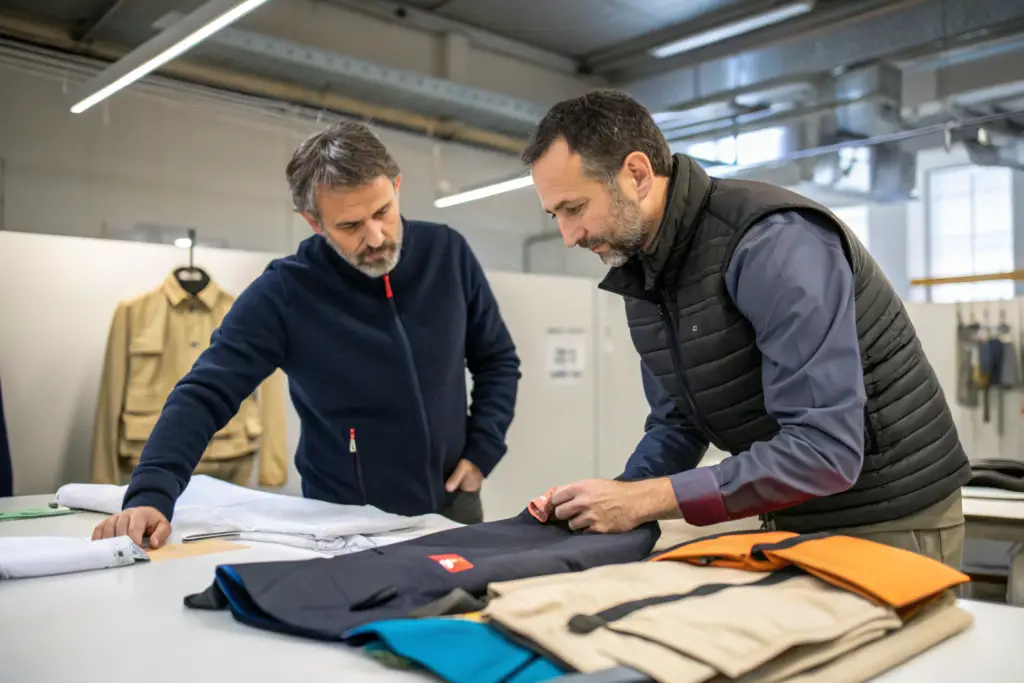
A basic garment order is a transaction. The brand provides a complete, production-ready tech pack. The factory produces the order to specification. The communication is operational: confirm receipt, confirm schedule, report progress, ship goods. The relationship is efficient and arms-length. A rare style order is a collaboration. The brand provides a design concept and initial specifications. The factory contributes technical expertise on how to achieve the design vision in production. The communication is iterative: here is the first sample, here are the suggested adjustments to achieve the drape you want, here is an alternative construction method that will improve the silhouette. The relationship is closer and more interdependent.
Brands that attempt to produce rare styles through a transactional factory relationship typically fail. The factory produces exactly what the tech pack specifies, but the tech pack cannot fully capture the design intent of a rare style piece. The first sample arrives and does not look right. The brand requests revisions, but the factory's transactional model does not support multiple iterative samples without surcharges and delays. The brand becomes frustrated. The factory becomes frustrated. The rare style piece never reaches its potential. This collaborative factory relationships for fashion brands is not a luxury reserved for high-end designers. It is a practical necessity for any brand producing distinctive garments.
How Does the Test-and-Scale Model Reduce the Inventory Risk of Rare Styles?
A basic garment with proven sell-through history can be ordered in volume with reasonable confidence. A rare style piece, by definition, has no sell-through history. Ordering 2,000 units of a sculptural jacket that may or may not resonate with consumers is a significant inventory risk. The test-and-scale model reduces this risk by validating demand before committing to volume.
Under a test-and-scale approach, the brand orders an initial test run of 150-300 units per style. The test quantity is sufficient to stock key wholesale accounts, seed the product with influencers, and gather sell-through data. If the style performs—high full-price sell-through, strong reorder requests from wholesale accounts, positive social media engagement—the brand places a scaled reorder within 2-4 weeks. The factory, which has reserved capacity and prepositioned greige fabric under a partnership agreement, produces the reorder rapidly. If the style underperforms, the brand's exposure is limited to the test quantity. This test-and-scale production model for fashion brands aligns production volume with demonstrated demand, the critical risk management strategy for rare style programs.
What Production Capabilities Should Brands Look for in a Rare Style Manufacturing Partner?
Not every factory that produces garments can produce rare style garments. The capabilities required extend beyond standard cut-and-sew operations into specialized techniques, custom development, and iterative creative collaboration. A brand evaluating a factory for rare style production should look for specific, verifiable capabilities rather than general claims of quality and experience.
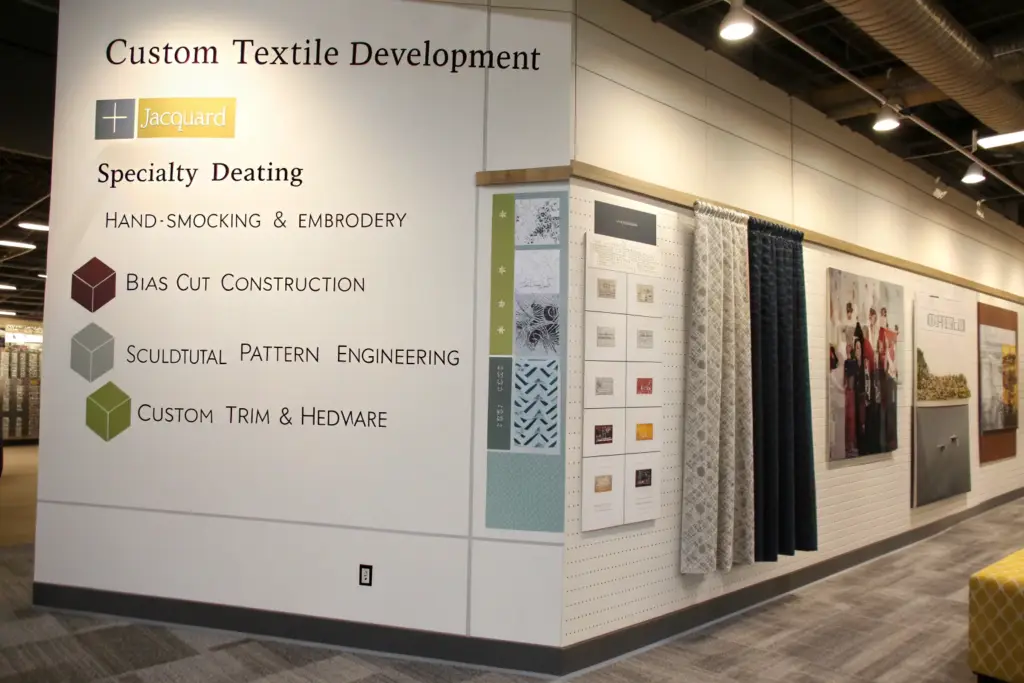
The production capabilities that distinguish a rare style manufacturing partner include custom textile development capability for exclusive fabrics that cannot be sourced from open-market mills, advanced pattern engineering for non-standard silhouettes, sculptural volumes, and bias-cut construction, artisanal embellishment capability performed in-house for hand-smocking, specialty pleating, embroidery, and fabric manipulation, custom trim and hardware development for unique buttons, zippers, and closures that complete the rare style vision, and flexible production lines configured for small-batch manufacturing with rapid changeover capability to support the test-and-scale model. A factory that possesses these capabilities can execute a rare style vision. A factory that lacks them can only produce a compromised version.
How Can a Brand Verify a Factory's Rare Style Capabilities Before Partnering?
A factory's website may claim capability in "custom design" and "specialty techniques." These claims are meaningless without verification. The brand must see evidence of the specific capabilities their rare styles require. Verification methods include requesting a portfolio of past rare style projects with photographs of the garments and, if possible, contact information for the brand partners who can provide references, conducting a live video walkthrough of the factory's sample room and specialty workstations, asking to see current work-in-progress that demonstrates the specific techniques the brand's styles require, and placing a paid development sample order to test the factory's capability on the brand's own design before committing to production volume.
A brand we partnered with for a rare style program requested a paid development sample before committing to production. They sent us the tech pack for their most technically challenging piece—a dress with a complex draped bodice and a hand-finished bias hem. We produced the sample, shipped it, and participated in a video call to review it together. The sample met their specifications. The development process demonstrated our communication quality and technical capability. They placed the production order with confidence. This verifying factory capabilities for complex garment production approach is a prudent step that protects the brand from committing to a factory that cannot execute.
What Questions Should a Brand Ask to Assess a Factory's Development Process?
The development process for a rare style piece is more intensive than for a basic garment. The brand needs to understand how the factory manages this process. Key questions include: Who will be the dedicated pattern maker and sample sewer assigned to our development? What is the typical number of sampling iterations for a complex new style, and how is that managed in the timeline and costing? How do you handle fit adjustments and design modifications during sampling? Do you provide digital samples for initial silhouette and proportion review before cutting physical samples? What is the communication protocol during development—who do we talk to, how often, and through what channels?
A factory that answers these questions with specificity has a defined development process. A factory that answers with generalities—"We will work with you until you are satisfied"—does not. This evaluating a factory's product development process is as important as evaluating their production capability. The development process is where rare styles succeed or fail.
Conclusion
The shift from basics to rare styles in the US wholesale market is not a temporary trend. It is a structural realignment driven by permanent changes in consumer behavior, retail economics, and social media dynamics. The consumer whose closet is full of excellent, affordable basics is not shopping for another white T-shirt. They are shopping for the piece that makes them feel something, that expresses their individuality, and that photographs beautifully for their social feed. The wholesale buyer who serves this consumer is not stocking basics that can be found anywhere. They are stocking rare styles that give the consumer a reason to choose their store.
For apparel brands, this shift demands a corresponding shift in design philosophy, sourcing strategy, and factory partnership. The brand that continues to develop collections built around basics will find its wholesale accounts declining, its margins compressing, and its products invisible in a sea of commodity apparel. The brand that embraces rare style development—investing in distinctive design, exclusive fabrics, and artisanal construction—will find wholesale buyers eager to write orders and consumers willing to pay full price.
At Shanghai Fumao, we have invested in the capabilities that rare style production demands: custom textile development, advanced pattern engineering, in-house artisanal embellishment, custom trim development, and flexible production lines configured for the test-and-scale model. We partner with brands not as a transactional supplier but as a collaborative development partner, bringing our technical expertise to the challenge of realizing their creative vision in commercially viable production.
If your brand is navigating the shift from basics to rare styles, or if you have a distinctive design concept that previous factories have been unable to execute, let us discuss your vision. Contact our Business Director, Elaine, at elaine@fumaoclothing.com. Share your design concepts. We will provide a technical feasibility assessment and a development plan to bring your rare style pieces to the wholesale market with the quality and distinctiveness that today's buyers demand.