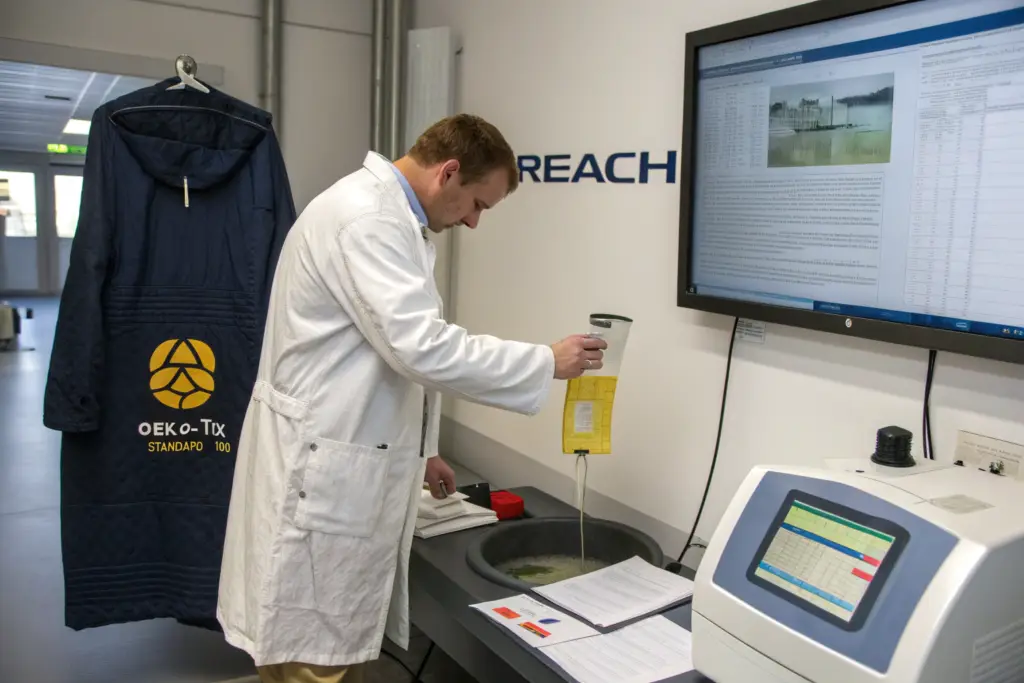
You receive a shipment of men's jackets at your European distribution center. The goods are held at customs pending a REACH compliance check. The test results come back: the zipper pulls contain phthalates above the permitted threshold. The shipment cannot enter the EU market. You face three options: re-export the goods at your cost, destroy them, or pay for expensive component replacement and re-testing. None of these options were in your budget. Your supplier had assured you the products were "fully compliant with EU regulations." They were not. The assurance was based on assumptions, not testing. The cost of that assumption is now yours to bear.
Aligning your garment supplier's quality control process with EU REACH standards requires moving beyond supplier assurances to documented, verifiable chemical compliance testing at every stage of production. REACH compliance for apparel is not a single certificate. It is a systematic process that includes: raw material screening where every fabric, dye, and trim component is verified against the REACH Restricted Substances List and Substances of Very High Concern Candidate List, production process controls that prevent cross-contamination from non-compliant materials, third-party laboratory testing of finished garments using accredited EU-recognized labs, and comprehensive technical documentation that provides the proof of compliance required by EU customs authorities and retail partners. A supplier that cannot demonstrate this systematic approach is not aligned with REACH, regardless of what they claim.
At Shanghai Fumao, our REACH compliance program was built in partnership with our European brand and distributor partners who operate in the EU market. We understand that REACH is not a one-time certification but an ongoing regulatory obligation that requires continuous vigilance, supplier management, and testing. Let me walk you through exactly what REACH compliance means for apparel, how to verify your supplier's alignment, and what documentation you should demand to protect your business.
What Is REACH and Why Does It Matter for Garment Importers?
REACH stands for Registration, Evaluation, Authorisation, and Restriction of Chemicals. It is European Union Regulation EC 1907/2006, and it is one of the most comprehensive chemical regulatory frameworks in the world. For apparel importers, REACH matters because it directly regulates the chemical substances that can be present in garments sold in the EU. A garment that contains a restricted substance above the permitted concentration limit cannot legally be placed on the EU market. The responsibility for compliance falls on the importer—the entity that first places the product on the EU market—which is typically the brand or distributor.
REACH matters for garment importers because non-compliance carries severe consequences: customs detention and rejection of shipments at EU borders, mandatory product recall from the market if non-compliant goods have already been distributed, financial penalties that vary by EU member state but can be substantial, and reputational damage as non-compliant products are publicly listed in the EU's RAPEX rapid alert system. Beyond the negative consequences, proactive REACH compliance is a competitive advantage in a market where European retailers and consumers increasingly demand chemical safety transparency.
What Is the Difference Between the Restricted Substances List and the SVHC Candidate List?
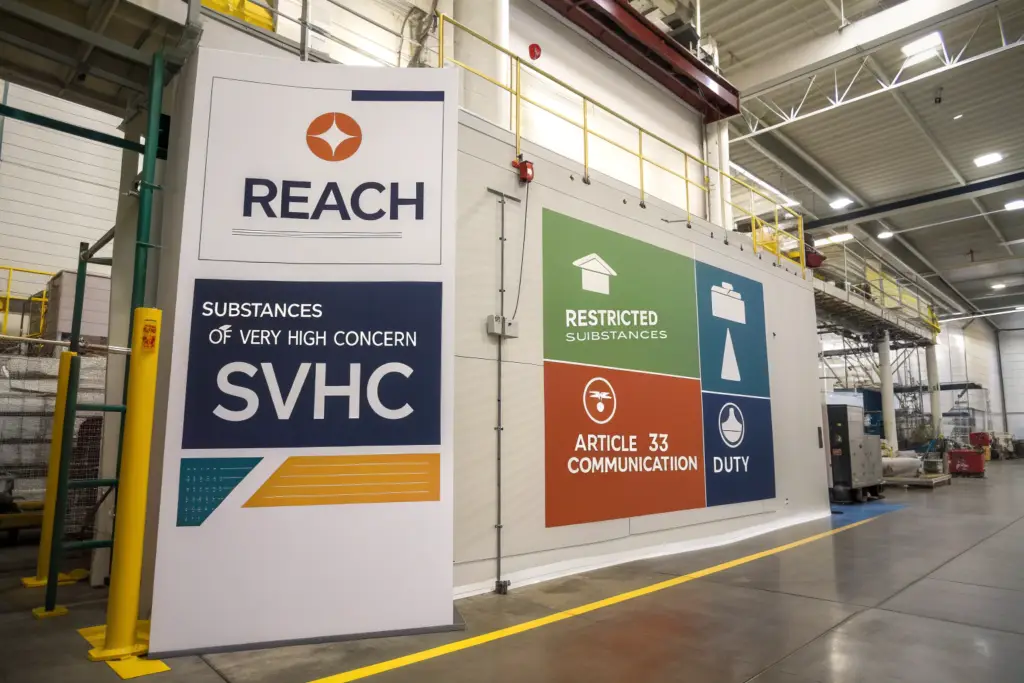
REACH maintains two key lists that apparel importers must understand. The Restricted Substances List (Annex XVII) contains substances whose use is restricted or banned in specific applications, with defined concentration limits. For apparel, this includes specific azo dyes that can release carcinogenic amines, certain phthalates in plasticized components, formaldehyde above specific thresholds, and heavy metals including lead, cadmium, and nickel in accessible metal parts. These restrictions are absolute legal limits. A garment that exceeds the limit for a restricted substance cannot be sold in the EU.
The Substances of Very High Concern (SVHC) Candidate List operates differently. SVHCs are substances identified as having serious health or environmental effects. They are not yet restricted but are candidates for future restriction. The immediate obligation for apparel importers is Article 33 communication duty: if a garment contains an SVHC above 0.1% by weight, the importer must inform the customer upon request, providing the substance name and safe use information. Many European retailers now require their suppliers to disclose any SVHCs present and are moving toward zero-SVHC policies. This REACH Restricted Substances vs SVHC for textiles distinction is critical for importers to understand and for suppliers to manage.
How Does REACH Differ from OEKO-TEX and Other Textile Certifications?
OEKO-TEX Standard 100 is a voluntary certification that tests finished textile products for harmful substances. It is widely recognized and respected, and it includes many of the same substances regulated by REACH. However, OEKO-TEX certification does not automatically guarantee full REACH compliance. The testing parameters, the substance lists, and the concentration limits may differ between OEKO-TEX and REACH. A garment can be OEKO-TEX certified and still fail a REACH compliance check if the certification testing did not cover a specific substance or component regulated by REACH.
REACH is a legal requirement. OEKO-TEX is a voluntary standard that can support REACH compliance but does not replace it. A responsible supplier will use OEKO-TEX certified materials as a foundation, conduct additional REACH-specific testing where gaps exist, and provide documentation that addresses both the legal requirement and the voluntary standard. We treat REACH compliance as the mandatory baseline and OEKO-TEX certification as a value-added demonstration of chemical safety commitment. This REACH vs OEKO-TEX for garment compliance understanding guides our testing and documentation protocols.
What Raw Material Screening Process Is Required for REACH Alignment?
REACH compliance begins long before a finished garment is tested. It begins with the raw materials. Every fabric, every dye, every button, every zipper, every snap, every drawcord tip, every printing ink, and every packaging component is a potential source of restricted substances. A factory that waits until the finished garment to test for REACH compliance is managing risk reactively. A factory that screens raw materials before they enter production is managing risk proactively.
A REACH-aligned raw material screening process requires three elements: a qualified supplier program where every material supplier provides REACH compliance declarations and test reports before being approved, an incoming material verification program where high-risk materials are screened using X-ray fluorescence or other rapid testing methods to verify supplier declarations, and a material traceability system that links every production batch to its specific material lots so that if a compliance issue is identified, the affected products can be precisely isolated. This process catches compliance issues before they contaminate production.
What Are the Highest-Risk Components for REACH Non-Compliance in Garments?
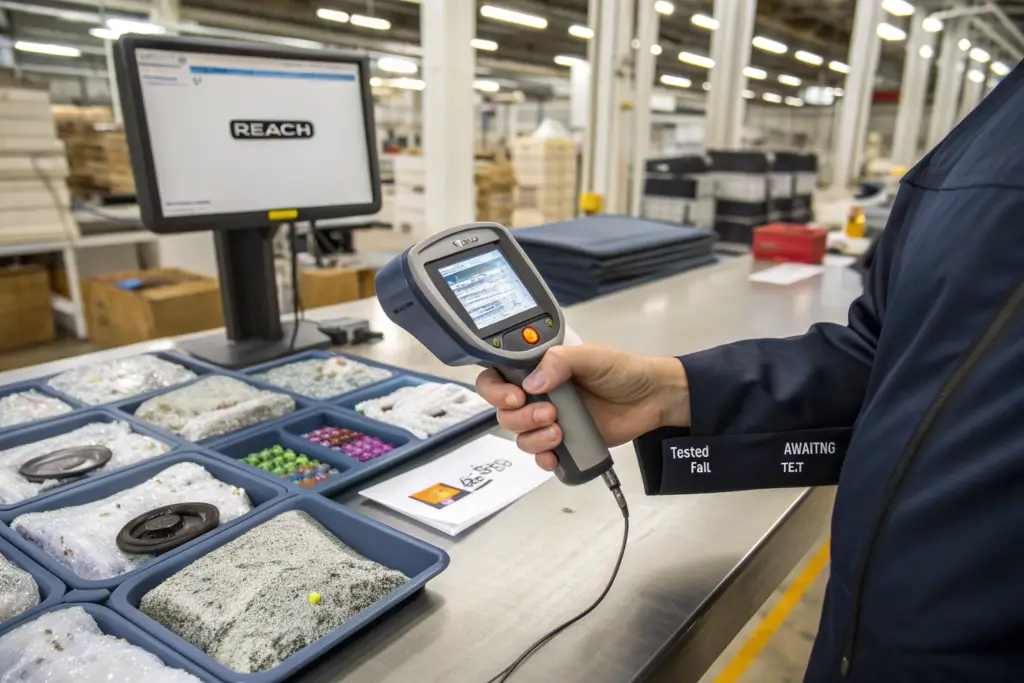
Not all garment components carry equal REACH risk. Understanding the risk profile by component enables focused testing where it matters most. The highest-risk components in apparel are plasticized prints and coatings, which may contain phthalates used as plasticizers; metal trims including zippers, buttons, snaps, and rivets, which may contain lead, cadmium, or nickel; synthetic leather and PU coatings, which may contain phthalates or restricted solvents; azo-dyed fabrics in dark or intense colors, particularly reds, blues, and blacks, which may release restricted aromatic amines; and waterproof or water-repellent finishes, which historically used perfluorinated compounds now restricted.
Our incoming material screening prioritizes these high-risk components. Every metal trim shipment is tested with XRF for lead, cadmium, and nickel content before it enters our trim inventory. Every plasticized print and coating is tested for phthalates. Every dyed fabric is tested for azo-releasable amines, with additional testing frequency for dark and intense colors. This risk-based screening approach allocates testing resources where the probability of non-compliance is highest. This high-risk REACH components in apparel knowledge is essential for both factories and importers to manage compliance effectively.
How Should a Factory Qualify and Monitor Its Material Suppliers?
A supplier declaration is only as reliable as the supplier's own compliance program. A factory cannot simply collect REACH compliance letters from material suppliers and file them away. It must verify that the supplier's compliance claims are credible and back them with periodic testing.
Our material supplier qualification process requires each supplier to submit their REACH compliance program documentation: their restricted substances testing protocols, their laboratory accreditations, their supply chain traceability for chemical inputs, and their history of compliance issues. Suppliers are re-evaluated annually. Their declarations are verified through our own periodic testing of incoming materials. If a supplier's material fails our verification testing, the supplier is placed on probation and required to implement corrective action. Repeated failures result in disqualification. This supplier chemical compliance management process extends REACH compliance upstream into the supply chain, reducing the risk of contaminated materials reaching our production floor.
What In-Production Controls Prevent Chemical Cross-Contamination?
Raw materials may pass REACH screening, but chemical contamination can still occur during production. A cutting table used for a non-compliant fabric and then used for a compliant fabric without cleaning can transfer residues. Sewing machine oil, cleaning solvents, or lubricants used on production equipment can introduce restricted substances. Non-compliant trims accidentally mixed into a compliant production run can contaminate an entire batch. In-production controls prevent these pathways of contamination.
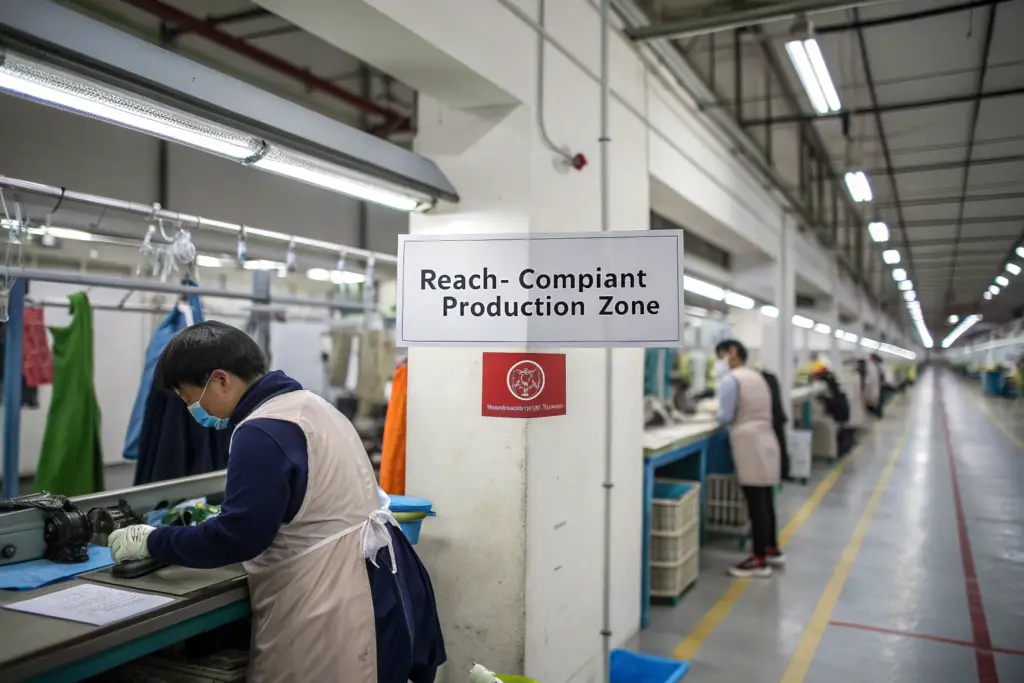
In-production REACH controls prevent chemical cross-contamination through production area segregation where REACH-compliant production is physically separated from any non-compliant production, equipment and tool cleaning protocols that prevent residue transfer between production batches, controlled substance management for all chemicals used in the production process including machine oils, cleaning agents, and marking pens, and line clearance procedures between production batches that verify all materials from the previous batch have been removed before the next batch begins. These controls ensure that compliant materials remain compliant through the production process.
How Are Production Chemicals Managed to Prevent Introducing Restricted Substances?
The focus on fabric and trim compliance can overlook the chemicals used in the production process itself. Sewing machine lubricants, cutting table cleaners, fabric marking pens and chalks, spot-cleaning solvents, and pressing aids all contact the garment during production. If these chemicals contain restricted substances, they can contaminate an otherwise compliant garment.
We maintain an approved chemical register for all production chemicals. Every chemical used in our factory—from the sewing machine oil to the hand soap in the worker washrooms—is reviewed for REACH compliance. The Safety Data Sheet for each chemical is collected and assessed. Chemicals containing restricted substances are prohibited. Chemicals containing SVHCs are flagged and alternatives are sought. The approved chemical list is audited regularly. Any new chemical introduced into the factory must pass the REACH review before it is permitted on the production floor. This production chemical management for REACH compliance extends the compliance perimeter to include the manufacturing environment itself, closing a contamination pathway that many factories overlook.
What Is a Line Clearance Procedure and Why Does It Matter?
A production line that has just completed a run using non-compliant materials must be cleared before a compliant run begins. Fabric remnants, loose trims, partially assembled garments, and cutting waste from the previous batch can contaminate the compliant batch if not removed. A formal line clearance procedure ensures this does not happen.
Between every production batch, our line supervisors conduct a documented line clearance. All materials from the previous batch—fabric pieces, trims, threads, work-in-progress—are removed from the production area. Cutting tables, sewing machine beds, and workstations are cleaned. The clearance is visually verified by the supervisor and recorded in the batch production record. Only then are the materials for the next batch brought to the line. This procedure is standard manufacturing hygiene, but it takes on added significance when REACH compliance is at stake. A garment assembled with a compliant shell fabric and a compliant lining, but with an interlining remnant from a non-compliant batch, could fail a finished product test. This line clearance and batch changeover procedures is a process discipline that protects REACH compliance at the production stage.
What Third-Party Testing Program Proves REACH Compliance?
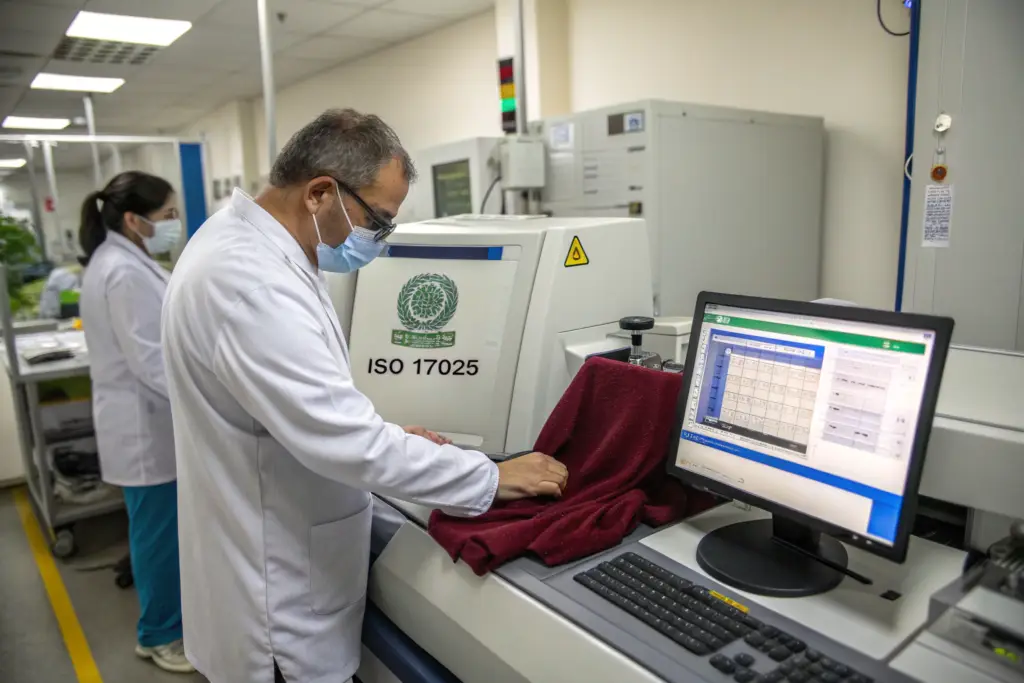
Raw material screening and in-production controls reduce the risk of REACH non-compliance. They do not eliminate it. The final proof of compliance is third-party laboratory testing of finished garments by an ISO 17025 accredited laboratory. This testing provides the objective, independent evidence that the garment meets REACH requirements. It is the documentation that customs authorities, retail partners, and in the worst case, courts will accept as proof of compliance.
A REACH-aligned third-party testing program includes testing of finished garments against the REACH Annex XVII restricted substances relevant to the garment's materials and components, use of an ISO 17025 accredited laboratory that is recognized by EU authorities, testing frequency that is risk-based with higher-risk components and new suppliers tested more frequently, and a documented testing schedule that covers all product categories and material types. The test reports become the legal evidence of compliance that protects the importer in the event of a customs challenge or market surveillance action.
What Specific Tests Should Be Conducted on Apparel for REACH Compliance?
REACH does not prescribe a single test protocol for apparel. The required tests depend on the garment's materials and components. A comprehensive REACH testing program for apparel typically includes azo dye testing for restricted amines, using EN 14362 standard methods, for all dyed fabrics and leather components; phthalate testing using GC-MS methods for plasticized prints, coatings, synthetic leather, and flexible plastic components; heavy metals testing using ICP-MS methods for metal trims, zippers, buttons, and snaps; formaldehyde testing for fabrics that may have been treated with formaldehyde-based finishes; and organotin compound testing for textiles with polyurethane coatings or plastisol prints.
The specific test suite for each garment is determined by a material risk assessment conducted during product development. A cotton jersey T-shirt with a simple screen print requires a different test suite than a technical outerwear jacket with a waterproof membrane, multiple synthetic components, and metal hardware. Our compliance team determines the appropriate test protocol for each product in consultation with our accredited laboratory partners. This REACH testing requirements for textiles and apparel specificity ensures that testing is comprehensive for each product's risk profile.
How Often Should REACH Testing Be Conducted?
A one-time test on a pre-production sample provides assurance only for that specific sample at that specific moment. It does not guarantee that bulk production materials are identical to the sample materials, or that subsequent production batches maintain the same material inputs. Ongoing testing is required to maintain confidence in continued compliance.
Our REACH testing program operates on a risk-based schedule. High-risk garment categories—those with plasticized prints, multiple synthetic components, or metal trims—are tested annually at minimum, with additional testing triggered by changes in material supplier, material formulation, or production process. Medium-risk categories are tested every two years. Low-risk categories—simple garments with single natural fiber fabrics and minimal trims—are tested every two to three years unless a material change triggers earlier testing. Beyond the scheduled testing, every new material supplier and every new fabric or trim component undergoes initial REACH compliance testing before being approved for production. This ongoing REACH compliance testing program provides continuous assurance of compliance rather than a single point-in-time verification.
What Documentation Package Should a Brand Demand from Their Supplier?
When an EU customs authority questions a shipment, or a retail partner audits the brand's compliance program, the brand must produce documentation. A vague assurance from the supplier is not documentation. A single test report on a sample from two years ago is not documentation. The brand needs a comprehensive, organized, accessible technical file that proves REACH compliance for the specific products in question. A supplier aligned with REACH provides this documentation as a standard deliverable.
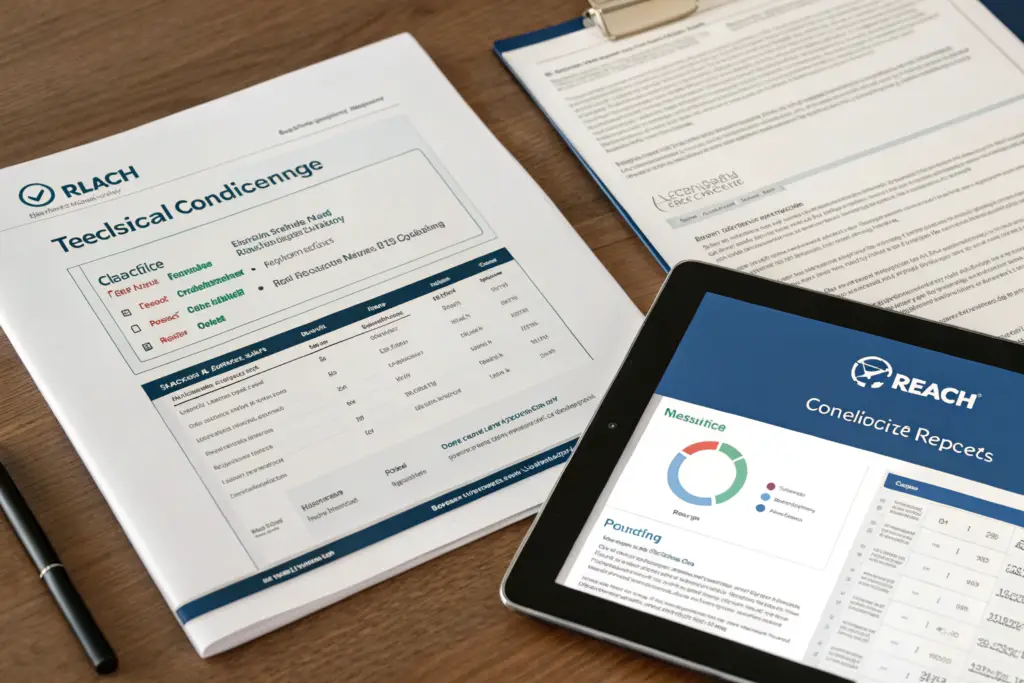
The REACH compliance documentation package a brand should demand includes: a product-level REACH compliance summary identifying the product and declaring REACH conformity, supplier declarations from all material and component suppliers, third-party test reports for finished garments and high-risk components from ISO 17025 accredited laboratories, material traceability records linking the specific garment batch to the specific material lots tested, and a production batch record documenting the line clearance, approved chemical usage, and QC checks performed. This technical file should be maintained for at least 10 years as required by REACH Article 36.
What Should Be in a REACH Compliance Summary for a Specific Product?
A REACH compliance summary is the document that a brand presents to a customs officer or a retail compliance auditor. It should clearly identify the product and concisely summarize the compliance evidence. A well-prepared summary includes the product name, style number, and production batch identification; a statement of REACH conformity declaring that the product meets all applicable REACH requirements; a summary of the testing conducted, including the laboratory name and accreditation, the test methods used, the substances tested, and the results; a list of the materials and components in the product with their compliance status; and the signature and date of the responsible compliance officer.
We provide a REACH compliance summary for every production batch shipped to our European brand and distributor partners. The summary is part of the shipment documentation package, alongside the commercial invoice, packing list, and certificate of origin. The brand has the compliance evidence in hand before the goods arrive at customs. This REACH compliance technical file for apparel preparedness prevents the customs delays and compliance crises that occur when documentation is requested and the brand must scramble to obtain it from the supplier.
How Should a Brand Verify That the Factory's Documentation Is Genuine?
A supplier committed to transparency will not object to independent verification of their compliance documentation. A brand should verify, not just accept, the documentation provided. Verification can include contacting the testing laboratory directly using publicly available contact information—not contact details provided by the supplier—to confirm the test report is genuine and the results are accurate. It can include sending retained samples from the bulk shipment for independent third-party testing and comparing the results to the factory's test reports. And it can include conducting an on-site compliance audit of the factory to verify that the documented processes exist in practice.
We welcome all of these verification activities from our brand partners. Our test reports include the laboratory's contact information and report reference numbers. We retain bulk production samples and can provide them for independent testing. Our factory is open to compliance audits, whether conducted by the brand's own team, a third-party audit firm, or a retail partner's compliance department. This openness to verification is itself a signal of REACH alignment. A factory that resists independent verification of its compliance claims is not a factory whose documentation should be trusted. This independent verification of supplier REACH compliance is the final layer of assurance that protects the brand from false compliance claims.
Conclusion
Aligning your garment supplier's quality control process with EU REACH standards is not a one-time certification exercise. It is an ongoing operational commitment that spans raw material screening, production process controls, third-party laboratory testing, and comprehensive documentation. A supplier that is truly aligned with REACH can demonstrate this alignment at every stage, from the XRF screening of incoming metal trims to the ISO 17025 accredited test report on the finished garment, from the approved chemical register on the production floor to the technical file ready for customs inspection.
At Shanghai Fumao, our REACH compliance program was built for the reality of the European market. We understand that our brand and distributor partners are legally responsible for the products they place on the EU market. Our job is to ensure they have the materials, the processes, and most importantly, the documented evidence to meet that responsibility with confidence. We do not ask our partners to trust our word. We provide the test reports, the supplier declarations, the material traceability records, and the compliance summaries that prove our word is true.
If you are currently selling into the EU market or planning to enter it, and you want to verify that your garment supplier's quality control process is aligned with REACH standards, we invite you to audit our compliance program. Contact our Business Director, Elaine, at elaine@fumaoclothing.com. Request our REACH compliance documentation for a sample product category. Schedule a compliance audit of our facility. Verify our test reports with our accredited laboratory partners. Do all of it. We will support your verification process because we have nothing to hide and everything to prove.