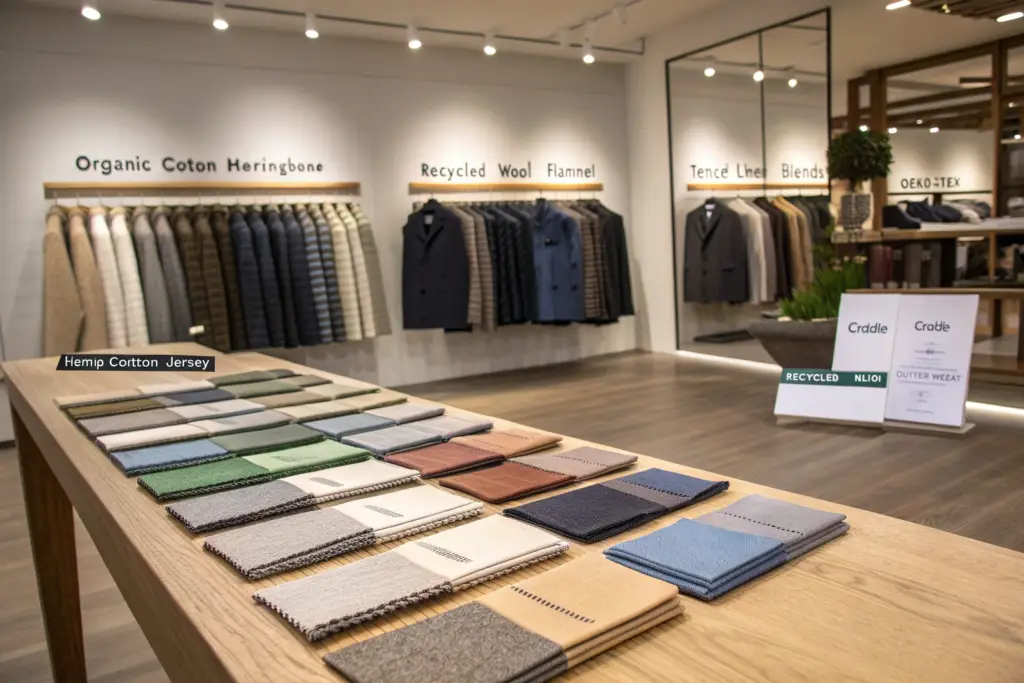
You are a distributor or brand owner targeting the German men's wear market. Your buyers are asking for sustainable fabrics. Not just any sustainable fabrics—fabrics that meet specific German expectations for certification, performance, and aesthetic. They want garments that look like the tailored, functional menswear their customers expect, but with environmental credentials that satisfy the most demanding sustainability standards in Europe. You send a fabric inquiry to your factory. They respond with a list of standard recycled polyester and conventional organic cotton options. The fabrics lack the certifications German retailers require. The hand feel is not refined enough for the German consumer. The sustainability story is too generic to differentiate your brand in a market where every brand claims to be green. You need fabrics that are as sophisticated as the German market itself.
The men's wear sustainable fabrics gaining traction in the German market this year are defined by three characteristics: rigorous third-party certification that meets German and EU standards, performance and aesthetic qualities that do not compromise on the masculine, functional, and tailored expectations of the German menswear consumer, and traceable, transparent supply chains that enable the specific, verifiable sustainability claims German retailers and consumers demand. The leading fabrics include GOTS-certified organic cotton in refined twills and herringbones, GRS-certified recycled wool blends that maintain the luxury hand feel of virgin wool, Tencel-lyocell blended with linen or organic cotton for lightweight shirting and summer suiting, hemp-cotton blends that appeal to the natural fiber preference in the German market, and recycled nylon and polyester for the functional outerwear and performance segments.
At Shanghai Fumao, we have developed a sustainable fabric program specifically for our European brand and distributor partners serving the German market. We understand that German sustainability expectations are higher than in most other markets. Let me walk you through the specific fabrics, the certifications that matter, and how to build a men's wear collection that meets German market requirements without compromising on quality or price.
Why Do Certification Standards Matter More in the German Market Than Elsewhere?
The German consumer does not accept vague sustainability claims. Terms like "eco-friendly," "green," and "sustainable" without third-party certification are viewed with skepticism. German retailers, from large chains to independent boutiques, require documented proof of sustainability claims because they are legally responsible for the accuracy of product labeling under EU and German consumer protection law. The German government's Grüner Knopf (Green Button) label, which certifies both the product and the company, has raised consumer awareness of what credible sustainability certification looks like.
Certification standards matter more in the German market because of a combination of regulatory rigor, consumer awareness, and retail accountability. German consumers are among the most sustainability-literate in the world. They recognize certification logos and actively look for them. German retailers face legal liability for inaccurate environmental claims and therefore demand certified documentation from their suppliers. The most important certifications for men's wear fabrics in the German market are GOTS (Global Organic Textile Standard) for organic natural fibers, GRS (Global Recycled Standard) for recycled content claims, OEKO-TEX Standard 100 for chemical safety, and Cradle to Cradle for circular economy design. Fabrics that carry these certifications provide the verified, documented sustainability claims that the German market demands.
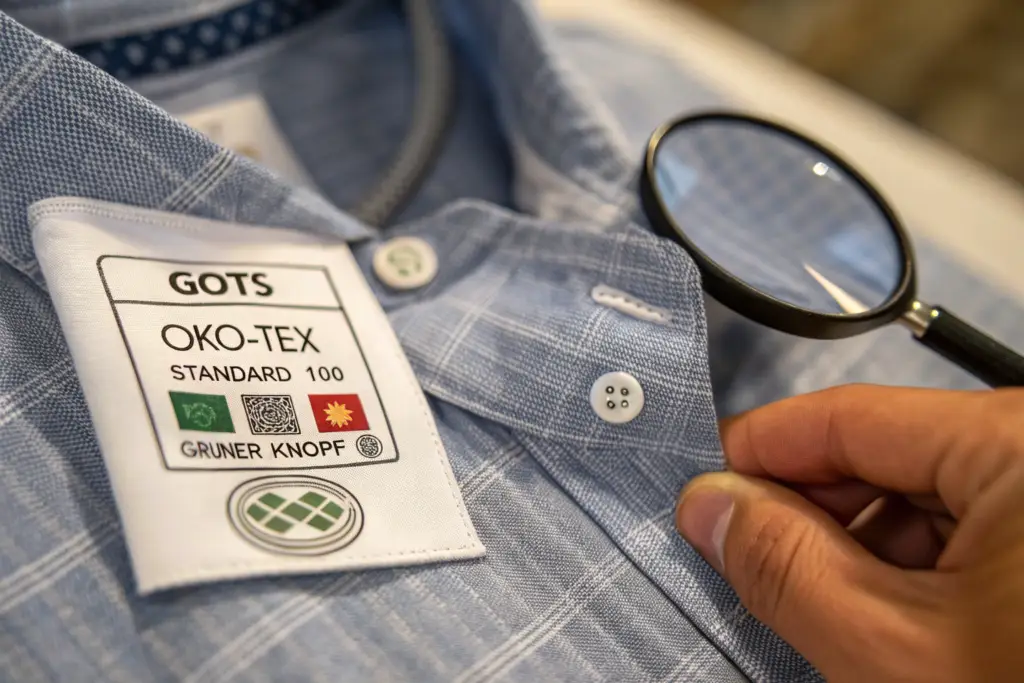
What Is the Grüner Knopf and Why Does It Influence Fabric Sourcing?
The Grüner Knopf (Green Button) is a German government-run sustainability label for textiles. It is unique among sustainability certifications because it audits both the product and the company. The product must meet 26 social and environmental criteria covering the entire production process, from raw material to finished garment. The company must demonstrate corporate due diligence across human rights, environmental protection, and anti-corruption. A brand or distributor that holds Grüner Knopf certification must ensure that its entire supply chain meets these standards.
For a factory supplying fabrics to a Grüner Knopf-certified brand, the implications are significant. The fabric must be traceable to its source. The production processes must meet the criteria. The documentation must be comprehensive. We work with our German brand partners to provide the supply chain transparency and certified fabric documentation that Grüner Knopf requires. This includes mill certification records, fiber origin traceability documents, chemical input records for dyeing and finishing, and social compliance audit reports for every facility in the supply chain. This Grüner Knopf textile certification Germany is a market-specific requirement that factories serving the German market must understand and support.
How Do GOTS and GRS Certifications Differ in What They Verify?
GOTS and GRS are the two most requested fabric certifications for the German market, but they verify different things. Understanding the difference is essential for selecting the right fabric for the right product category and marketing claim.
GOTS certifies organic natural fibers. It verifies that the cotton, wool, linen, or other natural fiber was grown or raised according to organic standards, without synthetic pesticides or genetically modified organisms. It also certifies that the processing—spinning, weaving, dyeing, finishing—meets environmental and social criteria. A fabric with GOTS certification can be marketed as organic. GRS certifies recycled content. It verifies the percentage of recycled material in the fabric and tracks the recycled content through the supply chain. It also includes environmental and social criteria for processing. A fabric with GRS certification can be marketed with a specific recycled content claim, such as "made with 70% recycled wool." A men's wear brand might use GOTS-certified organic cotton for shirting and GRS-certified recycled wool for suiting. Both certifications are recognized and respected in the German market. This GOTS vs GRS certification for apparel fabrics understanding guides fabric selection for specific product categories and marketing claims.
What Organic Cotton Innovations Are Elevating Men's Wear Beyond Basic Jersey?
The German men's wear market demands fabrics that look and feel premium. A basic organic cotton jersey T-shirt is a starting point, not a collection. The innovation in organic cotton over the past three years has been in refined fabrications: twills with the structure for chinos, herringbones with the texture for button-down shirts, French terry with the weight and hand feel for premium sweats, and compact poplins with the crispness for tailored dress shirts. These fabrics combine organic certification with the sophisticated aesthetic that German men expect.
The organic cotton fabrics gaining traction in the German men's wear market are refined weaves and knits that elevate organic cotton beyond basics: GOTS-certified organic cotton herringbone and twill weaves for shirting with the texture and body of conventional premium cotton, compact GOTS-certified poplin with a crisp hand for dress shirts, organic cotton French terry in heavier weights for premium loungewear and casual pieces that compete with conventional cotton on comfort and durability, and organic cotton-linen blends that combine the structure of linen with the softness of cotton for summer suiting and smart-casual shirting. These fabrics meet the German consumer's expectation that sustainable choices should not require aesthetic compromise.
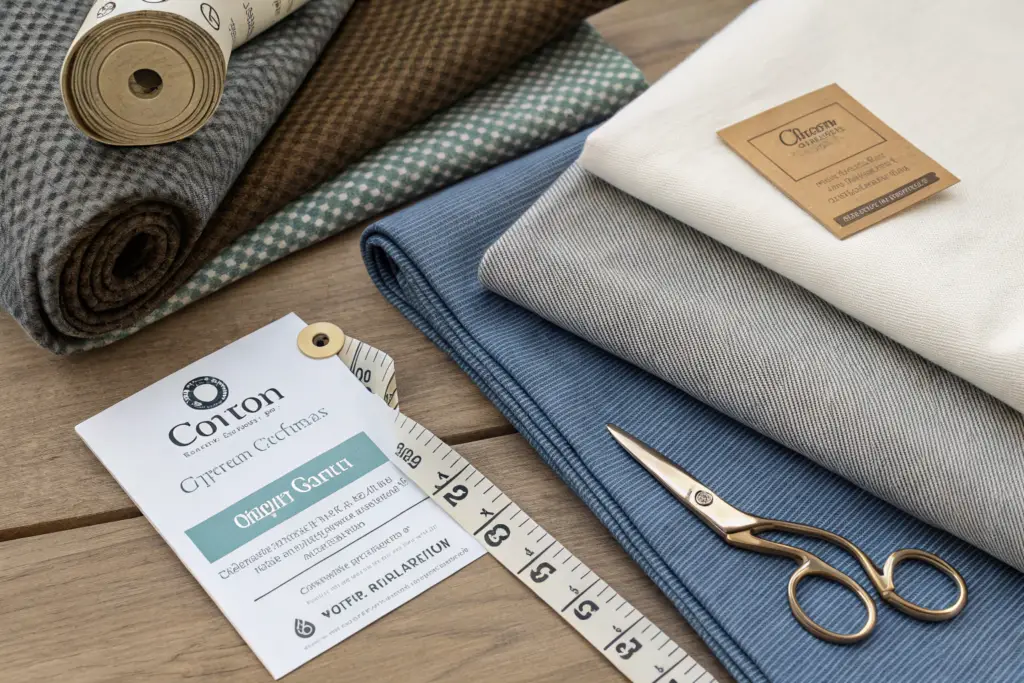
How Has Organic Cotton Twill Achieved Par with Conventional Cotton in Durability?
Early organic cotton fabrics had a reputation for being less durable than conventional cotton. The fibers were sometimes shorter, the yarns less consistent, and the fabrics more prone to pilling and wear. This reputation was a barrier to adoption in the German men's wear market, where durability and longevity are valued alongside sustainability.
Advances in organic cotton breeding, ginning, and spinning have largely closed the durability gap. Long-staple organic cotton varieties, grown primarily in India and Turkey, produce fibers that rival conventional long-staple cotton in length and strength. Improved spinning technology produces more consistent yarns. Our GOTS-certified organic cotton twill, sourced from a mill that specializes in organic yarns, has been tested for tensile strength, seam slippage, and pilling resistance. The results match our conventional cotton twill within the testing margin of error. A pair of chinos made from this fabric will wear as well as conventional cotton chinos. This organic cotton durability improvements have been a critical enabler for the German market, where the sustainable option must match or exceed the conventional option on performance.
What Finishing Techniques Create the Crisp Hand That German Menswear Demands?
German men's wear favors a clean, structured aesthetic. Shirts should have body and crispness. Trousers should hold a crease. The soft, lived-in look that is popular in some markets is less common in Germany, where a more formal, put-together appearance is the norm. Organic cotton fabrics can achieve this aesthetic with the right finishing techniques.
Our organic cotton poplin for dress shirts undergoes a resin-free easy-care finishing process that provides wrinkle resistance and a crisp hand without the formaldehyde-based resins that German retailers and consumers avoid. The finish is OEKO-TEX certified to ensure chemical safety. The fabric is calendered—passed through heated rollers under pressure—to create a smooth, lustrous surface. The result is an organic cotton dress shirt fabric that looks and performs like a premium conventional poplin. For chinos, a light enzyme wash followed by a compressive shrinkage process creates a soft but structured fabric that holds its shape. These fabric finishing for premium organic cotton menswear are applied at the mill level, specified by our fabric development team to meet the aesthetic requirements of the German market.
Why Are Recycled Wool Blends Outperforming Virgin Wool in German Menswear?
Wool is a staple of German men's wear. The tailored wool jacket, the wool overcoat, and the wool flannel trouser are core wardrobe pieces. The German consumer values wool for its natural origin, its warmth, its breathability, and its longevity. The idea of recycled wool—recovering wool fibers from post-consumer or post-industrial waste and spinning them into new yarn—aligns with the German commitment to circular economy principles. But the recycled wool must perform as well as virgin wool. A recycled wool jacket that pills after one season or feels rough against the skin will be rejected.
GRS-certified recycled wool blends are gaining traction in the German men's wear market because they deliver the performance, hand feel, and durability of virgin wool with a compelling circular economy story. The technical breakthrough is in the core-spun yarn construction, where a core of recycled polyamide filament provides strength and a sheath of recycled wool provides the natural hand feel and appearance. This construction overcomes the fiber-length degradation that historically limited recycled wool's performance. The fabrics match virgin wool on pilling resistance, tensile strength, and thermal insulation, while offering a verified recycled content claim that German retailers can market with confidence.
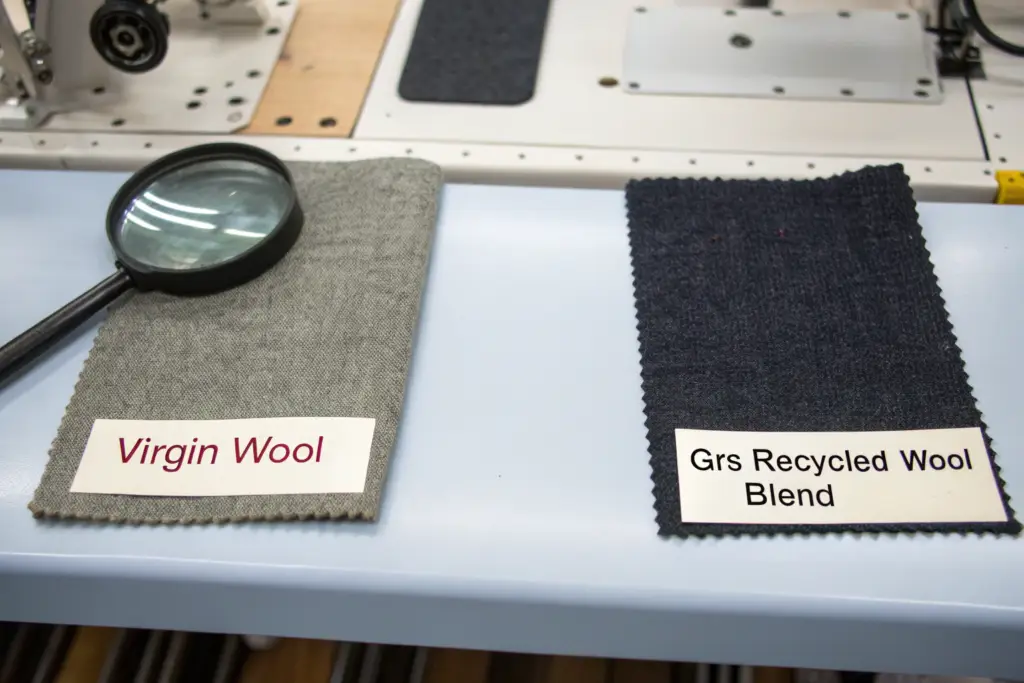
How Does the Core-Spun Yarn Construction Solve Recycled Wool's Weakness?
Mechanically recycled wool is produced by shredding wool garments or wool waste back into fiber. The shredding process breaks the wool fibers, reducing their average length. Short wool fibers produce weak yarn that pills easily and lacks tensile strength. Traditional recycled wool fabrics were often blended with a high percentage of virgin synthetic fiber to compensate, which diluted the wool content and the natural fiber story.
The core-spun construction solves this by using the recycled wool as a sheath around a strong filament core. The core, typically recycled polyamide, provides the tensile strength, abrasion resistance, and pilling resistance that the short recycled wool fibers cannot provide alone. The recycled wool sheath provides the natural hand feel, the warmth, the breathability, and the wool appearance. The consumer touches and sees wool. The hidden core provides performance. The recycled polyamide core also carries its own GRS certification, so the entire yarn can be certified with a combined recycled content. This core-spun recycled wool yarn technology is the innovation that has made recycled wool commercially viable for tailored German menswear. Our recycled wool flannel, used for jackets and trousers, contains 60% GRS-certified recycled wool and 40% GRS-certified recycled polyamide core. The performance metrics match our virgin wool flannel.
What Is the Lifecycle Assessment Advantage of Recycled Wool?
German retailers and consumers are increasingly interested in the quantitative environmental impact of their clothing choices. A fabric's carbon footprint, water consumption, and land use are becoming part of the purchase decision. Recycled wool offers a compelling lifecycle assessment advantage over virgin wool.
Producing virgin wool requires sheep farming, which involves land use, water consumption, methane emissions, and animal welfare considerations. Producing recycled wool from post-consumer waste avoids these upstream impacts. The environmental savings are significant: according to lifecycle assessment data from our wool suppliers, recycled wool production uses approximately 70% less water, 60% less energy, and generates 70% fewer CO2 emissions than virgin wool production. These quantified environmental benefits are exactly the type of data that German retailers need for their sustainability reporting and marketing. A men's wear brand can communicate a specific, verifiable environmental benefit: "This jacket saved X liters of water and Y kilograms of CO2 compared to virgin wool." This lifecycle assessment of recycled vs virgin wool data is a powerful marketing asset in the data-driven German market.
What Plant-Based and Circular Fibers Are Emerging for German Men's Summer Wear?
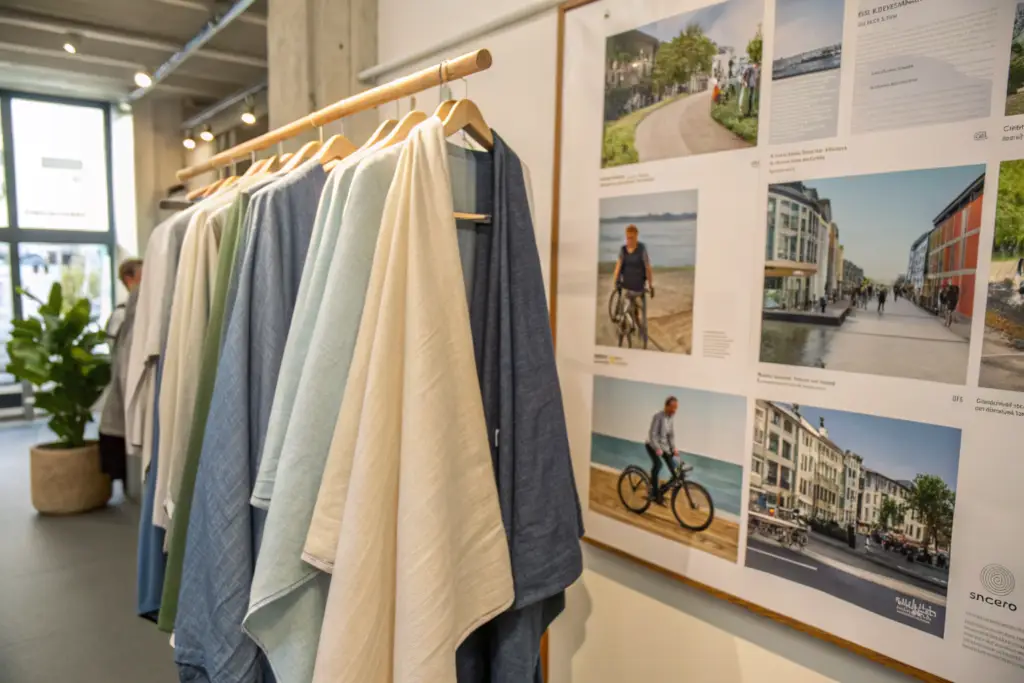
German summers are mild but increasingly punctuated by heatwaves. The German man needs summer clothing that is breathable, lightweight, and suitable for both urban professional environments and weekend leisure. The sustainability expectation extends to summer fabrics, with a particular German preference for plant-based natural fibers over synthetic alternatives, even recycled synthetics. Hemp, linen, and lyocell are the fibers gaining traction, often in blends that combine the best properties of each.
The plant-based and circular fibers gaining traction for German men's summer wear include hemp-cotton blends that offer the breathability and sustainability of hemp with the softness of organic cotton, Tencel-linen blends that combine the drape and luster of lyocell with the texture and coolness of linen, and recycled nylon for the lightweight performance outerwear segment where natural fibers cannot meet the functional requirements. These fabrics align with the German preference for natural, biodegradable materials where possible, and certified recycled synthetics where performance demands it.
Why Is Hemp Gaining Preference Over Linen for Casual German Menswear?
Linen has traditionally been the summer fabric of choice for European menswear. It is breathable, absorbent, and has a characteristic texture. But linen has drawbacks: it wrinkles extremely easily, it can feel rough against the skin, and its cultivation, while more sustainable than cotton, still requires significant water. Hemp addresses several of these drawbacks while offering its own sustainability advantages.
Hemp requires less water and fewer pesticides than cotton or linen. It grows quickly and regenerates soil. The fiber is naturally antimicrobial, UV-resistant, and durable. Hemp fabric softens with washing and wear, developing a comfortable patina over time. For the German market, which values longevity and natural materials, hemp is an appealing choice. Our hemp-organic cotton blend, in a 55-45 ratio, combines the sustainability and texture of hemp with the softness and familiarity of cotton. The fabric is used for casual button-down shirts, relaxed trousers, and unstructured jackets. It wrinkles less than pure linen, softens more quickly, and carries GOTS certification for both the hemp and cotton content. This hemp fabric for sustainable menswear is emerging as a preferred summer option in the German market.
How Does Tencel-Linen Blend Offer the Best of Both Fibers?
Linen offers texture, breathability, and a natural, slightly rumpled aesthetic that suits casual summer tailoring. Tencel lyocell offers exceptional softness, fluid drape, and a subtle luster that elevates a fabric beyond the purely rustic. Blending the two creates a fabric that combines the best properties of each.
A Tencel-linen blend in a 70-30 or 60-40 ratio provides the cool, breathable feel of linen with the softness and drape of Tencel. The Tencel reduces the harshness that pure linen can have against the skin. The linen provides the texture and body that pure Tencel sometimes lacks. The blend is ideal for summer shirting, lightweight unstructured blazers, and relaxed tailored trousers. Both fibers have sustainability credentials: Tencel is produced in a closed-loop process with responsible wood sourcing, and linen is a low-impact natural fiber. Our Tencel-linen shirting fabric is finished with an enzyme wash for a soft, worn-in hand feel. It carries OEKO-TEX certification and is available with Tencel branding for brand marketing purposes. This Tencel and linen blended fabrics represent the kind of fiber innovation that appeals to the German market's desire for natural, high-performance, sustainably produced materials.
How Should Brands Build a Coherent Sustainable Fabric Story for the German Market?
The German market does not respond to a simple "made with organic cotton" hangtag. German consumers and retailers want the full story. Where was the fiber grown? Who grew it? What certification verifies the organic claim? Where was the fabric woven? What dyes were used? What social standards were followed? The fabric is not just a material. It is a narrative with documented evidence at every stage. A brand that can tell this story credibly differentiates itself in a market saturated with generic sustainability claims.
Building a coherent sustainable fabric story for the German market requires connecting the fabric to specific, verifiable claims at every stage of the supply chain: fiber origin with certification and traceability data, mill production with social and environmental audit reports, chemical inputs with OEKO-TEX or ZDHC conformance, and finished garment with a consumer-facing communication tool such as a QR code linking to the full supply chain story. The most successful German brands do not just sell a sustainable garment. They sell documented proof of sustainability.
What Documentation Package Should a Brand Expect from Their Factory?
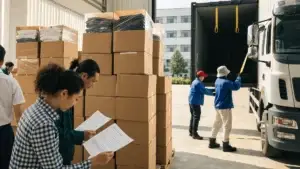
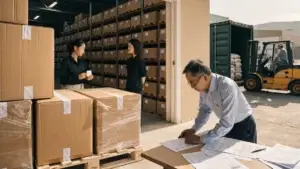
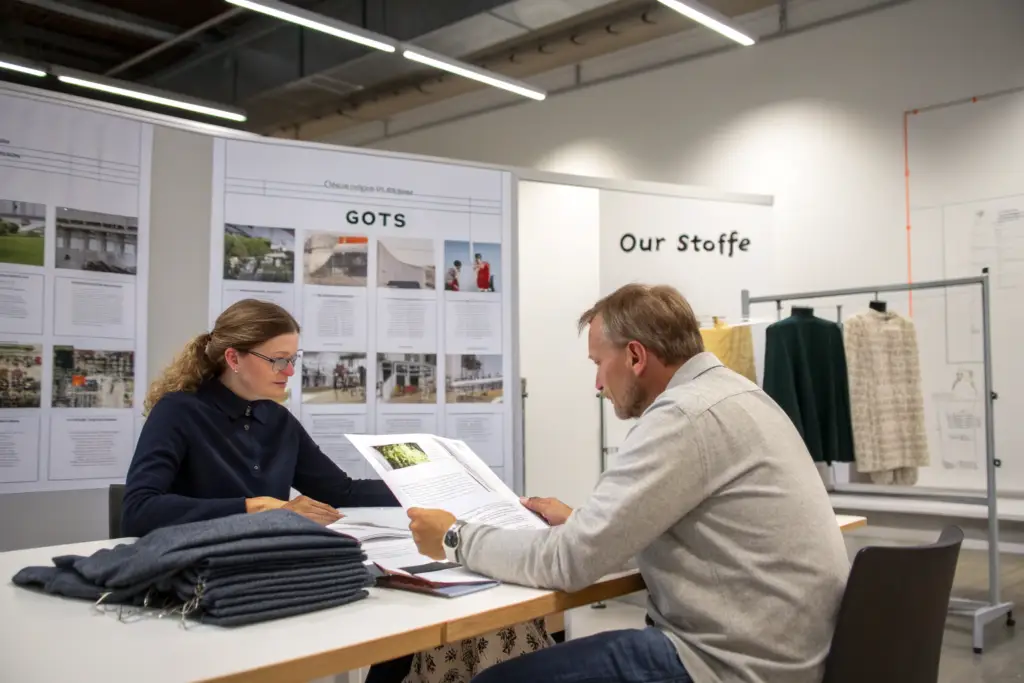
A brand serving the German market should not have to chase their factory for sustainability documentation. The documentation should be a standard deliverable, provided with the shipment or in advance for the brand's own marketing preparation. A complete documentation package includes the fabric certification certificate from the relevant body, the mill audit report showing social and environmental compliance, the fiber origin traceability document, the chemical input summary with OEKO-TEX or ZDHC conformance, and digital assets including certification logos and QR code data for consumer-facing communication.
We provide this documentation as a standard component of our sustainable fabric program. When a brand orders GOTS-certified organic cotton garments, they receive the GOTS transaction certificate, the mill's social compliance audit, the organic cotton origin traceability record, and the OEKO-TEX certification for the dyes and finishes used. This documentation package enables the brand to make specific, verified claims in the German market and to satisfy the documentation requirements of German retailers. This sustainable fabric documentation for apparel brands is not an add-on service. It is an essential part of supplying the German market.
How Can a QR Code on the Hangtag Connect the Consumer to the Supply Chain?
German consumers who care about sustainability want to verify claims themselves. A hangtag that says "GOTS Certified Organic Cotton" is good. A hangtag with a QR code that the consumer can scan to see the full supply chain journey—from organic cotton farm to spinning mill to fabric mill to garment factory—is better. It provides transparency that builds trust and differentiates the brand.
We support our brand partners in implementing QR code traceability. Our production system captures the supply chain data at each stage: the organic certification number of the cotton bale, the GOTS scope certificate of the spinning mill, the dye lot and chemical compliance data from the fabric finishing, and the audit status of our own facility. This data is compiled into a digital product passport format that can be accessed via a QR code printed on the hangtag. The German consumer scans the code and sees the full journey of their garment. This QR code supply chain traceability for apparel is the cutting edge of sustainable fabric marketing in Germany, and early-adopter brands are using it to capture market share from competitors who make claims without offering proof.
Conclusion
The sustainable fabrics gaining traction in the German men's wear market this year share a common DNA: they are certified, they perform as well as or better than conventional alternatives, and they come with the documentation and traceability that the German market demands. GOTS-certified organic cotton in refined weaves has moved beyond basics into tailored shirting and structured trousers. GRS-certified recycled wool blends have achieved performance parity with virgin wool through core-spun yarn innovation, unlocking the circular economy story that resonates with German values. Plant-based fibers like hemp and Tencel-linen blends are capturing summer wear with their natural, biodegradable credentials. And recycled nylon and polyester serve the performance segments where natural fibers cannot meet functional requirements.
At Shanghai Fumao, our sustainable fabric program for the European market is built on the understanding that German sustainability expectations are the highest in the world. We do not offer vague eco-claims. We offer certified fabrics with complete documentation packages, traceable supply chains, and the performance characteristics that German men expect from their clothing. Our brand and distributor partners serving the German market receive not just fabric, but a fully documented sustainability story that they can communicate to retailers and consumers with confidence.
If you are developing a men's wear collection for the German market and need sustainable fabrics that meet the certification, performance, and documentation requirements of German retailers and consumers, let us discuss your specific fabric needs. Contact our Business Director, Elaine, at elaine@fumaoclothing.com. Share your product categories, your target certifications, and your performance requirements. We will present our sustainable fabric options with full documentation, enabling you to build a collection that competes on quality and sustainability in Europe's most demanding market.