You finally found a factory that delivers quality, responds to emails within hours, and actually cares about your brand. The first two orders went smoothly. Then communication slows. Your production slot gets pushed for a larger client. The pricing creeps up without explanation. The partnership you thought you had built was just a transactional honeymoon. I have watched brand owners cycle through this disappointment repeatedly, treating factory relationships like dating apps—swiping to the next supplier the moment friction appears. This short-term mindset guarantees that you never access the deepest value a manufacturer can offer.
Building a long-term partnership with a top clothing manufacture requires moving beyond transactional sourcing into collaborative planning. It demands consistent communication rhythms, shared forecasting data, mutual flexibility during challenges, and a commitment to growing together rather than extracting maximum short-term value. The brands that earn preferred partner status receive priority production scheduling, first access to innovative materials, and pricing stability that transactional buyers never see.
At Shanghai Fumao, our most successful partnerships span five, seven, and even ten years. These brand partners are not our largest accounts by volume. They are the ones who treat us as an extension of their business rather than a vendor to be managed. Let me explain exactly how these relationships are built and maintained, from the first order through years of collaborative growth.
Why Do Transactional Sourcing Relationships Fail Over Time?
The transactional sourcing model is built on a single metric: price per unit. The brand sends an RFQ to five factories. The lowest bidder wins. The factory produces the order as specified. Both parties move on. This model works for commodity products with stable specifications and predictable demand. It fails for custom apparel, where design iteration, material sourcing, quality standards, and delivery timelines require ongoing collaboration. When every order is bid competitively, neither party has an incentive to invest in the relationship. The factory saves its best capacity for loyal partners. The brand never sees the factory's full capability.
Transactional relationships fail because they create misaligned incentives. The brand optimizes for the lowest unit cost on each order. The factory optimizes for maximum margin on a one-time transaction. Neither party invests in process improvement, knowledge sharing, or problem prevention. When challenges arise—a fabric delay, a quality issue, a shipping disruption—the relationship lacks the goodwill reserve needed to solve the problem collaboratively. Each side protects its own interest, and the partnership fractures.

What Signals That a Brand Is Treated as a Transactional Customer?
Factories signal transactional status through specific behaviors. Response times to emails stretch from hours to days. Production schedules are rigid and non-negotiable. The factory shows no curiosity about the brand's sell-through data or customer feedback. The sales contact changes frequently with no introduction. Pricing is presented as take-it-or-leave-it with no cost breakdown. Sample requests are met with reluctance or additional fees that were previously waived.
A brand owner recently told me about his previous factory relationship. He had placed four orders over two years with the same supplier. On the fifth order, he requested a minor modification to the hang tag string material. The factory quoted a $200 "development fee" and extended the lead time by two weeks. He realized at that moment that despite two years and six figures in orders, he was still a transactional customer. The factory had never invested in understanding his brand. Every interaction was a standalone negotiation. This experience drove him to seek a genuine partnership. We onboarded him with a detailed brand briefing session where we learned his customer demographic, his retail channels, his quality standards, and his growth plans. The hang tag modification was handled without a fee because it was a minor adjustment within an established relationship framework. The difference between transactional and partnership treatment is visible in how supplier relationship management practices are applied to your account.
How Does Price-Only Negotiation Damage Long-Term Value?
Beating a factory down to the lowest possible unit price feels like a win in the short term. The brand's margin expands by $0.80 per unit. The order is placed. The factory agrees to the price. But the factory must maintain its own margin. To do so at the lower price, it may substitute a slightly lower-grade thread, reduce the QC sampling rate, or schedule the order on a less experienced production line. The brand may not notice the difference on the first order. On the third order, the quality drift becomes apparent. Returns increase. Customer complaints rise. The $0.80 per unit saved is now being spent many times over on return shipping and lost customer lifetime value.
A sustainable menswear brand we partnered with had previously sourced from a factory that undercut our quote by 15%. After three orders, their return rate had climbed to 14% due to inconsistent sizing and seam failures. They came to us to fix the problem. We analyzed the returned garments and found that the previous factory had reduced stitch density and used a lower-grade thread to preserve their margin at the negotiated price. The brand's short-term savings had created a long-term quality crisis. Our pricing is transparent and consistent. We show the cost breakdown. We explain what each component costs and why. We do not participate in price wars because we know that sustainable apparel pricing reflects real investment in materials, labor, and quality control. Brands that negotiate solely on price eventually receive a product built solely to a price point.
What Communication Practices Distinguish a True Manufacturing Partnership?
Communication frequency and quality are the most reliable indicators of partnership depth. Transactional relationships communicate around orders. An RFQ is sent. A quote is returned. A PO is issued. A shipping notification is sent. The communication is event-driven and minimal. Partnership relationships communicate continuously. The factory shares production updates before the brand asks. The brand shares sell-through data and customer feedback voluntarily. Problems are communicated immediately with proposed solutions, not hidden until they become crises.
Partnership communication is proactive, transparent, and bidirectional. The factory does not wait for the brand to request an update; it provides scheduled progress reports with photos and data. The brand does not treat its sell-through data as proprietary; it shares performance metrics so the factory can optimize production planning. When issues arise, both parties communicate early, focus on solutions rather than blame, and emerge with a stronger process.
How Often Should a Brand and Factory Communicate Outside of Active Orders?
Silence between orders is a missed opportunity. A brand that only contacts the factory when placing a PO is invisible between transactions. The factory's production planners, material sourcers, and quality team are not thinking about the brand's upcoming needs. The brand becomes a surprise that must be squeezed into the schedule rather than an anticipated partner with reserved capacity.
We maintain a regular communication cadence with our long-term partners, even when no order is active. A monthly check-in call reviews upcoming product launches, material availability, and capacity planning for the next quarter. A quarterly business review examines the previous quarter's quality metrics, delivery performance, and any areas for improvement. These meetings are not sales calls. They are collaborative planning sessions. A brand partner recently mentioned during a monthly call that they were considering a new recycled nylon fabric for their outerwear line. We had not yet received an RFQ. Our material sourcing team began researching suppliers immediately. By the time the brand issued the formal RFQ three weeks later, we had three qualified fabric options with test data ready for review. This proactive supply chain collaboration only happens when communication extends beyond the transactional window.
Many brands treat sales data as confidential. They fear that if the factory knows a style is selling well, the factory will raise prices. This fear-based information hoarding prevents the factory from optimizing production and materials planning. A factory that knows a style is a strong performer can reserve fabric inventory, pre-book production capacity, and shorten reorder lead times. A factory kept in the dark cannot prepare.
Share your sell-through data by style and size. Share your marketing calendar so we know when new collections launch and when promotional periods occur. Share customer feedback on fit, fabric feel, and durability so we can adjust production specifications. Share your growth projections so we can plan capacity allocation. A women's dress brand we work with shares a monthly dashboard showing unit sales by style, return rates by reason code, and inventory weeks of supply. This data allows us to forecast their reorder timing and have greige fabric prepared. Their average reorder lead time has dropped from six weeks to three weeks because we can anticipate their needs. This data sharing in supply chain partnerships builds a moat around the relationship that transactional competitors cannot cross. The brand receives faster, more reliable service. The factory receives predictable, growing volume. Both parties win.
How Does Financial Transparency Strengthen the Manufacturing Relationship?
The traditional buyer-supplier relationship treats cost as an adversarial game. The factory hides its true costs to preserve negotiating power. The brand demands price reductions without understanding cost drivers. Both sides suspect the other of extracting unfair margins. This dynamic poisons collaboration. A partnership model treats cost as a shared problem to be solved jointly. The factory opens its books to show the cost breakdown. The brand identifies areas where cost reduction would have the most impact on retail pricing. Both parties work together to engineer cost out of the product without sacrificing quality.
Financial transparency transforms cost from a conflict point into a collaboration point. When the factory shows the brand that fabric represents 55% of the garment cost, the conversation shifts from "reduce your price by 10%" to "how can we reduce fabric cost by 10%?" Solutions emerge that benefit both parties: sourcing alternative mills, adjusting fabric width to reduce waste, pooling fabric orders across styles. The factory maintains its margin. The brand achieves its target cost. The relationship strengthens through shared problem-solving.

What Does an Open-Book Costing Model Look Like in Practice?
An open-book costing model provides a line-item breakdown of every cost component in the garment. The breakdown includes fabric cost per yard and consumption per unit, trim costs per component, cutting labor, sewing labor per operation, finishing and packing labor, quality control allocation, overhead allocation, logistics costs, and the factory's margin. Each line item is transparent and verifiable.
We provide this breakdown as a standard part of our quoting process for long-term partners. A men's shirt brand we work with used our open-book costing to identify that their custom mother-of-pearl buttons were the second-largest cost component after fabric, representing 12% of the total garment cost. We collaborated to source an alternative shell button with a similar aesthetic from a different supplier that reduced the button cost by 35%. The total garment cost dropped by 4%, preserving our margin while achieving the brand's retail price target. This collaborative garment costing transparency would have been impossible in a traditional buyer-supplier relationship where costs are hidden and negotiated adversarially. The brand understood the real cost drivers. We facilitated the cost reduction. Both parties benefited.
How Should Both Parties Handle Unexpected Cost Increases?
Cotton futures spike. Ocean freight rates surge. A key trim supplier raises prices. In a transactional relationship, the factory absorbs the increase silently and looks for ways to cut corners, or it surprises the brand with a mid-production price increase that destroys trust. In a partnership, the factory communicates the cost increase immediately with documentation. The brand and factory then decide together how to handle it.
Last year, a freight rate surge during peak season threatened to add $0.45 per unit to a large order for a women's knitwear brand. We notified the brand the day we received the freight quote, shared the carrier's rate notification, and proposed three options: absorb the increase jointly by splitting it, delay the shipment by two weeks to access a lower rate, or switch to a different carrier with a slightly longer transit time. The brand chose to split the increase with us because the launch date could not move. Both parties absorbed $0.22 per unit, preserving the partnership and the launch timing. This supply chain cost management approach is only possible when financial transparency and mutual commitment exist. A transactional factory would have shipped at the higher rate and invoiced the brand after delivery, or absorbed the cost and reduced quality. Neither outcome serves the long-term relationship.
How Do Collaborative Growth Plans Benefit Both Factory and Brand?
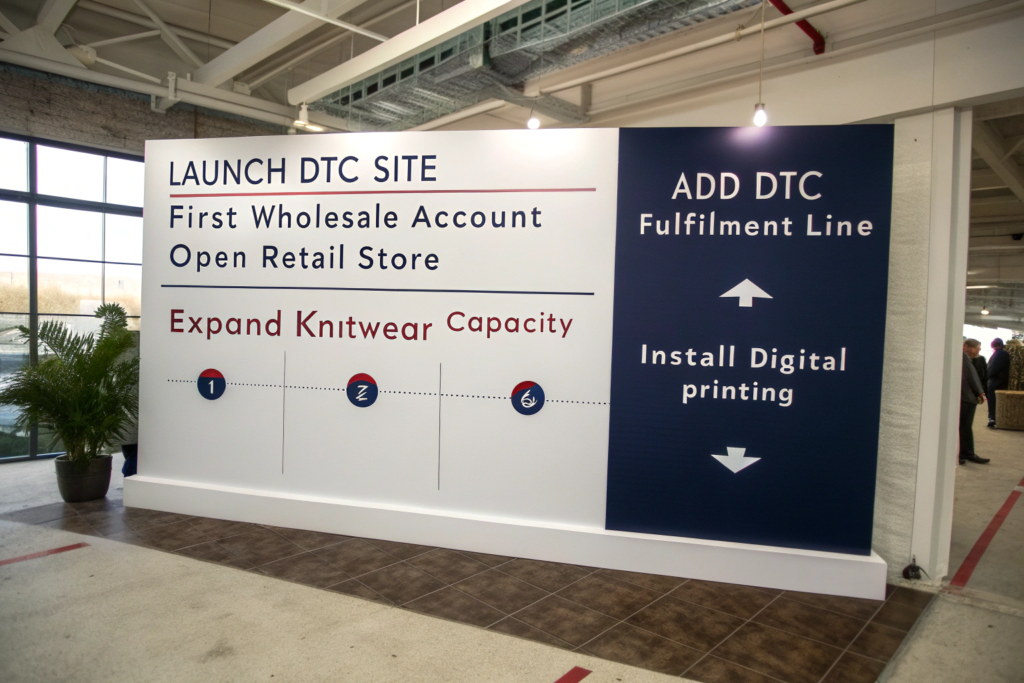
A factory that does not know its partner's growth plans cannot prepare to support them. The brand outgrows the factory's capacity or capability, and the partnership ends not because of failure but because of misalignment. Collaborative growth planning aligns the brand's expansion trajectory with the factory's investment roadmap. The brand shares its three-year vision. The factory commits to building the capabilities needed to support that vision. Both parties grow together, and the switching costs that would be incurred by changing partners become a powerful retention force on both sides.
Collaborative growth planning involves annual strategy sessions where the brand shares revenue projections, new product categories under consideration, and channel expansion plans. The factory responds with a capability roadmap: new equipment investments, additional production line allocation, new material sourcing partnerships, and enhanced logistics services. Both parties commit to mutual investment, creating a partnership that deepens in value each year rather than commoditizing over time.
How Does a Factory Invest in a Brand's Specific Growth Trajectory?
A brand partner informed us two years ago that they planned to launch a children's wear line to complement their successful women's collection. We had limited children's wear experience at that time. Rather than lose the partner to a children's wear specialist, we invested in building the capability. We hired a children's wear pattern maker with fifteen years of experience. We sourced CPSIA-compliant trim suppliers. We trained a production line on children's wear safety requirements and smaller-scale construction techniques.
The investment took six months and significant resources. When the brand launched their children's line, we were ready. The collection sold well, and the brand has since expanded children's wear to 30% of their total revenue. We are now their sole manufacturing partner across both categories. This mutual commitment created a partnership that is deeply integrated and difficult for competitors to disrupt. The brand knows we invested specifically for them. We know the brand's loyalty is earned through demonstrated commitment. This manufacturing partnership development model is the opposite of transactional sourcing. It requires a long-term perspective from both parties, but the resulting relationship produces value that short-term sourcing strategies can never access.
What Joint Innovation Projects Strengthen the Partnership Bond?
Co-developing a new fabric, a new sustainable packaging solution, or a new production technique turns the factory and brand from buyer-supplier into co-creators. The shared intellectual and financial investment in innovation creates a bond that transactional relationships lack. Both parties have skin in the game. Both parties share in the success.
A premium activewear brand we partner with approached us with a challenge: their customers wanted a legging fabric that felt cool to the touch during workouts but did not sacrifice compression. We co-developed a nylon-spandex fabric with a flat fiber cross-section and a permanent hydrophilic finish. The development took four months and involved eight fabric iterations. We split the development costs with the brand. The resulting "Cool-Touch" fabric became their signature product line, contributing 25% of their annual revenue. They have exclusivity on the fabric formulation within their market segment. This collaborative apparel innovation deepened the partnership beyond pricing and delivery metrics. The factory and brand share a success story that neither could have achieved alone.
Conclusion
Building a long-term partnership with a top clothing manufacture is not about finding the perfect factory and then coasting. It is about consistently investing in communication, transparency, and mutual growth. The brands that earn preferred partner status are not necessarily the largest. They are the ones who share their data, communicate proactively, negotiate costs collaboratively, and plan their growth in alignment with the factory's capability roadmap. They treat the factory as a strategic asset rather than a cost center.
The factory reciprocates with priority scheduling, first access to innovative materials, pricing stability, and a level of care during production that transactional orders never receive. When problems arise—and in garment manufacturing, problems always arise—the partnership has a reserve of goodwill and a track record of collaborative problem-solving that turns a potential crisis into a reinforced bond.
At Shanghai Fumao, we measure our success not by the number of new clients we onboard each quarter, but by the length and depth of our existing partnerships. Our longest-standing brand partners have been with us for over a decade. They have grown from small direct-to-consumer startups into multi-million-dollar brands. We have grown our capabilities alongside them. That is the partnership model we believe in.
If you are ready to move beyond transactional sourcing and build a manufacturing partnership that compounds in value year after year, let us start with an open conversation about your brand's vision, challenges, and growth plans. Contact our Business Director, Elaine, at elaine@fumaoclothing.com. Let us explore what we can build together over the next five years, not just the next purchase order.