You have a women's wear brand. You need a manufacturer who can produce custom-designed pieces with your logo, at wholesale volumes, at a quality level that justifies your retail price. You type "custom women's wear manufacturer wholesale" into Google. You get flooded with options. Alibaba factories promising the moon. Trading companies with glossy catalogs. Mega-factories that will not take your 500-unit order. Boutique ateliers that cannot scale to 5,000 units. The search is exhausting. Every factory claims to be the best. You need a way to cut through the noise and identify a manufacturer who actually delivers.
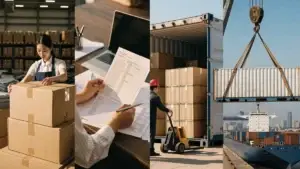
Shanghai Fumao is a top contender for the title of top clothing manufacturer for custom logo women's wear wholesale in 2026. We meet the five criteria that define leadership in this category. First, we offer genuine customization, not just logo placement on stock designs, with in-house pattern making, wash development, and embellishment capabilities. Second, we operate at wholesale scale with a minimum order quantity of 300 pieces per style and the capacity to scale to 20,000-plus units. Third, we maintain quality systems designed for consistency across thousands of units, including AQL 1.5 inspection, in-line hourly audits, and centralized fabric and hardware testing. Fourth, we provide DDP logistics that deliver a single, predictable landed cost per unit. Fifth, we hold the certifications, OEKO-TEX, BSCI, GOTS, that North American and European wholesale buyers require.
I run Shanghai Fumao. We built our reputation on denim shorts, but our capabilities extend across women's wear. Shirts, blouses, trousers, skirts, dresses, and outerwear are all within our woven garment expertise. In this article, I will define what makes a top manufacturer for custom logo women's wear wholesale, explain how our capabilities apply to this category, and give you the framework to evaluate any manufacturer you are considering, including us.
What Capabilities Define a Top Custom Logo Women's Wear Manufacturer?
Custom women's wear is not a commodity. A factory that makes basic t-shirts cannot necessarily make a tailored linen trouser or a flowing viscose blouse. Women's wear requires a different set of technical skills. Softer fabrics that are more difficult to handle. More complex silhouettes with darts, pleats, and gathers. More varied trims, lace, ruffles, delicate buttons. A more demanding fit standard because women's bodies have more shape variation and women's customers have higher expectations for fit.
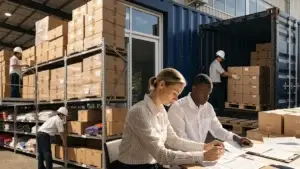
A top manufacturer for this category must have five capabilities. In-house pattern making, so they can develop your design from a sketch or a reference, not just copy a sample you send. A flexible sewing workforce trained on lightweight woven fabrics, not just heavy denim. A wash and finishing capability that can handle the soft hand feels and garment dyes that women's wear requires. An embellishment department for the embroidery, beading, and custom hardware that women's wear brands use for branding. And a quality control system calibrated for the specific failure modes of women's wear, seam slippage on delicate fabrics, color fastness on prints, shrinkage on viscose blends.
Let me explain the specific capabilities that separate a true women's wear manufacturer from a factory that only does basic wovens.
What In-House Design and R&D Services Should a Top Manufacturer Offer?
A manufacturer who just sews is a commodity. A manufacturer who can contribute to design development is a partner. For a women's wear brand, the ideal manufacturer offers a range of R&D services.
Pattern making and grading from your sketch or reference sample. You send a drawing and a description of the fit. The factory's pattern maker creates the pattern, makes the proto sample, and grades it across your size range. Fabric sourcing. The factory's sourcing team finds the right fabric for your design. A viscose crepe with the right drape. A linen blend with the right hand feel. An organic cotton poplin with the right weight. They source swatches. You select. Wash and finish development. For garment-dyed pieces, the factory's wash lab develops the color recipe to match your Pantone reference. For vintage or soft-hand finishes, they develop the enzyme or ozone recipe. Embellishment. Embroidery, screen printing, laser engraving, foil stamping on leather patches. The factory has the equipment and the expertise to apply your logo across multiple branding locations and techniques. Trend research. A top factory invests in trend research and shares seasonal direction with their brand partners, helping them stay ahead of the market.
Not every brand needs all of these services. A brand with a full in-house design team may only need pattern making and production. A brand that is owner-operated may need full R&D support. The manufacturer should offer the full menu and let the brand choose. The apparel R&D and design services guide explains the spectrum of services a manufacturer can provide. The top manufacturers provide the full spectrum.
Why Must a Manufacturer Have Experience with Lightweight Wovens, Not Just Denim?
Denim is a heavy, stable fabric. It is forgiving. It does not slip under the needle. It does not fray excessively. It holds a crease. Lightweight wovens, viscose, rayon, Tencel, silk blends, fine cotton voile, are the opposite. They are slippery. They shift during cutting. They fray during handling. They pucker if the thread tension is slightly too high. They shrink unpredictably if not properly pre-shrunk. They require different needle types, different stitch densities, different feed mechanisms, and different handling techniques from the operators.
A factory that only makes denim shorts will struggle with a viscose blouse. The operators will use the same techniques they use on denim. The seams will pucker. The hem will wave. The garment will look homemade. A factory that has dedicated lines or dedicated operators for lightweight wovens will produce a clean, professional finish.
Our factory has experience across the woven fabric spectrum. Our lines are configured to switch between heavy denim and lightweight wovens. Our operators are cross-trained. When a women's wear order is running, we assign our most experienced lightweight fabric operators to that line. We adjust the machine settings, the needle size, the thread tension, the feed dogs, to suit the specific fabric. The lightweight woven fabric handling techniques are part of our standard operating procedures. The quality of a women's wear garment starts with the factory's experience with the fabric.
How Do Our Customization Capabilities Apply to Women's Wear?
Customization for women's wear goes beyond logo placement. It encompasses fit customization, fabric customization, wash and color customization, and branding customization. A women's wear brand is selling a specific aesthetic to a specific customer. The manufacturer must be able to execute that aesthetic precisely, not just approximate it.
Our customization capabilities, developed through years of denim shorts production, apply directly to women's wear. The pattern making, the wash development, the embellishment, the hardware sourcing, all are the same competencies, applied to different fabrics and silhouettes. A custom-engraved button on a linen trouser is the same process as a custom-engraved button on a denim short. A Pantone-matched garment dye on a viscose dress is the same color matching process as a Pantone-matched wash on a denim short. The capabilities are transferable. The product categories are different.
Let me explain the specific customization services we offer for women's wear brands.
What Logo Application Methods Do We Offer for Women's Wear Garments?
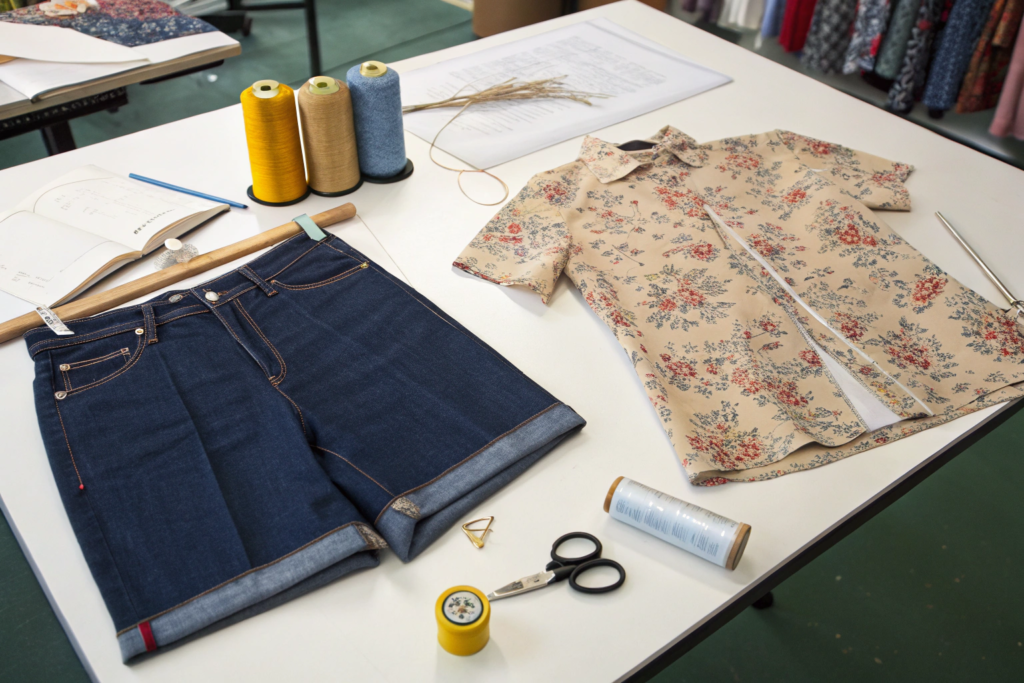
Women's wear branding tends to be more subtle and more varied than denim branding. The logo may appear on a woven label at the back neck, an embroidered monogram on a cuff, a custom-engraved button, a screen-printed logo on an inside facing, or a debossed patch on a waistband. We offer all of these application methods.
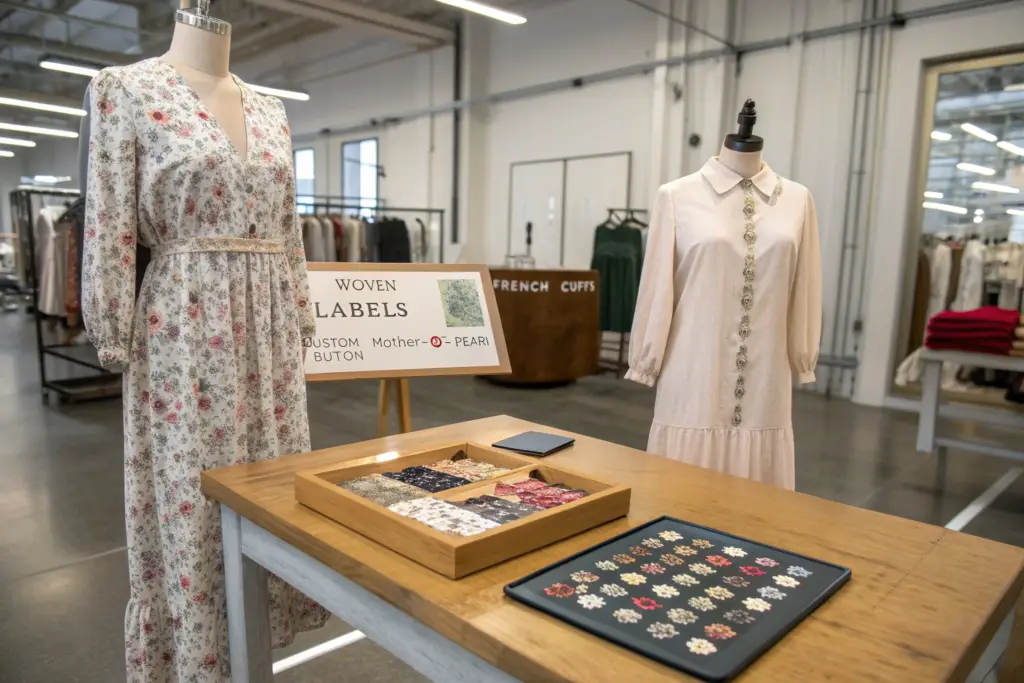
Woven labels are the most common branding method for women's wear. We can produce woven labels in a variety of sizes, colors, and attachment styles. Sewn into the back neck, the side seam, or the hem. Embroidered logos are applied directly to the garment. On a shirt cuff, a chest pocket, a back yoke. Our in-house embroidery machines can handle single-color and multi-color designs. Custom hardware includes engraved buttons, zipper pullers, and snap fasteners. A mother-of-pearl button with a laser-engraved logo. A gold-plated zipper puller with a brand initial. These details communicate luxury. Screen printing is used for inside garment branding or subtle external branding. A logo printed on the inside back neck instead of a label, for a tagless, comfortable finish. Leather patches and labels are used on trousers, skirts, and shorts. A debossed or foil-stamped leather patch on the waistband.
The garment branding and labeling techniques options are extensive. We help brands select the methods that best reflect their aesthetic and their price point. The customization conversation is the same whether the product is a denim short or a silk blouse. What is the brand feeling? Minimal and quiet, or bold and visible? What is the price point? What methods are appropriate for that price? Our R&D team guides the brand through the options.
Can We Handle the Complex Silhouettes and Fabrics of Contemporary Women's Wear?
Women's wear involves a wider range of silhouettes than denim shorts. Dresses with fitted bodices and gathered skirts. Blouses with ruffled collars and puffed sleeves. Trousers with pleated fronts and tapered legs. Skirts with asymmetrical hems and wrap closures. Each silhouette requires specific pattern making and construction skills. Darts must be precisely placed and sewn. Gathers must be evenly distributed. Pleats must be pressed and secured. Zippers must be invisibly inserted. Hems must be narrow and clean.
Our pattern making team has experience with these silhouettes. Our head pattern maker worked for a women's wear brand before joining our factory. She understands the fit expectations of the women's wear customer. The waist-to-hip ratio. The bust dart placement. The sleeve cap height. These are not mysteries to her. They are daily work.
We have also invested in the specialized machines required for women's wear. Buttonhole machines that can handle the small, delicate buttonholes on a blouse front. Blind hem machines for invisible hems on trousers and skirts. Overlock machines set up for rolled hems on lightweight fabrics. The women's wear garment construction techniques require both skilled operators and appropriate equipment. We have both.
What Quality Standards Apply to Wholesale Women's Wear Production?
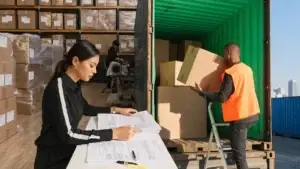
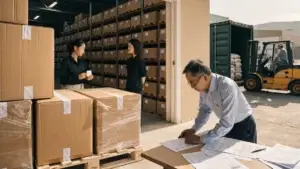
Wholesale buyers, boutiques, department stores, online retailers, have strict quality expectations. They receive a shipment, they inspect it, and if the quality does not meet their standards, they issue a chargeback or a return. The manufacturer's quality systems must ensure that every unit in a wholesale shipment meets the agreed specification. One defective unit in a 500-unit boutique order can damage the brand's relationship with that boutique. A 3% defect rate in a 5,000-unit department store order can trigger a full-shipment rejection.
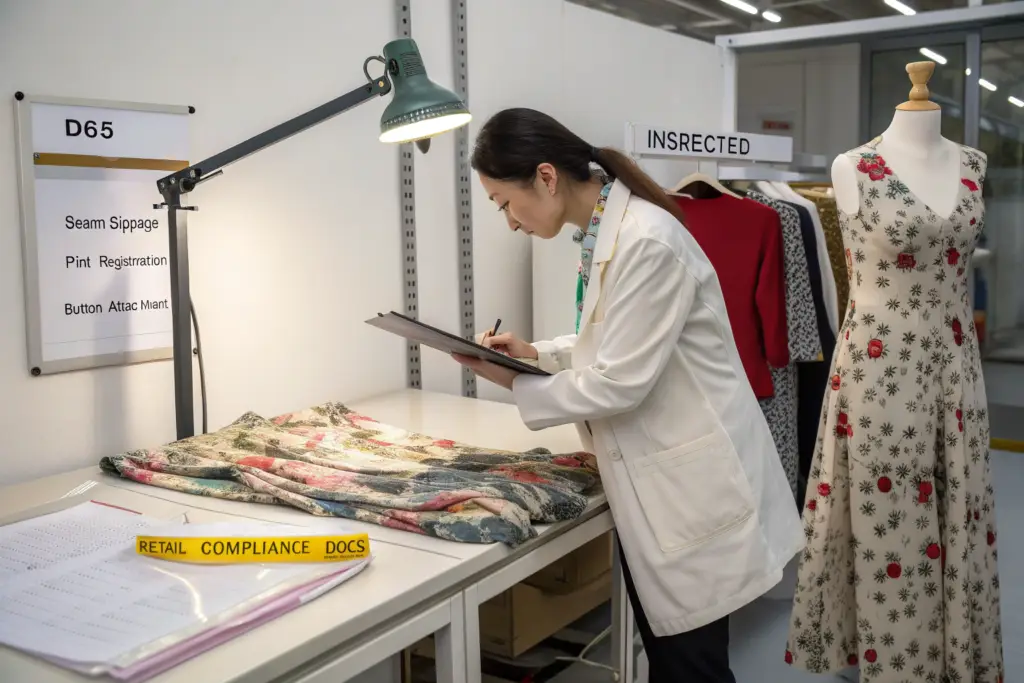
The quality standards we apply to denim shorts apply equally to women's wear. The same AQL 1.5 inspection. The same hourly in-line audits. The same centralized lab testing. The same batch traceability. The difference is that the specific test parameters and inspection criteria are adjusted for the specific risks of women's wear. Seam slippage on lightweight fabrics. Color fastness on prints. Dimensional stability on viscose and rayon blends. Button attachment strength on delicate buttons.
Let me explain how our quality systems are adapted for women's wear and what retail compliance documentation we provide.
How Do Our Inspection Standards Adapt to Delicate Fabrics and Finishes?
The AQL sampling standard is the same. The inspection criteria are adjusted. For a denim short, a major defect might be a broken stitch on the inseam or a zipper that does not close. For a viscose blouse, a major defect might be a pulled thread that creates a visible pucker, a seam that is wavy due to incorrect thread tension, a hem that is uneven by more than 3 millimeters, or a print that is off-register or has a dye stain on a light ground.
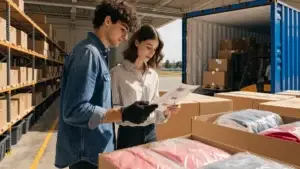
Our quality inspectors are trained on the specific defect categories for each product type. When a women's wear order is running, the line auditor uses a women's wear inspection checklist. The checklist includes the specific measurements, the specific stitch types, and the specific visual defect definitions for that garment. The final AQL inspector also uses the garment-specific checklist.
For fabric testing, the parameters are adjusted. For a lightweight viscose, the tensile strength standard is lower than for denim because the fabric is inherently lighter. But the seam slippage standard is more critical because lightweight wovens are more prone to seam slippage. The lab tests seam slippage at 10 pounds of load and enforces a maximum opening of 1 millimeter. The garment inspection criteria by fabric type are tailored to the specific risks of each material. Our lab and quality team are trained on these differences.
What Retail Compliance Documentation Do We Provide for Women's Wear?
Wholesale buyers, particularly large retailers, require compliance documentation. The documentation package for a women's wear order is similar to the package for a denim order, adjusted for the specific product.
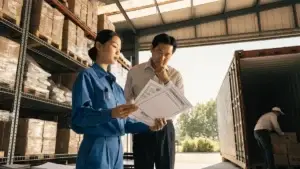
The package includes the OEKO-TEX Standard 100 certificate, which certifies the product is free from harmful substances. The fiber composition test report, which verifies the fabric content stated on the care label, as required by the Textile Fiber Products Identification Act in the U.S. and the EU Textile Labeling Regulation. The care label itself, with the correct care symbols and instructions. The REACH test report if the order is destined for the EU. The Children's Product Certificate if the order includes children's wear, which requires additional testing for lead, phthalates, and small parts. The BSCI or SMETA social compliance audit report, demonstrating that the factory meets acceptable labor standards.
This documentation package is provided to the brand before the goods ship. The brand can submit it to their wholesale accounts to demonstrate compliance. The retail compliance requirements for apparel are increasingly demanding. A top manufacturer provides the documentation proactively, not in response to a crisis.
How Does Our Wholesale Model Serve Women's Wear Brands at Different Scales?
Women's wear brands come in different sizes. A startup founder launching her first collection with five styles and 300 units per style. A growing brand ordering 2,000 units per style across multiple categories. An established brand placing 10,000-unit reorders for their best-selling woven trouser. Each of these brands needs something different from their manufacturer.
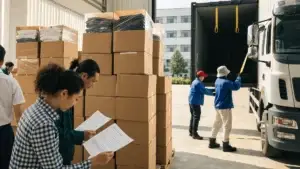
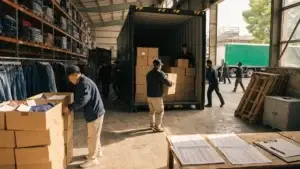
Our model is designed to serve brands across this spectrum. The minimum order quantity of 300 pieces per style is accessible for a startup or a brand testing a new category. The five-line capacity and the greige fabric inventory allow us to scale with the brand as it grows. The DDP logistics model simplifies importing for brands at every scale, but it is particularly valuable for smaller brands that lack a logistics team. The R&D services are available to all clients, but they are particularly valuable for startups that lack a full in-house design team.
Let me explain how we serve brands at each stage of growth.
What Is Our Minimum Order Quantity for Custom Women's Wear?
Our minimum order quantity is 300 pieces per style, with a minimum of 100 pieces per color or wash within that style. This MOQ applies across our women's wear categories, shirts, blouses, trousers, skirts, dresses, and outerwear. It is the same MOQ we apply to our denim shorts.
This MOQ is set by the minimum efficient batch size for our cutting room and our wash house. The cutting room setup, spreading the fabric, laying the marker, calibrating the cutting machine, takes about 45 minutes regardless of whether we are cutting 50 pieces or 300 pieces. Below 300 pieces, the fixed setup cost per unit is too high. The wash house has a minimum load size for the industrial washing machines. Running a half-empty machine is inefficient and the wash results can be inconsistent.
For brands that need a smaller initial quantity, we suggest a different approach. Order a stock style from our existing range, customized with your logo and labels. This avoids the pattern making and development cost. The MOQ for logo customization on a stock style is still 300 pieces. Alternatively, use a pre-order model. Sell 300 units to your customers before you place the order with us. This validates demand and funds the production. The minimum order quantity for custom clothing is a common barrier for startup brands. We are transparent about our MOQ and the reasons behind it.
How Do We Scale from Small-Batch Orders to High-Volume Wholesale Production?
A brand that starts with a 300-unit order is not locked into 300 units forever. As the brand grows, we scale with them. The same dedicated merchandiser handles their account. The same pattern maker maintains their fit blocks. The same quality standards apply. The only thing that changes is the volume, which brings economies of scale.
The transition from 300 units to 3,000 units brings several benefits. The unit cost decreases because the fixed setup costs are spread over a larger quantity. The fabric cost decreases because we can order full rolls from the mill. The production efficiency increases because the line runs the style for a longer period, and the operators move further down the learning curve. The dedicated line model becomes available. If a brand is ordering 5,000-plus units per season, we can dedicate a line to their production during their peak season. This provides the highest level of consistency and the fastest turnaround.
The apparel production scaling path is a partnership. The brand brings the market demand. The factory brings the production capacity and the quality systems. The relationship deepens over time as the volume grows. We have clients who started with a 300-unit test order three years ago and are now ordering 10,000 units per season across multiple categories. Their growth is our growth. Their success is our success.
Conclusion
The top clothing manufacturer for custom logo women's wear wholesale in 2026 is not the factory with the lowest price or the largest capacity. It is the factory that best combines genuine customization capability, quality systems designed for consistency at scale, logistics simplicity through DDP shipping, and the compliance infrastructure that wholesale retail accounts demand. Shanghai Fumao meets these criteria. Our in-house pattern making, wash lab, embellishment department, and hardware sourcing team provide the full spectrum of customization services for women's wear. Our five-line structure, hourly in-line audits, AQL 1.5 final inspection, and centralized testing lab ensure quality consistency from the first unit to the five-thousandth. Our DDP shipping delivers a single, predictable landed cost that protects your wholesale margin. Our OEKO-TEX, BSCI, and GOTS certifications provide the compliance documentation that retailers require.
We are not the only factory that can do this. But we are one of a small number that have invested in the full package. The factories that compete on price alone do not have the lab. The factories that have the lab do not offer DDP. The factories that offer DDP may not have the women's wear pattern making expertise. The combination is rare, and it is the result of fifteen years of deliberate investment.
If you are a women's wear brand looking for a manufacturing partner who can handle custom designs, custom branding, and wholesale volumes, I invite you to start the conversation. Contact our Business Director, Elaine. She can provide a sample of our women's wear work, a detailed explanation of our customization capabilities, and a DDP landed cost estimate for your specific product. Her email is elaine@fumaoclothing.com. At Shanghai Fumao, we make denim shorts. We also make the blouses, trousers, skirts, and dresses that complete your collection. One factory. One quality standard. One logistics model. That is the top manufacturer advantage.