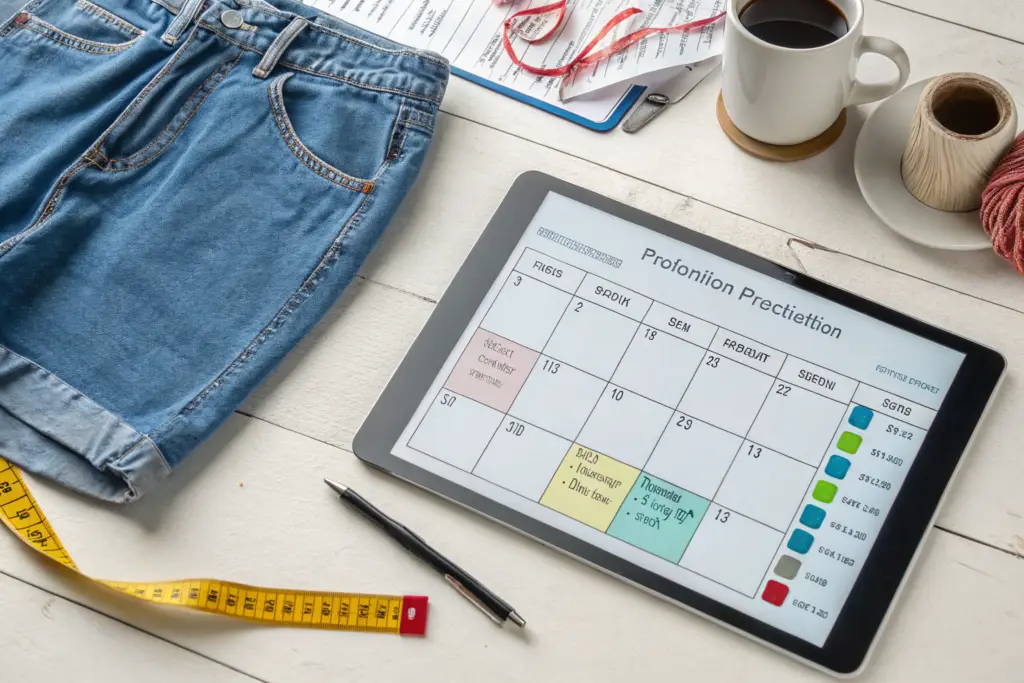
I'm going to give you the direct answer right at the top, because I know you're probably reading this while staring at a retail calendar and counting backward from your launch date. For a standard custom denim short with a moderate wash, our lead time is 30 to 45 days from order confirmation to ex-factory shipment. For a complex wash involving multiple stages, hand-spraying, or specialty fabric, the lead time extends to 45 to 60 days. For a first-time development order that includes sampling, the total timeline from tech pack to shipment is typically 60 to 75 days. These are not sales-rep promises that stretch once the order is placed. These are production-verified numbers that I track personally across every order that leaves my factory. I'm Richard, the owner of Shanghai Fumao. In this article, I'll break down exactly where the time goes, why some orders move faster than others, and how you can shave days off the timeline without compromising quality.
How Long Does a Standard Denim Shorts Order Take from Start to Finish?
Let me walk you through the 45-day standard order, day by day, so you understand exactly what happens and why each stage takes the time it does. This is not a theoretical timeline. This is the actual workflow I watch every week from my office window overlooking the factory floor.
The clock starts ticking when you send the purchase order and the deposit payment lands in our account. Day 1 is the order confirmation. The account manager loads the order into our production management system, and the countdown begins. Days 1 through 7 are for fabric procurement. We don't start from zero here. For most standard denim qualities, we hold greige fabric inventory in our warehouse. The fabric is pulled, inspected for defects, and sent through our pre-wash shrinkage testing. If we're sourcing a specialty denim that we don't stock, fabric procurement extends to 10 to 14 days, which is why I ask clients to confirm fabric choices early.
Days 8 through 12 are for cutting. The CAD pattern is loaded from the approved sample file. The automatic spreading machine lays down the denim plies. The cutting machines trace the pattern pieces. The cut bundles are labeled, tied, and moved to the sewing line staging area. A cutting QC check verifies that the panel shapes match the pattern spec. Days 13 through 30 are for sewing. This is the longest phase, and it's where the bulk of the labor happens. The bundles move through the sewing cells: pocket assembly, fly and waistband, side seams, hemming, topstitching. Inline QC inspects at each checkpoint. The finished shorts are collected at the end of the line.
Days 31 through 37 are for the wash. The shorts are loaded into the industrial washing drums. The wash recipe—whether a simple enzyme rinse or a multi-stage stone wash—runs through its programmed cycles. The shorts are dried, checked for wash consistency against the approved sample, and moved to the finishing area. Days 38 through 42 are for finishing and final QC. Buttons are attached. Rivets are set. Labels are sewn in. Loose threads are trimmed. Each pair is pressed. The AQL final inspection is conducted by our QC team. Any defects found are repaired on the spot. Days 43 through 45 are for packing and loading. The shorts are folded, bagged, cartoned, labeled with shipping marks, and palletized. The container is loaded, or the cartons are dispatched to the freight forwarder. The ex-factory date is recorded. The order is shipped.
This 45-day rhythm is what we aim for, and we hit it on over 90% of our standard orders. The timeline is tight but not rushed. It allows for the natural pace of a sewing line that's running at optimal speed, not frantic overtime. When factories quote you 20 or 25 days, they're either cutting corners on quality inspection, running unsustainable overtime, or promising something they can't deliver.
What Stages of Production Consume the Most Calendar Days?
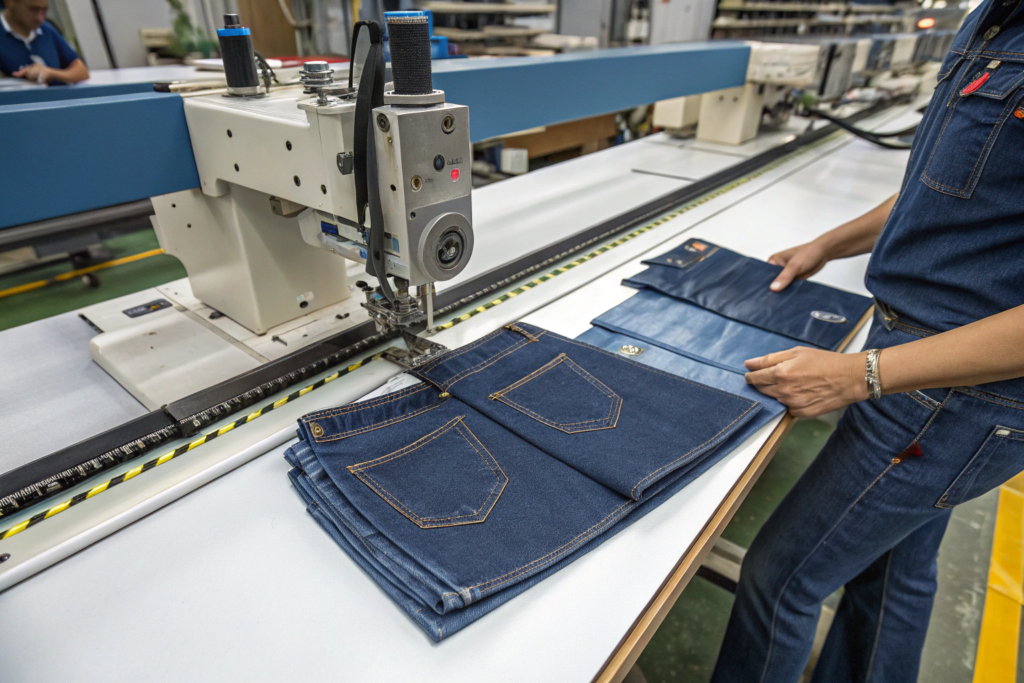
The two biggest time consumers are sewing and fabric procurement. Sewing eats 18 working days on a standard order because it's a manual, operation-by-operation process. A pair of five-pocket denim shorts goes through roughly 25 to 30 separate sewing operations from the first pocket stitch to the final hem. Each operation takes between 30 seconds and two minutes. Multiply that by a few thousand units, and you have a multi-week sewing phase. You can't compress this stage without adding more sewing stations, which we do for large rush orders, but it comes at a cost premium.
Fabric procurement is the wildcard. When the fabric is in our warehouse, it takes two days to pull, inspect, and pre-wash. When the fabric has to be ordered from the mill, it takes 7 to 14 days for weaving, dyeing, finishing, and delivery. This is the single biggest variable in the timeline, and it's the stage most affected by your decisions as a buyer.
Here is a breakdown of the calendar days by stage for a standard 5,000-unit denim short order with a moderate enzyme wash:
| Production Stage | Calendar Days | Variables That Can Extend This |
|---|---|---|
| Fabric Procurement (from stock) | 2 - 3 days | Specialty denim from mill adds 7-14 days |
| Fabric Inspection & Pre-Wash | 2 - 3 days | Shrinkage issues require re-testing |
| Cutting | 3 - 5 days | Complex pattern with many pieces extends this |
| Sewing | 16 - 20 days | Intricate construction adds 3-5 days |
| Wash (Moderate Complexity) | 5 - 7 days | Multi-layer wash adds 5-10 days |
| Finishing & Trims Attachment | 3 - 4 days | Custom hardware delays can bottleneck here |
| Final QC & Packing | 3 - 5 days | Failed AQL requires 100% re-inspection |
| Total Standard Lead Time | 30 - 45 days |
The finishing and QC phase looks short on paper, but it's where many factories stumble. A failed AQL inspection triggers a 100% re-inspection, which can add two to three days. A missing trim—a custom button that didn't arrive on time—can halt the entire finishing line. I manage this risk by ordering trims at the same time as fabric, so they arrive well before they're needed. It's a simple sequencing discipline, but you'd be surprised how many factories order trims only after sewing begins, then act surprised when the buttons aren't there on finishing day.
How Do We Handle Rush Orders Without Sacrificing Quality?
A rush order is a request to deliver in less than our standard 30-day minimum. I get these calls regularly: a brand owner whose previous supplier failed at the last minute, a distributor who won a surprise retail placement, a startup whose launch campaign went viral and needs a fast reorder. I say yes to rush orders selectively, and only when I can maintain quality.
The way we compress a timeline is not by asking workers to sew faster. A rushed operator makes mistakes, and those mistakes cost more time in rework than the speed saves. Instead, we compress the timeline by eliminating the white space—the gaps between stages where work sits waiting for the next stage to begin.
On a standard order, there might be a one-day buffer between cutting completion and sewing start, and another buffer day between sewing and wash. These buffers are safety margins that absorb minor delays. On a rush order, we remove the buffers. We also run the order on a dedicated line that doesn't switch to other styles, so there's no changeover downtime. And we schedule the wash house to process the order immediately as sewing finishes, even if that means running a late shift.
The fastest we've ever delivered a denim short order was 22 days for a 3,000-unit reorder of a previously approved style with stocked fabric. That's a record, not a promise. The conditions were perfect: the pattern was already digitized and approved, the fabric was on the shelf, the trims were in stock, and the wash recipe was dialed in from a previous run. The sewing line ran on a dedicated schedule with no interruptions. The wash house ran the batch through immediately. The QC team worked extended hours to inspect and pack. The order shipped on day 22.
I charged a 15% rush surcharge for that order. The surcharge covered the overtime premiums for the sewing operators and the wash house technicians, plus the opportunity cost of displacing other scheduled work. The client was happy to pay it because the alternative was losing a retail shelf placement that was worth far more than the surcharge. That's the calculus on rush orders: the surcharge is real, but the cost of a missed market opportunity is almost always higher.
A word of caution: I will not accept a rush order for a first-time development project. Sampling cannot be rushed. The fit must be approved. The wash must be developed and signed off. Trying to compress a development timeline creates the very quality risks that rush-order clients are usually trying to escape from a failed supplier. For a first-time order, I ask for the full development timeline. For a reorder of an approved style, I can work with urgency.
What Factors Can Extend or Shorten Your Custom Denim Timeline?
Your lead time is not a fixed number. It's a function of the decisions you make during the design and development process. Some brands consistently receive their orders in 35 days. Others, ordering similar volumes, wait 60 days. The difference is rarely the factory's efficiency. It's the choices the brand made about fabric, wash, trims, and approval speed.
The single biggest accelerator is a frozen spec. When a client finalizes every detail—fabric, wash, trims, measurements, labels—before the purchase order is issued, the production timeline runs smoothly. There are no mid-production change requests that disrupt the workflow. The sewing line doesn't stop while the pattern room adjusts a pocket dimension. The wash house doesn't re-run a batch because the client decided they want a slightly lighter tint. A frozen spec is the greatest gift a client can give to a production schedule.
The single biggest decelerator is custom fabric. If you want a denim that doesn't exist in any mill's stocked inventory—a specific weight, a specific stretch percentage, a specific indigo shade, a specific slub character—the mill has to develop it from scratch. That development process takes 3 to 5 weeks. The mill spins a trial yarn, weaves a sample meterage, sends it to us for evaluation, and we send it to you for approval. If the first trial isn't right, the cycle repeats. Custom fabric development is a noble pursuit, and it can create a genuinely unique product, but it adds a month or more to the timeline. I've seen brands delay their launch by an entire season because they fell in love with a custom fabric that took three development rounds to perfect.
Another major timeline factor is the complexity of your size run. A brand that offers sizes XS through 3XL, with a full grade across seven sizes, requires more cutting setup and more sewing line configuration than a brand offering S, M, L, XL. Each additional size adds grading time in the pattern room and increases the number of marker variations in the cutting room. The impact is modest—maybe an extra day or two—but it's real.
How Does Wash Complexity Impact the Production Calendar?
Wash complexity is the second biggest timeline variable after fabric. I've written extensively about our wash development process in another article, but let me focus specifically on the calendar impact here.
A simple enzyme wash or light stone wash adds about 5 to 7 days to the production timeline. The shorts go into the washing drums, the standard recipe runs, the shorts come out, dry, and move to finishing. This is a one-shot process with a predictable duration.
A multi-layer wash, like the vintage tint or micro-acid haze I described in earlier articles, adds 10 to 15 days. Each layer of the wash—the base enzyme treatment, the tint application, the partial stone wash, the localized spray, the final softening—requires a separate pass through the washing or spray equipment. Between passes, the shorts often need to dry to a specific moisture content for the next chemical application to work correctly. Drying time is a fixed physical constraint; you can speed up a sewing machine by adding operators, but you can't speed up a dryer without scorching the fabric.
The most time-intensive washes are the ones that require manual hand-spraying. Each pair of shorts is individually sprayed by a skilled artisan. An artisan can spray maybe 150 to 200 pairs per day, depending on the complexity of the pattern. For a 5,000-unit order with a detailed hand-sprayed fade, that's 25 to 33 working days of spray labor, just for the wash stage. I discussed this in detail in our article on rare wash styles. The time is irreducible if you want the authentic, organic look of a hand-sprayed fade. You can't automate it without losing the character.
When a client asks me about wash complexity during the design phase, I always present the timeline trade-off. "This wash will give you a unique competitive advantage, and it will add two to three weeks to your lead time. Can your launch calendar accommodate that?" Some brands say yes, and we plan accordingly. Some brands adjust the wash spec to a simpler, faster process that still looks great. The key is having the conversation early, before the production clock starts.
Why Does Your Response Speed Affect Our Delivery Date?
This is a delicate topic, but I need to be honest about it. The factory's lead time is only half the equation. The other half is your response time as the client. Every day you sit on a sample approval, a lab dip confirmation, or a spec clarification is a day added to the total timeline. I can't sew fabric you haven't approved. I can't wash shorts without a signed-off wash reference.
I've tracked this data across hundreds of orders, and the pattern is clear. The clients with the shortest total lead times are not the ones with the simplest products. They're the ones who respond fastest. They receive the fit sample, and within 48 hours, they're back with clear, annotated feedback. They receive the wash lab dip, and within 24 hours, they've approved it or requested a specific adjustment. They treat the approval process with the same urgency as the factory treats the production process.
The clients with the longest total lead times are often surprised when I show them the data. They remember the factory taking 60 days to ship. What they don't remember is that the fit sample sat in their office for 11 days before they tried it on a model, and the wash lab dip sat on their desk for 8 days before they looked at it under proper lighting. Those 19 days of client delay added three weeks to the total timeline. The factory's actual production time was 41 days—well within the standard window.
I don't raise this point to assign blame. I raise it because it's an area where you, as the brand owner, have total control. If you prioritize sample approvals, you will receive your order faster. If you set internal deadlines for your team—"all sample feedback must be returned within 48 hours of receipt"—you will compress the total timeline significantly. This is one of the simplest, most overlooked levers for faster production.
How Does Our Sampling Process Fit Into the Overall Lead Time?
The sampling process is not part of the production lead time, and it's a mistake to think of it that way. Sampling is a separate phase that must be completed before the production clock starts. A factory that quotes you a "total timeline" that lumps sampling and production together is blurring a distinction you need to understand clearly.
Here's the correct way to think about it: the sampling phase ends when you sign off on the pre-production sample. The production phase begins when you issue the purchase order and pay the deposit. The total project timeline is the sampling phase plus the production phase. If you try to overlap them—issuing the PO before the sample is fully approved—you risk producing thousands of units that don't match the final approved spec. That's a catastrophe I've seen play out many times.
For a new client developing a custom denim short from scratch, the sampling phase typically takes 4 to 6 weeks. This includes pattern making, the first fit sample, client feedback, the second fit sample if needed, wash development, and the final pre-production sample. I discussed this process in detail in our article on minimum order quantities, but the timeline breakdown is worth repeating here.
A realistic sampling timeline for a new denim short program looks like this: Days 1 through 7 are pattern making and the first fit sample in proxy fabric. The sample ships to the client. The client reviews and provides feedback within a target window of 5 to 7 days. Days 14 through 21 are the second fit sample, now in the actual production fabric with the proposed wash. The sample ships again. The client reviews and approves, or requests minor tweaks. Days 28 through 35 are the pre-production sample, which should be identical to the bulk production. The client signs off. The sampling phase is complete.
If the fit is straightforward and the client's feedback is clear and fast, two sample rounds might suffice, and the sampling phase can be compressed to 3 to 4 weeks. If the fit is complex—a new silhouette, a challenging fabric, a brand still defining its fit identity—three or four rounds are common, and the sampling phase extends to 5 to 6 weeks. The timeline is largely driven by the number of sample rounds, which is driven by the clarity of the initial tech pack and the speed of client feedback.

How Long Does the Initial Sample Development Take?
The initial sample, also called the first fit sample or the proto sample, is the first physical version of your denim short. It's sewn from the pattern our team creates based on your tech pack and reference images. This is the most time-intensive sample in the process because the pattern has to be built from scratch.
Our standard turnaround for an initial fit sample is 7 to 10 working days from receipt of the approved tech pack. This timeline assumes the tech pack is complete and we don't have to pause to ask clarifying questions. If the tech pack is missing measurements or the reference images are unclear, the clock stops while the account manager queries the client. This is another reason why the structured onboarding process I described in the communication article is so critical. A thorough kickoff call prevents these delays.
The pattern maker spends the first one to two days creating the digital pattern in our CAD system. The pattern is graded to the base size, usually a size 32 for men's or a size 8 for women's. The sample machinist then cuts and sews the sample. For a first-time style, the machinist works slowly and deliberately, checking each operation against the pattern. The sample is reviewed internally by our QC supervisor for obvious issues—twisted seams, unbalanced pockets, incorrect measurements—before it ships to the client.
The client receives the sample and conducts their own fit review. This is where the client's response speed directly affects the total timeline. A client who tries the sample on a fit model the day it arrives and sends feedback the next morning keeps the process moving. A client who waits a week to schedule a fitting adds a week to the sampling phase. I encourage clients to plan their fit review in advance. Know who your fit model is. Book their time. Have your fit evaluation criteria ready. Treat the sample's arrival as an urgent task, not a passive event.
Can You Shorten the Timeline by Approving Digital Samples?
Digital sampling technology has advanced rapidly, and I'm a strong advocate for using it to accelerate the early fit rounds. But I need to be clear about what digital sampling can and cannot do. It can show you the silhouette, the proportions, and the drape of the denim on a parametric avatar. It can demonstrate how the shorts will look in different sizes. It cannot show you the hand feel of the fabric, the true color of the wash, or the texture of the surface finish. Those qualities require a physical sample.
For a new client with a relatively standard denim short design, I often recommend a hybrid approach. Round One is a digital sample. We create the 3D model from the pattern file, apply a digital fabric simulation that matches the weight, stretch, and drape of the production denim, and share the model with the client. The client reviews the fit on the avatar, checks the proportions, and provides initial feedback. This digital round takes 3 to 4 days instead of 7 to 10 days for a physical sample, and it costs significantly less.
Round Two is the first physical sample, incorporating the feedback from the digital round. Because the digital round already caught the major proportion issues, the physical sample is often much closer to the target fit. In many cases, the Round Two physical sample becomes the approval sample, eliminating an entire physical sample round.
This hybrid digital-first approach can shave 2 to 3 weeks off the total sampling phase. It works best for clients who are comfortable reviewing a 3D model on a screen and who have a clear vision of their desired fit. It works less well for clients who need to touch and feel the fabric to make decisions. I offer both paths and let the client choose based on their preferences and timeline constraints.
What Shipping and Logistics Factors Affect the Final Delivery Date?
The ex-factory date is when the shorts leave my shipping dock. The delivery date is when they arrive at your warehouse or your retail distribution center. The gap between these two dates is the logistics phase, and it's full of variables that are largely outside the factory's direct control but still affect your total timeline.
Ocean freight from Shanghai to the U.S. West Coast typically takes 14 to 18 days port-to-port. To the East Coast, it's 25 to 30 days, often with a transshipment through the Panama Canal or an overland rail leg from a West Coast port. These are the shipping line's published transit times, and they're reasonably reliable. But port congestion, customs clearance delays, and trucking availability can add days or weeks to the back end.
I track the total door-to-door timeline for every shipment, and I share this data with clients so they can plan realistically. The best-case scenario for a West Coast delivery is about 45 days total: 30 days production, 15 days ocean freight, 2 days customs and drayage. The realistic scenario, accounting for typical port delays and customs clearance, is closer to 50 to 55 days total. The worst-case scenario, which happened during the supply chain disruptions, was 90-plus days. Those disruptions have largely resolved, but the memory of them should inform your planning buffer.
One factor that many importers overlook is the documentation timeline. Before the container can sail, the shipping documents—the commercial invoice, the packing list, the bill of lading, the certificate of origin—must be prepared and transmitted. Errors in these documents cause customs holds. A misspelled company name, an incorrect harmonized code, a mismatched piece count—these small clerical errors can add three to five days of delay at the destination port while the customs broker sorts out the discrepancy. We have a dedicated shipping documentation specialist on staff who reviews every document before transmission. This is a small role in the factory, but it prevents a disproportionate number of logistics delays.

DDP, or Delivered Duty Paid, is a shipping term that means the factory takes responsibility for the entire logistics chain, including import duties and customs clearance, up to the final delivery address. I've written about our DDP capability in our company overview, and it's a service that our North American distribution clients increasingly prefer.
The advantage of DDP for timeline management is that it consolidates responsibility. When the factory controls the freight forwarding, the customs brokerage, and the final delivery, there's a single point of accountability. If the container is delayed at the port, I know about it immediately because my freight forwarder notifies me directly. I don't have to wait for you to check with your broker and then tell me there's a problem. The communication chain is shorter, and problems get resolved faster.
DDP also simplifies the customs clearance process. Our freight forwarder is intimately familiar with the harmonized tariff codes for denim apparel. They prepare the documentation correctly the first time, reducing the likelihood of a customs hold. They have pre-established bonds and relationships with customs brokers at all major U.S. ports. The clearance process that might take an unfamiliar broker four days takes our team one or two.
The trade-off is cost. DDP shipping is more expensive than FOB shipping because the factory is absorbing the freight, insurance, duties, and brokerage costs into the unit price. You pay a premium for the convenience and the timeline certainty. For brands with tight launch windows or retailers with strict delivery compliance requirements, the premium is usually worth it. A missed delivery window can trigger chargebacks from retailers that dwarf the DDP premium. For brands with more flexible timelines and established relationships with their own freight forwarders, FOB shipping remains a viable option. I offer both and help the client decide based on their specific situation.
What Is the Fastest Shipping Method for Urgent Reorders?
When time is the absolute priority, air freight is the answer. It's expensive, but it's fast. A shipment of denim shorts sent by air from Shanghai to a major U.S. airport takes 3 to 5 days in transit, plus a day for customs clearance and a day for trucking to the final destination. The total air freight timeline from ex-factory to delivery is about 7 to 10 days, compared to 20 to 35 days for ocean freight.
The cost differential is brutal. Air freight for denim shorts, which are relatively heavy and dense, can run 4 to 6 times the cost of ocean freight on a per-unit basis. For a 500-unit reorder, air freight might add $3 to $5 per pair to the landed cost. For a premium retail brand selling at $80-plus per pair, that's absorbable, especially if the alternative is an out-of-stock situation on a best-selling style. For a value-oriented brand, air freight can wipe out the margin entirely.
I use air freight selectively, and only when the client requests it and understands the cost implications. The most common scenario is a hot-selling style that sold out faster than expected. The brand places a fast reorder, we run the production as a rush order, and the goods go by air to restock the shelves before the selling season ends. The air freight cost is treated as a marketing and customer-retention expense, not a production cost. The brand preserves its retail relationships and captures revenue that would have been lost to a stockout.
A middle-ground option that's gaining popularity among my mid-sized clients is sea-air hybrid shipping. The goods ship by ocean from Shanghai to a transshipment hub like Dubai or Singapore, then transfer to air freight for the final leg to the U.S. This route is slower than direct air freight—about 12 to 15 days total—but significantly cheaper. It's a niche option that works well for specific geographic combinations and volume levels. I can advise on its viability based on the specific destination and timeline requirements.
Conclusion
The lead time for custom denim shorts from Shanghai Fumao is not a mystery. It's a structured, predictable process that I've mapped out in detail: 30 to 45 days for a standard order from confirmation to ex-factory shipment, with an additional 4 to 6 weeks for first-time sampling and 2 to 4 weeks for ocean freight to the U.S. The total project timeline for a new client developing a custom short is typically 10 to 14 weeks from tech pack to warehouse delivery.
This timeline can be compressed through smart choices. Freeze your spec before the PO. Choose stocked fabric over custom mill development. Opt for a moderate wash over a complex multi-layer treatment if your launch date is tight. Respond to sample approvals within 48 hours. Use digital sampling for the early fit rounds. Consider DDP shipping for consolidated logistics accountability. And if the situation is truly urgent, we can execute rush production and air freight, at a premium, to meet a critical deadline.
The timeline can also extend if these choices aren't managed carefully. Custom fabric development, complex washes, slow sample approvals, and mid-production spec changes are the four horsemen of the delayed delivery. I've seen each of them push a shipment past its selling window. The antidote is early, transparent planning between the brand and the factory.
If you're planning a denim short program and need a realistic production timeline based on your specific design, fabric, and wash requirements, please reach out to our Business Director, Elaine. She can walk you through a detailed schedule estimate, including the sampling phase, the production milestones, and the shipping transit time to your specific delivery address. You can contact her directly at elaine@fumaoclothing.com. The sooner we plan, the sooner your shorts hit the shelf.