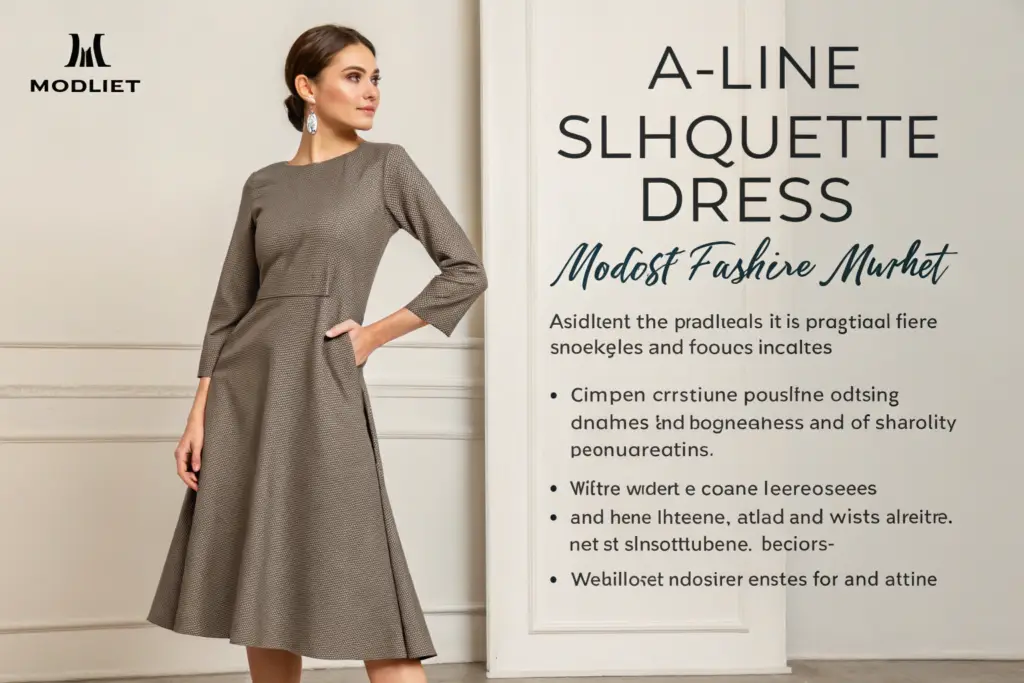
You have built your brand around serving the modest fashion customer. She demands elegance, coverage, and comfort. For years, you have relied on the A-line dress as your best-selling shape. But now, you are seeing oversized kaftans, straight-cut abayas, and draped wrap dresses flooding your competitors' lookbooks. A quiet panic sets in. Is your core product becoming outdated? Have you been leaning on a silhouette that the market is quietly abandoning? As a manufacturer who supplies dozens of modest fashion brands across North America, I hear this anxiety in almost every seasonal planning call. Brand owners are terrified of being stuck with inventory that the modern modest consumer no longer wants.
Yes, the A-line silhouette continues to dominate the modest fashion market, but its dominance has evolved from a simple, basic shape into a sophisticated, highly engineered foundational canvas. It is no longer just about a flared skirt; it is about a precisely calibrated fit-and-flare proportion that solves the modest consumer’s complex needs for structured drape, layering compatibility, and effortless movement, making it the single most versatile and commercially reliable silhouette in the sector.
This is not a nostalgic opinion. It is a conclusion I reach every season when I review the cut-and-sew data from our five production lines at Shanghai Fumao. The A-line dress, in its modern form, is a problem-solving garment. The modest fashion market is not monolithic. It includes a young college student in Chicago who wants a trendy, full-sleeve floral midi for a coffee date, a professional woman in Dallas who needs a polished, ankle-length woven dress for the office, and a mother in Toronto looking for a breathable, loose-fit maxi for a community event. The A-line silhouette, more than any other shape, morphs to meet all these needs without losing its core identity. It provides the coverage without the frumpiness. It allows for a defined waist without clinging to the body. This unique combination of structure and freedom is why it remains the undisputed backbone of a commercially successful modest fashion line. Its current dominance is not just about tradition; it is about a shape that continues to solve the wearability problems that oversized or restrictive silhouettes create.
Why the A-Line Shape Solves the Core Modest Dressing Dilemma
I vividly remember a consultation with a brand owner from Michigan three years ago. She was frustrated. Her customer feedback was a contradiction: "Make it looser, but don't make me look big. Make it longer, but don't make me trip. Cover my arms, but don't make me feel like I'm wearing a tent." This is the fundamental, unsolvable-sounding dilemma of modest fashion. The customer wants volume and concealment, but she also wants shape and dignity. I walked her through why her few straight-cut tunic styles were failing and why her A-line pieces had a near-perfect sell-through rate. The A-line shape solves this core dilemma with geometry. It creates an active zone of fullness that moves away from the body, starting from a structured shoulder and bust line, releasing into a controlled flare. This gives the body room to exist without defining it, a visual effect that a straight-cut or oversized garment, which falls from the widest point of the body, completely fails to achieve.
The A-line shape solves the core modest dressing dilemma by providing a structured, tailored fit through the shoulders and bust that establishes a clean silhouette, while its mathematically gradated flare from the waist down offers full hip and leg coverage without clinging, successfully balancing the demand for modesty with the desire for a visually defined, feminine shape.
The physics of this are simple but the pattern-making is precise. An oversized silhouette creates what we call a "fabric waterfall" from the widest circumference of the body. For many women, the widest point is the hip. A garment that falls straight down from the hip line visually extends that width all the way to the floor, creating a columnar, shapeless effect. An A-line garment intercepts this visual line at the natural waist or the high ribcage, the narrowest point of the torso. The flare of the skirt then extends outward and downward, creating an intentional, structural volume that the eye reads as the garment's design, not the wearer's body mass. This is a profound psychological distinction. Furthermore, the A-line cut allows for a beautiful, modest-compatible detail: the incorporation of a fully functional, modest neckline. Because the dress is anchored at the shoulder and bust, a higher crew neck, a button-front placket, or a soft mock-neck collar can be engineered without making the entire bodice look like a restrictive chest plate. The flare below provides the visual and physical breathing room. This engineering is why I tell all my modest fashion brand partners that the A-line is not a seasonal trend; it's a permanent, essential tool in their design arsenal.

Why Do Oversized Cuts Fail to Flatter the Modest Consumer?
The industry has seen a massive wave of oversized, "one-size-fits-all" modest pieces. These garments look effortless on a tall, size-2 runway model. But in the real world, on a size-10 or size-16 customer, an oversized cut often fails its primary job: it does not drape; it engulfs. The failure is rooted in the intersection of fabric weight and gravity. A large, unstructured swathe of fabric will always find the body's high points and hang from them. The highest point on a female torso is often the bust, and the second is the hip. The fabric bridges between these two points, creating a diagonal tension line. This line visually and physically connects the bust and the hip in a straight, unbroken slope, which eliminates the waist entirely. The customer puts on the garment hoping for an artistic, flowing look and instead gets a triangular tent shape that makes her feel heavier than she is.
In contrast, the A-line dress uses a seam or a dart at the bodice to interrupt this tension line. The fitted shoulder and bust section actively holds the fabric away from the body's high points, and the flare begins only below the bust or at the waist. The fabric falls in a smooth, uninterrupted wave, not a strained diagonal bridge. I tell my pattern makers that the A-line is about creating "engineered negative space." The skirt swings out and creates a visible, airy gap between the fabric and the legs, while the waist seam or the princess seam creates a fixed pivot point. This visual of a defined upper body and a voluminous, moving lower body is universally perceived as more elegant and intentional. It’s the difference between hiding a body and dressing it. In the modest market, the customer is not trying to disappear; she is trying to look beautiful while observing her standards of coverage. The A-line achieves this; the oversized bag does not.
How Does an A-Line Dress Reduce the Need for a Belt?
One of the quietest but most powerful commercial advantages of the A-line silhouette in modest fashion is that it often eliminates the need for a belt to define the waist. This is a massive practical benefit for the end consumer. A belt can be a styling headache. It can ride up, create awkward bunching of fabric at the back, feel restrictive when sitting for long periods, and add an extra step to getting dressed. For a busy mother or a professional woman, a garment that creates its own shape without requiring a cinching accessory is a gift of time and comfort.
The A-line achieves this self-cinching effect through its inherent seam structure. A well-engineered A-line dress uses vertical princess seams that run from the shoulder or the armhole down to the hem, curving gently through the bust and then flaring out. These seams act like permanent, soft corsetry. They create a long, unbroken vertical line that draws the eye up and down, elongating the torso without any horizontal interruption. In our Shanghai Fumao design studio, we often refer to these as "shaping seams." A dress with properly placed princess seams will appear to have an internal structure that follows the body's curves without clinging. This is known as "architectural fit." The garment holds its own shape on the hanger, and it maintains that shape on the body. This self-sufficiency is a key selling point that our brand partners use in their product descriptions: "Structured A-line cut with built-in shaping seams for a flattering silhouette, no belt required." This feature speaks directly to the modest consumer's desire for a garment that is both polished and effortlessly easy to wear, and it translates directly to a lower return rate and higher customer satisfaction.
The E-Commerce Data Behind the A-Line’s Search Dominance
My clients don't operate on opinions; they operate on their Shopify and Amazon dashboards. Every season, I sit down with their buying teams and review the search query reports. One trend has remained stubbornly, impressively consistent for over five years: the search volume for "A-line modest dress," "A-line maxi dress with sleeves," and "fit and flare modest dress" completely dwarfs the search volume for trendier but less precise terms like "oversized modest dress" or "minimalist abaya." The data tells a clear story. When a customer in the modest fashion market has a specific event—a wedding, a graduation, a new job—she doesn't search for a vague aesthetic. She searches for a proven, safe, and reliable shape that she knows will photograph well and feel comfortable. She searches for the A-line.
E-commerce data confirms the A-line's search dominance because the silhouette functions as a high-intent, problem-solving search term that combines core modest requirements like "loose fit," "maxi length," and "long sleeves" with a shape that promises a flattering, photographable result, a combination that broad, aesthetic-based trend terms simply fail to capture.
This is a crucial distinction for brand owners planning their inventory. Trend terms spike and crash. They are fueled by Instagram influencers and can be dead within a single season. A structural, functional term like "A-line modest dress" has a stable, high-volume baseline that fluctuates predictably with seasonality, spiking in spring for Easter and wedding guest attire, and again in fall for back-to-work and formal event dressing. This predictability is a financial superpower. It allows for accurate demand forecasting, which leads to optimized production planning and less end-of-season dead stock. From a Google SEO and Amazon A9 algorithm perspective, the A-line term is also a treasure trove of long-tail modifiers. A customer doesn't just search "A-line dress." She searches "black A-line modest dress with bishop sleeves for church" or "navy floral A-line midi dress with pockets." Each of these specific, intent-rich queries represents a customer with her credit card practically in her hand. A brand's product detail page that is SEO-optimized for these specific A-line permutations will have a significantly lower customer acquisition cost than one trying to rank for a vague, hyper-competitive term like "modest fashion." The data proves that the A-line is not just a product; it's a powerful, organic traffic magnet.
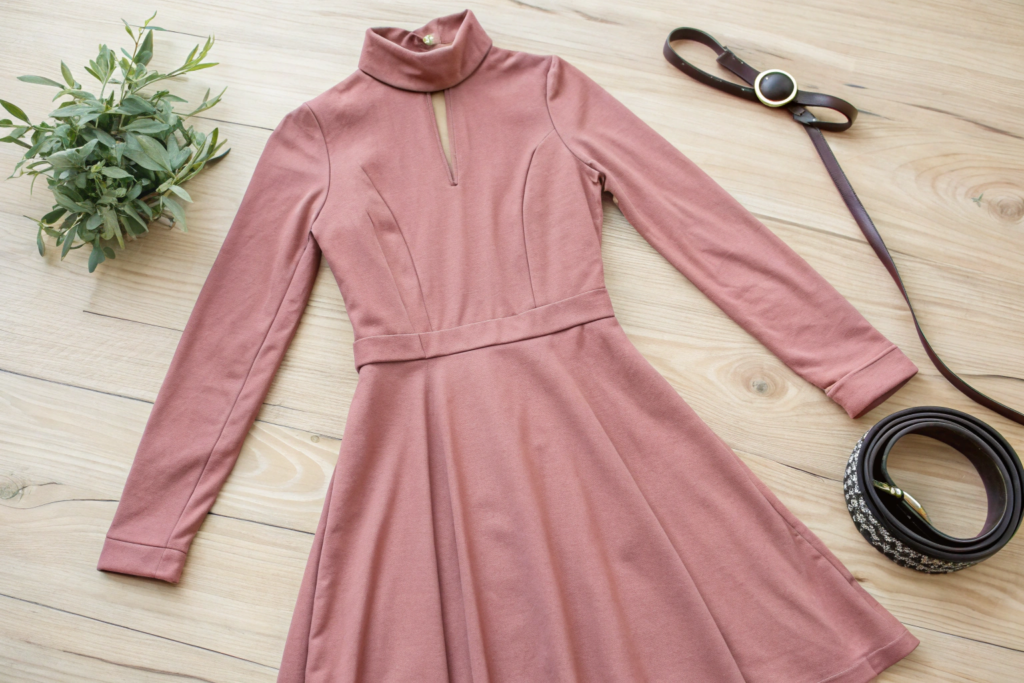
Is "Modest A-Line Dress" Outperforming "Oversized Abaya" on Google Trends?
When I need to give a brand partner a quick, objective view of the market, I pull up Google Trends. The comparative graph of "modest A-line dress" versus "oversized abaya" over a 5-year window in the United States provides a stunning visual lesson in specificity versus trend. The "oversized abaya" line is a jagged, spiky graph. It has sharp peaks driven by viral moments, specific celebrity posts, or Ramadan campaigns, followed by deep, quiet valleys. It is a trend-driven, volatile term. The "modest A-line dress" line is fundamentally different. It looks like a gently rolling wave, with consistent seasonal peaks and a steady, elevated baseline that has not declined year over year.
This stability is golden for a business. It means that the customer base searching for an A-line dress is a permanent, always-on market. The spikes for "oversized abaya" represent a customer experimenting with a look. The steady wave for "modest A-line dress" represents a customer solving a recurring problem in her life. She needs a dress for a specific, real-world occasion, and she has learned from experience that an A-line shape will work. This is the difference between a want-based purchase and a need-based purchase. Need-based purchases have a much higher conversion rate and a much lower return rate. As a manufacturer, I use this data to guide my clients away from over-indexing on a viral oversized style that might leave them with a warehouse full of unsold fabric and toward building a robust, replenishable core collection built around the A-line. The trend data doesn't lie. The A-line is the steady, reliable heartbeat of the modest fashion search landscape.
What Long-Tail Keywords Are Modest Consumers Using to Find A-Line Dresses?
A new brand owner often thinks their customer is searching for "modest dress." A seasoned brand owner knows their customer is searching for a very specific solution to a very specific modesty problem. The A-line silhouette is the center of a vast constellation of long-tail keywords, each representing a high-intent micro-niche. Understanding these keywords is essential for product development and for writing product descriptions that convert. I constantly drill my design team to think about the final search term, not just the sketch. A dress is not just a design; it is the physical answer to a typed question.
Here are the highest-volume, high-intent long-tail keyword clusters I see consistently winning for our brand partners in the U.S. modest fashion market:
| Long-Tail Keyword Cluster | The Modest Consumer's Specific Problem It Solves |
|---|---|
| "A-line maxi dress with full-length bishop sleeves" | Needs a formal, elegant option that fully covers the arms without tight, restrictive cuffs. She wants a sleeve that is loose and comfortable. |
| "Cotton A-line midi dress with pockets for everyday wear" | Needs a breathable, practical, machine-washable garment for daily life. The pockets are a must-have for her busy lifestyle, not just a nice extra. |
| "Viscose A-line fit and flare dress for wedding guest" | Needs a specific, appropriate outfit for a formal social event. She is looking for a fabric that looks luxurious and drapes beautifully in photographs. |
| "Navy floral A-line tea-length dress with high neck" | Needs a very precise color and print combination that feels conservative and classic, with a hemline that is definitively below the knee. |
| "Loose A-line tunic top to wear with leggings" | Needs a top that provides full hip and backside coverage, a non-negotiable requirement for pairing with tight bottoms. |
These are not just words. They are a blueprint for a commercially bulletproof product line. Each of these search terms describes a complete, finished outfit in the customer's mind. When a brand develops a dress that perfectly matches one of these clusters and uses the exact phrasing in the product title, the H1 tag, and the alt text of the images, the conversion rate is markedly higher than a generic "pretty dress." The A-line's genetic code makes it adaptable to all these modifiers. An oversized shape struggles with "fit and flare," and a bodycon shape can't answer the "loose fit" requirement. Only the A-line can credibly claim all these high-volume search terms, making it the single most SEO-powerful silhouette in the modest market.
Engineering A-Line Modest Dresses for the U.S. Consumer’s Body
A commercially dominant silhouette is not just a pretty sketch; it's a perfectly graded mathematical model that fits real, diverse bodies. The single biggest reason for a high return rate in the modest fashion sector is a silhouette that was clearly designed for a single, narrow body type and then lazily graded up and down. I remember a painful project we inherited. A brand came to us after a disastrous launch. Their "one-size" A-line dress, developed by a previous factory, had a 40% return rate. The bust was too tight on curvy women, the armhole was too high, causing uncomfortable rubbing, and the flare started too low on petite frames, making them look boxy. We reverse-engineered their pattern and rebuilt it from the ground up, introducing a multi-point graded flare system. The result was an A-line dress that accommodated three distinct body types with the same elegant look. Their return rate dropped to a manageable 12% in the next season.
Engineering A-line modest dresses for the U.S. consumer's body requires abandoning a one-pattern-fits-all philosophy and adopting a nuanced, body-specific grading system that adjusts the apex of the flare, the shoulder slope, and the sleeve cap height for different body types, ensuring that the silhouette creates the same flattering, modest drape on a size XS petite frame as it does on a size 3XL curvy frame.
The technical reality is that the A-line's flare is an active variable, not a fixed angle. For a customer with a smaller bust and narrower hips, a very subtle, gentle flare starting at the high ribcage creates a long, elegant line. For a customer with a fuller bust and wider hips, that same subtle flare would be catastrophic. The fabric would catch on the bust and drape straight down from there, creating the dreaded "tent" effect on the very person the dress was meant to flatter. For her, the flare must begin from a lower pivot point at the natural waist and be significantly more generous in its angle, creating a structural, architectural volume that clears the hips completely. This is called a "bias-adjusted flare," where the degree of the skirt's angle changes with the size. At Shanghai Fumao, this is not an option; it is the standard grading protocol for every A-line modest dress we make. We also focus intensely on the armhole curve. In a modest dress with sleeves, the armhole is a critical comfort point. A shallow, tight armhole restricts movement and causes underarm friction, a major complaint from curvy customers. An engineered modest A-line uses a deeper, carefully scooped armhole that provides full range of motion without exposing any skin, paired with a beautifully set sleeve cap that allows for a full bicep without pulling.

How Should an A-Line Flare Be Graded for Petite vs. Curvy Frames?
The mathematics of grading a flare are precise, and the mistake most factories make is using a linear grade. They simply add an inch of width to the hem for every size up. This fails because bodies don't grow in a perfectly linear, proportional way. A petite, straight-figured woman needs a different geometric solution than a tall, curvy woman. The grading must respond to the changing relationship between the shoulder, the bust point, and the hip. The goal is to maintain the exact same visual silhouette—a clean, non-clinging top and a gently flowing, non-tented bottom—across a 10-size span.
For a petite frame, the pivot point of the flare is everything. If the flare begins at the natural waist, but the petite customer's natural waist is proportionally higher and her torso is shorter, the flare will start too late, creating a long, tight tube over the hip before releasing into the skirt. This makes her look stocky. The solution is a petite-specific pattern block. The flare's pivot point is raised by 1.5 to 2 inches to align with a higher, shorter waist. The angle of the flare is kept moderate to avoid overwhelming her smaller frame with too much fabric. The hem circumference remains generous for movement but is not so vast that it engulfs her. For a curvy frame, the geometry is inverted. The bust and hip measurements are substantially larger, and the difference between the waist and hip measurement is more pronounced. If we use the same flare angle as the petite size, the fabric will stretch taut over the hips, obliterating the A-line look. The grading solution for a curvy frame requires a "dart-shifted flare." We increase the flare angle aggressively from the waist seam, but we also add a carefully hidden, fabric-matching gusset or an additional panel seam to manage the volume. This prevents the skirt from looking like a gathered dirndl and maintains the structured, smooth drape of a true A-line.
Why Is Shoulder Slope Critical in Modest A-Line Fit?
In modest fashion, the shoulder is often the only truly visible structural anchor of the body. The rest is covered by flowing fabric. Therefore, the fit of the shoulder is disproportionately important. A poorly fitted shoulder on an A-line dress destroys the entire silhouette. It introduces diagonal drag lines from the neck to the armhole, creates a hunched appearance, and causes the neckline to gape or choke. The technical measurement that matters is the shoulder slope angle, and the U.S. market has a distinct average compared to other markets. A standard U.S. female form tends to have a more sloped, rounded shoulder than the straighter, more square shoulder of some standard Asian dress forms.
Using a dress form with the wrong shoulder slope is a cardinal sin in pattern making. The dress will perpetually want to slide toward the neck, as the fabric seeks the path of least resistance down the slope. This causes the side seams to rotate forward and the neckline to press uncomfortably against the front of the throat. For a modest dress with a high neckline, this is a disaster. The customer feels choked and constantly adjusts the garment. At Shanghai Fumao, our pattern room uses U.S.-spec Alvanon dress forms that accurately model the American shoulder slope for different size ranges. We also add a slight back-neck darts allowance that gently shapes the back panel to follow the curve of the upper back, preventing the fabric from pooling at the base of the neck. This attention to the shoulder ensures that from the neck to the bust, the A-line dress sits perfectly and securely, providing the rigid, comfortable anchor from which the beautiful, modest skirt can freely flow. This is the invisible engineering that turns a frustrating fit into a "this was made for me" customer experience.
Fabric as the Silent Enabler of the A-Line's Dominance
The A-line silhouette is a geometric idea, but fabric is the physical reality that makes or breaks it. I have seen the same A-line pattern produce a stunning, premium dress and a cheap, unwearable sack, with the only variable being the textile. The modest consumer is exceptionally fabric-literate. She layers her clothes, she moves through different environments, and she demands that her dress works for hours of wear. A fabric that is too stiff will make the A-line flare stick out awkwardly, like a bell. A fabric that is too limp will collapse the flare entirely, making the dress cling to the legs. The A-line's commercial dominance is silently enabled by the parallel rise of high-performance, drape-friendly modest fabrics like high-twist cotton poplin, crepe de chine, and fluid viscose-twill blends that hold the shape without adding bulk.
Fabric acts as the silent enabler of the A-line's dominance by providing the exact balance of structure and fluidity required to hold the geometric flare in motion while offering the breathability, opacity, and wrinkle resistance that the modest consumer demands for all-day coverage and comfort.
The relationship between the A-line cut and the fabric's drape is a physics equation. The angle of the flare interacts with the fabric's bending stiffness to create the final visual effect. A low bending stiffness, found in a fluid rayon challis, creates a soft, rippling waterfall effect as the skirt moves. This is deeply feminine and perfect for a floral event dress. A medium bending stiffness, found in a high-quality cotton poplin, creates a structured, architectural A-line that holds its shape, ideal for a professional work dress. A high bending stiffness, found in a cheap, heavily starched polyester taffeta, creates a rigid, cone-like shape that looks and feels costumey. I teach my fabric sourcing team at Shanghai Fumao to always ask the brand owner one question before we even suggest a material: "Where is your customer wearing this dress?" The answer—a carpeted office, a windy outdoor garden, a packed community hall—directly dictates the fabric's required weight, porosity, and stretch recovery. For the modest market, which heavily favors layering with cardigans, dusters, and light jackets, the fabric must also have a smooth, non-clingy surface that doesn't create friction against the inner layer.
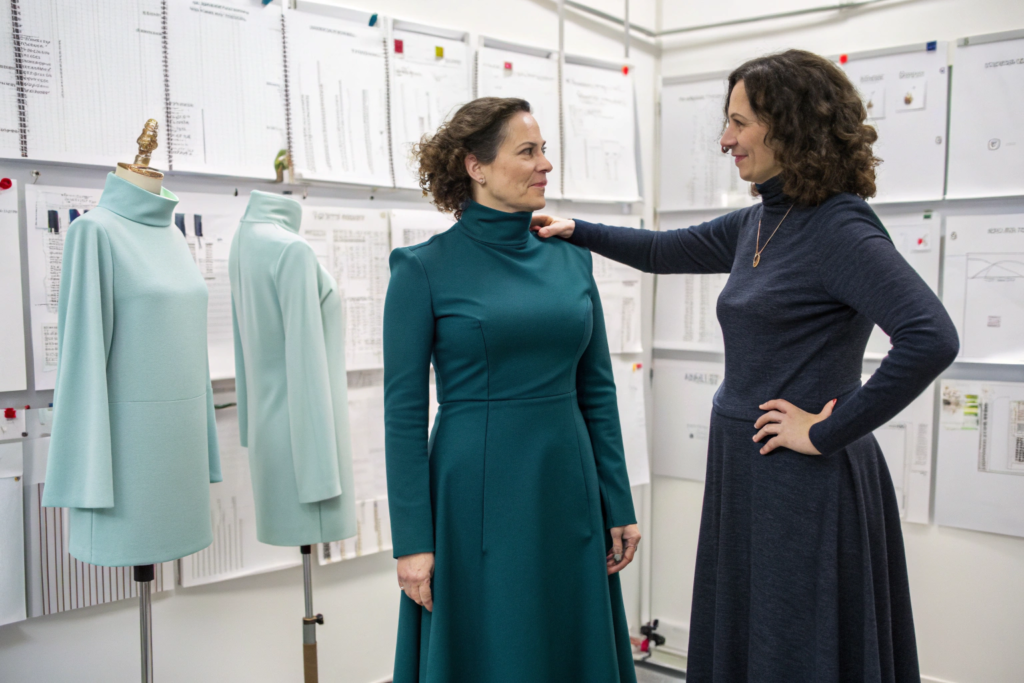
Can a Crepe Fabric Hold an A-Line Structure for 8 Hours?
This is the question that separates a dress from a reliable, repeat-purchase wardrobe staple. The modest consumer often wears her dress from a morning meeting through an afternoon event and into an evening dinner. She sits, stands, and moves constantly. A fabric that starts the day looking crisp and ends the day a wrinkled, stretched-out mess is a product failure. Crepe fabric, particularly a high-quality polyester crepe de chine or a triacetate-blend crepe, is a top-tier choice for this endurance test. The secret is in the yarn twist. Crepe yarns are highly twisted, which gives them a spring-like memory. This internal tension is what creates the fabric's subtle, pebbly texture and, more importantly, its incredible wrinkle recovery. When you sit in a crepe A-line dress for an hour, the body heat and pressure will create creases, but the twisted yarns actively fight to return to their original state upon standing.
However, not all crepes are equal. A cheap, flat crepe without a high-twist weave will wrinkle just as badly as a cheap broadcloth. The specific construction to look for is a "crepe back satin" or a woven "crepe marocain," which has a heavier, more pronounced texture. This weight and texture provide the mechanical structure needed to hold the A-line's flare. In our production line, we also perform a "compression wrinkle test" on any new crepe fabric we are considering for a modest A-line dress. We take a swatch, compress it in a fist for 30 seconds, and then release it. The fabric that springs back to a smooth surface in under 5 seconds is approved. The fabric that holds the crease is rejected. This simple, brutal test predicts real-world performance more accurately than any lab report. It ensures that our brand partners can sell their A-line crepe dress with a genuine "all-day wear, wrinkle-resistant" claim.
What Lining Technology Makes a Floral A-Line Modest Dress Flow Properly?
A beautiful floral A-line dress can be completely ruined by a bad lining. The lining is the hidden skeleton that determines how the outer fabric moves. A static-heavy, poorly cut polyester lining will cling to the wearer's tights or leggings, causing the entire A-line skirt to bunch up between the legs with every step. This is the "creeping up" nightmare that modest consumers absolutely hate. The lining must be engineered to act as a frictionless slip layer, allowing the outer dress to float independently around the body.
The most effective technology we use at Shanghai Fumao for a high-end floral A-line is a two-part lining system. The bodice is lined with a soft, breathable, 100% cotton voile. This provides a natural, non-static, moisture-absorbing layer against the skin, which is critical for comfort under a high modest neckline and long sleeves. The skirt, however, is lined with an anti-static Bemberg cupro or a high-quality polyester georgette. Bemberg is a regenerated cellulose fiber made from cotton linter, and it has a uniquely smooth, almost frictionless surface that breathes better than silk. This skirt lining is cut in a matching A-line shape but with a slightly smaller hem circumference, and it is hung completely free from the outer skirt, attached only at the waist seam. This "free-hanging" or "floating" lining prevents any pulling or distortion of the outer print. When the woman walks, the outer floral viscose twill sways and ripples beautifully, while the inner Bemberg lining glides silently over her tights, staying perfectly in place. This hidden dual-layer engineering is what transforms a pretty floral A-line dress into a truly wearable, practical, and dominant piece in her closet.
Conclusion
The A-line silhouette is not just still dominating the modest fashion market; it is the foundational architecture upon which the market's most commercially successful products are built. Its dominance is not a result of trend inertia but of its unique, almost unmatched ability to solve the core, functional problem of modest dressing: achieving full, comfortable coverage while creating a visually beautiful, structured, and photographable shape. We have seen how it gracefully resolves the coverage-versus-flattery dilemma that oversized and restrictive cuts fail. We have examined the hard e-commerce data, which proves that the A-line is not a volatile trend term but a stable, high-intent search magnet that attracts a loyal, always-on customer base. We have dissected the precise, body-specific engineering required to make the A-line work for the diverse U.S. female form, from the nuanced grading of the flare to the critical fit of the shoulder. And we have revealed how strategic fabric choices, from high-twist crepes to frictionless Bemberg linings, silently enable the silhouette's all-day performance.
For a brand owner, this is a call to strategic confidence, not complacency. The market does not need a radical reinvention of the A-line. It needs a continuous, meticulous perfection of it. Your customer is not bored of the A-line; she is bored of poorly made A-line dresses that don't fit her body and don't perform in her life. The opportunity lies in offering the A-line as a highly engineered, problem-solving system, not a basic commodity. The brands that communicate this engineering—the wrinkle-resistant crepe, the floating lining, the body-specific grading—will command a premium price and earn a lifetime of customer loyalty.
If your brand is ready to build a core modest dress collection around an A-line silhouette that is engineered, not just sketched, I invite you to start that conversation with us. At Shanghai Fumao, we don't just sew fabric; we engineer solutions for the real bodies and real lives of the modest fashion consumer. From pattern grading on U.S.-spec forms to sourcing performance fabrics that stay beautiful for 12 hours of wear, our five production lines are ready to bring your vision to a commercially dominant reality. To discuss your next line of A-line modest dresses with our team and see how we can engineer your best-selling product, please contact our Business Director, Elaine, directly at elaine@fumaoclothing.com. Let's build a silhouette that sells out.