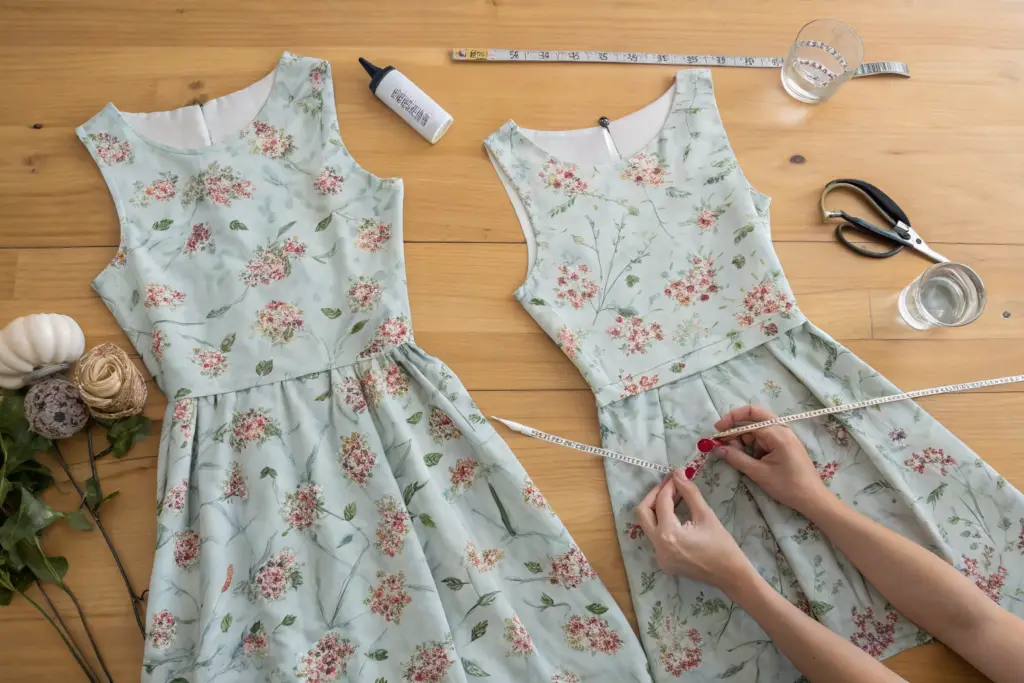
A brand owner from Miami called me last April. She had sourced 1,500 A-line floral dresses for her summer collection. The fabric was a beautiful polyester crepe. The print was vibrant. The price was incredible. The dresses sold fast. Then the returns started. Customer after customer complained the dress made them sweat. "I wore it to a garden party and felt like I was wrapped in plastic." "Beautiful dress, but unwearable in Florida heat." The return rate hit 18%. She liquidated the remaining stock at a loss. She called me to source her next collection in cotton voile. She told me, "I learned the hard way that fabric is not just a look. It is an experience. My customer lives in a hot place. Polyester betrayed her."
Neither polyester nor cotton is universally better for an A-line floral dress. The right choice depends on three factors: the dress’s intended use occasion, the climate where your customer lives, and the production budget. Cotton is superior for casual day dresses, hot and humid climates, and brands marketing natural sustainability. Polyester is superior for formal event dresses, cool or transitional climates, and brands requiring drape, wrinkle resistance, and high-definition print vibrancy on a tight budget. The “better” fabric is the one that aligns with your customer’s expectations and your brand’s price point.
I have manufactured thousands of floral dresses in both polyester and cotton. I know the cost, the drape, the print quality, and the return reason for each fabric. Let me compare them across every dimension that matters for your business.
What Are the True Costs: Polyester vs. Cotton for Floral Dress Manufacturing?
The first question most brand owners ask is about cost. The fabric cost. The duty cost. The total landed cost. The per-unit cost difference between a polyester dress and a cotton dress can be significant, but the ticket price is only part of the story. The hidden costs of returns, durability, and brand perception often outweigh the initial fabric savings.
Polyester floral fabric is significantly cheaper than cotton, typically costing $1.50 to $3.00 per meter, while cotton voile or cotton poplin costs $3.50 to $6.00 per meter. A polyester A-line dress can have a total landed cost 25% to 40% lower than an equivalent cotton dress. However, cotton dresses command a higher retail price, have lower return rates in warm climates, and build a premium brand perception that justifies better margins. The lower upfront cost of polyester can be a false economy if it leads to high returns or a cheap brand image.
Let me break down the real numbers for a typical 2,000-unit A-line floral dress order.

How Much Does the Fabric Cost Difference Impact Your Landed Price?
For a simple A-line floral dress with a knee-length hem, you need about 1.8 to 2 meters of fabric per dress, depending on the size. The fabric is the single largest cost component.
A standard polyester crepe with a digital floral print costs me about $2.00 per meter from my printing partner. That is $3.80 of fabric per dress. A high-quality cotton voile with the same digital floral print costs about $4.50 per meter, or $8.55 of fabric per dress. The cotton dress costs $4.75 more just in fabric.
The duty cost also differs. Polyester dresses imported into the US under HS code 6204.43 have a duty rate of 16%. Cotton dresses under HS code 6204.42 have a duty rate of 4.4%. On a $12 FOB dress, the polyester duty is $1.92. The cotton duty is $0.53. The duty difference adds another $1.39 in favor of cotton.
The total landed cost comparison for a 2,000-unit order looks like this:
| Cost Component | Polyester Crepe Dress | Cotton Voile Dress |
|---|---|---|
| Fabric Cost per Unit | $3.80 | $8.55 |
| Trim & Labor Cost per Unit | $5.20 | $5.70 |
| FOB Cost per Unit | $9.00 | $14.25 |
| US Import Duty | $1.44 (16%) | $0.63 (4.4%) |
| Total Landed Cost per Unit | $10.44 | $14.88 |
The polyester dress lands at $10.44. The cotton dress lands at $14.88. The cotton dress costs 42% more. But the cotton dress can retail for $78 to $88. The polyester dress competes in the $38 to $48 range. The gross profit per dress is higher on the cotton dress despite the higher cost. The math is not just about the cost. It is about the margin.
What Hidden Costs Should You Factor In?
Returns are a hidden cost. A polyester dress worn in a hot climate has a higher return rate because of the “sweaty” feeling. Each return costs you $5 to $8 in shipping and restocking. If the polyester dress has a 10% return rate and the cotton dress has a 4% return rate, the return cost difference on a 2,000-unit order is significant. 200 returns versus 80 returns. At $6 per return, the polyester batch costs you $720 more in return processing. This narrows the landed cost gap.
The markdown risk is another hidden cost. A polyester dress that looks shiny or cheap on the hanger will be marked down faster at retail. A cotton dress with a soft, natural drape holds its perceived value longer. A markdown of 20% on a $48 polyester dress costs $9.60 per unit. A markdown of 10% on an $88 cotton dress costs $8.80 per unit. The cotton dress has a lower markdown rate and a lower markdown cost as a percentage of retail.
How Do Drape and Silhouette Compare for an A-Line Shape?
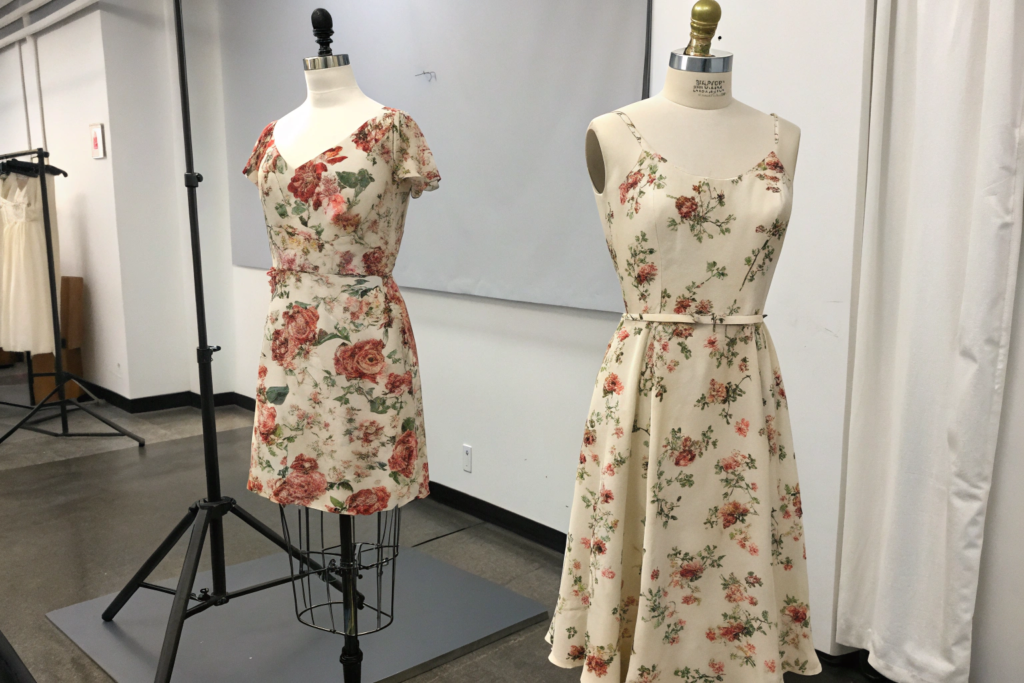
The A-line silhouette depends on the fabric’s ability to flare out from the shoulders and bust and hold a gentle shape without collapsing or sticking to the body. The drape of the fabric determines whether the dress looks like a soft, romantic piece or a stiff, structured garment. Polyester and cotton behave very differently in this silhouette.
Polyester crepe and chiffon offer a fluid, slinky drape that hangs close to the body and moves with a swishy, liquid motion. Cotton voile and poplin offer a crisp, airy drape that holds the A-line shape away from the body and moves with a soft, breathable rustle. For a romantic, dressy A-line, polyester drape is often preferred. For a casual, everyday A-line, the crisp structure of cotton creates the classic, flattering tent shape that skims the body without clinging.
The drape is the personality of the dress. It determines how the dress photographs, how it moves on a walking woman, and how it feels after hours of wear.
Why Does Polyester Drape Differently Than Cotton?
Polyester is a synthetic polymer fiber. It is extruded in continuous filaments. The fibers are perfectly smooth and uniform. This gives polyester fabrics a low-friction surface. The fabric slides against itself easily. The drape is fluid, almost oily. A polyester crepe A-line dress hangs in soft, vertical folds. It moves with a noticeable swish. It does not hold a crisp shape away from the body.
This drape is beautiful for an evening or event dress. It photographs well in motion. It has a subtle sheen that catches the light. But it can also cling to the body due to static electricity. In dry weather, a polyester dress can ride up and stick to the legs. This is a common customer complaint.
Cotton is a natural staple fiber. The fibers are short and have a slightly rough surface. They create friction against each other. This gives cotton fabrics a crisper, more structured drape. A cotton voile A-line dress holds its shape away from the body. It does not cling. It has a soft, airy volume. It moves with a gentle rustle, not a swish.
This drape is ideal for a day dress. It looks effortless and casual. It does not stick to the skin in humidity. It breathes, so the air circulates under the dress and keeps the wearer cool. The cotton A-line is the classic “summer dress” silhouette.
How Does the Choice Affect the “A-Line” Shape?
The A-line shape requires the fabric to flare out from the shoulders and maintain that flare. A fabric that is too limp will collapse. A fabric that is too stiff will stand out like a bell. The ideal A-line fabric has moderate body.
Cotton poplin has excellent body. It is crisp and holds its shape. It is ideal for a structured A-line silhouette. Cotton voile has less body but enough to hold a soft flare. Polyester crepe has less body than cotton poplin. It drapes more than it flares. The A-line shape is subtler, more of a suggestion than a structure. Polyester chiffon has almost no body. It is for a very soft, flowing interpretation of the A-line.
A client in Nashville switched her bestselling A-line floral dress from cotton poplin to polyester crepe for one season to save costs. The customer reviews immediately noted the difference. “The dress doesn’t hold its shape like the old version.” “It clings to my tights.” She switched back to cotton for the next season. The A-line shape her customers loved depended on the crispness of the cotton. She learned that the silhouette and the fabric are one design decision, not two.
Which Fabric Offers Better Print Vibrancy and Durability for Florals?
A floral dress is a printed dress. The quality of the print is the first thing the customer sees. The vibrancy of the colors, the sharpness of the edges, and the durability of the print after washing are all determined by the interaction between the ink, the printing process, and the fabric. Polyester and cotton take print very differently.
Polyester achieves the highest print vibrancy and sharpness because the smooth fiber surface reflects light evenly, and the dye-sublimation process bonds the ink at a molecular level, creating a permanent, fade-resistant image. Cotton prints have a softer, more matte, and slightly muted appearance because the ink absorbs into the textured fiber. However, cotton prints with reactive dyes are extremely wash-durable, while cheap polyester prints with pigment inks can crack and peel over time. The print method matters as much as the fabric.
The printing technology determines the outcome. Let me explain the differences.
Why Does Polyester Produce More Vibrant Floral Prints?
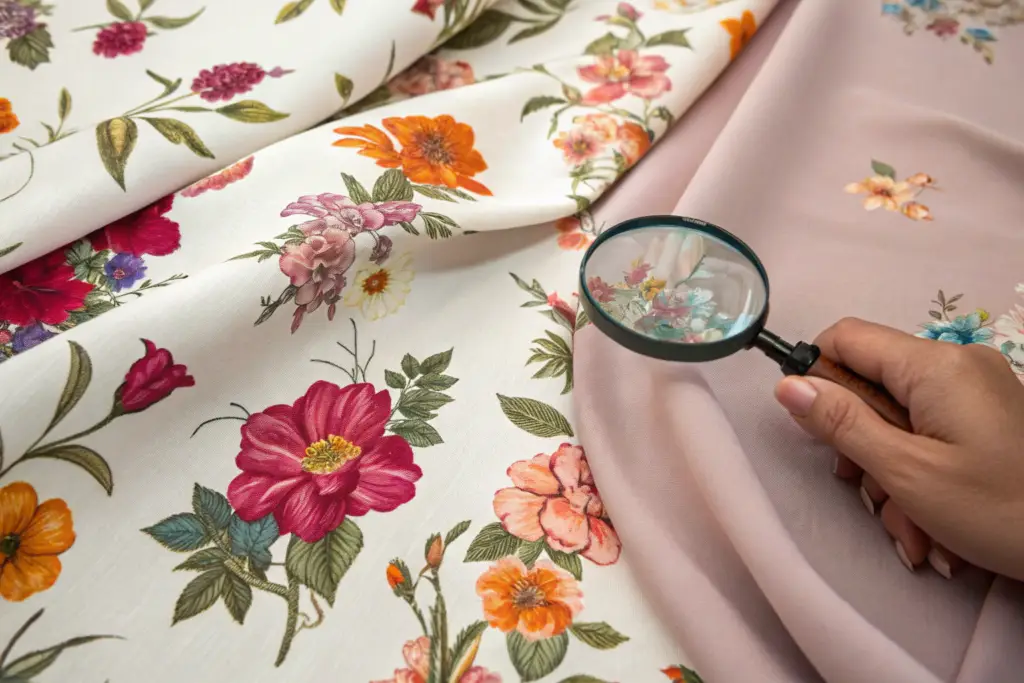
Polyester is printed using dye-sublimation, also called sublimation printing. The design is printed onto a special transfer paper. The paper and the white polyester fabric are pressed together under high heat. The heat turns the solid dye into a gas. The gas penetrates the polyester fibers and bonds with them at a molecular level. When the fabric cools, the dye is permanently trapped inside the fiber.
The result is a print that is incredibly vibrant. The colors are bright and saturated. The edges are razor-sharp. The print does not sit on top of the fabric. It becomes part of the fabric. You cannot feel the print with your fingers. The fabric remains soft and smooth. The print will not crack, peel, or fade for the life of the garment. This is the technical advantage of polyester.
However, sublimation only works on polyester. It does not work on cotton. So if you see a highly vibrant, sharp floral print, it is almost certainly on polyester. The print quality is excellent, but the fabric is still polyester with all its breathability limitations.
How Does Cotton Print Quality Compare?
Cotton is printed with reactive dyes or pigment inks. Reactive dye printing is the premium method. The dye chemically bonds with the cotton fiber. The print is soft. It penetrates the fabric. It does not sit on the surface. It is extremely wash-durable. The colors will not fade for years. However, the colors are inherently less vibrant than sublimation on polyester because the cotton fiber is matte and textured. The light scatters off the surface. The print looks softer, more muted, and more natural. This is actually desirable for the watercolor floral and vintage floral trends I discussed in another article.
Pigment ink printing is the cheaper method. The ink sits on the surface of the fabric like a thin layer of paint. The colors are slightly more vibrant than reactive dyes but less vibrant than sublimation. The print has a slightly stiff hand feel. Over time and repeated washing, the pigment layer can crack, peel, or fade. This is the print quality risk on very cheap cotton dresses.
At Shanghai Fumao, I use reactive dyes for all cotton floral prints. The cost is higher than pigment printing but lower than the return rate. A client in Austin tested a pigment-printed cotton dress against a reactive-dyed cotton dress. The pigment print started to show fine cracks after 10 washes. The reactive dye print looked identical at 30 washes. She switched to reactive dyes permanently. The $0.40 per meter extra cost was a fraction of the cost of the bad reviews the pigment print would have generated.
What About Breathability, Comfort, and Climate Suitability?
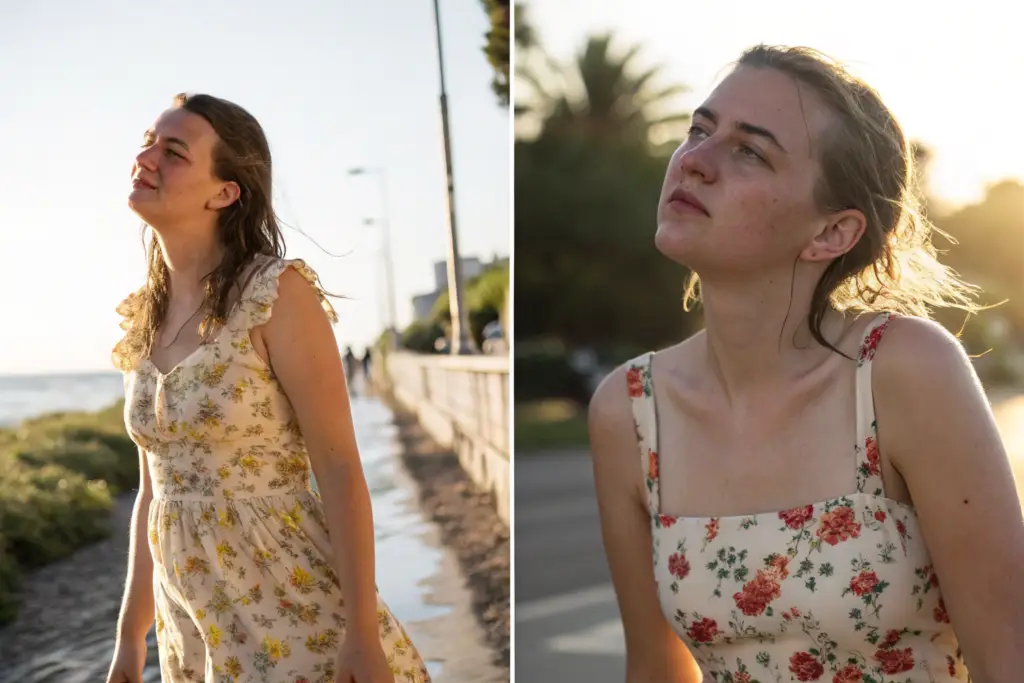
The most common reason for returning a polyester dress is “it made me sweat.” This is not a minor complaint. It is a fundamental mismatch between the product and the use case. A floral dress is typically a warm-weather garment. The customer wears it to a summer wedding, a garden party, a vacation dinner. She expects to feel cool and comfortable. The fabric choice determines whether she does.
Cotton is a natural, hydrophilic fiber that absorbs moisture away from the skin and allows it to evaporate. It is highly breathable and ideal for hot, humid climates. Polyester is a synthetic, hydrophobic fiber that repels moisture. It traps heat and sweat against the skin, creating a hot, clammy feeling in warm weather. For a summer floral dress, cotton is functionally superior for comfort. Polyester is acceptable only in air-conditioned environments, cool climates, or for evening events where temperature is not a primary concern.
The science is simple. The customer experience is visceral. A woman knows within five minutes of wearing a dress whether the fabric breathes.
How Does the Science of Fiber Breathability Work?
Cotton fibers are shaped like twisted ribbons with a hollow core. This structure wicks moisture. The fiber absorbs sweat from the skin, swells slightly, and transports the moisture to the surface of the fabric, where it evaporates. This process cools the skin. It is the same mechanism that makes a cotton towel dry you off. Cotton is actively cooling.
Polyester fibers are solid rods of plastic. They absorb almost no moisture. Standard polyester has a moisture regain of 0.4%. Cotton has a moisture regain of 8.5%. Sweat does not absorb into polyester. It sits on the skin. It pools. It creates a humid microclimate between the dress and the body. The wearer feels hot, sticky, and clammy. This is why polyester is often described as “unwearable” in summer.
There are performance polyesters with moisture-wicking finishes, but these are rare in the fashion dress market. A standard polyester floral dress at a $40 retail price does not have moisture-wicking technology.
A client in Miami learned this the hard way, as I mentioned earlier. She now sources only cotton voile and rayon challis for her summer dresses. Her return rate for “fabric comfort” is under 2%. The Miami customer will not tolerate polyester in July. The Seattle customer might be fine with it in an air-conditioned office. Know your customer’s climate.
Which Fabric Is Better for Travel and All-Day Wear?
Cotton wrinkles. This is the primary disadvantage of cotton for a travel dress or an all-day event dress. A woman sits through a two-hour ceremony in a cotton A-line dress. She stands up, and the back of the dress is a map of wrinkles. Polyester is highly wrinkle-resistant. A woman can wear a polyester dress for 12 hours, sit, stand, dance, and the dress looks freshly pressed at the end of the night.
This is why polyester dominates the formal and event dress market. Bridesmaids’ dresses are almost always polyester. They need to look perfect from 2 PM ceremony to 11 PM last dance. Cotton cannot deliver that performance.
The trade-off is clear. For a casual day dress, the customer accepts wrinkles as part of the natural fabric charm. For an event dress, the customer demands wrinkle resistance. Choose the fabric that matches the occasion.
Conclusion
The choice between polyester and cotton for an A-line floral dress is a choice about your brand’s relationship with your customer. A polyester dress is cheaper to produce. It prints with extraordinary vibrancy. It does not wrinkle. It drapes with a liquid, evening-appropriate elegance. But it does not breathe. It can feel cheap against the skin. It carries the environmental stigma of plastic. A cotton dress costs more. Its print is softer and more muted. It wrinkles. It requires a more careful customer. But it breathes beautifully. It feels luxurious in the heat. It ages with grace. It aligns with the values of sustainability and natural living.
There is no wrong answer, only a wrong answer for your specific customer. A brand selling $38 fast-fashion floral dresses to a young, trend-driven customer in a cool climate will choose polyester. A brand selling $88 sustainable floral dresses to a 35-year-old professional in a warm climate will choose cotton. The most successful brands I work with choose cotton and charge accordingly. They build their brand on quality, comfort, and natural materials. The customer pays more and returns less.
If you are deciding between polyester and cotton for your next floral dress collection, I can help you evaluate the options. Our Business Director, Elaine, can send you our fabric swatch kit. It includes polyester crepe, cotton voile, and cotton poplin, all printed with the same floral design. You can feel the drape. You can do the breathability test. You can see the print quality difference. Email her at elaine@fumaoclothing.com. Ask for the Floral Fabric Comparison Kit. Choose the fabric that makes your customer feel beautiful, comfortable, and loyal. That is the better fabric.