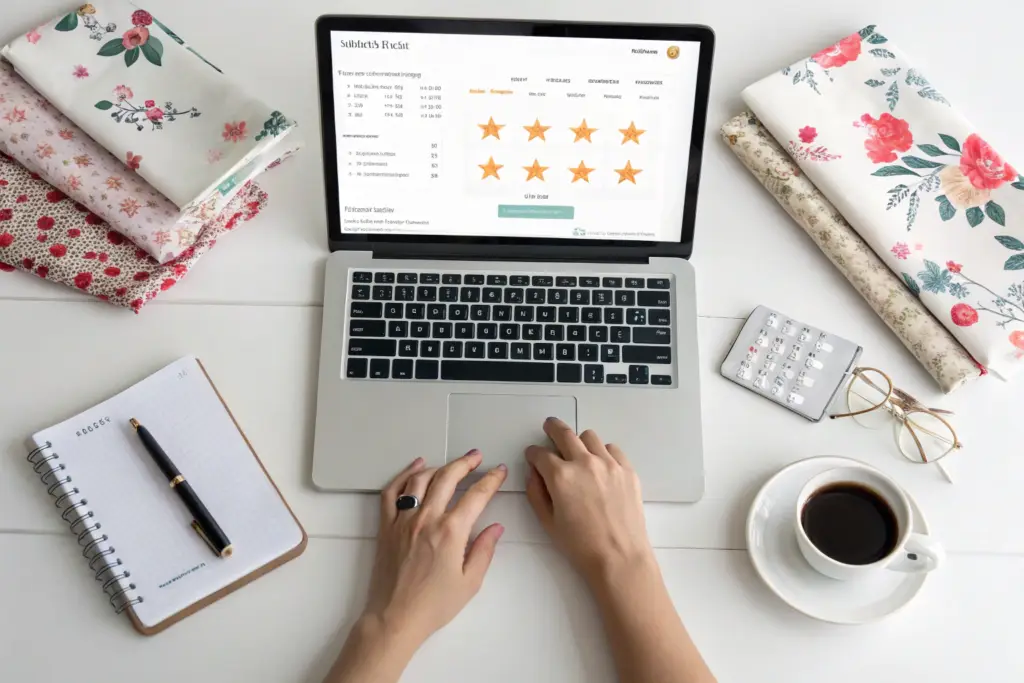
A brand owner from Seattle messaged me on Alibaba three years ago. She had sent the same inquiry to 12 suppliers. She received 12 quotes ranging from $6.50 to $18.00 for what looked like the same A-line floral dress. The photos were similar. The descriptions were similar. The prices were wildly different. She was paralyzed. She didn't know how to tell the difference between a real factory with quality production and a trading company selling photos from another factory's catalog. She almost gave up and sourced locally for triple the price. She told me later, "Alibaba felt like a casino. I didn't know which table was rigged."
Comparing floral dress suppliers on Alibaba requires a systematic, five-point verification process. You must verify the supplier's legal identity and business type, audit their certifications and third-party inspection reports, evaluate their communication responsiveness and technical knowledge, physically test their sample against your specification, and compare their total landed cost, not just their FOB price. A supplier who excels in one area but fails in another is a risk. A supplier who scores well across all five points is a potential long-term partner.
I have been on the receiving end of thousands of Alibaba inquiries. I know what a professional buyer asks. I know what a novice buyer misses. I want to give you the exact framework I would use if I were in your shoes, comparing suppliers for a floral dress order. This is the insider's guide to finding the real factory behind the profile picture.
How Do You Verify a Supplier Is a Real Factory and Not a Trading Company?
The first question on Alibaba is not "What is your price?" The first question is "Who are you?" A trading company resells products from other factories. They add a margin, which increases your cost. They have less control over quality because they don't own the production line. A factory manufactures the product directly. They control the cost, the quality, and the timeline. Your goal on Alibaba is to find the factory, not the middleman. The platform has tools for this, but they are imperfect.
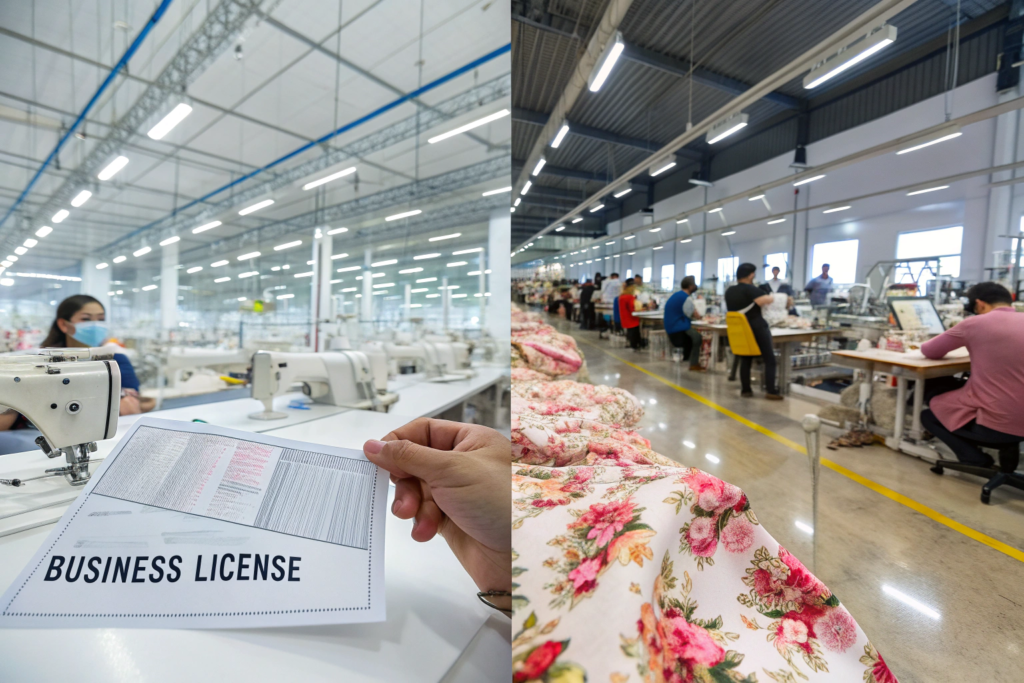
A real factory on Alibaba will have a "Verified Supplier" or "Assessed Supplier" badge with an on-site check performed by a third-party inspection company. The business license will show "Manufacturing" in the business scope. The company address on the license will be in an industrial zone, not a virtual office. A live video call will show an active production floor with floral garments, not a showroom with samples from multiple, unrelated categories. A trading company will have a business scope of "Trading" or "Wholesale," a generic office address, and will resist or delay a live video call.
I have a Verified Supplier badge on my Alibaba profile. The badge is backed by an SGS on-site assessment. You can click on it. You can read the report. Here is how to dig deeper.
What Information on the Alibaba Profile Reveals the Truth?
Open the supplier's Alibaba homepage. Look for the "Company Profile" section. A real factory will list the number of production lines, the factory size in square meters, the number of employees, and the annual production capacity. These numbers should be specific. "5 production lines" is specific. "Many production lines" is vague and suspicious.
Look at the product categories. A factory specializes. If the supplier sells floral dresses, industrial machinery, and Christmas decorations, they are a trading company. A factory focuses on its core category, like women's apparel or woven garments. My Alibaba profile at Shanghai Fumao focuses exclusively on apparel manufacturing. Dresses, tops, pants, outerwear. That is it. No electronics. No home goods. A focused profile is a factory profile.
Look at the "Supplier Type" field. Alibaba allows suppliers to self-declare as "Manufacturer," "Trading Company," or "Manufacturer/Trading Company." Some trading companies falsely declare themselves as manufacturers. This is why the self-declaration is not enough. You must cross-reference it with the business license and the video call.
How Do You Cross-Reference the Business License with the Profile?
Ask the supplier to send you a copy of their business license. A real factory will send it immediately. A trading company will hesitate or send a blurred, low-resolution scan. The license is a public document in China. There is no reason to hide it.
The license has a "Business Scope" field. It is in Chinese, but you can use Google Translate or Alibaba's built-in translation. The scope will list the activities the company is legally registered to perform. Look for the characters "生产" which means "Production" or "Manufacturing." If the scope says "Manufacturing of Apparel and Textile Products," the company is legally a manufacturer. If the scope says "Wholesale and Retail of Apparel" without "Manufacturing," the company is legally a trading company.
A client in Toronto shared a license with me from a supplier claiming to be a factory. The business scope said "Trading of Garments and Accessories." I told her the supplier was a trading company. She confronted them. They admitted they were a trading company but said their "partner factory" was excellent. She decided to continue the conversation, but she did so with open eyes. She now knew there was a middleman margin and an extra communication layer. The information changed her negotiation strategy.
What Certifications and Reports Should a Quality Floral Dress Supplier Have?
A real factory invests in compliance. They pay for independent audits. They pay for material testing. They maintain certifications. These documents cost money and time to acquire. A factory that has them is signaling that they are a serious, legitimate business. A trading company or a low-quality factory will not have current, verifiable certifications because the investment is too high relative to their margins.
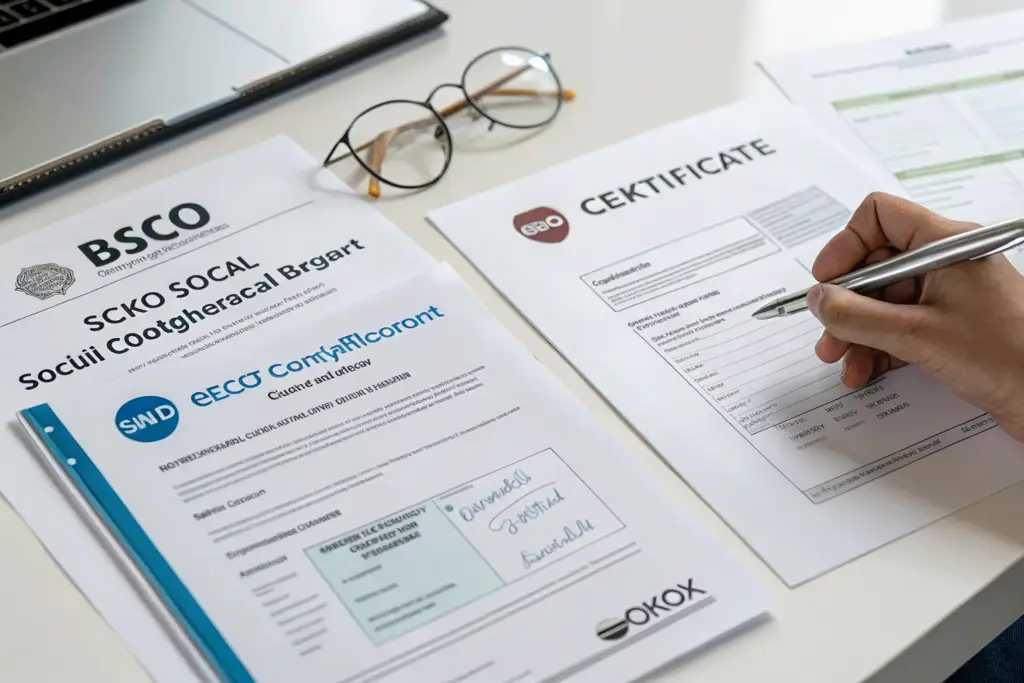
A quality floral dress supplier should have a current BSCI or SEDEX social compliance audit report, an OEKO-TEX Standard 100 certificate for their fabrics, and ideally an ISO 9001 quality management certification. These documents must be verifiable on the issuing body's website using the certificate number. A supplier who says "certifications are in process" or "we can send them later" is a red flag. Certifications are either current and verifiable, or they are not.
I provide my BSCI report, my OEKO-TEX certificate, and my ISO 9001 certificate to every new client before any payment is discussed. Here is how you check them.
Why Is a BSCI Audit Report Non-Negotiable for a Dress Supplier?
BSCI stands for Business Social Compliance Initiative. It is a social audit that checks working conditions, worker safety, wages, working hours, and environmental practices. A BSCI audit is conducted by an independent, approved auditing company like SGS, Intertek, or Bureau Veritas. The auditor visits the factory in person, inspects the premises, interviews workers, and issues a report with a grade.
A BSCI report proves the factory is not a sweatshop. It proves workers are treated fairly. For your floral dress brand, this is a marketing asset. You can tell your customers the dresses are ethically made. You can show the BSCI report on your website.
Ask the supplier for their BSCI report number and the name of the auditing company. Go to the auditing company's website. Send them an email with the report number. Ask them to verify the report's validity. A real report will be verified within 48 hours. A fake report will not exist in their system.
I had a client from London verify my BSCI report this way. She emailed SGS directly. They confirmed the report number, the audit date, and the rating. She placed her order the next day. The verification built instant trust.
What Does an OEKO-TEX Certificate Tell You About the Floral Fabric?
A floral print uses dyes. Cheap dyes can contain harmful chemicals like azo dyes, formaldehyde, or heavy metals. These chemicals can cause skin irritation or worse. An OEKO-TEX Standard 100 certificate means the fabric has been tested by an independent lab and found free of harmful substances. It is safe for human skin contact.
This is critical for a dress that is worn directly against the skin, especially in summer when the customer may perspire. A dress that causes a rash is a return and a bad review. An OEKO-TEX certificate is your insurance policy against this.
The certificate has a number. You can verify it on the OEKO-TEX website using the Label Check tool. Enter the number. The website will tell you if the certificate is valid, which company it belongs to, and what product classes it covers. Do this check. It takes two minutes. It protects your brand from a toxic fabric scandal.
How Do You Evaluate a Supplier's Communication Before Ordering?
The way a supplier communicates before you pay is the way they will communicate after you pay. A supplier who takes three days to reply to a simple question will take three days to reply when there is a production problem. A supplier who gives short, vague answers will give short, vague answers when you ask about a delay. Communication quality is a leading indicator of overall supplier quality.
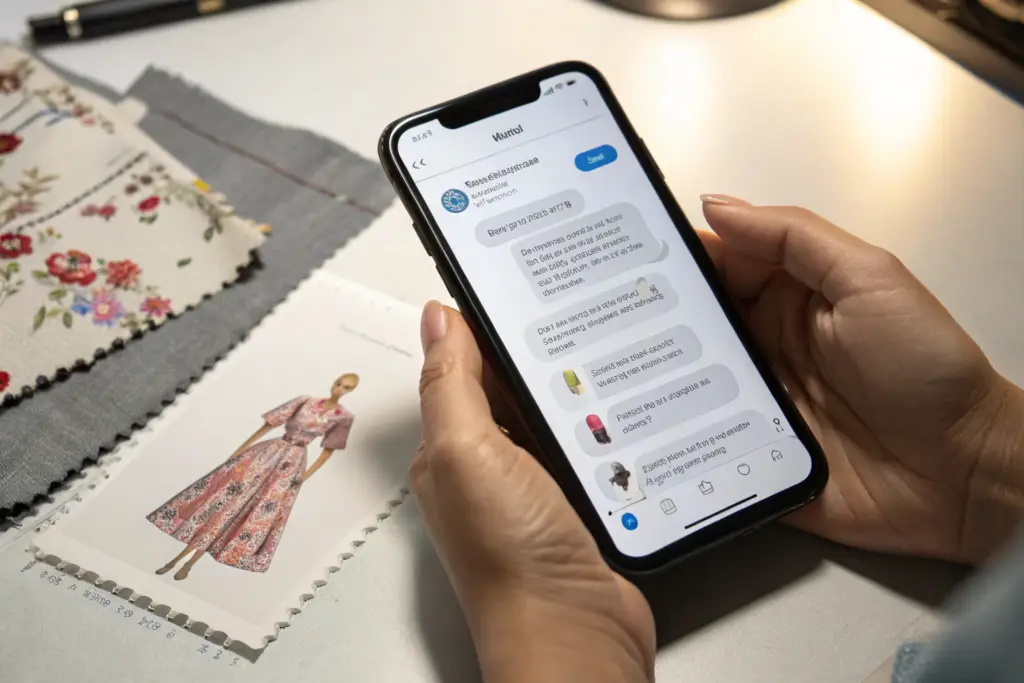
A professional floral dress supplier will respond to an initial inquiry within 24 hours, answer every specific question with a specific answer, provide photos and technical specifications without being asked multiple times, and offer a live video call without hesitation. A poor supplier will respond slowly, give generic answers like "good quality" or "no problem," and avoid direct questions about technical specifications like stitch density or fabric weight.
I answer inquiries within 12 hours. I provide technical answers with numbers, not adjectives. I offer a video call in the first conversation. This is the communication standard you should demand.
What Questions Reveal Technical Competence in Floral Dress Production?
A generic supplier can answer a generic question. "Can you make floral dresses?" "Yes." This tells you nothing. A technically competent supplier can answer a specific question about floral dress construction. The questions you ask reveal the supplier's knowledge level.
Ask these five questions. First: "What is the standard stitch density you use for the side seams on a lightweight rayon dress?" A quality answer is "10 to 12 stitches per inch." A vague answer is "We use high quality stitching."
Second: "How do you ensure the floral print placement is consistent across sizes?" A quality answer is "We use a graded print scale, so the pattern repeat scales proportionally with the size." A vague answer is "We cut carefully."
Third: "What seam finish do you recommend for an unlined A-line floral dress to prevent fraying?" A quality answer is "French seams on the side seams and a clean-finished serged edge on the hem." A vague answer is "We use good seam finish."
Fourth: "Can you send me a photo of a recent floral dress order on your production line right now?" A quality response is a photo sent within an hour. A vague response is "We will send later" and then days of silence.
Fifth: "Can we do a 10-minute video call today so I can see the production floor?" A quality response is "Yes, what time?" A vague response is an excuse.
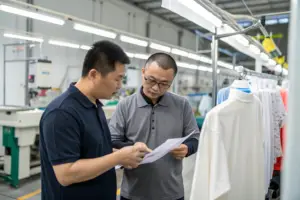
A supplier who passes these five questions has demonstrated technical competence, production transparency, and communication responsiveness. A supplier who fails any of them is a risk.
How Do You Interpret Alibaba's Response Rate and Transaction History?
Alibaba's platform metrics are useful but imperfect. The Response Rate shows the percentage of inquiries the supplier replies to within a certain timeframe. A rate above 95% is good. Below 80% is a red flag.
The Transaction History shows the number of orders processed through Trade Assurance. A supplier with a long, consistent transaction history has been operating on the platform for a while. A supplier with a short history is not necessarily bad, but they are unproven.
The On-Time Delivery Rate is critical. Alibaba tracks whether the supplier ships orders by the agreed date. A rate above 95% is good. Below 90% is a red flag. A floral dress for spring must arrive in spring. A supplier with a low on-time delivery rate will cost you a season.
Look at the Buyer Reviews. Read the detailed ones, not just the star ratings. Look for reviews that mention dress quality, print accuracy, communication, and delivery. A review that says "The floral print was exactly as shown and the fit was perfect" is more valuable than five stars with no comment.
Why Is a Physical Sample the Ultimate Comparison Tool?
The photos on Alibaba are marketing. The product descriptions are promises. The sample is the truth. You cannot compare suppliers based on digital images alone because every supplier uses the best photography they can afford. The sample reveals the actual fabric quality, the actual stitch density, the actual print sharpness, and the actual fit. A sample is a physical contract. It says, "This is what I will deliver."
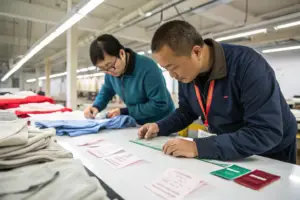
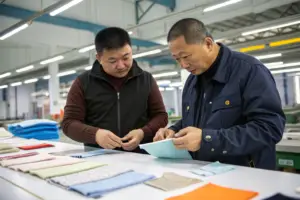
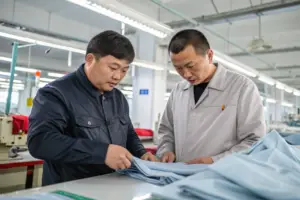
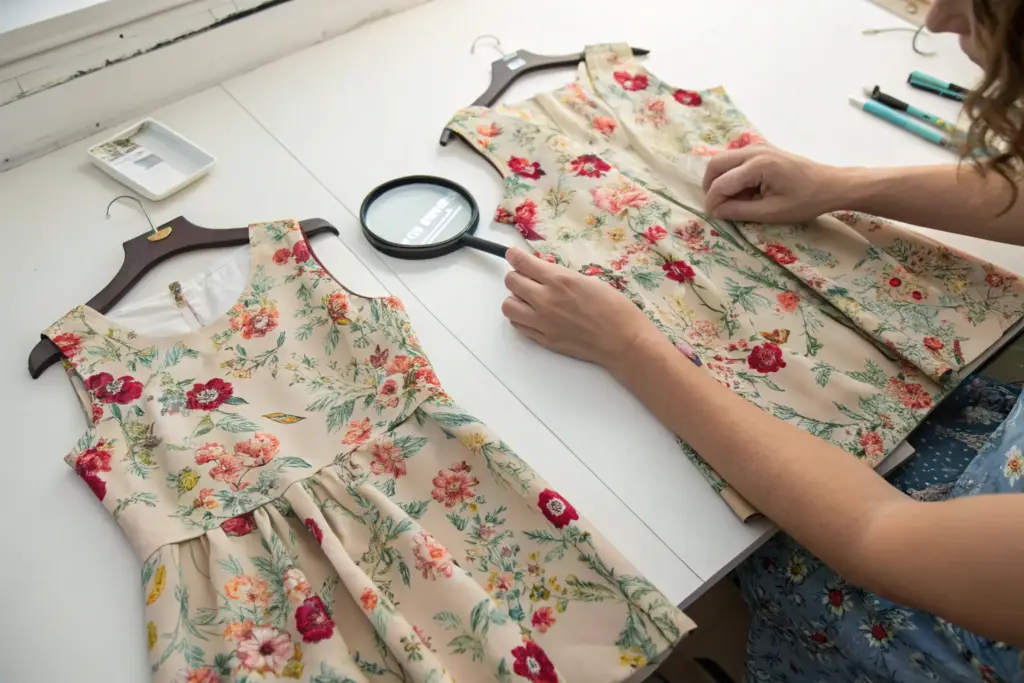
The physical sample is the ultimate comparison tool because it reveals what the supplier's marketing hides. You must order a sample from at least your top two or three suppliers. When the samples arrive, you compare them side-by-side on fabric weight, print color accuracy, stitch density, seam finish quality, and fit on a live model. You do a wash test on each sample. You pull the seams. You inspect the inside finishing. The differences that were invisible in photos become glaringly obvious when you hold the two dresses in your hands.
A sample costs $50 to $150 including shipping. It is the most valuable investment in your supplier selection process. I encourage every potential client to order a sample. I want them to compare it to the competition.
What Specific Tests Should You Perform on a Dress Sample?
Do not just look at the dress. Test it. Put it on a dress form or a fit model. Does the A-line flare fall correctly? Does the neckline lie flat against the skin? Does the waist seam, if present, sit at the natural waist?
Turn the dress inside out. Inspect the seams. Are they French seams or serged edges? Are the seam allowances at least 3/8 inch? Are there bar-tacks at the stress points? Is the hem clean and deep?
Pull the seams gently. Do the threads grin? Does the seam pucker? A well-sewn seam holds tight and lies flat.
Wash the sample in warm water. Dry it on medium heat. Does the dress shrink? Measure the length before and after. The shrinkage should be less than 3%. Does the floral print fade? Does the fabric pill? The washed sample is the real dress. The unwashed sample is a promise.
Compare the print to the Alibaba photo. Is the color accurate? Are the flowers the same scale? Is the print placement on the dress similar to the photo? A common trick is to photograph the sample in perfect lighting and then ship a dress with duller colors. Your own eyes are the judge.
How Do You Turn Sample Feedback into a Production Specification?
After you test the samples, you will have a clear favorite. The winning sample becomes the "Approved Sample." You and the supplier both sign a sample tag and attach it to the dress. The supplier keeps a duplicate. This sample is the physical standard for the bulk production. Every production dress must match this sample.
You also send a written specification document. It lists the SPI for every seam, the seam finish type, the hem depth, the fabric weight, the care label content, and the packaging method. The Alibaba order contract, either via Trade Assurance or direct, references the Approved Sample and the Specification Document. If the bulk production does not match, you have a contractual basis for a claim. The sample is the foundation of the legal agreement.
I have a client in San Diego who does this meticulously. She sends me a marked-up specification document with every sample. I use that document to set up the production line. We both refer to the same standard. There is no ambiguity. The bulk production matches the sample exactly.
Conclusion
Comparing floral dress suppliers on Alibaba is not a shopping exercise. It is a due diligence investigation. You start by verifying the supplier's legal identity. Are they a factory or a trader? You check their certifications. Are they ethically audited? Is their fabric safety-tested? You probe their communication. Do they answer specific technical questions quickly and accurately? You order a physical sample. You test it, wash it, pull it, measure it, and wear it. You compare the samples side-by-side. Then you document the approved standard in a signed sample and a written specification.
The supplier who passes all five gates is not necessarily the cheapest. They are the lowest risk. A cheap dress that arrives late, fades in the wash, and fits poorly is not cheap. It is a liability. A dress that arrives on time, washes beautifully, and fits your customer perfectly is an asset. The price difference between the two is the cost of your due diligence.
If you are comparing floral dress suppliers on Alibaba right now, include Shanghai Fumao in your evaluation. Send an inquiry to our Business Director, Elaine. Ask the five technical questions I listed. Request a live video call. Order a sample. Test it against the competition. Our email is elaine@fumaoclothing.com. I am confident we will pass your comparison because we built our factory to meet the standard of a professional buyer, not just to win an Alibaba click. Do the work. Compare the samples. The best dress will prove itself.