Every factory you evaluate claims to be the best. "Best quality." "Best price." "Best service." The word "best" has been used so many times by so many suppliers that it has lost all meaning. You have been burned before by a factory that promised excellence and delivered mediocrity. You are right to be skeptical. So I will not ask you to believe that Shanghai Fumao is the best manufacturer for A-line floral dresses. I will show you what we do, how we do it, and what our clients say about working with us. You can decide for yourself whether our capabilities match your definition of "best." The only claim I will make outright is this: we are not the right manufacturer for every brand. We are the right manufacturer for brands that value quality over speed, partnership over transaction, and long-term margin stability over the lowest possible FOB quote.
Shanghai Fumao Clothing distinguishes itself as a manufacturer of A-line floral dresses through five specific, verifiable capabilities: an in-house sample studio that develops your exclusive silhouettes and prints rather than copying stock designs; a woven dress-specialized production system calibrated for the specific construction requirements of A-line dresses; a fabric and print partner network that provides access to exclusive, small-batch European linens and digital print technologies; a structured client protection framework including milestone-based payments, DDP logistics, and sealed pre-production samples; and a communication culture built on proactive, transparent, engineer-led reporting rather than sales-rep filtering. Whether these capabilities make us the "best" for your brand depends on your specific priorities. I invite you to test our claims against your requirements.
My name is Elaine. I am the co-owner of Shanghai Fumao. I started my career as a pattern maker, cutting and draping muslin on a dress form in a small sample room in Shanghai. I built this factory over fifteen years because I wanted to create a manufacturing environment that I, as a former pattern maker and merchandiser, would have trusted with my own designs. I have seen what happens when a factory prioritizes volume over quality, speed over accuracy, and sales promises over production reality. I designed Shanghai Fumao to be the opposite of that factory. In this article, I will walk you through each of our core capabilities, provide specific evidence for each claim, and honestly address the types of brands for whom we are not the right fit.
How Does Our In-House Sample Studio Turn Your Design Concept Into a Production-Ready Dress?
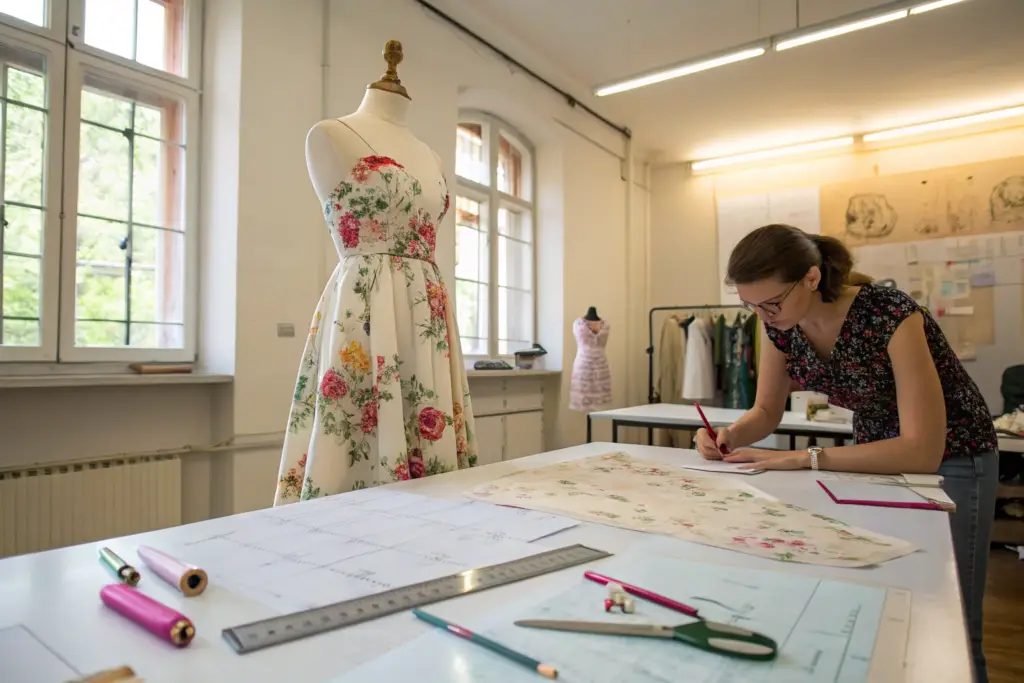
The difference between a beautiful design sketch and a dress that sells through at full price is the sample development process. A factory that treats sampling as a quick prelude to the "real work" of production will produce a dress that looks like the sketch from a distance but fails on a body. The armhole gapes. The print is misaligned at the waist seam. The hem hangs unevenly. These are not random defects. They are the direct result of a sample process that prioritized speed over accuracy, flat pattern copying over draping, and verbal approval over visual documentation. A quality A-line floral dress is born in the sample room, not on the production floor.
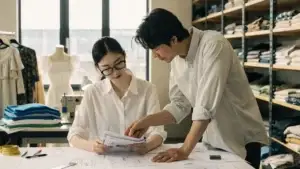
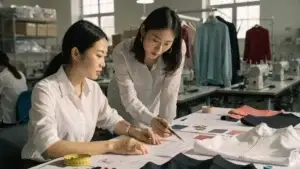
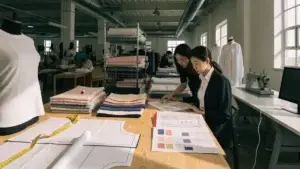
Our in-house sample studio is staffed by a dedicated pattern engineer with over twenty years of woven dress experience and two full-time sample makers who do not work on production lines. They work exclusively on client development. The studio is equipped with Alvanon European and North American standard dress forms in sizes 2 through 18, a digital pattern-making CAD system, and a fabric library of over 100 linen and cotton qualities. We develop your A-line floral dress through a structured four-stage process: design interpretation and muslin fitting, exclusive print development with strike-off approval, first complete sample in your chosen fabric and print, and a pre-production sample that serves as the legally binding quality standard for your bulk order. We do not guess at your vision. We build it, show it to you, and revise it until it matches what you saw in your mind.
What Is the Difference Between a Factory That "Makes Samples" and a Factory With a True Development Studio?
Many factories will tell you they have a "sample room." In most cases, this is a single sewing machine in a corner of the production floor, operated by a sewer who also works on the production line. The factory's version of "sampling" is taking your tech pack, cutting the fabric as specified, and sewing the pieces together. If the tech pack contains an error—a measurement that is physically impossible for a woven fabric, a seam type that will pucker on a curve—the factory does not catch it. They sew what you specified. The sample arrives. It is wrong. You do not know why. Three sampling rounds pass. The season deadline approaches. You approve a sample you are not happy with because you ran out of time.
A true development studio does not just execute your instructions. It interprets them. It challenges them when it sees a problem. It suggests alternatives that you may not have considered. When our pattern engineer receives a design brief for an A-line floral dress, she reviews it not just for technical accuracy but for constructability in the chosen fabric. She asks questions that a copyist does not ask. "This specified hem circumference, with this lightweight linen, will flutter in an uncontrolled way when the wearer walks. Would you like us to increase the hem facing weight to stabilize it, or adjust the hem circumference by two centimeters?" "This floral print has a large-scale repeat. If we place the bodice pattern piece here on the print layout, the focal flower will be centered on the bust. If we place it here, the flower will be cut off at the side seam. Which do you prefer?" These are not execution questions. They are design collaboration questions. They are the difference between a supplier who makes what you asked for and a partner who helps you make what you actually want. The sample development versus sample execution in garment manufacturing article explains why this distinction matters for brands that compete on design rather than price.
How Does Our Print Development Process Ensure Your Florals Are Exclusive and Accurate?
A stock floral print from a supplier's catalog can be bought by your competitor. Your dress becomes a commodity. An exclusive print, developed for your brand, is a defensible asset. The development process for an exclusive print requires specific technical capabilities and a structured approval workflow to ensure the colors on the fabric match the colors you approved on the screen or the paper proof.
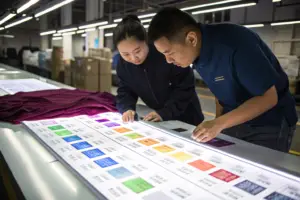
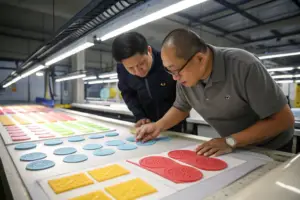
Our print development process works as follows. You provide a print concept. This can be a detailed vector file ready for production, a reference image of a floral style you like, or a color palette and a description of the floral type. Our print partner creates a digital print file and produces a paper proof for your initial color review. You mark up the paper proof with your color adjustments. Once the paper proof is approved, we produce a fabric strike-off. The strike-off is a printed sample of the repeat pattern on the actual fabric you have chosen for the dress. A print that looks vibrant on paper can look dull on linen because linen absorbs ink differently than paper. The strike-off is the critical color checkpoint. You review the strike-off under natural daylight. You approve the colors, or you request adjustments. Only after the fabric strike-off is approved do we proceed to bulk printing. This process adds approximately two to three weeks to the development timeline compared to using a stock print. It costs more. It produces a print that belongs to your brand alone, and it ensures the colors on the finished dress are exactly what you approved, not a surprise that arrives in the shipping carton. The digital textile printing and color management for fashion article explains the technology and the workflow. This capability is standard in our sample studio. It is absent in factories that only offer stock prints.
What Woven Dress Production Capabilities Make Our Quality Consistent Across Orders?
A factory can produce one beautiful sample. The sample proves that the most skilled sewer in the company, working without time pressure, can make your dress. It proves possibility. It does not prove repeatability. Repeatability—the ability to produce 500 or 1,000 dresses that are each as well-made as the sample—requires a production system that is designed for consistency, not dependent on individual heroics. This is where most factories fail. The sample is exquisite. The bulk order is a disappointment. The brand is left wondering what happened between the sample room and the shipping container.
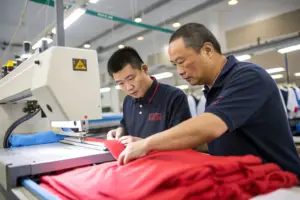
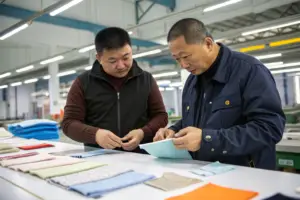
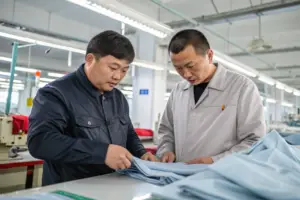
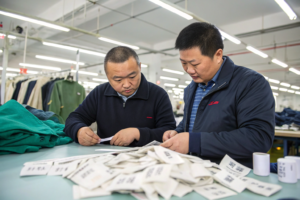
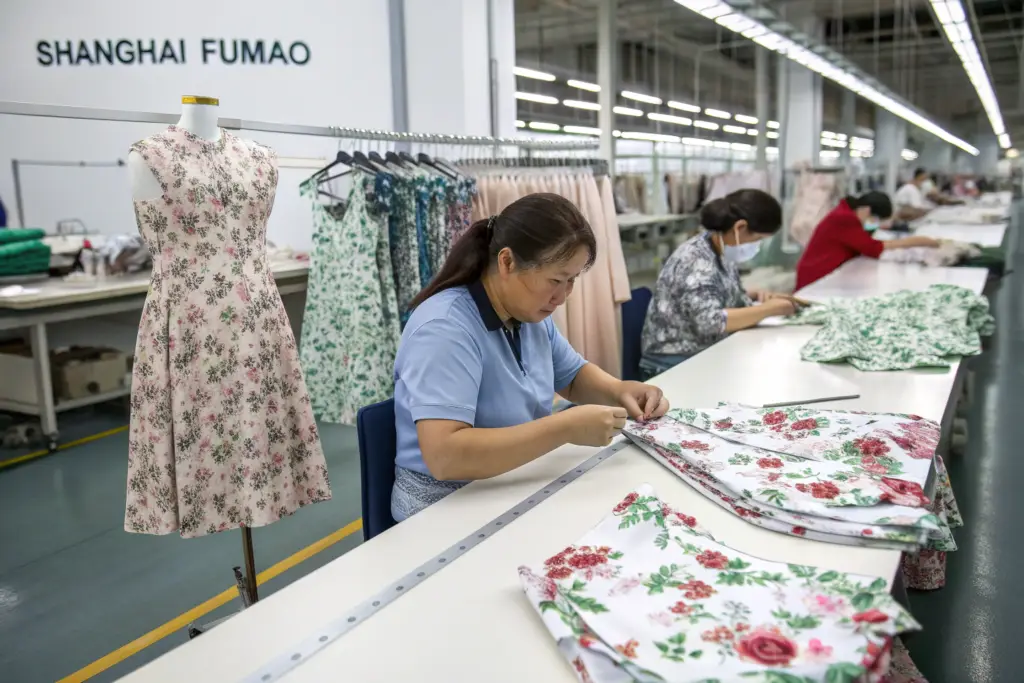
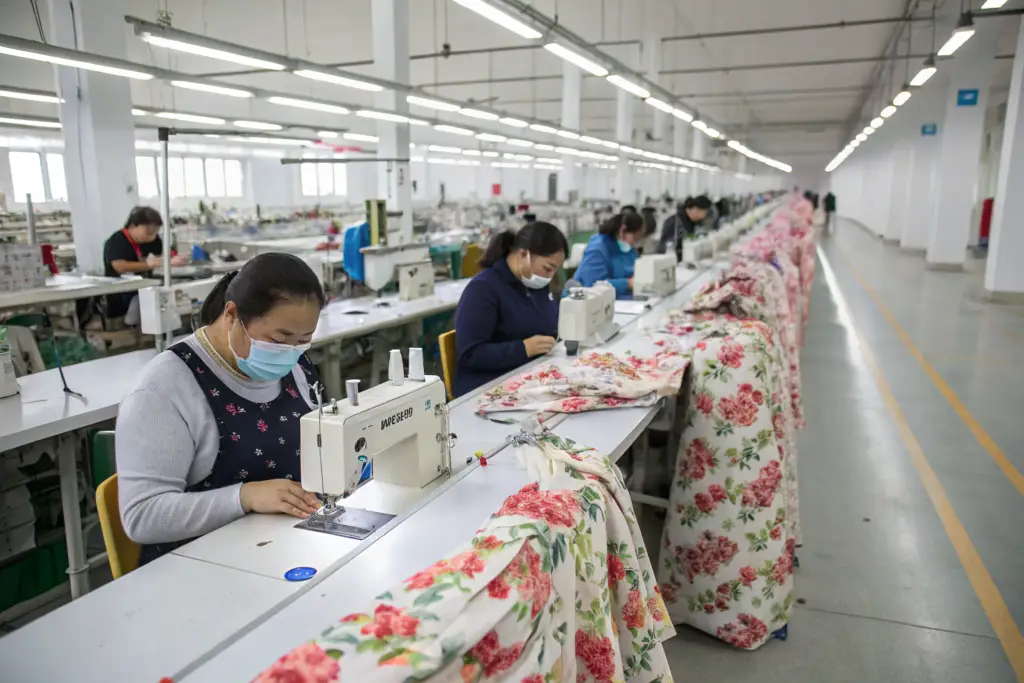
Our woven dress production is structured around three principles that produce consistent quality across orders. First, we run a dedicated woven dress line, not a mixed-product line. The machines are calibrated for woven fabrics. The workers are trained specifically on the operations that woven dresses require: invisible zipper insertion, clean-finished bodice facings, French seams on skirt panels, even hemming on flared silhouettes. Second, our in-line QC frequency is twice the industry standard, with a dedicated dress inspector checking measurements and construction on 20% of garments during production, not just at the end. Third, every dress undergoes a hanging inspection before packing, where it is placed on a form and visually assessed for drape, print alignment, and overall appearance. A dress that looks good flat can look wrong on a body. The hanging inspection catches what the flat measurement misses.
What Specific Construction Standards Do We Apply to A-Line Dresses?
A-line dresses have specific stress points and specific aesthetic requirements that a generalist factory may not address. The armhole must lie flat against the body without gaping. The invisible zipper must be truly invisible, with the zipper tape concealed and the seam closed smoothly above and below the zipper. The hem must maintain the A-line flare without puckering, which requires specific handling during pressing. The bodice-to-skirt seam must align the print across the seam so the floral pattern is not interrupted.
Our standard construction specifications for A-line dresses include these requirements, which are written into our quality manual and checked at every QC gate. Armholes are finished with a cleanly turned and understitched facing or a full lining, never with a simple overlocked edge. The invisible zipper is inserted using a specialized zipper foot and is inspected for smooth operation and full concealment on every dress. The side seams and the bodice-to-skirt seam are either French-seamed for lightweight fabrics or clean-finished with bound edges for heavier fabrics. The hem is a double-turn hem, precisely 1.5 centimeters wide, topstitched at a consistent 2 millimeters from the inner folded edge. The hem circumference is measured on every dress during the hanging inspection to ensure the flare is consistent and the dress does not twist. These are not exotic standards. They are the baseline for a quality woven dress. But they are standards that require training, inspection, and a production culture that does not cut corners when the schedule is tight. At Shanghai Fumao, the QC inspector has the authority to stop the line if a quality standard is not being met. The production manager cannot overrule the QC inspector. This structural separation of quality authority from production authority is what makes our quality claims provable, not aspirational. The woven garment construction quality standards guide details the industry benchmarks. We meet or exceed them on every order.
How Does Our Hanging Inspection Catch Defects That Flat Inspection Misses?
A standard QC inspection measures a garment laid flat on a table. The inspector checks the measurements, the seam integrity, and the stitching quality. This catches many defects. It misses others. A dress that measures correctly on the table can hang incorrectly on the body. The drape can be distorted by a slight grain line deviation that is invisible in a flat measurement. The print can appear aligned on the table but look misaligned when the dress is worn because the body's curves shift the fabric. The hem can appear even on the table but hang unevenly because one side seam was sewn with slightly more tension than the other.
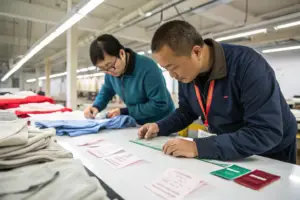
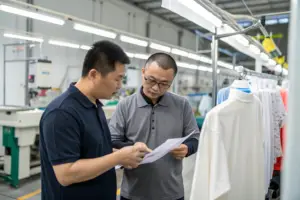
Our hanging inspection places each dress on a standardized dress form after the flat QC is complete. The inspector walks around the form. She checks the hang of the hem from all angles. She checks the drape of the skirt. She checks the alignment of the print at the side seams and the bodice-to-skirt seam on a three-dimensional form. She checks that the neckline lies flat and the armholes do not gape. She checks that the invisible zipper remains invisible when the dress is on a body. A dress that passes the flat QC but fails the hanging inspection is sent back for rework. This additional inspection step adds approximately three to five minutes per dress. It is time and labor that a volume-obsessed factory will not spend. We spend it because we know that our clients' customers will judge the dress on their bodies, not on a table. The garment hanging inspection for drape and appearance explains why this three-dimensional check is essential for dresses and other garments where drape is a critical quality attribute.
What Client Protections Do We Build Into Every Order?
A beautifully made dress that arrives late is a problem. A beautifully made dress that arrives with a different print color than you approved is a problem. A beautifully made dress for which you paid 100% upfront and have no recourse if the quality is wrong is a liability. The quality of the product is only half of what a manufacturer delivers. The other half is the structural protection that surrounds the transaction: the payment terms, the delivery guarantee, the quality standard, and the logistics accountability. A manufacturer that excels at sewing but neglects these protections is a manufacturer that exposes your brand to risks you cannot control.
We build four client protections into every order. First, milestone-based payment terms that tie your financial exposure to verified production progress, so you are not paying 100% before you have proof the goods exist and meet your specifications. Second, a live, shared Time & Action calendar that gives you real-time visibility into your order's status at every production stage, from fabric procurement to container loading. Third, a sealed pre-production sample, signed by both parties, that serves as the legally binding quality reference standard for your bulk order. Fourth, DDP logistics as our standard shipping model, transferring customs clearance risk, port fee volatility, and delivery accountability from you to us. These protections are not optional add-ons. They are built into our standard operating procedure.
How Does the Sealed Pre-Production Sample Function as a Legal Quality Standard?
I have explained the mechanics of the sealed PP sample in previous articles on sampling and quality control. Its role as a client protection deserves emphasis here. In a dispute over whether the bulk goods match what was approved, the sealed PP sample is the arbiter. It was cut from the actual bulk fabric. It includes all approved trims, labels, and construction details. It was measured against the spec sheet, and the measurements were recorded. It was signed and dated by both you and us. One copy is in your office. One copy is in ours, filed with the order documents.
When the bulk shipment arrives, if you believe the dresses do not match the approved sample, you have a physical, signed, dated reference standard. You place the bulk dress next to the PP sample. You compare them. If they match, the dispute is resolved in five minutes. If they do not match, the discrepancy is objectively demonstrable. The supplier cannot argue that "this is what you approved" because the approved object physically exists. This protocol has resolved disputes that would otherwise have escalated into chargebacks, and it has prevented disputes from arising because our production team knows the standard is documented and cannot be verbally reinterpreted. The pre-production sample as quality contract guide explains the legal and operational value of this practice. It is rare in Chinese export factories. We made it standard because we want our quality claims to be provable, and because we want our clients to sleep well between the time they approve the sample and the time they open the carton.
Why Do We Offer DDP as Our Standard Shipping Model?
I have written a dedicated article on the three benefits of DDP shipping. Its role as a client protection is straightforward. Under FOB, you are the importer of record. You are legally responsible for customs classification, duty payment, and any customs exams or penalties. You coordinate the freight forwarder, the customs broker, and the trucking company. When a problem occurs, you manage it, and you pay for it. Under DDP, we are the importer of record. We handle customs clearance. We pay the duties. We manage the logistics chain from our factory floor to your warehouse door. The price we quote is the price you pay. There are no surprise storage fees, customs exam bills, or port congestion surcharges.
We offer DDP as our standard model because we believe a supplier's responsibility does not end at the loading dock. It ends when you open the carton in your warehouse and the dresses are exactly what you expected. This model transfers the logistics risk from you to us, which is where it belongs because we control the production and the shipping timeline. A DDP shipment that arrives late or damaged is our problem, not yours. A FOB shipment that arrives late or damaged is your problem, even though you controlled none of the entities that caused the delay or damage. The DDP versus FOB risk allocation for importers analysis confirms that DDP provides superior protection for the buyer. We made it our standard because it aligns our incentive with yours: we both want the dresses to arrive on time and in perfect condition.
For Which Types of Brands Are We NOT the Right Manufacturer?
No manufacturer is right for every brand. A manufacturer who claims to serve everyone serves no one well. I want to be honest about the types of brands for whom Shanghai Fumao is not a good fit. This honesty protects you from a mismatched partnership and protects us from taking on clients whose needs we cannot meet. A partnership that is misaligned on fundamentals will fail, regardless of good intentions on both sides.
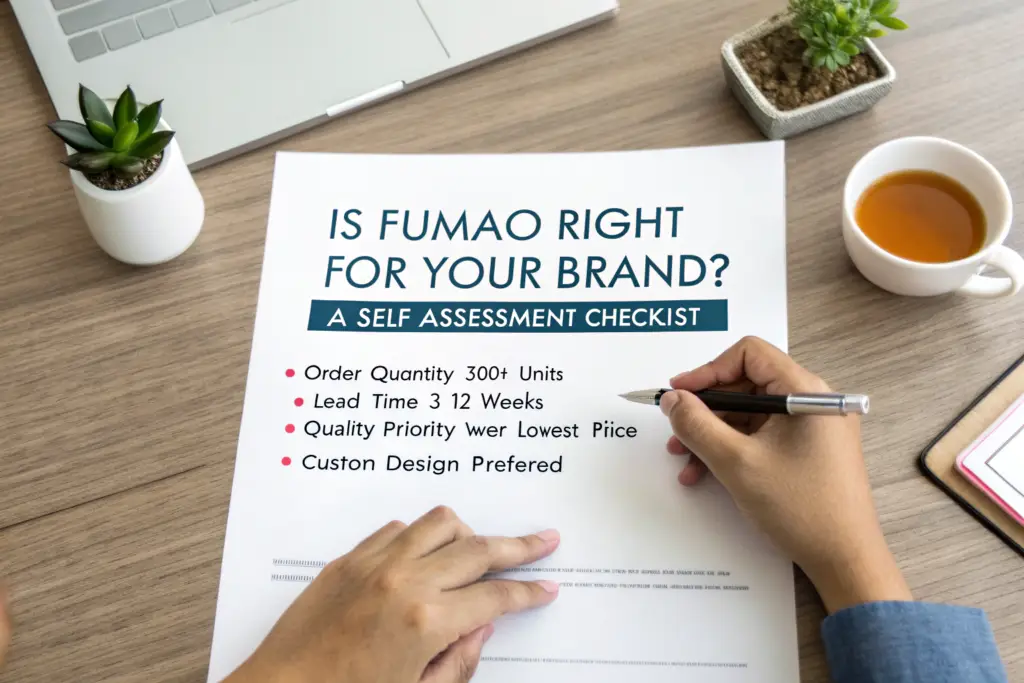
Shanghai Fumao is likely not the right manufacturer for your brand if your primary purchasing criterion is the lowest possible unit price, if your typical order quantity is below 300 units per style, if you require a production lead time shorter than eight weeks as a standard timeline, or if you prefer to buy stocked, off-the-shelf designs rather than developing custom silhouettes and prints. We do not compete on price against commodity factories. Our minimums and lead times reflect the quality of our materials and the thoroughness of our process. Our value proposition is built on quality, reliability, and design partnership, not on speed and cheapness. If your brand's needs align with the first list, there are many factories that will serve you well. If your brand's needs align with the second list, we should talk.
What If Your Brand Prioritizes the Lowest Unit Price Above All Else?
The global apparel manufacturing market is stratified by price and quality. At the bottom are commodity factories that compete solely on price. They use the cheapest available fabric, the fastest possible sewing methods, and the minimum acceptable QC. Their FOB prices are low. Their landed costs, after factoring in defect rates, return processing, and inconsistent quality, are often higher than they appear. But the upfront price is undeniably low, and for brands whose business model depends on that low upfront price, these factories are the appropriate choice.
We do not compete in that tier. Our fabric costs more because we use certified European flax for our linen dresses, OEKO-TEX certified dyes for our prints, and genuine YKK zippers and corozo buttons for our trims. Our labor costs more because we pay skilled, experienced sewers a stable wage rather than temporary workers at piece rates. Our overhead costs more because we maintain a dedicated sample studio, a greige fabric bank, a live T&A tracking system, and a QC department that is independent of production. These costs are reflected in our FOB price, which is typically 20% to 30% above the lowest quotes you will find on Alibaba. The brands that choose us do so not because our price is the lowest, but because their total cost of ownership—including returns, markdowns, chargebacks, and the brand damage of inconsistent quality—is lower with us. If your business model requires the lowest upfront FOB price to work, we respect that. We are simply not your supplier. The total cost of ownership versus FOB price in apparel sourcing article explains why the lowest FOB price often produces the highest total cost. The brands that understand this distinction are our clients.
What If Your Typical Order Quantity Is Below Our Minimum?
Our minimum order quantity for custom-developed styles is 300 units per style, with some flexibility depending on the complexity of the design and the fabric. This minimum is not arbitrary. It is driven by the economics of fabric dyeing, print setup, and production line efficiency. A custom print requires a minimum print run to be cost-effective. A custom dye lot requires a minimum meterage for the dye house to run the batch. A production line requires a minimum volume to achieve the efficiency that keeps our labor costs within your budget.
If your typical order quantity is 100 units per style, we are not the right manufacturer for your core program. There are excellent small-batch manufacturers and domestic production options that serve this segment well. We can, however, serve brands in the 100 to 200 unit range through our "stock fabric, adapted silhouette" program, where we adapt one of our existing A-line dress patterns in a fabric we stock in our greige bank. This reduces the development cost and the fabric minimum, making smaller orders feasible. If you are in this range, contact us and we can discuss whether your specific style can be accommodated. The apparel manufacturing minimum order quantity economics explains why minimums exist and how they vary by product type and factory structure. Our minimums reflect our specialization in quality woven dresses, not a desire to exclude smaller brands.
Conclusion
Is Shanghai Fumao the best manufacturer for A-line floral dresses? The answer depends on how you define "best." If "best" means the lowest FOB price on Alibaba, then no, we are not. If "best" means the fastest possible delivery, then no, a stocked wholesale platform will be faster. If "best" means a manufacturer who will develop your exclusive silhouettes and prints in a dedicated sample studio, produce your dresses on a specialized woven dress line with rigorous hanging QC inspections, protect your order with milestone-based payments, DDP logistics, and sealed pre-production samples, and treat your brand's long-term success as the measure of their own performance—then I believe we are a strong candidate for the title, and I invite you to test that belief with evidence.
You can test us in several ways, each carrying progressively more commitment. Request a stock sample of one of our existing A-line dress styles. Wear it. Wash it. Inspect the seams. Compare it to your current supplier's quality. Ask us for a DDP landed cost quote on a specific dress you are planning. Compare the true landed cost, including all the fees your current FOB supplier bills after shipment, to our single, all-inclusive price. Commission a small trial development project: one style, your exclusive print, our pattern-making and sample development. Evaluate our communication, our timeline accuracy, and the quality of the sample. Each of these steps provides objective data about whether our capabilities match our claims.
My name is Elaine. My email is elaine@fumaoclothing.com. Contact me with your requirements, your skepticism, and your questions. I will answer honestly, even when the honest answer is that we are not the right fit. Because a good partnership, like a good dress, is built on a foundation of truth, not on a fantasy of perfection.