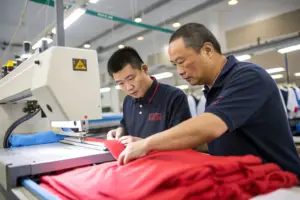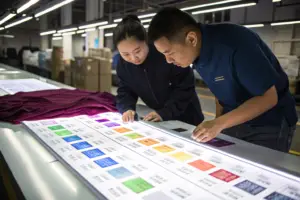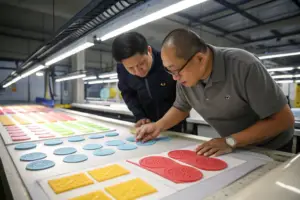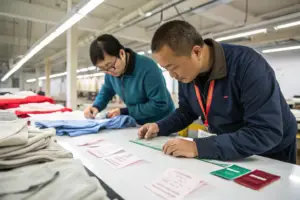
You are standing in a showroom, or scrolling a wholesale platform, or opening a sample package from a potential supplier. The dress looks beautiful at first glance. The floral print catches your eye. The silhouette seems right. But you have been in this industry long enough to know that first glances lie. A dress that looks beautiful on a hanger can feel cheap on the body, fall apart after three washes, or hang with a twisted hem that customers will return. You need to know, in minutes, not weeks, whether this dress is worth your investment. You need a systematic, repeatable method to separate the dress that will build your brand from the dress that will generate returns, complaints, and chargebacks.
Spotting a high-quality A-line floral dress requires inspecting five specific areas, in order: the fabric composition and print quality, which determine the dress's tactile appeal and visual authenticity; the seam construction and interior finishing, which reveal the manufacturer's quality standards; the invisible zipper insertion, which is the single most reliable indicator of overall construction care; the hem finish and skirt hang, which determine how the dress moves on the body; and the bodice structure and armhole fit, which determine whether the dress looks polished or cheap when worn. Each area has specific, observable indicators that you can check in under two minutes, without special tools. If a dress passes all five checks, it is a high-quality garment. If it fails any one, the supplier has cut corners, and the dress will generate returns.
My name is Elaine. I have spent over fifteen years manufacturing woven dresses, linen pants, and coordinated collections at Shanghai Fumao. I have inspected thousands of dresses. I have also seen the returns data from our brand partners, correlating specific construction flaws with specific customer complaints. I know exactly where cheap dresses fail and exactly how quality manufacturers prevent those failures. In this article, I will teach you the five-point inspection method I use to evaluate every sample that leaves our factory. You can use this method in a showroom, at a trade show booth, or on a sample mailed to your office. It will save you from investing in dresses that look good in photos but fail on your customers.
Why Is Fabric Composition and Print Quality the First and Most Revealing Check?
The fabric is the dress. You can construct a dress with perfect seams and a flawless zipper, but if the fabric feels cheap, looks shiny, or loses its print after washing, the dress is a return waiting to happen. The customer's first interaction with the dress is tactile. She touches the fabric. If it feels like plastic, she has already decided, consciously or not, that the dress is not worth its price. Her second interaction is visual. She looks at the print. If the colors are dull or the print is blurry, she questions the brand's quality standards. The fabric and the print are the dress's first handshake with the customer. A limp, clammy handshake ruins the relationship before it begins.
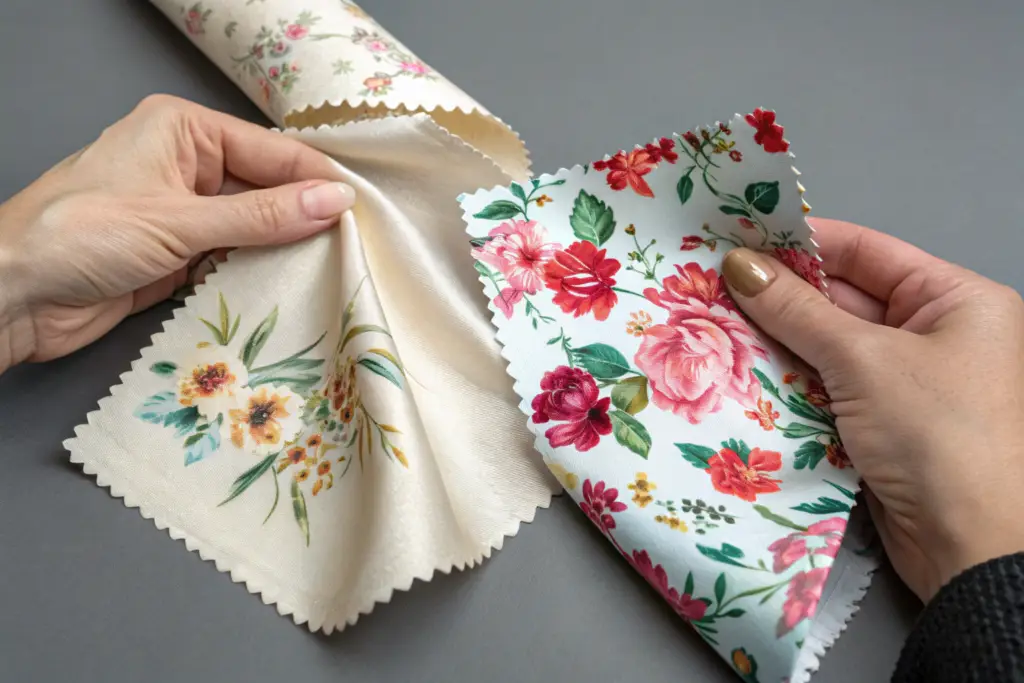
The first quality check is a three-part fabric and print assessment. Touch the fabric. High-quality woven dress fabrics—linen, cotton voile, cotton poplin, viscose crepe—feel cool, breathable, and pleasant against the skin. Cheap polyester feels slick, warm, and clammy. Look at the print clarity. A high-quality digital or screen print has crisp edges, vibrant but natural color saturation, and no visible pixelation. A cheap print looks blurry, faded, or has a visible dot matrix pattern. Check the print alignment at the seams. A quality dress has the floral pattern matched at the side seams and the waist seam. A misaligned print is a flashing neon sign that says "cost-cutting." If the fabric and print fail this check, do not bother inspecting further. The dress is a commodity, not a premium product.
How Can You Identify Natural Fibers and Quality Weaves by Touch Alone?
You cannot carry a burn test kit into a trade show booth. But you can develop your tactile memory for quality fabrics. The difference between a quality woven dress fabric and a cheap imitation is detectable by touch, and with practice, the detection becomes instantaneous.
High-quality linen feels cool to the touch, even in a warm room. It has a characteristic slub texture—small, irregular thickenings in the yarn that are natural to flax fiber. These slubs are randomly distributed and feel organic, not mechanical. Cheap linen imitations, usually polyester or viscose blends, feel warmer, smoother, and more uniform. They lack the cool hand and the organic slub of real linen. High-quality cotton voile feels like a soft cloud. It is lightweight, semi-sheer, and has a gentle, fluid drape. It is perfect for A-line dresses with a gathered or tiered skirt. Cheap voile imitations feel stiff, papery, or have an unnaturally slick finish. High-quality cotton poplin feels crisp, smooth, and substantial. It holds a shape well and is ideal for more structured A-line silhouettes. Cheap poplin feels thin, flimsy, or has a plasticky coating. The natural fiber identification for apparel buyers guide provides additional methods for verifying fiber content when you have access to a fabric swatch and a lighter. For a showroom evaluation, trust your touch. Your fingers know quality. You just need to give them the vocabulary to describe what they are feeling.
What Does Print Alignment at the Seams Reveal About Manufacturing Standards?
Print alignment at the seams is the manufacturing equivalent of a restaurant's bathroom. It is not the part of the product the customer is supposed to notice. It is the part that reveals how much the establishment cares when no one is looking. Aligning a floral print at the side seams and the waist seam requires the cutting room to match the pattern pieces to the print repeat. This takes time. It wastes fabric because the pattern pieces cannot be nested as tightly on the marker. It requires a skilled cutter who understands print matching, not just a machine operator following a digital file.
A factory that prioritizes cost over quality will ignore print alignment. The cutter will place the pattern pieces to minimize fabric waste, not to match the print. The side seams will cut through flowers at random points. The waist seam will show a jarring break in the pattern. The dress, viewed from the front, might look fine. Viewed from the side or back, it will look sloppy. The customer will not consciously think "the print is misaligned at the side seam." She will think "this dress looks cheap." Print alignment is a silent quality signal. A dress with carefully matched prints at the major seams signals that the manufacturer invested time and fabric in getting the details right. A dress with misaligned prints signals that the manufacturer optimized for speed and cost, and if they cut this corner, they cut others that you cannot see. The print alignment standards for quality garment manufacturing guide explains the industry benchmarks for print matching. A quality dress matches the print at the center front, the side seams, and the bodice-to-skirt seam. A dress that fails to match at any of these points is a second-quality garment, regardless of the hangtag price.
How Does Seam Construction and Interior Finishing Separate Premium From Commodity Dresses?
The outside of a dress can be deceptive. A skilled sewer can make a cheap fabric look presentable from the outside with careful pressing and strategic topstitching. The inside of the dress cannot lie. The seam finishes, the facing treatments, the label attachment, and the zipper tape all reveal the manufacturer's true quality standards. A customer may not turn every dress inside out before buying, but she will discover the interior quality when she wears the dress, washes the dress, and feels the seams against her skin. A dress with a beautiful exterior and a messy, scratchy interior is a dress that will be worn once and returned, or worn once and donated. A dress with an interior as clean as the exterior is a dress that builds brand loyalty.
Turn the dress inside out. Inspect three interior indicators. First, the seam allowances. A quality woven dress has clean-finished seam allowances—French seams where the raw edge is fully enclosed, or flat-felled seams, or bound seams with a soft cotton tape. An overlocked, serged edge that is left raw and exposed is the hallmark of fast fashion. Second, the bodice facing or lining. A quality dress has a fully faced or lined bodice, with the facing neatly turned, pressed, and understitched so it does not roll to the outside. A cheap dress has an unlined bodice with raw edges barely finished, or a facing that gapes and rolls. Third, the labels. A quality dress has a soft, woven main label and a care label with detailed fiber content and washing instructions. A cheap dress has a scratchy, printed satin label, or worse, a care label with vague or missing information.
Why Is an Overlocked Seam on a Woven Dress a Warning Sign?
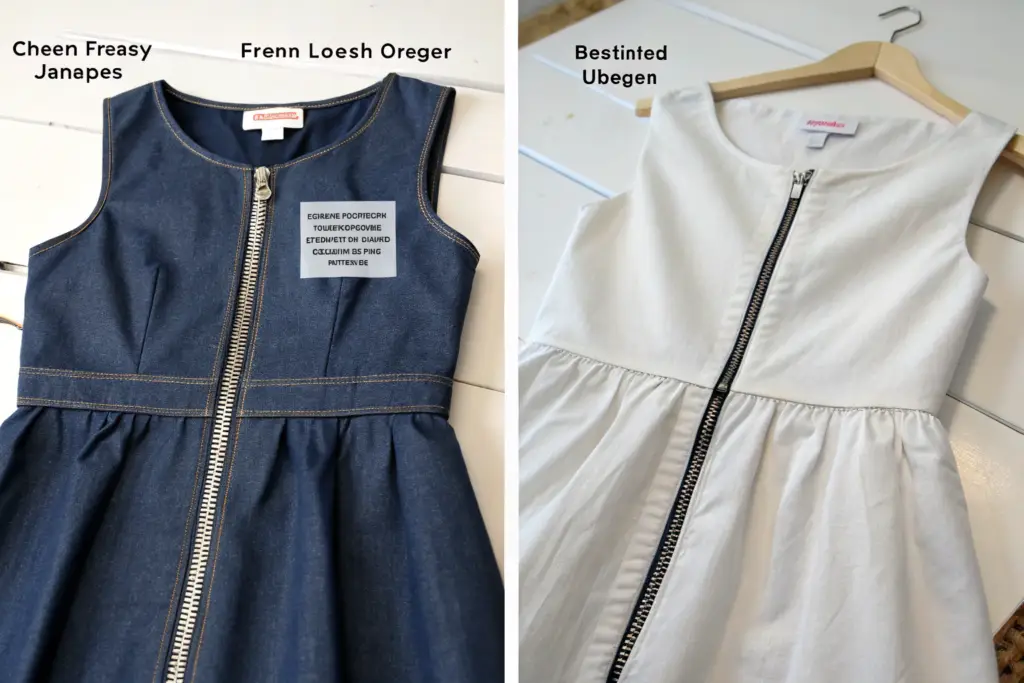
An overlocked seam, also called a serged seam, is a seam where the raw fabric edges are trimmed and wrapped in a loop of thread. It is fast, cheap, and appropriate for knit garments like t-shirts, where the fabric does not fray. On a woven fabric like linen or cotton poplin, an overlocked seam leaves a raw edge that will fray with repeated washing. The overlock thread contains the fraying for a while, but eventually, the threads work loose, the edge frays, and the seam weakens.
A French seam, in contrast, encloses the raw edge entirely within a folded seam. The raw edge is trapped inside a clean fabric channel. It cannot fray. It cannot irritate the skin. It is more time-consuming to sew and requires more skill, which is why fast-fashion factories avoid it. When you turn a woven dress inside out and see overlocked seams on the side seams, the skirt panels, or the bodice, you are looking at a factory that prioritized speed over durability. The dress will look acceptable when new. After ten washes, the internal fraying will be visible, and the garment's structural integrity will begin to degrade. The French seam versus overlocked seam in woven garment construction guide explains the durability and aesthetic differences. For a dress you are selling as a premium product, French seams on the major structural seams are not a luxury. They are a baseline requirement.
What Does a Facing That Lies Flat and Stays Hidden Tell You?
The bodice facing is the interior fabric panel that finishes the neckline and armholes. On a cheap dress, the facing is cut hastily, attached with a single row of stitching, and not understitched. The result is a facing that rolls outward, becoming visible from the outside. The customer constantly tucks it back in. She feels the dress is poorly made. She is right.
On a quality dress, the facing is cut from the same fabric as the dress, or from a soft, color-matched lining fabric. It is sewn to the neckline with precision. It is understitched—a row of stitching that attaches the facing to the seam allowance, not visible from the outside, that forces the facing to roll inward rather than outward. It is tacked down at the shoulder seams and the center back to prevent shifting. It is pressed meticulously so it lies completely flat and invisible from the outside. This is detail work. It takes time. It requires a sewer who cares about the inside of the garment. When you see a facing that lies flat and stays hidden, you are looking at a factory with a quality culture that extends beyond the visible surface. The bodice facing and understitching techniques tutorial shows the construction steps that produce a clean, professional interior. It is a small detail that has a large impact on the wearer's experience.
Why Is the Invisible Zipper the Single Best Indicator of Overall Construction Care?
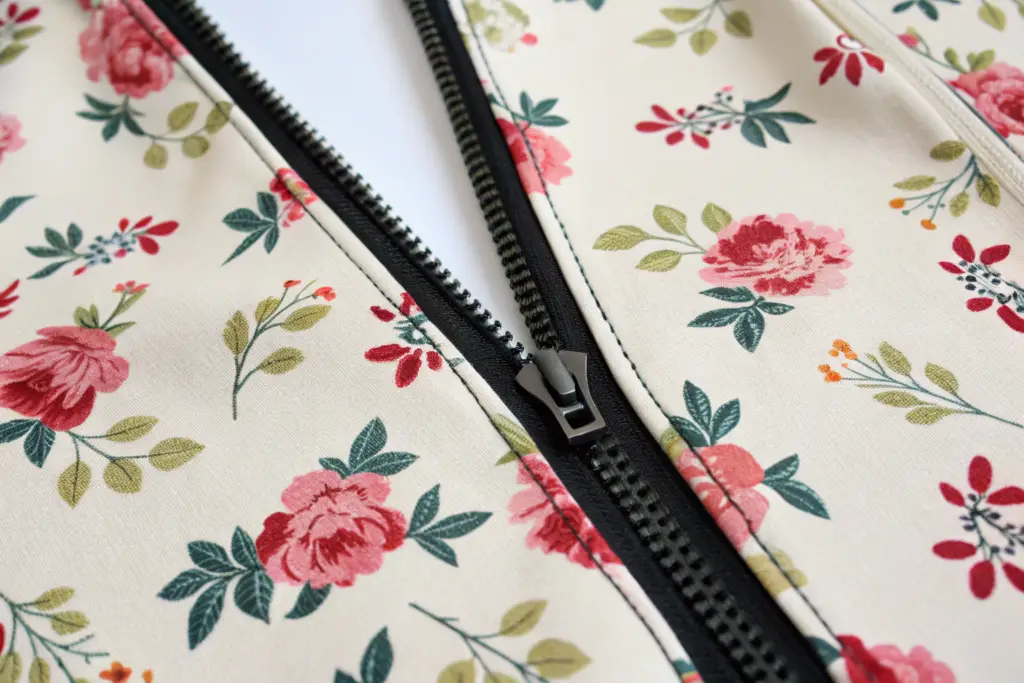
Invisible zipper insertion is technically demanding. The zipper must be sewn so close to the teeth that the fabric conceals the zipper entirely, but not so close that the zipper cannot slide smoothly. The fabric on either side of the zipper must lie flat without puckering. The seam above and below the zipper must close perfectly, with no gaping, no misalignment, and no visible break in the print. This single operation requires more skill, more time, and more precision than almost any other step in dress construction.
The invisible zipper is the canary in the coal mine. A dress with a perfectly inserted invisible zipper—truly invisible teeth, flat fabric, seamless print match across the closure—was almost certainly made in a factory with high overall quality standards. A dress with a visible zipper, puckered fabric, or a misaligned print at the closure was almost certainly made in a factory that cuts corners. This one check, performed in ten seconds, predicts the overall quality of the garment with high accuracy. Use it as your quick-sort evaluation when you are reviewing multiple dresses in a showroom or a sample shipment.
How Do You Evaluate an Invisible Zipper in Five Seconds?
Walk up to the dress. Find the zipper, usually at the center back or the left side seam. Run your finger along the zipper closure. Does the zipper feel completely smooth and flat, with no bumps, no catching, and no visible teeth? A quality invisible zipper feels like a continuation of the seam, not an interruption. Look at the fabric immediately around the zipper. Is it flat and smooth, or is it puckered and rippled? Puckering means the sewer applied uneven tension or used the wrong presser foot. It is a permanent defect that no amount of pressing will fix. Look at the seam above the zipper pull. Is it closed cleanly, with the two sides meeting perfectly? A small gap or a misalignment at the top of the zipper is a common defect in rushed production. Finally, unzip and rezip the zipper three times. It should move smoothly without catching on the fabric. A zipper that catches will frustrate the customer and eventually damage the fabric around the closure. The invisible zipper insertion quality standards guide shows the correct technique and the common defects. A dress that passes this five-second zipper check has likely been made with care. A dress that fails it has not.
What Does the Zipper Tape Color Reveal About the Manufacturer's Attention to Detail?
The zipper tape is the fabric strip to which the zipper teeth are attached. It is visible only when the zipper is open. On a cheap dress, the zipper tape is often a standard black or white, regardless of the dress fabric color. On a coral linen dress, a black zipper tape flashes visibly when the wearer moves. It is a small detail, but it signals to the customer that the manufacturer used whatever was cheapest and closest at hand.
On a quality dress, the zipper tape is color-matched to the dress fabric. A coral dress has a coral zipper tape. A navy dress has a navy zipper tape. This requires the factory to stock or order zippers in multiple colors, not just black and white. It requires the trim department to issue the correct zipper to the sewing line for each production batch. It is a small logistical complexity, and factories that prioritize quality absorb this complexity. Factories that prioritize cost do not. When you see a black zipper tape on a light-colored dress, you are seeing a manufacturer that made the cheapest choice at every decision point. If they made the cheapest choice on the zipper tape, a detail the customer does see, they made the cheapest choice on the seam finishes, the interfacing, and the hem construction, details the customer does not see until after she has washed the dress. The zipper tape color is a proxy for the manufacturer's overall philosophy. Choose the manufacturer that matches the tape.
How Does the Hem and Skirt Hang Determine the Dress's Movement and Perceived Value?
An A-line dress is designed to move. The skirt flares outward from the bodice, creating a silhouette that is both structured and fluid. When the wearer walks, the skirt should swing gently, not collapse, not twist, and not expose an uneven hem. The hem is the final, visible edge of the garment. It frames the silhouette. An uneven, puckered, or twisting hem undermines the entire dress. The customer may not be able to articulate why the dress looks wrong when she walks past a mirror, but she will feel it, and she will return it.
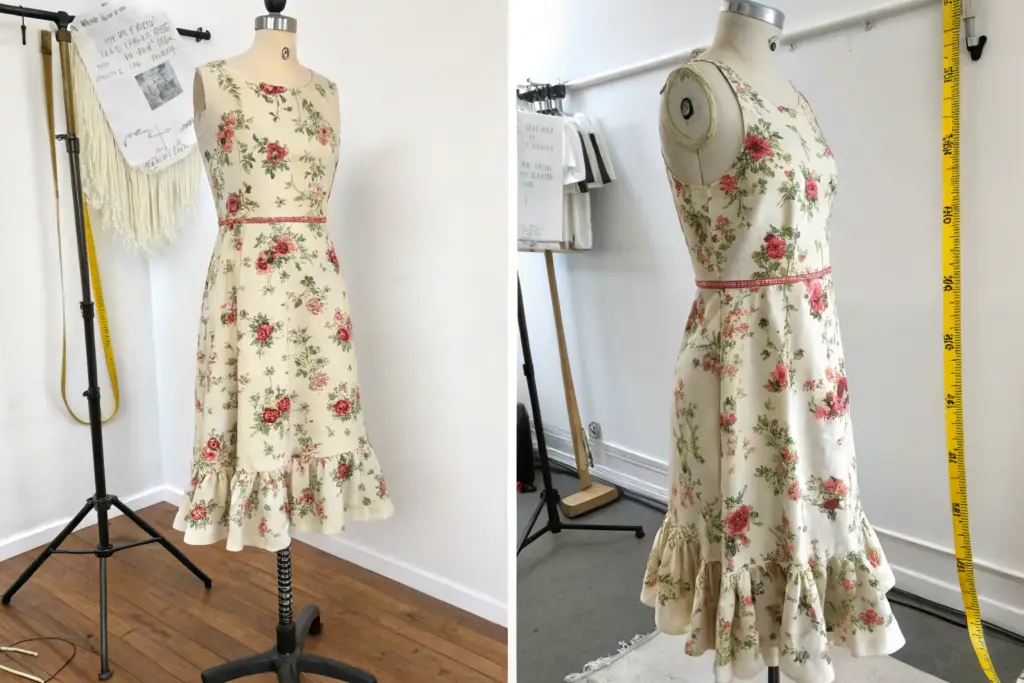
Inspect the hem on three dimensions. First, evenness. Hold the dress by the shoulders and let it hang freely. Walk around it. The hem should be parallel to the floor. An uneven hem, higher on one side, indicates the side seams were cut or sewn at different lengths, or the fabric was not relaxed before cutting. Second, finish. Turn the hem inside out. A quality dress has a double-turn hem, at least 1.5 centimeters deep, with the raw edge enclosed. The stitching should be even, at a consistent distance from the inner fold, and nearly invisible from the outside. A cheap dress has a narrow, single-turn hem that will curl and fray. Third, hang. Observe the dress on a body or a form. The skirt should flare symmetrically, without twisting. A twisted skirt indicates a grain line problem in the cutting that cannot be fixed.
What Causes a Twisted Skirt, and Why Is It a Fatal Defect?
A twisted skirt is an A-line dress where the side seams do not hang straight down the sides of the body. Instead, they pull toward the front or the back. The hem appears uneven not because it was cut unevenly, but because the entire skirt is rotated around the wearer's body. This defect is visible when the wearer walks. The dress looks like it was put on crooked.
The cause is a grain line error in the cutting room. Woven fabric has a straight grain, running parallel to the selvage, and a cross grain, running perpendicular. Skirt panels must be cut with the straight grain aligned vertically to the body. If a panel is cut off-grain, even by a few degrees, the fabric will hang on the bias, and the skirt will twist. This defect cannot be corrected after cutting. It cannot be pressed out. The dress is permanently damaged. A factory that produces twisted skirts is a factory where the cutting room does not check grain lines before spreading the fabric, or where the fabric was not properly relaxed before cutting. The fabric grain line and its impact on garment drape explains the technical cause and the irreversibility of the defect. A dress with a twisted skirt should be rejected outright. It is a structural failure, not a cosmetic flaw.
How Does a Blind Hem Finish Signal a Premium Garment?
On most mass-market dresses, the hem is topstitched. A visible row of stitching runs around the skirt, a few millimeters from the bottom edge. This is fast, easy, and acceptable for casual garments. On a truly premium dress, the hem is blind-stitched. The stitching catches only a thread or two of the outer fabric, making it nearly invisible from the outside. The hem appears to float, attached by magic.
Blind hemming requires a specialized blind hem machine and an operator trained to use it. It takes more time than topstitching. It produces a cleaner, more elegant finish that signals to the customer that the garment was made with extra care. It is particularly important for floral prints because a visible topstitch line can disrupt the flow of the print. A blind hem allows the print to continue uninterrupted to the very edge of the fabric. The blind hem versus topstitched hem in dressmaking comparison explains the visual and functional differences. When you see a blind hem on an A-line floral dress, you are looking at a garment that was finished with the same care a skilled dressmaker would apply to a custom piece.
How Does the Bodice Structure and Armhole Fit Affect the Dress's Polished Appearance?
The bodice is the most photographed part of the dress. It is what customers see in product images, in mirror selfies, and in tagged photos. A bodice that gapes at the armhole, pulls across the bust, or has a neckline that stands away from the body looks unpolished and ill-fitting in every photo. The customer may not return the dress because of the armhole gaping, but she will not wear it to the event she bought it for, and she will not buy from your brand again. The bodice fit is where pattern engineering either succeeds or fails.
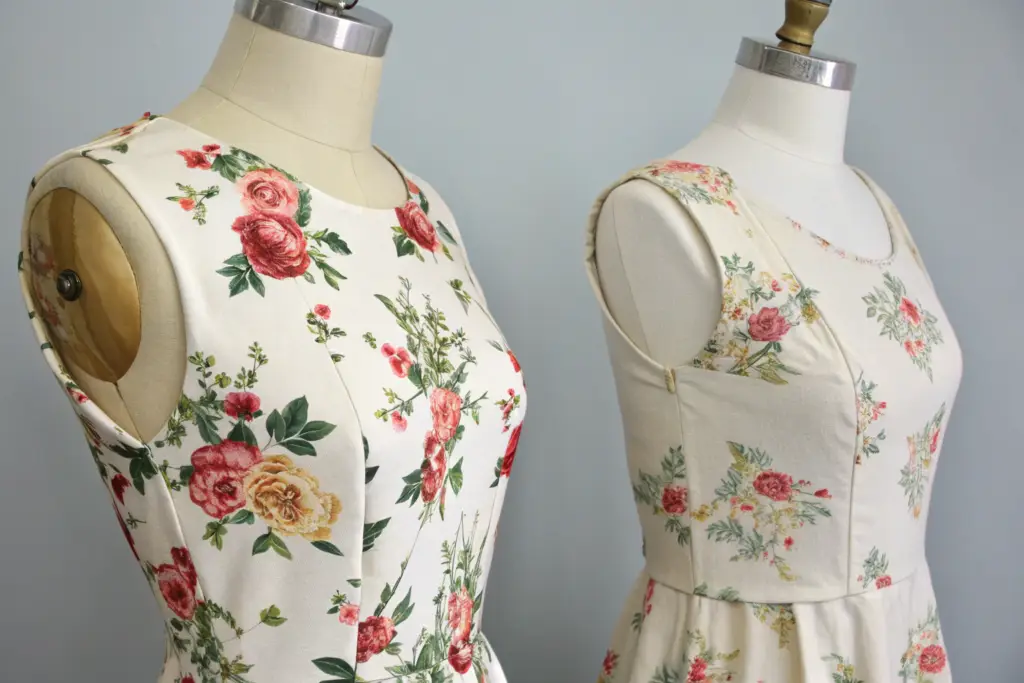
The bodice quality check focuses on two areas. First, the armhole fit. The armhole should lie flat against the dress form or the body, with no gaping, no pulling, and no visible raw edges. A gaping armhole indicates the armhole curve was not correctly shaped for the average body, or the facing was not properly understitched. Second, the neckline fit. The neckline should sit smoothly against the body, not standing away, not gaping, and not pulling. A neckline that stands away from the body is a sign of a pattern that was drafted for a different fabric weight or a different body posture than the target customer. Both defects are pattern problems, not sewing problems. They indicate a factory that does not invest in pattern fit engineering.
Why Does Armhole Gaping Occur, and Why Is It a Pattern Engineering Failure?
Armhole gaping occurs when the armhole curve of the dress is larger than the armhole curve of the body wearing it, or when the curve is shaped incorrectly for the forward-leaning posture of a real human shoulder. The excess fabric stands away from the body, creating a visible gap. From the side, the dress looks borrowed, not fitted.
This is not a sewing defect. It is a pattern engineering defect. The armhole curve was drafted for a mannequin that stands perfectly straight with its shoulders pulled back. Real women stand with their shoulders slightly forward. A well-engineered armhole pattern accounts for this posture by adjusting the curve and the pitch of the shoulder seam. A factory that copies patterns from standard blocks without fitting them on live models produces dresses with armhole gaping. A factory that fits patterns on standard dress forms but never on moving bodies produces the same. The armhole fit engineering for woven dresses guide explains the technical adjustments required for a clean armhole fit. It is a specialized skill. A dress with no armhole gaping was made by a factory that invested in pattern-making expertise.
What Does a Smooth, Gap-Free Neckline Indicate About Production Quality?
The neckline is the frame of the face. It is the focal point of the dress in every photograph. A neckline that gapes, stands away from the body, or has visible rippling immediately degrades the perceived quality of the entire garment. The customer sees it in the mirror. She sees it in photos. She cannot un-see it.
A smooth, gap-free neckline is achieved through a combination of correct pattern shaping, a properly cut and interfaced facing, and precise understitching that forces the facing to roll inward. The facing must be cut on the same grain as the bodice so it shrinks and stretches at the same rate during washing. The interfacing must be lightweight and compatible with the shell fabric. The understitching must be perfectly placed. These are interdependent details. If any one is wrong, the neckline will gap. When you see a neckline that lies perfectly flat against the body, you are seeing a factory where the pattern maker, the cutting room, and the sewing line all executed their roles correctly. The neckline facing and understitching for clean finish tutorial explains the technical process. The result is a dress that photographs beautifully and makes the wearer feel polished, which is exactly what your customer is paying for.
Conclusion
A high-quality A-line floral dress is not defined by the brand name on the label or the price on the hangtag. It is defined by specific, observable, verifiable construction characteristics that you can assess in under two minutes. The fabric feels cool and natural, not slick and synthetic. The print is crisp, vibrant, and aligned at the seams. The interior seams are French-seamed or bound, not raw and overlocked. The invisible zipper is truly invisible, with a color-matched tape and a smooth, pucker-free insertion. The hem is even, deep, and blind-stitched, allowing the A-line skirt to hang symmetrically without twisting. The armholes lie flat without gaping. The neckline sits smoothly against the body. These are not subjective judgments of taste. They are objective quality indicators that correlate directly with durability, customer satisfaction, and low return rates.
At Shanghai Fumao, these are the standards we build into every dress. Our QC checklist includes every point I have described, and our QC inspectors are authorized to reject any garment that fails any of them. We do this because we know that our clients' customers judge a dress in seconds, and their judgment determines whether the brand earns a repeat purchase or a return label. If you want to test our quality against these criteria, request a stock sample of one of our A-line dresses. Inspect it using the five-point method. Compare it to your current supplier's product. Let the dress speak for itself. Contact me, Elaine, at elaine@fumaoclothing.com. I will arrange a sample shipment and let you be the judge.