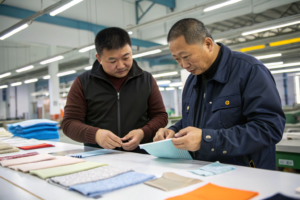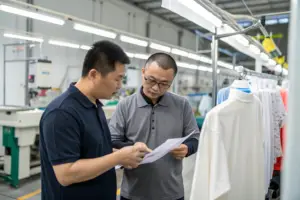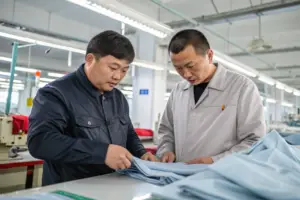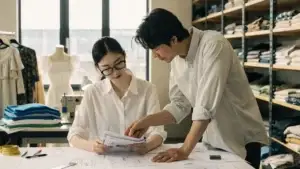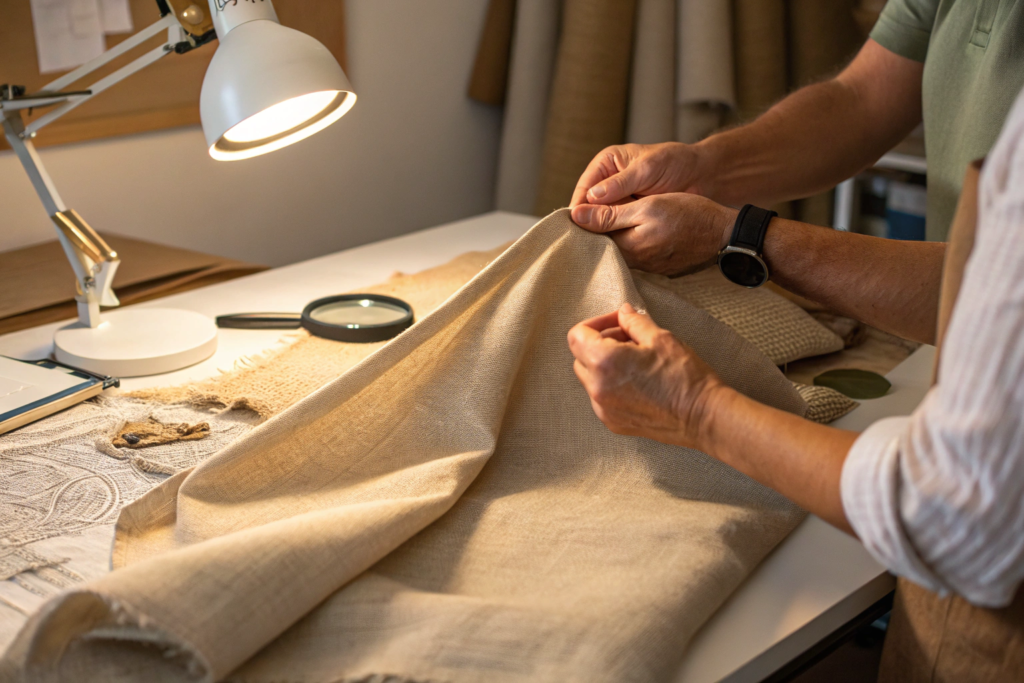
A boutique owner from Seattle emailed me a photo last month. She was crying. She had pre-sold 300 pairs of "luxury linen" wide-leg pants on her website. The fabric felt like cardboard. The "soft natural drape" she advertised was a stiff, scratchy mess. She bought based on a filtered Instagram video. She never touched the fabric before her money left her account. In this industry, a screen lies. A real sample doesn't.
You verify fabric quality before placing a bulk order by requesting a physical fabric swatch, performing a set of simple at-home burn and feel tests to check fiber content, and demanding a third-party lab report that proves the fabric's weight, shrinkage rate, and colorfastness. A photo is a promise. A swatch is evidence.
There is a system to this. I have been making linen garments in China for 15 years. I know the tricks. I know how to spot a bad batch before it becomes your inventory. I will show you exactly how to protect your money.
What Physical Swatch Tests Can You Do at Home or Office?
You don't need a lab coat. You don't need a $5,000 machine. You need your hands, a lighter, and a washing machine. Before you pay $20,000 for a production run, you spend $30 on FedEx. I insist every new client touches a physical swatch before I cut a single meter of fabric. It is the cheapest insurance you will ever buy.
The most reliable at-home verification is the Burn Test for fiber content, the Crease Test for drape recovery, and the Wash Test for shrinkage. Linen burns differently than polyester. It wrinkles differently than rayon. And it shrinks a lot more than people think. These three tests, done on a physical swatch, will expose a fake in 5 minutes.
You are not a textile engineer. But you can be a detective. Here is how.
How Do You Perform a Burn Test to Check if Linen Is Pure?
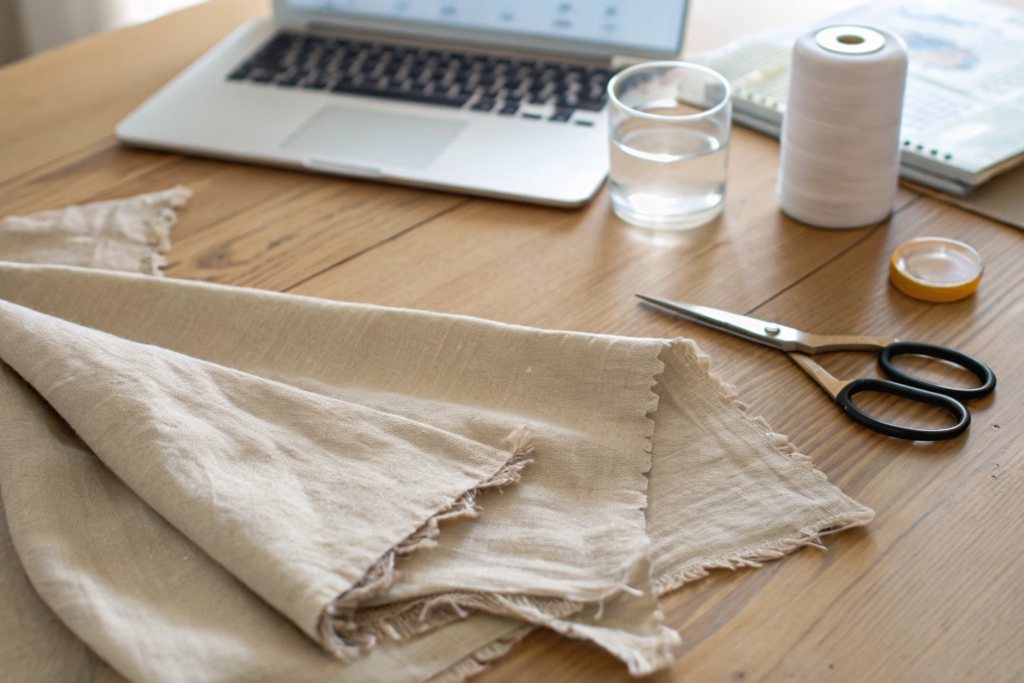
You need a pair of tweezers, a ceramic plate, and a lighter. Cut a small strip of the fabric from your swatch. Hold it with the tweezers. Light the edge. Watch the flame and smell the smoke.
Pure linen burns slowly. The flame is yellow. The smoke smells like burning paper or dry leaves. The ash is light gray and crumbles into powder when you touch it. This is normal. Now, if the fabric melts away from the flame, pulls into a hard black bead, and smells like burning plastic, you have a polyester blend. Some factories will sell you "linen" that is actually 60% polyester and 40% linen. The burn test exposes it instantly. I had a client who was quoted a very low price for "pure linen." I told him to burn the swatch. It melted. He didn't order. He saved $15,000.
But a burn test does not tell you about quality. It only tells you about content. For quality, you must use your skin and your eyes. Pull a single yarn from the fabric. Untwist it. Long fibers mean high-quality linen. Short, dusty fibers mean cheap linen that will shed and pill. This is the "staple length" trick. A high-end Belgian linen yarn is long and smooth. A cheap Chinese short-staple linen feels hairy. I source only long-staple linen from trusted mills. When you hold a swatch from Shanghai Fumao, you can pull a thread and feel the difference.
What Does the Wash and Crease Test Tell You About Real Linen?
Linen shrinks. It is a fact. A good factory will pre-wash or garment-wash the fabric before cutting. If you get a raw swatch and wash it in hot water at home, it might shrink 5-8%. A pre-treated swatch should shrink less than 2-3%.
Take your swatch. Measure it. Write down the length and width. Put it in your washing machine on a warm cycle. Dry it on medium heat. Measure it again. If it shrank more than 3%, ask the supplier if the bulk fabric will be pre-shrunk. If they say "yes" but the swatch says "no," you have a problem. Also, look at the texture after washing. Real linen gets softer with every wash. It should not become a wrinkled disaster that looks like crumpled newspaper. It should have a relaxed, wavy crease. If the wrinkles are sharp and harsh, the fabric might be too stiff or over-starched. We use an enzyme wash on our linen wide-leg pants. It softens the fiber without chemicals. It gives that "lived-in luxury" feel that American consumers love.
How to Interpret a Third-Party Fabric Lab Report?
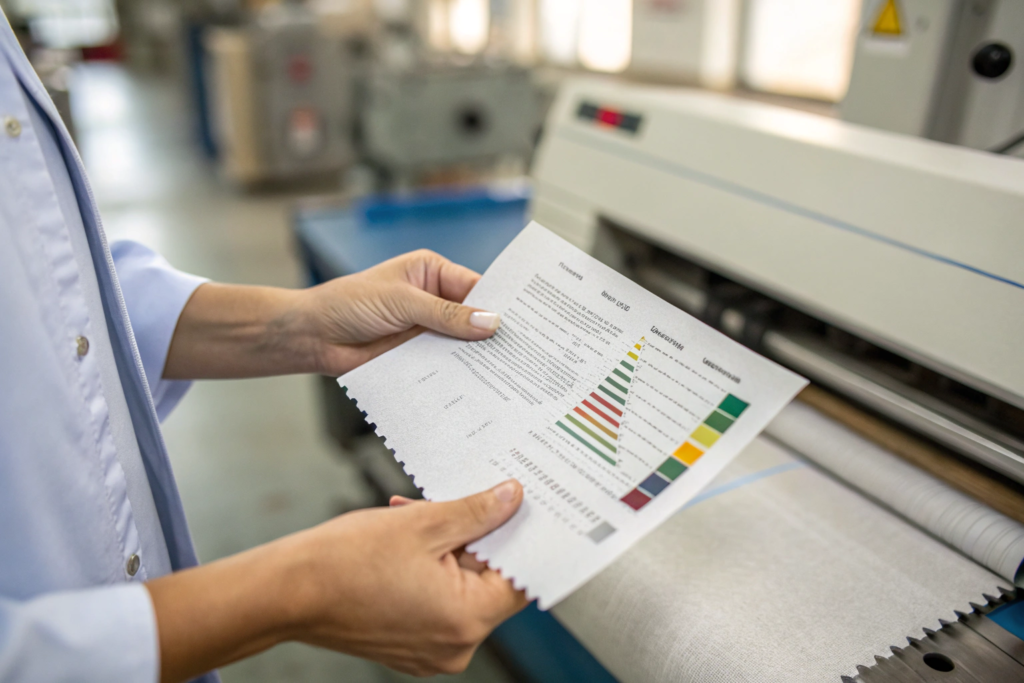
A factory can tell you "this is 200gsm." Then you get the pants, and they are thin like a summer scarf. Words are wind. A signed report from SGS or Intertek is a fact. It costs about $150 to $300. It is the best money you can spend on a big order. I provide these reports to my clients before they pay a deposit. If a factory refuses to provide a third-party test, walk away.
A useful lab report for linen wide-leg pants must include the fiber composition, the fabric weight, the tensile strength, the colorfastness to light and washing, and the dimensional stability results. You don't need to be a scientist. You just need to know the safe numbers for each line.
Let me translate the jargon for you. I look at these reports every week.
What Are the Key Numbers for Fabric Weight and Strength?
Look for two things: weight and seam slippage. Linen wide-leg pants need body. A good weight is between 170gsm and 210gsm. Below 160gsm, the fabric might be too sheer. You will get complaints about visible pockets. Above 250gsm, the pants become heavy and lose the "wide-leg flow." They look like canvas.
Seam slippage is critical for loose-fit pants. When you sit down, the seat seam stretches. A low-quality linen fabric will open up at the seams. The lab report uses a term called "Seam Slippage Resistance." You want a number above 100 Newtons for a standard seam. If it's below 80, you risk a split seam disaster. I have seen this happen with cheap linen from unverified suppliers. A brand owner in Miami sent me photos of pants that split right down the back. The fabric was linen, yes. But it was woven too loosely. The ASTM D434 test would have caught it. We test every new linen batch for seam slippage at Shanghai Fumao. If a fabric fails, we reject the lot before we cut a single pant. The mill takes it back, not us.
How Do You Check Colorfastness and Dimensional Stability?
Colorfastness to light is huge for linen. Linen fades beautifully, but it should not turn yellow or splotchy after two weeks in a sunny window. The lab report will show a Blue Wool Scale rating. For apparel, you want a grade of 4 or higher out of 8. Grade 4 means the color is commercially acceptable.
For washing colorfastness, the report shows a grey scale rating of 1 to 5. You want a 4 or higher. This means the dark navy linen pant won't stain a white shirt in the laundry. Dimensional stability is the shrinkage number. The report gives you a percentage, like -2.5% in warp and -1.8% in weft. This is normal. It means the fabric will relax but not transform into a different size. We use this data to adjust our patterns. If the fabric shrinks 2%, we make the pattern 2% bigger. The finished garment fits you exactly after it is washed. This is how real manufacturing works. It is not magic. It is math.
Why Is a Factory Visit or Video Call Crucial for Quality Verification?
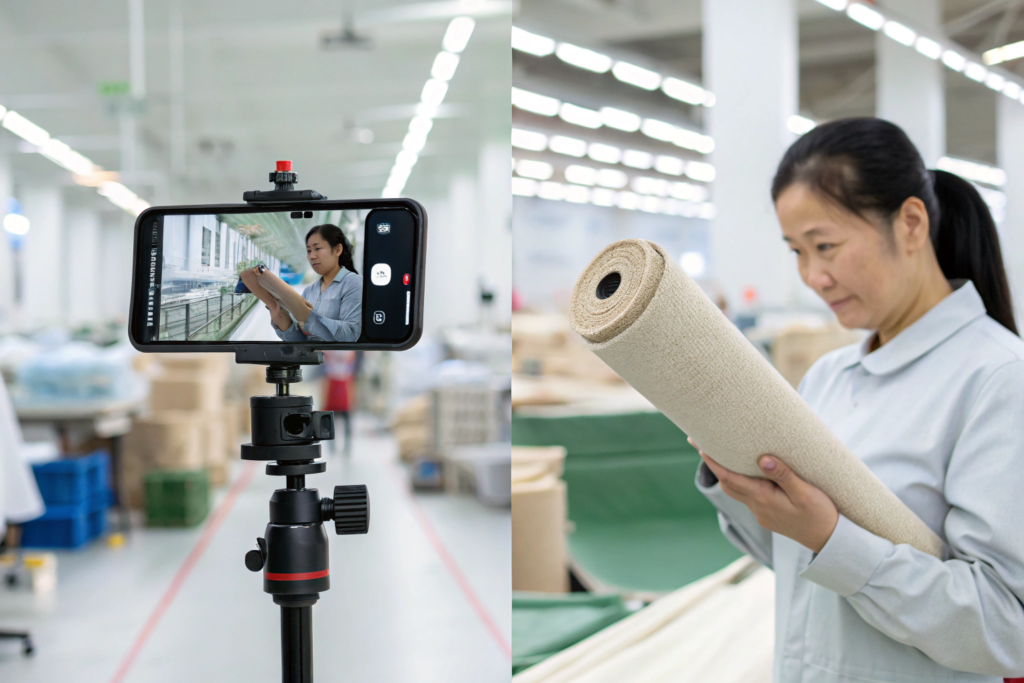
I understand you can't always fly to China. A plane ticket costs $2,000 and a week of your time. But you can't rely on a PDF alone. You must see the fabric in real-time. A pre-recorded video is a highlight reel. A live video call is the truth. You can say, "Show me the storage room." "Show me the roll I will actually get, not the one on your shelf."
A live video call walkthrough of the factory and the specific fabric inventory is the closest thing to being there. You verify that the factory exists, the linen rolls are real, and the working conditions are professional. It also builds a direct relationship with the people who will actually make your pants.
I encourage my clients to schedule a call after they get the swatch. It connects the physical sample to the production floor.
What Specific Fabric Details Should You Check on a Video Call?
Don't just look at faces smiling. Ask to see the roll label. Every roll of fabric has a sticker. It shows the fiber composition, the weight, the lot number, and the dye date. Ask the person to run a fingernail along the fabric. Watch the weave. Does it bounce back? Does it snag easily?
Ask them to hold the fabric up to the light. Pure linen has a "slubby" character. You should see thicker and thinner yarns randomly distributed. This is natural. If the fabric is perfectly uniform, like a printer paper, it might be a linen-rayon blend. Ask to see the back of the fabric. The weave should be identical to the front for a plain weave linen. I did a call with a new client from Colorado last month. I walked onto our production floor. I showed her the exact 210gsm cream linen we allocated for her wide-leg pants. I pulled a thread, lit it with a lighter on camera, and let her see the ash fall. She placed a $30,000 order 10 minutes later. That is trust built through transparency.
How Does Seeing the Production Floor Reduce Counterfeit Risk?
There is a scam where a middleman shows a nice sample, but the bulk order comes from a different, cheaper factory. You get a good swatch and bad pants. A live call kills this. You see the cutting tables. You see the sewing lines. You see the finished goods packing area.
When you call me at Shanghai Fumao, you see my team. You see the BSCI audit certificate on the wall. You see the fabric inventory racks. You see the care labels being sewn in. You are not just a name on an email. You are a partner. I can introduce you to the line supervisor who will sew your pocket bags. A factory tour, even a digital one, is a powerful quality verification tool. It forces a supplier to be accountable in a way that an email attachment cannot.
What Red Flags Should You Watch for in Supplier Communication?
Words reveal intentions. When I hear certain phrases, I know a supplier is hiding something. "Trust me" is the biggest red flag in apparel sourcing. Facts don't need trust. They need data. You must read emails for what is missing, not just what is written.
Key red flags include: an inability to provide a detailed tech pack, vague answers about shrinkage rates, a refusal to send a physical FOB sample before payment, and a price that seems too good to be true. These behaviors signal that the supplier either does not understand their own product or is deliberately hiding cost cuts in the fabric quality.
You protect yourself by asking questions a fake can't answer.
How Does a Supplier Handle Shrinkage and Crocking Questions?
Ask this specific question: "What is the exact shrinkage rate of this specific linen lot in warm wash, and can you send me the lab test showing the crocking fastness?" Watch the answer.
A professional supplier answers in 24 hours with a PDF. They say, "Our shrinkage is -2.2% by 1.8%, and our crocking rating is 4.5 for wet and dry." A bad supplier says, "It is standard quality, no problem." That is not an answer. That is a deflection. I have had clients come to me after losing money with another factory. They tell me, "The other factory said the fabric was 'high quality.'" I say, "Show me the report." They have no report. They have only a promise. At Shanghai Fumao, we test first, and we promise later. That is the right order.
Why Is a Tech Pack a Non-Negotiable Verification Tool?
A tech pack is a contract. It is a drawing of your wide-leg pant with every seam, every stitch type, and every measurement labeled. If a supplier doesn't create or follow a detailed tech pack, you are building a house without a blueprint.
Your tech pack locks in the fabric quality spec. It says, "Shell: 100% Linen, 195gsm, pre-shrunk. Lining: 100% Cotton voile." If the pants arrive and the lining is polyester, the supplier has violated the spec. You have grounds for a refund or a discount. Without a tech pack, it is your word against theirs. I create a tech pack for every order at Shanghai Fumao. You sign it. I sign it. It goes to the cutting room and the sewing line. Everyone follows the same document. This eliminates the "I thought you wanted it this way" problem. It is a verification tool as much as a design tool. It verifies that we have agreed on what "quality" means.
Conclusion
Verifying fabric quality before ordering is a process. You start with a physical swatch. You burn it, wash it, and look at the light through it. You then demand a third-party lab report. You look at the numbers for weight, shrinkage, and seam strength. You see the fabric live on a video call. You listen to how the supplier answers your hard questions. And you lock it all down in a technical specification sheet.
A low price is not a bargain if the fabric fails. A linen pant that shrinks 10% is not a garment. It is a returns nightmare. But a properly verified linen wide-leg pant is a beautiful product. It flows. It softens. It sells at full retail price because your customer feels the quality and becomes a repeat buyer.
This is the standard I bring to every order. It protects your money. It protects your reputation. And it builds a brand that customers trust.
If you want to verify the quality yourself, I invite you to test us. Contact our Business Director, Elaine, at elaine@fumaoclothing.com. Tell her you want a free fabric swatch kit for linen wide-leg pants, along with a sample lab report from our most recent production run. Feel the fabric. Do the burn test. Check the numbers. Then let's talk about your collection. I am confident your verification will be the start of a strong partnership.