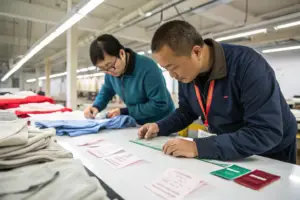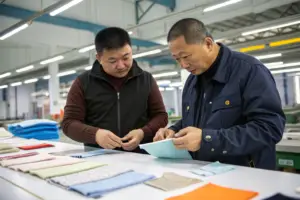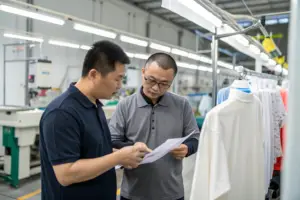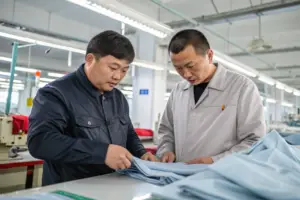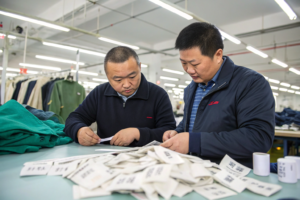
You hear the word "transparency" thrown around at every trade show and in every brand manifesto. Factories promise it. Brands demand it. But when you ask a supplier to show you their needle log or a live feed of the cutting table, they suddenly go silent. They offer you a glossy, edited video instead. This "transparency washing" is the new greenwashing. You are being sold a feeling of security, but you are still placing orders into a black box, crossing your fingers that the fabric you paid for is the fabric you get.
Transparency in garment manufacturing actually looks like a series of specific, verifiable, and real-time data streams—including raw material invoices, live production dashboards, unedited facility walkthroughs, and open defect logs—that a factory voluntarily publishes to eliminate information asymmetry between the buyer and the producer.
It is not a philosophy. It is a stack of digital tools and radical habits. At Shanghai Fumao, we had to stop just talking about transparency and start building the infrastructure for it. Here is a granular, technical look at what real transparency actually looks like in practice, from the supply chain map to the final shipping container.
What Does a Truly Transparent Raw Material Supply Chain Look Like?
Most brands receive a "fabric certification" that is a photocopy of a photocopy. It shows a mill name, but you have no idea if that mill actually wove your fabric, or if the certificate was borrowed from a different batch. True transparency starts at the molecular level of the supply chain. It means you can trace your specific roll of jersey back to the bale of cotton, not just to a general region, but to the specific knitting machine that ran at 2:00 PM on a Tuesday. This granularity is the only thing that stops "fabric fraud."
A truly transparent raw material supply chain provides you with the exact mill name, the specific yarn lot number, a live-time video of the dyeing process, and the original invoice showing the factory's cost, removing any mystery about the fiber's origin or the price markup.
We had to force our material vendors to accept this openness. It was a fight, because the textile industry is built on middlemen who profit from obscuring the source.
How do we verify the yarn origin using a "Lot Number Traceability System"?
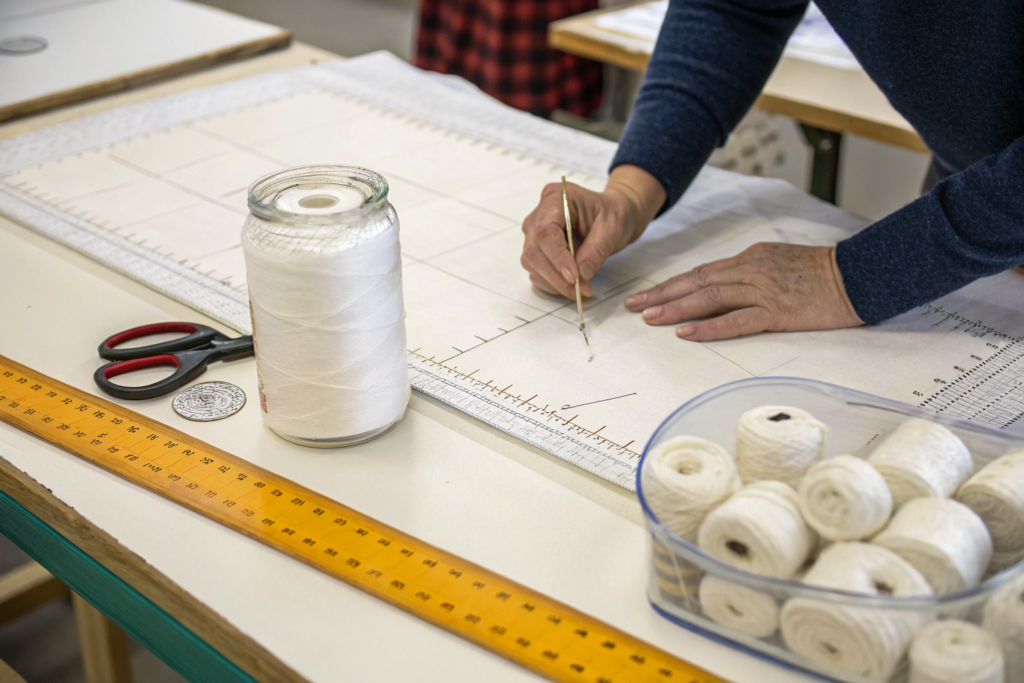
A label that says "Egyptian Cotton" is often a lie. Unless you can trace the lot number, you are probably buying a cheaper blend. We implemented a system where every roll of fabric that enters our factory is assigned a unique QR code. You, as the brand owner, can scan a master sheet that links that QR code to the original yarn lot.
I remember a specific instance with a luxury bedding start-up. They ordered 300 thread count long-staple cotton. We didn't just send a photo of the fabric. We sent them a scanned copy of the yarn bill of lading. It showed the yarn was imported by the knitting mill, dated two weeks prior. We showed the lab report from the mill that tested the fiber strength. This is not marketing. This is forensic accounting for textiles.
Your traceability should include this exact chain:
- Yarn Supplier Invoice: Proves the legal purchase of the specific fiber type.
- Mill Knitting Log: Shows the date, machine number, and tension settings for the greige fabric.
- Dye House Batch Card: Lists the chemical recipe and water temperature for your specific color lot.
- Shrinkage Test Swatch: A physical cut from the batch with a pre-wash grid, verifying the dimensional stability claims.
If a factory refuses to show you the dye house batch card, it is usually because they switched to a cheaper, unapproved dye house for your bulk order. True transparency is the right to audit that batch card yourself.
The Bill of Materials is the financial DNA of your garment. A standard BOM lists the items. A transparent BOM lists the cost of the items. When we decided to publish open-source BOMs, our accountant warned us that clients would ask for the cost price and then try to nickel-and-dime us. The opposite happened. Clients realized the true value of our labor.
An open-source BOM looks like this for a standard heavyweight hoodie:
| Component | Specification | Actual Mill Cost (per pc) | Factory Margin |
|---|---|---|---|
| Shell Fabric | 440gsm 100% Cotton French Terry | $5.80 | 0% (Pass-through) |
| Ribbing | 400gsm 1x1 Rib | $1.20 | 0% (Pass-through) |
| Zipper | YKK #5 Metal | $1.85 | 0% (Pass-through) |
| Cut-Make-Trim | Labor + Overheads | $6.50 | 15% Net Profit |
| Total | Ex Works | $15.35 | Transparent |
By showing the margin is made on the honest labor conversion, not hidden in fake material upsells, you change the relationship. The buyer no longer feels scammed. They see we make a fair profit on the physical work of sewing, not a secret profit on the cotton. This is the visual difference between a partner and a middleman.
How Should a Transparent Production Floor Operate in Real-Time?
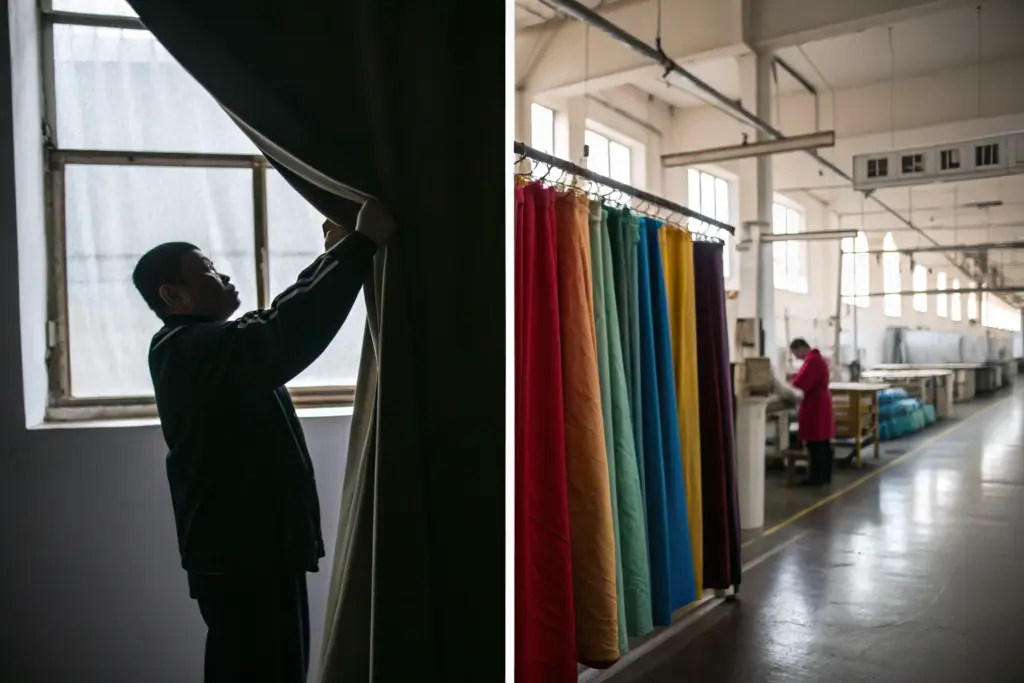
A static photo of a factory floor is a lie frozen in time. It might have been cleaned just for the shot. It might have been the only day the lights were on. Real-time transparency is about motion. It is about seeing the dust move, the fabric stack shrink, and the operators rotate. This dynamic view proves competence. It shows that the factory is a living organism, not a staged museum.
A transparent production floor operates with live dashboards that show current output against targets, CCTV feeds accessible to the client, and hourly QC updates that log defects as they happen, not after the batch is packed.
We had to dismantle the "management by closed door" culture. We put screens on the floor that the workers could see, and we gave clients the same exact view.
What is an "Hourly QC Pass Rate" board, and why does it matter for your order?
Most quality control happens at the end, when the garment is finished. If the stitching machine was misaligned for 4 hours, you have 400 defective pieces. "End-of-line" inspection is a failure. True transparency moves QC to the beginning and middle of the process.
We installed tablets at the end of each of our 5 lines. The QC checker does not wait. Every hour, they input the defect count directly into a Google Sheet that is shared with the client. We call this the "Hourly Live Pass Rate."
For a recent order of 1,000 printed polo shirts, the client watched this board from his office in Austin. At 10:30 AM, he saw the "Print Placement" defect spike to 5%. He immediately messaged us. We paused the line and found that the screen printing pallet adhesive had worn off. We fixed it in 15 minutes. Only 50 shirts were printed off-center instead of 500. This is the power of hourly transparency. It allows for real-time correction instead of post-mortem refunds.
Your interface for a transparent factory should show:
- Current Hourly Output: Units sewn vs. Target.
- First-Pass Yield: Percentage of pieces with zero defects at the first check.
- Top Defect Right Now: A live ticker showing "Broken Stitch 3%."
- Line Downtime: "Line 3 paused for thread change, 5 minutes."
This is surgical transparency. It is not for marketing. It is for a brand owner who wants to sleep knowing the yield is tracking correctly.
How does a "Live Line Load Heatmap" prove we are not hiding subcontracting?
One of the darkest secrets in garment manufacturing is illegal subcontracting. A factory takes your order, says they are making it, but secretly sends the cut panels to a dark, unregulated sweatshop across town. The finished goods come back, and you never know your product was made in a fire hazard.
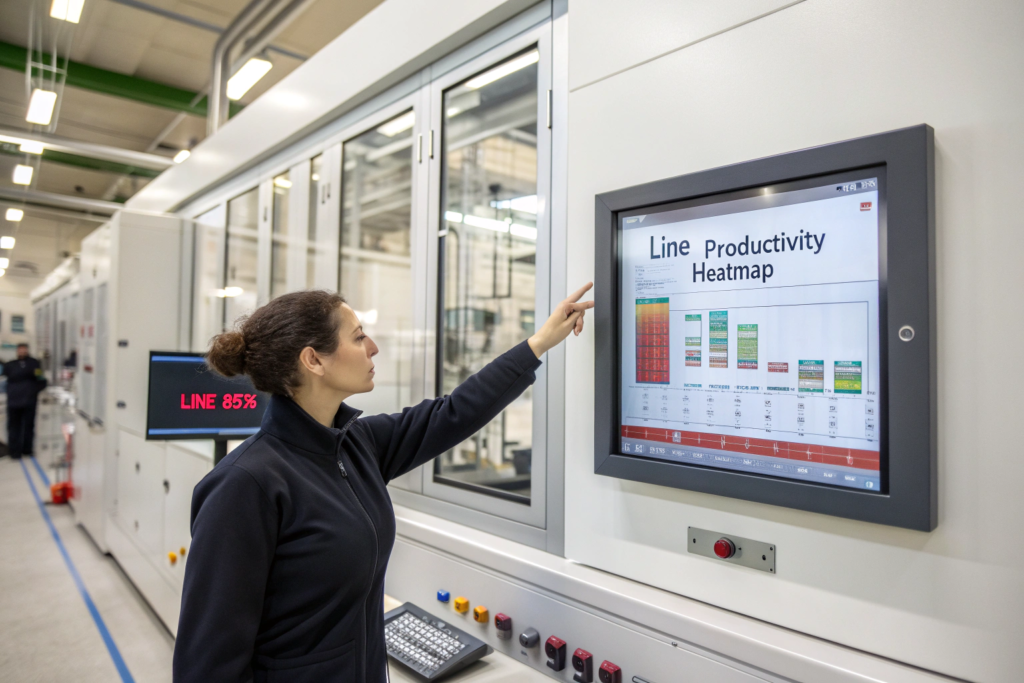
A heatmap stops this. We have a digital dashboard that shows the physical location of your goods in our facility. It is tied to our internal production planning software. It shows that your specific order, "Brand X Woven Shirts," is currently occupying 60% of Line 4’s capacity.
If a factory is subcontracting, your order suddenly disappears from the "line load" view for a day because it is off-site. Our clients have learned to check this. If the bar for their order drops to zero while we are working, they ask why.
This heatmap is integrated with our Shanghai Fumao factory floor. It is not a simulation. It updates every time a bundle of cut work is scanned into a sewing station. This proves that the work stays within the walls you audited. It also shows you exactly why a specific line is slow. You can see the "Capacity Used" bar turning red, and you understand that the complexity of a cargo pant is eating up more time than a basic tee. This visibility builds patience and realistic expectations, removing the fear that the factory is just lazy.
What Does a Perfectly Transparent Logistics and Shipping Process Include?
The moment the goods leave the factory, most brands enter a "dark period." They wire 80% of the money, and then they hear nothing for five weeks. They don't know if the goods are in a warehouse, on a ship, or stuck in customs. This silence is the most stressful part of the entire manufacturing process. It is also where a lot of fraud happens, with containers being swapped or delayed while invoices demand urgent payment.
A perfectly transparent logistics process includes a pre-shipment "walkthrough" video of your exact cartons, a live container tracking link, the final Bill of Lading posted within hours, and a GPS tracker attached to the pallet for DDP shipments, closing the visibility gap from our dock to your door.
We treat the transit as part of the manufacturing process. The supply chain does not end at our loading dock; it ends at your warehouse, and we need to see it all the way there.

Why does the "Final Carton Audit Video" matter more than the sample photo?
Before we seal a box, we film it. This is not a cinematic highlight reel. It is a slow, boring, detailed video of our shipping clerk picking up every piece of labeling, showing the barcode, and placing it in the box. For an order shipping to a Fulfillment by Amazon warehouse, this is critical.
Amazon requires specific carton labels and packing slips. If the label is missing, the entire shipment is rejected. An apparel brand we work with faced this crisis with their previous supplier. The boxes arrived, but the Amazon barcode was smudged. The shipment was quarantined.
Now, we do a "Final Carton Audit Video." We lay out the contents of the first carton: the poly-bagged garments, the exact placement of the silica gel pack, and the ASIN label on the outside. We scan the barcode with a reader gun on camera to prove it beeps.
We send this 5-minute video to the client via WeTransfer before the truck arrives. The client can visually confirm that the label is legible and the fold is right. If there is a problem, we fix it before shipping. This is transparency as a last-line defense. It replaces the "I hope it's right" prayer with a "I saw it was right" confirmation. It is the ultimate proof that the custom apparel inside the box matches the purchase order.
How does a "GPS Pallet Tracker" for DDP shipments change the customer experience?
A DDP shipment means we are responsible for the goods until they reach the client's address. A traditional tracking number only updates at major hubs. It goes silent for days over the ocean or during a rail transfer. This silence breeds anxiety and repeated "Where is my stuff?" emails.
We started attaching small, battery-powered GPS trackers to the pallets of our premium "Glass Pocket" package clients. These trackers ping location data every few hours via cell towers. The client gets a link to a live map.
I recall a shipment destined for a pop-up shop in London. The brand owner called me in a panic because the standard DHL tracking hadn't updated for 48 hours. He thought the goods were lost. I told him to check the GPS link. He opened it and saw the pallet sitting at a sorting facility in the Midlands. He could literally see it was 45 minutes from his location. The panic vanished instantly. The sensor also monitors temperature and shock. We could verify the container wasn't left on a scorching tarmac, which could melt the poly bags. This level of logistics visibility transforms the customer from a worried buyer into an informed observer. It is a premium product that we now consider standard for the trust it builds.
Conclusion
Transparency is not a vague corporate value. It is a physical, technical, and operational reality. It looks like an open-source bill of materials that reveals the cost of every snap and zipper. It sounds like the live hourly QC checker reporting a defect rate in a Google Sheet. It feels like the ability to pull up a video of your carton being taped shut and scanned. These are not just trust-building exercises; they are the specific, verifiable actions that separate a modern manufacturing partner from an old-school black box.
Real transparency is hard because it exposes everything, including the small mistakes. But it is the only way to fix those mistakes before they become your brand’s problem. This is the standard we have built at Shanghai Fumao, and it is the only standard that lets our clients sleep at night while their production runs half a world away. To experience this level of clarity for your next collection, contact our Business Director, Elaine, at elaine@fumaoclothing.com. Let’s open the black box together.