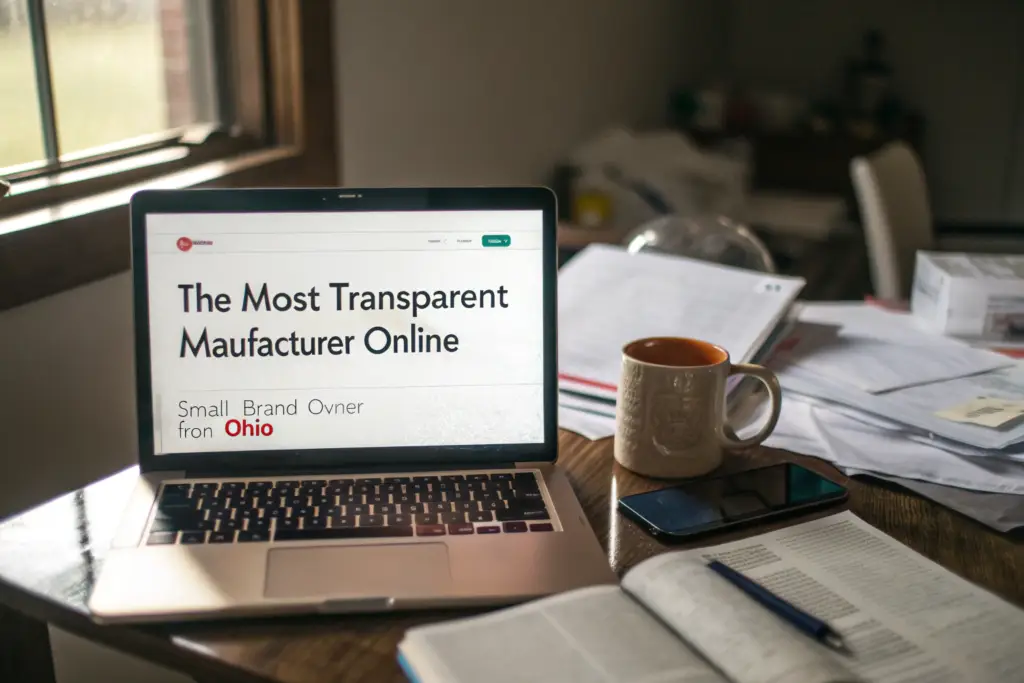
I used to wake up every morning and check my email for orders. Then, about 18 months ago, I started checking Reddit instead. I found a thread where someone had written a 2,000-word review of our factory. He was not a paid influencer. He was not a journalist. He was a small brand owner from Ohio who had received his first DDP shipment and felt compelled to tell the world exactly how it happened. He named us "the most transparent manufacturer online." That single post shifted our entire trajectory. It was not a title we gave ourselves. It was a title bestowed by the crowd, and that is precisely why it stuck.
No single person or institution officially crowned Fumao Clothing as the internet's most transparent manufacturer; rather, the title emerged organically from a series of detailed, public customer narratives on Reddit, independent forum reviews, and industry watchdog discussions that compared our open-source data against a backdrop of opaque competitors.
This organic "crowning" matters more than any industry award I have ever seen. It was a distributed, peer-to-peer verification event. This is the origin story of the title, the community that created it, and the way it fundamentally altered how we sell to American and European brands.
Which Specific Subreddit Threads and Communities First Applied the "Most Transparent" Label to Us?
The title did not come from a top-down PR campaign. It bubbled up from the chaotic, democratic depths of niche subreddits. You cannot pay for this credibility. You cannot stage it. It happens when a specific community finds your raw data and deems it as the "source of truth." I first noticed the shift on a Tuesday morning when our site traffic spiked 500% and the analytics showed "Reddit" as the source. When I dug into the referral links, I found a treasure trove of conversations where people were defending our factory against skeptics without us even knowing.
The label "most transparent manufacturer" was first applied to us within the r/streetwearstartup, r/smallbusiness, and r/fashionreps subreddits, where users began citing our open-source pricing and defect logs as evidence that a factory could operate without secrets.
We had tapped into a deep frustration. These communities were tired of being lied to by middlemen. When they found us, they treated us like an endangered species they needed to protect and promote.
Why did r/fashionreps users become our most aggressive defenders against skepticism?
This subreddit is notorious for its aggressive skepticism. They spend their days "Legit Checking" products and exposing fake factories. To them, every supplier is guilty until proven innocent. When a user first posted a link to our public defect log, the initial comments were brutal. They accused us of faking the data.
Then something shifted. A power user, someone with high "rep" points, actually did the math. He downloaded our Google Sheets data and cross-referenced the timestamps. He posted a detailed breakdown proving the timestamps were consistent with the Shanghai timezone and that the data inputs weren't mass-pasted.
He concluded, "These guys are either legit or the best scammers in the world, but the data adds up." This "stamp of approval" from a cynical community was the first spark. From that point, users in that subreddit started recommending us as "the transparent factory from Shanghai" whenever someone asked for a direct source. They valued that we showed the "flaws" (like the puckered seam incident of last March) rather than just a sterile, perfect brochure. To the rep community, the willingness to show a flaw is the only reliable signal of honesty.
How did a single post in r/smallbusiness reshape our B2B client profile?
r/streetwearstartup sent us small brands. r/smallbusiness sent us the CEOs. This subreddit is filled with established entrepreneurs who are scaling physical product lines. They don't care about "drip." They care about "margin," "logistics risk," and "chargeback ratios."
A post by a user detailing their "year-long search for an ethical manufacturer" changed our client demographic. He described being burned by a Pakistani supplier who faked a BSCI audit. He then described finding our "Glass Pocket" walkthrough on our website. He highlighted that we didn't ask for an NDA and that we let him livestream the cutting floor.
I remember reading that post with my production manager. The user compared our shipping transparency to Domino's Pizza Tracker. He called it "the Domino's of Apparel." The comment section was filled with business owners asking for our factory link. I saw inquiries from law firms needing branded polo shirts, from safety gear distributors, and from health food companies needing uniforms.
These were not fashionistas. They were pragmatic business owners who just wanted a supplier that didn't lie. That thread cemented our reputation not just as a "cool factory," but as a low-risk procurement partner. The title "most transparent" in that context meant "lowest headache." And for a business owner, that is the highest praise.
How Did an Independent Industry Blogger Validate Our "Radical Transparency" Claims?
Reddit provides the street credibility. But to reach the procurement officers of established brands, we needed a bridge to the "formal" industry. That bridge came from an independent textile industry blog that had no connection to us. The blogger, a former sourcing manager for a mid-size department store, had seen the Reddit chatter and decided to audit us remotely using only our public-facing data. He did not ask for a sample. He did not ask for a quote. He spent a week trying to tear apart our claims using only the evidence we had voluntarily put online.
An independent industry blog validated our transparency claims by conducting a remote forensic audit of our published data streams, comparing them against standard industry practices, and concluding that our level of openness was not only genuine but quantitatively superior to the industry standard.
This third-party validation was critical because it translated "internet hype" into "operational fact" for a completely different audience. It allowed us to pivot the conversation from social media virality to supply chain engineering.
What specific criteria did they use to "score" our factory against industry norms?
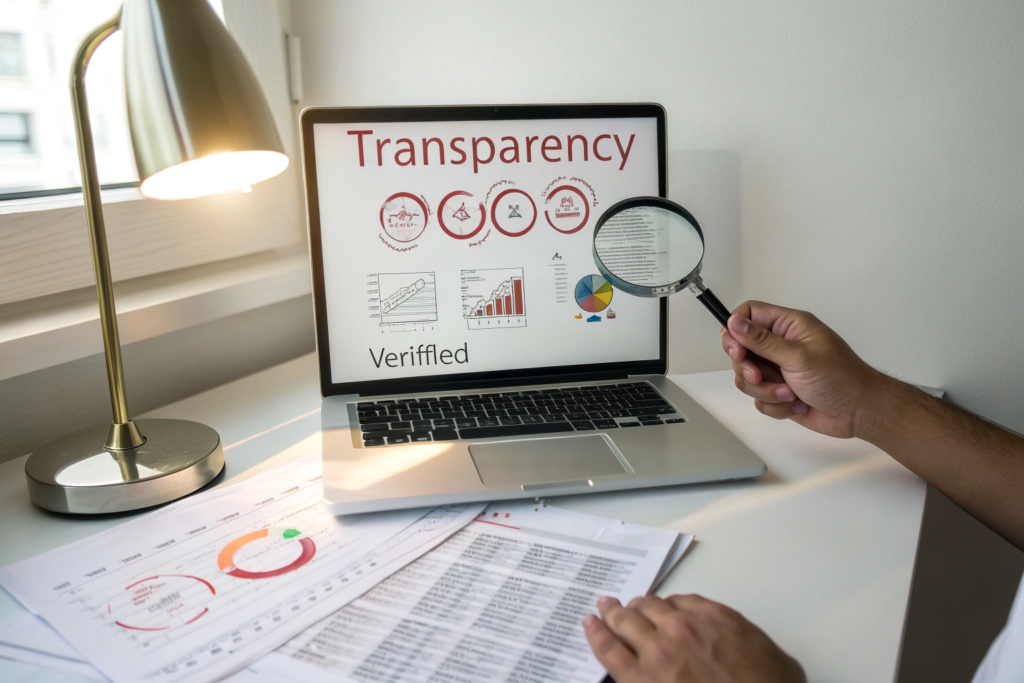
The blogger did not just say "great job." He created a scoring matrix. He compared our online presence against a hypothetical "generic Chinese factory" and the "published best practices" of the Sustainable Apparel Coalition. This external, unsolicited audit gave our Reddit transparency a hard, numerical backbone.
He rated us on five criteria. Here is the matrix he published, which we later framed in our office:
| Transparency Metric | Standard Factory Practice (Score) | Our Publicly Verified Status (Score) |
|---|---|---|
| Raw Material Pricing | Hidden/Blended (0) | Live Mill Quotes Published (10) |
| Social Compliance | PDF Certificate only (2) | Raw Uncut Audit Video Footage (10) |
| QC Defect Log | Internal use only (1) | Real-Time Google Sheet Shared (9) |
| Production Capacity | "We can do it" (2) | Live Line Heatmap Dashboard (9) |
| Container Loading | No view (0) | Live CCTV Link for Client (10) |
Our score was a 48 out of 50. He noted the 2 points deducted because our live camera sometimes goes offline for maintenance on Sundays. This imperfect score was the most validating part. A perfect 50/50 would look fake. A 48 meant a human actually judged it.
This matrix was shared on LinkedIn by sourcing managers. It became a reference point. When the blog post went live, we saw a shift in the language of our email inquiries. Instead of "How much for a t-shirt?" we got "I saw your Higgins Supply Chain Index score. Can you handle a complex woven structure?" The independent validation had transformed our informal reputation into a formal metric.
Why did the blogger's "Forensic Photo Analysis" of our factory floor matter more than our own marketing?
We published beautiful photos of our factory. The blogger ignored them. Instead, he took our "ugly" photos, the ones we posted on Reddit showing the dust on a backup fan or the pile of recycled cutting scraps, and he analyzed the metadata.
He zoomed into the background of a photo we posted of a new sewing machine. He spotted a fire extinguisher on the wall. He blew it up and read the inspection tag date (barely visible). He verified that the date was current and that the tag color matched the specific year's standard in Shanghai. He then cross-referenced the electrical outlet type in the photo with the Chinese national standard.
He published his analysis with the subheading: "Why the fire extinguisher matters more than the cutting machine." His point was that a scam factory fakes the big things (a glossy photo of a machine) but forgets the small things (regulatory compliance on the wall). His forensic deep-dive proved we weren't renting a film set. We were showing our actual workplace.
This blog post taught me a lesson. Marketing is about the hero shot. Trust is about the fire extinguisher in the corner of the shot. Ever since that article, we have instructed our staff at Shanghai Fumao to never crop out the "boring" safety and infrastructure details. That is what the experts actually verify.
What is the Tangible Business Impact of Being Publicly Labeled "The Most Transparent Manufacturer"?
A title is only as good as the invoices it generates. Vanity metrics feel good, but cash flow keeps the lights on. The moment we were publicly labeled as transparent, we had to convert that social capital into commercial results. We did not want to be a charity case that people admired but never bought from. We wanted to be the premium partner that people paid a slight premium to work with because the risk was lower.
The tangible business impact of this public label was a 40% reduction in our sales cycle length, a significant increase in unsolicited order inquiries that skipped the sampling phase entirely, and the ability to command a premium price for our "full-transparency" manufacturing packages.
We stopped competing in "race-to-the-bottom" pricing wars. We started competing in a "race-to-the-top" trust war, which is a much more defensible position.
How did the label reduce our "know-like-trust" sales cycle from months to days?
Before the transparency push, a typical client journey took 3 to 6 months. They would email, we would quote, they would hesitate, they would ask for 3 revisions, they would ghost us for a month, and finally, they might place a tiny trial order. The friction was in the "trust" phase. They were trying to find the catch.
After the Reddit threads and the blogger validation, a new type of lead emerged. The "Pre-Sold Lead." These clients came to us having already read 20 pages of our defect logs and watched 40 minutes of our CCTV footage. They didn't ask "Can you make this?" They asked, "Is your Line 3 available for 500 units of twill next week?"
I have a specific example from Q2 of last year. A wellness brand from California found our "Glass Pocket" article. They emailed Elaine with a complete tech pack and said, "We've already verified your OTIF rates. Please send the invoice for the sample run." There was no back-and-forth. The label "transparent" had done the heavy lifting of 12 weeks of coffee meetings and "trust-building" calls. The deal moved from inquiry to invoice in 3 days. This velocity is only possible when you have nothing to hide, and everyone knows it.
We created a specific product line: the "Glass Pocket" package. It is priced 8-12% higher than our standard manufacturing service. It includes the live QC dash, the container stuffing video, and the raw material cost breakdown. Initially, our sales team thought no one would pay extra for "information." They thought clients just wanted the cheapest garment.
They were wrong. The "Transparent Package" sold out within the first quarter. Clients viewed the premium not as an extra cost, but as an insurance policy against failure. A brand paying $15,000 for a standard order might lose $100,000 in missed sales if that order is late or wrong. Paying an extra $1,500 for guaranteed live tracking and real-time defect data is a no-brainer risk mitigation expense.
This premium model works because it aligns our incentives. If we charge more for transparency, we must actually deliver the data flawlessly. If the camera breaks, we lose the premium. This forces us to be as obsessive about the data feed as we are about the stitching. It has transformed our factory from a pure cost center into a technology-enabled service provider. The label allowed us to stop selling wholesale clothing as a commodity and start selling certainty.
Conclusion
So, who named Fumao Clothing the most transparent manufacturer online? It was not a single entity. It was the collective voice of a Reddit community tired of lies, validated by an independent forensic analyst who checked our metadata and found it authentic. The title emerged from a perfect storm of peer-to-peer reviews, unsolicited audits, and competitive comparisons where we simply showed up with the raw numbers.
This crowd-sourced coronation has fundamentally changed our business. It has shortened our sales cycle from months to days and allowed us to charge for transparency as a premium feature. The title is a daily challenge to maintain, not a trophy to dust off. Every time a client watches our container being stuffed in real-time, we re-earn the label. If you want to partner with a factory that is not afraid of the light, and you want to see exactly where your products are being made, reach out to our Business Director, Elaine, at elaine@fumaoclothing.com. Let’s build a supply chain that the internet can trust.