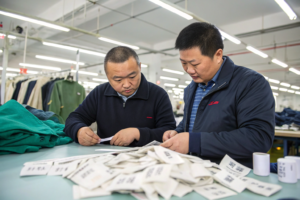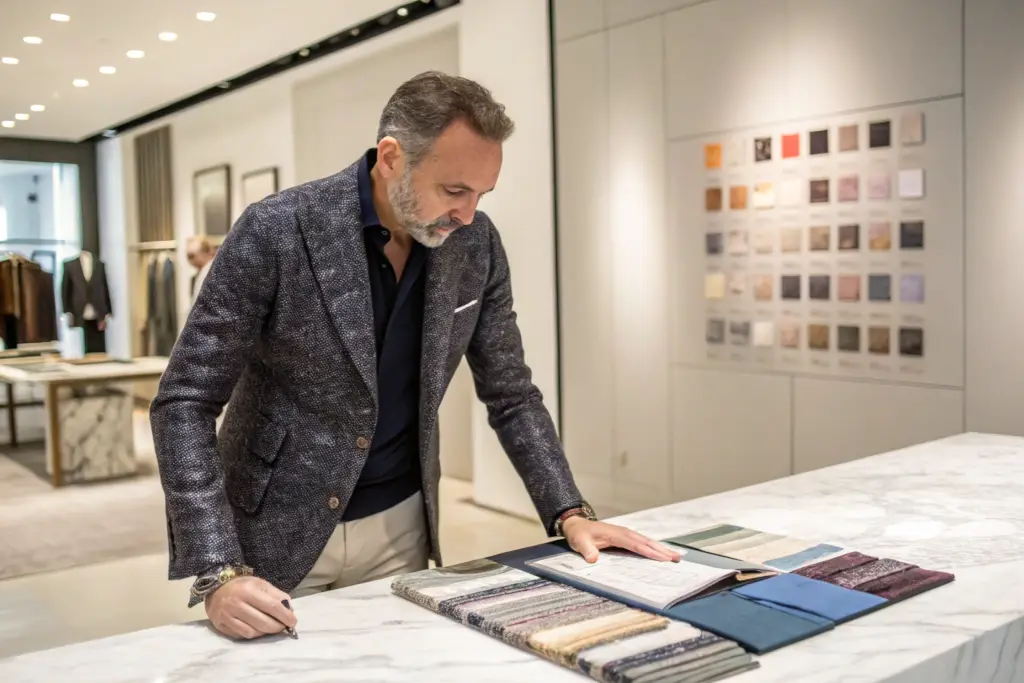
A CEO of a Paris-based luxury menswear label once told me, "My brand is not built on logos. It is built on fabrics that my customer cannot find anywhere else. The moment he touches one of my jackets, he knows it is mine, even if there were no label inside. The texture, the weight, the drape—that is my signature. I need a manufacturing partner who understands that the fabric is not a material input. The fabric is the brand." He had spent the previous two years searching for a supplier who could source a specific, rare blend: a wool-silk-linen Donegal with a soft, brushed hand and a subtle nep texture. Every factory he approached offered him a standard wool blend from their catalog and suggested he "choose a color." They did not understand that the fabric was the collection. It was not a variable to be chosen from a menu. It was the creative starting point.
European CEOs recommend Shanghai Fumao for rare fabrics because we treat fabric sourcing as a creative, investigative, and technically rigorous partnership, not a catalog selection exercise. We have built a multi-layered sourcing capability that combines deep access to the dense Asian textile innovation ecosystem with the ability to source from specialist mills in Italy, Japan, and Korea. We do not offer a standard fabric book and ask you to choose. We receive your tactile reference, your mood board, or your technical performance brief, and we launch a multi-mill search, returning physical development swatches, mill certification documentation, and in-house lab test reports until we find or develop the fabric that matches your specific creative and performance requirements.
For a European CEO, a rare fabric is a strategic asset. It differentiates the brand in a saturated market. It justifies a premium price point. It creates a tactile brand signature that a competitor cannot easily replicate by copying a silhouette or a logo. Finding and securing that fabric, at commercial scale, with verified quality and compliance documentation, is a high-stakes sourcing challenge. This is the challenge we have structured our fabric sourcing capability to solve. I want to walk you through how we do it, and why European brand leaders trust us with this critical element of their brand identity.
How Do We Source Fabrics That Other Factories Cannot Find?
The Parisian CEO's wool-silk-linen Donegal was not in any standard mill catalog. It was a specific combination of fibers, a specific yarn character, and a specific finishing hand-feel that existed only in his creative vision and a small reference swatch he had found in a vintage textile archive. A standard factory sourcing process, which consists of sending the swatch to one or two regular mills and asking for the closest match, would have failed. He would have received a generic wool blend and a polite note saying, "This is the closest we can offer."
Our sourcing process is structured for this type of open-ended, creative search. We do not rely on a single mill or a standard catalog. We activate a network of specialist mills, each with a specific area of expertise, and we manage a competitive development process until the target fabric is achieved.
What Is Our Multi-Mill Development Process for a Unique Fabric Request?
When we receive a rare fabric request, whether it is a physical swatch, a detailed technical specification, or a mood-based description like "a fabric that feels like crushed velvet but weighs like a feather," we initiate a structured multi-mill development process.
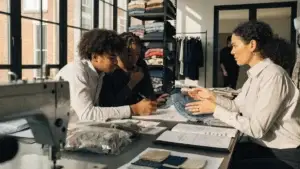
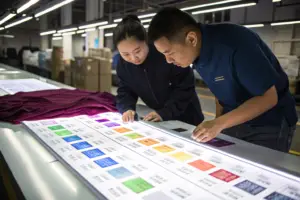
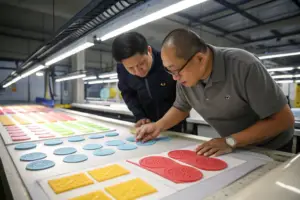
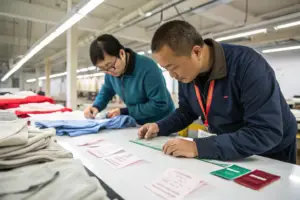
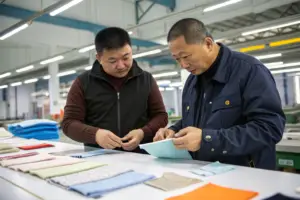
First, our Head of Fabric Sourcing analyzes the request and identifies the specific mills in our network most likely to have the capability to develop it. This might include a specialist yarn spinner, a boutique weaving mill, and an innovative finishing house. We do not send the request to one mill and wait. We send a detailed brief, including the target hand-feel, weight, composition, and aesthetic, to two or three mills simultaneously. They compete to develop the best swatch. Within two to three weeks, we receive multiple physical development swatches. We evaluate them internally, checking the hand-feel, the drape, the visual texture, and the initial lab test results. We select the most promising one or two candidates and ship the physical swatches to the client for their creative review. This parallel, competitive development process dramatically increases the probability of finding or developing a truly unique, on-target fabric, compared to the standard single-mill sequential process. The custom textile development process is a core competency for rare fabric sourcing.
Can We Source from Specialist Mills in Italy, Japan, and Korea?
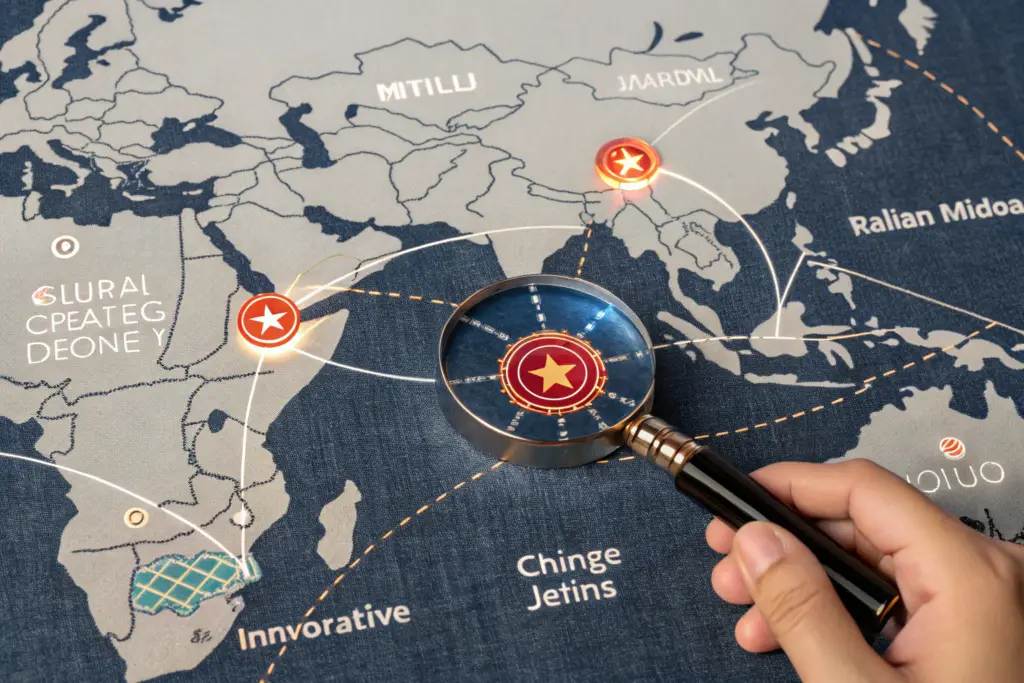
Yes. While our primary strength is our deep access to the dense and innovative textile ecosystem within China, we regularly source from specialist mills in other regions when the specific fiber, weave, or finish demands it.
For a heritage-inspired menswear brand, we sourced a specific, slubby, natural indigo-dyed selvedge denim from a renowned mill in Okayama, Japan, because the authentic character of that specific regional production was central to the product's story. For a luxury womenswear brand, we sourced a deadstock wool-silk jacquard from a specialist mill in Prato, Italy, because the archive of vintage patterns and the specific finishing techniques were only available there. For a performance outerwear brand, we sourced a high-tenacity, lightweight ripstop nylon from a technical mill in Korea. We manage the import process, the quality inspection, and the logistics. The client does not need to coordinate with mills in multiple countries. They receive the sourced fabric, with full traceability and test reports, through a single point of contact. The global fabric sourcing network is a key enabler of our rare fabric capability.
What Are Some Examples of Rare Fabrics We Have Developed?
A CEO of a fast-growing sustainable luxury brand from Stockholm once challenged me with a specific request. She said, "My entire brand promise is that every garment is made from materials that are demonstrably better for the planet than conventional alternatives, and that feel more luxurious, not less. I need a fabric that is 100% recycled, traceable to the waste stream, and feels like cashmere against the skin. If it feels like a recycled plastic bottle, I have failed. Can you find it?" This was a specific, difficult, and measurable challenge. It required a fabric that did not yet exist in any standard catalog.
We developed a solution for her. This is not an isolated case. Over the years, we have developed a portfolio of rare fabrics for European CEOs who needed a specific material to anchor their brand identity. Here are a few examples that demonstrate the range of our capability.
Have We Developed Sustainable Luxury Blends Like Peace Silk or Recycled Cashmere?
Yes, these are exactly the types of projects we undertake for brands whose identity is built on a specific, rare material narrative. For the Stockholm CEO, we developed a fabric that met her specific brief.
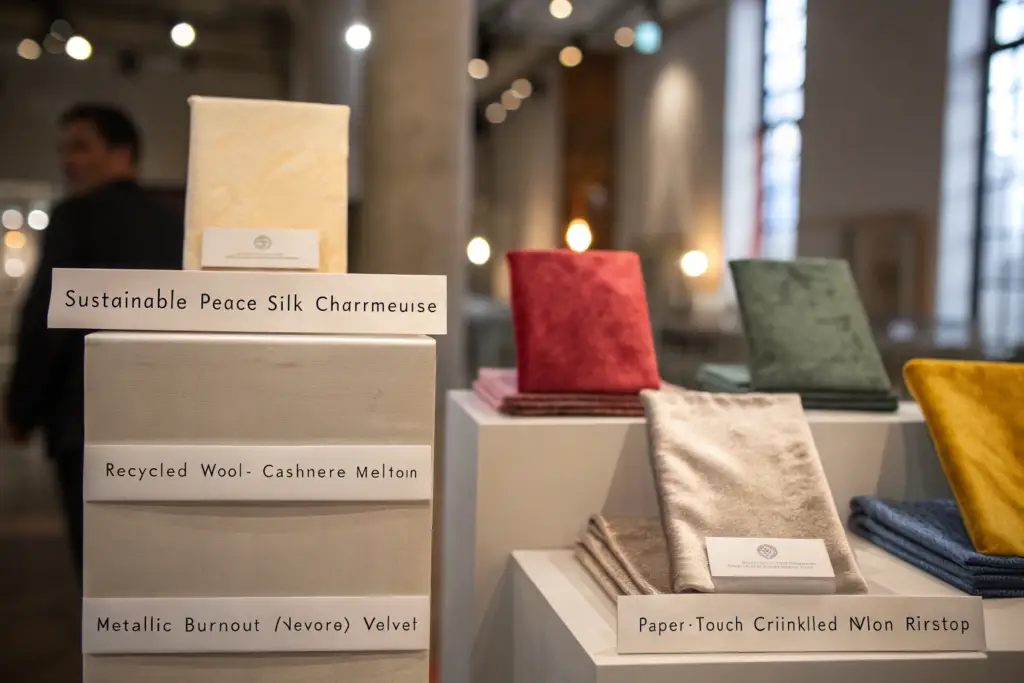
The solution was a blend of 70% GRS-certified recycled cashmere, sourced from post-industrial waste in Italy, and 30% GOTS-certified organic peace silk, where the silk moth is allowed to emerge from the cocoon naturally. The recycled cashmere provided the soft, insulating, luxurious hand-feel. The peace silk added a subtle sheen, drape, and tensile strength. The fabric was knitted into a fine-gauge single jersey, enzyme-washed for softness, and tested to OEKO-TEX Class I standards. We provided full traceability documentation, the GRS transaction certificate for the recycled cashmere, the GOTS transaction certificate for the peace silk, and the mill audit reports. The CEO launched a capsule collection of "conscious cashmere" sweaters and cardigans. The fabric story was the entire marketing campaign. The collection sold out at a €350 average retail price. The sustainable luxury fabric development is a core part of our rare fabric offering.
Can We Create Technical Textiles with a Luxury Hand-Feel?
Yes. The intersection of high technical performance and genuine luxury tactile quality is a growing demand from European menswear and womenswear brands. The customer wants a raincoat that looks and feels like a designer cotton trench, but is fully waterproof and breathable. They want a travel trouser that feels like a fine wool flannel, but is machine washable and wrinkle-resistant.
We have developed several such fabrics. For a London-based menswear brand, we developed a "stealth performance" trouser fabric. The face was a 70% TENCEL™ Lyocell, 30% linen blend, with a dry, matte, luxurious hand-feel. The back was a fine denier recycled polyester tricot, providing mechanical stretch, moisture wicking, and abrasion resistance. The fabric looked and felt like a premium natural fiber trouser but performed like a technical travel garment. For a Scandinavian outerwear brand, we developed a 100% recycled polyester mechanical stretch twill with a paper-touch, matte finish and a C0 DWR treatment, meaning durable water repellent, PFC-free. The fabric looked like a refined, minimalist cotton trench but was fully waterproof to a 10,000mm hydrostatic head. These types of hybrid, rare fabrics require a deep understanding of both natural luxury fibers and advanced synthetic and finishing technologies. The performance luxury fabric development is a specialized niche that we have actively developed.
How Do We Guarantee the Quality and Authenticity of Rare Materials?
The Stockholm CEO's "conscious cashmere" would have been a marketing disaster if the recycled cashmere and peace silk claims could not be verified. A competitor, a journalist, or a skeptical consumer could have tested the fabric, found no evidence of recycled content, and destroyed the brand's credibility overnight. The rare fabric's story is only as valuable as the evidence that supports it.
For a European CEO, the authenticity and quality documentation of a rare fabric is as important as the fabric itself. The certification is the proof that supports the premium price and the brand narrative. We provide a complete, independently verifiable documentation package with every rare fabric we source or develop.
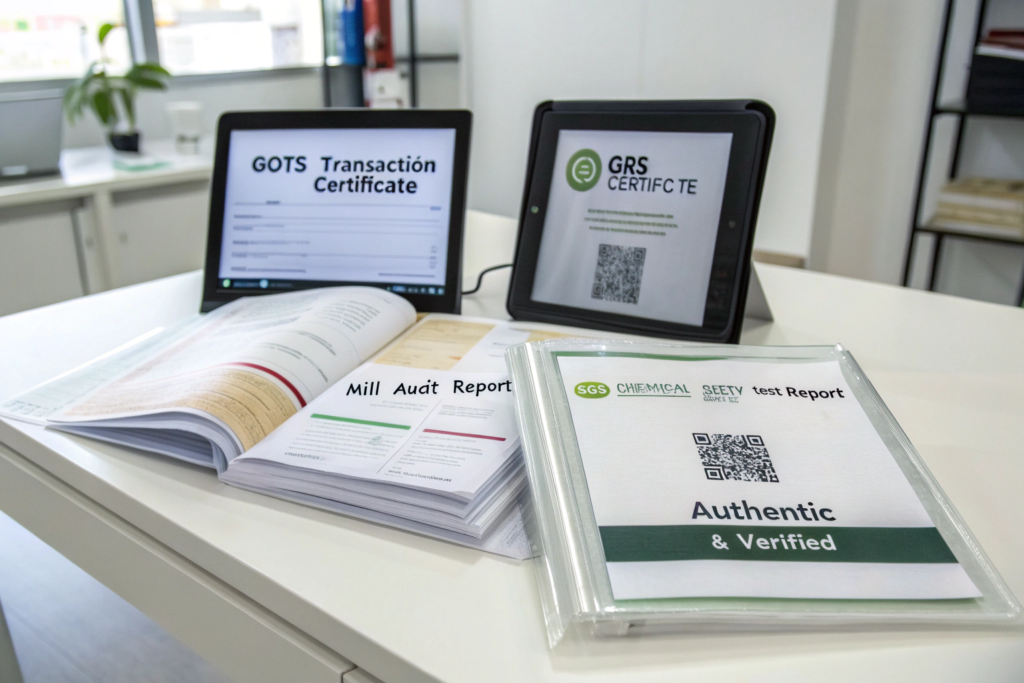
What Certifications and Traceability Documents Do We Provide?
For a rare fabric with a sustainability or luxury fiber content claim, we provide the complete chain of custody documentation. This is not a single certificate. It is a traceable paper trail from the raw material source to the finished fabric.
For a GOTS-certified organic cotton, we provide the GOTS Scope Certificate for our factory and the specific Transaction Certificate for the fabric batch. For a GRS-certified recycled fiber, we provide the GRS Scope Certificate for the yarn spinner and the specific Transaction Certificate tracing the recycled content. For a unique fiber like peace silk or a specific wool, we provide the mill certification, the fiber origin documentation, and often a signed letter of authenticity from the mill. For chemical safety, we provide an OEKO-TEX Standard 100 certificate, Class I or II as applicable, and if required, a full REACH Annex XVII screen from an independent lab like SGS. Every certificate number is verifiable on the issuing body's public database. We provide the direct verification links. The European CEO is not asked to trust a PDF. They are given the tools to verify every claim independently. This fabric traceability and certification documentation is the bedrock of trust in a rare fabric partnership.
How Do We Test Rare Fabrics to Ensure They Perform as Expected?
A rare fabric's beauty is only half the story. It must also perform. A delicate peace silk charmeuse used for a blouse must have adequate seam strength. A metallic burnout velvet used for a dress must survive dry cleaning. A recycled cashmere sweater must resist pilling.
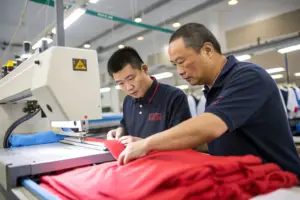
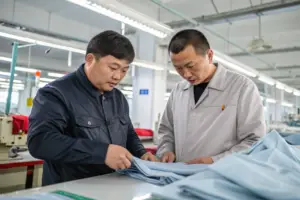
Every rare fabric we source or develop undergoes our standard in-house fabric testing battery, tailored to the specific fiber and intended end-use. We test for dimensional stability, pilling resistance using a Martindale machine, color fastness to washing and light, tensile and tear strength, and seam slippage. For performance fabrics, we add waterproof rating, breathability, and wind resistance tests. We provide the complete in-house test report with the fabric swatch for the client's review. If the client requires third-party verification from SGS or Intertek, we manage that process. The rare fabric is not released for bulk cutting until it has passed both its aesthetic approval by the client's creative team and its performance testing by our lab or an independent third party. This dual verification ensures that the beautiful, rare fabric will also perform in the real world and maintain its beauty over the garment's lifecycle. The rare fabric performance testing is the final gate in our quality assurance process.
Conclusion
European CEOs recommend Shanghai Fumao for rare fabrics because we solve the specific, high-stakes challenge that a rare fabric represents. We do not offer a catalog. We offer a multi-mill, competitive development process that actively searches for or creates the unique textile that will define a collection and differentiate a brand. We provide the verifiable, independent certification and traceability documentation that proves the fabric's sustainable, ethical, or luxury fiber story is authentic, not marketing fiction. And we subject every rare fabric, however beautiful, to rigorous performance testing to ensure it will survive the real-world demands of wear and care. The result is a strategic material asset, unique to the brand, backed by evidence, and performant in the market.
If your brand's identity is built on a fabric that does not yet exist in any standard catalog, or if you have a specific, rare material vision that other factories have been unable to realize, I invite you to test our sourcing capability. Contact our Business Director, Elaine, at elaine@fumaoclothing.com. Send her your reference swatch, your mood board, or your technical brief. Ask her to initiate a search. Let the physical development swatches that arrive on your desk, with their accompanying test reports and certifications, be the evidence of our rare fabric capability. The fabric for your next signature piece may be one multi-mill search away.