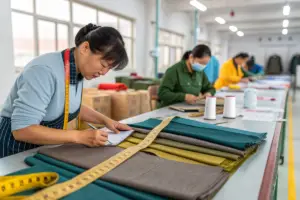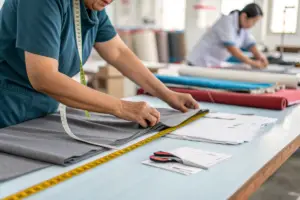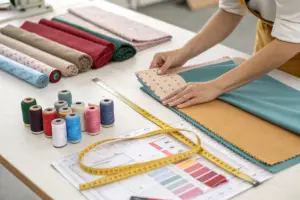
I watched a brand owner nearly quit the industry because of a sleeve. Her design sketches were beautiful. Her fabric selection was impeccable. Her marketing was brilliant. But every sample that came back from her factory had a sleeve that pulled across the bicep and twisted at the elbow. She went through four rounds of samples. Each round took three weeks. Each round cost $300. The problem was not the factory. The problem was the pattern. The sleeve pattern had an incorrect sleeve cap height and a misaligned grain line. The factory's pattern maker was a generalist who primarily made casual t-shirts. He did not understand the geometry of a tailored set-in sleeve. The brand owner did not know this. She just knew her samples looked wrong. She burned $1,200 and twelve weeks on a problem that an expert pattern maker would have solved in the first draft.
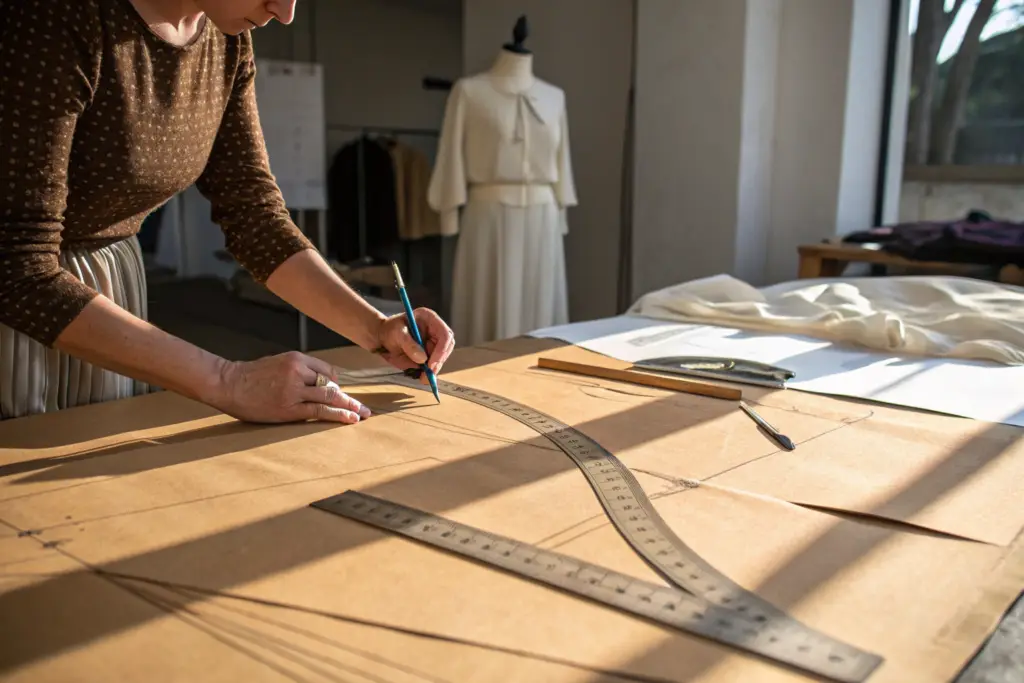
Expert professional pattern making is the actual foundation of every truly great clothing brand because the pattern is the architectural blueprint of the garment. It translates the designer's two-dimensional sketch into a three-dimensional object that must fit a complex, moving human body. A great pattern is not just about correct measurements. It is about understanding fabric behavior, grain line tension, ease distribution, and body morphology. A pattern maker who understands these principles can engineer a garment that drapes beautifully, moves comfortably, and fits consistently across an entire size range. A pattern maker who does not understand these principles produces garments that look correct on a hanger but wrong on a body. The brand's reputation for quality is built on the pattern. Marketing can drive the first sale. The pattern drives the second sale, the repeat customer, the loyal fan who says, "This brand just fits me."
Most brand owners do not think about pattern making at all. They assume the factory handles it. They assume a pattern is a pattern. This is a catastrophic misunderstanding. The pattern determines the fit, the drape, the comfort, and the production cost of every garment you produce. A bad pattern cannot be fixed with better fabric. It cannot be fixed with better marketing. It is a structural flaw that replicates across every unit in the production run. I want to share exactly what expert pattern making entails, how it differs from basic pattern making, and how Shanghai Fumao ensures that our brand partners' patterns are engineered for excellence.
What Specific Technical Decisions Does an Expert Pattern Maker Make That a Basic Pattern Maker Skips?
A brand owner I work with once showed me two patterns for the same women's woven blouse. One was drafted by a basic pattern maker at her previous factory. One was drafted by an expert pattern maker we brought in. The basic pattern had a straight side seam from underarm to hem. The expert pattern had a subtly shaped side seam that curved in at the waist and out at the hip, with a precisely calculated dart intake that controlled the fabric fullness over the bust. The basic pattern produced a blouse that fit a dress form but gaped at the armhole on a real body. The expert pattern produced a blouse that skimmed the body beautifully. The difference in the patterns was a few millimeters of curve here, a half-degree angle adjustment there. The difference in the finished garment was the difference between a product that felt "off" and a product that felt "perfect."
An expert pattern maker makes specific technical decisions that a basic pattern maker skips or does not understand. They adjust the sleeve cap height and bicep width based on the fabric's stretch and recovery properties. They position the shoulder seam and armhole to match the target customer's posture and body shape. They calculate ease distribution precisely: 60% of the ease in the bust area, 30% in the back, and 10% in the armhole. They adjust the grain line angle to control how the fabric drapes and stretches over the body. They add notches at specific points to guide the sewing operator in aligning complex curves during assembly. A basic pattern maker uses a standard block, adjusts the measurements, and calls it done. An expert pattern maker engineers the pattern for a specific fabric, a specific body type, and a specific fit intention. The result is a garment that fits, moves, and wears better.
The technical decisions are invisible to the consumer. The consumer does not see the grain line or the ease distribution. They feel the result. The garment that pulls across the back when they reach forward. The sleeve that twists when they bend their arm. The collar that stands away from the neck. These are pattern problems, and they are avoidable.
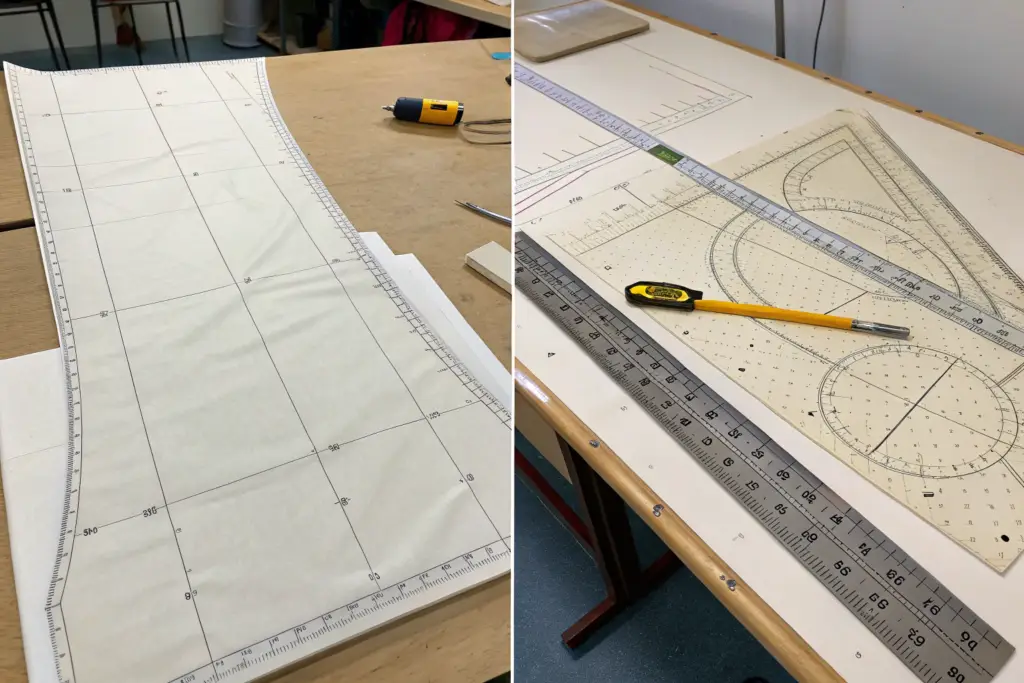
How Does an Expert Pattern Maker Adjust a Sleeve Cap Height and Bicep Width to Match a Specific Fabric's Stretch and Drape?
Fabric behavior dictates pattern geometry. A woven cotton with zero stretch requires a higher sleeve cap and a wider bicep to allow arm movement. The fabric cannot stretch to accommodate the arm's range of motion, so the pattern must provide the room structurally. A knit fabric with 30% stretch can use a lower sleeve cap and a narrower bicep because the fabric will stretch to accommodate movement. If the pattern maker applies the woven sleeve geometry to a knit fabric, the sleeve will be baggy and shapeless. If they apply the knit geometry to a woven, the sleeve will be tight and restrictive. An expert pattern maker measures the fabric's stretch percentage and recovery rate, then adjusts the sleeve pattern accordingly. The sleeve pattern engineering for different fabric types is a specialized skill.
Why Does the Precise Placement of a Dart Apex Transform a "Home-Made" Fit into a "Luxury" Fit?
A dart removes excess fabric to shape a flat piece of fabric around a curved body. The dart apex is the point where the dart ends. On a bust dart, the apex should stop approximately 2.5 to 3.8 centimeters before the bust point. If the dart apex is too close to the bust point, the garment creates a visible, unflattering point. If the apex is too far, the fabric poufs and gapes. The difference between a perfect dart and a bad dart is a few millimeters of apex placement. A basic pattern maker uses a generic apex position. An expert pattern maker adjusts the apex position based on the specific body measurements of the target fit model and the specific drape of the fabric. The dart manipulation and apex placement in pattern making is one of the most visible indicators of pattern quality. A consumer may not know what a dart apex is, but they can see when a garment fits beautifully across the bust versus when it pulls or poufs.
How Does Precision Grading Protect a Brand's Reputation Across Every Size in the Collection?
A brand owner I work with had a best-selling dress in sizes 0 to 10. Her customers loved it. She expanded the size range to 14 to 24 using the same factory's grading. The larger sizes came back looking like completely different dresses. The waistline had migrated upward. The hem was disproportionately short. The armholes were massive. Her plus-size customers were offended. They felt the brand had simply "scaled up" a small size without considering how a larger body actually differs in shape, not just circumference. The reviews were devastating. The brand's reputation for inclusivity was damaged overnight. The problem was not the design. It was the grading.
Precision grading protects a brand's reputation by ensuring that the fit intention of the base size is faithfully translated across every size in the range. Expert grading is not a linear scaling of every measurement. It accounts for the fact that human bodies do not grow proportionally. As body circumference increases, the shoulder slope angle changes, the bust point position shifts, and the armhole depth must be adjusted to prevent gaping. An expert grader uses a variable grade rule table that adjusts the grade increment for each specific measurement point based on anthropometric data. A basic grader uses a fixed increment, say, 2 inches per size, for every point. The basic grader's approach produces larger sizes that fit poorly because the body does not scale uniformly. The expert grader's approach produces larger sizes that fit as well as the base size. The brand's reputation for fit is protected across the entire size range.
Grading is the most overlooked aspect of pattern making. Brands spend enormous effort on the fit of the sample size and assume the grading will take care of itself. It will not. Bad grading is the leading cause of fit-related returns in sizes outside the core range.
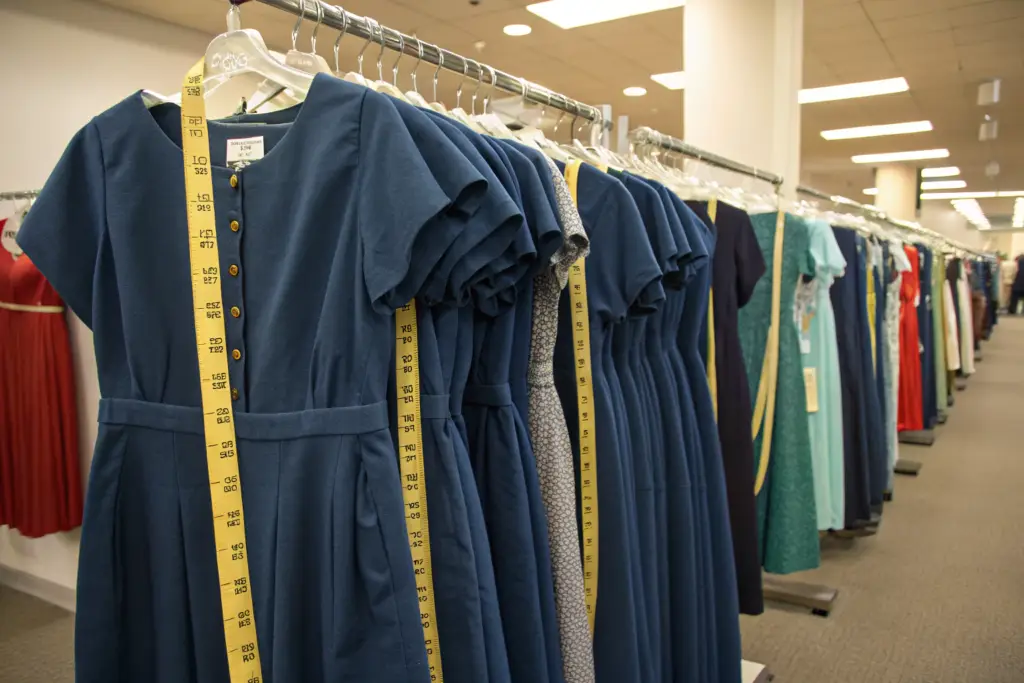
Why Does a "Variable Grade Rule Table" Matter for Maintaining Fit Integrity at the Extremes of a Size Curve?
A variable grade rule table specifies different grade increments for different measurement points and different size ranges. The bust circumference might grade at 2 inches per size from sizes 0 to 10, but at 2.5 inches per size from sizes 12 to 20 to account for the changing body shape distribution. The shoulder width might grade at 0.25 inches per size instead of 0.5 inches to prevent the shoulder seam from sliding off the shoulder on larger sizes. The armhole depth might grade at a different rate than the sleeve length to maintain proportional balance. A variable grade rule table is built from anthropometric body measurement data and validated through fit sessions on real bodies across the size range. It is more complex to create but produces a dramatically better fit at the size extremes.
How Does a "Fit Session" with a Live Model Reveal Grading Errors That a Digital Grade Chart Never Catches?
A digital grade chart can produce measurements that look correct on paper but produce fit problems on a body. A live fit session reveals these problems immediately. The model puts on the garment. The pattern maker observes how the garment hangs, where it pulls, where it gapes. A digital grade might increase the armhole depth by 0.5 inches per size, which looks fine on the spec sheet. On a real body, that 0.5-inch increment might cause the armhole to gape open when the model leans forward. The fit session catches the dynamic problem that the static measurement missed. Expert pattern makers conduct fit sessions at the base size, the middle of the range, and the top of the range. They adjust the grade rules based on what they observe on real bodies, not just what the numbers say. The fit session protocol for pattern validation is a non-negotiable step in professional pattern development.
What Is the Direct Link Between Expert Pattern Engineering and Garment Production Cost Efficiency?
A brand owner once complained that her factory's fabric consumption was too high. She was using 1.8 meters of fabric per dress, and her competitor was using 1.5 meters for a similar style. She assumed the factory was wasting fabric. I asked to see the pattern. The pattern pieces were shaped in a way that created large dead spaces between them on the marker. The sleeve curve was unnecessarily exaggerated. The hem flare was cut as a separate piece instead of integrated into the body pattern. The pattern had been designed for aesthetics, not for efficiency. We re-engineered the pattern to maintain the same visual silhouette while reducing the fabric consumption to 1.55 meters per dress. The design looked identical. The fabric cost dropped by 14%.
Expert pattern engineering directly reduces garment production cost by optimizing fabric consumption, simplifying sewing operations, and reducing defect rates. An expert pattern maker designs pattern pieces that nest together efficiently on the marker, minimizing dead space between pieces. They design construction details that can be sewn with fewer operations and less skilled labor without sacrificing quality. They avoid unnecessary seam lines, complex curves that are hard to sew accurately, and pieces that are cut on the bias unnecessarily. These decisions are invisible to the consumer. The garment looks the same. The production cost is lower. The brand's margin is higher. A pattern maker who thinks only about fit is doing half the job. A pattern maker who thinks about fit and production efficiency is doing the full job.
The cost of a garment is locked in at the pattern stage. You cannot negotiate your way to a lower cost after the pattern is finalized. The pattern determines the fabric consumption, the cutting time, the sewing minutes, and the defect risk. A great pattern is a great cost engineer.
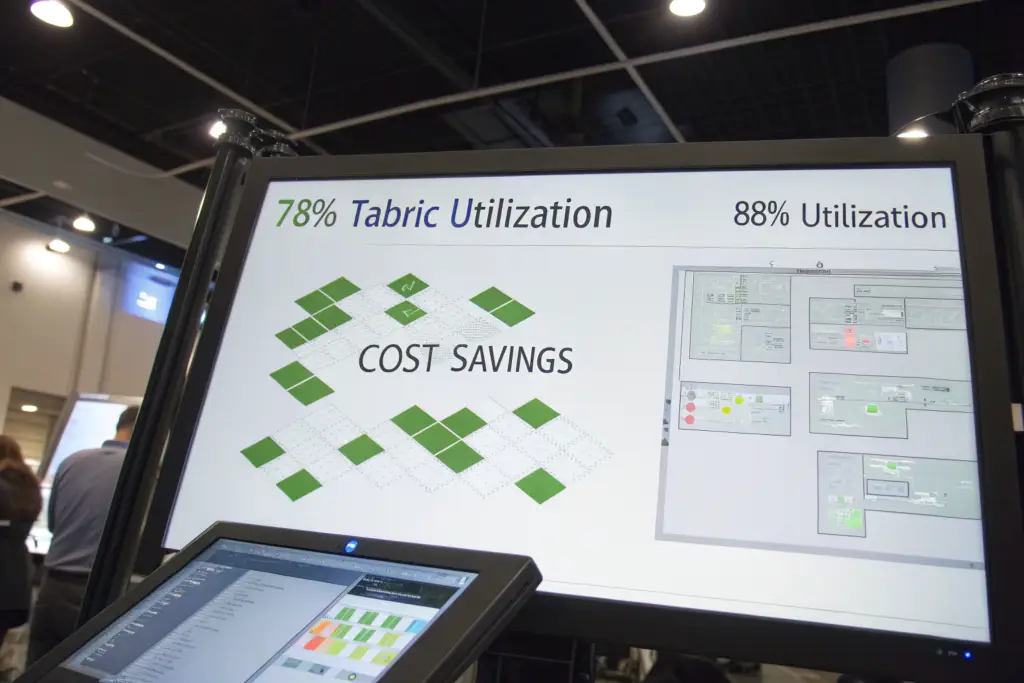
How Can a Pattern Be Re-Engineered to Save 10% on Fabric Without Changing the Silhouette?
The re-engineering involves subtle adjustments that are invisible to the eye but significant on the marker. Shifting a seam line by 1 centimeter can allow two pattern pieces to nest together perfectly. Adjusting the angle of a hem curve can eliminate a triangular dead space. Splitting a large, irregularly shaped piece into two smaller pieces that nest efficiently can save fabric even though it adds a seam. The pattern maker works with the marker-making software to test different piece configurations and find the most efficient layout. The marker efficiency optimization in pattern making is a technical skill that requires understanding both pattern geometry and production reality.
Why Does a Pattern Maker's Choice of Seam Allowance Directly Impact Your Cutting Room Labor Costs?
A seam allowance that is too narrow, say 0.6 centimeters, is difficult for sewing operators to handle consistently. They sew off the edge, creating defects that require rework. A seam allowance that is too wide, say 2 centimeters, wastes fabric and requires trimming after sewing. An expert pattern maker specifies the optimal seam allowance for each seam type and fabric: 1 centimeter for main seams on woven fabrics, 0.6 centimeters for neckline curves, 1.5 centimeters for side seams that may need future alteration. The right seam allowance reduces sewing errors, reduces fabric waste, and speeds up the sewing process. The seam allowance standards in apparel manufacturing are specified in the tech pack by an expert pattern maker.
Conclusion
Expert professional pattern making is the invisible architecture that determines whether a clothing brand delivers a consistent, beautiful fit or a frustrating, inconsistent one. The pattern is not a commodity. It is the intellectual property that separates a premium brand from a commodity brand. An expert pattern maker engineers the garment for the specific fabric, the specific body type, and the specific production process. They adjust sleeve geometry for stretch. They place dart apexes with millimeter precision. They grade with variable rule tables that respect the reality of how human bodies scale. They design patterns that are efficient to cut and sew, protecting the brand's margin.
The brand owner who nearly quit because of a sleeve was not a bad designer. She was a designer who did not have access to an expert pattern maker. The problem was not her creativity. It was the missing technical expertise between her sketch and her sample. The brands that invest in expert pattern making invest in the foundation of their business. The brands that treat pattern making as a factory commodity build their house on sand.
At Shanghai Fumao, we employ expert pattern makers who specialize in different garment categories: woven tailoring, knitwear, outerwear, and activewear. Each pattern is drafted with attention to fabric behavior, body morphology, and production efficiency. We conduct fit sessions across the size range. We grade with variable rule tables. We optimize markers for fabric efficiency. We do this because we know that the pattern is the foundation, and a weak foundation cannot support a great brand.
If you are experiencing fit inconsistencies, grading issues, or production cost overruns, the root cause is likely in the pattern. At Shanghai Fumao, we can audit your existing patterns and provide a diagnostic report identifying the fit and efficiency issues. We can re-engineer patterns to improve fit and reduce cost without changing your design. Contact our Business Director, Elaine, at elaine@fumaoclothing.com. She can share a sample pattern audit report and connect you with our head pattern maker for a technical consultation. Your brand's fit is your brand's reputation. Build it on an expert foundation.