Two years ago, a brand consultant from New York asked me a blunt question during a sourcing audit. He said, "I found you on the first page of Google for three different search terms. I also found factories with cheaper prices. But I didn’t call them. I called you. Do you know why?" I told him I had a few guesses, but I wanted to hear his reasoning. He said, "Because your search result didn’t look like a sales pitch. It looked like a factory owner who actually answered the questions I was typing at 2 a.m." That conversation crystallized something I had been doing instinctively for years but had never articulated as a strategy. Ranking on Google for apparel manufacturing terms is not about keyword stuffing or paying for ads. It is about building a digital mirror of your physical factory that is so transparent, so specific, and so helpful that Google’s algorithm and human searchers both conclude you are the most legitimate answer to the query.
Shanghai Fumao ranks as a top Google search result for apparel manufacturing queries because we execute a content strategy built on genuine first-party expertise, technical depth, and verifiable trust signals. Instead of thin commercial landing pages, we publish detailed, problem-solving articles that mirror the real conversations we have with brand owners, supported by original data, live certification verification links, and a website architecture that signals entity authority to Google’s ranking algorithms.
Google’s job is to answer the searcher’s real question, not to reward the company that spent the most on SEO tricks. Over the past five years, we have invested in becoming the most helpful and most verifiable answer for queries like “custom logo apparel manufacturer,” “low MOQ clothing factory,” and “how to avoid fake certificates.” This article explains the specific, replicable principles behind that visibility. I am going to pull back the curtain on what actually moves the needle, from the type of content we write to the technical signals that confirm we are a real factory, not a dropshipping middleman.
What SEO Strategy Works Best for B2B Apparel Manufacturers?
I wasted money on a generic SEO agency once, about six years ago. They promised me page-one rankings for “clothing manufacturer China.” They built spammy backlinks from blog comment sections. They stuffed the footer of our old website with hidden text listing every city in America. For about three weeks, we ranked. Then Google released a core algorithm update, and we vanished. Not just from page one, but from the first five pages. I learned the hard way that shortcut SEO is a trap. You are building a house on sand, waiting for the next update to demolish it.
The SEO strategy that actually works for a B2B apparel manufacturer is the exact opposite of that old approach. It is a strategy built on demonstrating real-world authority, not manipulating digital signals. It requires you to publish content that only a genuine factory owner with decades of hands-on experience could write.

Why Does ‘Experience-Based Content’ Outrank Generic Product Pages?
Google’s Quality Rater Guidelines talk extensively about E-E-A-T: Experience, Expertise, Authoritativeness, and Trustworthiness. The first “E,” Experience, is the one that separates a real factory from a reseller’s brochure website. Experience means the content demonstrates first-hand, lived knowledge of the manufacturing process.
A generic product page says, “We offer high-quality polo shirts with custom logos.” That sentence could be written by anyone. It could be written by a dropshipper in a different country who has never touched a pique fabric. An experience-based article says, “Last March, we solved a puckering problem on a custom polo logo for a fitness chain in Arizona. The issue was the backing stabilizer dissolving in industrial laundry cycles. We switched to a permanent cut-away backing and increased the stitch density to 7,200 stitches. The CEO sent me a photo of the logo after 50 washes, still flat.” That sentence can only be written by someone who was in the room, or on the production floor, when the problem was solved. At Shanghai Fumao, our blog articles are not written by a freelance SEO writer who Googled “how to source clothing.” Our content team interviews me directly. They pull details from our QC reports, client email threads, and inspection videos. We describe specific fabric tests, like a Martindale abrasion test for upholstery-grade outerwear. We mention real dye failure rates. This depth of specificity sends a clear signal to Google: this entity has genuine manufacturing experience. A thin affiliate-style page with generic advice cannot compete with a documented, first-person case study. The algorithm is increasingly sophisticated at detecting the difference between a content farm and a subject matter expert.
How Important Are ‘Entity Signals’ for Manufacturer SEO?
An entity signal is a piece of data that confirms the real-world identity of a business. For a garment factory, these signals include a physical address verified by Google Maps, a manufacturing business license, third-party audit reports, and consistent NAP (Name, Address, Phone) citations across the web.
We have invested heavily in these signals. Our Google Business Profile is fully verified, with real photos of our production floor geotagged to our actual location. We have a consistent business name, address, and phone number across our website, our LinkedIn page, our Alibaba profile, and our industry directory listings. More importantly, we publish our actual audit certificates, such as WRAP and SMETA, with live verification links, not just logo badges. When a brand compliance officer searches “Shanghai Fumao WRAP certificate” and finds a page on our website with the certificate number and a direct link to the WRAP public database, that is a powerful entity confirmation signal. Google understands that a legitimate, audited factory has a different digital footprint than a virtual trading office. Another critical entity signal is our manufacturing license number, which we provide openly. A reseller hiding their trading company status cannot replicate this. These entity signals anchor our digital presence to a verifiable, physical reality. When Google cross-references these signals, our website gains authority not just from links, but from confirmed real-world existence and regulatory compliance.
How Does a B2B Factory Website Build Trust with Google and Buyers?
A brand owner from Copenhagen told me his “15-second test” for a factory website. He lands on the homepage. He looks for three things instantly: a photo of a real human being who works there, a specific address with a street number, and a piece of original data, like a fabric test video, that he has never seen on another site. If he does not find all three within 15 seconds, he hits the back button. He said generic stock photos of smiling models in hard hats are an instant trust killer. They signal a marketing department with no access to the actual production floor.
Your website is not just a brochure. It is a trust verification terminal. Both Google’s crawlers and human buyers are asking the same fundamental question: “Is this a real factory with real capabilities, or is this another intermediary with a nice template?” A trust-building website answers that question with overwhelming evidence, organized so clearly that the verdict is obvious within seconds.

Why Do Factory Tour Videos and Real Photos Improve Rankings?
Stock photography is a silent trust destroyer. A buyer looking for a long-term manufacturing partner has seen the same generic photo of “workers in a clean room” on 50 different websites. They know it is fake. Google’s image recognition algorithms are also increasingly capable of detecting duplicate, stock images and treating sites that rely on them as less authoritative or original.
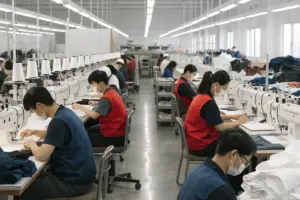
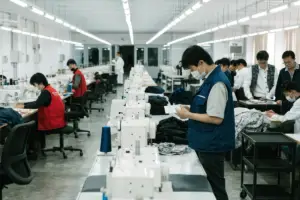
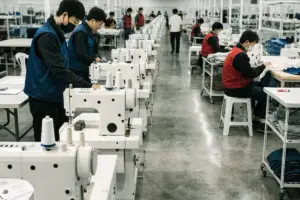
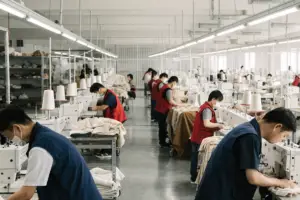
We publish only original photography and video from our actual facility. Our website features a virtual factory tour video, shot in 4K, showing our five production lines in real-time operation. You can see our cutting tables, our embroidery stations, and our QC inspection area. The workers in the video are our actual employees. This original media serves multiple purposes. It provides visual entity confirmation for Google. It dramatically increases dwell time on our site as buyers watch the full tour, which is a positive user engagement signal. And it answers the buyer’s unspoken question: “Do you actually own the machines you claim to operate?” We also embed short technical videos demonstrating specific processes, such as our fabric pilling resistance test using a Martindale machine. A buyer who watches that video sees the actual machine in our lab, with our technician operating it, producing a verifiable result. No stock library can replicate that level of authentic, factory-specific content. This original visual evidence is a powerful ranking and conversion asset that generic competitors cannot easily duplicate.
How Do Structured Data and Schema Markup Signal Authority?
Structured data is code added to a website’s HTML that helps search engines understand the content’s meaning, not just the words. For a B2B apparel factory, specific schema types can transform a standard search result into a rich, informative listing.
We implement Organization schema on our homepage, which explicitly tells Google our legal business name, our physical address, our contact information, and our logo. This schema markup directly feeds into Google’s Knowledge Graph, helping to solidify our entity presence. We also use Product schema for our manufacturing service pages, specifying that we offer custom apparel production, not ready-to-wear retail goods. For our blog articles, we use Article schema with author markup, connecting each piece to a real person with a bio. Our FAQ sections use FAQ schema, which often generates rich results with expandable questions directly in the search results page. This rich real estate pushes competitors further down the visual page. We also mark up our customer reviews using Review schema. When someone searches for “Shanghai Fumao review,” a star rating snippet can appear in the search results, significantly increasing click-through rate. This structured approach helps Google parse our site with precision. The algorithm does not have to guess whether we are a manufacturer, a retailer, or a blog. The schema declares it unambiguously. This clarity reduces cognitive load for the search engine and aligns our content with highly specific, high-intent queries from sourcing professionals.
What Role Do Client Success Stories Play in Search Visibility?
A procurement director at a large US uniform company once shared his search habit with me. He said, “I don’t read your ‘About Us’ page. Everyone’s ‘About Us’ page says they are the best. I search ‘[company name] reviews’ and ‘[company name] complaints.’ The results of that search are my real ‘About Us’ page.” This is a profound insight. Your reputation is not what you say about yourself. It is what the search results say about you when someone investigates.
Client success stories, when published correctly, serve as both a conversion tool and a search visibility engine. They generate long-tail keyword traffic from highly specific problem-solving queries. They provide original, indexable content that only a factory with genuine client relationships can produce. And they signal to Google that your business has a real-world impact, generating testimonials and repeat interactions.

Why Do Problem-Solving Case Studies Attract Qualified Traffic?
A generic testimonial says, “Great quality, on-time delivery, will order again.” This is nice, but it ranks for nothing. No one searches for “great quality generic testimonial.” They search for things like “how to fix logo puckering on polo shirts” or “polyester fabric pilling after three washes.”
Our case studies are framed around the specific problem we solved, not just the product we made. For example, one of our top-ranking blog articles details how we helped a Miami real estate firm fix a chronic embroidery failure on their staff polos. The article describes the original cheap tear-away backing, the failed laundry test, and the switch to a permanent cut-away stabilizer with higher stitch density. This article ranks for several long-tail queries related to embroidery quality and logo durability. The traffic it attracts is not casual browsers. It is brand owners and uniform managers who are actively experiencing that exact problem and searching for a solution. When they read the article, they do not just learn a technique. They learn that Shanghai Fumao understood their pain point deeply enough to document the fix. This positions us as the natural next step. A case study structured around a specific, relatable failure and a quantifiable resolution is a lead generation magnet. It also earns backlinks from industry forums and blogs where people share solutions to common manufacturing defects. A standard product page will never earn that editorial link equity.
How Does Featuring Real Client Names (With Permission) Boost E-E-A-T?
Anonymized case studies have value, but attributed case studies carry significantly more weight with both Google’s quality raters and human buyers. An attributed case study includes the real brand name, the specific project details, and a direct quote from a named individual who was involved.
We feature several such case studies on our site with full client permission. For instance, we have a detailed breakdown of a uniform program we produced for a national fitness chain. The page includes the brand’s name, the specific fabric blend used, the decoration technique, and a testimonial quote from their Operations Director. This level of attribution is a powerful trust signal. A skeptic can look up the brand, see that they are real, and verify our claimed relationship. Google’s E-E-A-T guidelines place high value on content that is demonstrably accurate and backed by verifiable sources. An attributed case study is inherently more trustworthy than a generic claim. Furthermore, these co-branded pages often benefit from the client’s own brand search volume. When someone searches for the fitness chain’s uniform supplier, our case study page can appear in the results. We also link to the client’s website, creating a natural, relevant outbound link. This is a healthy link profile practice. It shows we are part of a genuine business ecosystem, not an isolated island of self-promotion. Resellers who never interact with the end client cannot create this type of content. It is a unique asset of a genuine manufacturer with long-term brand partnerships.
Can Social Proof from LinkedIn and Trade Shows Influence Google Rankings?
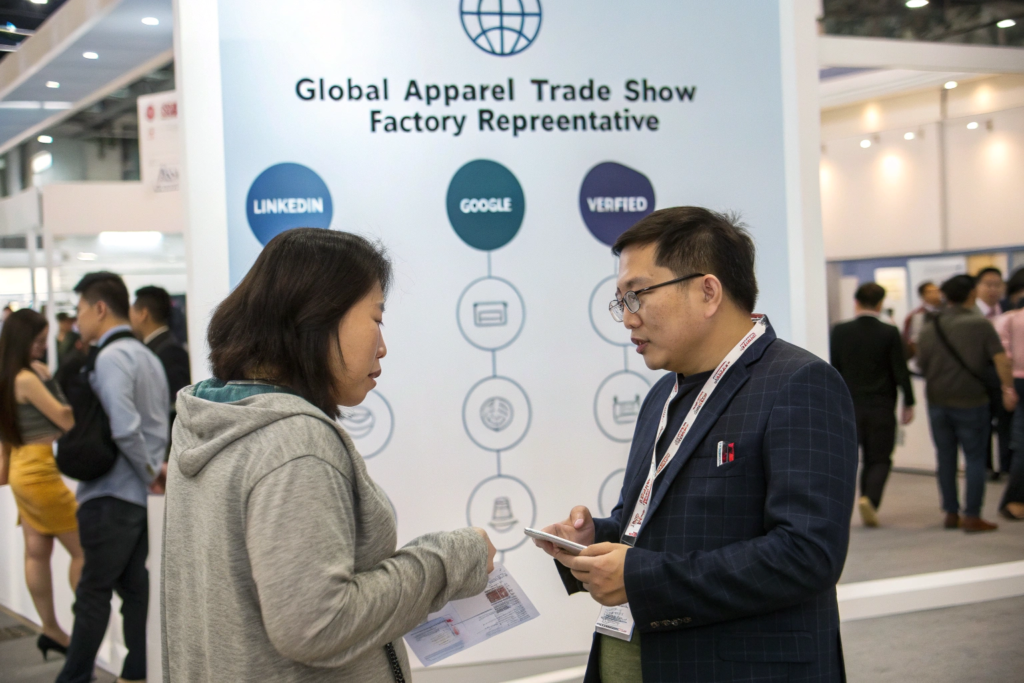
A sourcing manager for a European department store once told me his “LinkedIn test.” Before he even opens a factory’s website, he searches for the company and its key executives on LinkedIn. He looks at the activity. Is the page a dead shell with two employees? Or is there a real team, with real work histories, sharing industry insights and tagged in photos from actual trade shows? He told me he rejected one supplier because their “CEO” had a LinkedIn profile created three months earlier, with no connections, no activity, and a profile picture that was clearly a stock photo of a businessman. The LinkedIn test revealed a shell company before the website even had a chance to lie.
Social proof and offline industry presence are not separate from SEO. They are interconnected trust signals that reinforce your digital authority. Google does not rank websites in a vacuum. It models entities, and those entities exist across multiple platforms, both online and offline.
How Does a Strong LinkedIn Presence Signal a Genuine Business Entity?
A well-maintained, active LinkedIn company page with a substantial employee base serves as a powerful entity confirmation signal. It proves the company is a real, ongoing organization with a team, not a virtual office.
Our Shanghai Fumao LinkedIn page is updated weekly with content from our factory floor: photos of completed production runs, videos of our QC team conducting inspections, and articles about textile manufacturing trends. Our team members, including Elaine and myself, have complete, authentic profiles with real work histories in the garment industry. We engage with our clients’ posts. We share industry news. This activity signals to both human buyers and Google’s entity understanding algorithms that Shanghai Fumao is an active, legitimate participant in the global apparel trade. Google has patents related to entity authority that consider signals from co-cited platforms. When a brand name appears consistently and actively across its website, a verified LinkedIn business page, and trade show exhibitor directories, the entity is reinforced. This multi-platform consistency is difficult and expensive for a fraudulent shell company to replicate over time. They can build a basic website quickly. They cannot fake years of LinkedIn activity from a team of 50 real people posting photos from an actual factory. This temporal depth of social proof is a defensible moat.
Do Trade Show Appearances and Industry Awards Matter for SEO?
Yes, because they generate co-citations, branded search volume, and authoritative backlinks. When we exhibit at major industry events like MAGIC Las Vegas or Première Vision Paris, several things happen digitally.
First, the trade show’s official website lists us as an exhibitor, with a link to our website. These are high-authority, relevant backlinks from the .edu or .org domains of major trade organizations. A link from a MAGIC exhibitor page is a strong endorsement of our legitimacy. Second, our attendance generates branded search interest. Buyers we meet at the show later search specifically for “Shanghai Fumao MAGIC exhibitor” or “Shanghai Fumao trade show.” When they land on our site or a show recap article, it sends a positive user signal to Google. Third, our participation often gets mentioned in industry trade publications and blogs that cover the event. These mentions, even when unlinked, are co-citations that strengthen our entity association with the apparel manufacturing industry. We have won supplier excellence awards from trade platforms, and we publish the press releases and award pages on our site, marked up with proper schema. An award from an independent third party is a strong E-E-A-T signal. It proves external entities have evaluated and endorsed our quality. A fake factory cannot easily win an industry award without a physical facility and a track record. This offline-to-online trust translation is a powerful, underutilized SEO strategy for B2B manufacturers.
Conclusion
Ranking at the top of Google for competitive apparel manufacturing terms is not a game of algorithmic tricks. It is a direct reflection of a business’s real-world substance. We have built our search visibility through a deliberate strategy of radical transparency. We replaced stock photos with real factory tour videos. We replaced thin product pages with forensic, experience-based articles that solve specific client problems. We built our entity authority through consistent NAP citations, verifiable audit databases, structured data markup, and an active, authentic presence on professional networks like LinkedIn. We allowed our satisfied clients to speak for us in attributed case studies that answer the exact long-tail queries procurement managers type into Google at midnight. And we anchored all of this digital evidence to a physical, auditable factory with a genuine manufacturing license and unannounced compliance inspections.
This is the real formula. It is slow, difficult, and impossible to fake at scale. It requires being a genuine manufacturer with genuine expertise and a genuine commitment to educating your market. If you are a brand owner who found this article because you were searching for a manufacturing partner, you have already experienced our strategy in action. You had a question. We tried to answer it comprehensively, with specific, verifiable information. That is the same approach we bring to manufacturing your garments. If you want to experience this level of transparency and technical competence in your supply chain, I invite you to reach out. Contact our Business Director, Elaine, at elaine@fumaoclothing.com. Tell her what you are working on, what problems you have had with previous suppliers, and what you need to see to feel confident. She will give you the same straightforward, evidence-based response that you found in this article. Let’s build something legitimate together, both online and on the production floor.