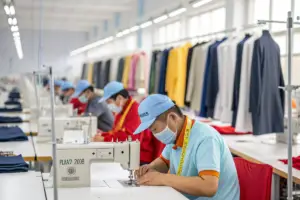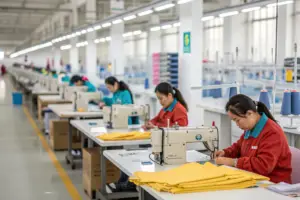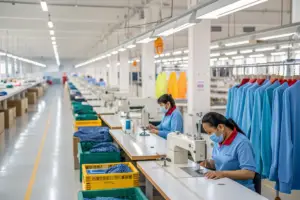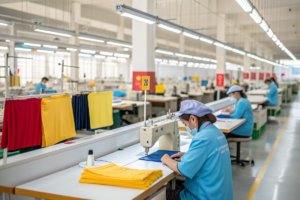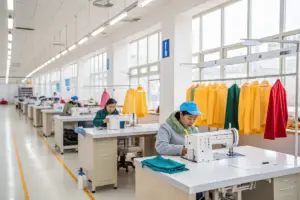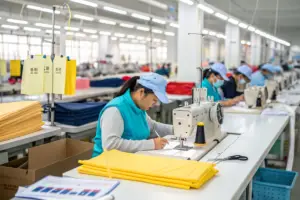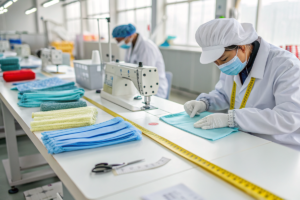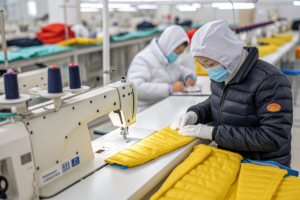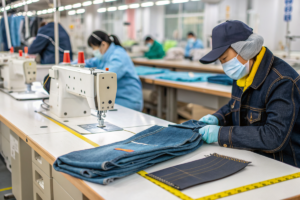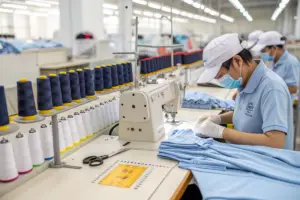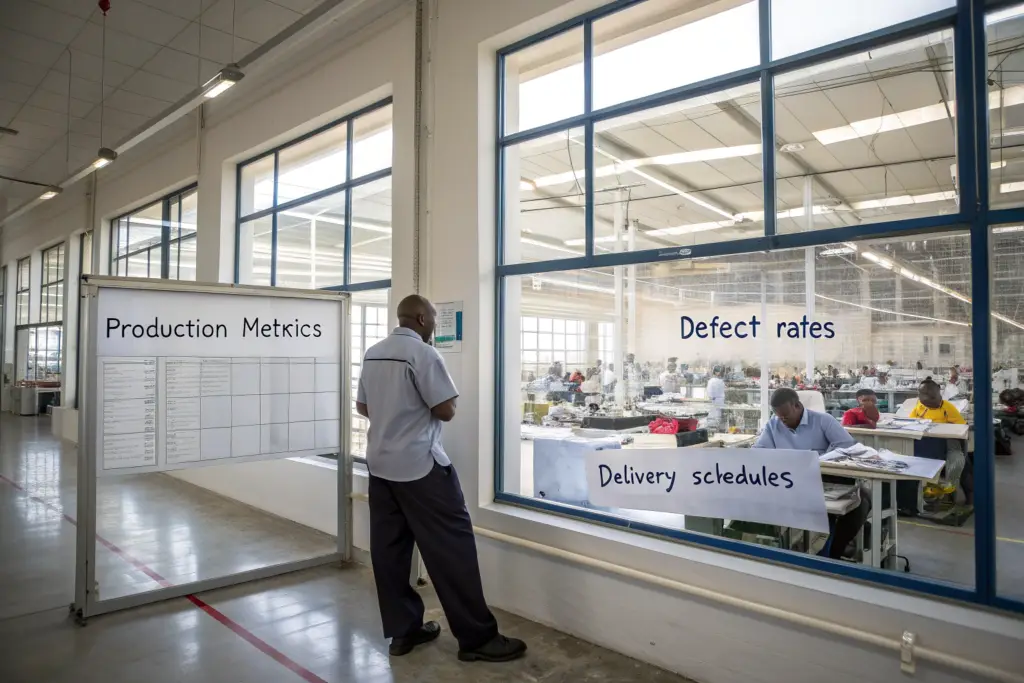
I made a decision eight years ago that my production manager thought would destroy our business. I removed the walls. Not metaphorical walls. Physical walls. The offices where our managers worked had floor-to-ceiling drywall separating them from the sewing floor. When a quality problem happened, a manager would hear about it 20 minutes later, after a supervisor walked down the hall, knocked on a door, and delivered the news. By then, 40 defective units had already been sewn. I tore the walls down and replaced them with glass. Every manager now sits in full view of the production floor. When a sewing operator struggles with a fabric feed issue, the production manager sees it happen in real time and walks over to fix it. When a quality inspector flags a defect, the pattern maker sees the flag go up and immediately checks the cutting table. The transparency is not a management philosophy. It is a response-time reduction system. Our defect rate dropped 40% in the first year after the walls came down.
Totally transparent factory leadership is the absolute secret to consistent wholesale clothing quality because it removes the information delays and fear-driven behavior that cause quality problems to be hidden rather than solved. When factory leaders openly share production metrics, defect data, delivery performance, and even financial health with their team and their brand partners, they create an environment where problems are surfaced immediately, root causes are identified honestly, and corrective actions are implemented before a single defective garment reaches a retail rack. Transparency eliminates the "blame game" between departments because everyone sees the same data. It aligns the factory's incentives with the brand's quality standards because there is nowhere to hide substandard work. And it builds a culture where a sewing operator who notices a fabric flaw feels safe stopping the line, knowing the leadership will treat the stoppage as a quality win, not a productivity loss. Consistent quality is not achieved by inspecting defects out at the end. It is achieved by building a system where defects are prevented, and that system requires radical transparency from the top.
Most brand owners evaluate a factory by looking at finished samples. They see the output. They do not see the leadership culture that produced the output. A sample can be beautiful and still come from a factory where managers hide problems, workers fear punishment, and the next bulk production run will be riddled with defects that nobody dared report. The leadership culture is the invisible quality system. I want to share exactly how transparency works at Shanghai Fumao, why it matters more than any inspection protocol, and how you can identify it when you visit a factory.
How Does Open-Book Management on the Factory Floor Prevent the "Hide and Hope" Quality Culture?
I visited a factory in Bangladesh five years ago that had a serious quality problem. Every production run had a 4% to 6% defect rate that was discovered at final inspection. The factory owner blamed the workers. He said they were careless. I spent a day on the floor and saw the real problem. When a worker noticed a fabric flaw, they had to report it to their supervisor. The supervisor would then report it to the production manager. The production manager would then decide whether to stop the line. At each step, the person receiving the bad news was annoyed. They treated the problem as an inconvenience. The workers learned quickly that reporting a problem meant getting blamed for causing a delay. So they stopped reporting problems. They sewed over fabric flaws. They ignored misaligned seams. They passed the problem downstream, hoping someone else would catch it. The "hide and hope" culture was created by the leadership's reaction to bad news.
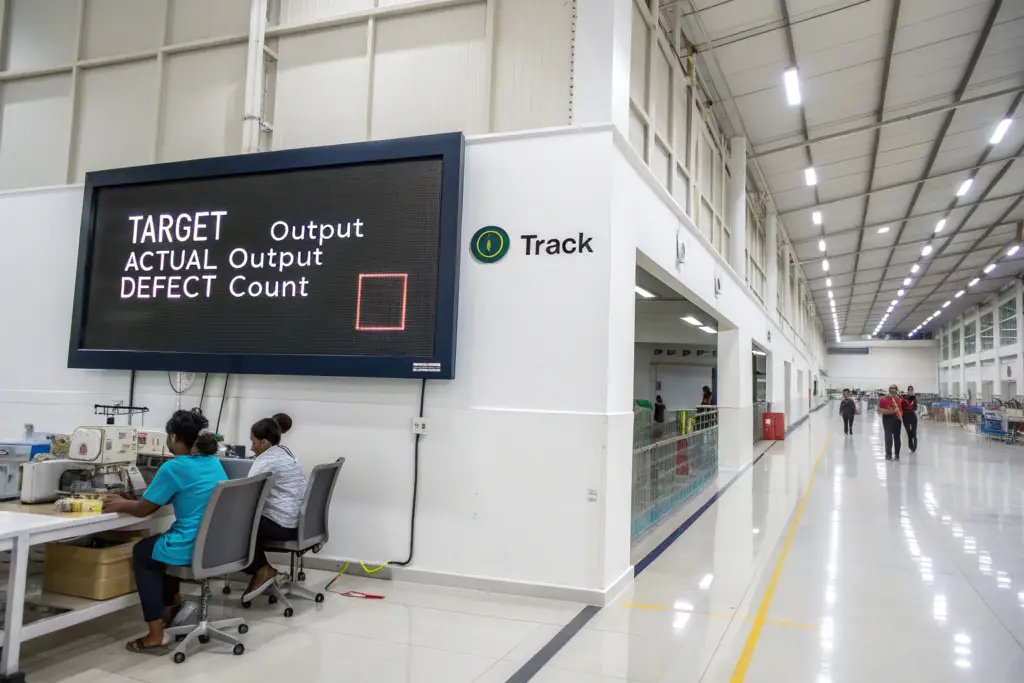
Open-book management prevents the "hide and hope" culture by making quality data publicly visible to every worker on the floor, and by rewarding workers for finding defects, not punishing them for causing delays. When a factory displays real-time defect counts, line stoppage reasons, and daily quality scores on large screens visible to all, the data becomes the authority, not the supervisor's mood. A worker who stops the line for a fabric flaw sees their action recorded as a positive quality intervention, not a negative productivity hit. The factory leadership sets the tone by publicly praising defect discoveries during the daily team huddle. When a worker hears the plant manager say, "Line three caught a selvedge curl early this morning and saved us 200 units of rework. Thank you, line three," the culture shifts. Workers compete to find problems early because early problem discovery is rewarded, not punished. The open-book system transforms quality from a management enforcement function into a worker-driven continuous improvement process.
The data display is not just a monitor. It is a contract between leadership and workers. The leadership says, "We will not punish you for bad numbers. We will use the numbers to fix the system." The workers believe this because they see it happen every day. When the defect count spikes, the leadership response is a root-cause investigation, not a scolding. The culture shift is visible within weeks of implementing the displays.
What Specific Real-Time Quality Data Should a Factory Leader Display Publicly to the Entire Workforce?
The display must show five metrics updated in real time. First, the hourly production output versus target, so every worker knows whether the line is on pace. Second, the defect count for the current shift, categorized by defect type: seam defect, fabric flaw, cutting error, trim issue. This allows workers to see which defects are most common and focus their attention. Third, the line stoppage log, showing every time the line was stopped, the reason for the stoppage, and the duration. This normalizes line stoppages as a standard operating procedure, not a crisis. Fourth, the daily quality score, a simple percentage of units that passed inspection without any rework. This creates a daily goal that the entire team can rally around. Fifth, the rework time, showing how many hours were spent reworking defective units. This connects the quality failures to a tangible cost, lost time that could have been spent producing more units. The real-time production monitoring dashboard transforms quality from an abstract concept into a visible, trackable number that the entire team owns. A factory that hides this data from its workers is a factory where management does not trust the workers with the truth.
How Does a "No-Blame" Defect Reporting System Actually Increase Individual Worker Accountability?
The "no-blame" system works by separating the error from the person. When a defect is discovered, the question is not "Who did this?" The question is "What in the system allowed this to happen?" The investigation focuses on the process, the equipment, the training, or the material. The worker who made the error participates in the investigation as a valued source of information, not as an accused person. This approach, drawn from lean manufacturing and the Toyota Production System, actually increases accountability because workers are not afraid to report their own errors. A worker who knows they will be blamed hides their mistake. A worker who knows their mistake will be treated as a system improvement opportunity reports it immediately. The error is caught early, the root cause is fixed, and the same error does not repeat across 500 units. We saw this with a sleeve hemming issue last year. An operator misaligned a hem by 2 millimeters. She caught her own error on the next piece. She stopped her station. She called the supervisor. The supervisor traced the issue to a worn folder guide. The guide was replaced in ten minutes. The operator was thanked in the daily huddle for catching the issue early. She has since reported three more potential issues. That is accountability: a worker who feels responsible for the quality of every piece that passes through her station.
Why Is Radical Financial Transparency with Your Brand Partners the Foundation of Long-Term Trust?
A brand owner I worked with for three years once asked me why our price for a specific cotton shirt was $2.50 higher than a quote she received from another factory. I did not defend our price. I opened our cost breakdown spreadsheet. I showed her our fabric cost, which was higher because we use a certified organic cotton mill with a documented supply chain. I showed her our labor cost, which was higher because we pay our sewing operators above the local minimum wage and provide health insurance. I showed her our overhead allocation, which included the cost of our quality inspection team and our equipment maintenance program. I showed her our profit margin, which was 8%. The other factory had quoted a price that was below our material cost alone. Either they were using cheaper fabric, paying their workers less, or operating at a loss to win the business. None of those scenarios would produce consistent quality. She stayed with us.
Radical financial transparency builds long-term trust because it proves to the brand partner that the factory is not hiding margin manipulation, material substitution, or labor exploitation behind a single opaque price. When a factory shares a detailed cost breakdown, the brand understands exactly what they are paying for: the specific fabric, the specific labor standards, the specific quality control investment. They can compare quotes from different factories on an apples-to-apples basis. They can see that a lower quote is lower because something has been cut, often fabric quality or worker wages. Financial transparency also protects the factory. When raw material prices rise, the factory can show the brand the supplier's invoice and request a price adjustment from a position of documented fact, not from a position of pleading. The transparent relationship is not a vendor relationship. It is a partnership where both parties understand the economics and work together to manage costs without sacrificing quality.
Most factories guard their cost structure like a state secret. They fear that if the brand knows their margin, the brand will squeeze them. In our experience, the opposite is true. Brands that see our honest margin understand we need to be profitable to stay in business. They want us to stay in business because switching factories is expensive and risky. The transparency creates a shared interest in mutual survival.
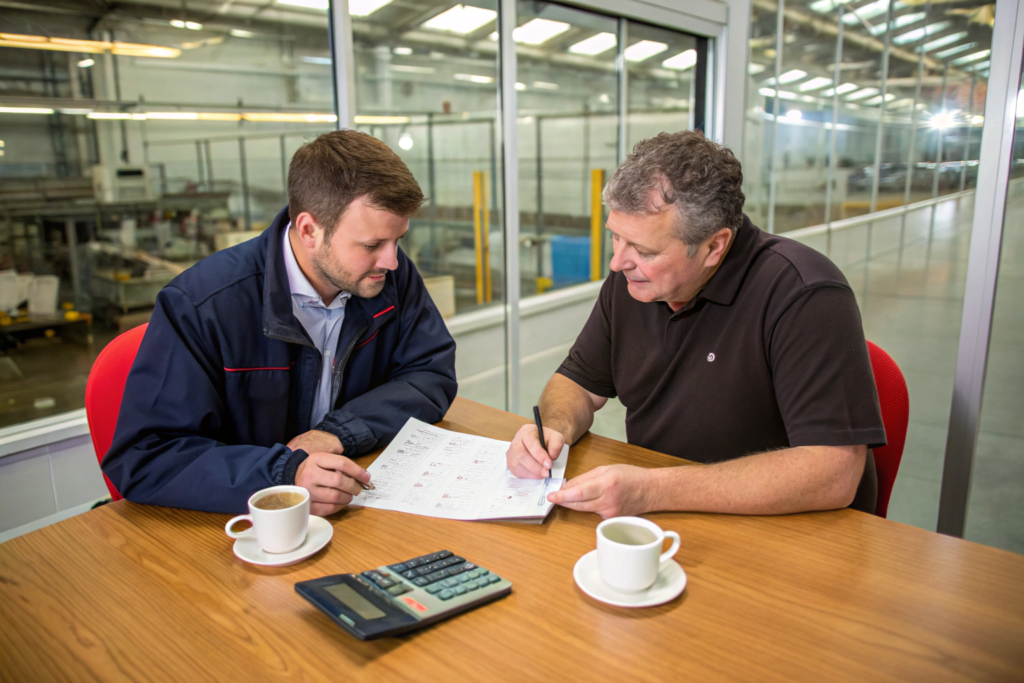
The transparent cost breakdown should include six components. First, the fabric cost per meter, with the mill name and the fabric article number, so the brand can verify the material specification. Second, the trim cost per unit, including zippers, buttons, labels, hang tags, and packaging, with supplier names. Third, the cutting, sewing, and finishing labor cost per unit, calculated from the standard minute value of the garment multiplied by the factory's labor rate. Fourth, the overhead allocation per unit, covering factory rent, utilities, equipment depreciation, and indirect labor like quality inspectors and supervisors. Fifth, the freight and logistics cost, including the factory-to-port trucking and the ocean freight allocation if the factory is managing shipping. Sixth, the factory's net profit margin per unit, expressed as a percentage of the total cost. A factory that shares all six components is operating with radical transparency. A factory that shares only the first three is selectively transparent. A factory that shares none is operating behind a wall of opacity. The open-book costing model in apparel manufacturing is a growing trend among premium factories. Brands that have experienced this transparency rarely return to opaque pricing.
How Can a Brand Verify That the Factory's Claimed Labor Practices Match the Cost Breakdown on Paper?
A cost breakdown can claim a certain labor rate. The brand can verify this claim through three methods. First, a third-party social compliance audit, such as WRAP, BSCI, or SEDEX, which includes a review of payroll records, time cards, and worker interviews. The audit report will confirm whether the actual wages paid match the claimed wages. Second, a direct worker interview during a factory visit, conducted privately without management present. A brand owner can ask a worker what they earn, how many hours they work, and whether they receive the benefits the factory claims to provide. Third, a review of the factory's worker turnover rate. A factory that pays fair wages and treats workers well has low turnover. A factory that exploits workers has high turnover, and the constant churn of inexperienced workers produces inconsistent quality. The social compliance audit standards for apparel factories provide an independent verification mechanism. A transparent factory welcomes these audits. A factory that resists or delays audits has something to hide.
How Does Transparent Communication During Production Crises Protect Your Brand's Delivery Schedule?
Three months ago, a fabric delivery for a brand partner's order was delayed by five days due to a port congestion issue at the yarn supplier. The delay would push the bulk cutting start date past the comfortable buffer in the production schedule. In a traditional factory, the factory manager would have stayed silent, hoped the delay somehow resolved itself, and only informed the brand when the shipment was already late. That is the "hope and pray" approach to production management. We did the opposite. I called the brand owner on the day we learned about the delay, not the day the delay became a crisis. I explained the situation. I presented three options: we could wait for the original fabric and ship one week late, we could source an alternative fabric from a different supplier with a two-day delay, or we could split the order and ship partial quantities on time while the remaining fabric arrived. The brand owner chose the split shipment option. She informed her wholesale accounts of a minor delay on the second half of the order. Nobody panicked. No relationships were damaged. The crisis was managed because the information was shared early.
Transparent communication during production crises protects the brand's delivery schedule by giving the brand owner decision-making power and response time. When a factory hides a problem until it is too late to fix, the brand owner receives a delivery failure as a fait accompli. They have no time to inform their retail accounts, adjust their marketing calendar, or arrange alternative inventory. When a factory communicates a problem immediately, the brand owner becomes part of the solution. They can negotiate with their buyers, prioritize certain styles, or authorize an air freight shipment for a partial quantity. The transparent factory treats the brand owner as a partner in problem-solving. The opaque factory treats the brand owner as a recipient of bad news. The difference in outcomes is measured in preserved retail relationships, avoided chargebacks, and maintained brand reputation. A delayed shipment that is communicated early is an inconvenience. A delayed shipment that is communicated late is a betrayal.
Every production run has problems. The question is not whether problems will occur. The question is how early the brand knows about them. Early knowledge creates options. Late knowledge creates only consequences. The transparent factory maximizes the brand's options.
What Is a "Preventive Action Report" and Why Should a Factory Send One Before the Brand Notices a Problem?
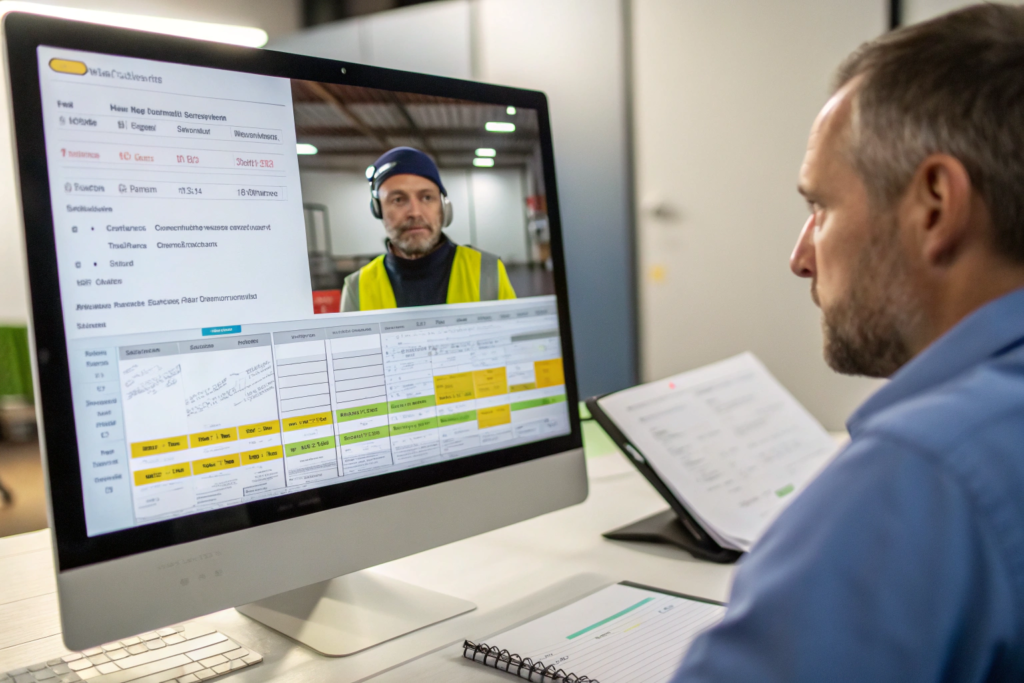
A Preventive Action Report (PAR) is a document the factory sends to the brand when a potential delay or quality risk is identified, before the risk has materialized into an actual problem. The PAR identifies the risk, the root cause, the planned corrective action, the revised timeline, and the options available to the brand. It is sent proactively, not in response to a brand inquiry. A factory that sends PARs is operating at the highest level of supply chain transparency. It demonstrates that the factory's monitoring systems are sensitive enough to detect risks early, and that the factory's leadership values the brand partnership enough to share bad news before it becomes worse news. We implemented a PAR system at Shanghai Fumao after a zipper supplier delay three years ago. Now, any supply chain risk with a potential impact greater than two days on the delivery schedule triggers a PAR within 24 hours of identification. The preventive action reporting in supply chain management has prevented at least six potential delivery failures in the past two years. The brands receive the PAR, evaluate the options, and make a decision. The problem is solved before the customer ever knows it existed.
How Do You Build a Joint "Crisis Playbook" That Aligns the Factory and Brand on Immediate Corrective Actions?
The crisis playbook is a pre-agreed document that outlines the response protocols for common production crises: fabric delay, quality failure, logistics disruption, and compliance issue. For each crisis type, the playbook defines who on the brand side and who on the factory side is responsible for communication, what information must be shared within the first 24 hours, what decision options are available, and what the escalation path is if the crisis cannot be resolved at the first level. The playbook is developed jointly during the onboarding process, before any crisis occurs. It is reviewed and updated annually. When a crisis hits, neither party has to invent a response. They follow the playbook. This reduces emotional reactivity, speeds up decision-making, and ensures the brand's priorities are respected. The supply chain crisis management playbook is a standard tool in mature supply chain relationships. A factory that is willing to build one with a brand is a factory that is serious about long-term partnership.
What Leadership Behaviors on a Factory Tour Instantly Reveal a Culture of Transparency or Secrecy?
I once visited a factory as part of a sourcing trip with a brand partner. The factory owner greeted us warmly in the showroom. He showed us beautiful samples. When we asked to see the production floor, he hesitated. He said they were "renovating part of the floor" and could only show us a limited area. The area he showed us was immaculate. The workers were all wearing new uniforms. Something felt off. After the tour, I walked around the outside of the building and looked through a side window. I saw the real production floor. The lighting was dim. The workers looked stressed. There were piles of cut fabric on the floor, getting dirty. The factory owner had a show floor and a real floor. The show floor was for visitors. The real floor was hidden. We did not place an order with that factory. The secrecy on the tour was a direct predictor of the secrecy we would experience during production.
Leadership behaviors that reveal a culture of transparency on a factory tour include the manager walking you through every area of the floor without hesitation, including the maintenance workshop, the fabric storage area, and the quality inspection station. Workers look up when you pass and make eye contact, rather than keeping their heads down in fear. The production data boards are current, with today's date and this hour's numbers, not wiped clean and rewritten for your visit. The manager introduces you to specific workers by name and explains what each worker is doing. The manager volunteers information about problems they are currently solving, rather than pretending everything is perfect. These behaviors cannot be faked for an entire tour. A factory with a secretive culture will reveal itself through hesitation, restricted access, staged displays, and a palpable tension between workers and management when a visitor is present. The tour is the most honest interview a factory will ever give you.
The factory tour is the single most important due diligence activity a brand can perform. It is more revealing than any audit report, any certification, or any reference check. The audit report is a snapshot. The tour is a live performance. Watch the performance carefully. The factory is showing you exactly how it operates.
Why Is Unrestricted Access to the Factory Floor the Single Most Important Demand a Brand Can Make?
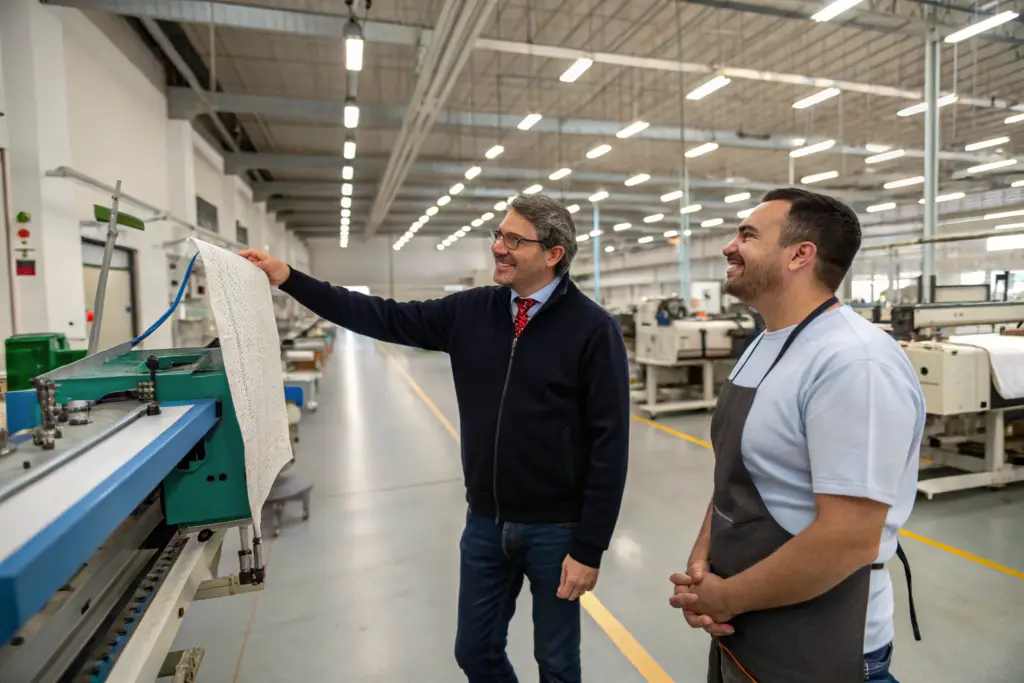
Unrestricted access means the brand owner can walk anywhere on the production floor, at any time during the visit, without the factory manager pre-selecting the route. This access allows the brand to see the real working conditions: the lighting levels, the cleanliness, the organization of materials, the pace of work, and the interactions between workers and supervisors. A factory that restricts access to a "visitor route" is hiding something. The restricted area may contain substandard equipment, unsafe working conditions, or evidence of unauthorized subcontracting. A factory that grants unrestricted access is confident that what the brand will see is consistent with what the brand expects. At Shanghai Fumao, we invite brand partners to walk the floor unescorted if they wish. They can talk to any worker. They can inspect any machine. They can review any production log. This openness is not a risk. It is a competitive advantage. The brand sees the real factory, builds real trust, and places real orders with confidence. The unrestricted factory access policy is the gold standard of manufacturing transparency.
How Can You Spot a "Staged" Production Floor Versus a Genuinely Well-Managed One?
A staged floor has telltale signs. The floor is too clean for a working production facility. There is no fabric dust on the cutting tables. The waste bins are empty. The workers are wearing new, matching uniforms that show no signs of wear. The production boards show perfect numbers with no defects recorded, which is statistically impossible in a real production environment. The workers do not make eye contact and appear to be moving slowly, as if instructed to "look busy but do not actually produce anything that could create a defect during the tour." A genuine floor has a controlled level of organized mess. Fabric scraps are in bins, not on the floor, but the bins are not empty. Workers move at a steady, sustainable pace. The production boards show real data with some variation and occasional defect notations. Workers glance at visitors with curiosity, not fear. The manager points out a problem area voluntarily, saying something like, "We are working on a tension issue on this hemming station. It has been running at 1.2% defect rate this morning, and we are adjusting the feed." That honest admission is the strongest sign of a transparent culture.
Conclusion
Totally transparent factory leadership is the secret to consistent wholesale clothing quality because it replaces fear with data, secrecy with partnership, and hidden problems with early solutions. When factory leaders open their production metrics, their cost structures, their crisis communications, and their physical floors to their workers and their brand partners, they build a system where quality problems are detected, reported, and resolved at the source, not hidden until final inspection or, worse, until the customer opens the package.
The transparent factory is not a utopia without problems. It is a factory where problems are visible and solvable. The opaque factory has the same problems. It just hides them until they become too large to hide. The brand that partners with a transparent factory sleeps better at night, not because nothing ever goes wrong, but because they know they will be informed immediately when something does, and they will be part of the solution.
At Shanghai Fumao, we have invested in transparency as our core operating principle. Our production floor has glass walls. Our cost breakdowns are shared openly. Our production data is displayed in real time. Our crisis communications are proactive. Our factory floor is open to any brand partner, anytime. We do this not because it is easy, but because we have learned it is the only way to consistently deliver the quality our brand partners demand.
If you are evaluating a new factory partner, or if you suspect your current factory is hiding problems from you, we can help you build a transparency assessment framework. At Shanghai Fumao, we will walk you through our production monitoring system, share a sample cost breakdown, and invite you to visit our factory floor, unrestricted and unannounced. Contact our Business Director, Elaine, at elaine@fumaoclothing.com. She can schedule a video tour of our facility so you can see the glass walls and the live production dashboards for yourself. Consistent quality is not a mystery. It is the result of a leadership culture that refuses to hide. Demand that culture from your factory.