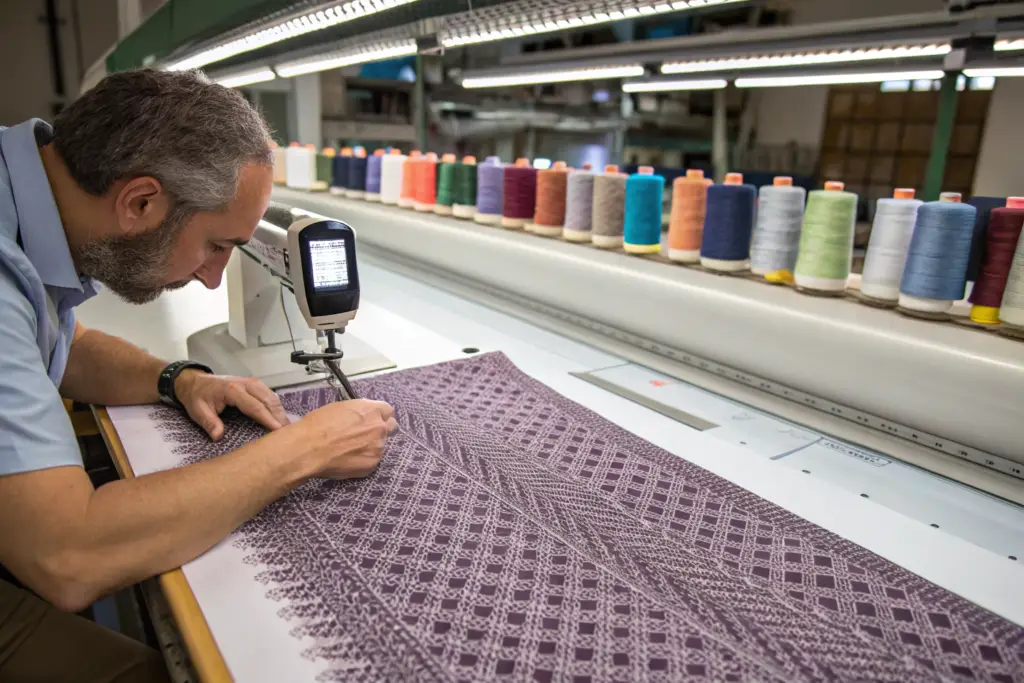
I nearly lost a $60,000 order last year over 40 grams of fabric. A men’s shirting brand we work with had built their entire autumn collection around a specific Japanese selvage denim. Three weeks before bulk cutting was scheduled, their mill informed us the fabric had sold out. There was no backup stock. The only available alternatives were a generic 10-ounce denim that felt flimsy by comparison. The brand owner called me in a panic. He was ready to cancel the production run. I asked him to give me ten days. We contacted a specialty mill we partner with in Zhejiang province. We sent them a swatch of the original denim. We asked them to reverse-engineer the slub character, the indigo shade, and the hand feel. They developed a custom milled fabric that matched the original within a 95% visual and tactile accuracy. It took an extra four weeks. The brand’s delivery shifted from September to October. But when the shirts finally hit the retail floor, the sell-through was exactly the same as the previous season. The brand did not lose a single retail account. The custom fabric milling saved the collection.
Custom fabric milling is totally worth the extra three to four weeks of production time because it transforms your garment from a commodity into a legally protectable brand asset. When you mill custom fabric, you control the fiber composition, the yarn count, the weave structure, the weight, and the hand feel with a precision that off-the-shelf fabric can never match. You build a material that is exclusive to your brand, impossible for competitors to copy from a swatch book, and perfectly engineered for the specific drape and durability your design requires. The extra lead time is not a delay. It is a strategic investment that pays for itself through higher sell-through rates, lower markdown pressure, and a brand story that retail buyers and end consumers perceive as authentically premium. Stock fabric is a compromise. Custom fabric is a competitive moat.
Most brand owners treat fabric sourcing as a selection exercise. They visit a fabric market, flip through swatch books, and pick the least objectionable option. They are building their brand on materials that are available to any competitor with a business license. A custom milled fabric changes the game. You are no longer picking from a menu. You are writing the recipe. I want to share exactly how custom milling works, what the four weeks are spent on, and why the brands who make this investment consistently outperform those who do not.
What Exclusive Competitive Advantages Does a Custom Milled Fabric Create for Your Apparel Brand?
A women’s wear brand I manufacture for competes in the saturated linen dress market. Two years ago, they were struggling. Their dresses looked similar to ten other brands at the same price point. Buyers at trade shows would glance at their booth and walk past because they felt they had already seen the product. The brand owner decided to invest in a custom linen blend. We worked with a mill to develop a 55% linen, 45% organic cotton slub weave with a specific irregular texture that no other brand had. The fabric was exclusive. The following season, the same trade show buyers stopped at the booth. They touched the fabric. They asked, "Where did you get this?" The brand owner could honestly say, "We developed it exclusively." The fabric became the brand’s signature. Two major department stores placed orders specifically because the material was unique. The brand’s revenue doubled in 18 months. The fabric did the work.
A custom milled fabric creates three exclusive competitive advantages that stock fabric cannot provide. First, it gives you material exclusivity. Your competitor cannot visit the same fabric market and buy the same roll. Second, it gives you design precision. You specify the exact fiber blend, yarn twist, weave density, and finishing treatment to achieve the drape, breathability, and durability your specific garment requires. Third, it gives you a proprietary brand story. You are not selling a dress. You are selling a dress made from a fabric your brand developed. This story commands a higher retail price, attracts premium wholesale buyers, and makes your product much harder to knock off. A competitor can copy your silhouette from a photograph. They cannot copy your fabric without access to your mill, your yarn specifications, and your finishing formulas.
The custom fabric becomes a defensible asset. In an industry where design patents are difficult to enforce, the fabric itself is the intellectual property. A factory in another country can reproduce a garment shape in 48 hours. Reproducing a custom yarn blend and a custom finishing treatment takes months, costs tens of thousands of dollars, and still may not match the original. The fabric is the moat.
How Does a Proprietary Yarn Blend or Weave Structure Legally Protect Your Designs from Knockoffs?
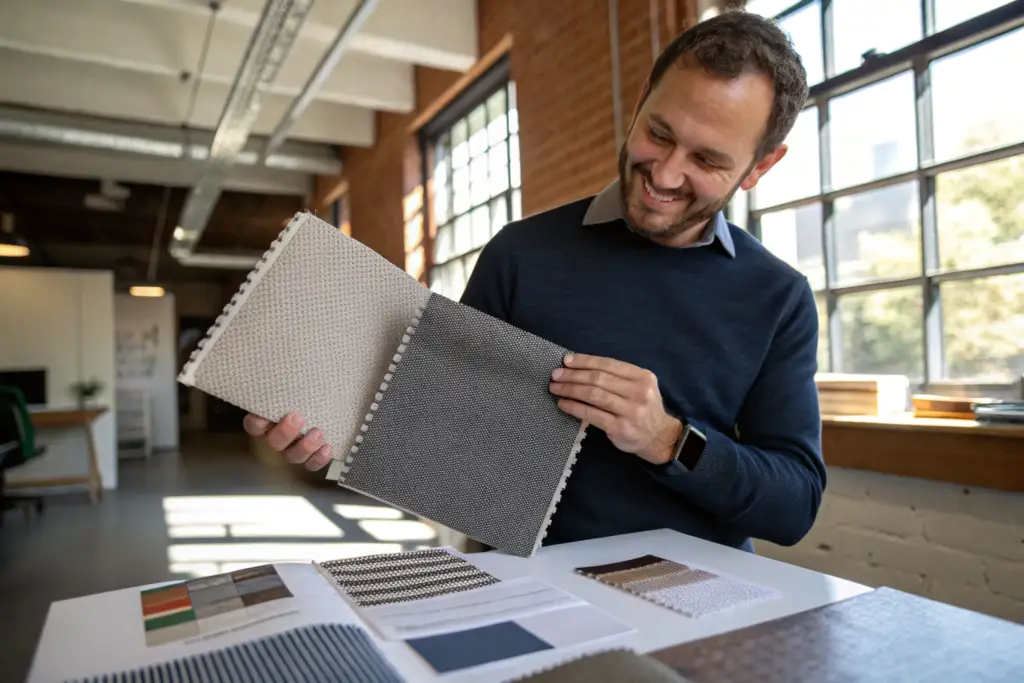
Design piracy is rampant in the apparel industry. A best-selling dress is photographed at a fashion week, and a copy appears on a fast fashion website within two weeks. The silhouette and the print can be copied. A custom fabric cannot be easily replicated because it is a technical product, not a visual one. A stock cotton poplin is a commodity. Anyone can buy it. A custom 60% Supima cotton, 40% Tencel blend with a specific yarn twist and a specific finishing treatment is a proprietary material. The mill that produces it has the only technical specifications. The yarn supplier has the only blend recipe. To copy the fabric, a competitor would need to find a mill willing to reverse-engineer the material, a process that takes months and requires significant technical expertise. Most competitors will not make the investment. They will move on to an easier target. For additional protection, brands can include the custom fabric specification in their design registration and include a material exclusivity clause in their agreement with the mill. The fabric IP protection strategy is not foolproof. It is a barrier. High barriers deter casual copycats. Casual copycats are the majority of the problem.
Why Do Retail Buyers Instantly Perceive a Garment Made from Custom Fabric as a Higher-Value Product?
Retail buyers touch hundreds of garments every week during buying season. Their fingers are calibrated to detect quality differences that consumers may not consciously notice. A stock fabric has a familiar hand feel. It feels like every other garment in its category. A custom fabric feels different. The texture is slightly more pronounced. The weight is slightly more substantial. The drape is slightly more fluid. The buyer’s subconscious registers the difference before their conscious mind can articulate it. They ask, "What is this fabric?" That question is the moment of differentiation. The brand owner answers, "It is a custom blend we developed exclusively." The buyer’s perception of value shifts instantly. The garment is no longer comparable to other garments in the category. It is in a category of one. The price objection fades because there is no direct comparison. The buyer is not deciding between your dress and a competitor’s dress. They are deciding whether their store needs an exclusive product that their customers cannot find anywhere else. The answer is usually yes. The retail buyer psychology of exclusivity is well documented. Exclusive products generate higher margins, higher customer loyalty, and higher reorder rates. The custom fabric is the mechanism that creates exclusivity.
How Exactly Is the Extra Three to Four Weeks of Lead Time Invested in the Custom Milling Process?
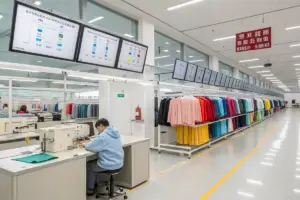
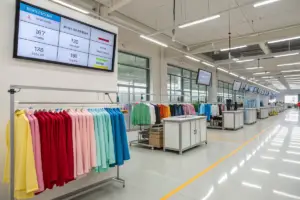
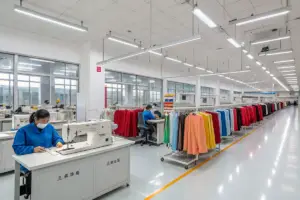
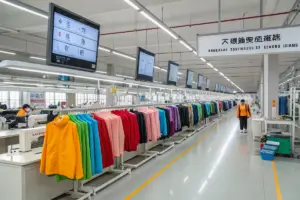
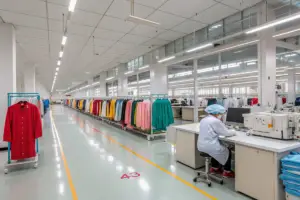
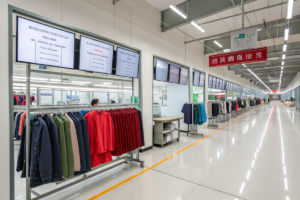
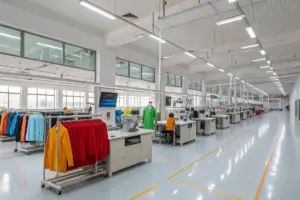
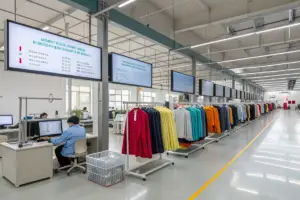
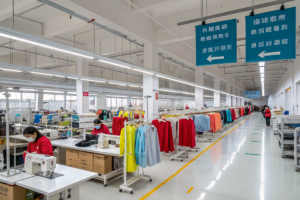
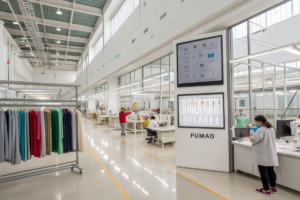
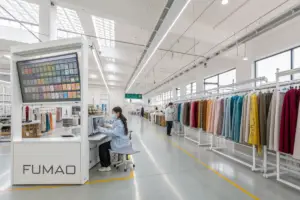
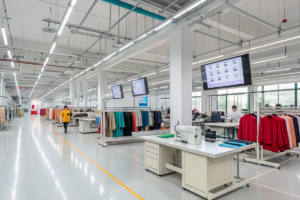
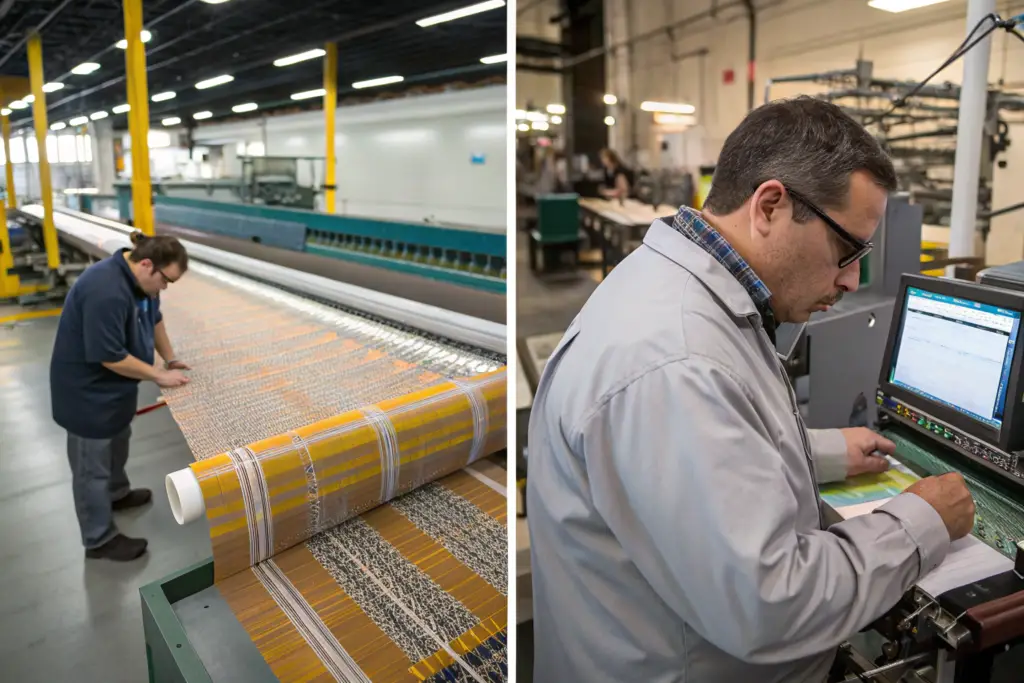
A brand owner once asked me what the factory "does" during those four extra weeks of custom milling. He suspected we were just padding the schedule. I invited him to visit the mill with me. He spent a full day watching the process. He saw the yarn sourcing meeting where the spinner presented three different twist options. He saw the warping process where 6,000 individual yarns were aligned on the beam. He saw the loom set-up where the weave pattern was programmed and tested on a 5-meter sample before the full run began. He saw the finishing trials where the fabric was washed, dried, and tested for shrinkage. At the end of the day, he said, "I thought you were just ordering fabric. You are engineering it." That is exactly right. The four weeks are engineering time.
The extra three to four weeks of custom milling lead time are invested in four sequential stages, each of which builds on the previous one. Week one is yarn sourcing and testing. The mill sources the specific fibers, spins sample yarns, and tests them for tensile strength and color absorption. Week two is loom programming and sample weaving. The mill programs the weave structure into the loom, weaves a 5 to 10 meter sample, and sends it to the brand for approval. Week three is bulk weaving and finishing. Once the sample is approved, the mill sets up the full production run, weaves the bulk fabric, and applies the finishing treatments. Week four is quality inspection, shrinkage testing, and shipping. Each stage requires specialized equipment and skilled technicians. None of the stages can be skipped without compromising the quality or exclusivity of the final product. The time is not waiting time. It is working time.
The timeline is not arbitrary. Yarn spinning takes a specific number of hours per kilogram. Loom weaving takes a specific number of hours per meter. Finishing takes a specific number of hours per batch. The four weeks reflect the physical reality of textile manufacturing. A mill that promises custom fabric in two weeks is cutting corners somewhere, either on yarn quality testing, sample approval, or finishing validation.
What Happens During the Yarn Sourcing and Spinning Phase That Generic Stock Fabrics Skip Entirely?
Generic stock fabric is made from yarn that the mill has in inventory. The yarn was spun months ago for a general-purpose application. The twist level, the fiber blend, and the yarn count were chosen to satisfy the broadest possible range of customers. The fabric made from this yarn is a compromise. Custom yarn sourcing starts with the brand’s performance requirements. A brand making a lightweight summer suit needs a yarn with high tensile strength, a smooth surface for drape, and a fiber that breathes. The mill sources a specific long-staple cotton, combines it with a percentage of linen for breathability, and specifies a high-twist construction to give the fabric crispness. The spinner produces a sample yarn. The yarn is tested on a tensile strength tester to verify it meets the required breaking force. It is tested for evenness on an Uster tester to verify there are no thin spots that would cause weaving breaks. If the sample yarn fails any test, the spinner adjusts the twist or the blend and produces a new sample. This iterative process takes three to five days. Stock fabric skips this process entirely. The yarn is whatever the mill has on the shelf. If it works, it works. If it does not, the brand discovers the problem when the fabric pills, tears, or loses its shape after three washes.
How Does the Sampling Loom Trial Catch Structural Issues Before the Bulk Run Begins?
The sampling loom trial is the most critical quality checkpoint in the custom milling process. The mill programs the weave structure into a small sampling loom, not the full production loom. The sampling loom weaves a 5 to 10 meter length of fabric using the approved yarn. This sample reveals structural issues that are invisible on paper. The weave may be too loose, causing the fabric to shift and distort. The selvedge may curl. The pattern may not align correctly at the seam points. The hand feel may be too stiff or too limp. The brand reviews the sample and provides feedback. The mill adjusts the loom settings and weaves a second sample. This process repeats until the sample meets the brand’s specification. The sampling phase typically takes five to seven days. It is the equivalent of a pre-production sample in garment manufacturing. Skipping this phase is like cutting bulk fabric without approving a fit sample. The risk of a full production run being wrong is unacceptably high. The sampling loom protocol is standard practice in reputable mills. A mill that does not offer a sampling stage is not a custom mill. It is a stock mill that is willing to dye a stock fabric in a custom color, which is a different service entirely.
What Specific Quality and Performance Gains Does a Custom Fabric Deliver Over Off-the-Shelf Options?
A performance activewear brand we work with switched from a stock polyester-spandex jersey to a custom milled version two years ago. The stock fabric had a pilling problem. After 20 washes, the surface developed small, rough balls of fiber that made the garment look old. The brand’s return rate for "fabric quality" was 8%. They asked us to develop a custom fabric with the same stretch and recovery properties but superior pilling resistance. We worked with a mill to increase the yarn twist, use a longer-staple polyester fiber, and apply an anti-pilling finish during the final treatment stage. The custom fabric cost 18% more per meter. The brand’s pilling-related return rate dropped from 8% to 0.5%. The reduction in returns, reverse logistics costs, and damaged brand reputation more than covered the fabric cost increase within the first season. The custom fabric solved a specific performance problem that the stock fabric created.
Custom fabric delivers specific quality and performance gains because you engineer the material for the intended use case, not for a general-purpose application. You control the fiber staple length to reduce pilling. You control the yarn twist to improve tensile strength. You control the weave density to achieve the exact drape and opacity your design requires. You control the finishing treatments to add wicking, anti-microbial, water-repellent, or softening properties. A stock fabric is a finished product. You accept its properties as they are. A custom fabric is a designed product. You specify the properties you need, and the mill engineers the material to deliver them. The performance gains are measurable. Pilling resistance improves by 50% to 80%. Seam strength improves by 20% to 40%. Color fastness improves by one to two grades on the AATCC gray scale. These improvements translate directly into lower return rates, higher customer satisfaction, and higher wholesale reorder rates.
The performance difference between stock and custom fabric is not a matter of opinion. It is verifiable through standardized textile testing. A brand that commissions custom fabric can request the test reports and publish the performance data as part of their product marketing. A brand that uses stock fabric can only make generic claims. The data-backed performance story is a powerful sales tool.
How Does Controlling the Fabric Weight and Drape Precision Eliminate Fit Issues Across a Size Range?
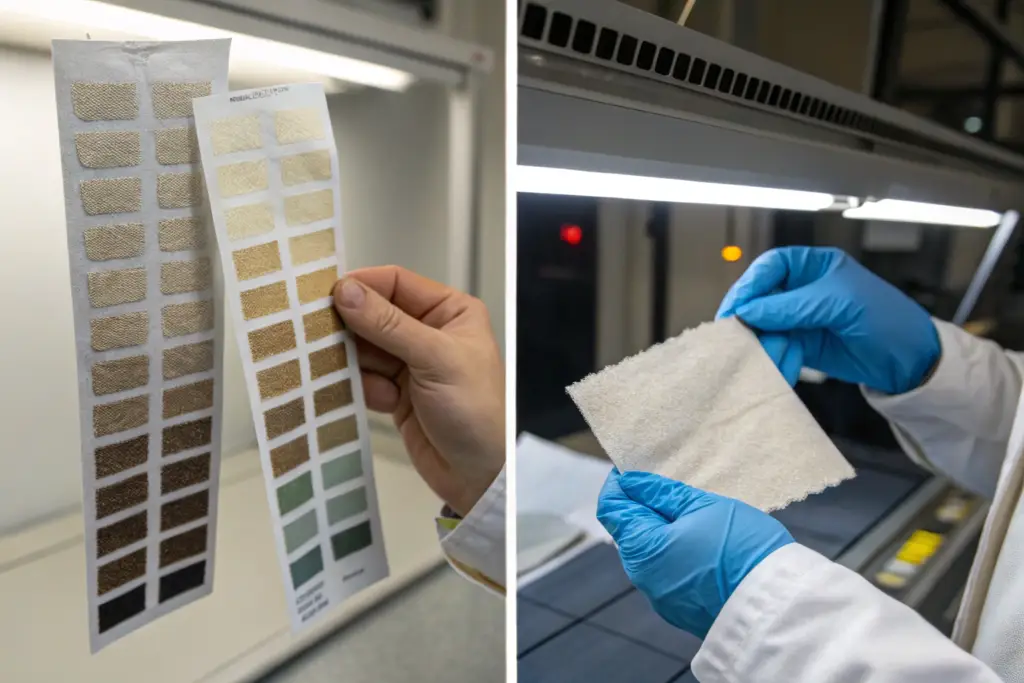
A stock fabric has a fixed weight and drape. The pattern maker must design the garment around the fabric’s properties. If the fabric is slightly stiffer than expected, the pattern ease allowances may be insufficient and the garment will feel tight. If the fabric is slightly lighter than expected, the garment may lose its structure and look flimsy on larger sizes. These fit issues compound across a size range. A garment that drapes beautifully on a size Small may pull awkwardly on a size XXL because the fabric weight is not calibrated for the larger pattern pieces. Custom fabric eliminates this variable. The brand specifies the target fabric weight, drape coefficient, and stretch percentage. The mill engineers the material to hit these targets. The pattern maker designs the garment knowing exactly how the fabric will behave. The fit is consistent across the entire size range because the fabric properties are consistent. We saw this play out with a women’s suiting brand we work with. Their stock wool blend was a 220 GSM twill. On sizes above 16, the trousers developed unsightly knee bags because the fabric lacked sufficient recovery. We developed a custom 260 GSM twill with a higher twist yarn and 3% spandex for recovery. The custom fabric added 40 grams of weight and significant recovery power. The knee bag issue disappeared across all sizes. The brand’s return rate for fit issues dropped by 60%. The fabric drape and fit relationship is a critical variable that custom milling allows you to control.
What Lab Testing Data Proves a Custom Fabric Outperforms Generic Alternatives in Durability?
The durability comparison is made through standardized textile testing. A Martindale abrasion test measures surface wear. A custom fabric with a higher yarn twist and denser weave will withstand 20,000 to 30,000 rub cycles before showing visible wear, compared to 10,000 to 15,000 cycles for a stock fabric of the same fiber content. A seam slippage test measures how much a seam opens under tension. A custom fabric with a tighter weave will show 0.5 millimeters of seam slippage, compared to 1.5 millimeters for a stock fabric. A tensile strength test measures the force required to tear the fabric. A custom fabric with longer-staple fibers and higher twist yarns will require 30% to 50% more force to tear. A color fastness to laundering test measures how much color fades after repeated washing. A custom fabric with a specific dyeing process and fixation treatment will score a 4.5 on the AATCC gray scale, compared to a 3.5 for a stock fabric. These numbers are not marketing claims. They are laboratory results generated by an independent textile testing laboratory. The brand that commissions custom fabric receives the test reports and can publish the data. The brand that uses stock fabric relies on the mill’s verbal assurances. The difference in credibility is significant.
How Does the Per-Unit Cost Analysis of Custom Milling Actually Work Out Over a Full Production Run?
A brand owner once rejected my suggestion to mill a custom cotton-linen blend because the per-meter price was $2.40 higher than a stock alternative. I asked him to build a full cost model with me. We calculated the fabric cost for a 2,000-unit production run. The custom fabric added $2.40 per meter, with an average consumption of 1.5 meters per garment. The total fabric cost increase was $7,200. Then we calculated the revenue side. The custom fabric allowed a $12 increase in wholesale price because the garment was now an exclusive product. The total revenue increase was $24,000. The net profit increase, after deducting the fabric cost increase, was $16,800. The brand owner stared at the spreadsheet. He had been about to reject a $7,200 investment that would return $24,000 in additional revenue. He approved the custom fabric on the spot. The collection sold through at 92% full price, the highest sell-through in the brand’s history.
The per-unit cost analysis of custom milling works out favorably because the fabric cost increase is a linear expense while the revenue increase is a multiplier effect. The custom fabric adds a fixed cost per meter, typically 15% to 30% above a comparable stock fabric. However, the exclusivity and quality of the custom fabric support a wholesale price increase of 10% to 25%. The higher sell-through rate, typically 15 to 25 percentage points higher than stock fabric garments, reduces markdown costs and increases gross margin dollars. When you model the full financial equation, fabric cost increase, wholesale price increase, sell-through improvement, and markdown reduction, the net profit per garment is almost always higher with the custom fabric. The break-even point is typically reached when the sell-through improvement exceeds 5 percentage points, which is a conservative threshold. The brands that do this math never go back to stock fabric.
The cost objection to custom fabric is usually based on a partial analysis. The brand owner looks at the per-meter price and compares it to the stock fabric price. This is a mistake. The correct comparison is between the total cost structure and total revenue structure of the two options. The fabric cost is one line item. The wholesale price, the sell-through rate, the markdown cost, and the reorder potential are the other line items. When all line items are included, the custom fabric wins.
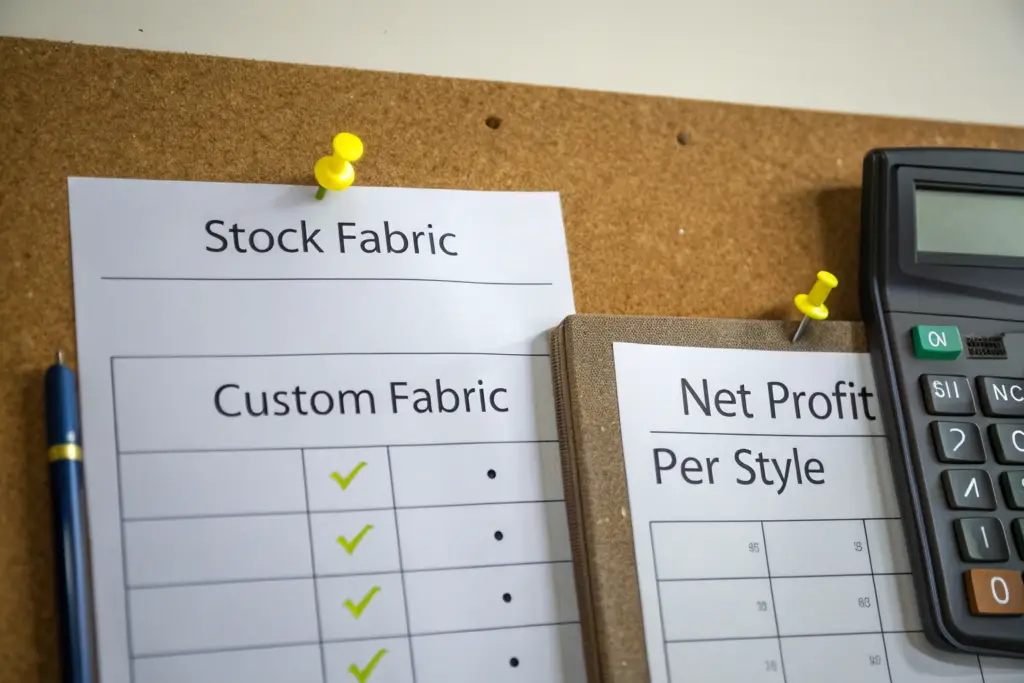
What Is the True Cost of a Higher Sell-Through Rate Versus the Upfront Fabric Investment?
A stock fabric garment with a 65% sell-through rate generates revenue on 65% of the units produced. The remaining 35% is sold at a markdown, donated, or destroyed. The markdown cost is the difference between the wholesale price and the clearance price. A custom fabric garment with an 85% sell-through rate generates revenue on 85% of the units. Only 15% is marked down. The 20-percentage-point difference in sell-through rate represents a significant profit swing. On a 1,000-unit production run with a $40 wholesale price, the stock fabric generates $26,000 in full-price revenue and $4,200 in markdown revenue, totaling $30,200. The custom fabric generates $34,000 in full-price revenue and $1,800 in markdown revenue, totaling $35,800. The revenue difference is $5,600. If the custom fabric investment was $3,600, the net gain is $2,000. The math holds for most product categories. The sell-through rate impact on profitability is a well-understood retail metric. Custom fabric improves sell-through because the product is differentiated and higher quality. The upfront fabric investment buys a higher sell-through rate. The higher sell-through rate generates more profit than the fabric investment costs.
How Do You Calculate the "Exclusivity Margin" That Justifies a Higher Wholesale Price?
The exclusivity margin is the additional wholesale price the market will accept for a product that is not available from any other brand. It is calculated by analyzing the price points of comparable exclusive products versus comparable non-exclusive products in the same category. A generic linen dress from a non-exclusive brand might wholesale for $28. A linen dress from a brand with a proprietary fabric, distinctive texture, or custom color might wholesale for $38. The $10 difference is the exclusivity margin. It is not arbitrary. It reflects the retail buyer’s willingness to pay more for a product their customers cannot comparison-shop. The retail buyer knows that an exclusive product reduces the risk of a customer finding the same dress cheaper at a competing store. The buyer is paying for reduced competitive risk. The brand that mills custom fabric captures this margin. The calculation is straightforward. Research comparable exclusive and non-exclusive products in your category. Identify the price gap. Estimate the percentage of the gap your custom fabric can capture. Build that percentage into your wholesale pricing model. The exclusivity pricing strategy is a standard practice in premium and luxury apparel. Custom fabric is the mechanism that makes it available to mid-market brands.
Conclusion
The extra three to four weeks of custom fabric milling is not a production delay to be tolerated. It is a strategic investment to be leveraged. During those four weeks, your fabric is being engineered to your exact specifications by skilled technicians who are spinning custom yarns, programming complex weaves, and testing every meter for quality and performance. The result is a material that no competitor can buy from a swatch book, that delivers measurable improvements in durability and drape, and that supports a higher wholesale price and a higher sell-through rate.
The brands that understand this shift their mindset from "fabric sourcing" to "fabric development." They stop picking from a menu and start writing recipes. They build their brand identity on proprietary materials that create a competitive moat. They do the full cost analysis and realize that the custom fabric investment returns more profit than it costs. And they develop relationships with mills and manufacturers who can execute the custom milling process reliably and transparently.
At Shanghai Fumao, we have built a network of specialty mills that produce custom fabrics for our brand partners across cotton, linen, wool, silk, and performance synthetic categories. We manage the custom milling process from yarn sourcing through quality inspection. We provide our brand partners with a detailed timeline for each stage, a cost breakdown that separates the yarn, weaving, and finishing components, and the lab test reports that verify the fabric’s performance properties. We do not upcharge for the service. We charge the mill’s invoice plus a transparent coordination fee.
If you are ready to stop compromising on stock fabric and start building your brand on proprietary materials, we can help. At Shanghai Fumao, we will review your fabric requirements and connect you with the appropriate mill for your fiber category and volume. We will provide a sample custom milling timeline and a cost model that compares stock versus custom fabric for your specific product. Contact our Business Director, Elaine, at elaine@fumaoclothing.com. She can send you a physical sample pack of custom fabrics we have developed for other brands, so you can feel the difference yourself. The four weeks will pass whether you use them or not. Use them to build a fabric your competitors cannot touch.