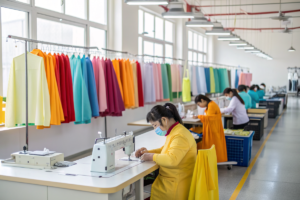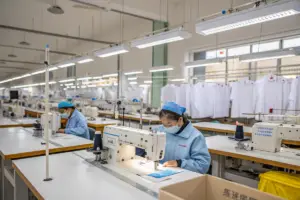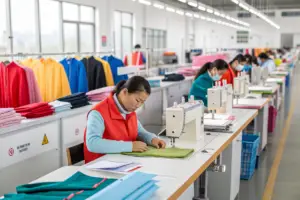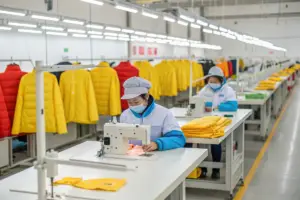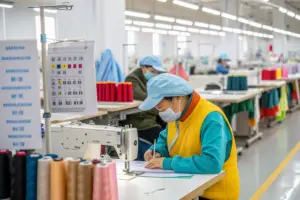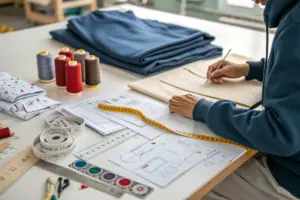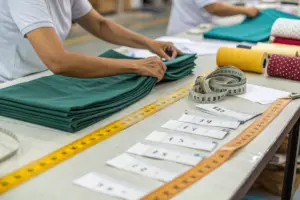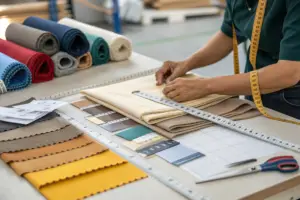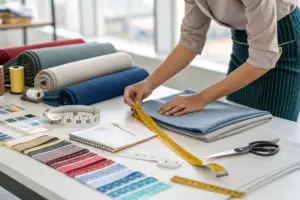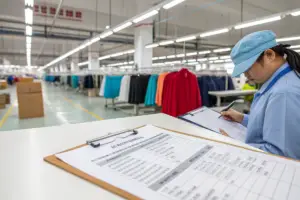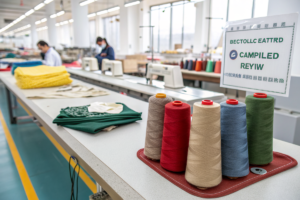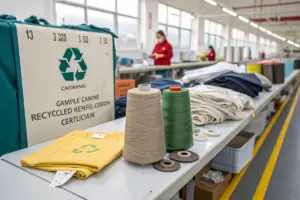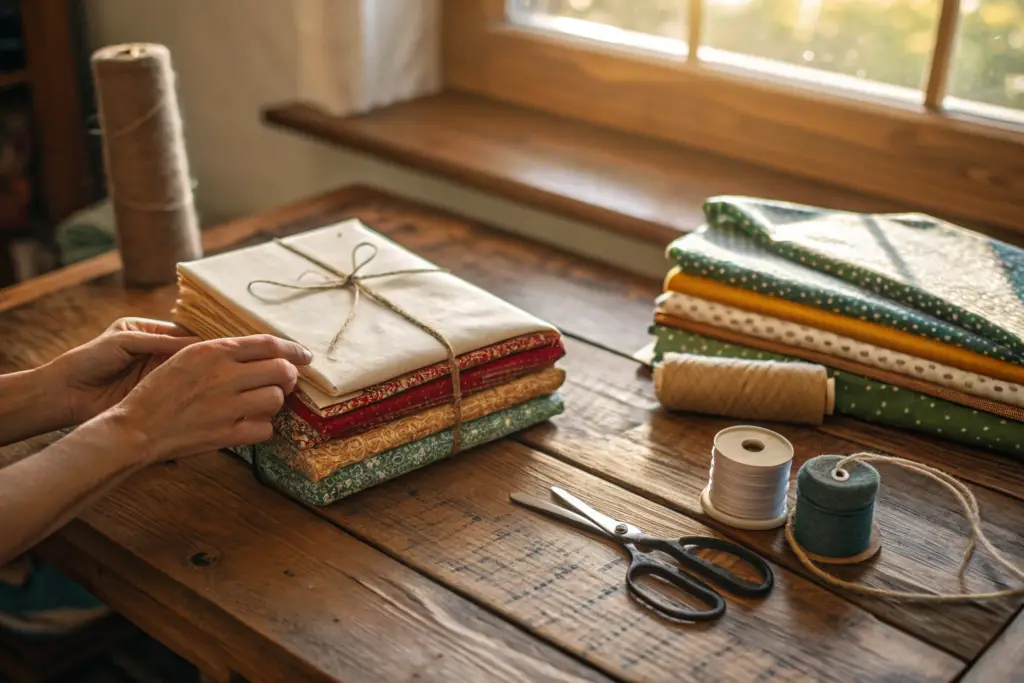
A few years ago, I received an unusual email. It was from a woman named Sarah, a home sewist in Portland, Oregon. She had purchased one of our men's overcoats from a boutique, and she was writing to ask a strange question: "What do you do with the leftover fabric from this beautiful wool? I would give anything to sew a matching winter cape for my daughter with it." Her email struck a chord. I realized that our cutting room floor was covered in treasure. We were generating hundreds of kilograms of high-quality fabric remnants every month—the end of a roll of Italian wool suiting, the leftover panels from a premium cotton shirting run, the scraps of a beautiful printed silk that could not be used for mass production but were far too valuable to recycle into industrial rags. This was fabric that a home sewer would pay a premium for at a retail fabric store, and we were sending it to a fiber recycler for pennies per kilo.
Home sewers buy Shanghai Fumao's leftover fabric bundles because they provide otherwise unattainable access to premium, commercial-grade, factory-floor fabrics—including natural fiber deadstock from Italian and Japanese mills—at a fraction of the retail fabric store price, bundled into curated, surprise-filled packages that fuel creativity and sustainable sewing. This is not a profit center for our factory. It is a deliberate, values-driven decision to keep beautiful, usable fabric out of the industrial waste stream and put it into the hands of the passionate, creative makers who will cherish it. A home sewer with a domestic sewing machine and a creative vision can transform a remnant of our high-end wool coating into a child's winter coat, a silk charmeuse scrap into a luxurious pillowcase, or a piece of organic cotton jersey into a baby's first romper. They are completing the life cycle of the fabric in the most beautiful way possible. Let me explain exactly what these bundles contain, how we grade and curate them, and why a passionate maker in a home studio is the best possible custodian for the last meter of a roll of fabric that once cost $40 a yard.
What Is Inside a Fumao Factory Floor Remnant Bundle?
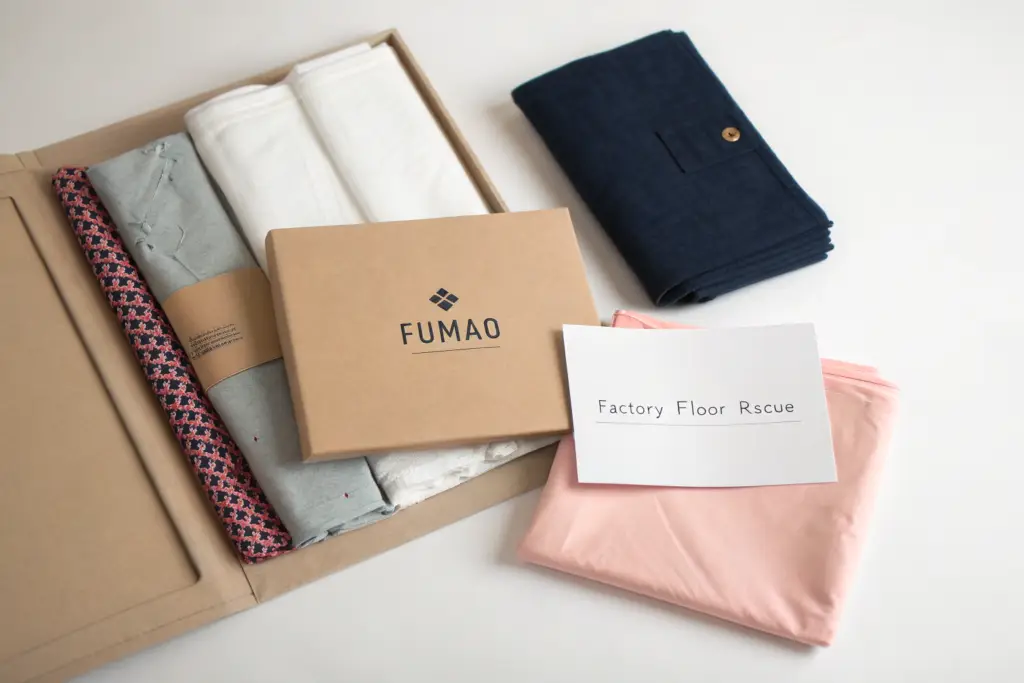
A Fumao Factory Floor Remnant Bundle is not a random, unsorted bag of industrial cutting waste. It is a deliberately curated, graded, and packaged collection of the premium remnants that are generated at the very end of our production rolls. These are not the small, irregular, post-cutting scraps that are swept from the cutting table floor. Those scraps are too small and inconsistently shaped for any home sewing project, and they are responsibly recycled through a certified textile recycler. The bundles contain only the "end-of-roll" and "over-order" pieces that are large, continuous, and usable.
In garment manufacturing, we order fabric in bulk rolls that are typically 50 to 100 meters long. The marker, which is the layout of the garment pattern pieces on the fabric, never perfectly consumes the entire roll. There is always a short, continuous length left at the end—perhaps 0.5 to 2 meters—that is too short for the marker but is a perfectly usable, beautiful piece of fabric. Additionally, we always order a small percentage of extra fabric, typically 3% to 5%, as a buffer against cutting errors, shade variation, or unexpected defects. If this buffer fabric is not needed, it remains as a pristine, unused roll. These are the two sources of our remnant bundles. The fabric is identical to the material in a $400 dress or a $600 overcoat that a brand sold last season. It is genuine, production-grade, commercial textile material.
Why Are Premium Wool and Silk Remnants the Core of Each Box?
The economics of garment manufacturing dictate that the most precious, high-cost fabrics generate the most valuable remnants. A roll of Italian-milled, Super 120s wool suiting costs us $28 per meter. We are not going to send the last 1.2 meters of that roll to a rag cutter for 50 cents. The material is too valuable, and the embedded energy and craftsmanship in its production are too significant. Similarly, a roll of 16-millimeter silk charmeuse, printed in Como, Italy, is a work of art. The remnant is a small, affordable piece of that art.
These premium natural-fiber fabrics are the core of our bundles because they represent the most extreme gap between their value to us and their value to a home sewer. To our factory, a 1.5-meter remnant of Super 120s wool is an unusable, short length that is a logistical nuisance. To a home sewer, that exact same 1.5-meter piece is enough fabric to make a child's tailored coat, a luxurious vest, or a set of high-end cushion covers. It is a treasure that would cost $42 at a retail fabric store, if they could even find it, because most retail stores do not stock commercial-grade Italian suitings. The home sewer pays a fraction of that retail price, we recover a meaningful portion of our material cost, and a beautiful piece of fabric avoids the industrial shredder. For the silk remnants, the value proposition is even more extreme. A 1-meter remnant of printed silk charmeuse can become a bias-cut slip dress, a set of luxury sleep masks, or the lining of a handmade jacket. The fabric is genuinely precious, and the home sewer is the only market that can extract its full value in small, creative quantities. This is the circular economy operating at its most practical and beautiful level.
How Do We Grade "Sewable" Pieces From Industrial Cutting Waste?
Not all remnants are created equal. A piece of fabric is only valuable to a home sewer if it meets three specific criteria: usable size, clean shape, and known fiber content. A long, thin, irregularly shaped strip from the selvedge edge of a cutting marker is not sewable. It might be 2 meters long but only 10 centimeters wide. This is industrial waste. A clean, rectangular piece measuring 0.8 meters by 1.5 meters is a sewable remnant. It is large enough to cut pattern pieces for a small garment or an accessory.
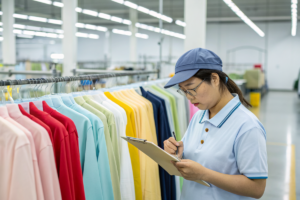
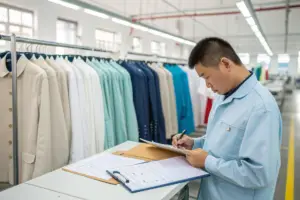
Our grading process is performed by a dedicated remnant sorting team, which is a small group of three experienced sewists who work part-time in our cutting room. They inspect every end-of-roll piece against a simple, three-tier grading system. Grade A pieces are clean, rectangular, and larger than 1 square meter. These are the core of our premium bundles. Grade B pieces are clean, rectangular, and between 0.5 and 1 square meter. These are ideal for accessories, children's wear, or patchwork projects. Grade C pieces are smaller than 0.5 square meters but still clean and regularly shaped. These are included as "bonus" pieces in the bundles, perfect for small crafts, appliqué, or pocket linings. Any piece that is irregularly shaped, stained, damaged, or smaller than a Grade C is immediately diverted to the industrial recycling stream. The grading team also identifies the fiber content, either from the original mill tag if it is still attached, or through a simple burn test and visual inspection by our senior fabric sourcer. Each graded piece is then folded neatly and labeled with a small, hand-stamped tag indicating its fiber content and approximate dimensions.
Why Is a "Surprise Bundle" a Better Model Than Listing Individual Pieces?
When we first explored the idea of selling our remnants, we considered a standard e-commerce model: photograph each individual piece, list its exact measurements and fiber content, and sell it as a one-off item. This model is common in the deadstock fabric resale market. We tested it for three months, and we discovered it was fundamentally broken for the type of high-end, varied remnants our factory generates. The cost of photographing, measuring, and listing each unique, one-of-a-kind remnant was astronomical. A single piece of silk, priced at $12, cost us $8 in labor to list. The business model was unsustainable. More importantly, the best pieces sold within minutes of being posted, and the majority of the pieces languished for weeks, creating a "picked-over" feeling for customers who arrived late. The individual listing model created a zero-sum, competitive shopping experience that was completely at odds with the creative, joyful, sustainable spirit of the project.
The "Surprise Bundle" model solves both the economic and the experiential problem. We curate a balanced assortment of 5 to 7 pieces into a single, fixed-price bundle, with a guaranteed total fabric area and a guaranteed minimum number of premium natural-fiber pieces. The customer knows they will receive a specific quantity of beautiful, usable fabric, but the exact colors, prints, and textures are a delightful surprise.
How Does a Curated Assortment Spark More Creativity Than a Specific Purchase?
A specific purchase is a solution to a known problem. A sewer needs 2 meters of navy blue cotton twill to make a pair of trousers. They search for "navy blue cotton twill," find it, buy it, and sew the trousers. The fabric purchase is a transaction. The creative vision came first; the fabric was merely the material input.
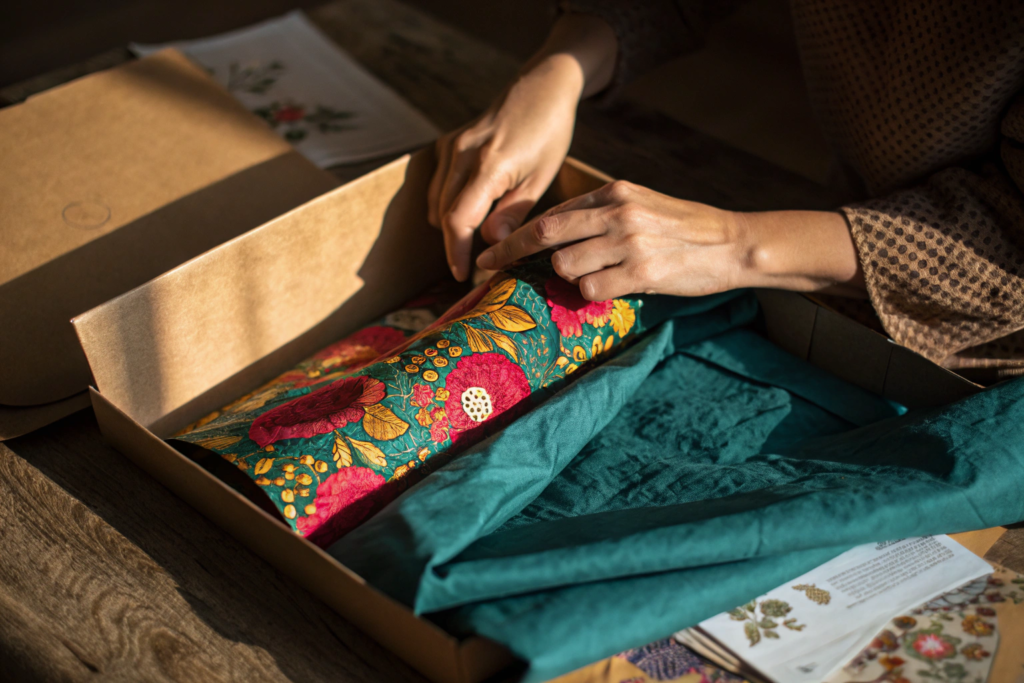
A surprise bundle works in the opposite direction. The fabric arrives first, and the creative vision follows. A sewer opens a bundle and finds a piece of deep teal wool jacquard, a piece of printed silk crepe de chine, and a piece of mustard yellow linen. These three fabrics would never have appeared together in a planned, specific purchase. But now they are together, on the cutting table, and the sewer's creative mind begins to make unexpected connections. The teal wool could be a vest. The printed silk could be the lining of that vest. The mustard linen could be a contrasting back panel. The fabric combination inspires a design that the sewer would never have conceived if they had simply searched for the individual components. The bundle is not a transaction; it is a creative catalyst. It forces the sewer out of their habitual color palette, their familiar fabric types, and their planned project list. It introduces randomness, serendipity, and the spark of unexpected inspiration that is the very essence of creative work. This is the reason our most passionate customers describe the bundle as "a monthly dose of creative joy" rather than "a fabric purchase."
Why Does a Fixed-Price Mystery Box Eliminate "Picked-Over" Inventory?
The "picked-over" problem is the tragedy of the individually listed remnant. Imagine a table at a fabric swap meet. The first ten people arrive and take all the silk, the wool, and the linen. The remaining fifty people arrive and find a table full of polyester and cotton broadcloth. They are disappointed. They feel they missed out. The experience is negative, and they do not return. The same dynamic plays out online, and it is even more extreme because a single person can buy the entire stock of the best pieces in seconds, leaving a ghost town for everyone else.
A fixed-price, curated mystery box completely solves this problem. Every box is pre-packed with a guaranteed composition. The box that ships on Monday to the first customer contains the same quality and variety as the box that ships on Friday to the last customer. The customer is buying the curation, not the individual pieces. They know they will receive a specific mix of fibers, weights, and sizes. The surprise is in the specific colors and patterns, not in the quality. This model transforms the shopping experience from a competitive race into a delightful, reliable subscription. Every customer gets the same "unboxing" joy. No customer is left with the picked-over, rejected remains. The value is democratized. This is the only sustainable, customer-fair way to sell a large, continuously flowing stream of unique, one-off remnants. It treats every customer like the first customer, and it is the foundation of our remnant bundle program's strong, loyal community.
How Are the Bundles a B2C Extension of Our B2B Sustainability Pledge?
The remnant bundle program began as a practical solution to a waste problem. It has become the most emotionally resonant and publicly visible expression of our factory's commitment to a genuinely circular textile economy. In our B2B communications with brand partners, we talk about our OEKO-TEX certifications, our recycled polyester options, and our solar-powered factory roof. These are important, but they are abstract and corporate. The remnant bundle program is sustainability you can hold in your hand. It is a physical, tangible, deeply personal connection between our factory's material stream and an individual creative maker.
Our brand partners are increasingly demanding verified, audited proof that their supply chain is minimizing waste and avoiding the incineration or landfilling of textile materials. The remnant bundle program is a documented, measurable, and communicable waste diversion stream. We track every kilogram of fabric that enters the bundle program, and we report the annual total diverted weight to our brand partners as part of their sustainability scorecard. A brand that orders 5,000 wool coats from us can tell their end customer that the leftover wool from their production was not landfilled; it was placed into the hands of home sewists who made children's coats, heirloom quilts, and creative works of art.
How Does a "Factory Floor Rescue" Story Connect With Conscious Consumers?
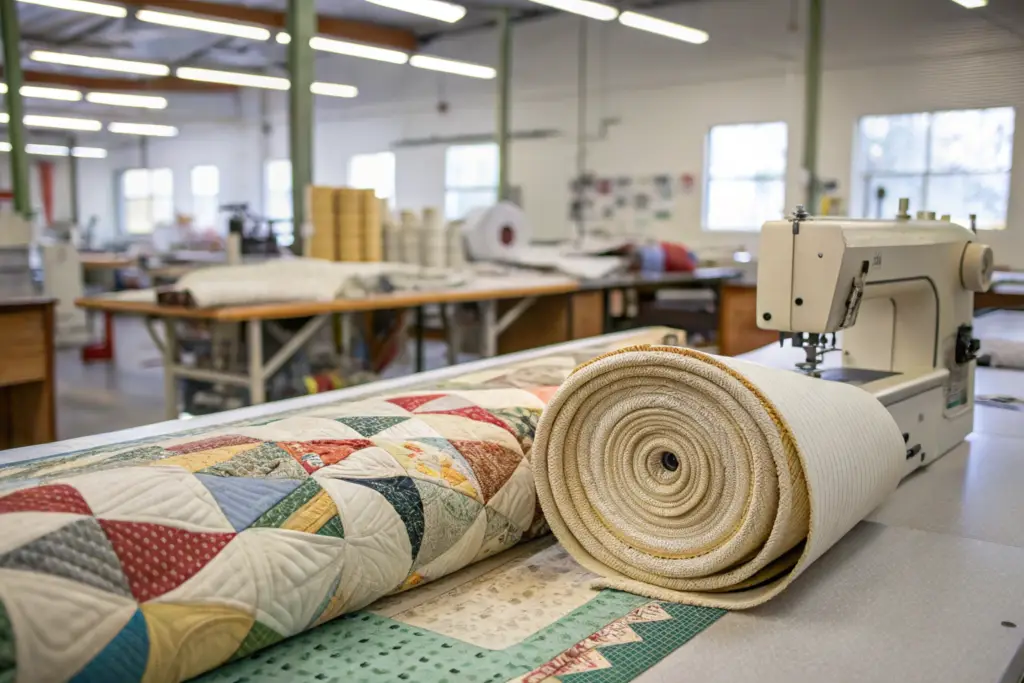
The "Factory Floor Rescue" is the narrative we use to tell the story of these bundles, and it is a narrative that deeply resonates with the growing community of conscious consumers. The story is simple and true: beautiful, precious fabric, destined for the industrial shredder because it was too short for a factory marker, is rescued, curated, and delivered to a creative maker who will give it a second, more intimate life. The story frames the purchase not as a discount fabric buy, but as a small, personal act of environmental rescue.
This narrative is powerful because it gives the home sewer a meaningful role in a larger system. They are not just a consumer of a product; they are a participant in a circular supply chain. They are the final, creative link that prevents waste. When they sew a garment from a remnant, they are not just making something for themselves; they are completing the life cycle of a piece of fabric that began in an Italian mill, traveled to our Shanghai factory, and was destined for disposal. They are the hero of the fabric's story. This emotional resonance is the reason our bundle customers are so passionately loyal and why they share their unboxing videos and finished projects on social media with such genuine enthusiasm. They are not just showing off a new dress; they are telling the story of a rescue. This authentic, user-generated storytelling is the most powerful marketing our factory could ever have, and it aligns perfectly with the values of the modern conscious consumer.
Can a Brand Offer Co-Branded Remnant Bundles to Its Own Customers?
Yes, and this is an exciting, emerging area of collaboration we are actively developing with several of our brand partners. The concept is simple: a brand that manufactures a specific product with us—for example, a line of premium linen summer dresses—can commission a limited-edition, co-branded remnant bundle containing the exact leftover fabrics from their own production run. The bundle is packaged in a kraft paper box with the brand's logo, our "Factory Floor Rescue" stamp, and a co-branded story card that explains the collaboration.
This co-branded bundle becomes a powerful, tangible, and profitable extension of the brand's sustainability story. The brand sells the bundle on their own website to their own customers. The customer, who already loves the brand's aesthetic and quality, is thrilled to receive a curated box of the actual fabrics that went into the brand's collection. It creates an unprecedented level of material intimacy between the brand and its community. A customer who sews a child's dress from the same linen that the brand used for its signature summer dress feels a profound, personal connection to the brand. They become a creator within the brand's aesthetic universe, not just a consumer. For the brand, it is a new revenue stream from a previously wasted material, a powerful customer loyalty tool, and a genuine, verifiable waste diversion initiative that can be reported in their annual sustainability disclosures. We manage the entire curation, grading, and fulfillment process, and we deliver the finished, co-branded bundles to the brand's warehouse or directly to their customers. It is a turnkey sustainability solution that turns a waste problem into a community-building brand asset.
Conclusion
A home sewer buying a Shanghai Fumao Factory Floor Remnant Bundle is not purchasing a cheap bag of industrial scraps. They are participating in a deliberate, curated, and deeply sustainable rescue of premium, commercial-grade fabric that would otherwise be shredded. The bundle contains end-of-roll and over-order pieces of the same Italian wool suiting, Japanese cotton shirting, and Como-printed silk charmeuse that go into $400 dresses and $600 overcoats. The surprise bundle model transforms the shopping experience from a competitive, picked-over clearance into a joyful, creative catalyst, where the unboxing is an act of discovery and the fabrics inspire projects the sewer would never have imagined. This program is the most authentic, tangible expression of our factory's commitment to a circular textile economy. It diverts tons of beautiful fabric from the industrial waste stream annually, and it places that fabric into the hands of passionate, creative makers who complete its life cycle in the most beautiful way imaginable.
If you are a home sewer, a textile artist, or a creative maker who wants to sew with fabrics that are normally accessible only to high-end fashion brands, we would love for you to experience a Factory Floor Rescue Bundle. The bundles are released in limited quantities on the first Monday of each month, and they sell out quickly. To join the mailing list and receive the release notification, contact our Community Manager through our Business Director, Elaine, at elaine@fumaoclothing.com. Tell her you want to be added to the Remnant Bundle list. Let us put the last meter of a beautiful roll of fabric into your hands, and onto your sewing table, where it belongs.