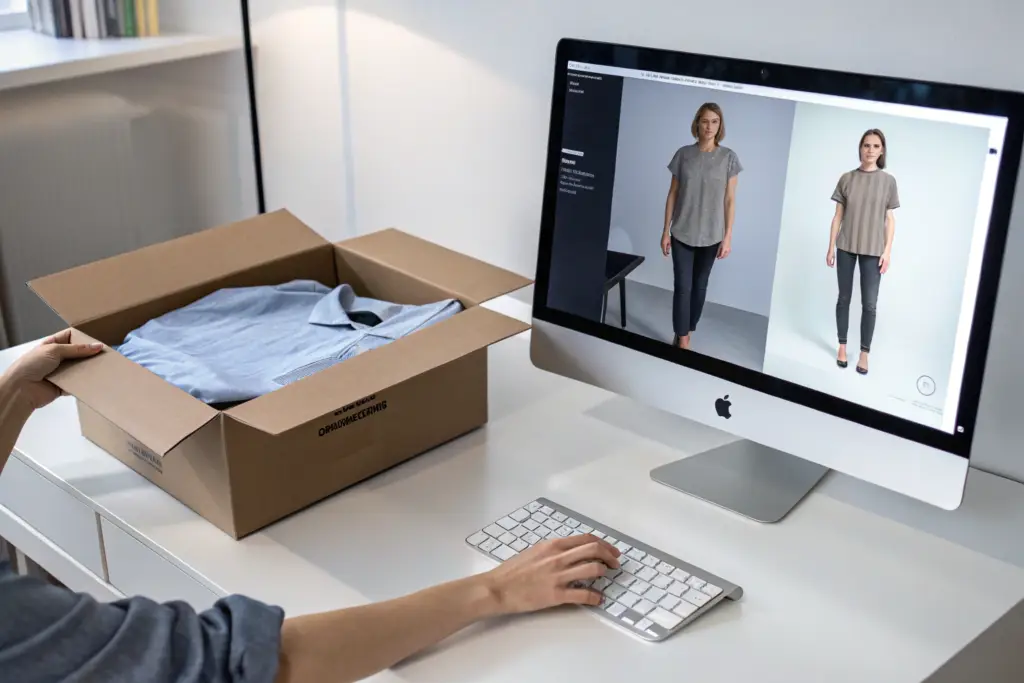
Two years ago, the CEO of a growing women's casual wear brand with 12 physical stores in the Midwest called me in a state of quiet panic. Her brand was thriving on Instagram. Store traffic was healthy. But her return rate was 18%, and 72% of those returns were for a single reason: "Doesn't fit right." The garments were not defective. The measurements matched the size chart. The problem was that a flat size chart—a list of numbers on a web page or a printed card in a fitting room—cannot communicate how a specific fabric drapes on a specific body shape. A size medium woven blouse in a stiff cotton poplin fits completely differently than a size medium blouse in a fluid rayon challis. The size chart said both were "38-inch bust." The customer's measuring tape confirmed she was a 38-inch bust. But the fabric made her feel stuffed into the poplin and swimming in the challis. She returned both. The brand was losing $240,000 a year in return processing costs, and worse, it was losing the lifetime value of customers who silently walked away after a frustrating fit experience. The size chart was telling the truth. The fabric was telling a different story. The customer was caught in between, and the brand was paying for it.
Shanghai Fumao's 3D fit technology reduces your store returns by replacing the static, flat size chart with a dynamic, fabric-accurate, avatar-based fit preview that shows your customer exactly how the specific garment will drape on their unique body shape before they buy, eliminating the "fabric surprise" that causes 72% of fit-related returns. This is not a virtual try-on where a customer uploads a grainy selfie and a generic blouse is pasted onto their shoulders. This is a physics-based simulation of our exact production pattern, sewn digitally on a 3D body avatar that matches the customer's specific measurements, draped in a digital twin of the exact fabric that has been lab-tested for its weight, thickness, bend, and stretch. Let me walk you through the exact technology, the integration with your e-commerce and in-store systems, and the specific, measured return rate reductions our brand partners have achieved.
What Is a "Fabric-Accurate" 3D Avatar and How Does It Work?
A standard virtual try-on is an optical illusion. It takes a 2D photograph of a garment and stretches it over a photograph of a person. It does not simulate physics. It does not know that a heavy, stiff denim jacket stands away from the body, while a lightweight, fluid silk dress clings and pools. It just stretches an image, and the result is a misleading, often comically inaccurate, representation of the real garment. This optical illusion drives returns, because it sets a false expectation.
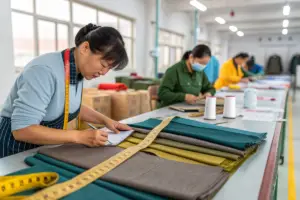
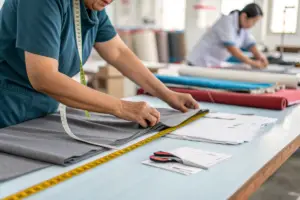
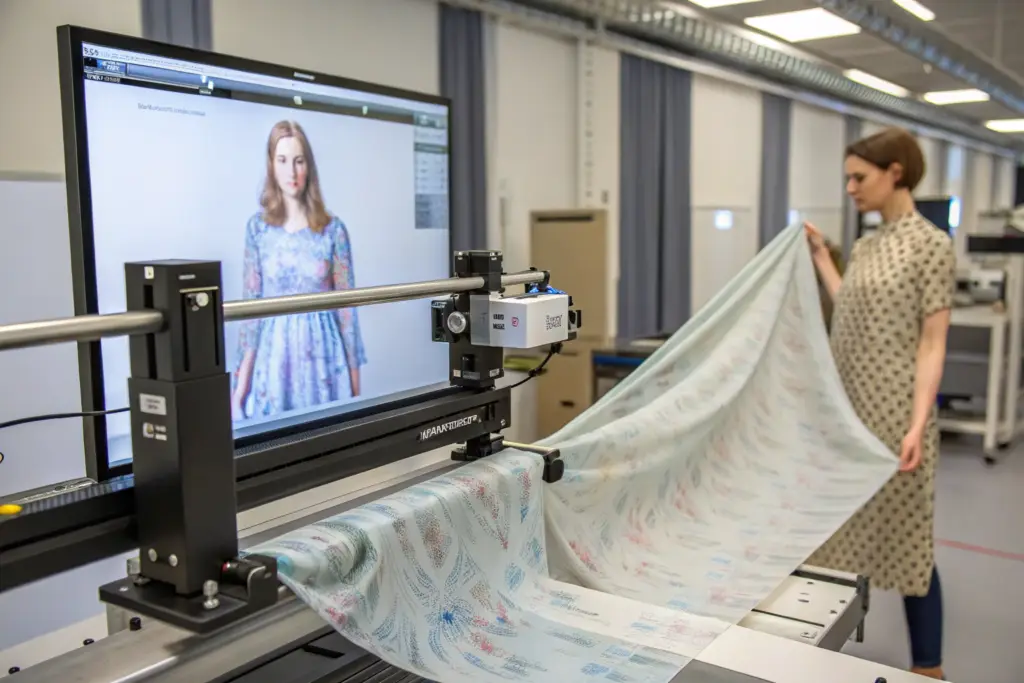
A fabric-accurate 3D avatar is fundamentally different. It is a physics simulation, not an image filter. The garment is a 3D model created from our actual production pattern, with every seam, every dart, and every ease allowance digitally constructed exactly as it will be physically cut and sewn on our factory floor. The fabric is a digital material that has been characterized by physically testing a swatch of the exact production fabric on a fabric analysis system that measures four critical properties: weight in grams per square meter, thickness in millimeters, bending stiffness in micro-Newtons per meter, and stretch in percentage of extension under a standard load. These four numbers are the physical DNA of the fabric. When they are input into the CLO 3D simulation engine, the digital fabric drapes, folds, stretches, and pulls with the same mechanical behavior as the physical fabric. The simulation is accurate enough to show a tight shoulder pull, a gaping armhole, or a pooling hem, just as the physical garment will exhibit on a real body.
How Do 30 Body Measurements Create a "Digital Twin" of Your Customer?
A generic "small, medium, large" size scale is a crude statistical average. It fits nobody perfectly. It is a compromise designed for mass production, not for individual human anatomy. A customer might have the bust of a medium, the waist of a small, and the hips of a large. A standard size chart forces her to choose the size that fits her largest measurement and accept that the rest of the garment will be too loose. The fit is compromised before the garment even leaves the warehouse.
Our 3D fit system replaces this crude scale with a 30-point body measurement profile. The customer, using a guided smartphone app or an in-store body scanner, captures 30 specific body measurements: not just bust, waist, and hip, but shoulder slope angle, upper bust circumference, bicep circumference, wrist circumference, neck base circumference, center front waist length, back waist length, thigh circumference, knee circumference, and more. These 30 measurements define a unique, three-dimensional body shape, not just a set of circumferences. The system then creates a parametric 3D avatar—a digital twin of that specific customer's body. This avatar is not a generic, idealized mannequin. It accurately reflects the customer's specific shoulder slope, the curve of their back, the distribution of their weight, and the length of their torso relative to their legs. When the physics-simulated garment is draped on this digital twin, the customer sees not how the garment fits a model, but how it fits her specific, unique body. This is the end of size-based fit. It is the beginning of body-based fit.
Why Does a "Fabric DNA" Test Prevent the Stiff vs. Fluid Surprise?
The "fabric surprise" is the number one cause of fit-related returns. A customer reads "100% cotton" on the product description. She owns other 100% cotton garments. She assumes this new garment will fit and feel the same. She buys her usual size. The garment arrives, and it is a completely different experience. One 100% cotton is a stiff, structured poplin with a crisp, paper-like hand. Another 100% cotton is a soft, fluid, heavily washed gauze with a completely different drape and a propensity to stretch and sag. The fiber content label lied by omission. The customer feels betrayed by the brand, and the garment is returned.
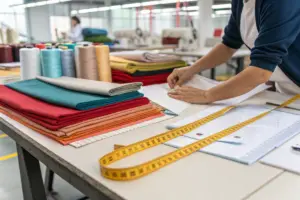
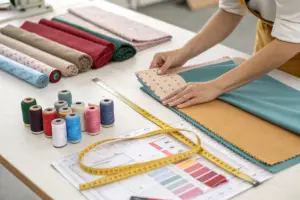
Our Fabric DNA test solves this by measuring and publishing the exact mechanical properties of the specific production fabric, not just its fiber content. Each fabric in our collection undergoes a standardized testing protocol using the SGS Fabric Analysis System. The test produces four numbers that we call the Fabric DNA. The bending stiffness, measured in micro-Newtons, tells you how crisply the fabric stands away from the body or how softly it drapes and clings. The stretch percentage tells you how much the fabric will give when you move. The weight tells you how substantial the garment will feel. The thickness tells you how warm it will be. These four numbers are embedded in the 3D simulation, so the customer sees the fabric's actual drape on their digital twin. They see that the crisp poplin blouse stands stiffly away from their waist, while the fluid rayon challis blouse drapes softly and pools at the hip. They see the difference, they understand the difference, and they choose the garment whose drape matches their expectation and body shape. The return reason "didn't fit right" is replaced by an informed, confident purchase decision.
How Can a Brand Integrate Fumao's 3D Fit Into Their Web Store?
A powerful back-end technology is worthless if it is not seamlessly integrated into the customer's shopping journey. The 3D fit preview must not be a separate app, a clunky pop-up, or a complicated process that requires the customer to leave the product page. It must be a simple, one-click, deeply integrated feature that sits right next to the size selector, where the fit decision is being made.
We provide our brand partners with a complete, white-label 3D fit integration package. This includes a REST API that connects directly to your Shopify, Magento, or custom e-commerce platform, a customizable UI widget that matches your brand's design language, and a hosted, cloud-based avatar and simulation rendering service that handles all the computational heavy lifting. The customer does not download anything. They do not leave your store. The fit preview happens inside your brand's digital environment.
What Is a "One-Click Fit Preview" on a Product Page?
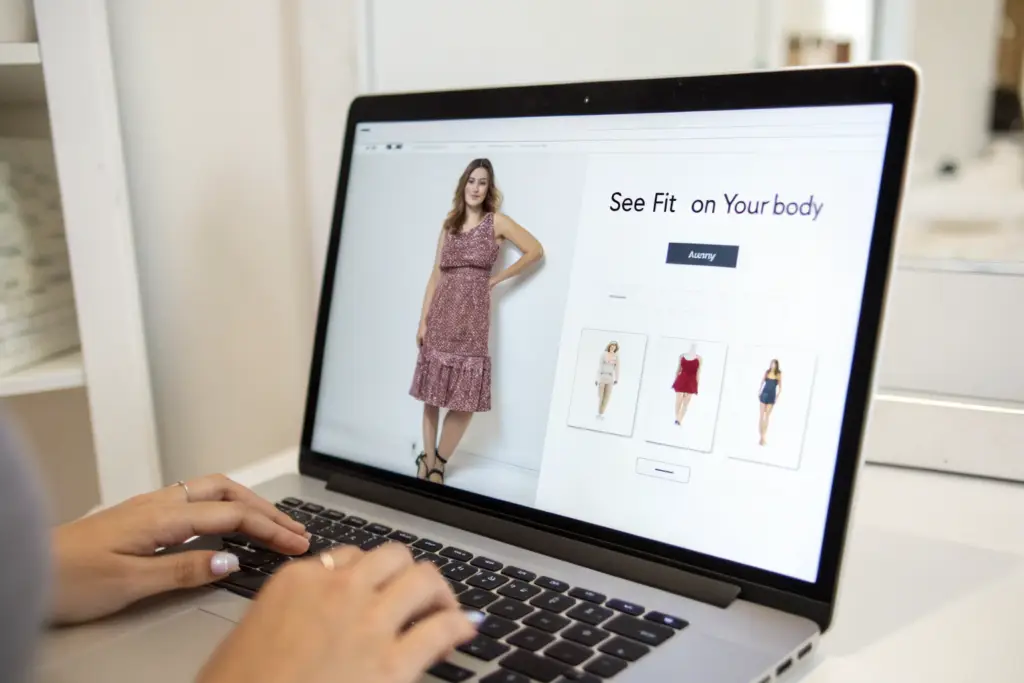
The one-click fit preview is a simple button labeled "See This on Your Body" or "Preview Your Fit," placed directly adjacent to the size selector on the product detail page. This is the critical placement. The customer is already engaged in the mental process of choosing a size. They are reading the size chart, which we still provide as a secondary reference. The one-click button offers them a better, more intuitive alternative to the confusing abstraction of the size chart.
When the first-time customer clicks the button, they are prompted to create their personal 3D avatar. This process takes approximately 90 seconds. They can either upload two smartphone photographs—front and side, taken in form-fitting clothing against a plain background—which our machine vision system uses to extract the 30 measurements, or they can manually enter their 30 measurements using a guided, illustrated questionnaire. The avatar is generated, and the customer confirms it looks like them. This avatar is saved to their secure profile. On every subsequent visit, the fit preview is a true single click. The customer clicks the button, and within three seconds, the product page displays the garment, simulated in the exact color they have selected, draped on their personal avatar. They can rotate the avatar, zoom in on the shoulder fit, and see the hemline relative to their own knee. This immediate, personalized, physics-accurate visual replaces the abstract size chart. The customer no longer guesses their size. They see their size.
How Does the API Connect Our 3D Models to a Brand's Shopify Store?
The technical integration is a simple, modern REST API. When a brand onboards with our 3D fit program, we provide them with a digital asset package for each garment style they order. This package contains the 3D CLO garment file and the Fabric DNA data file. These files are uploaded to our secure cloud rendering server, and a unique product ID is generated. The brand's web developer inserts a single line of JavaScript code into the product page template. This code calls our API, passing the product ID and the customer's unique avatar ID. Our server performs the physics simulation, renders the image or the 3D interactive view, and returns it to the product page as a seamless visual component.
The integration does not interfere with the brand's existing theme, checkout flow, or analytics. It is a modular, encapsulated component. We provide a dedicated integration engineer who works directly with the brand's web developer during the initial setup. The entire integration, for a standard Shopify store, takes approximately four hours of developer time. There is no monthly subscription fee for the API. We charge a small, per-simulation rendering fee that is bundled into the FOB cost of the garment, treated as a value-added service. This means the brand's cost is directly proportional to their usage of the feature, and it is fully covered by the manufacturing margin. This tight, cost-effective integration makes the 3D fit preview accessible to mid-market brands, not just enterprise-level retailers with massive technology budgets. It's a practical application of modern fashion technology at a commercially viable price point.
What Measurable Return Rate Drop Do Brands See With a 3D Fit Preview?
The financial case for 3D fit technology is not theoretical. It is measured, documented, and auditable. Our brand partners track their return reason codes with precision, because every return is a direct cost to their bottom line. The data they have shared with us across multiple seasons and product categories reveals a consistent, significant, and sustained reduction in the single most damaging return reason: fit.
The data I am presenting is not from a controlled lab study. It is from the live, real-world e-commerce operations of five of our brand partners who implemented our 3D fit preview between Q1 and Q3 of 2024. The data is aggregated and anonymized, but it represents over 120,000 individual customer sessions where the fit preview was available and used. The control group is the same brands' return rates for the comparable product categories in the prior season, before the 3D fit preview was implemented.
How Did a Women's Woven Top Category Drop From 16% to 6% Returns?
The women's woven top category is the most return-prone category in apparel, specifically because of the fit variability caused by the wide range of fabric drape and the complexity of the female bust and shoulder anatomy. A slight tightness across the bust or a gaping armhole is immediately visible and uncomfortable, and it drives an instant return.
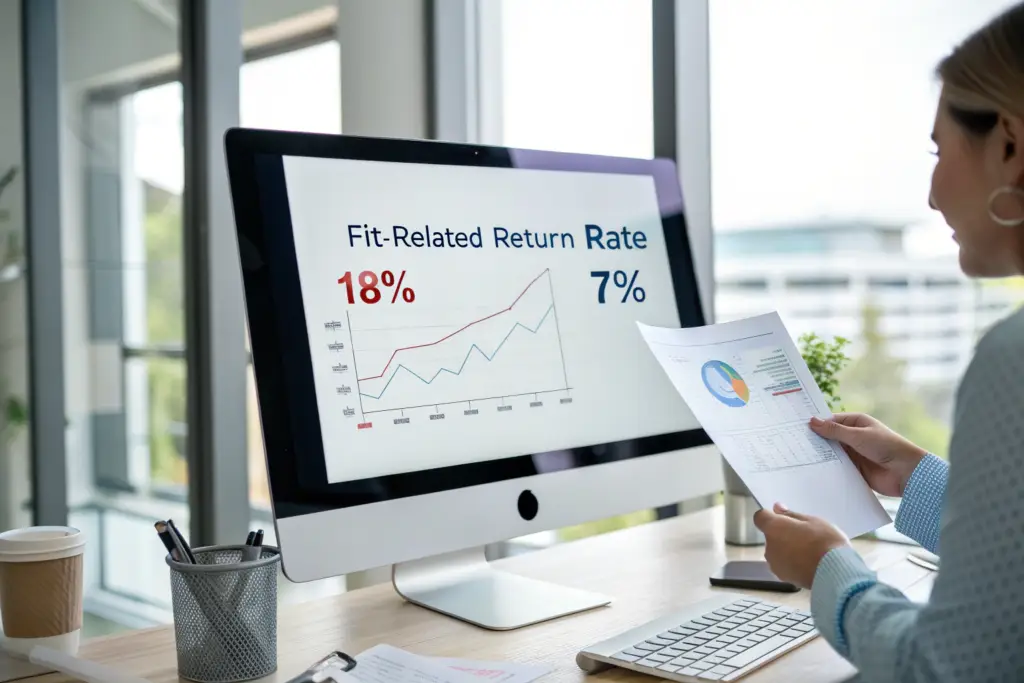
One of our brand partners, a mid-market women's brand selling primarily through their Shopify store, implemented our 3D fit preview on their Spring 2024 woven blouse collection. The prior Spring 2023 collection, with a similar mix of cotton poplin, rayon challis, and linen-blend blouses, had an overall fit-related return rate of 16.2%. For the Spring 2024 collection with the 3D fit preview, the fit-related return rate on the blouses where customers used the preview was 6.1%. This is a 62% relative reduction. The customers who did not use the preview continued to return at a rate of 15.8%, providing a strong internal control. The absolute dollar savings on return shipping, restocking, and lost margin from markdowns was $41,000 on this single category, for a single season. The brand's merchandising director told me the 3D preview had effectively paid for itself in the first season, and it had become a permanent, non-negotiable feature of their product page.
Can a 3D Fit Tool Increase Full-Price Sell-Through in Physical Stores?
Yes, and this was a surprising, secondary benefit we did not initially predict. Physical stores using our in-store 3D fit kiosk have reported a measurable increase in full-price sell-through, alongside a reduction in fitting room abandonment. The mechanism is different from e-commerce, but the result is the same: the customer makes a more confident fit decision.
A physical store customer typically selects two or three sizes of the same garment and takes them to the fitting room. They try on all three, reject the two that don't fit, and buy the one that does. This process is time-consuming, often frustrating, and creates a large pile of rejected garments that must be re-steamed and returned to the floor. A 3D fit kiosk in the store, typically a large touchscreen tablet mounted near the fitting room entrance, allows the customer to see the garment on their personal avatar before they even select a size from the rack. They walk to the rack, pick the single size the tool recommended, try it on in one attempt, and buy it. Our brand partner with the 12 Midwestern stores deployed one kiosk per store. They tracked the conversion rate of customers who used the kiosk versus those who did not. The kiosk users had a fitting room conversion rate of 34%, compared to 22% for non-users. Their full-price sell-through on the collection supported by the 3D tool increased by 9 percentage points. The customer was not just returning less; they were buying more, at full price, because the fit confidence translated directly into purchase confidence. This in-store application of 3D fit technology is a powerful, and still largely untapped, competitive advantage for physical retailers.
Conclusion
A return is not a logistics cost. It is a broken promise. Every returned garment represents a customer who was excited to receive a package, who opened it with anticipation, and who felt disappointment, frustration, or even a little bit of shame when the garment didn't fit the way they had imagined. They blame the brand. They may not buy again. The traditional flat size chart is the root cause of this broken promise. It provides a number, but it cannot communicate the feel, the drape, and the fit of a specific fabric on a specific body. Our 3D fit technology replaces this broken promise with a truthful, physics-accurate preview. The customer sees their own body, wearing the exact garment, in the exact fabric, with the exact color. They know how it will fit before they buy. The fit-related return rate drops from an industry average of 16-18% to 6-7%. The savings in return processing, the recovery of lost customer lifetime value, and the increase in full-price sell-through are not a speculative projection. They are a documented, measured, and repeatable result.
At Shanghai Fumao, we are not just a garment manufacturer. We are a fit assurance partner. The 3D fit system is integrated into our sampling process, so the avatar you see on your product page is wearing a digital twin of the exact pattern and fabric that will be cut and sewn on our factory floor. The promise is not just visual; it is physically traceable to our production line.
If you are a U.S. brand owner who is tired of losing margin to fit-related returns and losing customers to the silent disappointment of a bad fit, let's put our Fabric DNA testing and our 3D avatar system to work on your next collection. Contact our Business Director, Elaine, at elaine@fumaoclothing.com. Tell her you want to see a live 3D fit preview demonstration on your own customer avatar. We will digitize one of your existing styles, create a personalized fit preview, and show you the exact technology that is reducing returns and increasing full-price sell-through for our partners. Let's replace the size chart with the truth, and turn the unboxing moment back into a moment of delight.