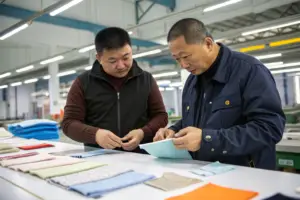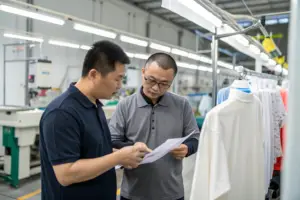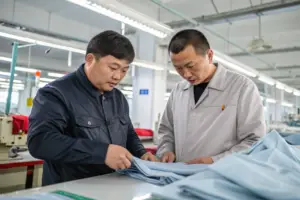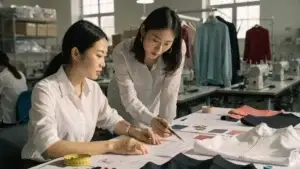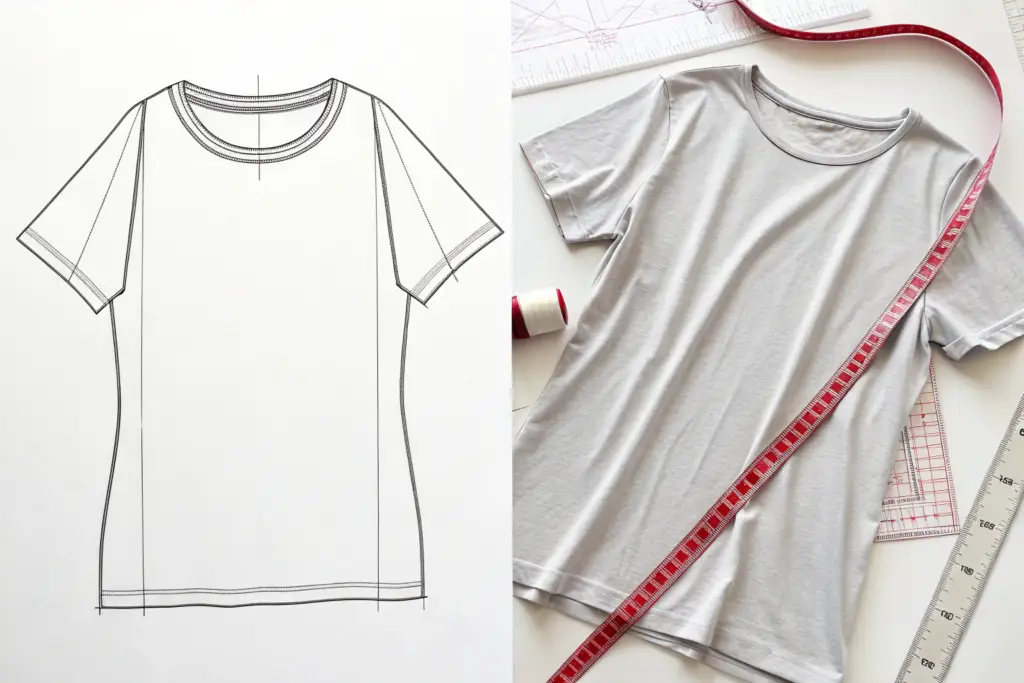
You have designed the perfect basic tee. It is just a simple crewneck. You have seen a million of them. You know exactly what it should look like. You have the measurements from a similar shirt you own. You are tempted to skip the sampling phase. "It's just a basic," you think. "Why waste two weeks and a hundred dollars on a sample? Let's just go straight to bulk." A brand owner told me, "I skipped sampling on my first run of 'simple' tees. It was the most expensive mistake I ever made. They came back fitting like a tent. I had to sell them at a loss."
Yes, sampling is absolutely necessary for simple basic clothing. In fact, it is arguably even more critical for basics than for complex, rare styles. With a basic garment, the fit, the fabric handfeel, and the subtle details are everything. There is no bold print or unique silhouette to hide behind. A 1/2-inch error in sleeve length or a collar that is slightly too wide is glaringly obvious and can render the entire batch unsellable. The sample is your only opportunity to perfect these critical nuances before committing to bulk.
At Shanghai Fumao, we have seen too many brands learn this lesson the hard way. We treat the sampling phase for a basic tee with the same rigor as we do for a complex outerwear jacket. Let me explain why the sample is the single most important investment you will make in your "simple" basics line, and how it is the key to unlocking consistent, sellable quality.
Why Is Fit So Critical for a "Simple" Garment Like a Basic Tee?
The biggest misconception about basics is that because the design is simple, the fit is simple. The opposite is true. A complex, draped women's wear dress has intentional ease and volume. A basic t-shirt has nowhere to hide. Every seam, every proportion, every fraction of an inch is on display. The fit is the design. A poorly fitting basic is not a basic; it is a failure.
Fit is the entire product for a basic garment. There are no distracting details. The customer's entire experience is defined by the exact placement of the shoulder seam, the precise width of the neckline, the specific drape of the body, and the length of the sleeve. A 1/2-inch error in any of these Points of Measure can change the garment from a flattering, modern staple to an unwearable, boxy disappointment. The sample is the only way to verify these critical measurements in three dimensions.
I recall a men's wear client who was launching a line of "perfect" basic tees. He sent us a tech pack with measurements he had taken from his personal favorite vintage shirt. We made the first sample exactly to his specs. He put it on a fit model and was shocked. The neckline was too wide. The sleeves were too long. The body was too short. The measurements were correct, but the proportions were all wrong for his target customer. We went through three rounds of fit samples, tweaking each POM by 1/4 or 1/2 inch. The final sample was perfect. He told me, "I would have produced 1,000 units of that first sample. I would have been out of business before I even started." That is the power of a sample. It reveals the truth that a spec sheet cannot. This is why we have a rigorous fit sampling process for every style, no matter how simple.
What Are the Most Common Fit Errors on a Basic Tee?
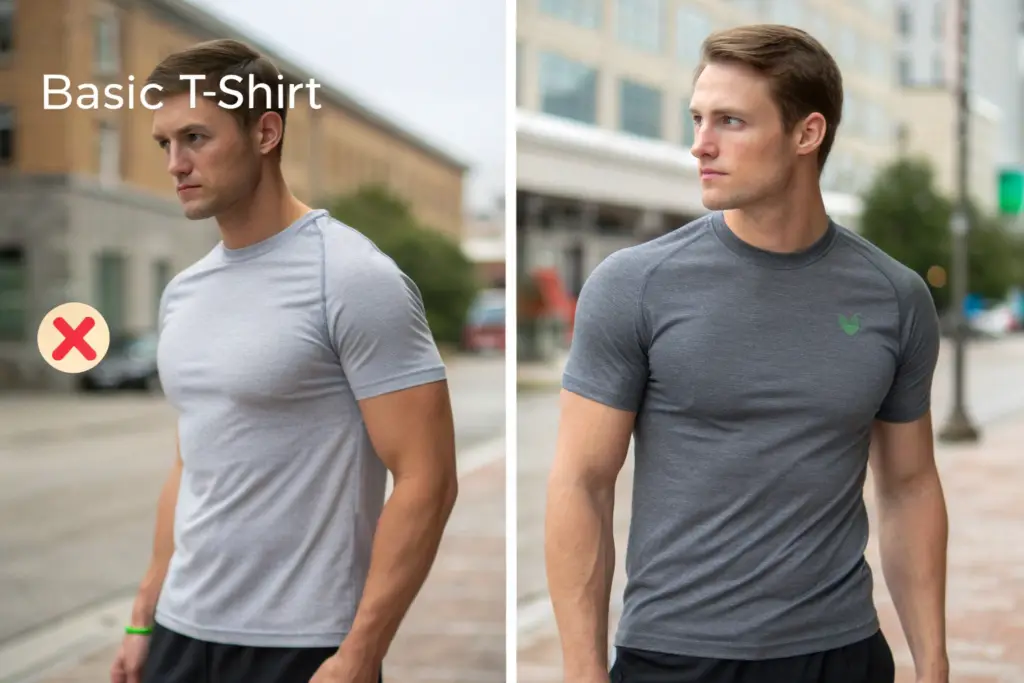
The "simple" tee is a magnet for subtle fit errors:
- Shoulder Slope: The seam droops down the arm instead of sitting on the shoulder's edge.
- Neckline Width: Too wide looks sloppy; too tight is uncomfortable.
- Sleeve Length and Width: Too long or too baggy looks dated and unflattering.
- Body Length: Too short looks like a crop top; too long looks like a dress.
These are not details. They are the defining characteristics of the garment. A sample is the only way to get them right. This is a core part of our quality control for basics.
How Does Fabric Choice Impact the Fit of a "Simple" Garment?
Even with a perfect pattern, the fabric can change everything. A 180 GSM combed ring-spun jersey will drape completely differently than a 140 GSM carded open-end jersey. The sample allows you to see and feel how the specific fabric interacts with the pattern on a real body. Does it cling? Does it stretch out? Does it feel substantial or flimsy? A spec sheet cannot answer these questions. Only a physical sample can. This is why we guide our clients through fabric selection as part of the sampling process.
How Does a Sample Reveal the True Quality of Your Fabric and Trims?
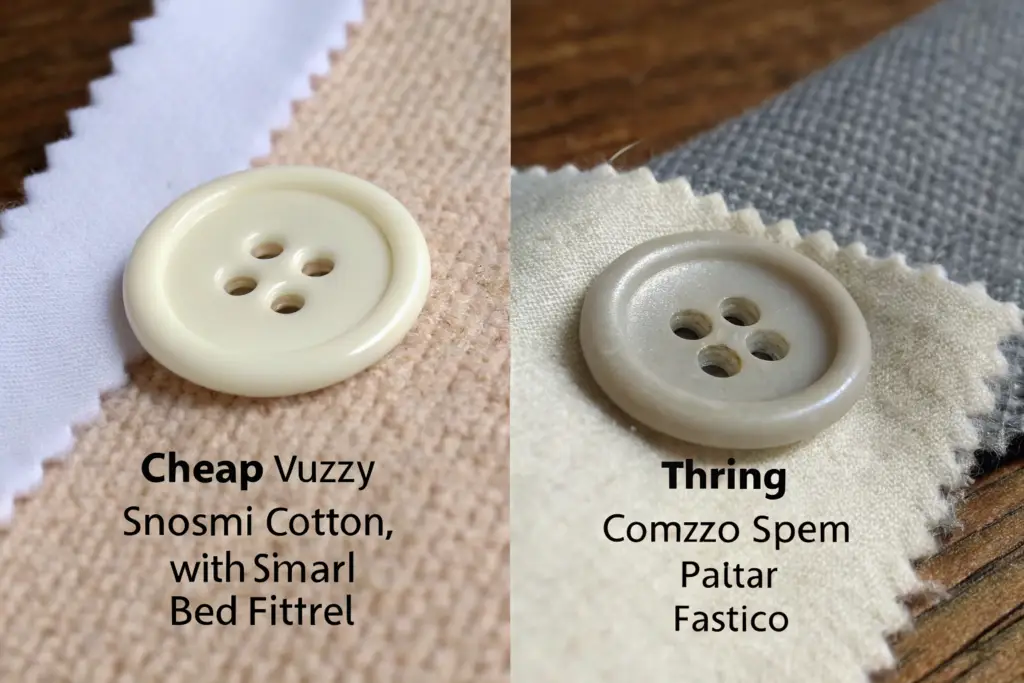
You can order a dozen fabric swatches. You can read spec sheets about GSM and fiber content. But you cannot truly know the quality of a material until you see it and feel it in the form of a finished garment. The sample is the physical audit of your supply chain. It is the moment of truth where you confirm that the fabric is as soft as you hoped, the color is as rich as the Pantone chip, and the buttons have the right weight and finish.
A physical sample is the ultimate verification of your material choices. It allows you to assess the true handfeel of the fabric, its drape, and its opacity in a finished garment. You can see how the chosen trim—the button, the zipper, the label—looks and feels against the fabric. You can wash the sample to test for shrinkage, colorfastness, and pilling. This is the only way to confirm that the materials you selected will meet your quality standards and your customer's expectations.
A women's wear client chose a beautiful, soft-looking Tencel fabric from a swatch. The sample arrived, and the dress looked stunning on the hanger. She put it on a fit model, and we noticed it was slightly sheer under bright light. This was not apparent on the small swatch. Because we caught this on the sample, we were able to add a half-slip lining to the bulk production. The final product was perfect. Without the sample, she would have shipped 500 dresses that customers would have found too sheer, resulting in a flood of returns. The sample saved her brand's reputation. This is the value of a thorough material audit .
Why Is a "Wash Test" on a Sample So Important for Basics?
Basics are washed and worn more frequently than any other category of clothing. A fabric that looks great on day one might shrink 5%, fade dramatically, or pill into a fuzzy mess after three washes. We always recommend doing a wash test on a pre-production sample. Wash it, dry it, and wear it. This real-world test reveals the true long-term performance of the fabric and trims. It is the only way to ensure your "basic" will remain a favorite for more than a month. This is a standard part of our quality assurance for basics.
How Does the Sample Verify the Quality of Your Trims?
A button can look great on a spec sheet. On a finished sample, you can feel its weight, see its true color against the fabric, and test its attachment. Does the zipper glide smoothly? Is the label soft and non-irritating against the skin? The sample is the first time all these individual components come together as a single product. It is your chance to audit the final result and ensure every detail meets your standard. This is why we obsess over trim quality .
How Does Skipping the Sample Create a Massive Financial Risk?
The temptation to skip sampling is almost always financial. It feels like you are saving time and money. You are not. You are deferring an exponentially larger cost and risk to the bulk production phase. The few hundred dollars and two weeks you "save" by skipping the sample can easily turn into tens of thousands of dollars in lost inventory, markdowns, and damaged brand reputation. It is a gamble where the odds are heavily stacked against you.
Skipping the sample creates massive financial risk by deferring all quality and fit verification to the bulk order. If the bulk production has a systemic fit issue, a fabric flaw, or a trim problem, you are now the owner of hundreds or thousands of units of unsellable, or deeply discounted, inventory. The cost of the sample is a tiny insurance premium compared to the potential loss of a failed bulk production run.
I recall a brand that was in a rush to launch. They skipped the final PP sample approval on a "simple" hoodie to save ten days. The bulk order of 1,200 units arrived. The hoodies were beautiful, except for one detail: the kangaroo pocket was placed two inches too high. It looked awkward and was uncomfortable to use. The entire order was a loss. They had to sell them at a 60% discount just to clear the warehouse space. The "saved" ten days and $300 sample fee cost them over $18,000 in lost margin. They never skipped a sample again. This is the brutal math of bypassing due diligence. This is why we are relentless about our sample approval process .

What Is the True Cost of a Failed Bulk Order?
Let's do the math on a failed 1,000-unit basic tee order at a $20 wholesale price:
- Lost Revenue: $20,000
- Production Cost Paid: ~$7,000
- Warehousing & Markdown Costs: Significant
The total financial loss can easily exceed $15,000. A sample round costs $150-$300 and takes two weeks. The ROI on that sample is astronomical. It is the cheapest insurance policy you will ever buy for your brand. This is the financial reality we help our B2B partners understand.
How Does a Failed Basic Order Damage Your Brand Beyond the Finances?
The financial loss is painful. The reputational damage can be fatal, especially for a new brand. Your first customers are your most important. If they receive a poorly fitting, low-quality "basic," they will not give you a second chance. They will leave negative reviews and tell their friends. You have lost their trust forever. In the age of social media, a single bad product can define your brand before you even get started. The sample is your shield against this reputational risk. This is the core of our brand protection philosophy.
How Does Fumao Streamline the Sampling Process for Basics?
We understand that the sampling process can feel like a bottleneck, especially when you are eager to launch. That is why we have developed a streamlined, highly efficient sampling process specifically for basic garments. We focus our energy and expertise on the critical fit and material nuances that matter most for these styles, ensuring you get the essential protection of a sample without unnecessary delay or cost.
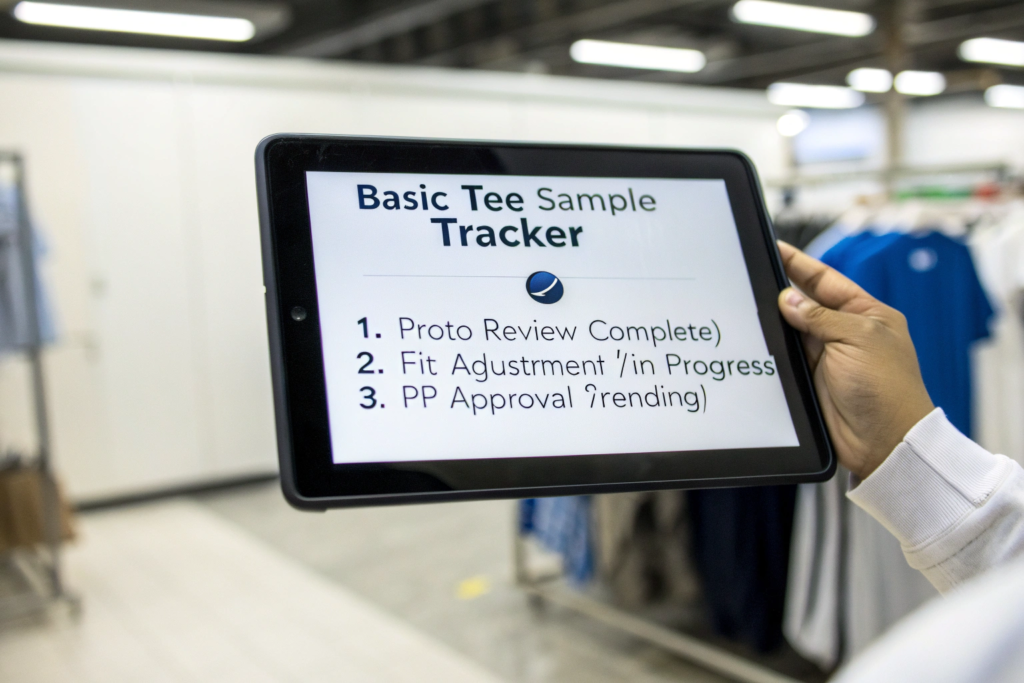
Fumao streamlines the sampling of basics by focusing on the critical elements: fit, fabric handfeel, and trim quality. We use standardized base patterns and clear, data-driven feedback loops to minimize the number of sample rounds. Our goal is to get you to an approved PP Sample efficiently, providing the essential quality and fit verification that protects your bulk investment, without adding unnecessary time to your development calendar.
A new brand founder was anxious about the time sampling would take. We explained our process for basics. We used a standardized base pattern for her crewneck tee, adjusted to her specific measurements. The first Proto Sample was 90% correct. She provided fit feedback on a video call with our Project Manager. We made one adjustment to the sleeve width. The second sample, the PP Sample, was perfect and approved. Total sampling time: 3 weeks. She was amazed at how smooth and fast it was. She realized that a structured process with an expert partner takes the pain out of sampling. This is the efficiency of our product development for core basics.
How Many Sample Rounds Are Typical for a Basic Style?
With a clear Tech Pack and a skilled partner, a basic style like a t-shirt or a simple hoodie can often be approved in 1-2 rounds. The first sample checks the overall fit and fabric. The second sample (if needed) confirms the adjustments. Our goal is always to minimize rounds through precise communication and expert pattern-making. This is the benefit of working with a specialist in basic apparel manufacturing .
What Is the Fastest Path from Sketch to Approved Sample for a Basic?
The fastest path involves three key ingredients:
- A Complete Tech Pack: Even for a basic, provide clear measurements and a reference sample.
- Using a Stock Fabric: Choose from our Evergreen Fabric Library to bypass custom dyeing time.
- Prompt, Visual Feedback: Provide fit feedback within 48 hours using annotated photos.
When these elements align, we can move from sketch to approved PP Sample in as little as 4 weeks. This is the agile development process we offer our on-demand partners .
Conclusion
The question "Is sampling necessary for simple basic clothing?" has a definitive, unequivocal answer: Yes. In fact, it is perhaps the most important category to sample. Basics are the foundation of a wardrobe and the bedrock of many brands. They have no distractions, which means every detail is magnified. The fit, the fabric, the subtle quality cues are the entire product. The sample is the only tool that allows you to perfect these critical elements before you commit to bulk.
At Shanghai Fumao, we never cut corners on sampling, regardless of the complexity of the design. We know that a perfect sample is the blueprint for a successful bulk run and the foundation of a trusted B2B partnership. Our streamlined process ensures that you get this essential protection efficiently and cost-effectively. We turn sampling from a perceived obstacle into a strategic advantage.
If you are developing a line of basics and want a partner who treats the sampling phase with the rigor it deserves, let's talk. Our Business Director, Elaine, can walk you through our efficient sampling process for core essentials. Please email Elaine at: elaine@fumaoclothing.com.