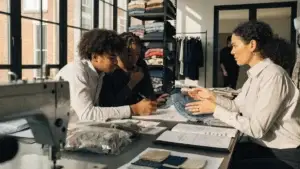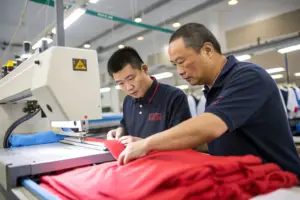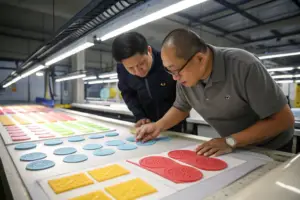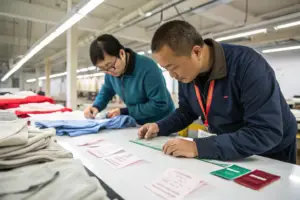
Early in my career, I made a mistake I will never forget. A client from a major New York brand sent us a tech pack for a beautiful silk blouse. The patterns were perfect on paper. The sewing was immaculate. We shipped the samples, and the client approved them. Then came production. When the full order arrived in New York, the client called me, furious. The blouses did not fit the same as the samples. We had used a slightly different roll of silk for production, and the drape changed everything. I learned a hard lesson that day. Fit is not just about measurements. It is about the relationship between fabric, construction, and the human body.
Women's wear fit is critical in the sampling stage because the female body has more complex curves and variations than standard menswear. A small error in the bust dart, a slight miscalculation in the waist-to-hip ratio, or using the wrong fabric weight can completely change how a garment looks and feels on a woman. The sampling stage is your only chance to catch these issues before you commit to thousands of dollars in production. If the fit is wrong, the garment will not sell, no matter how beautiful the design.
That experience with the silk blouse changed how we operate at Shanghai Fumao. Now, we insist on testing every single fabric variation during sampling. We use live fit models for every women's wear project. We have learned that women's bodies are not standard, and our process must respect that. A good fit is invisible. The woman just feels confident and comfortable. A bad fit is impossible to ignore.
What Makes Women's Wear Fit More Complex Than Menswear?
When I talk to new clients, many assume that fit is fit. You measure, you sew, and it fits. But the female body is more varied. Men's bodies generally have a straighter silhouette from shoulder to hip. Women's bodies have the bust, a defined waist, and curvier hips. Each of these curves must be addressed in the pattern. If the pattern is wrong, the garment will pull, gap, or sag in ways that ruin the look.
The complexity comes from the need for darts, curved seams, and precise ease allowances. A dart is not just a fold of fabric. It is a tool to create three-dimensional shape from two-dimensional cloth. The placement, length, and angle of a bust dart can change the entire front of a blouse. In sampling, we adjust these elements millimeter by millimeter to achieve a perfect fit across all sizes, from a 0 to a 14.
Let's look at the specific areas where fit issues appear and how sampling helps us fix them.
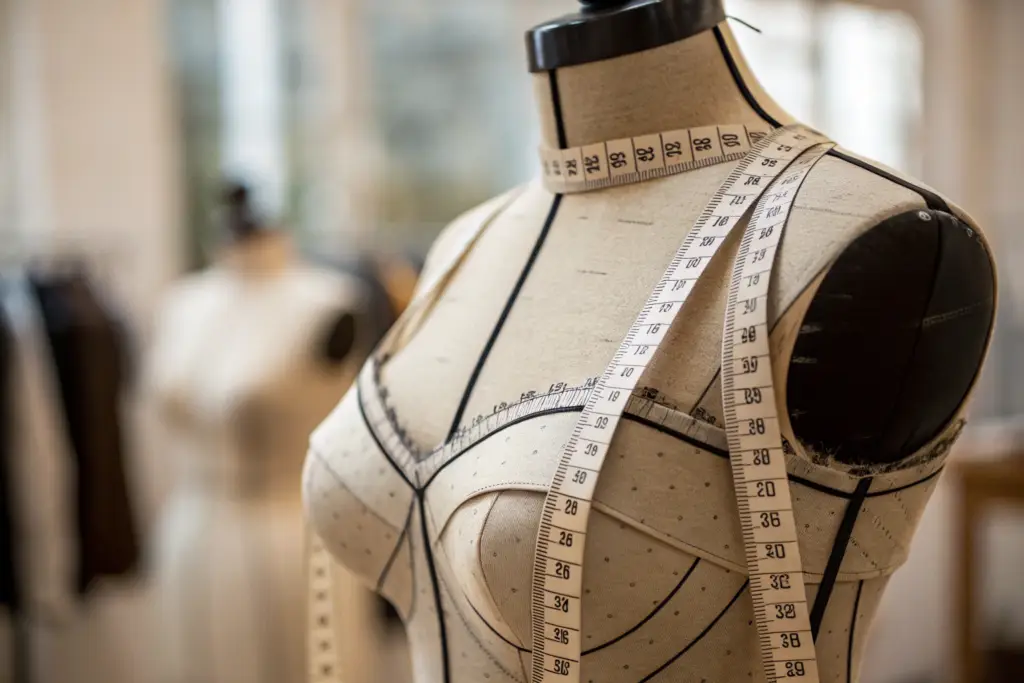
Why are bust darts so difficult to get right?
Bust darts are the most common way to add shape for the chest. But every woman's bust is different. Height, projection, and spacing all vary. A dart that is too long will create an unflattering point. A dart that is too short will leave the fabric pulling across the bust. A dart that is angled wrong will gap at the armhole or center front.
I remember a project for a client making a fitted women's blazer. Our first sample looked good on the hanger, but on our fit model, the bust darts pointed slightly downward. It made the whole jacket look droopy. We had to go back to the pattern, rotate the dart angle by just five degrees, and recut the sample. The second fit was perfect. The jacket suddenly looked sharp and professional. That five-degree change was invisible on paper but made all the difference on a real body.
How do different fabrics affect the fit of women's wear?
This is the lesson I learned the hard way with the silk blouse. Fabric has memory, stretch, and drape. A pattern cut for a stiff cotton will behave completely differently in a fluid viscose. During sampling, you must test your design in the exact fabric you will use for production. Substituting a similar fabric for the sample is a recipe for disaster.
For example, a woven fabric with no stretch needs more ease for movement. You need room to raise your arms. A knit fabric with stretch can be cut closer to the body. The pattern must account for this. When we sample a women's wear design, we always note the fabric's weight and stretch percentage. We adjust the pattern accordingly. A client from Miami once sent us a design for a linen dress. The first sample was in a medium-weight linen. It looked great. But for production, they wanted a lighter, more breathable linen. We had to re-sample because the lighter fabric draped differently and the whole silhouette changed. Sampling saved them from a costly production mistake.
How Does The Sampling Process Reveal Fit Problems?
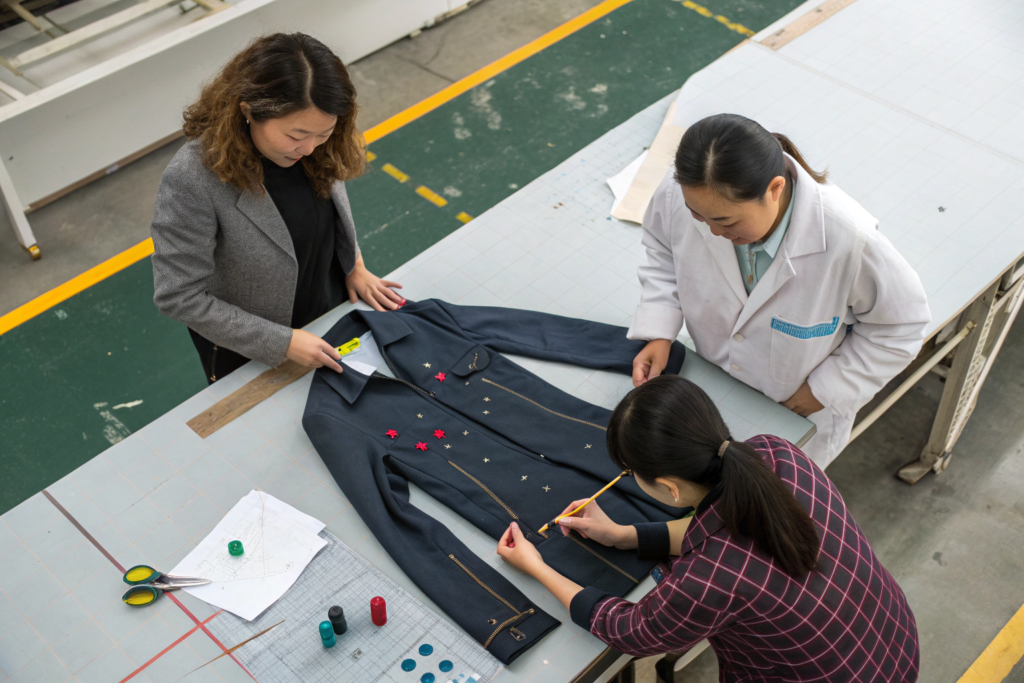
The sampling stage is not just about making one garment to look at. It is a diagnostic process. We put the sample on a live person, and we watch. We look for drag lines, which indicate the fabric is pulling somewhere it should not. We look for gaping, which means there is too much fabric. We check the hem to make sure it hangs level all around. These are the clues that tell us what is wrong with the pattern.
A proper fit session involves a live fit model with measurements that match your target customer. The designer, pattern maker, and sample sewer all observe. We mark adjustments directly on the garment with chalk and pins. We then take the marked garment, measure the changes, and correct the digital pattern. This cycle of sample, fit, adjust, and re-sample is repeated until the fit is flawless.
At Shanghai Fumao, we have a dedicated fitting room with professional lighting and full-length mirrors. We use both professional fit models and, sometimes, we invite local clients to participate. Let's break down what we look for during these sessions.
What are the most common fit issues found during sampling?
The most common issue we see is the "whiskering" effect. These are diagonal lines radiating from the bust or hip. They mean the garment is too tight in that area. The fabric is pulling against the curve. The solution is usually to add more fabric through a wider dart or a curved seam.
Another common problem is gaping at the armhole or neckline. This happens when the curve of the pattern does not match the curve of the body. The fabric falls away instead of lying flat. This often requires adjusting the angle of the shoulder seam or the depth of the armhole curve. For pants, we often see issues with the rise. A front rise that is too short creates an uncomfortable pulling sensation. A back rise that is too long causes sagging. These are subtle adjustments, but they make the difference between pants that feel great and pants that are constantly pulled and adjusted.
Why is it important to fit samples in multiple sizes?
Fitting a size small is not enough. Your patterns are graded to create a range of sizes. If the grade is wrong, the fit will fall apart at the extremes. A size 2 might fit perfectly, but a size 12 might have a gaping neckline or tight hips. This is a grade rule problem, not a pattern problem for one size.
During sampling for women's wear, we often request to fit a size small and a size large. We look at how the proportions change. Does the shoulder width increase at the same rate as the bust? If not, the larger size might have shoulders that are too wide or too narrow. We have fit models for different size ranges. We use them to test our grading. A client from a plus-size women's brand taught me this years ago. She insisted on fitting every sample in a 1X and a 3X. She taught us that the proportions of a plus-size body are different, and standard grade rules do not always work. Now, we customize grade rules for each client's fit preferences.
How Can Poor Fit Impact Your Brand's Success?
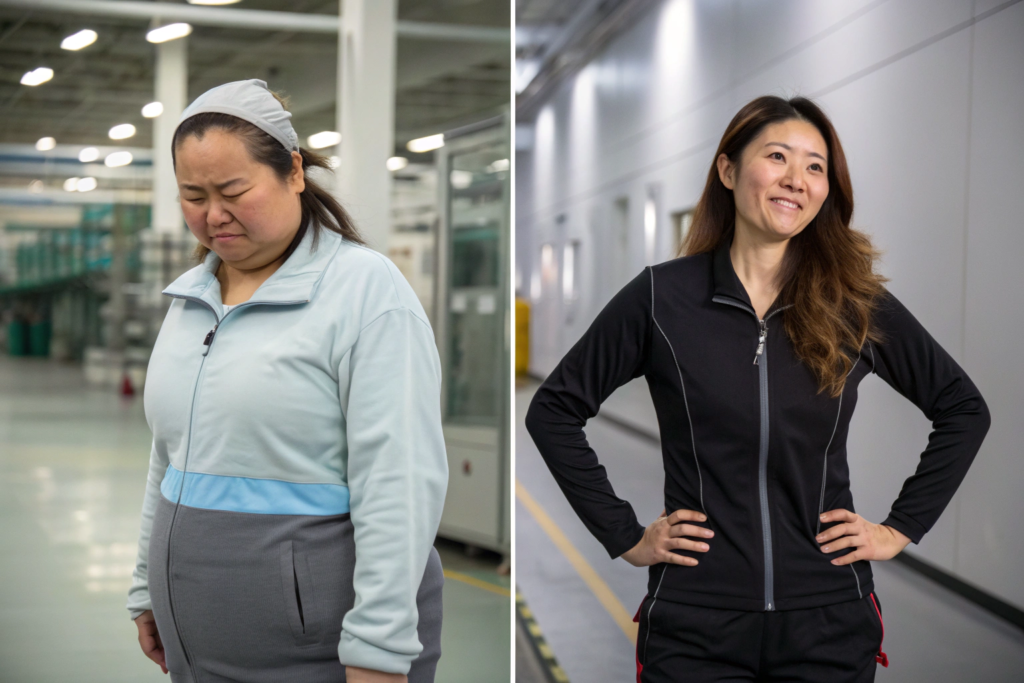
Fit is not just a technical detail. It is an emotional experience for the woman wearing the clothes. When a dress fits perfectly, she feels beautiful and confident. She gets compliments. She reaches for that dress again and again. When a garment fits poorly, she feels frumpy and self-conscious. She returns it, and she might never buy from that brand again.
Poor fit leads directly to high return rates, negative reviews, and lost customers. In e-commerce, where women cannot try on clothes before buying, fit consistency is everything. If your samples fit perfectly but your production garments do not, your return rate will skyrocket. A high return rate eats your profits and damages your brand's reputation. Mastering fit in the sampling stage is the most direct path to customer satisfaction and repeat business.
I have seen this play out with clients. One brand, a women's activewear line from California, had a return rate of 15% on their first collection. We analyzed the returns and found that most were for fit issues. The leggings were too short in the rise. We went back to sampling, adjusted the pattern, and tested the new fit on multiple models. The next collection had a return rate under 5%. The owner told me that fixing the fit was the best investment she ever made.
How does fit affect your return rate and profitability?
Returns are expensive. You lose the shipping cost both ways. You have to process the return and restock the item, if it is even sellable. Often, returned items end up being sold at a discount. A high return rate can turn a profitable product into a loss leader.
In women's wear, fit is the number one reason for returns. A woman might love the color and the fabric, but if the waist hits her in the wrong place, back it goes. By investing time and money in the sampling stage to perfect the fit, you are actually saving money on future returns. You are also building a database of customer data. Over time, you will know exactly how your fit runs. You can communicate this clearly on your website, which reduces returns even further. A client of ours includes detailed fit notes on every product page, based on the data from our samples. Her customers trust her size guide, and they order with confidence.
What does perfect fit do for customer loyalty?
Perfect fit creates brand loyalty. When a woman finds a brand that fits her body well, she sticks with it. She knows that a size medium from that brand will fit her perfectly every time. She does not have to go through the hassle of ordering multiple sizes and returning the ones that do not work.
I have a client in Boston who makes women's workwear. She has a loyal following of professional women who swear by her pants. These women know that the fit is consistent season after season. They can order online without trying on, and they know the pants will fit. That trust is incredibly valuable. It took years to build, and it started with a commitment to perfect fit during the sampling stage. At Shanghai Fumao, we help our clients achieve that consistency. We keep detailed records of every pattern adjustment, so when a client reorders a style years later, we can replicate the fit exactly.
Conclusion
Women's wear fit is both a science and an art. It requires precise measurement, deep understanding of the female form, and careful attention to how fabric behaves. The sampling stage is where all of this comes together. It is your opportunity to catch problems, make adjustments, and perfect the garment before you invest in full production. Rushing through sampling to save time or money is a false economy. The time you save will be lost ten times over in returns and damaged reputation.
At Shanghai Fumao, we treat every women's wear sample as a masterpiece in progress. We use skilled pattern makers, experienced sewers, and live fit models to ensure that when your garment goes to production, it is ready to make women feel beautiful. We know that your success depends on our precision.
If you are ready to create a women's wear collection with fit that sells, let's partner together. Please contact our Business Director, Elaine, at elaine@fumaoclothing.com. Visit Shanghai Fumao to see how our commitment to fit can help you build a brand women trust and love.