You have been through the sample drill before. You send your tech pack. You wait. You pay. You wait some more. The sample finally arrives, and it is wrong. The fit is off. The stitching is sloppy. The fabric is not what you wanted. You feel frustrated. You feel like the factory just does not get it. You wonder if there is a better way. You wonder if any manufacturer actually cares about getting it right the first time.
A great clothing manufacturer improves your sample development process by becoming an extension of your own team. We do this by assigning a dedicated sales manager, conducting thorough tech pack reviews before cutting, providing proactive material suggestions, sending photo updates during production, and delivering honest fit feedback. The goal is to eliminate guesswork, reduce costly revisions, and get you a sellable sample in the shortest possible time.
I have run this factory for over a decade. I have seen the good, the bad, and the ugly side of sample development. I know that for every sample we get right, there is a brand owner somewhere who is relieved. For every sample we get wrong, there is a brand owner who is stressed and losing money. That is why I have spent years refining our process. I want every sample we ship to make you smile. Let me tell you exactly how a manufacturer should be helping you, and how we do it at Shanghai Fumao.
What should a manufacturer do before cutting your first sample?
The work on your sample does not start at the cutting table. It starts the moment we receive your tech pack. The actions we take in those first 24 to 48 hours determine the entire trajectory of your sample. A good manufacturer knows this and acts accordingly.
How does a comprehensive tech pack review save you time?
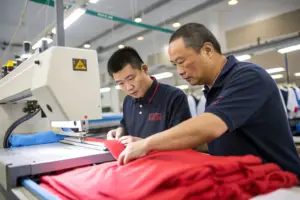
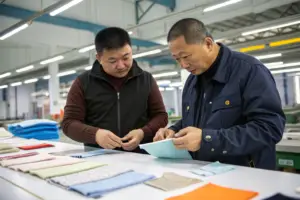
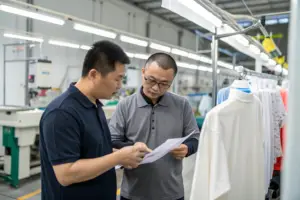
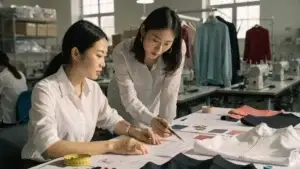
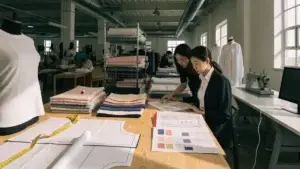
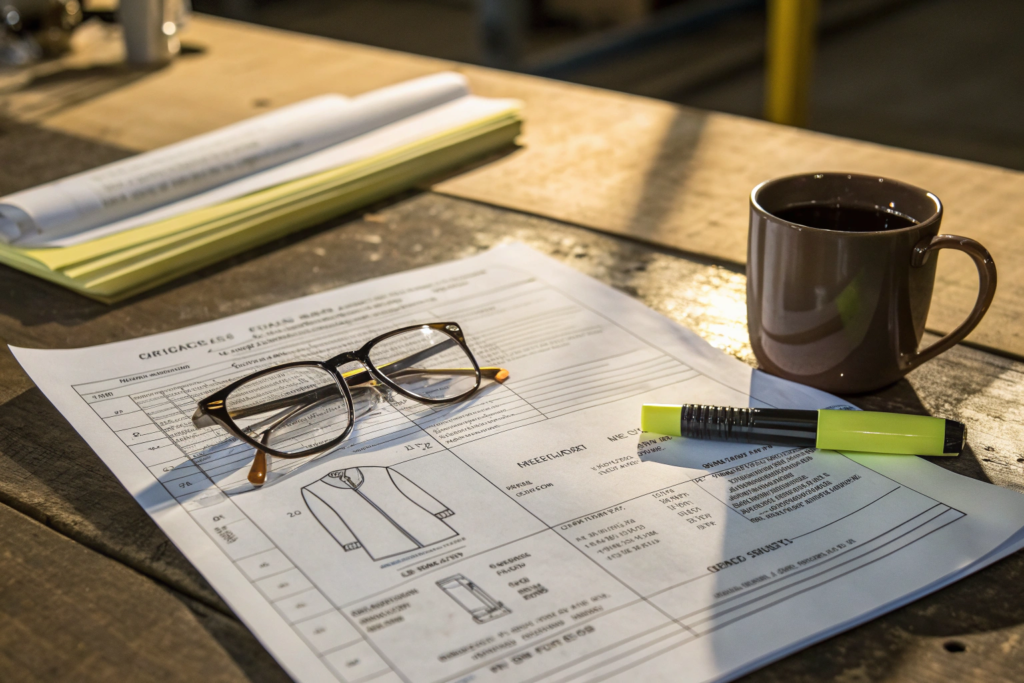
When your tech pack arrives, we do not just print it and hand it to a pattern maker. We schedule a tech pack review with our sales manager and sample room supervisor. We read every page. We look at every measurement. We check every material note. We are searching for anything that is unclear, missing, or potentially problematic.
For example, last spring a brand from Chicago sent us a tech pack for a beautiful lined jacket. The sketch was clear. The measurements were there. But as we reviewed, we noticed the bill of materials listed a zipper length that was 2 inches shorter than what the measurement spec suggested. The zipper would not reach the bottom of the jacket. We caught this before cutting. We called the client. It turned out to be a simple typo in the BOM. We fixed it in five minutes. If we had not reviewed the pack carefully, the sample would have been made with the wrong zipper. That would have meant a failed sample, a week of lost time, and a very frustrated client. This kind of proactive checking is what you should expect from any professional apparel manufacturer. You can learn more about the importance of pre-production processes from organizations like AAFA.
Why should your manufacturer ask you questions before starting?
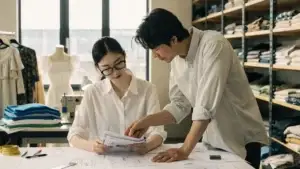
A manufacturer who asks no questions is a manufacturer who is guessing. Guessing leads to mistakes. A good partner asks questions. Lots of them. What do you mean by "vintage wash"? Can you send a reference image? You specified a certain thread count. Is that for the entire garment or just the collar? These questions are not a hassle. They are a sign of care.
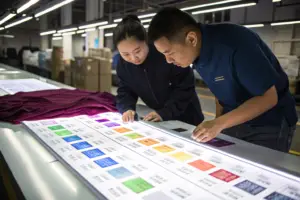
I remember a client from Seattle who sent us a tech pack for a line of organic cotton t-shirts. It looked complete. But our sales manager noticed the client had specified a "garment dye" process without listing the specific dye color codes. She emailed the client and asked for Pantone codes. The client replied, "Oh, I forgot to include those! I want a dusty rose and a sage green." We sourced the correct dyes, and the samples came out perfectly. If we had just used a generic "pink" and "green," the colors would have been wrong. That client is now one of our longest-standing partners because he knows we pay attention to the details he might forget.
How can a manufacturer improve communication during sampling?
The waiting period during sampling is the hardest part for most buyers. You send your money and your files, and then you hear nothing for weeks. This silence is stressful. A manufacturer who communicates well turns that stress into confidence.
What does good progress reporting look like?
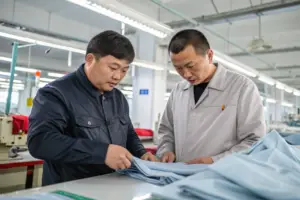
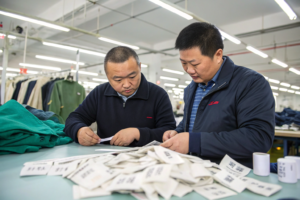
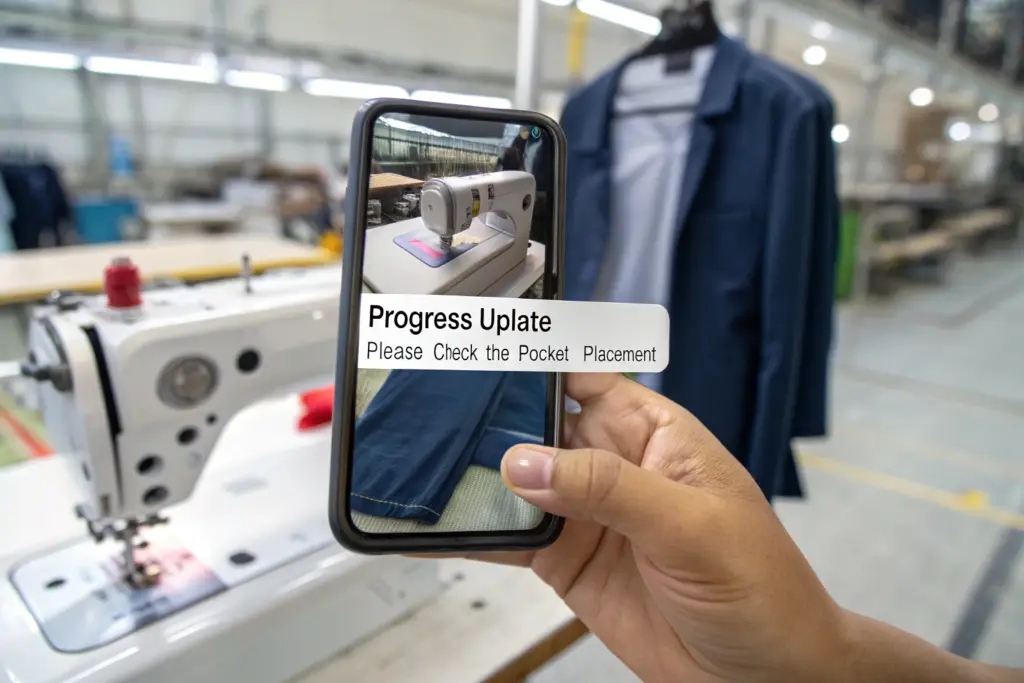
Good progress reporting means you never have to wonder what is happening. Your dedicated sales manager should send you updates at key milestones. Pattern making is complete. Here is a photo of the pattern pieces. Fabric has arrived. Here is a photo of the fabric roll next to a color standard. Cutting is done. Here are the cut pieces. Sewing has started. Here is a photo of the half-finished garment on the machine.
These updates take two minutes to send, but they build enormous trust. A few years ago, we were making a complex sample for a client in New York. It was a dress with a very unusual draped neckline. During sewing, our sample maker noticed the fabric was pulling in a way we did not expect. We took a photo and sent it to the client immediately. We said, "The drape is not falling as flat as your sketch. Should we continue, or do you want to adjust?" The client replied within the hour with a small pattern adjustment. We fixed it right then. The final sample was perfect. Without that photo update, we would have finished the sample, shipped it, and the client would have rejected it. That is the power of real-time communication. Using tools like WhatsApp or WeChat for quick photo sharing can make this process seamless.
How should a factory handle problems during sample making?
Problems happen. Fabric arrives with a flaw. A trim is out of stock. A stitch type does not work with the chosen material. These are realities of manufacturing. The difference between a good factory and a bad one is how they handle these problems.
A bad factory hides the problem. They use flawed fabric anyway. They substitute a trim without asking. They hope you will not notice. You will notice. A good factory stops work immediately and contacts you. We explain the problem clearly. We offer solutions. For example, last winter we were making a sample for a client in Boston. The zipper he specified was on backorder for six weeks. We called him and said, "We have two alternatives. One is a YKK zipper that is almost identical but has a slightly different pull. The other is a different brand that matches your spec exactly and can ship in three days. Which do you prefer?" He chose the alternative brand. The sample was delayed by only three days instead of six weeks. This honesty and problem-solving is what builds long-term partnerships. At Shanghai Fumao, we believe transparency is the only way to work.
How can a manufacturer help you perfect the fit?
Fit is subjective. What looks perfect to you might look boxy to me. A good manufacturer knows this and does not just follow your measurements blindly. We use our experience to guide you toward a better fit, even if it means pushing back on your requests.
Why should a manufacturer offer fit recommendations?
Your measurement spec is your goal. But we have made thousands of garments. We know how different fabrics behave. We know how patterns need to be adjusted for certain body types. When we see a potential fit issue in your spec, we should tell you.
I remember a client from Los Angeles who sent us a spec for a women's blouse. The shoulder slope was very straight. In our experience, that measurement would cause the fabric to bunch at the neck on most women. Our pattern maker called the client and said, "We think you might want to add a half-inch of slope to the shoulder. It will hang much cleaner." The client was skeptical but agreed to try it both ways. We made two samples: one with his original spec and one with our recommendation. When he compared them, ours fit dramatically better. He changed his spec for the entire production run. That blouse became one of his top sellers. That is the value of working with an experienced manufacturer. We are not just order takers. We are fit experts. You can research basic fit principles on sites like Fit for Fashion.
How many fit samples are reasonable?
A common question I hear is, "How many samples will this take?" The answer depends on the garment and the clarity of your instructions. But a good manufacturer should aim to get it right in two to three rounds.
The first sample is the fit sample. It checks the overall silhouette and basic measurements. You try it on, take photos, and send comments. The second sample should incorporate those comments and be very close to final. For simple styles, this second sample is often the final pre-production sample. For complex styles, you might need a third round to fine-tune details. If a factory tells you that four or five rounds are normal for a basic t-shirt, something is wrong with their process. Either they are not listening, or their pattern makers are not skilled. At Shanghai Fumao, we track our first-time fit rate. We are proud that over 70% of our simple styles are approved in two rounds or less. That saves you time and money.
How can a manufacturer streamline the approval and revision process?
The sample is done. It arrives at your office. Now the clock is ticking again. You need to review it, decide on changes, and send feedback. This part of the process can drag on for weeks if not managed well. A good manufacturer helps you move quickly.
What format should sample feedback take?
Clear feedback leads to fast corrections. Vague feedback leads to more rounds. A good manufacturer will guide you on how to give feedback. We should ask you to send comments in a specific format. For example, we might ask you to take photos of the sample on a model, circle areas that need change, and write the correction directly on the photo.
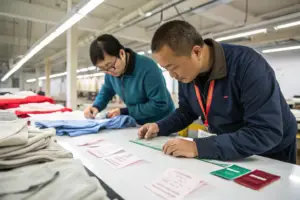
We might provide you with a sample comment sheet that lists each measurement point and asks for your approval or requested change. This structure ensures nothing is missed. A few months ago, a client from Miami sent us feedback that said, "The sleeves feel weird." That was it. We had no idea what "weird" meant. Too long? Too tight? Too full? We had to email back and ask for clarification. That cost two days. If he had said, "The sleeve length is 1 inch too long, and the bicep circumference needs 2 more inches of ease," we would have fixed it immediately. Using a standardized form, like those discussed on Tech Pack Academy, can prevent this confusion.
How quickly should revisions be completed?
Once we receive your clear feedback, the revision work should begin immediately. A good manufacturer will prioritize revisions from existing clients. We know you are waiting. We know you have deadlines.
Typically, a revision sample should take about half the time of the original sample. If the first sample took 20 days, a revision should take 7 to 10 days. This is because the pattern is already made. We are just adjusting it. The materials are already sourced. We are just cutting new pieces from the same fabric. A few years ago, a client in Chicago needed a revision sample in five days for a last-minute buyer meeting. His feedback was clear, well-documented, and came with photos. We put his revision at the front of the line. We shipped it in four days. He made the meeting and got a huge order. Speed matters, and a manufacturer who understands that is a true partner.
Conclusion
Your sample development process should not be a source of stress. It should be a creative and exciting time. You are seeing your ideas come to life. The right manufacturer makes that happen. We review your tech pack carefully. We ask smart questions. We send you photos as we work. We give you honest fit advice. We help you give clear feedback. And we revise quickly. This is the process we have built at Shanghai Fumao over many years. It is designed to serve you, the brand owner, so you can focus on what you do best: designing and selling.
If your current sample process feels broken, let us fix it. If you are tired of waiting and wondering, let us show you a better way. Please contact our Business Director, Elaine, at strong>elaine@fumaoclothing.com</strong. She will walk you through our sample development process and answer any questions you have. Let's make your next sample your best sample.