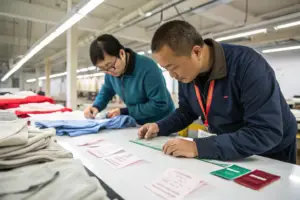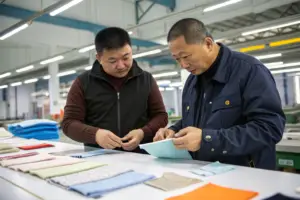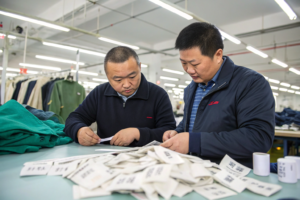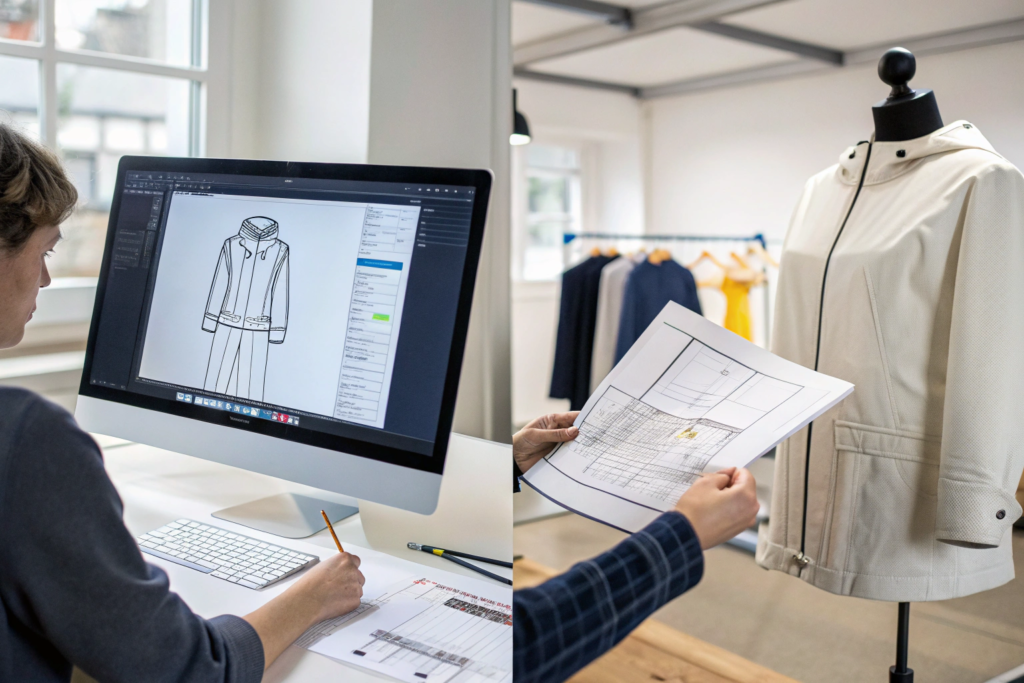
You have spent weeks perfecting your designs. You have created a detailed tech pack with measurements, materials, and sketches. You send it to a factory with high hopes. Then the sample arrives, and your heart sinks. The pocket is in the wrong place. The stitching is wrong. The color is off. It looks nothing like what you imagined. This is a nightmare scenario for any brand owner. You wonder if the factory even looked at your tech pack. You wonder if this process ever works.
The best way to execute a garment design from a tech pack is to treat the tech pack as a living document and to build a collaborative partnership with your factory from day one. It is not enough to just send a file and wait. You must review the tech pack with your factory contact, clarify ambiguous points, approve key materials before cutting, and establish a clear communication loop for feedback. When both sides work from the same understanding, the execution is almost always perfect.
I have been in this industry for over 15 years. I have seen tech packs that are works of art. I have also seen tech packs that are just a photo and a napkin sketch. The difference in the final product is massive. But even the best tech pack can fail if the execution is wrong. A few years ago, a brand from Chicago sent us a flawless tech pack for a line of technical cargo pants. Every measurement was there. Every stitch type was noted. But when we started, their sales manager called and said, "Wait, we changed the pocket fabric. Did we update the tech pack?" They had not. We caught it in time because we talked. That conversation saved us from making 6 wrong samples. Let me share with you the exact process we use to turn your digital vision into a physical product you will love.
How do I prepare my tech pack for factory handoff?
Before you hit send on that email, take one last look at your tech pack. The way you present your information can determine how fast and how accurately we can work. A messy or incomplete tech pack leads to questions, delays, and mistakes. A clean, organized tech pack leads to smooth execution.
What file format should I use for my technical sketches?
The most important part of your tech pack is the sketch. This is our visual guide. For the best results, you should send vector files like Adobe Illustrator (.ai) or Scalable Vector Graphics (.svg). These files can be scaled up or down without losing quality. We can zoom in on a tiny detail and see exactly how you want the stitching to look.
If you send a JPG or a PNG, the image can become pixelated and blurry when we enlarge it. This leads to guessing. Last year, a client from Texas sent us a JPG of a shirt with a very specific yoke seam. When we enlarged the image, the seam line was fuzzy. Our pattern maker thought it was a design line. It turned out to be a shadow in the original drawing. The first sample had an extra seam. We had to remake it. That was a 10-day delay that a simple vector file would have prevented. If you need to create vector sketches, you can learn the basics on Adobe's official tutorials or hire a freelancer who specializes in technical design.
How should I organize the pages of my tech pack?
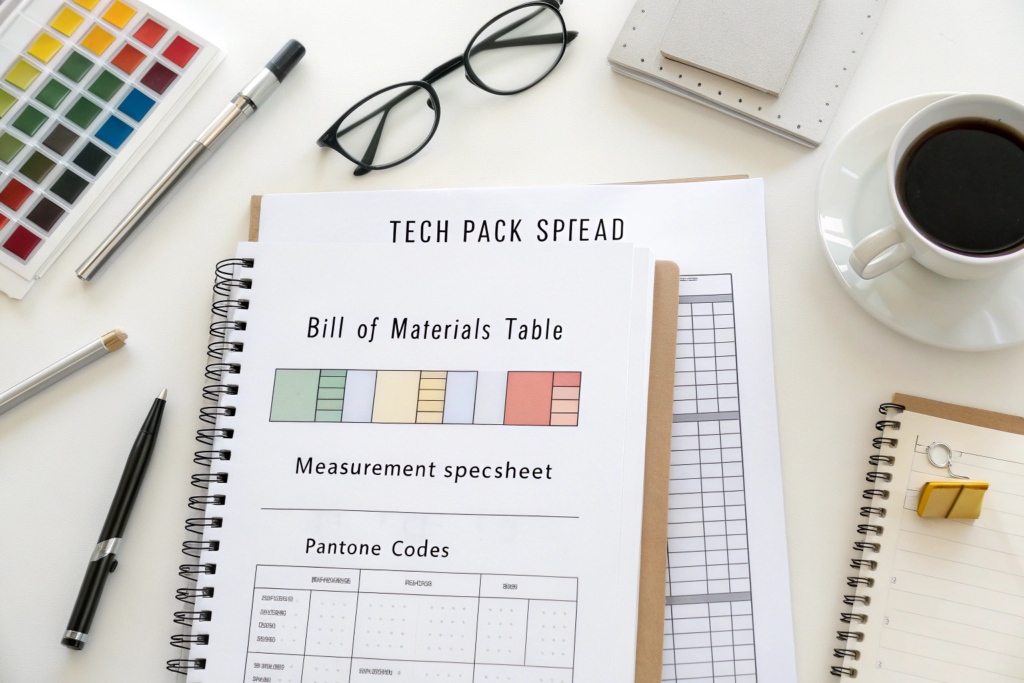
A tech pack is often many pages. Do not just send one long PDF. Organize it logically. Start with a cover page that shows the style name, number, and a front and back sketch. Then include the technical flat sketch page with all views. Next, add the bill of materials page. Finally, include the measurement spec sheet and any special construction notes.
Use clear headings and labels. For example, do not just write "buttons." Write "Front Button: 18L, Polyester, Matte Black, 4-hole." The more specific you are, the better. I remember a client in Seattle who organized her tech packs beautifully. Each page was labeled. Each measurement was in a table. Her samples almost always came out right on the first try. She saved months of development time over the years. At Shanghai Fumao, we appreciate this organization. It shows us you are a professional, and it motivates us to give you our best work. You can find templates for tech pack organization on sites like TechPack Designer.
What is the first step a factory takes with a new tech pack?
When your tech pack arrives at our factory, it does not just go straight to the sewing machine. There is a critical first step. We review it. We look for anything that is unclear or missing. This review is your best chance to catch potential problems before they become costly mistakes.
Why do we need a kickoff meeting or call?
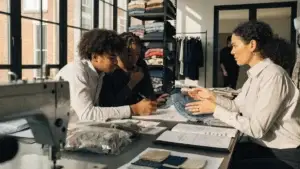
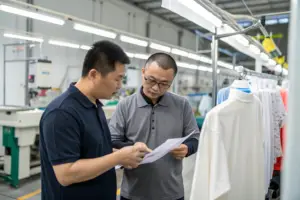
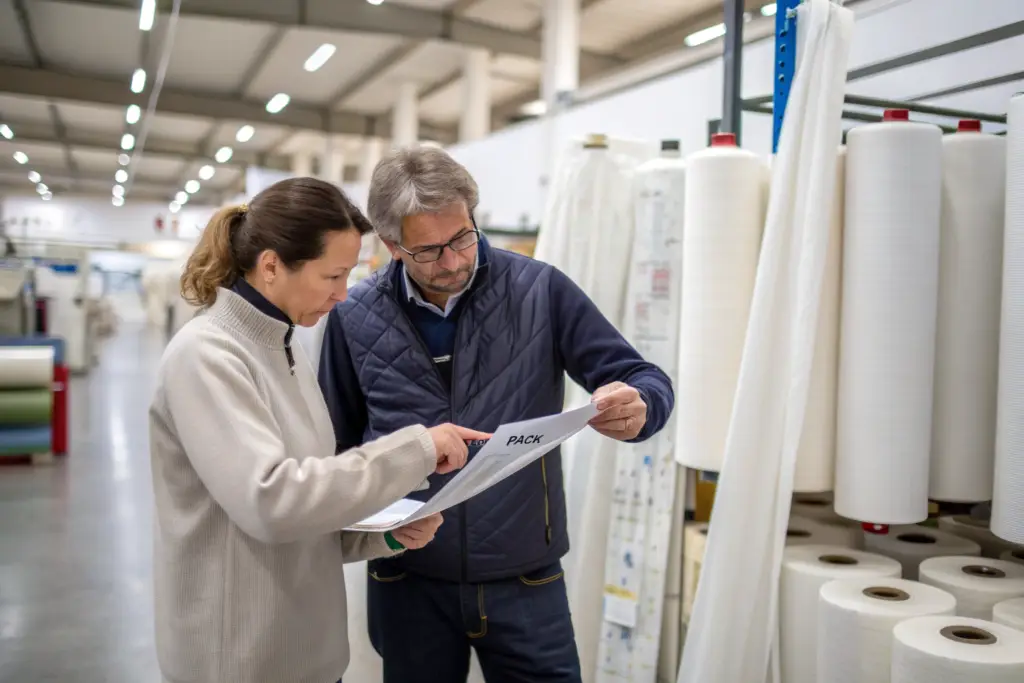
The best way to start is with a quick call. This is often called a kickoff meeting. It does not need to be long. Even 15 minutes can make a huge difference. On this call, your dedicated sales manager and the sample room supervisor will go through your tech pack page by page.
We will ask you questions. You said "light wash" on the denim. How light? Can you send a photo? You specified a certain type of zipper. Do you have a preferred brand? These questions are not meant to bother you. They are meant to ensure we understand your vision perfectly. A few months ago, we had a client from Miami who wanted a very specific "vintage" look for a line of t-shirts. His tech pack said "garment wash." On our call, we asked him what he meant. Did he want a softener wash? A enzyme wash? A stone wash? He explained he wanted a soft hand-feel with a slightly faded look. We chose a bio-enzyme wash. The samples came out perfect. If we had just guessed, he might have gotten a stiff, untreated t-shirt. This step is about building a shared language. Resources like Maker's Row emphasize this collaborative approach in their guides to manufacturing.
How do we verify materials and trims before cutting?
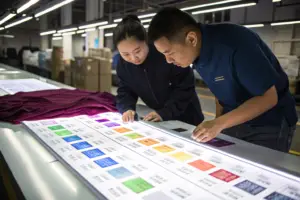
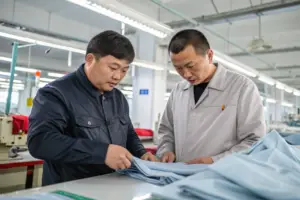
After the call, we move to material verification. If you specified a fabric, we need to see it or source a match. If you sent a physical fabric swatch, we will compare it to our available materials. If we are sourcing for you, we will send you trim cards or photos of the materials we find.
This is your chance to approve or reject. Never skip this step. I remember a client in Denver who approved a fabric swatch over email. It looked perfect on his screen. But when the sample arrived, the fabric was much shinier in person. He was disappointed. The lighting in his office and our camera had tricked us both. Now, we always recommend that clients request physical swatches for critical materials. It costs a little more and takes a few extra days, but it guarantees color and texture accuracy. For standard items like thread and elastic, we use trusted suppliers that meet global standards, which you can read about on sites like OEKO-TEX.
How does the factory interpret my measurements and grading?
Your measurement spec sheet is the law for your sample. But numbers on a page need to be translated into physical patterns. This is where the skill of our pattern maker comes into play. They take your data and turn it into the pieces that will be cut and sewn.
What is a pattern block and how is it used?
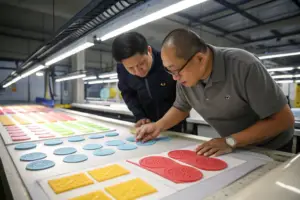
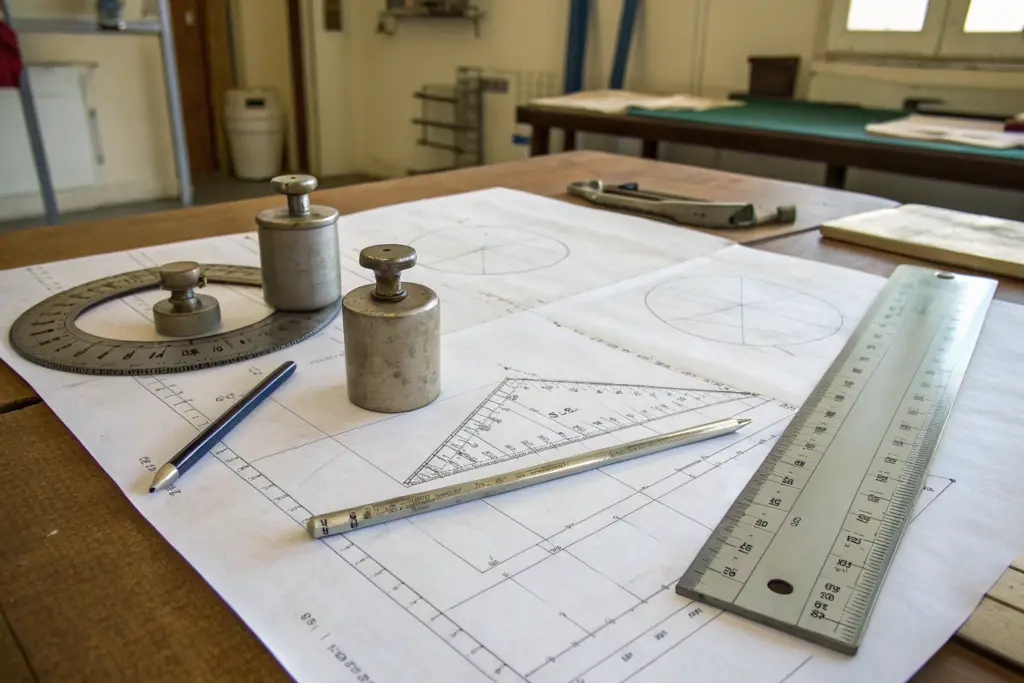
Every garment style starts with a pattern block or sloper. This is a base pattern for a specific fit, like a fitted bodice or a straight pant. Our pattern maker will take your measurements and compare them to our standard blocks. They will then modify the block to match your spec sheet.
For example, if your design is a fitted blouse, we might start with our standard fitted top block. Then we will adjust the neckline, sleeve length, and body length to match your numbers. This method is faster and more accurate than starting from scratch every time. If your design is totally unique, we will draft a new pattern from zero. This takes more time, but it ensures a perfect fit. A few years ago, a client from New York came to us with a completely new silhouette for a winter coat. It was unlike anything we had in our block library. Our pattern maker spent two full days drafting and testing the pattern before cutting any fabric. That care resulted in a coat that became the brand's bestseller that season.
How do we ensure your grading rules are followed correctly?
Grading is the process of creating the pattern pieces for all your sizes, from XS to XL. Your tech pack should include a grade rule table. This table tells us how much to increase or decrease each measurement point as the size changes. For example, the chest might increase by 1 inch per size, while the sleeve length might increase by 1/4 inch.
If your tech pack does not include this information, we have to use standard industry grade rules. But your brand might have a specific fit philosophy. Maybe you want a more generous fit in the hips for your plus sizes. If you do not tell us, we cannot know. I worked with an activewear brand from Los Angeles that wanted their leggings to fit tighter in the smaller sizes and looser in the larger sizes. It was an unusual grade. They included a detailed grade rule table in their tech pack. The samples fit perfectly across all sizes. This attention to detail is what separates successful brands from the rest. You can study standard grading practices through resources like Fit and Grade.
How do we handle construction and stitching details?
The way a garment is put together is just as important as the way it is cut. Stitching types, seam finishes, and construction order all affect the final look and durability. Your tech pack should guide us, but sometimes we need to make recommendations.
What stitch types and seam finishes should I specify?
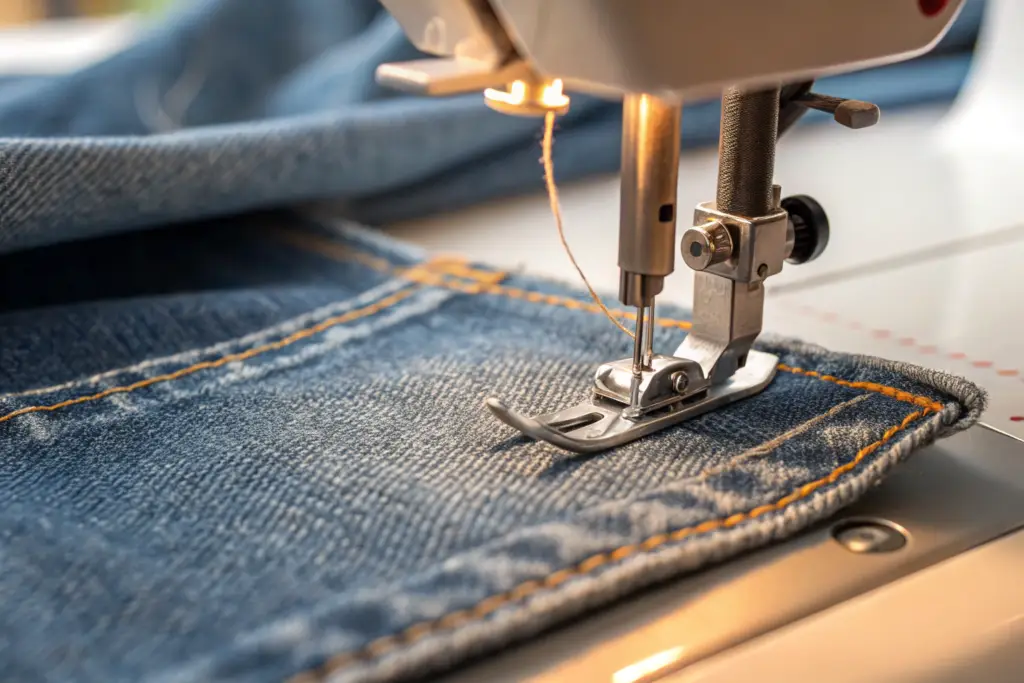
Your tech pack should specify the stitch type for different parts of the garment. For example, a t-shirt hem might use a coverstitch. A jeans side seam might use a chainstitch. A woven shirt might use a lockstitch. If you do not specify, we will use standard construction methods for that type of garment.
But if you have a specific preference, tell us. A client from Boston who made high-end work shirts always specified a "felled seam" on the shoulders and side seams. This is a stronger, cleaner finish that looks professional. His tech pack had a note: "All main seams must be felled." We followed that instruction exactly. The shirts were durable and beautiful. If you are unsure about stitch types, the Federal Trade Commission's guides on textile labeling can offer some context, but for technical details, consult with your factory during the kickoff call.
How do we handle special construction requests?
Sometimes your design has unique features. Maybe it has a complex pocket configuration. Maybe it has a hidden zipper placket. Maybe it has a combination of knit and woven fabrics. These special requests require extra attention.
When we see a special construction request, we always flag it during the kickoff call. We want to make sure we understand exactly how you want it done. Sometimes we might suggest a small change that makes the construction easier without changing the look. For example, a client from Seattle wanted a very specific type of binding on the armholes of a vest. The way he drew it would have required hand-sewing, which would have made the sample very expensive. We suggested a machine-sewn method that looked almost identical. He agreed, and we saved him hundreds of dollars in sample costs. At Shanghai Fumao, our goal is to bring your vision to life in the most efficient way possible. We want your product to be beautiful and profitable.
Conclusion
Executing a garment design from a tech pack is a partnership. You bring the vision and the details. We bring the skill and the experience. The best results come from clear communication at every step. Review your tech pack before you send it. Hop on a call to discuss it. Approve materials before we cut. Talk through construction details. When we work together like this, the first sample is often the final sample. That saves time, saves money, and gets your product to market faster.
We have done this hundreds of times. We have helped startups launch their first collection. We have helped established brands expand into new categories. We know the process, and we know how to avoid the common pitfalls. If you have a tech pack ready, or if you need help creating one, let us talk. Please contact our Business Director, Elaine, at strong>elaine@fumaoclothing.com</strong. She will review your project and explain exactly how we will execute your design, step by step.