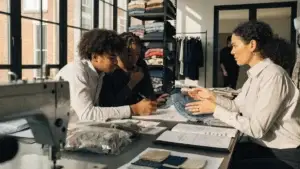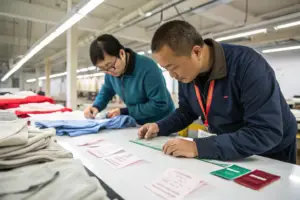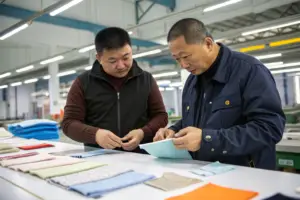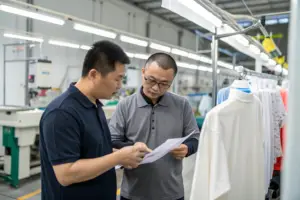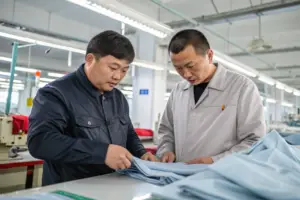
I have learned over thirty years that a clear process is the foundation of trust. When you send us a design idea, you should know exactly what happens next. You should know who is working on it, how long it will take, and what you need to do at each step. Without this clarity, anxiety builds. You wonder if your project is lost. You wonder if anyone is paying attention. You wonder when you will see results.
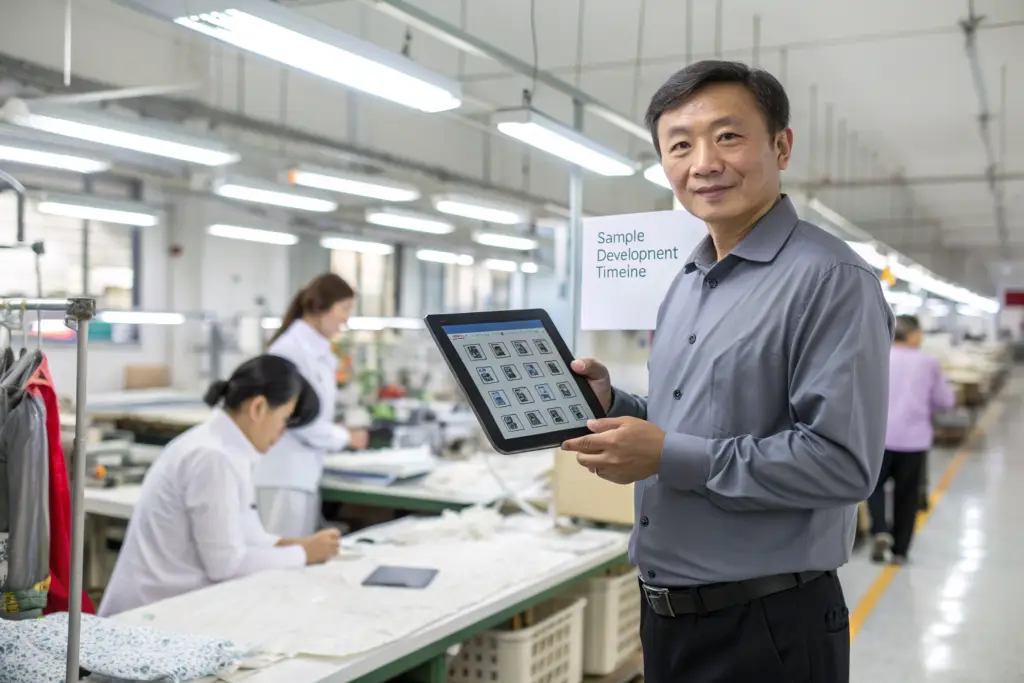
At Shanghai Fumao, our sample development process is designed to be transparent, efficient, and collaborative. We break it down into clear stages, from your initial inquiry to your final approval. We communicate at every step. We ask questions. We provide options. Our goal is to make you feel like you are right here in the room with us, guiding the process. Because in reality, you are.
I built this process based on decades of feedback from clients like you. A few years ago, a brand owner from Boston told me, "The best part of working with you is that I always know where my project stands. I never have to wonder." That comment meant more to me than any compliment about our sewing quality. A clear process builds confidence. And confidence is the foundation of a lasting partnership.
Step 1: How Do We Start With Your Initial Inquiry?
Every project begins with a conversation. You reach out to us, usually by email, and tell us about your idea. This first step is simple but critical. It sets the direction for everything that follows. We want to understand your vision as clearly as possible from the very beginning.
Do not worry if your idea is not fully formed. Many of our best projects start with rough sketches and enthusiastic descriptions. The important thing is to start the conversation. We will ask questions to help clarify your vision and gather the information we need to move forward.

What information should you send in your first email?
To help us understand your project quickly, please include as much of the following as you can:
- A description of the garment: what is it, who is it for, what is its purpose?
- Images or sketches: any visual representation of your idea, even rough drawings or photos of similar styles.
- Fabric ideas: if you have a specific fabric in mind, tell us. If not, describe the feeling you want (soft, structured, flowing, etc.).
- Quantities: an estimate of how many pieces you are thinking of ordering.
- Timeline: when do you need the samples? When do you need the bulk goods?
A client in Seattle once sent us an email with just a photo from Pinterest and the words, "I want this, but in a heavier fabric and with longer sleeves." That was enough. We responded with questions, he answered, and we started the sample process within a week. Do not overthink the first email. Just start the conversation.
How quickly will we respond to your inquiry?
We pride ourselves on fast, professional communication. You will typically receive an initial response from our team within 24 hours, often much sooner. This first response will acknowledge your inquiry and may ask some clarifying questions.
Within a few days, one of our account managers will be assigned to your project. This person will be your single point of contact throughout the entire process. They will introduce themselves and begin gathering the detailed information needed for sampling. A client from Chicago once told me he received a response from us within four hours on a Sunday. He was shocked. He said, "I knew right then you were different." We are here to help, and we do not keep you waiting.
Step 2: How Do We Review And Interpret Your Design?
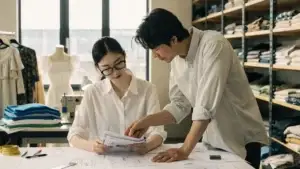
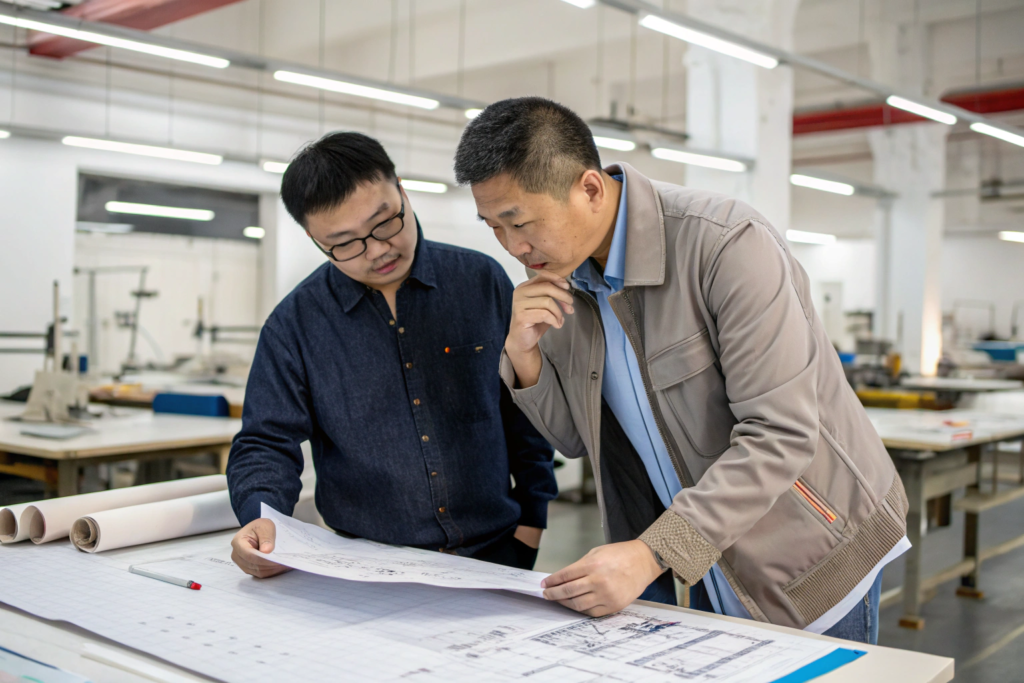
Once we have your initial information, our team gets to work. Your project is assigned to a dedicated account manager and a pattern maker. Together, they review everything you have sent. They study your sketches. They read your notes. They try to understand not just what you want, but why you want it.
This review stage is where we identify potential challenges. We look at your design and think about how it will be constructed. We consider the fabric you have chosen. We think about the production process. If we see anything that might be problematic, we make notes to discuss with you.
What questions will we ask you during this stage?
Our goal is to eliminate guesswork. We will likely ask you several questions to clarify your design:
- Can you tell us more about the fit? Is it slim, regular, or relaxed?
- Are there any specific measurements we should use?
- Can you describe the desired stitch details? For example, do you want topstitching on the seams?
- What type of collar, cuff, and pocket do you envision?
- Do you have any preferences for buttons, zippers, or other trims?
A client in Denver sent us a sketch of a jacket but had not specified the pocket style. We asked him for clarification. He sent a photo of a pocket from a vintage jacket he loved. We used that as our reference. Asking questions upfront saves time and prevents misunderstandings later.
How do we handle incomplete or unclear designs?
This happens all the time. Most of our clients are creative, not technical. If your design is incomplete, we do not panic. We use our experience to fill in the gaps. We make reasonable assumptions and then confirm them with you.
For example, if you send a sketch of a dress but do not specify the seam finishes, we will assume a standard clean finish. We will then ask you to confirm if that is acceptable. If you send a design for a shirt but no measurements, we will ask for your target size or suggest standard industry measurements. We guide you through the process. You do not need to be a technical expert. You just need to collaborate with us.
Step 3: How Do We Create Your Initial Tech Pack And Pattern?
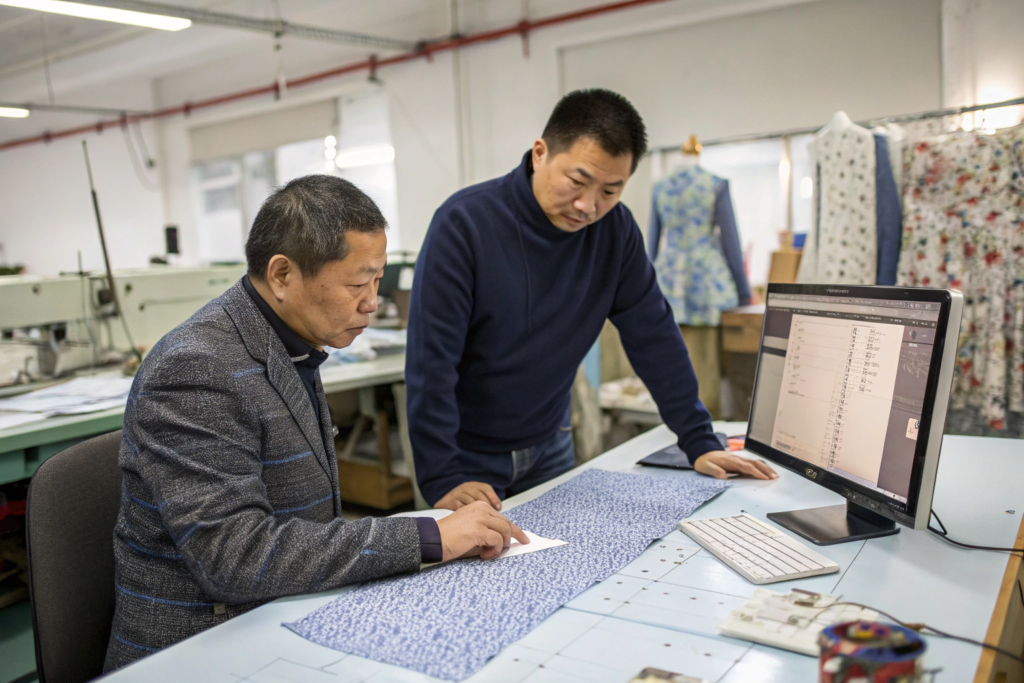
With a clear understanding of your design, our technical team creates the blueprint. This blueprint is called a tech pack. It includes detailed flat drawings, a measurement spec sheet, and construction notes. From this tech pack, our pattern makers create the first paper pattern.
This stage translates your creative vision into a language our factory can understand. The pattern is the template from which your garment will be cut and sewn. It must be precise. Even a 2-millimeter error in a pattern can throw off the entire fit of a garment.
What is included in the tech pack we create for you?
If you do not have your own tech pack, we create one for you. Our tech pack typically includes:
- Technical flat drawings showing the front and back of the garment with all design details.
- A measurement spec sheet with all key points of measure for your sample size.
- Construction details describing how seams should be finished, how pockets should be attached, etc.
- A bill of materials listing all the components we plan to use.
We share this tech pack with you for review before we cut any fabric. This is your chance to catch any misunderstandings. A client in New York once noticed that our flat drawing showed a different pocket placement than she intended. We corrected it immediately. Reviewing the tech pack saves time and ensures we are aligned before we invest in making the sample.
How do we create the first pattern?
Our pattern makers use specialized CAD (Computer-Aided Design) software to create the first pattern. They input all the measurements from the spec sheet. The software creates a digital pattern that can be printed on paper at full size.
The pattern maker then checks the digital pattern for any potential issues. They look at how the pieces will fit together. They ensure the grain lines are correct. They add seam allowances and notches. Once the digital pattern is approved, we print it on large sheets of paper. This paper pattern is then used to cut the fabric for your first sample. The precision of CAD ensures that your pattern is accurate and repeatable for future reorders.
Step 4: How Do We Source Materials For Your Sample?
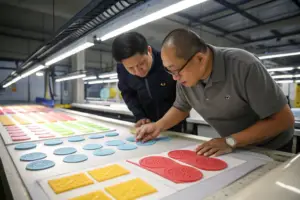
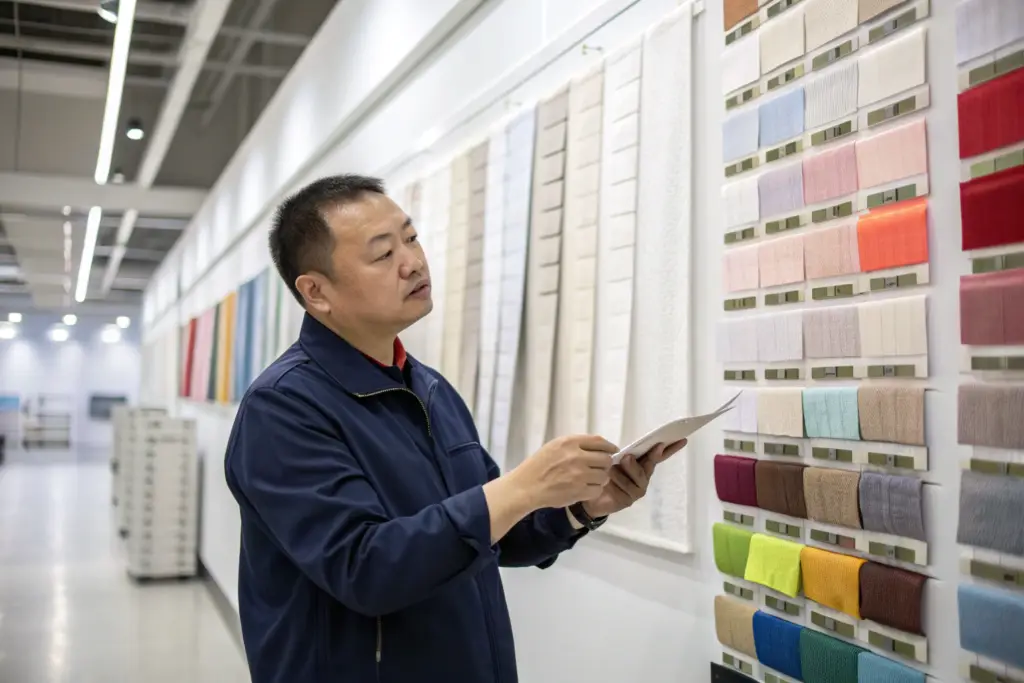
Before we can sew your sample, we need materials. We source the fabric and trims specified in your tech pack. If you have provided specific materials, we purchase them. If you have only described the desired feeling, we select options from our extensive network of suppliers.
Our sourcing team has deep relationships with mills and trim suppliers across China and the region. We can find almost anything. We also keep a large inventory of common fabrics in stock, which can speed up the sampling process significantly.
What if the exact fabric you want is not available?
This happens occasionally. A specific mill might be out of stock. A particular fabric might have been discontinued. When this happens, we do not give up. We work to find the best alternative.
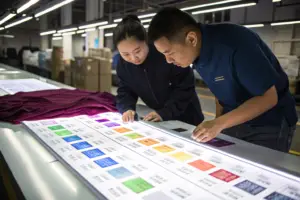
We will source comparable fabrics from other suppliers. We will send you swatches of the options. We will explain the differences in weight, hand-feel, and composition. You then choose the alternative that best meets your needs. A client in San Francisco wanted a specific deadstock fabric that was no longer available. We found three alternatives, sent swatches, and he chose one that was actually better for his garment. Flexibility and creativity in sourcing are part of our service.
Trims are just as important as fabric. We source buttons, zippers, labels, hang tags, and thread based on your specifications. We have a wide network of trim suppliers offering everything from basic plastic buttons to custom metal logo buttons.
If you need custom trims with your logo, we manage that process too. We work with suppliers to create the molds or artwork. We order the minimum quantities. We inspect the trims upon arrival to ensure they meet your quality standards. A client in Boston wanted custom engraved buttons for his premium shirt line. We sourced them, inspected them, and attached them to his samples. The buttons were a hit with his customers. Every detail matters.
Step 5: How Do We Sew Your First Proto Sample?
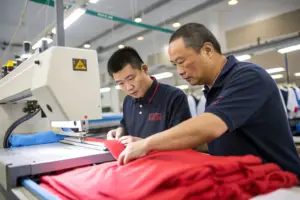
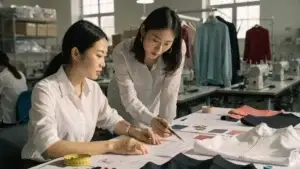
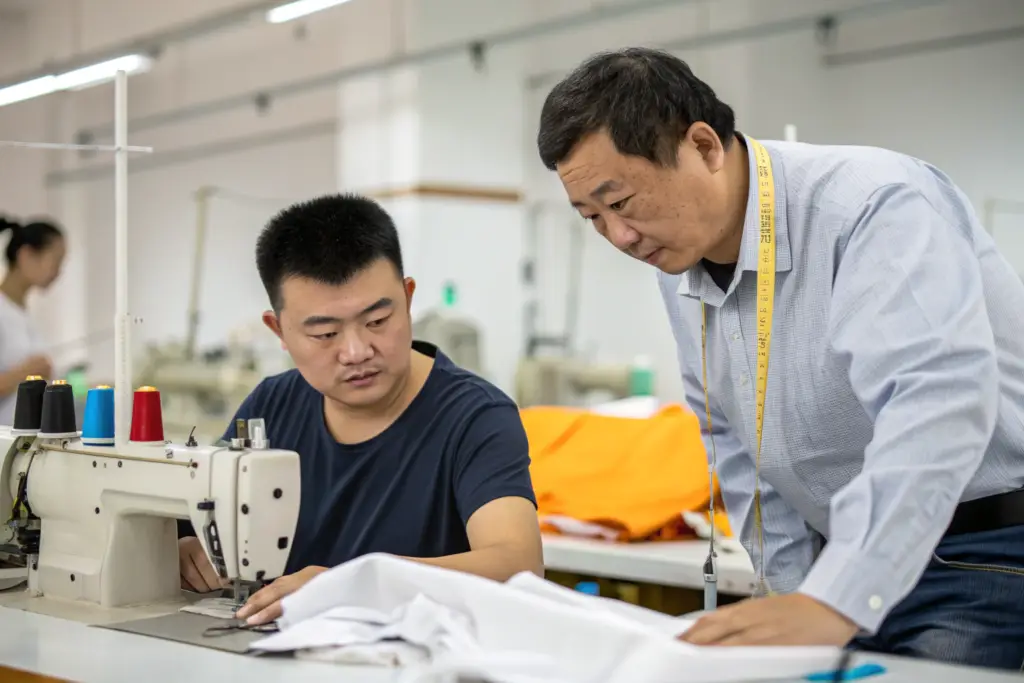
With the pattern cut and the materials ready, our sample sewers begin their work. These are our most experienced operators. They specialize in bringing new designs to life. They understand how fabric behaves and how construction details should look.
Sewing a sample is different from sewing bulk production. The sewer follows the pattern and the construction notes, but they also use their judgment. They may notice things that the pattern maker missed. They may suggest a better way to sew a particular seam. Their expertise is invaluable at this stage.
How long does it take to sew a proto sample?
The time varies depending on the complexity of the garment. A simple t-shirt might be sewn in a few hours. A complex jacket with many pieces and details might take a full day or more.
However, the total time from pattern approval to a finished sample is typically 5 to 10 business days. This includes cutting the fabric, sewing the sample, and doing an initial quality check. For rush projects, we can often expedite this to 3 to 5 days. A client in Los Angeles once needed a sample in one week for a major retailer presentation. We prioritized his project and delivered in six days. He got the order. Speed is possible when we work together closely.
What happens if the first sample has issues?
The first sample almost always has some issues. That is normal. That is why we make samples. The sample sewer and the pattern maker will review the finished garment together. They will note any problems: a seam that puckers, a collar that does not roll correctly, a fit issue.
We document these issues. We then go back to the pattern and make adjustments. This might mean changing a seam allowance, adjusting a curve, or re-cutting a piece. We then make a second sample that incorporates these fixes. This iterative process continues until the sample is perfect. A client in Chicago once needed four samples of a complex tailored blazer. Each round fixed something. The final sample was flawless. He now uses that style as his flagship product.
Step 6: How Do We Review The Sample With You?
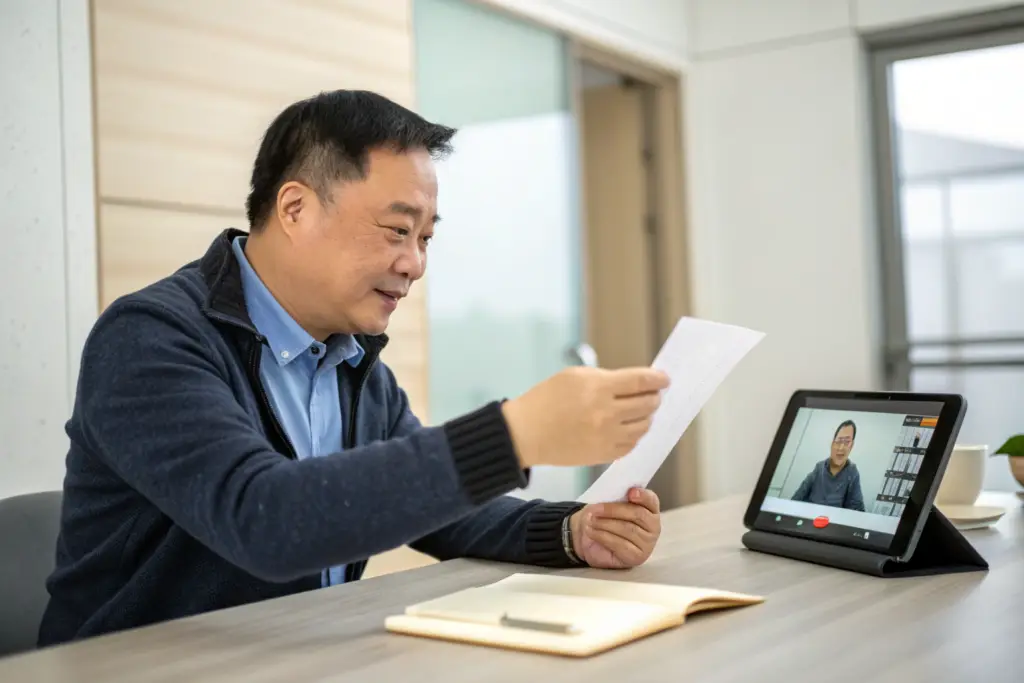
Once the sample is finished and we have done our internal review, we send it to you. Along with the physical sample, we provide detailed documentation. This includes photos, measurement reports, and our own observations.
Now it is your turn. You receive the sample. You try it on. You examine it closely. You compare it to your original vision. This is the most important feedback loop in the entire process.
What feedback should you provide after receiving the sample?
We need your honest, detailed feedback. Please tell us:
- Does the fit feel right? Is it too tight, too loose, or perfect?
- Are the measurements correct? Please measure the sample against your spec sheet.
- Does the fabric feel as expected?
- Are the construction details correct? Is the pocket in the right place? Is the collar the right shape?
- What changes do you want for the next sample?
The more specific you are, the faster we can make the adjustments. "The fit is good, but the sleeve is 1cm too long" is perfect feedback. "The sleeve feels a bit off" is harder to act on. We will work with you to translate your feelings into precise instructions.
How many sample rounds should you expect?
There is no fixed number. Simple designs might be perfect after one or two rounds. Complex designs might need three or four. The key is to keep going until you are 100% satisfied.
Do not settle. Do not approve a sample just because you are tired of waiting. If something is not right, tell us. We will fix it. A client in New York once rejected five samples of a beaded evening gown. Each round got closer. The sixth sample was perfect. The gowns sold for $800 each and received rave reviews. Her patience created a masterpiece. We are with you for as many rounds as it takes.
Step 7: How Do We Finalize And Approve Your Sample?
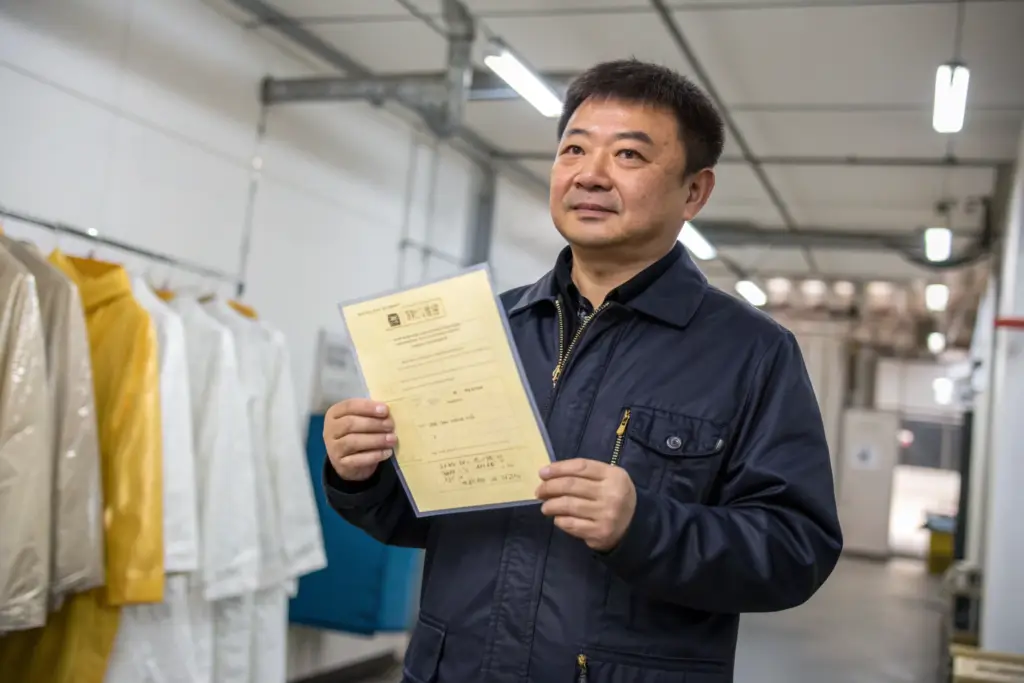
When you finally say, "This is it. This is perfect," we celebrate. But then we get to work. The approved sample becomes your Golden Sample. It is tagged, dated, and logged into our system. It is placed in a special, protected area in the quality control department.
Your approval is the official green light. It means we have a shared understanding of exactly what your final product should look like. We now have a physical standard that will guide every step of bulk production.
What documentation do we create upon final approval?
When you approve the sample, we create a final approval record. This includes:
- A signed or emailed approval from you.
- A final tech pack with all the confirmed specifications.
- The Golden Sample itself, clearly labeled with your style name, date, and any special notes.
- A record of any final changes made between the last sample and the approved version.
This documentation protects both of us. It ensures that there is no confusion about what was approved. If a question arises during production, we refer to the Golden Sample and the final tech pack. A client in Denver once had a new staff member question a detail during production. We pulled out the Golden Sample and the approval email. The issue was resolved in minutes. Good documentation prevents arguments.
How do we use the approved sample for production planning?
The approved sample is not just a reference. It is a tool. We use it to:
- Create the final production patterns.
- Order the exact fabric and trims in bulk quantities.
- Train the production line operators on your specific requirements.
- Set the quality control standards for inspection.
Every person involved in making your clothes will see the Golden Sample or a high-quality photo of it. They will know exactly what they are aiming for. This alignment is the key to consistent, high-quality bulk production. Your approved sample is the bridge between a great idea and a great product.
Conclusion
Our clothing sample development process at Shanghai Fumao is designed to be thorough, transparent, and collaborative. We start with your initial idea. We review it carefully. We create a technical blueprint. We source the right materials. We sew with skill and care. We review with you. We refine until perfect. And finally, we approve a Golden Sample that will guide your entire production run.
This process takes time and attention. But it is the surest path to a successful product. It prevents costly mistakes. It ensures your fit is perfect. It guarantees that your vision becomes a reality. We have refined this process over thirty years, and we are confident it works.
If you are ready to start your own sample development journey, I invite you to reach out. Let us put our process to work for you. Contact our Business Director, Elaine, at elaine@fumaoclothing.com. Tell us about your idea. We will guide you through every step, from the first sketch to the final Golden Sample.