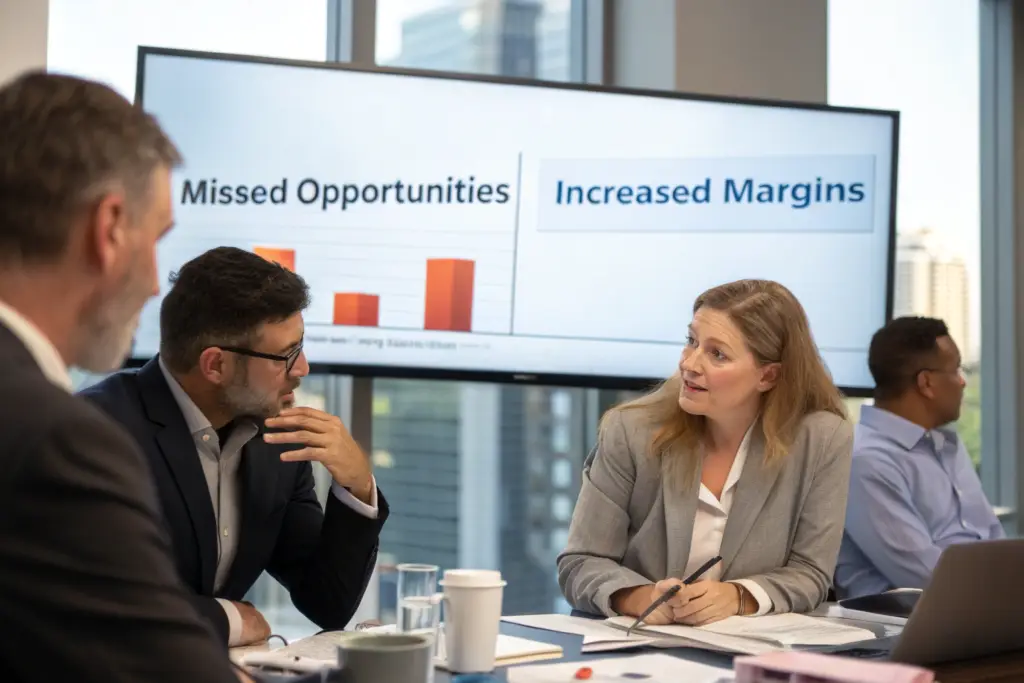
I meet brand owners every month who are stuck. They are frustrated with their current suppliers. They are tired of late shipments, inconsistent quality, and products that look like everyone else's. But they hesitate to make a change. They think it is too hard. They think it will disrupt their business. They tell themselves they will look for a new partner "next year." Meanwhile, their competitors are moving ahead. They are launching unique collections. They are building loyal followings. They are commanding higher prices.
The cost of staying with a mediocre supplier is not just the visible problems you deal with today. It is the invisible cost of missed opportunities, stagnant margins, and a brand that fails to stand out. Switching to a true Full-Package partner is not a risk. It is the most direct path to unlocking your brand's full potential. And there has never been a better time to make that move than right now.
I have seen this hesitation countless times. A few years ago, a brand owner from Chicago came to me. He had been with the same wholesale supplier for eight years. His business was flat. His margins were shrinking. He was afraid to change because that supplier was "reliable enough." We worked together on a small FPP test order for a new jacket design. It sold out in weeks. He now does 90% of his volume with us. He told me his only regret was waiting so long. Do not let that be your story.
What Are The Hidden Costs Of Staying With Your Current Supplier?
When you have been with a supplier for a long time, you stop noticing the small frustrations. You accept late shipments as normal. You budget for a certain percentage of defects. You spend hours every week chasing answers. These costs become invisible because they are baked into your routine. But they are real, and they are draining your profitability.
A true accounting of your current supplier would include not just the invoice price, but the value of your time spent fixing their mistakes, the lost sales from delayed inventory, the discounts you have to offer on flawed goods, and the customers you never get because your products look generic. When you add all of that up, the "cheap" supplier is often the most expensive choice.

How much is poor quality really costing you?
Let me give you a real example. A client in Denver came to us after years with a low-cost supplier in another country. He thought he was saving money. His defect rate was running around 8%. He had accepted this as normal. But when we analyzed it, the true cost was staggering.
For every 1,000 pieces he ordered, 80 were defective. He spent time inspecting them, photographing them, and arguing with the supplier for credits. He sold the defective ones at 50% off, losing money on each. His brand reputation suffered because those discounted items ended up in the market looking cheap. His total "cost of poor quality" was adding nearly 15% to his landed cost. When we started producing for him with a defect rate under 2%, his margins improved immediately. The higher unit price from us was more than offset by the elimination of all the hidden costs he had been ignoring for years.
What is the value of your time spent managing supplier problems?
Your time is your most valuable asset. You should be spending it on growing your business, finding new customers, and designing great products. Instead, you are probably spending hours every week on emails about late shipments, quality disputes, and shipping document errors.
A client in Los Angeles tracked his time for one month. He was spending over 15 hours a week on supplier management. That is almost two full working days. He calculated the value of that time based on what he could earn finding new clients. It was over $3,000 a week in lost opportunity cost. When he switched to our FPP service, his weekly supplier management time dropped to about two hours. We handle the problems so he does not have to. That freed up 13 hours a week for him to focus on growth. What could you do with an extra 13 hours every week?
How Is The Market Demanding More Unique And Higher Quality Products?
The American consumer has changed. They are bombarded with choices every day. They have become experts at spotting quality. They can feel the difference between a cheap garment and a well-made one. They are also bored. They see the same fast-fashion styles everywhere. They are actively looking for brands that offer something different, something authentic, something with a point of view.
This shift in consumer behavior has huge implications for you. If you are still selling the same basic styles as everyone else, you are competing on price alone. That is a race to the bottom. The brands that are winning today are the ones with distinct identities. They offer unique designs, better fabrics, and consistent quality. They are built on products that cannot be found anywhere else.

Why are consumers losing interest in generic apparel?
The rise of social media has made everyone a critic. Consumers share their finds and their disappointments instantly. A generic t-shirt from a no-name brand has no story. It does not create an emotional connection. Consumers today want to feel like their clothing says something about who they are. They want uniqueness.
I see this in the feedback our clients get. One client in San Francisco who switched to our FPP service for a line of uniquely dyed hoodies saw his social media engagement explode. Customers posted photos because the colors were unlike anything else on the market. They felt special owning something rare. That emotional connection is impossible to create with a generic wholesale product. Your customers are hungry for something different. Are you giving it to them?
How does better quality reduce returns and build loyalty?
Returns are a silent killer of profits in the apparel business. The industry average return rate for online clothing purchases is around 20% to 30%. Many of those returns are due to poor fit or poor quality. The customer orders, the garment arrives, it feels cheap or fits wrong, and back it goes. You lose the sale, you pay for shipping both ways, and you have an unhappy customer.
When you produce higher quality garments through FPP, your return rate drops dramatically. A client in Boston who makes high-end women's dresses with us has a return rate of under 5%. His customers keep the dresses because they love how they feel and fit. They also come back and buy more. They trust his brand. Lower returns and higher loyalty are direct financial benefits of investing in better quality. It is not a cost. It is an investment in customer lifetime value.
What Competitive Advantages Does FPP Offer Right Now?
The window of opportunity in fashion is always moving. The brands that succeed are the ones that can adapt fastest. They can bring new ideas to market quickly. They can respond to trends. They can offer something their competitors do not have. FPP gives you that agility. It transforms you from a passive buyer of existing products into an active creator of your own collection.
Right now, your competitors are either stuck in the wholesale model, selling the same generic goods, or they have already made the switch and are building brands with real equity. The gap between these two groups is widening every season. FPP is not just a different way to source. It is a strategic tool for winning in a crowded market.
How does FPP let you respond to trends faster?
Trends move at lightning speed today. What is hot on TikTok this week might be cold by next month. In the traditional wholesale model, you are at the mercy of the factory's development cycle. You see a trend, but by the time you find a supplier and get samples, the moment has passed.
With FPP, you can be much faster. Because we control the entire process, we can compress timelines. If you see a trend emerging, we can source a fabric, develop a sample, and get into production in weeks, not months. A client in New York spotted a trend for a specific type of cargo pant on social media. He called us on a Monday. We had a fabric sourced by Wednesday, a sample by the following Monday, and production started within three weeks. He had the pants in his warehouse and on sale while his competitors were still trying to find a supplier. Speed is a massive competitive advantage.
How does owning your designs protect your long-term value?
When you buy wholesale, you own nothing. The design belongs to the factory. Any other brand can buy the same style. Your only differentiator is your label and your price. This is a fragile business model. If a competitor decides to price lower, you lose.
When you use FPP, you own your designs. You own the patterns. You own the specifications. No one else can legally produce that exact garment. This intellectual property becomes an asset of your brand. Over time, as you build a library of proprietary designs, your brand becomes more valuable. It is harder for competitors to copy you. A client in Seattle who has been with us for a decade now has over 200 proprietary styles. His business recently sold for a multiple that reflected the value of those exclusive designs. He built an asset, not just a revenue stream. That is the power of ownership.
How Can You Mitigate Global Supply Chain Uncertainty With FPP?
The last few years have taught everyone a hard lesson: global supply chains are fragile. Disruptions can happen at any time. A pandemic, a port strike, a weather event, a geopolitical issue. These events are outside your control. But how you structure your sourcing can make you more resilient or more vulnerable.
Relying on a single, distant supplier for generic goods is a high-risk strategy. If that supplier has a problem, your entire business stops. FPP, especially with a partner who offers DDP shipping and has flexible production, provides a buffer against these uncertainties. We absorb some of the risk so you do not have to.

How does DDP shipping protect you from logistics headaches?
Shipping and customs are a major source of supply chain uncertainty. Rules change. Tariffs are announced. Ports get congested. If you are managing your own freight, you are exposed to every one of these shocks. You have to learn the rules, find the brokers, and pray nothing goes wrong.
With DDP shipping, which we offer as part of our FPP service, we take on that entire burden. We handle the freight, the customs clearance, and the duty payment. If there is a delay at the port, we manage it. If a new regulation is announced, our logistics team deals with it. You receive one invoice and one delivery. Your exposure to logistics chaos is dramatically reduced. During the peak of the port congestion in 2021, our DDP clients still received their goods. We found alternative routes and managed the delays. The clients handling their own freight were stuck for months.
How does a flexible FPP partner help you adapt to disruptions?
Disruptions require adaptation. Maybe a fabric you planned to use is suddenly unavailable. Maybe a shipping route is closed. A rigid supplier will just say "sorry, we cannot help." A true FPP partner will work with you to find solutions.
We have a client in Chicago who had planned to use a specific cotton fabric from India. Suddenly, new tariffs made it prohibitively expensive. We immediately went to work. We found a comparable fabric from a mill in China that was not subject to the tariff. We got new samples approved within two weeks. The production continued almost on schedule. That kind of problem-solving is only possible when you have a partner who is invested in your success and has the flexibility to pivot. In today's unpredictable world, that adaptability is not a luxury. It is a necessity.
What Is The Real Cost Of Waiting To Make The Switch?
Every month you delay switching to a better sourcing model, you are making a choice. You are choosing to accept the status quo. You are choosing to let your competitors get ahead. The cost of waiting is not zero. It is the accumulated loss of all the opportunities you are missing.
I have seen this play out many times. Two brands start at the same point. One decides to invest in FPP and build exclusive products. The other sticks with wholesale to save money upfront. Five years later, the first brand has a loyal following, premium pricing, and a valuable business. The second brand is still fighting for scraps, competing on price, and struggling to grow. The difference is not talent or luck. It is the decision about when to invest in a real supply chain partnership.

How much profit are you losing by not having exclusive products?
Let us do some simple math. Imagine you sell 10,000 units a year of a basic hoodie. Your wholesale cost is $20, and you sell it for $40. Your profit is $20 per unit, or $200,000 a year. Now imagine you develop your own exclusive hoodie through FPP. Your cost might be $28, but you can sell it for $60 because it is unique and higher quality. Your profit is now $32 per unit, or $320,000 a year.
That is an extra $120,000 in profit from the same volume. Over five years, that is $600,000 in lost profit by sticking with the generic product. And that is just one style. Multiply that across your entire line, and the numbers become staggering. Waiting is costing you real money, every single season.
What is the risk of your brand becoming irrelevant?
This is the hardest cost to quantify, but it is the most important. Consumer preferences shift. The market evolves. Brands that do not evolve with it get left behind. They become irrelevant. Their customers move on to newer, more exciting brands.
A client in Miami told me a story about a competitor who had been in business for 20 years. They refused to change their sourcing model. They kept selling the same basic styles. Over five years, their sales steadily declined. Newer brands with more unique offerings took their shelf space. They eventually went out of business. My client looked at me and said, "I realized that could be me if I did not change." He switched to FPP with us three years ago. His business is growing again. He has a new energy. The risk of irrelevance is real, and it grows with every year you wait to innovate.
Conclusion
The decision to switch to a Full-Package manufacturing partner is one of the most important strategic moves you can make for your brand. It is not just about changing suppliers. It is about changing your entire approach to the market. It is about moving from being a commodity seller to being a brand builder. It is about investing in quality, uniqueness, and long-term value instead of chasing the lowest short-term cost.
The hidden costs of staying where you are are already eating into your profits. The market is demanding more from brands than ever before. The competitive advantages of FPP are available to you right now. The supply chain is uncertain, but a flexible partner can help you navigate it. And the cost of waiting—in lost profits and lost relevance—is higher than you probably realize.
At Shanghai Fumao, we are ready to help you make that transition. We have the experience, the systems, and the commitment to be your long-term partner. We have helped dozens of brands make this switch successfully. We can help you too. Do not wait another season. Please contact our Business Director, Elaine, at elaine@fumaoclothing.com. Let us start a conversation about your future. The time to act is now.