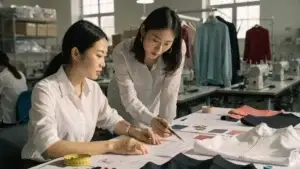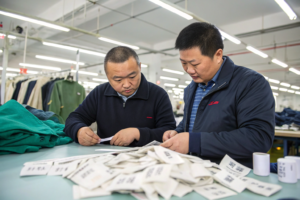
I have spent thirty years in this industry, and I have seen every sourcing model you can imagine. I have watched brands bounce from one method to another, always searching for the perfect balance of cost, quality, and control. Some try to save money by buying wholesale from massive catalog factories. Others spend months traveling to trade shows in Asia, hoping to stumble upon a hidden gem. Many end up frustrated, because each model has its own set of trade-offs. There is no perfect system, but there is a best fit for your specific goals.
The truth is, the way you source your garments determines everything about your business. It sets your cost structure, your quality ceiling, your minimum order quantities, and your level of creative control. Understanding the differences between Full-Package Production, CMT (Cut, Make, Trim), wholesale sourcing, and agent-based models is essential to making a choice that aligns with your brand's identity and financial goals.
I built Shanghai Fumao around the Full-Package model because I believe it offers the best balance for brands that care about quality and uniqueness. But I am also honest about its strengths and weaknesses compared to other options. A few years ago, a client from San Francisco came to me after trying every model. He started with wholesale, but everything looked generic. He tried CMT in Vietnam, but sourcing his own fabric was a nightmare. He worked with an agent, but margins disappeared. When he finally tried our FPP service, he said it felt like coming home. He had control without the operational headache. That is the value of finding the right fit.
What Is The Difference Between FPP And CMT Manufacturing?
CMT stands for Cut, Make, and Trim. It is a very common model, especially in emerging sourcing countries. In CMT, you are responsible for sourcing and providing all the raw materials. You buy the fabric, you buy the thread, you buy the zippers and buttons. You ship everything to the factory. The factory's job is simply to cut the fabric according to your patterns, sew the pieces together, and add the trims you provided. They then ship the finished garments back to you.
FPP, or Full-Package Production, is completely different. In this model, the factory takes responsibility for everything. We source the fabric based on your specifications. We source all the trims. We manage the sampling and pattern making. We handle production, quality control, and often shipping. You give us a design and a budget, and we deliver finished goods to your door.
What are the main advantages of CMT for a brand?
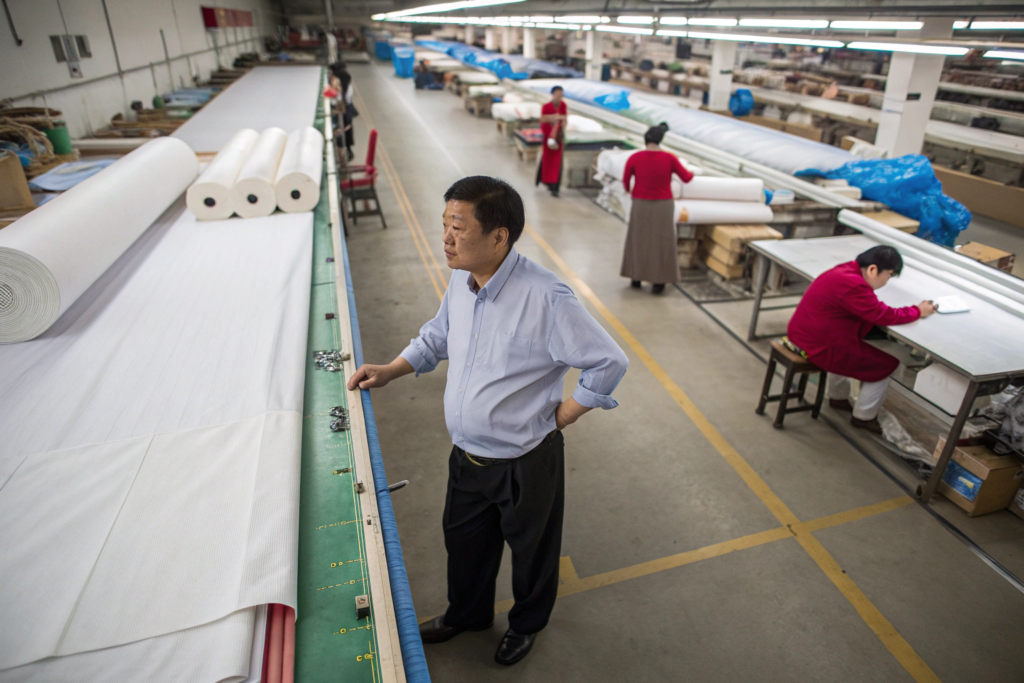
CMT gives you maximum control over your raw materials. If you have a specific fabric source that you love and trust, CMT allows you to use that fabric exclusively. You are not limited to the fabrics the factory has in stock or has relationships with. This can be a huge advantage for brands with very specific, proprietary fabric needs.
CMT can also sometimes offer a lower quoted manufacturing price. Because the factory is not managing the fabric sourcing or taking on the financial risk of buying materials, their fee is often lower on paper. For very large, predictable orders of simple styles, CMT can be cost-effective. A client from Chicago who produces millions of basic t-shirts uses CMT for his core line because he buys container loads of the same organic cotton fabric directly from the mill. It works well for his volume and simplicity.
Why might FPP be a better choice than CMT for most brands?
While CMT gives you control over materials, it also gives you all the responsibility and risk. Sourcing fabric is a highly specialized skill. You need to know how to verify quality, negotiate with mills, manage lead times, and handle logistics for shipping fabric to the factory. One mistake in fabric purchasing can ruin your entire production run.
I have seen this happen many times. A brand owner from Boston decided to source his own Italian wool for a jacket line. He paid a premium price, but when the fabric arrived at the CMT factory in Vietnam, it had a hidden flaw. The factory refused to cut it. He lost $30,000 on the fabric and missed his season. With FPP, we would have sourced the fabric, inspected it before purchase, and guaranteed its quality. We take on the risk so you do not have to. FPP also simplifies your life. You have one point of contact, one invoice, and one person responsible for the entire process. For most brands, this peace of mind is worth the slight premium.
How Does FPP Compare To Buying From Wholesale Suppliers?
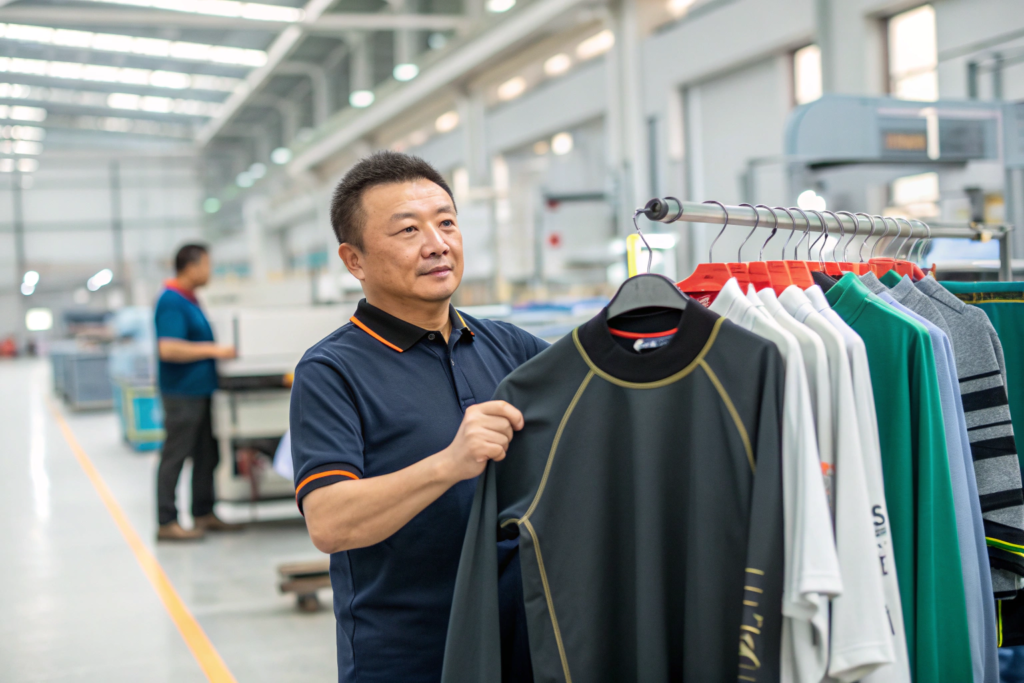
Wholesale sourcing is the oldest and simplest model. You find a supplier, often online or at a trade show. They have a catalog of existing designs. You pick the styles you like, choose your colors and sizes, and place an order. The factory produces their existing design for you, often with just your label sewn in. It is fast, it is simple, and it requires very little involvement from you.
FPP is the opposite. You are not choosing from someone else's catalog. You are creating your own products. You own the design, the pattern, and the specifications. The factory is a tool to bring your unique vision to life. It takes more time and effort upfront, but the result is a product that only you can sell.
What are the benefits of wholesale sourcing?
Speed and simplicity are the biggest benefits of wholesale. You can often get samples in days and production in weeks. There is no development time. There is no sampling cost. You see a design you like, you order it, and it arrives. This model is perfect for distributors who just need to fill a catalog quickly with basic, commodity items.
Wholesale also has very low minimums. You can often order 100 pieces of a style to test the market. There is no need to invest in pattern making or development. A client from Atlanta who runs a promotional products business uses wholesale almost exclusively. His clients want basic polo shirts with a logo embroidered on them. They do not need unique designs. Wholesale is the most efficient and profitable model for that business.
How does FPP justify its higher upfront investment?
FPP requires an investment of time and money that wholesale does not. You pay for sampling. You pay for pattern development. You wait longer for your first order. But the return on that investment is exclusivity and higher margins. When you buy wholesale, you are selling the same product as dozens of other brands. The only way to compete is on price. Your margins are squeezed.
When you create your own product through FPP, you own it. No one else can offer that exact jacket with that exact fit and those exact details. You can command a premium price. Your margins are healthier. A client in Denver who switched from wholesale hoodies to FPP-developed hoodies saw his wholesale price jump from $28 to $45. His retailers were happy to pay more because the product was better and exclusive to them. The higher upfront investment in FPP paid for itself in the first order.
How Does Working With An Agent Differ From Direct FPP?
Sourcing agents are intermediaries. They are based in the sourcing country, often China or Vietnam, and they act as your local representative. You tell the agent what you need. They find factories, get quotes, manage samples, and oversee production. They handle all the communication and logistics. You pay them a commission or a markup on the factory price.
Direct FPP means you work directly with the factory, like Shanghai Fumao. There is no middleman. You communicate with our sales team, our QC team, and our logistics team directly. You build a relationship with us over time. The communication is direct and unfiltered.
When does it make sense to use a sourcing agent?
Agents can be very valuable when you are just starting out in a new country. They have a network of vetted factories. They speak the language. They understand the local business culture. They can save you from making costly mistakes with unknown suppliers. If you are a small brand with no experience in Asia, a good agent can be a wise investment.
Agents also provide a layer of protection. They will visit factories on your behalf and conduct inspections. They handle the headaches of communication. For a client from Seattle who was launching his first imported line, he used an agent for the first two years. It helped him learn the ropes without getting burned. He then transitioned to direct partnerships with factories like ours once he had more experience.
The most obvious cost is the agent's commission, typically 5% to 15% of the order value. This directly reduces your margin. But there are hidden costs too. The agent adds a layer of communication. Your instructions pass through them to the factory, and the factory's feedback passes back through them. Things can get lost in translation or delayed.
More importantly, you lose the direct relationship with the people actually making your clothes. When there is a problem, you have to go through the agent. You cannot pick up the phone and talk to the production manager. You cannot build the personal trust that comes from years of direct partnership. A client in New York used an agent for five years. When he finally visited our factory directly, he told me he wished he had done it sooner. The direct communication was faster, clearer, and more honest. He realized the agent was adding cost without adding much value.
How Does Sourcing From Different Countries Compare?
You mentioned you source from China, Vietnam, and India. Each country has a different reputation and different strengths. Understanding these differences helps you decide where to place your bets. There is no single "best" country. There is only the best country for your specific product and priorities.
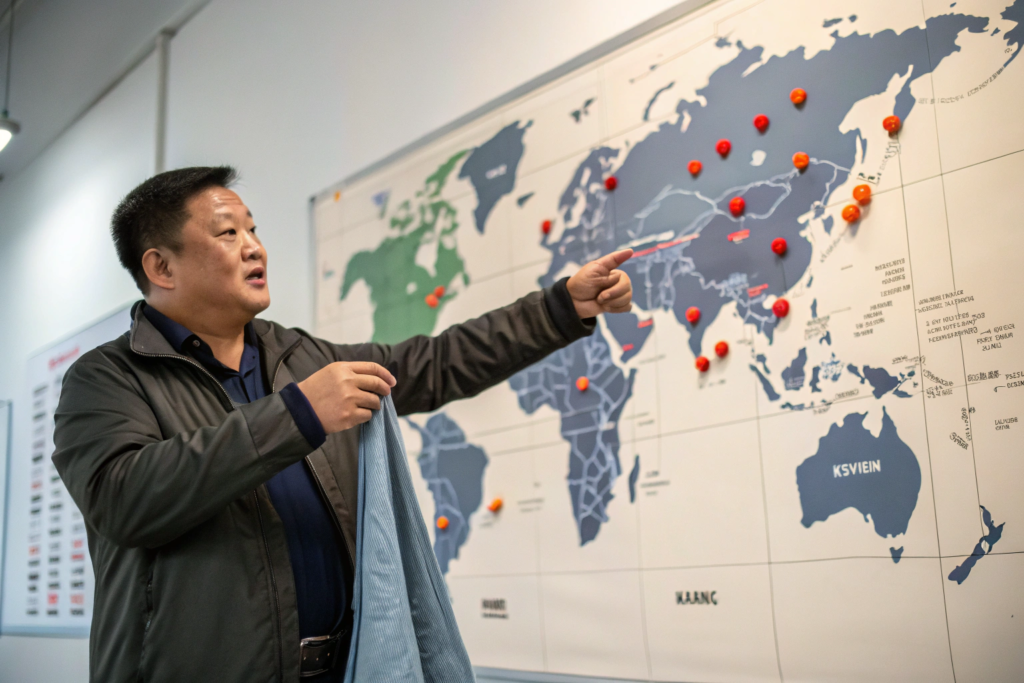
China, Vietnam, India, Bangladesh, Turkey, Mexico. Each offers a different mix of cost, quality, speed, and specialization. The landscape has changed dramatically in the last decade. China is no longer the cheapest option, but it remains the most capable for complex, high-quality production.
What are the strengths of manufacturing in China today?
China's biggest advantage is its complete supply chain ecosystem. You can find every type of fabric, every type of trim, and every type of specialized machine within a few hours of our factory. This speed and flexibility are unmatched. If you need a rare fabric or a special button, we can source it in days. In Vietnam or India, sourcing unique materials can take weeks.
China also has the most experienced and skilled labor force for complex garments. Our sewers have been doing this for decades. They can handle intricate details that factories in newer sourcing destinations struggle with. The quality ceiling in China is higher. Finally, logistics from China to the U.S. are very efficient. Shipping times are reliable, and DDP services are mature. For brands that value quality, speed, and flexibility, China remains the top choice.
How do Vietnam and India compare for garment sourcing?
Vietnam has become a major player, especially for basic items like jeans, t-shirts, and outerwear for large brands. The labor costs can be slightly lower than China. However, the supply chain is less developed. Much of the fabric used in Vietnam is still imported from China. This adds time and cost. For simple, high-volume styles, Vietnam can be a good option. For complex, rare styles, it is often more difficult.
India has strengths in specific areas like home textiles, organic cotton, and traditional handcrafts. There is a deep history of textile production. However, the infrastructure and logistics can be less reliable than China. Lead times can be longer and more unpredictable. For a client in Boston who wanted a line of hand-block printed dresses, India was the perfect choice. For his core line of precision-cut blazers, he chose us in China. You have to match the product to the country's strengths.
What Sourcing Model Is Best For Your Specific Business Needs?
There is no universal answer to the question of the best sourcing model. The right choice depends entirely on your brand, your products, your volume, and your goals. A startup testing a new concept has different needs than an established distributor with a stable catalog. A brand focused on luxury womenswear has different priorities than a brand selling basic promotional products.
The key is to be honest with yourself about what you need. Do you need complete creative control and exclusivity? Do you need the lowest possible price for a basic item? Do you need help with every step because your team is small? The answers to these questions will point you toward the right model.

Which model is best for a brand launching a new, unique concept?
If you are launching something new and unique, FPP is almost always the best choice. You need to develop samples. You need to refine the fit. You need to source special fabrics. You need a partner who will work with you through the inevitable challenges of bringing a new design to life. Wholesale will not work because your design does not exist in a catalog. CMT is too risky because you do not yet have reliable fabric sources.
A few years ago, a brand from Austin came to us with a sketch on a napkin. It was a unique hybrid garment, part hoodie, part shirt jacket. They had no idea how to make it. We used our FPP process to develop the pattern, source a special fleece, and create the first samples. Six months later, they launched on a crowdfunding site and raised $200,000. That only happened because they chose a model that provided complete development support.
Which model is best for a distributor focused on high-volume basics?
If your business is built on high-volume basics like plain t-shirts, polos, and hoodies, a hybrid approach might work best. You could use CMT for your core, high-volume styles where you have established fabric sources. This can optimize your material costs. For new styles or smaller seasonal collections, you might use FPP to maintain flexibility and quality.
You could also work with a specialized wholesale supplier for your most basic, commodity items. The key is to not put all your eggs in one basket. Use the model that fits each part of your assortment. A client in Los Angeles who distributes to screen printers uses wholesale for basic blanks, CMT for his custom-dyed core line, and FPP with us for his premium, branded collection. Diversifying his sourcing models has made his business more resilient and profitable.
Conclusion
Understanding the different garment sourcing models is like having a map in a unfamiliar city. It helps you navigate the options and choose the path that leads to your destination. CMT gives you material control but adds risk and complexity. Wholesale offers speed and simplicity but sacrifices exclusivity and margin. Agents provide a guide but add cost and distance. Each country offers different strengths. The choice is not about which model is "best" in some abstract sense. It is about which model is best for your unique brand, your unique products, and your unique goals.
At Shanghai Fumao, we have chosen to specialize in Full-Package Production because we believe it offers the most value for brands that care about quality, uniqueness, and long-term partnership. We take on the complexity so you can focus on building your brand and selling your products. If you are ready to explore whether FPP is the right model for your next collection, I invite you to reach out. Please contact our Business Director, Elaine, at elaine@fumaoclothing.com. Let us discuss your needs and find the best path forward together.