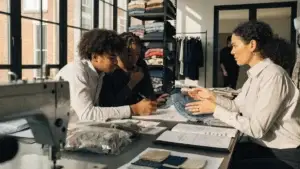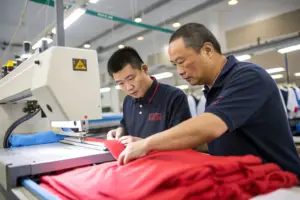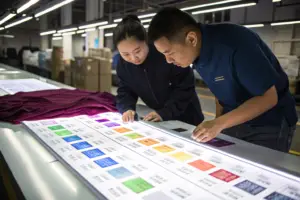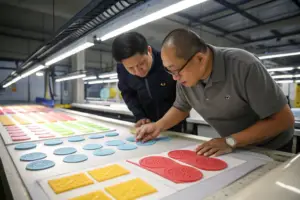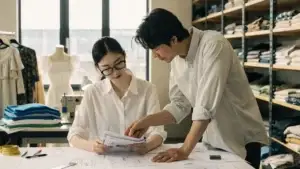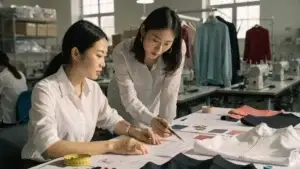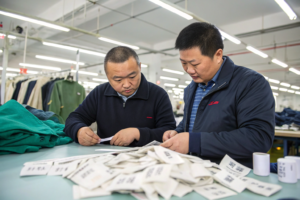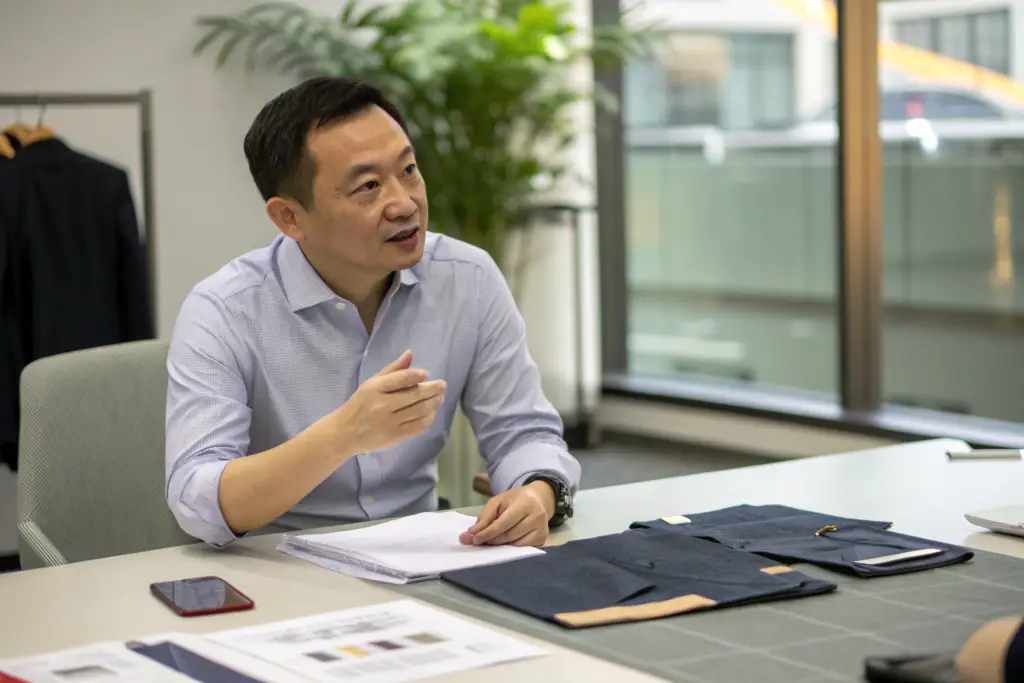
I have met hundreds of American buyers over the years. The ones who succeed are not always the ones with the biggest budgets. They are the ones who ask the best questions. They come prepared. They dig deep. They do not accept surface-level answers. They know that choosing a manufacturing partner is like choosing a business partner. The wrong choice can cost you years of stress and thousands of dollars. The right choice can make your business stronger and more profitable.
The questions you ask before you sign a contract are your most powerful tool for avoiding the nightmares of late shipments, poor quality, and hidden costs. You need to move beyond "how much does it cost?" and start asking about systems, transparency, flexibility, and values. The answers will reveal everything about whether a factory is a true partner or just another vendor.
I started Shanghai Fumao because I wanted to build the kind of factory I would want to partner with if I were in your shoes. I wanted to answer every question honestly and openly. A few years ago, a brand owner from Denver came to visit us with a three-page list of questions. He asked about our machinery maintenance schedule. He asked about our operator training program. He asked to see our fabric testing reports from the last six months. We spent four hours together. At the end, he said, "You are the first factory that did not get annoyed by my questions." He has been our client for seven years. Asking hard questions is how you find the right partner.
What Are Your Core Capabilities And Specializations?
Every factory has strengths and weaknesses. Some are great at basic t-shirts but terrible at complex outerwear. Some have excellent quality but cannot meet tight deadlines. Some specialize in one type of fabric but struggle with others. Before you trust a factory with your brand, you need to understand exactly what they are good at and what they are not.
This is not about judging a factory as "good" or "bad." It is about finding the right fit for your specific needs. A factory that is perfect for a basic knitwear brand might be a disaster for a high-end womenswear line. You need to match your requirements to their capabilities. Asking the right questions upfront saves you from painful mismatches later.
What product categories do you have the most experience manufacturing?
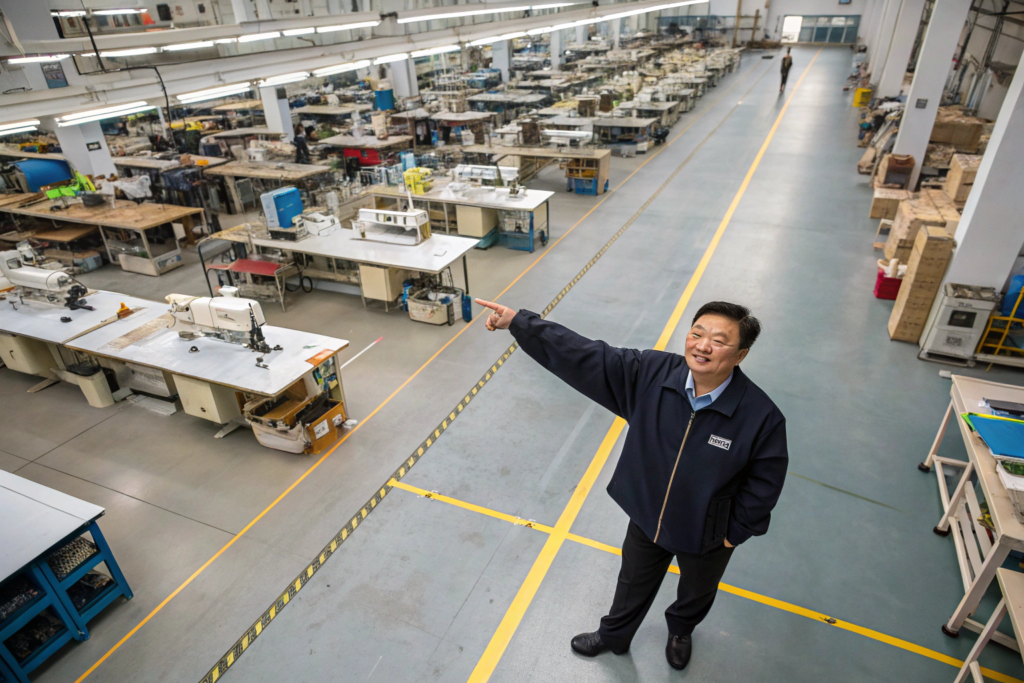
You should ask this question very early. Do not let them give a vague answer like "we do everything." A specialized partner is almost always better than a generalist. Ask for specifics. Have they made products similar to yours? What is their biggest strength? For us at Shanghai Fumao, we have deep experience in womenswear, particularly in dresses and blouses with complex construction. We also have a strong track record in outerwear and premium knitwear.
A few years ago, a client from Seattle came to us wanting to produce a line of technical outerwear. We were honest with him. While we have experience with jackets, our core strength is not in highly technical, taped-seam, waterproof garments. We recommended he find a factory that specializes in that niche. He appreciated our honesty, and later came back to us to produce his non-technical lifestyle collection. Being honest about your strengths builds trust.
How many production lines do you operate, and are they dedicated to specific clients?
This question tells you about capacity and flexibility. We have five production lines. This is a manageable number. It means we are not a giant, impersonal factory where your order gets lost. It also means we have the flexibility to dedicate a line to a consistent client's production if needed.
Ask if they have "dedicated lines" for key clients. Some factories do. This means the same team of operators works on your brand consistently. They become experts in your specific products and quality standards. For one of our largest clients, a distributor in Los Angeles, we essentially have a dedicated line for their core knitwear styles. This has reduced their production errors by over 50% because the operators know the garments intimately.
How Does Your Sampling And Development Process Work?
The sampling phase is your first real test of a potential partner. It is not just about getting a sample you like. It is about experiencing their process. How do they communicate? How do they handle feedback? How long does it take? How much do they charge? The answers to these questions will tell you a lot about what it will be like to work with them on a full production order.
A good factory will have a clear, transparent sampling process. They will tell you upfront what is included in the sample cost and what is not. They will ask you for detailed information. They will not rush. They will treat the sampling phase as the foundation for a successful production run, not just a formality.
What information do you need from me to create an accurate sample?
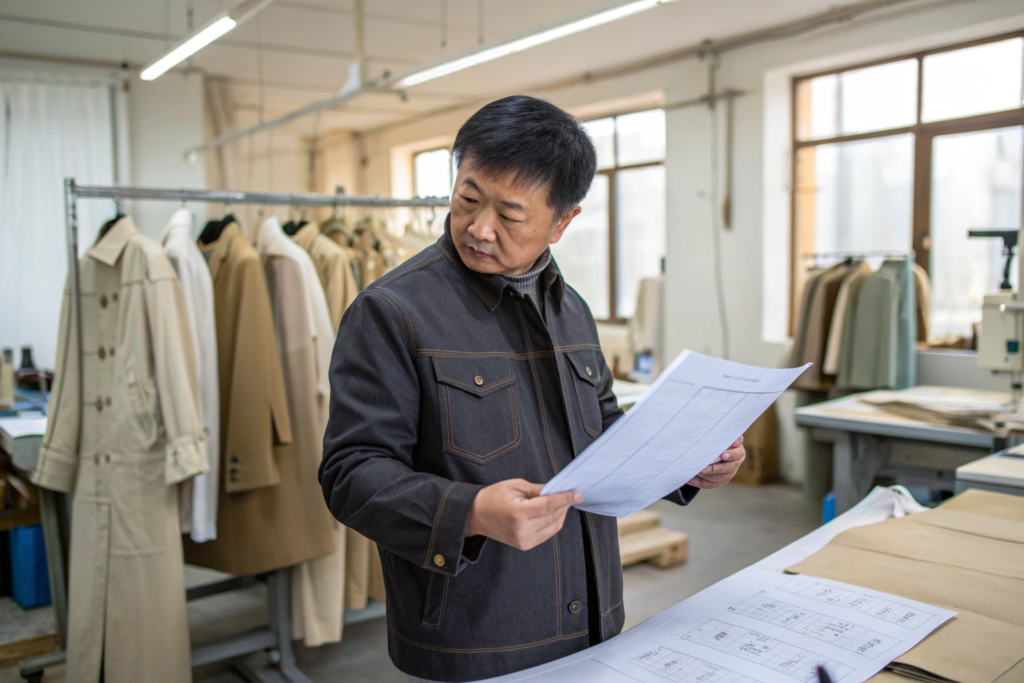
This question tests their professionalism. A good factory will ask you for a detailed tech pack. This should include flat sketches with measurements, construction details, stitching specifications, and information on all trims and labels. If they just say "send us a picture," be very careful. That is a recipe for misunderstandings.
We ask our clients for as much detail as possible. We also ask for reference images of the desired fit and feel. The more information we have at the start, the fewer sample rounds we will need. For a client in Boston who had a very detailed tech pack for a complex denim jacket, our first sample was 95% accurate. We only needed one small adjustment. Good information in means good samples out.
How many sample rounds are included in your sampling fee?
Sampling costs can add up quickly. You need to know what you are paying for upfront. Some factories charge a flat fee per sample, regardless of how many revisions are needed. Others, like us, offer a sampling package that includes a certain number of rounds. We typically include up to three rounds of revisions in our sampling fee for new developments.
This is important because complex styles almost always need more than one round. The first sample shows the concept. The second sample corrects the issues. Sometimes a third sample is needed for final tweaks. Knowing this cost structure upfront prevents surprises. A client from Austin once told me he paid for seven sample rounds with a previous supplier because they kept getting the fit wrong. That is a sign of a factory without proper pattern-making skills.
What Are Your Minimum Order Quantities And Production Lead Times?
Your business model depends on predictable timelines and manageable order quantities. You need to know if a factory can work with your volume and your schedule. If their minimums are too high, you will be stuck with too much inventory and cash flow problems. If their lead times are too long, you will miss your selling seasons.
A transparent factory will give you clear answers. They will explain what drives their minimums. They will break down their lead times into components: fabric sourcing, sampling, pattern grading, cutting, sewing, and shipping. This allows you to plan your entire season with confidence.
What is your minimum order quantity per style and per color?
This is a critical question. Do not accept a vague answer. Ask for specifics. For us, our standard MOQ is around 300 to 500 pieces per color per style for simple woven or knit tops. For more complex dresses or jackets, it might be 800 to 1,000 pieces. However, we are always willing to discuss smaller test orders for new clients or new styles.
A factory's MOQ is often tied to fabric purchasing. Fabric mills have their own minimums, usually around 1,000 to 1,500 meters per color. If your order is small, the factory might be left with expensive leftover fabric. Understanding this helps you negotiate. You might agree to use a standard fabric the factory already has in stock to get a lower MOQ.
Can you provide a typical production timeline from order to shipment?
Ask for a detailed timeline, broken down by week. A professional factory will be able to give you something like this:
- Week 1-2: Fabric and trim sourcing, lab dip development
- Week 3-4: Sample development and approval
- Week 5-6: Pattern grading, marker making, fabric cutting
- Week 7-10: Sewing and assembly
- Week 11: Final inspection and packing
- Week 12: Shipping
This is just an example. Timelines vary based on order complexity and fabric availability. But having this roadmap allows you to plan your marketing and sales activities. A client from Chicago told me that our detailed timeline allows him to give his retail buyers a firm delivery date six months in advance. That reliability is a huge competitive advantage.
How Do You Handle Quality Control And Problem Resolution?
Problems will happen. It is the nature of manufacturing. Fabric can have flaws. Machines can break. Humans can make mistakes. The true test of a partner is not whether they have zero problems. It is how they handle problems when they arise. Do they hide them? Do they blame you? Or do they communicate openly and fix them quickly?
You need to understand their quality control system before you commit. Ask about their inspection points. Ask about their defect rates. Ask about their process for handling returns or defective goods. A factory with a strong system will be proud to explain it. A factory with a weak system will give vague answers.
What is your AQL standard, and who performs the inspections?
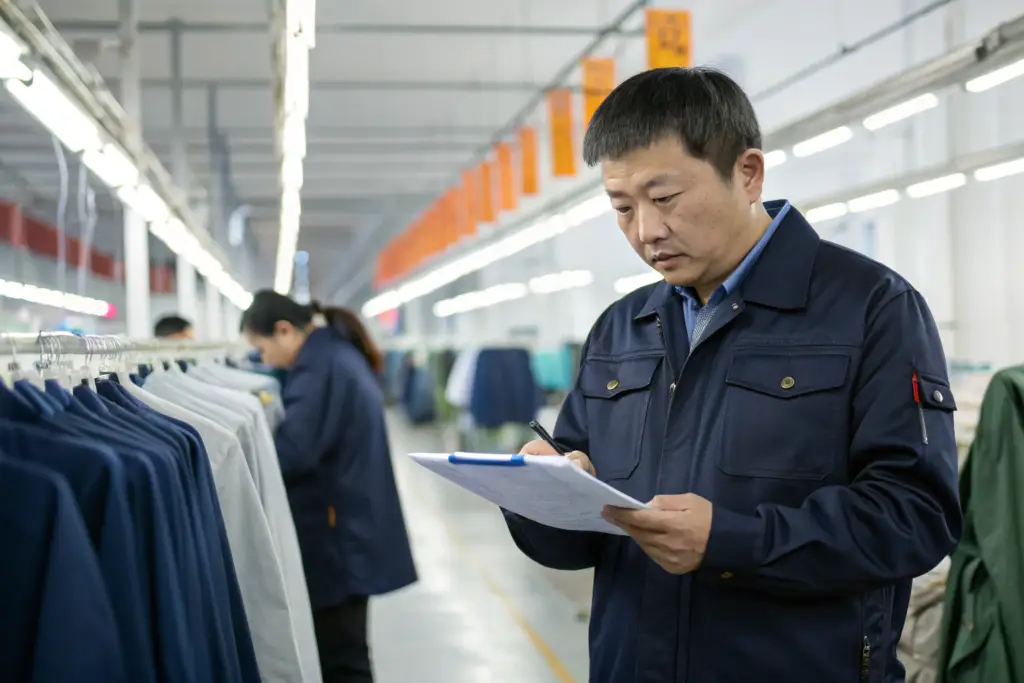
A professional factory will have a defined Acceptable Quality Level, usually 1.5 or 2.5 for major defects. They should have a dedicated QC team that is separate from the production team. These inspectors should report to a quality manager, not the production manager. This independence is crucial for objective checks.
At our factory, we have a four-stage QC process that I mentioned before. Our final inspection follows AQL 1.5 standards. We also welcome third-party inspectors. Ask the factory if they are comfortable with you sending an inspector from SGS or QIMA. If they hesitate or make excuses, that is a major red flag. A confident factory welcomes outside scrutiny.
What happens if a shipment arrives with quality issues?
You must get this answer in writing. Ask for their policy on defective goods. Do they offer a remedy? Will they provide a credit? Will they pay for return shipping? Will they rush a replacement?
Our policy is clear: we stand behind our work. If we make a mistake, we fix it. If a shipment arrives with defects that were our fault, we will work with you to find a fair solution. This might mean a credit on your next order, a partial refund, or a rush replacement of the defective items. We have been in business for decades because we value our reputation more than any single order. A client in New York once received a shipment where the color of the garments was slightly different from the approved lab dip due to a dye lot issue. We immediately offered a 15% credit on that invoice. He used that credit on his next order. We kept a client for life because we did not argue.
Can You Provide References And Evidence Of Your Compliance?
Any factory can make promises. Any salesperson can tell you what you want to hear. But proof is harder to fake. You need to verify their claims with real evidence. This includes talking to their existing clients, reviewing their compliance audits, and checking their legal standing. This step separates serious buyers from amateurs.
Do not be shy about asking for proof. A legitimate, well-run factory will have this information ready. They will be happy to share it. They understand that you are protecting your business. If a factory is evasive or refuses to provide references, walk away. There are plenty of honest factories in the world.
Can you provide contact information for current U.S.-based clients?
This is one of the most important questions you can ask. Speaking directly with other American brand owners who use the factory gives you unfiltered information. Ask about their experience with quality, communication, and reliability. Ask if they would choose the factory again.
We maintain a list of clients who have agreed to be references. We are happy to connect potential new partners with them. A few years ago, a brand owner from Miami asked for three references. He called all of them. He later told me that the conversations gave him more confidence than our entire factory tour. Hearing from peers that we deliver on our promises was the deciding factor for him.
What third-party audits or certifications do you have?
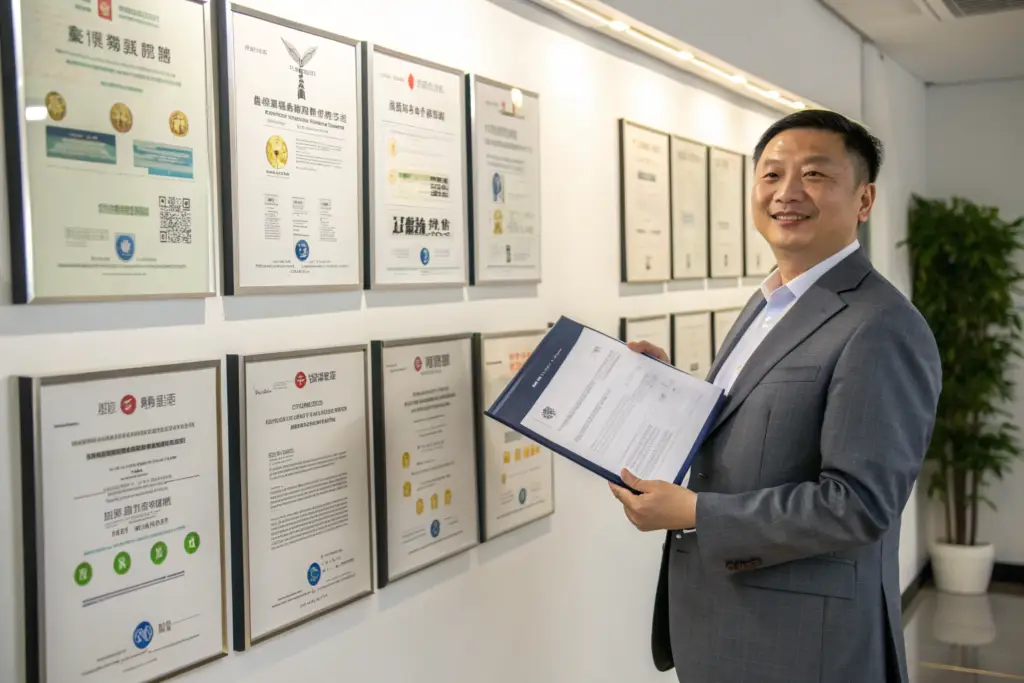
Certifications are not just pieces of paper. They are evidence that a factory has been vetted by an independent organization. Ask for their social compliance audits, like Sedex or BSCI. These show that the factory meets basic standards for working conditions and labor rights.
Ask for product-specific certifications if you need them. For organic cotton, ask for GOTS certification. For recycled materials, ask for GRS certification. For safety testing, ask for reports from accredited labs. We maintain a current BSCI audit and we work with GOTS-certified mills for our organic clients. Having these certifications ready saves time and builds immediate trust.
Conclusion
Finding the right FPP manufacturing partner is one of the most important decisions you will make for your brand. It is a relationship that can last for years or even decades. The time you invest in asking hard questions upfront is time that will pay for itself many times over in avoided problems and built trust. Do not rush. Do not settle for vague answers. Do not be afraid to dig deep. A great partner will respect your thoroughness and welcome your questions.
At Shanghai Fumao, we have built our company to answer every one of these questions with confidence and transparency. We have the capabilities, the systems, the experience, and the references to prove that we are the reliable, high-quality partner you are looking for. We do not hide from scrutiny; we invite it. If you are ready to start a conversation based on honest answers and mutual respect, please reach out. Contact our Business Director, Elaine, at elaine@fumaoclothing.com. Let us discuss how we can answer all your questions and build a successful partnership together.