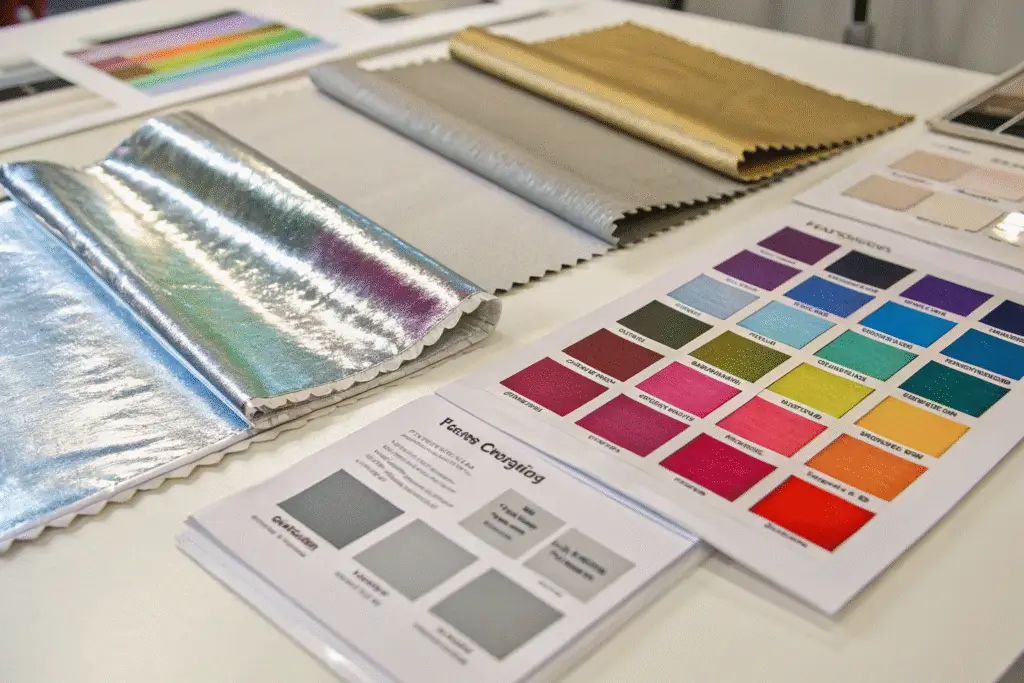
Metallic and specialty fabrics are essential to standout collections, runway looks, and high-impact marketing campaigns. But sourcing these materials for apparel production—especially from overseas suppliers—comes with risks if not done properly.
Foiling that peels. Coatings that crack. Minimum orders that trap your capital. These mistakes can kill a collection before it ships.
As a factory owner and exporter in China, I’ve helped U.S. apparel brands—from premium streetwear to costume houses—navigate the complexity of sourcing specialty textiles. If you’re planning a metallic-themed drop or limited-edition run, this guide will help you avoid costly pitfalls.
Which Types of Metallic and Specialty Fabrics Are Most Common?
There’s no single “metallic fabric.” Instead, you're dealing with a wide category that includes foiled knits, coated synthetics, jacquards, vinyls, and bonded constructions. Each comes with different price points, performance, and sourcing challenges.
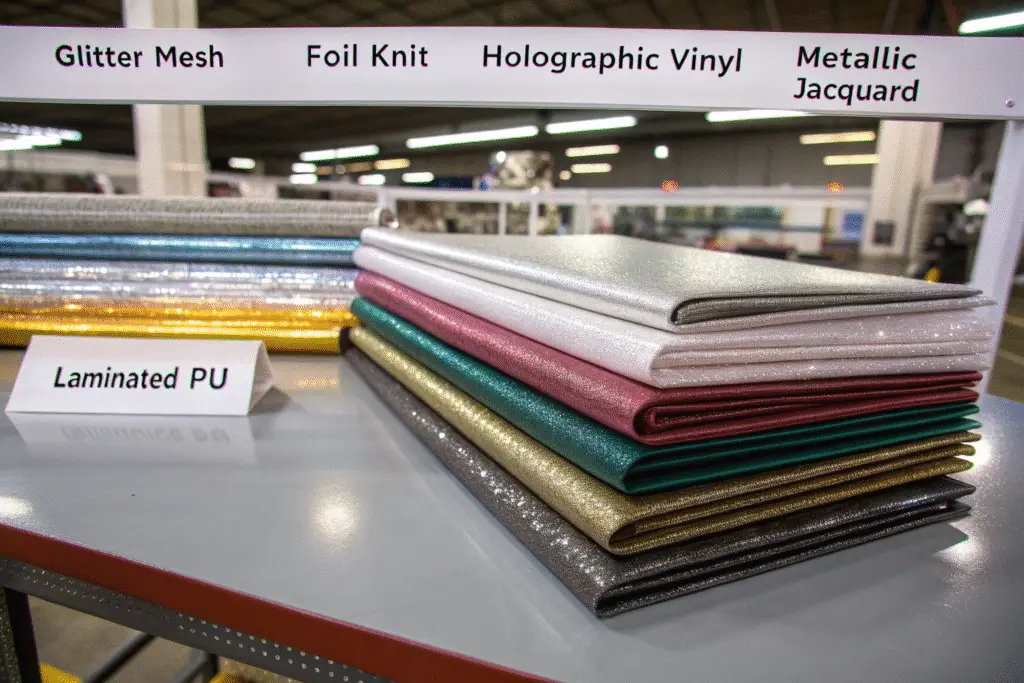
The most in-demand specialty fabrics include foil jersey, holographic spandex, metallic jacquard, coated mesh, and high-sheen PU.
What Are Foil Jerseys and When Should You Use Them?
Foil jersey refers to a knit base (often polyester or nylon-spandex) with metallic film heat-pressed on top. They’re commonly used in dancewear, performance fashion, and stagewear due to their elasticity and sheen.
We often supply foil stretch jersey (85% poly, 15% spandex) in weights between 180–220gsm. But beware: low-cost foil prints can flake after 2–3 washes. Always ask your supplier about wash test results like ISO 6330 or ASTM D4966.
For care standards and certifications, check SGS Global Fabric Testing.
What’s the Difference Between Jacquard and Coated Fabrics?
Metallic jacquard is woven, not printed. The metallic effect is achieved by weaving in Lurex or metallic yarns, which offer better longevity but higher MOQs and limited color flexibility. Ideal for luxury eveningwear or statement jackets.
Coated fabrics, like laminated PU or PVC-backed foil mesh, are great for outerwear, bags, or accessories. These may require ROHS or REACH compliance if shipping to the EU. Read more at OEKO-TEX FAQs.
What Are the Minimums and Lead Times for Specialty Fabrics?
Specialty fabrics aren’t always stocked. Metallic textiles are often made to order, especially when you require custom foil color, jacquard design, or lamination combinations.
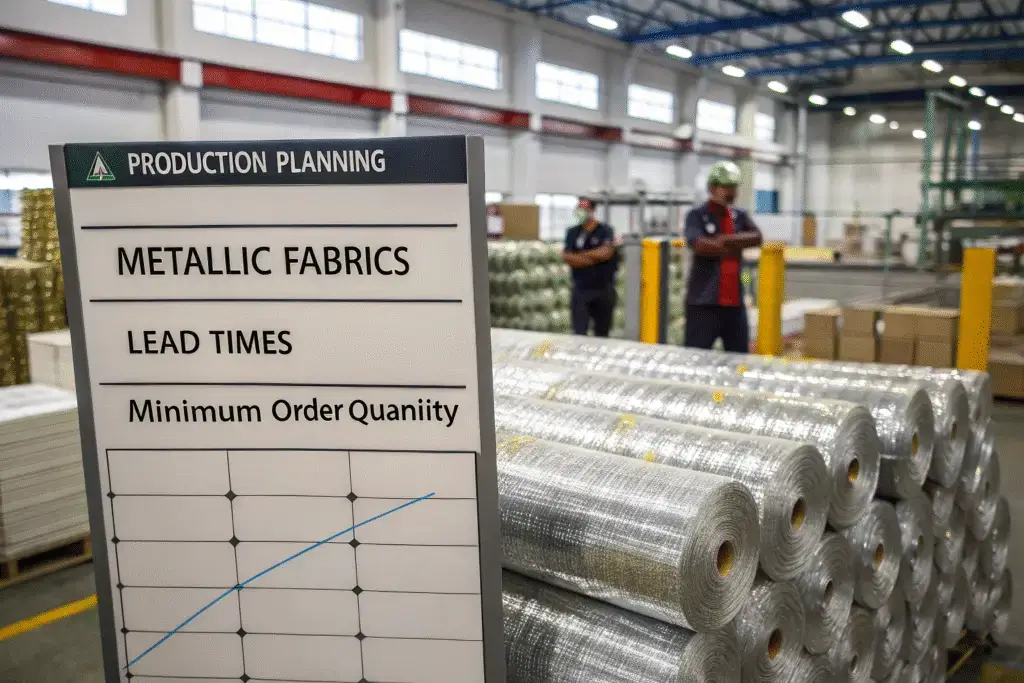
Average MOQs for metallics range from 300–800 meters, with lead times of 18–25 days depending on surface treatment and dyeing steps.
Can You Get Small Batches of Metallic Fabrics?
Yes, but expect limitations. We offer 300m per color MOQ for foil knits and 500m for metallic PU. For jacquards, MOQ often starts at 600m per design due to loom settings.
If you're prototyping or making sample lines, look for pre-dyed base fabrics with available foil overlays. That shortens lead times. Check sample-ready stocks at Fabric Wholesale Direct or Spoonflower.
How Should You Plan Around Production Lead Times?
Always factor in:
- Foil or coating application = +5–7 days
- Color matching (for metallics, this is tricky) = +3–5 days
- Shrinkage testing = +2 days
- Export packing and roll width variations
We suggest pre-ordering strike-offs and lab dips, and ensuring your final PO includes width, coating side, backing weight, and washing method.
What Quality and Performance Tests Are Crucial?
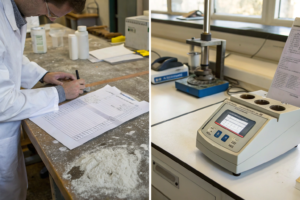
Metallic fabrics may look beautiful, but they often fail performance expectations without proper testing. Cracking, rubbing off, and color migration are common.
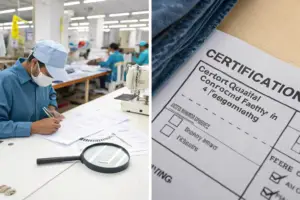
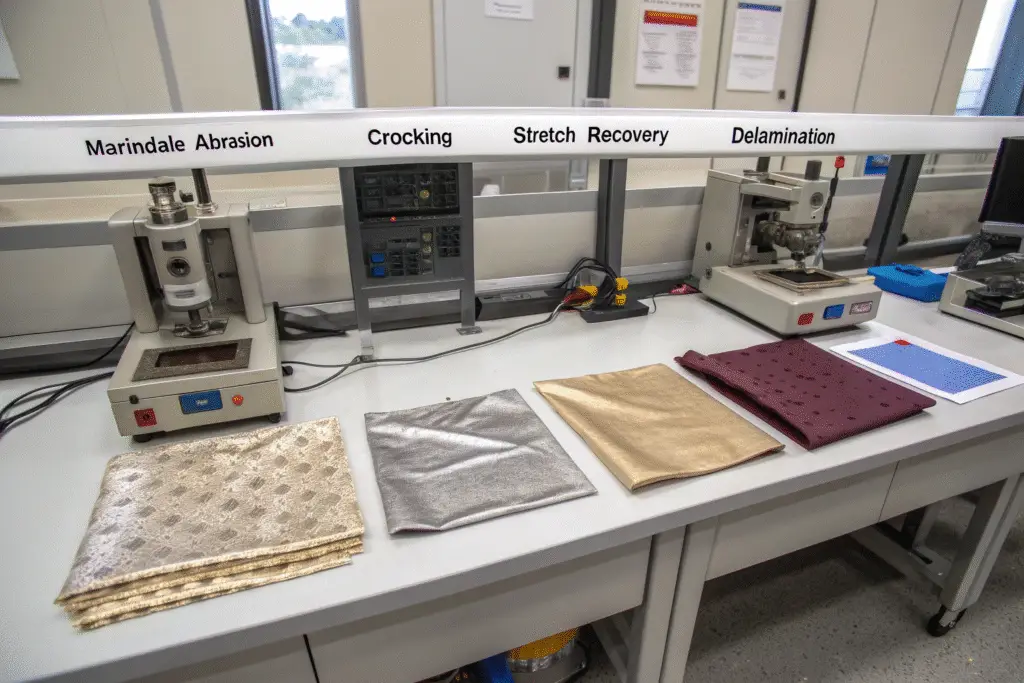
Always ask for test reports on adhesion strength, stretch recovery, washing durability, and colorfastness to perspiration.
Which Tests Should You Ask Suppliers to Run?
We run the following tests for U.S. clients:
- ISO 105-X12: Color fastness to rubbing
- ASTM D4966: Abrasion resistance
- ASTM D2594: Stretch & recovery (for knits)
- ISO 2286: Coating thickness and adhesion strength
We recommend working with third-party labs like TÜV Rheinland or Bureau Veritas if your supplier doesn't offer in-house data.
How Do You Ensure Durability in Metallic Finishes?
Durability depends on:
- Proper base fabric selection
- Foil or coating temperature and pressure control
- Post-finishing treatments (anti-crack, anti-peel)
- Storage and shipping packaging
We package metallic rolls with non-stick interleaves, and always advise cold water wash, inside out, line dry for foil or bonded items.
What Logistics and Compliance Issues Should You Watch?
Metallic and specialty fabrics often trigger extra scrutiny at customs, especially when importing to the U.S. or EU. Some finishes may contain restricted substances or require flammability testing.
Ensure your supplier declares correct HS codes, REACH safety data, and composition reports on the commercial invoice.
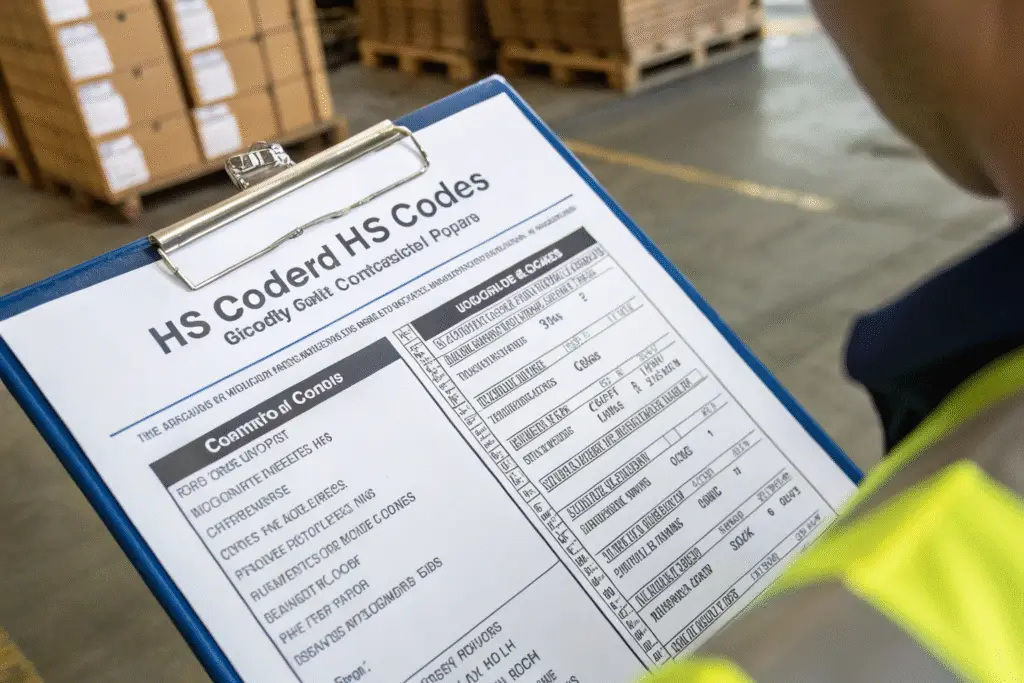
Are Metallic Fabrics Subject to Special Tariffs?
Yes. For example:
- HS Code 5903.10: Textile fabrics coated with PVC
- HS Code 5907.00: Textile fabrics otherwise impregnated or coated
- HS Code 5808.10: Woven metallic jacquard
Use the Harmonized Tariff Schedule to check duty rates. If the metallic coating is PU-based, it might fall under synthetic leather classifications with higher tariffs.
How Can You Ensure Compliance for U.S. and EU Markets?
Ask your supplier for:
- Full fiber composition sheets
- Chemical treatment declarations (AZO, heavy metal-free, phthalates)
- REACH and OEKO-TEX certificates
- MSDS if vinyl or solvent coatings are involved
We also recommend you clarify whether fabric is for apparel, accessories, or interiors, as classification affects import requirements.
Conclusion
Sourcing metallic and specialty fabrics opens the door to bold, high-margin fashion collections—but also exposes you to greater risk if you're not informed. The keys are clarity in communication, lab testing, MOQ planning, and compliance documentation.
At Shanghai Fumao, we help U.S. brands source specialty textiles with full transparency—from foil jersey to holographic PU—alongside DDP shipping, lab testing, and small-batch sampling. Want to make your next collection shine without stress? Contact our Business Director Elaine at elaine@fumaoclothing.com to explore our metallic fabric sourcing solutions.