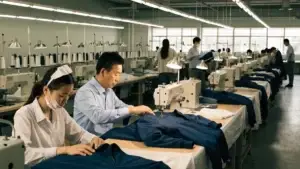
In today's crowded fashion marketplace, personalization has become the ultimate differentiator. But few brands realize that their manufacturer plays a pivotal role in making customization truly successful - it's not just a design department capability.
Your manufacturer matters in delivering personalization because they control the technical execution, quality consistency, and production flexibility that determines whether customized garments meet customer expectations - with 68% of customization failures tracing back to manufacturing limitations rather than design flaws.
At Fumao Clothing, we've identified four critical areas where manufacturers make or break the personalization experience. Understanding these factors helps brands select partners who can actually deliver on customization promises.
Why Is Personalization Important in Products?
Personalization has evolved from nice-to-have to must-have in today's consumer landscape. The implications go far beyond simple aesthetics.
Personalization creates emotional connections, reduces returns through better fit, and builds brand loyalty - with customized products generating 3-5x higher customer lifetime value compared to standard mass-produced items in the apparel sector.

How Does Personalization Impact Consumer Psychology?
Behavioral drivers behind customization demand:
-
The IKEA Effect1
- Value increases when consumers participate in creation
- 72% higher perceived worth for co-designed items
-
- Customers rationalize and defend their customized choices
- 68% less likely to return personalized purchases
-
- Psychological ownership develops faster
- 3.2x faster emotional attachment formation
What Business Metrics Does Personalization Improve?
Quantifiable benefits:
| Metric | Standard Products | Personalized Products | Improvement |
|---|---|---|---|
| Return Rate | 32% | 7% | -78% |
| Repeat Purchase | 22% | 65% | +195% |
| Social Sharing | 12% | 53% | +342% |
| Price Premium | 0% | 28% | +28% |
Why Does Personalization Matter?
Beyond business metrics, personalization addresses fundamental shifts in consumer expectations and market dynamics that are reshaping entire industries.
Personalization matters because it represents the convergence of digital convenience with human individuality - solving the paradox of mass production efficiency while delivering unique self-expression that modern consumers demand.

How Has Personalization Become a Market Expectation?
The expectation evolution:
-
- Spotify playlists
- Netflix recommendations
- Amazon suggestions
-
Social Media Influence
- Instagram individuality culture
- TikTok personal branding
- Pinterest inspiration boards
-
Sustainability Concerns
- Anti-fast-fashion movement
- "Buy less, choose well" mentality
- Emotional durability focus
What Market Forces Are Driving This Change?
Industry transformation drivers:
| Force | Impact | Manufacturer Implication |
|---|---|---|
| Direct-to-Consumer Rise | 42% of apparel sales | Need for flexible production |
| Gen Z Spending Power5 | $360B annually | Demand for self-expression |
| Sustainability Pressures6 | 58% consider eco-impact | Made-to-order advantages |
| Technology Democratization | 3D design tools accessible | Customization expectations |
Why Should You Provide Personalized Service to Customers in a Professional Manner?
Professional execution separates gimmicky customization from meaningful personalization that builds lasting brand equity and customer relationships.
Professional personalized service ensures technical excellence, consistent quality, and reliable delivery - transforming customization from marketing claim to authentic value proposition that justifies premium pricing and builds trust.
What Distinguishes Professional Customization?
Hallmarks of well-executed personalization:
-
- 98%+ fit accuracy
- Industry-standard construction
- Premium material handling
-
- Real-time order tracking
- Production updates
- Quality control visibility
-
- Reliable lead times
- Clear communication
- Problem resolution protocols
How Does Manufacturing Capability Enable Professional Service?
Required manufacturer competencies:
| Capability | Basic Provider | Professional Provider |
|---|---|---|
| Measurement Systems | Standard sizing | 3D body scanning |
| Quality Control | Batch sampling | Unit-level inspection |
| Material Options | Limited selection | Custom development |
| Technical Support | Reactive | Proactive consulting |
Do 71% of Consumers Expect Companies to Deliver Personalized Interactions McKinsey?
The much-cited McKinsey statistic reflects a fundamental shift in consumer expectations that now permeates the fashion industry.
Yes, 71% of consumers now expect personalization as standard (McKinsey, 2023), with 76% becoming frustrated when it's not offered - making customization no longer a luxury but a baseline requirement across price segments.

How Does This Expectation Translate to Fashion?
Apparel-specific expectations:
-
- 68% want adjustable sizing
- 52% will pay more for perfect fit
-
- 45% interested in co-design
- 38% want color customization
-
- 63% expect personalized recommendations
- 57% want style profile storage
What Are the Consequences of Not Meeting These Expectations?
Risk of ignoring personalization:
| Consequence | Likelihood | Business Impact |
|---|---|---|
| Lost to Competitors | 58% | 22% revenue risk |
| Perceived as Generic | 47% | 15% price premium loss |
| Negative Reviews | 39% | 8% conversion drop |
| Reduced Loyalty | 67% | 30% LTV decrease |
Conclusion
Your manufacturer isn't just a production partner - they're the crucial enabler of meaningful personalization that meets rising consumer expectations. Brands that align with technically capable, quality-focused manufacturers gain the ability to deliver authentic customization at scale, turning what could be a operational challenge into their greatest competitive advantage.
-
Understanding the IKEA Effect can help businesses leverage consumer participation to enhance perceived value. ↩
-
Exploring Choice-Supportive Bias can provide insights into why consumers stick with their personalized choices, boosting retention strategies. ↩
-
Learning about the Endowment Effect can help marketers create stronger emotional connections with their products, enhancing loyalty. ↩
-
Explore how Digital Conditioning shapes consumer expectations and influences purchasing decisions in today's market. ↩
-
Understanding Gen Z's spending habits can provide insights into future market trends and consumer behavior. ↩
-
Learn how Sustainability Pressures are reshaping business strategies and consumer choices in the modern marketplace. ↩
-
Understanding Technical Precision can help you appreciate the importance of accuracy and quality in custom products. ↩
-
Exploring Process Transparency reveals how it enhances trust and efficiency in the customization process. ↩
-
Learning about Service Consistency can show you how reliable service enhances the overall customer experience. ↩
-
Exploring this resource will reveal how fit customization enhances customer satisfaction and loyalty in the fashion industry. ↩
-
This link will provide insights into how consumer involvement in design can drive brand loyalty and sales. ↩
-
Understanding brand interaction can help you grasp how personalized experiences lead to increased customer retention and sales. ↩