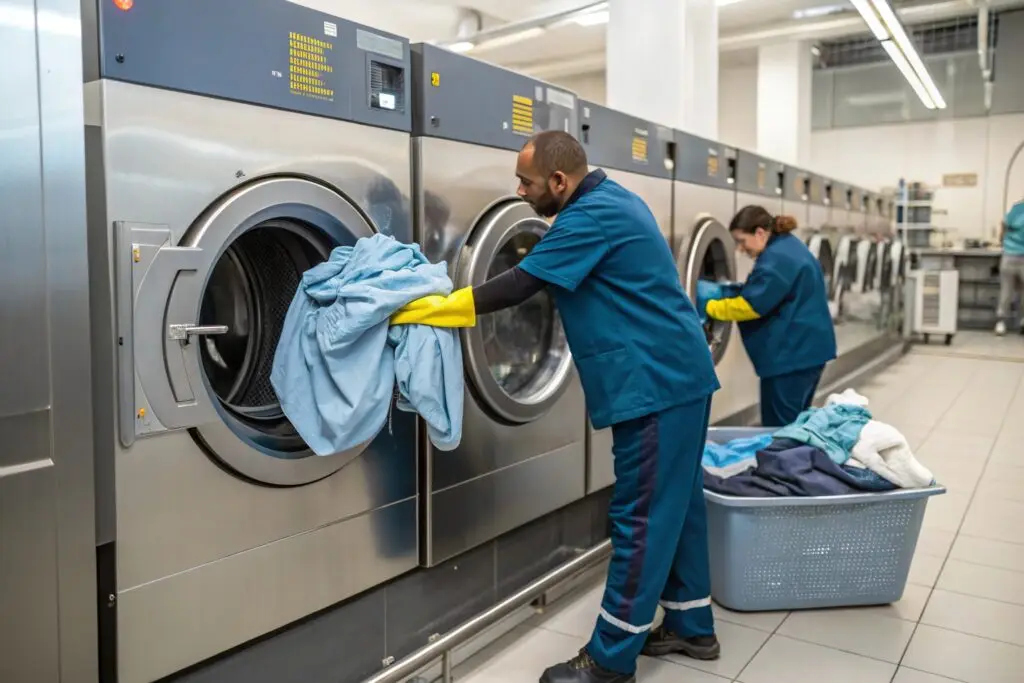
Every rental garment you replace early costs you profit. If it can’t survive 50 washes, it doesn’t belong in your lineup.
Rental garments must survive dozens of industrial wash cycles without fading, shrinking, or tearing—because early replacements ruin your ROI and your reputation.
I’ve worked with American uniform and rental businesses for years, and I’ve seen firsthand how wash durability makes or breaks profitability. Let’s explore why it should be your top priority.
How does wash durability impact rental garment ROI?
Most rental businesses lose profit not from pricing—but from short garment lifespan.
When garments survive more washes, the cost per use drops, margins go up, and customers stay longer because they see quality.
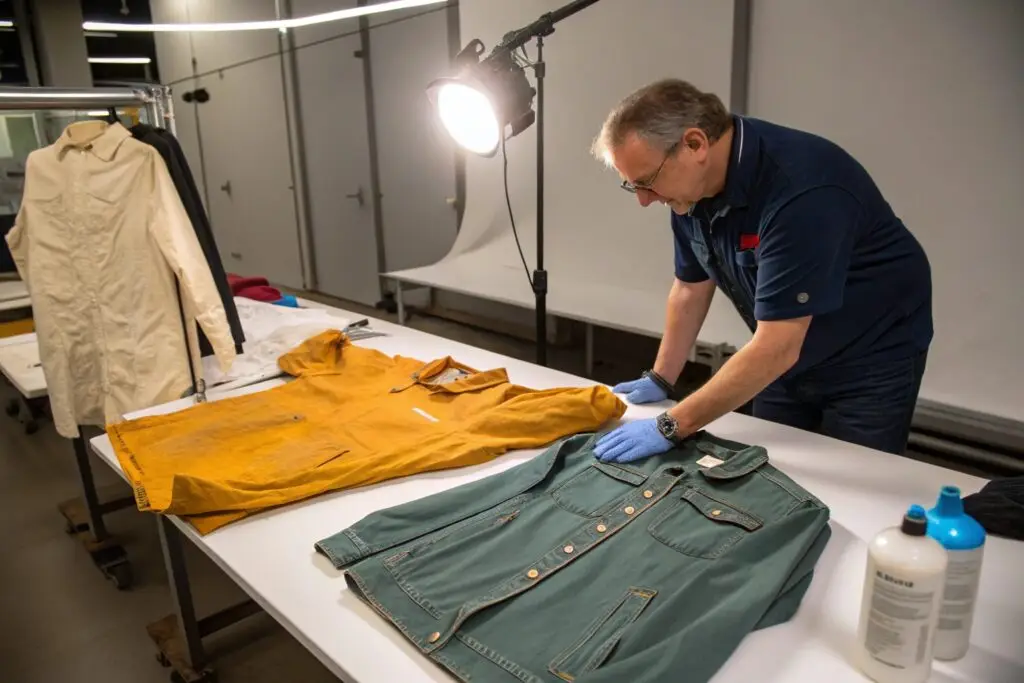
Why do garments that fail in washing cycles hurt your margins more than high material costs?
One U.S. buyer I worked with ran a restaurant uniform rental service. He sourced low-cost poly-cotton shirts, thinking he’d cut upfront cost. But after 15 washes, collars frayed and armpits yellowed. His average use cycle per shirt? Only 90 days.
We calculated the numbers:
| Shirt Type | Cost | Avg. Washes | Uses/Year | Cost per Use |
|---|---|---|---|---|
| Cheap Poly-Cotton | $3.00 | 15 | 50 | $0.06 |
| Mid-Grade Polyester | $4.50 | 50 | 150 | $0.03 |
| Premium Solution-Dyed | $5.50 | 75 | 200 | $0.0275 |
So the cheapest garment became the most expensive per use. Your accountant may love low purchase prices. But the real cost is how often you replace them.
How does better wash resistance1 directly affect your replacement rate2 and inventory control3?
Garments that hold up mean fewer reorders, less storage space, and better size availability. One buyer told me they used to order replacements every quarter. After switching to our 100% solution-dyed polyester work shirts, they went nine months without a reorder.
That extra capital was reinvested in sales. And their client noticed the upgrade—renewed the contract early. Durability is invisible marketing.
Top Fabrics with Proven Wash-Resistant Performance
There’s no guessing in rental wear. You need textiles tested to survive heat, bleach, and stretch.
Solution-dyed polyester, high-denier nylon, and polyester-wool blends outperform others in wash tests, keeping shape, color, and comfort.
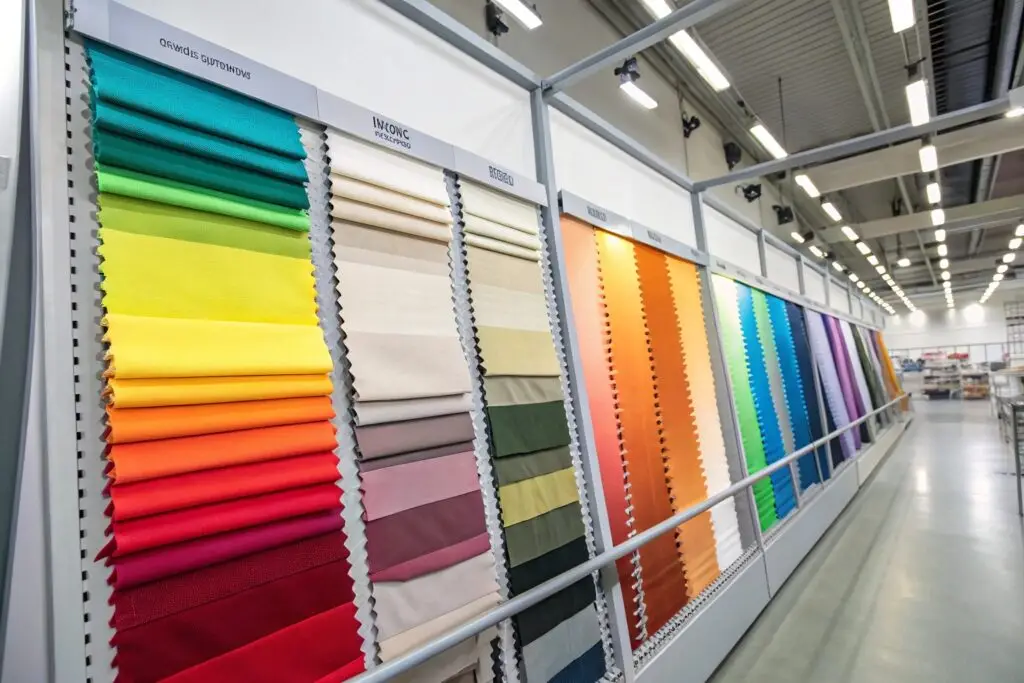
Which fabric types are most commonly used in commercial laundry rental garments and why?
After testing hundreds of fabrics across our five production lines, these are the top picks for high-frequency washing:
| Fabric Type | Wash Resistance | Comfort | Common Use |
|---|---|---|---|
| Solution-Dyed Polyester4 | Very High | Medium | Uniforms, table linen |
| Nylon 6.6 High Denier | High | Medium | Aprons, outerwear |
| Poly-Wool (65/35)5 | Medium-High | High | Corporate suiting, vests |
| Spandex Blends (5–10%)6 | Medium | High | Activewear, service pants |
The best-performing fabric across 75 washes in our lab? 100% solution-dyed poly twill. It scored 9/10 for colorfastness, 10/10 for dimensional stability, and 8.5/10 for abrasion.
How can you balance durability with user comfort and appearance in daily rental use?
Nobody wants itchy uniforms. We solve this with blended layers. For example, the inner face can be brushed poly-cotton while the outer layer remains solution-dyed poly. It feels soft but wears like armor.
And for high-visibility workwear, we embed color directly into the yarn using spun-dye technology. It doesn’t fade—even under UV. No screen-printing needed, which cuts one failure point.
Ask for layered structure samples before final production. That’s how we design for both comfort and performance.
Customer Retention Relies on Garments That Look New
Perception matters. When uniforms look fresh, clients believe in your service—even if you haven’t changed a thing.
Customers judge your value by garment appearance. Wash-resistant clothes stay crisp longer, increasing trust, retention, and referrals.
Why do garments that keep their shape and color after 50+ washes create stronger client loyalty?
One industrial laundry chain in Ohio told me their biggest churn reason was “uniforms look old too fast.” Their B2B clients thought they were cutting corners—when it was just weak fabric.
After switching to our 210gsm poly-wool blend suits7, the feedback changed. Clients called the outfits “new-looking” even after 6 months. They signed two-year renewals instead of one.
Clothing doesn’t just cover workers. It represents your brand. When it fades, so does your reputation.
How do high wash-resistance uniforms reduce customer complaints and returns in B2B settings?
Every complaint eats into service time. If your staff constantly swaps worn garments, that’s extra logistics and labor. One of our distributors showed me their complaint log: 80% related to fabric damage.
After they used our poly-nylon-blend kitchen coats8, their return rate dropped 73%. Clients said fewer rips, less discoloration. Most importantly, fewer urgent calls during business hours.
At Fumao, we often suggest clients build a “core rotation” of ultra-durable uniforms and a “soft rotation” for aesthetics. That split improves efficiency and keeps garments looking their best.
What should you ask suppliers about wash resistance testing?
Don’t trust verbal promises. Ask for proof—standardized test data, wash cycle benchmarks, and fiber certifications.
Every buyer should request AATCC or ISO wash test scores, inspect lab reports, and verify supplier test cycles exceed 50 washes.
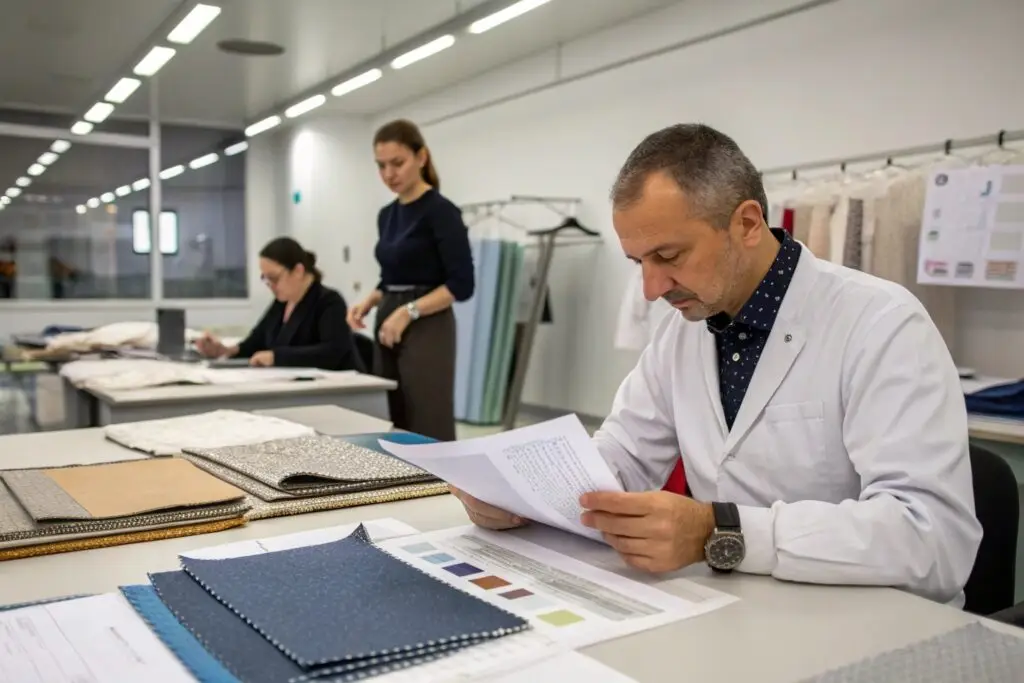
What testing standards prove that fabrics are built for rental use across commercial laundry systems?
We follow AATCC 619 (Colorfastness), AATCC 135 (Dimensional Change), and ISO 15797 (Industrial Washing Durability). These standards simulate real-world laundry conditions. Here’s what to look for:
| Test Code | What It Measures | Passing Score for Rental |
|---|---|---|
| AATCC 61 | Color retention after 5–10 washes | 4–5 on grayscale |
| AATCC 135 | Shrinkage in hot wash/dry | Under 3% |
| ISO 1579710 | Full industrial wash performance | Pass after 50 cycles |
Always ask for these reports before mass production. If a supplier hesitates, they probably haven’t tested properly.
How can you independently verify that supplier claims about durability are real?
We offer clients the option to run third-party lab tests11 at Bureau Veritas or SGS. Some even request blind batch testing—random samples pulled mid-production.
You can also buy a home-grade washer and dryer for your QC room. Run 10 test washes with high-temp detergent, then measure changes in:
- Width and length
- Color shade
- Fabric hand feel
- Print adhesion
At Fumao, we simulate 50 washes in-house with the same machines used by commercial laundries. That way, when we say “wash-resistant,” we mean it.
Conclusion
Rental success relies on garments that survive the wash, stay strong, and look new. That’s the standard we build into every thread at Fumao Clothing.
-
Understanding wash resistance can help you choose garments that last longer, reducing replacement costs and improving margins. ↩
-
Exploring this topic can reveal how better quality garments can lead to lower replacement rates and increased profitability. ↩
-
Learning about inventory control can optimize your stock management, leading to cost savings and improved service efficiency. ↩
-
Explore the advantages of Solution-Dyed Polyester, known for its high wash resistance and durability, making it ideal for uniforms and table linen. ↩
-
Learn about the benefits of Poly-Wool blends, which offer a great balance of comfort and durability for corporate attire. ↩
-
Discover how Spandex Blends enhance comfort and flexibility in activewear, making them perfect for service pants and more. ↩
-
Explore how 210gsm poly-wool blend suits can enhance durability and appearance, leading to better client satisfaction and loyalty. ↩
-
Learn about the advantages of poly-nylon-blend kitchen coats in reducing complaints and enhancing uniform longevity. ↩
-
Explore this link to understand the significance of AATCC 61 in ensuring fabric durability and color retention for rental use. ↩
-
Learn about ISO 15797 to see how it guarantees fabrics can withstand industrial washing, crucial for rental applications. ↩
-
Discover the importance of third-party lab tests in validating supplier claims about fabric durability and quality. ↩