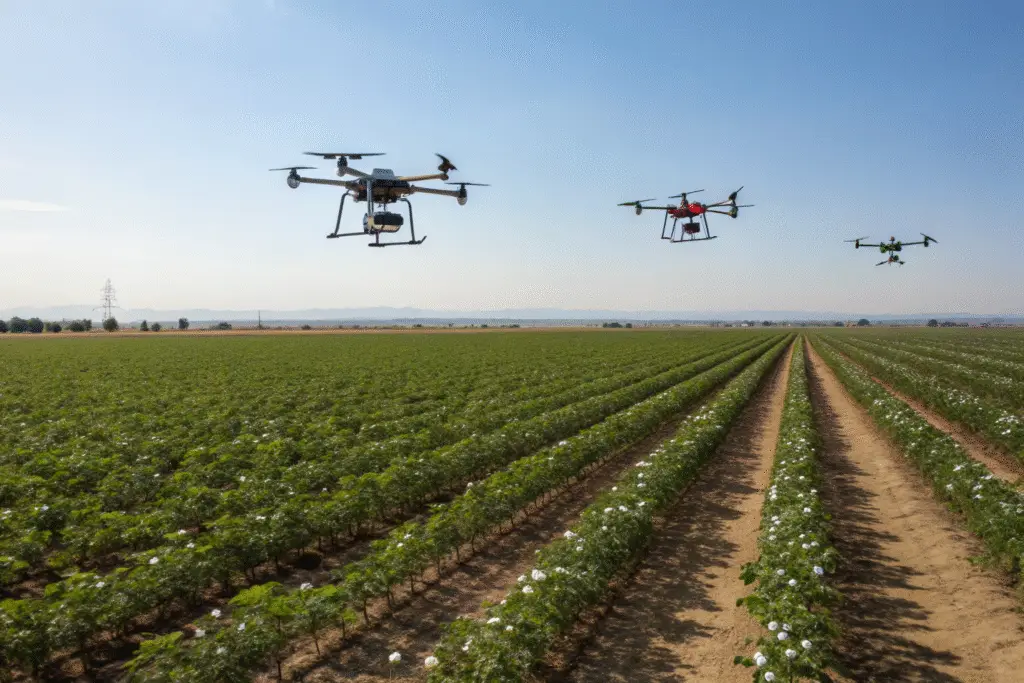
Cotton farming covers huge areas, and traditional inspections often miss early signs of problems. Farmers now need faster, smarter tools to track crop conditions. Drone swarms—groups of autonomous drones working together—offer a new solution for large-scale field analysis.
Using swarms instead of single drones provides quicker coverage, higher accuracy, and real-time agricultural insights.
This technology gives farmers both efficiency and sustainability, helping boost yields while lowering costs.
How Do Drone Swarms Work In Cotton Fields?
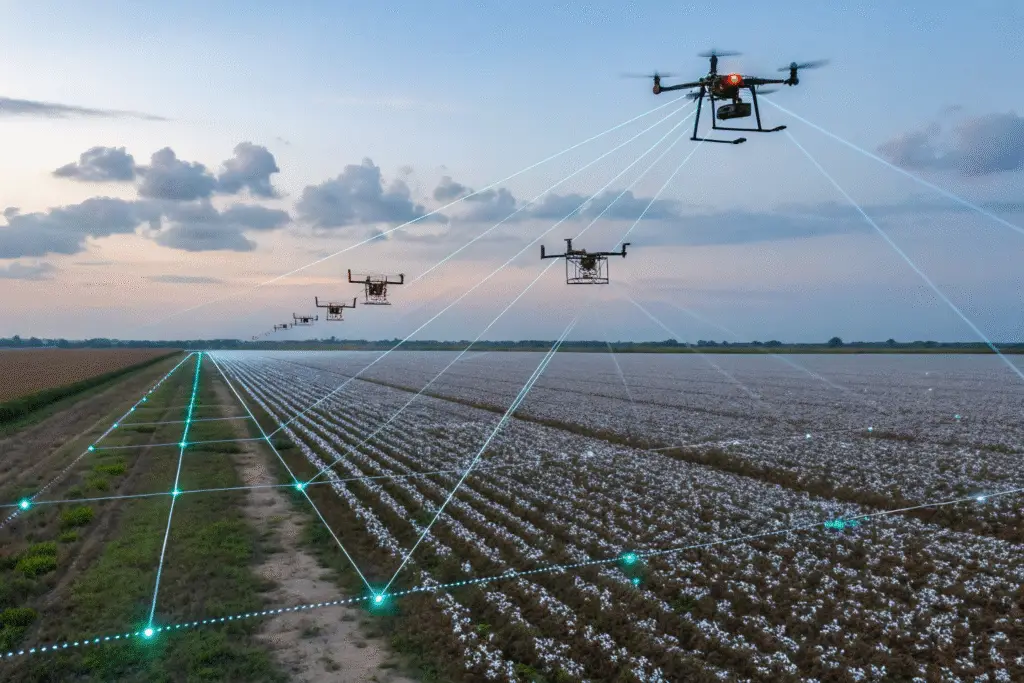
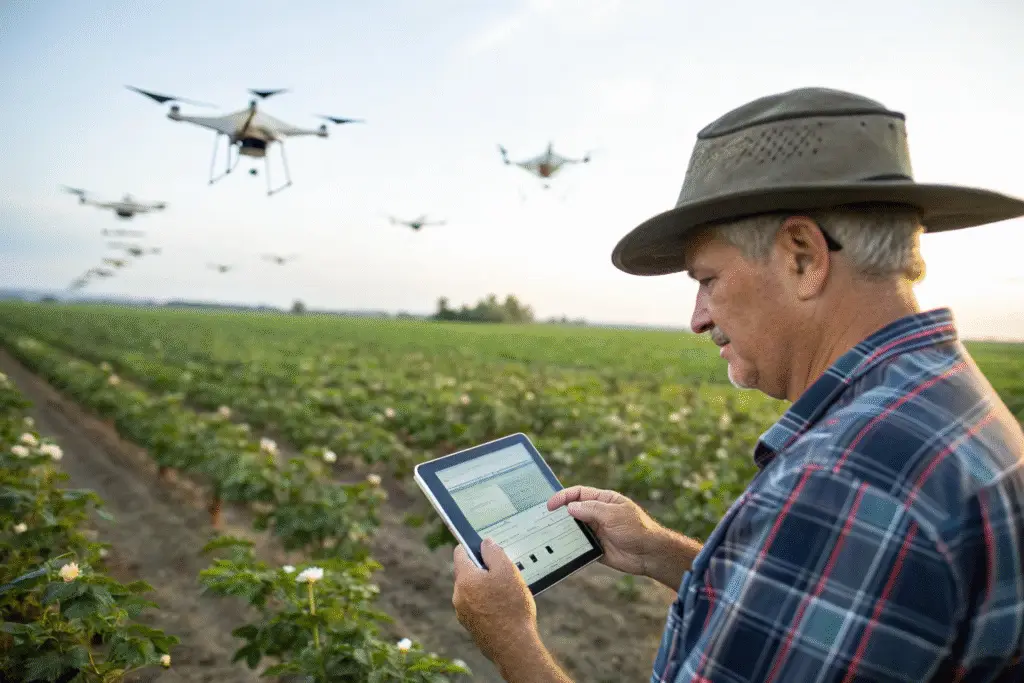
Unlike a single drone that scans slowly, swarms divide tasks across multiple aircraft. Each drone monitors a section of the field, ensuring full coverage without gaps.
Drone swarms improve efficiency by working in parallel, cutting flight time, and boosting data quality.
How do swarms coordinate tasks?
Algorithms guide each drone to its own zone. MIT Technology Review compares this system to bird flocks, where individuals move as one unit.
What advantages come from swarm coverage?
They save time and minimize overlap. ScienceDirect confirms that swarms provide faster, more precise monitoring than single-drone flights.
What Are The Benefits For Cotton Farmers?
Drone swarms do more than scan fields—they translate data into decisions. Farmers gain direct cost savings and long-term environmental improvements.
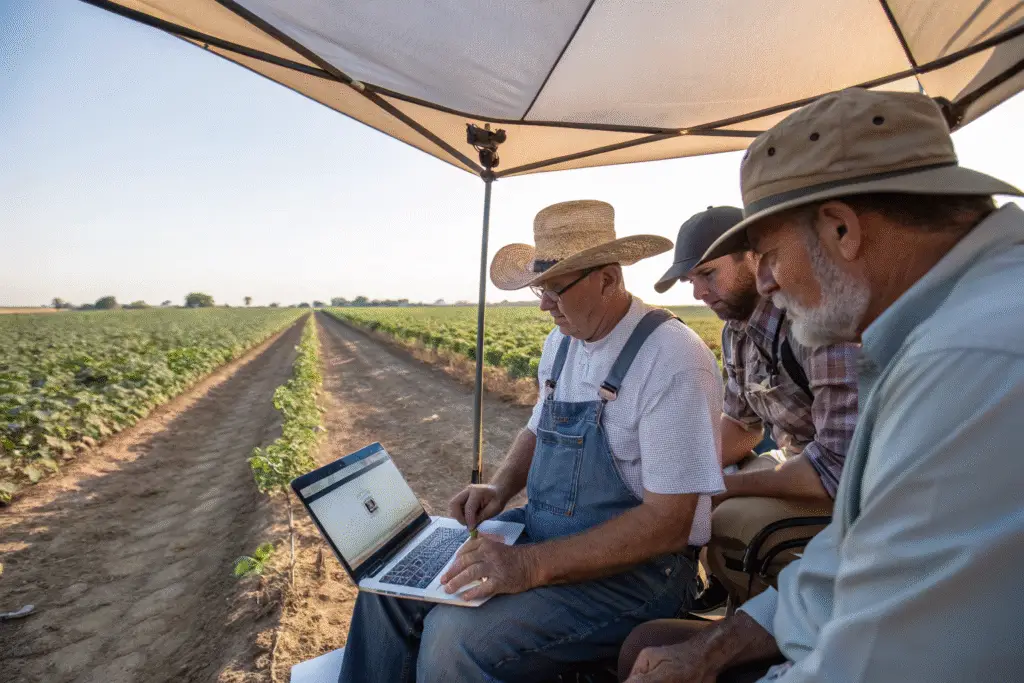
The benefits include reduced chemical use, higher profits, and sustainable practices.
How do they reduce costs?
By targeting water, fertilizer, and pesticides only where needed. World Bank shows precision farming lowers waste significantly.
Why is sustainability improved?
Fewer chemicals mean healthier soil and ecosystems. UN Environment Programme highlights that precision agriculture helps protect biodiversity.
What Data Can Drone Swarms Collect For Cotton Analysis?
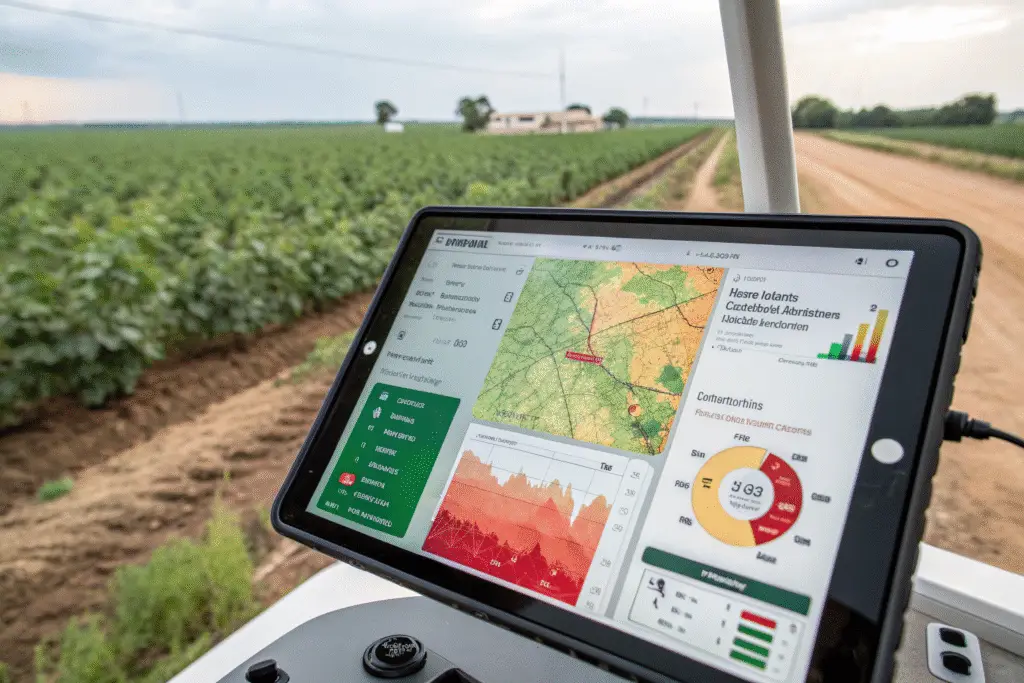
Drones gather more than images—they create layers of agricultural intelligence. Farmers use this data to predict problems and optimize harvests.
The data includes soil conditions, pest activity, plant health, and yield projections.
How do they measure crop health?
Special sensors track chlorophyll and stress signals invisible to the eye. FAO notes this helps identify nutrient deficiencies early.
Can they detect pests or diseases?
Yes. Ultra-sharp imagery reveals pest outbreaks before visible damage occurs. ResearchGate documents how drones detect issues days ahead of farmers.
Why Are Drones Better Than Traditional Field Monitoring?
Manual inspections are slow, and even satellite imagery lacks flexibility. Drones deliver detailed results quickly and adapt to changing farm needs.
Compared to older methods, drones generate more precise data in far less time.
What limits older monitoring methods?
Walking fields delays decisions. USDA warns that slow scouting means pests and irrigation issues spread before action.
How do drones improve accuracy?
With multispectral sensors, drones detect stress invisible to humans. NASA Earth Science confirms that aerial imaging outperforms ground inspection.
Conclusion
Drone swarms give cotton growers faster, sharper, and more actionable insights than traditional monitoring. They cut labor costs, improve yields, and reduce environmental impact by guiding precise input use.
At Shanghai Fumao, we support innovation from cotton sourcing to garment production. For collaboration on smart agriculture and textile manufacturing, contact our Business Director Elaine at elaine@fumaoclothing.com.