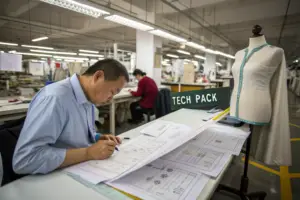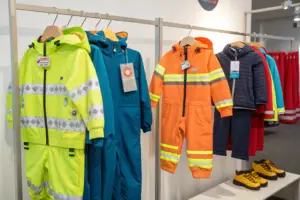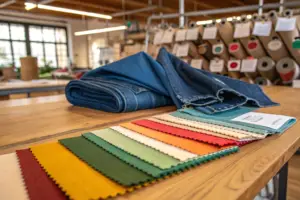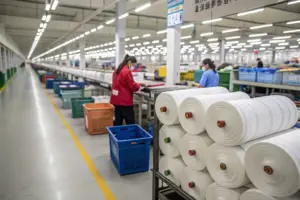
When sourcing custom apparel, you often face a fragmented supply chain: one company handles the fabric printing, another does the cutting and sewing, and a third might apply the logos. Each handoff is a point of delay, miscommunication, and added cost. For brands seeking efficiency, quality control, and faster time-to-market, this disjointed model creates unnecessary complexity and risk.
Partnering with a manufacturer that integrates both fabric printing and garment making under one roof offers significant advantages: it ensures perfect color and pattern consistency from roll to finished product, dramatically reduces lead times by eliminating inter-factory logistics, simplifies accountability, and often lowers overall cost by removing middle margins. This vertical integration creates a seamless, controlled pipeline for your apparel production.
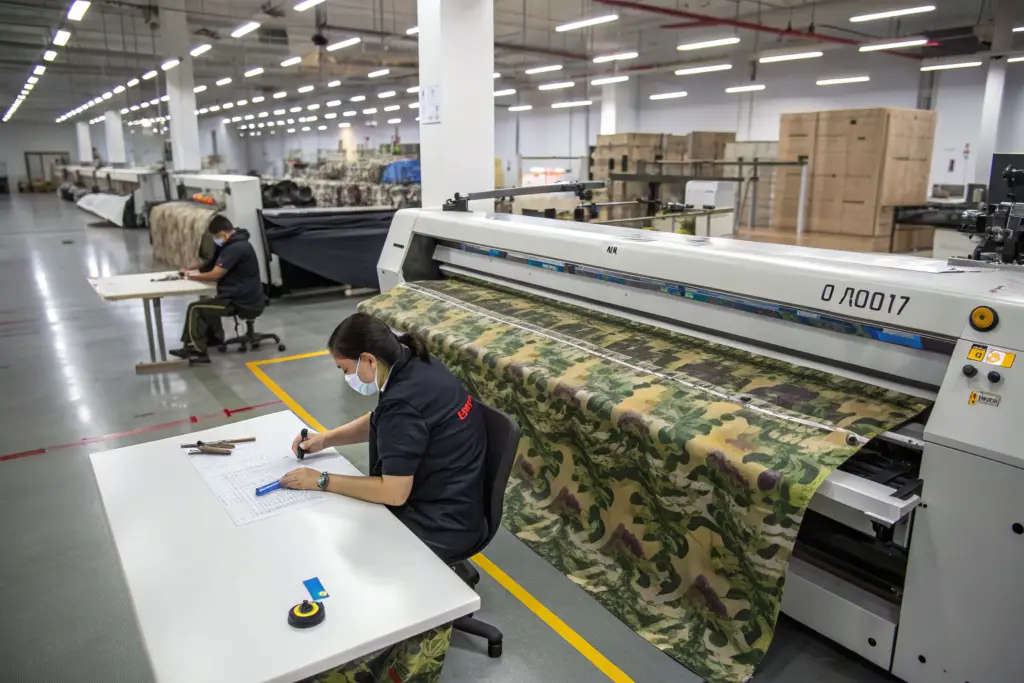
This integrated model is especially critical for products requiring precise pattern alignment, like camouflage hunting wear, or complex custom prints. Let's explore why this one-stop-shop approach is a strategic advantage for modern brands.
How does integrated production guarantee perfect pattern and color consistency?
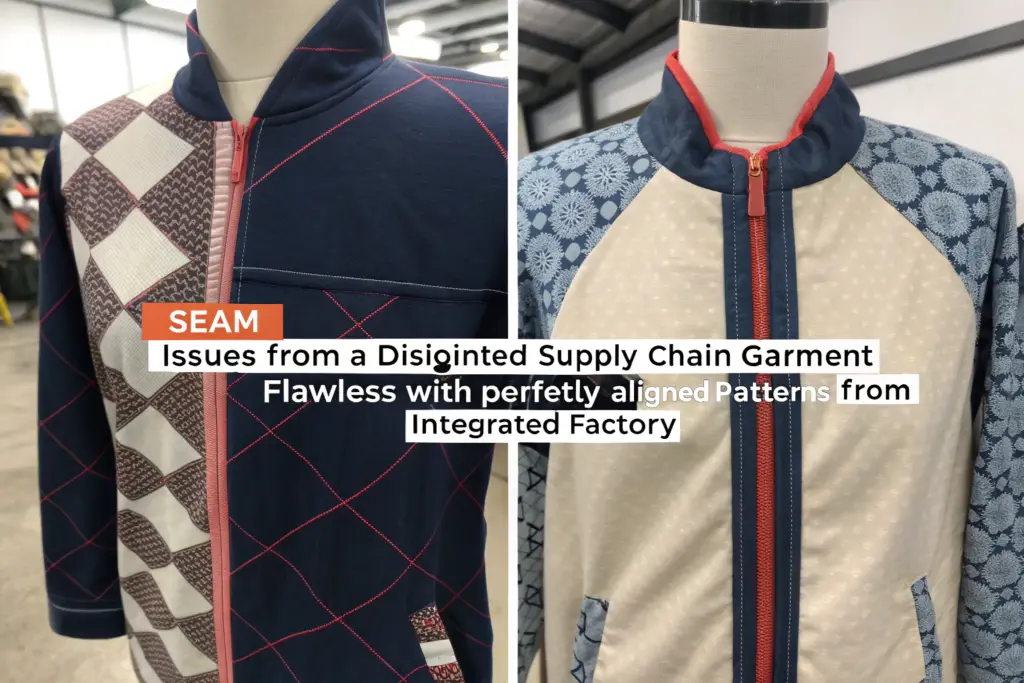
When fabric printing and garment making are separate, a "good enough" match between the printed pattern and the final garment is often the best outcome. Discrepancies in color batches or pattern scaling between the printer and the cutter can ruin a product line. An integrated manufacturer controls the entire visual chain.
Vertical control guarantees consistency because the same team manages the color calibration from the digital file to the printed fabric, and then carefully plans the cutting layout to ensure pattern alignment across garment panels. The color you approve on screen is the color that gets printed, and the pattern that gets printed is the pattern perfectly matched at every seam.
What is the technical process for ensuring consistency?
The integrated workflow follows a controlled digital thread:
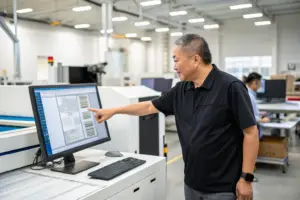
- Digital Color Management: The in-house print team uses spectrophotometers to calibrate monitors, printers, and inks. The color profile for a specific fabric is created and locked.
- Approved Strike-Off: A physical print sample is made and approved by you. This becomes the master for the entire run.
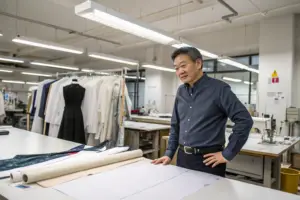
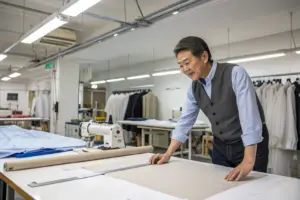
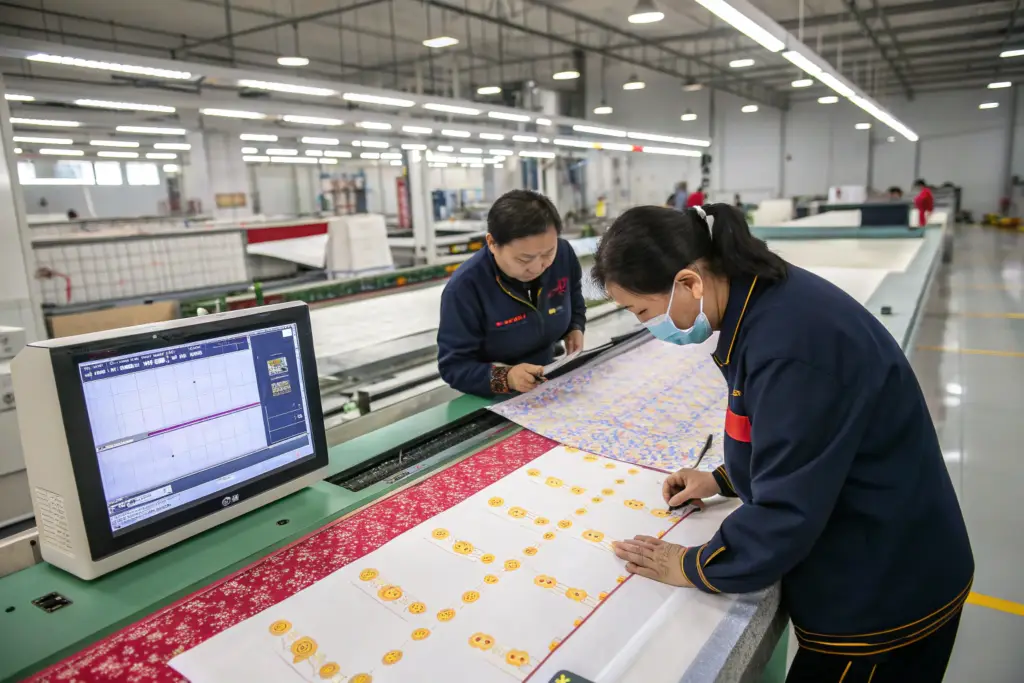
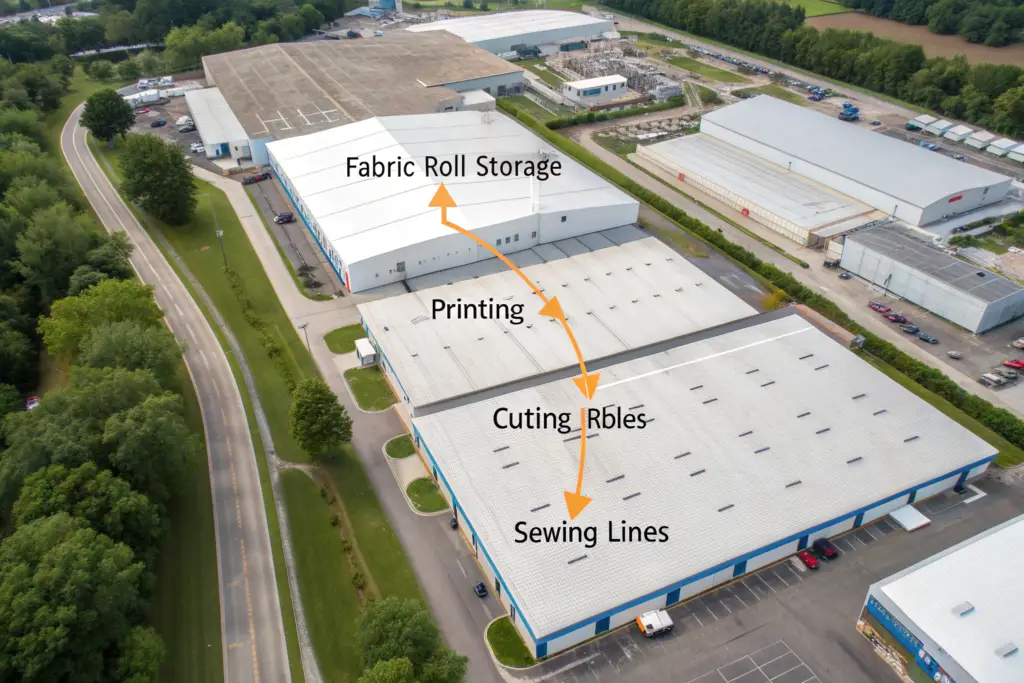
- Patterned Cutting: The cutting team, working in the same facility, receives the printed fabric rolls. They use specialized software and markers to plan cuts that prioritize pattern matching at critical seams (like the center back or sleeve caps). They have direct access to the print team to resolve any issues instantly.
This closed-loop system prevents the blame game between separate suppliers. For a client's series of gradient-dyed hunting shirts, our integrated control allowed us to maintain a perfect color transition across different garment sizes, which would have been nearly impossible with separate printers and sewers.
Why is this critical for licensed patterns like Mossy Oak?
Licensors have zero tolerance for color deviation or pattern distortion. An integrated manufacturer submits one strike-off for approval and then replicates it exactly in bulk. There's no risk of a separate printing vendor using an unapproved ink formula or a sewing factory misaligning the precious licensed fabric. We ensure every step adheres to the brand compliance standards set by the licensor, protecting your legal right to sell the goods.
Can a combined factory truly reduce lead times?
Time is revenue. Every day saved in production means earlier market entry and better capital turnover. The traditional multi-vendor model inherently builds in weeks of buffer for shipping fabric between facilities, re-quality checks, and coordinated scheduling.
Yes, an integrated factory can reduce lead times by 3-5 weeks or more. This acceleration comes from eliminating inter-factory transport, reducing administrative back-and-forth, enabling parallel processing, and allowing real-time problem-solving between departments.
Where is time saved in the process?
Consider the typical delays in a fragmented model:
- Fabric Transport Time: Shipping printed fabric from Printer A to Garment Factory B takes 1-2 weeks, plus unloading and quality re-inspection.
- Scheduling Delays: Aligning the production schedules of two independent businesses is difficult. If one is delayed, the other's line sits idle.
- Communication Loops: A problem found during cutting must be communicated back to the print supplier, diagnosed, and a solution shipped—adding weeks.
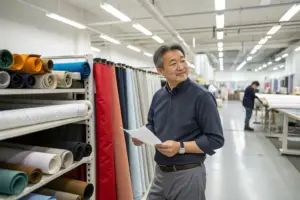
In an integrated setup like ours, the printed fabric moves directly from the printing department to the cutting room, often within hours. Production planning is unified. If the cutting team notices a minor print flaw, they walk over to the print manager to adjust the machine immediately. This agility allowed us to complete a rush 2,000-unit order of custom-printed polos in 28 days total, a timeline our client previously thought was impossible.
How does this affect sampling and development?
The speed advantage is even greater during development. You can approve a print strike-off and see a sewn sample within days, not weeks. Iterations on print placement or color are incredibly fast because the design, print, and sampling teams are in the same building. This rapid prototyping enables you to make better creative decisions and lock designs faster.
| Process Stage | Disjointed Model (Two Suppliers) | Integrated Model (One Supplier) | Time Saved |
|---|---|---|---|
| Fabric Approval & Production | 3-4 weeks at Printer + 1 week transport. | 3-4 weeks in-house. | 1+ week (eliminates transport & re-QC). |
| Garment Sampling | 1-2 weeks for fabric shipping + 2 weeks sampling at garment factory. | 3-5 days for in-house sampling after print approval. | 2+ weeks (eliminates shipping, enables instant revision). |
| Bulk Production | Highly variable due to schedule alignment risk. | Predictable, streamlined flow. | 1-2 weeks (eliminates coordination buffers). |
| Problem Resolution | Days/weeks of communication and shipping for fixes. | Hours/days with on-site collaboration. | Significant risk reduction. |
Does vertical integration improve quality control and accountability?
With multiple suppliers, quality issues lead to finger-pointing. The printer blames the sewer for poor handling; the sewer blames the printer for defective fabric. You, the brand owner, are left in the middle holding defective inventory and facing the financial loss.
Absolute accountability is the paramount benefit of integration. One company is responsible for the entire product—from the ink on the fabric to the last stitch. There is no room for blame-shifting, which forces a higher internal standard of quality at every step and gives you a single, clear partner to resolve any issue.
How does in-house control elevate final quality?
Quality checks are embedded throughout the unified process:
- Pre-Print: Fabric is tested for shrinkage and color absorption.
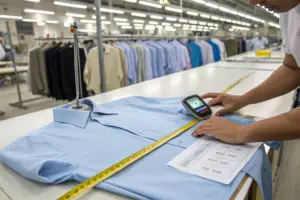
- Post-Print: Every meter of printed fabric is scanned for defects before it's moved to cutting.
- During Cutting: Pattern alignment is verified.
- During Sewing: In-line inspectors check construction.
- Final Audit: AQL inspection on finished garments.
Because all departments report to the same management, quality standards are uniform and enforceable. A quality management system like ISO 9001 is implemented holistically. When we identify a potential print flaw during cutting, we don't ship flawed fabric to ourselves; we fix it immediately, protecting your order's integrity.
What does single-point accountability mean for you as a client?
It means simplicity and security. You have one contract, one point of contact, and one team incentivized to deliver a perfect final product. If there is a problem, there is only one number to call. This clarity builds trust. For example, when a minor but consistent speckling appeared in a custom print for a boutique brand, our integrated team diagnosed it as a static issue in our printing department, adjusted the equipment, and re-printed the affected fabric within 48 hours—all without involving the client in troubleshooting or cost negotiations.
Is an integrated factory more cost-effective in the long run?
The initial unit price from an integrated factory may not always be the absolute lowest bid. However, the total cost of ownership—factoring in speed, reliability, defect rates, and administrative overhead—is almost always lower. Hidden costs in a fragmented supply chain erode margins quickly.
Vertical integration reduces total cost by cutting out intermediary markups, minimizing fabric waste through coordinated planning, drastically reducing the incidence of costly defects, and lowering your internal management overhead. You pay for efficient production, not for multiple companies' profit margins and your own time spent coordinating them.
Where are the specific cost savings?
- Eliminated Middle Margins: You are not paying a printer's profit margin and then a garment factory's profit margin on top of the printed fabric cost.
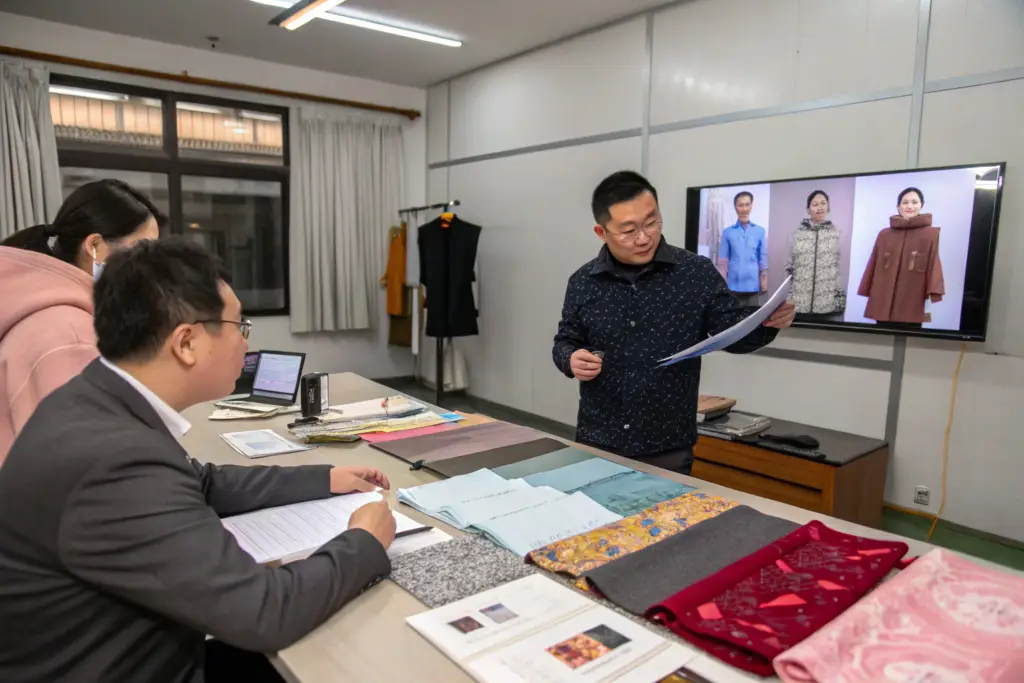
- Reduced Material Waste: Integrated cutting planners work directly with print technicians to optimize print layouts and cutting markers together, maximizing fabric yield from every roll.
- Lower Defect Rates: Fewer handoffs and unified QC mean fewer defective finished goods. The cost of rejects, remakes, and customer returns is vastly reduced.
- Lower Transaction Costs: You manage one PO, one shipment, one set of documents. This saves countless hours of your team's time.
For a growing workwear brand we partner with, moving to our integrated model reduced their annual "cost of quality" (rework, returns, delays) by an estimated 18%, even though their per-unit FOB price was slightly higher. Their finance team confirmed the net profit per unit improved.
Why is Fumao Clothing's integrated model a strategic advantage?
Our capability to handle digital and screen printing alongside full-scale garment manufacturing is a core differentiator. It allows us to offer true full-package production from a blank fabric roll to a retail-ready garment. For clients, this means we can execute complex custom prints and constructions that other factories would outsource, giving you faster, more reliable, and often more innovative results. This control is why brands seeking dependable, high-quality custom apparel consistently choose us.
Conclusion
In a competitive market where speed, consistency, and accountability are currency, partnering with a vertically integrated manufacturer is a powerful strategic decision. It consolidates your supply chain, reduces risk, accelerates time-to-market, and provides unmatched control over the final product's quality. While the initial price point might not always be the lowest, the value in terms of reliability, simplicity, and total cost is overwhelmingly superior.
If you are tired of managing a fragmented supply chain and ready for a streamlined, accountable partnership, consider the integrated approach. At Fumao Clothing, our combined fabric printing and garment making expertise is designed to give you this exact advantage. To explore how our one-roof control can benefit your next collection, contact our Business Director, Elaine, at elaine@fumaoclothing.com. Let's build a more efficient supply chain together.