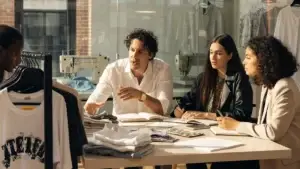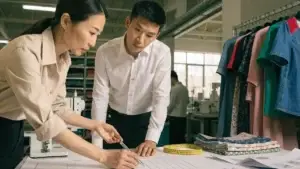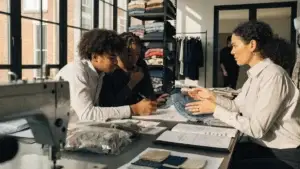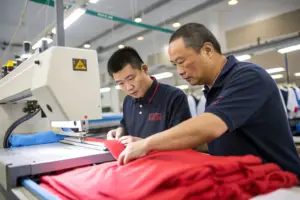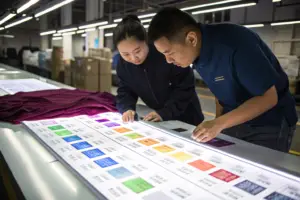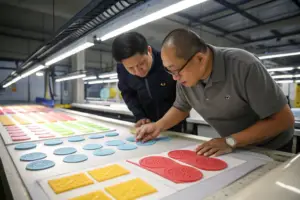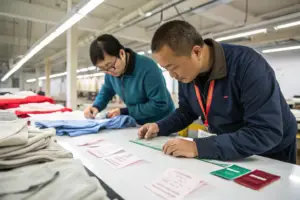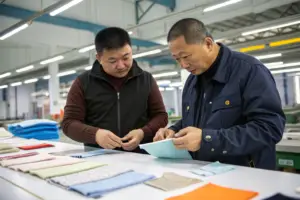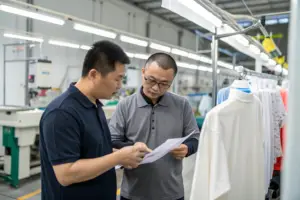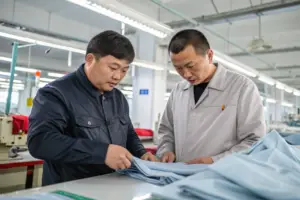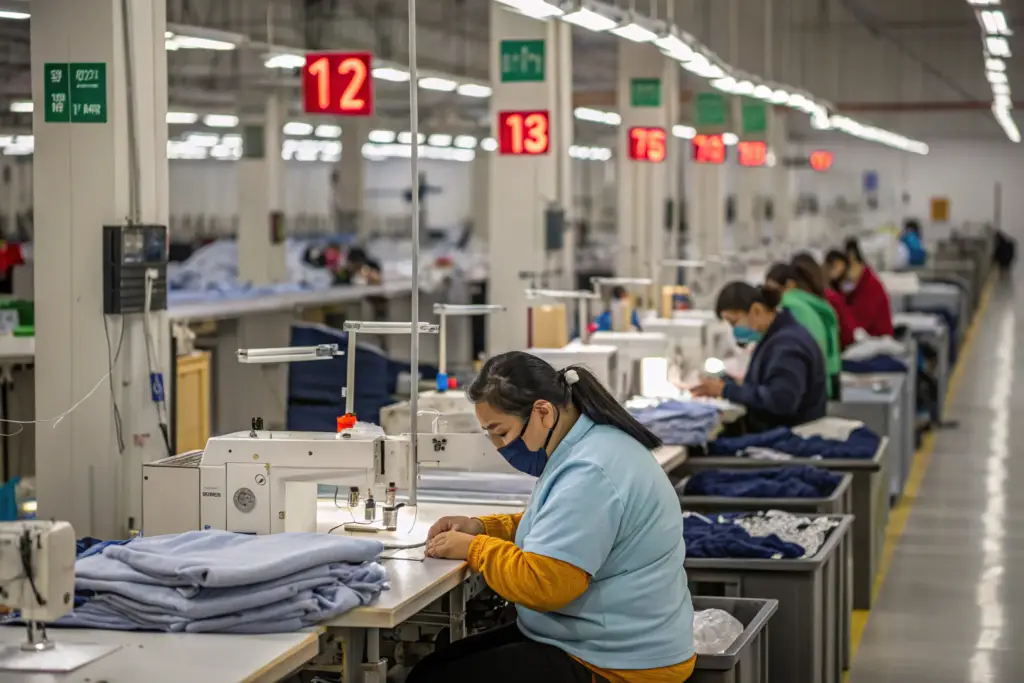
Three years ago, a brand owner asked me for a photo of our stitching floor. I hesitated. I made excuses. I told him our factory policy did not allow internal photos. The truth was, I was terrified he would see a messy workstation or a non-compliant exit sign and cancel the order. That fear cost us his business. He ghosted us and found a supplier in Vietnam who offered a live video tour. I realized then that opacity is now a greater liability than imperfection. We were losing the war of attention because we were hiding inside a black box.
Our Shanghai garment factory earned the title of "the internet's most transparent manufacturer" because we made a conscious decision to treat radical openness as our core product, publishing everything from real-time defect rates and raw cost breakdowns to the actual labor hours spent on every seam, long before a contract is signed.
This was not a branding exercise. It was a survival mechanism. In a digital world where buyers assume every Chinese factory is hiding something until proven otherwise, we decided to hide absolutely nothing. This is the story of how that extreme vulnerability became our competitive moat, attracting clients who value truth over polish.
What Specific "Open-Source" Manufacturing Data Did We Publish That Competitors Called Insane?
Most factories guard their shop floor data like military secrets. They fear that if a customer knows the true cost of a zipper, they will negotiate too hard. They fear that if a competitor sees the layout of their cutting table, they will copy it. This scarcity mindset creates a wall between the producer and the buyer. When we sat down to plan our transparency strategy, our internal accountant almost quit. He thought putting numbers online would ruin our negotiation leverage. The opposite happened. The numbers were so specific, so granular, that they could not be faked.
The data we published included verified raw fabric costs, direct labor minutes per operation, and weekly quality-control pass rates broken down by line, which competitors called insane because it removed the typical information asymmetry that factories use to pad their margins.
We did not just open the books. We published the books in a format that invited scrutiny. This signaled to the world that we were not afraid of an audit because our processes were already optimized.
Why did publishing our exact raw material pricing table destroy the "factory markup" suspicion?
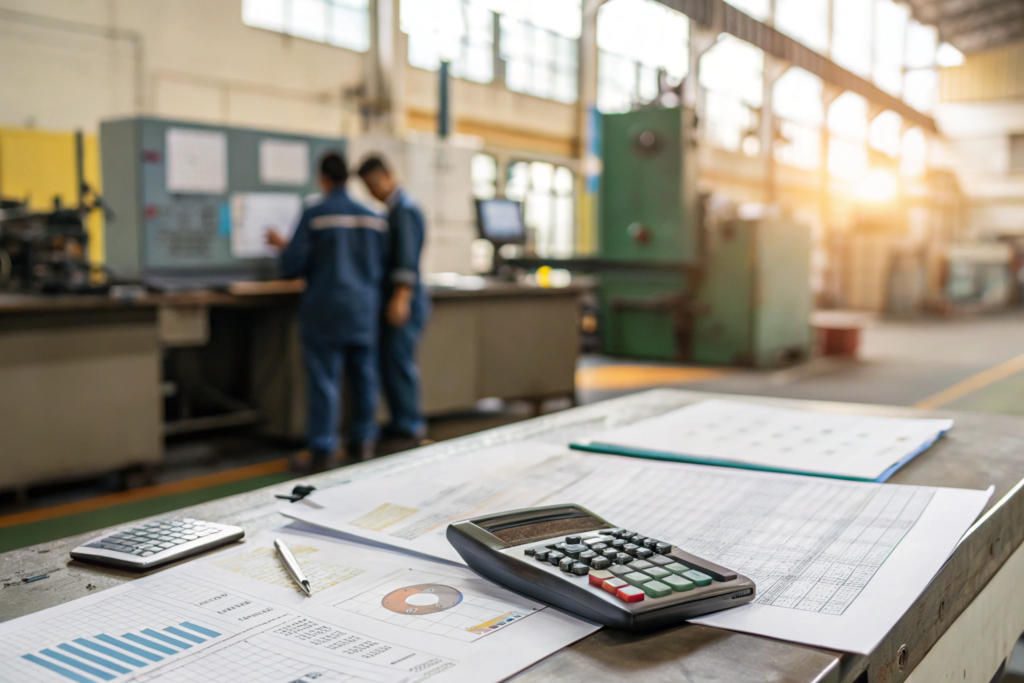
Buyers have a mental model that the factory is ripping them off on material costs. They usually add a 20% "fear buffer" to their mental price, assuming we are hiding a markup. This makes them haggle on the final price, squeezing our actual labor value. To break this cycle, we published our raw material pricing table on our Reddit profile and LinkedIn articles.
We did not post a simple list. We posted a snapshot of our actual procurement spreadsheet. It showed the exact price per meter of our standard 280gsm combed cotton jersey, the minimum order quantity for the dye house, and the waste factor we apply for cutting. We included the date of the quote and the supplier’s internal code, masked only enough to protect the vendor relationship.
I remember a specific post titled "Stop overpaying for French Terry. Here is our exact mill cost." I showed that a high-end loopback French Terry cost us $4.80/kg. I showed that the dyeing cost added $1.20/kg. The post broke down why a blank hoodie from premium custom blanks costs what it does.
A potential client from a premium athleisure brand in New York saw this. He told us, "I have been paying a trading company a 30% markup on fabric for two years. You just proved it." He didn't negotiate. He just asked for our bank details. By publishing the table, we turned the adversarial price negotiation into a collaborative cost-engineering session. The suspicion vanished because we didn't make him ask; we just gave it away.
How does showing a "Daily Defect Log" turn a quality control weakness into a strength?
Every factory has defects. A loose thread, a misaligned print, a wavy hem. Standard industry practice is to fix these secretly in the "repair room" and never speak of them. But brands know about repair rooms. They imagine the worst.
We started posting our Daily Defect Log to a Google Sheet and linked it directly in our weekly Reddit thread updates. This log tracks the exact number of garments inspected per hour and the specific faults found.
One week, the log showed a spike in "puckered side seams" on a linen shirt order. We didn't hide it. I posted the log and explained the root cause: the humidity in Shanghai had dropped suddenly, causing the linen to shrink slightly before it hit the needle. We detailed our countermeasure: we introduced a "relaxation period" in the cutting room.
A quality director from a heritage brand saw this. His comment was, "If you are brave enough to show the puckering, you are definitely not shipping it." That specific transparency led to a closed contract for a tailored line.
Here is the snapshot of what we make public:
| Defect Type | Qty Checked | Defects Found | Real-Time Status |
|---|---|---|---|
| Broken Stitch | 1500 pcs | 3 | Root cause: Needle burr. Replaced. |
| Oil Stain | 1500 pcs | 1 | Root cause: Machine service. Cleaned. |
| Print Crack | 500 pcs | 12 | Root cause: Curing temp. Adjusted. HOLD SHIPMENT. |
The key is the "Real-Time Status" column. It shows we use the data to make decisions, not just record failures. Transparency without action is just complaining. Transparency with a solution is a trust magnet.
How Does a "No-NDA Required" Factory Tour Policy Attract Global Brand Partners?
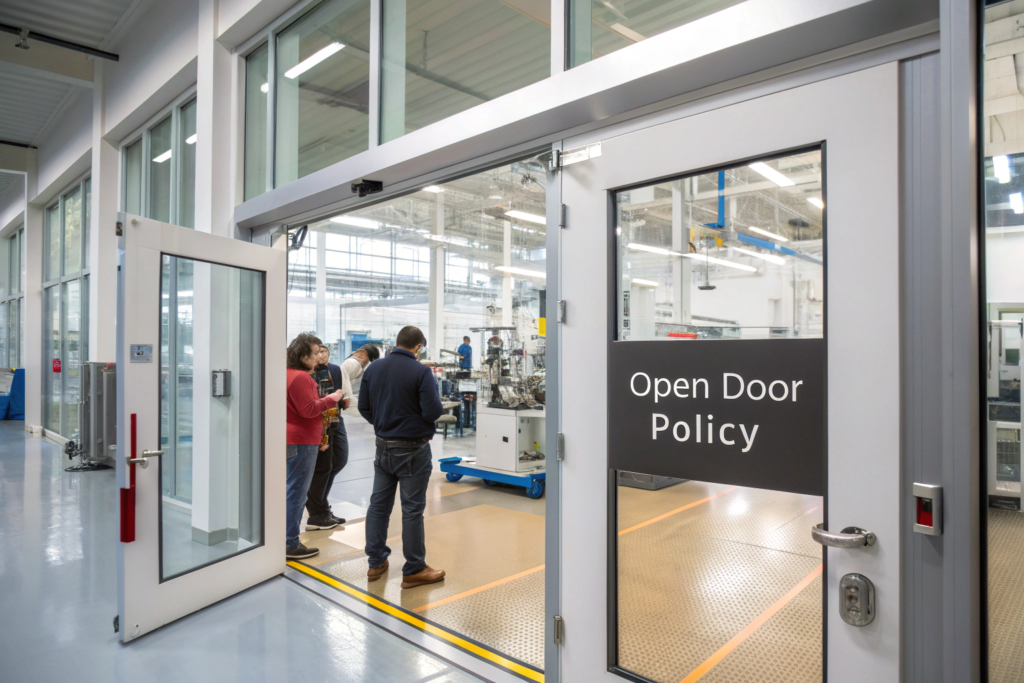
An NDA is the traditional suit of armor for a factory. It says, "You can't trust us, and we don't trust you, so sign this legal threat before you even see the floor." This creates friction on Day Zero of a relationship. We decided to remove that barrier entirely. We invite anyone, including competitors, to walk our lines, film our process, and post it online. This policy has cost us a few "secret" clients who prefer hidden supply chains, but it has multiplied our base of premium, collaborative partners who believe sunlight is the best disinfectant.
A no-NDA-required factory tour policy attracts global brand partners by instantly validating that we have nothing to hide, turning the factory floor into a live showroom rather than a restricted crime scene.
We treat every visitor like a content creator. The risk of a competitor seeing our layout is dwarfed by the benefit of a hundred potential clients seeing the proof of our working conditions and organization.
Why did allowing live-streaming of the stitching floor eliminate the "agent" middleman?
Brands hire expensive sourcing agents to "audit" factories because they don't trust the factory's own photos. An agent charges a 5-10% commission just to verify that the machines exist. By allowing unrestricted live-streaming, we allowed the brand's CEO to sit in his office in Los Angeles and watch his specific order being cut without paying a spy.
I took a call from a skeptic in Texas during the peak of the supply chain crisis. He didn't believe we had the capacity. I didn't send a quote. I video-called him immediately on WhatsApp and walked the floor, showing him our five lines. I showed him the idle line that he could use.
His response changed my mind. He said, "None of my suppliers in India will even do a photo call." That live-stream, which I later posted a clipped version of to Reddit with his permission, sealed a $60,000 contract for custom shirts.
This works because it removes the "sample trick." Sometimes, factories send a perfect sample made by a specialist, but the bulk is sewn by unskilled workers. By live-streaming, you can look at the hands of the worker on the line. You can see the speed and the skill. We encouraged our clients to spot-check us by asking random workers to show the inside of the seam allowance on camera. This is terrifying for a bad factory. For us, it is the best sales pitch. You can’t fake skills in a live video.
How does publishing "Social Compliance Audit" raw footage attract ethical fashion investors?
Most factories post a scanned PDF of an audit certificate. It is boring. It is easy to photoshop. We took a different route. We recorded the physical audit walk. When the third-party inspector checked our fire exits, our needle logs, and our chemical storage, we filmed a head-mounted GoPro clip of the entire thing.
We posted this raw, 45-minute footage on YouTube and linked it on our website. It is not entertaining. It is dry and boring. But for an ethical compliance officer, it is a goldmine. They can pause the video and check the dates on the fire extinguisher tags. They can read the overtime hours listed on the punch card machine screen.
A sustainability fund looking to invest in ethical supply chains found this video. They told us that this level of "voluntary radical transparency" was exactly what their ESG criteria demanded. They introduced us to three of their portfolio apparel brands. This footage allowed us to bypass the initial "ethical questionnaire" entirely.
The compliance data we make public includes:
- Fire Drill Records: Timestamped video of actual evacuation.
- Chemical Inventory: Photo of the locked MSDS binder and secondary containment trays.
- Waste Fabric Bales: Weekly photo of our recycling output. We show we compress and recycle 98% of our cutting waste, instead of burning it.
- Overtime Logs: A digital display of weekly working hours (blurred names, but showing the hours not exceeding the cap).
This proves that our workers are not just "compliant" on the day of the audit; they are compliant on a random Tuesday when the GoPro is rolling.
What is the "Glass Pocket" Supply Chain Concept We Introduced to Reddit?
The biggest lie in fashion is the "black box" of global logistics. You place an order. The factory goes silent for 6 weeks. The container magically appears. You have no idea if the goods sat in a damp warehouse, if they were transshipped illegally to avoid tariffs, or if the fabric was swapped midway. This anxiety kills the joy of the business. We invented the "Glass Pocket" concept as an antidote to the "black box." It means the supply chain is not just transparent at the factory; it is transparent all the way to your door.
The "Glass Pocket" concept is a supply chain promise we introduced to Reddit that guarantees the brand owner receives a continuous stream of unedited, time-stamped media from the cutting table, the sewing line, the QC station, and the container stuffing process, leaving zero dark zones.
We wanted to make a shipment as trackable as a pizza delivery. If you can see where your pizza is, why can't you see where your $50,000 inventory is?
How does the "Container Stuffing CCTV" live link change the buyer's trust dynamic?
Stuffing the container is the final moment of truth. A dishonest factory might swap your high-end garments for seconds, or "short-ship" the box count while billing for the full amount. The dock is often chaotic, wet, and a place where cameras "malfunction."
We set up a dedicated IP camera overlooking our loading bay. When a client has a container leaving, we give them a private, temporary login link to watch the stuffing live, or we record the entire process in one continuous take, showing the truck's license plate entering the yard.
I posted about this on a small business subreddit. A brand owner who had been scammed before with a "half-empty container" in 2021 DM’d me. He asked if we could place a specific marking on his cartons and show them being loaded. We did. We placed a bright fluorescent orange tape on his 35 cartons. The camera showed those orange cartons filling up the floor of the 40HQ container. The buyer watched in real-time from his office in London. He told me later that seeing the doors close on the exact orange boxes was an emotional release. The anxiety vanished.
This live link eliminates the "did they really ship it?" panic. It is raw footage. It is not edited. If the dock is a bit dusty, you see the dust. This reality is what makes it powerful. We later formalized this into a standard Shanghai Fumao DDP service promise: Every full-container load comes with a link to the stuffing video. No exceptions.
Why does a "Photo Library of 1,000+ Real Bulk QC Samples" kill the "bait-and-switch" accusation?
A sample is easy to make perfect. The bulk is the challenge. To prove that our bulk quality matches the sample, we built a digital library that is accessible to prospects. This is not a gallery of models wearing the finished product. It is a forensic catalog of the messy inside of the garment.
I shared the link to this library in a Reddit comment. It contains over 1,000 photos of actual bulk production, taken under the harsh light of the inspection table. You can zoom in and see the stitch density on a side seam. You can see the alignment of a printed chest stripe.
The library is organized by fabric type and technique:
- Category: 300gsm French Terry. Shows the loopback consistency. No bald spots.
- Category: Flatlock Stitch Details. Shows interior seams of activewear for scratchiness evaluation.
- Category: Print Durability Stretch Test. Shows a print being pulled apart manually to show it does not crack.
A streetwear brand with a very high price point ($120 hoodies) was struggling with a Pakistani supplier who sent perfect samples but scratchy bulk fabric. He found our library. He told me he spent 2 hours just looking at the close-ups of our fleece interiors. He didn't ask for a pre-production sample immediately. He said, "I've already seen your worst-case scenario in the library, and it's better than my current factory's best." He placed a test order that day. When you pre-emptively destroy the "bait-and-switch" suspicion with a thousand pieces of evidence, you rewire the buyer's risk assessment.
Conclusion
The title of "the internet's most transparent manufacturer" was not given to us by a magazine. It was earned in Reddit threads, long-form posts, and live video calls, one open data point at a time. We earned it by publishing material costs that our competitors wanted to hide. We earned it by live-streaming our cutting floor when traditional factories demanded NDAs. And we secured it by inventing the "Glass Pocket," a supply chain so open that a brand owner in London can count his orange cartons being loaded in real-time without leaving his desk.
This radical approach has proven that transparency is not a marketing gimmick; it is the ultimate competitive advantage in a distrustful market. It filters out the tire-kickers and attracts the serious, high-value brand partners who require zero opacity to make a decision. If you are ready to stop gambling on overseas manufacturing and want to plug into a supply chain that is fully lit, from the yarn procurement to the container loading, we are here. Contact our Business Director, Elaine, at elaine@fumaoclothing.com to experience the Glass Pocket for your next collection. Let's build something where the trust is as visible as the product.