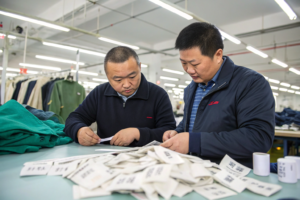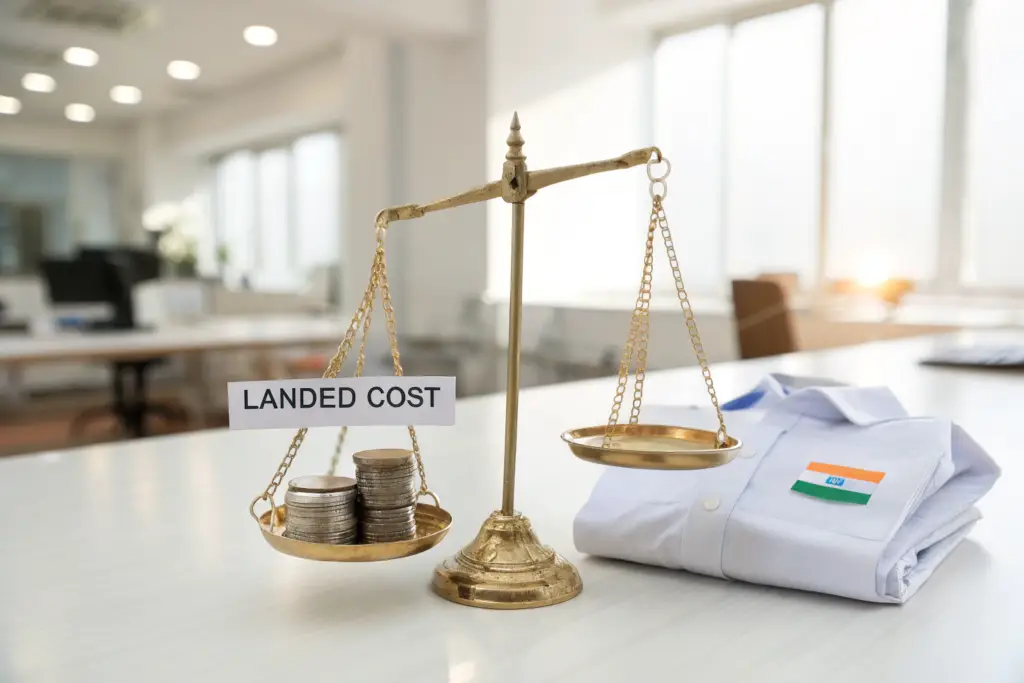
You have a quote from an Indian factory. It looks attractive. But when you add up the shipping delays, the communication gaps, the fabric inconsistency, and the hidden agency fees, the "cheap" price becomes very expensive in time and stress. I have watched buyers chase the lowest unit price, only to lose their entire season's margin on air freight and chargebacks. The real question is not who is cheaper on paper. The real question is who delivers the lowest landed cost for a product that actually sells at full price. That is where Shanghai Fumao wins.
Shanghai Fumao is often cheaper than Indian factories when you compare the total landed cost for a consistent, premium-quality garment. We achieve this through unmatched vertical integration, massive domestic raw material scale, and logistics efficiency. We don't cut corners on quality. We cut out the middlemen, the waste, and the inefficiencies that silently inflate your final bill.
Why does our structural cost advantage matter more than a lower unit price? Because a factory that saves you $0.50 on the unit but costs you $1.50 in hidden freight, rework, and lost sales is not cheap. It is expensive. I want to walk you through the real drivers of cost in our factory versus a typical Indian supplier. This is not just about wages. It is about the entire supply chain ecosystem that surrounds the garment.
Vertical Integration That Cuts Out Costly Middlemen
The biggest hidden cost in apparel sourcing is the margin taken by intermediaries. When you buy from a factory that outsources its fabric sourcing, its dyeing, and its finishing, you are paying a markup at every single step. Each middleman adds their profit. Each handoff adds a delay. Many Indian factories, particularly smaller ones, are stitching units only. They buy dyed fabric from a trader. They send the cut panels to an external printer. They lose control of both cost and timeline.
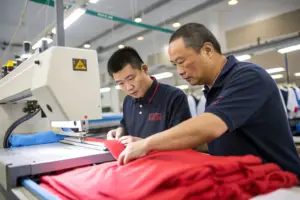
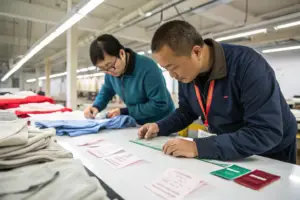
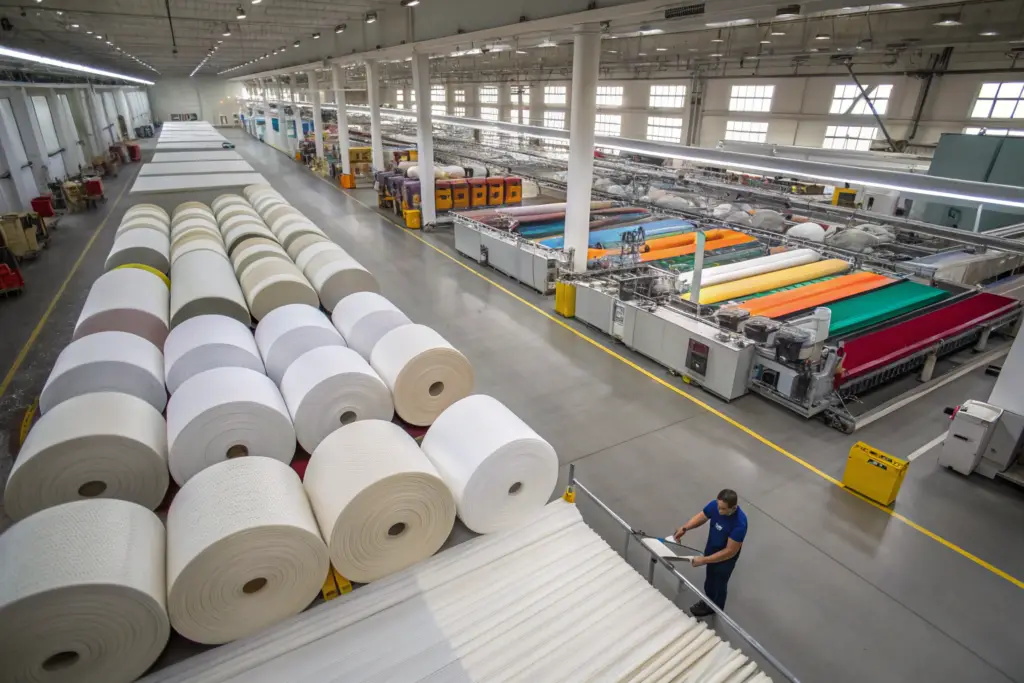
We operate as a vertically integrated manufacturer. Fabric procurement, dyeing, printing, cutting, sewing, and finishing all happen within our controlled production campus. There are no external trader markups inflating your material cost. There are no handoff delays inflating your lead time. This integration compresses the supply chain, removing the hidden costs that make other factories more expensive than they first appear.
How Does In-House Fabric Sourcing Reduce Raw Material Costs?
When a factory buys fabric from a local market trader, that trader takes a 5% to 10% commission. That cost is baked into the price of the fabric and passed to you. We bypass traders entirely. Our procurement team buys greige fabric and yarn directly from mills in Jiangsu and Zhejiang provinces. We buy at mill-gate prices because of our volume and our long-term partnership contracts.
This direct sourcing advantage is structural. China's textile industry is the largest in the world. The sheer volume of cotton, polyester, and viscose processed domestically creates a raw material market price that is often lower than what an Indian factory can access, especially after import duties on specialized yarns. For example, high-tenacity filament yarn for activewear is produced at scale in China. An Indian factory may need to import it, paying freight and duty. We buy it from a plant two hours away. This textile supply chain density translates directly into a lower cost per meter for your fabric, without sacrificing quality.
Can Eliminating External Dye Houses Lower Your Production Costs?
Dyeing is a bottleneck. If a factory sends fabric to an external dye house, they lose a week in transit and processing. They also pay the dye house's profit margin. And if the color is off, the blame game begins. The dye house blames the fabric. The factory blames the dye house. You pay for the delay. Our in-house dyeing and finishing unit eliminates this fragmentation.
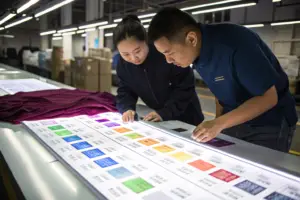
We control the chemical recipes, the water quality, and the processing timeline. This means our dyeing cost per kilogram is strictly the cost of dyes, chemicals, water, energy, and labor. There is no third-party profit margin added. Furthermore, integrated dyeing reduces the rework rate. If a shade needs adjustment, our lab does it internally within hours. An external dye house might take days and charge a re-dyeing fee. This speed and cost control is directly reflected in the FOB price we offer you. You can read more about the benefits of integrated production in resources on textile manufacturing efficiency.
Supply Chain Density and Logistics Speed Advantages
Distance costs money. Every day your goods are in transit, your working capital is frozen. Every extra nautical mile burns fuel and adds to your freight bill. India's geographical position, relative to the US West Coast, is a significant logistical disadvantage compared to China. This is not a matter of opinion. It is maritime geography. The time and cost of moving a container from a factory to a US distribution center are critical components of your landed cost, and they often favor China.
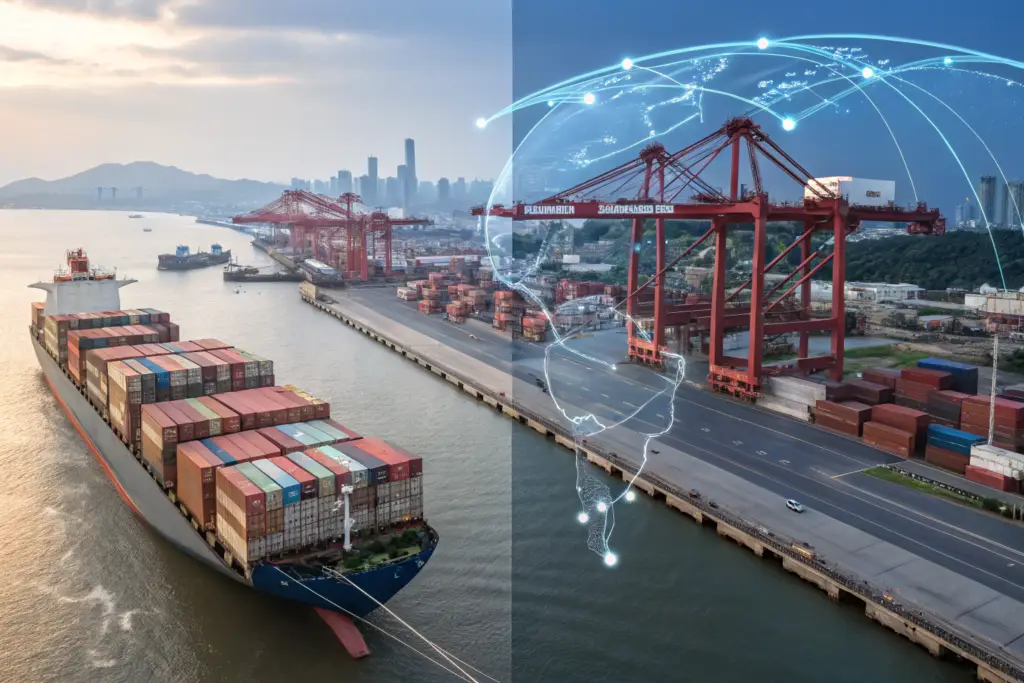
Our factory benefits from China's unparalleled logistics infrastructure. Shanghai port is the world's busiest container port, offering direct, high-frequency sailings to US West Coast ports. Transit times are shorter. Freight rates are more competitive. Our shipping department books containers with guaranteed vessel space. This logistics speed means your inventory arrives faster, re-stocks your shelves sooner, and reduces your supply chain financing costs.
Why Does Port Infrastructure Affect Your Per-Unit Price?
A congested port adds demurrage, detention, and uncertainty. Shanghai operates with deep-water berths, automated terminals, and a level of throughput efficiency that few ports in the world can match. This means containers are loaded onto vessels on schedule. They are less likely to be rolled to the next sailing. This reliability has a direct financial value.
Indian ports, while improving, still face significant congestion and draft restrictions that limit the size of vessels that can call. Transshipment via Colombo or Singapore is often necessary, adding days and cost. When you import from India, you must factor in a higher risk buffer for logistical delays. When we ship from Shanghai, our logistics team books direct sailings to Long Beach or Newark with a transit time of 12 to 15 days. This speed and reliability is a hidden cost saver. You can compare port performance data from sources like the World Bank Container Port Performance Index. Faster ports mean faster inventory turnover for your business.
How Does Faster Shipping Reduce Your Inventory Holding Costs?
Cash is the lifeblood of your brand. Every dollar tied up in goods on a slow boat is a dollar you cannot spend on marketing, design, or new samples. The difference between a 14-day transit from Shanghai and a 25-day transit from an Indian port via a transshipment hub is eleven days of frozen capital. Over multiple seasons, this financing cost compounds.
Imagine you run a $200,000 seasonal order. The eleven extra days of transit from India means you need to place your order eleven days earlier, pay your deposit eleven days earlier, and wait eleven extra days to start selling. That is eleven days of additional working capital requirement. Our DDP door-to-door service from Shanghai is optimized for speed. We cut the cash conversion cycle. This is a real, quantifiable financial advantage of sourcing from a factory embedded in China's logistics ecosystem. You can find deeper analysis on this in supply chain finance publications.
Integrated DDP and the Elimination of Surprise Fees
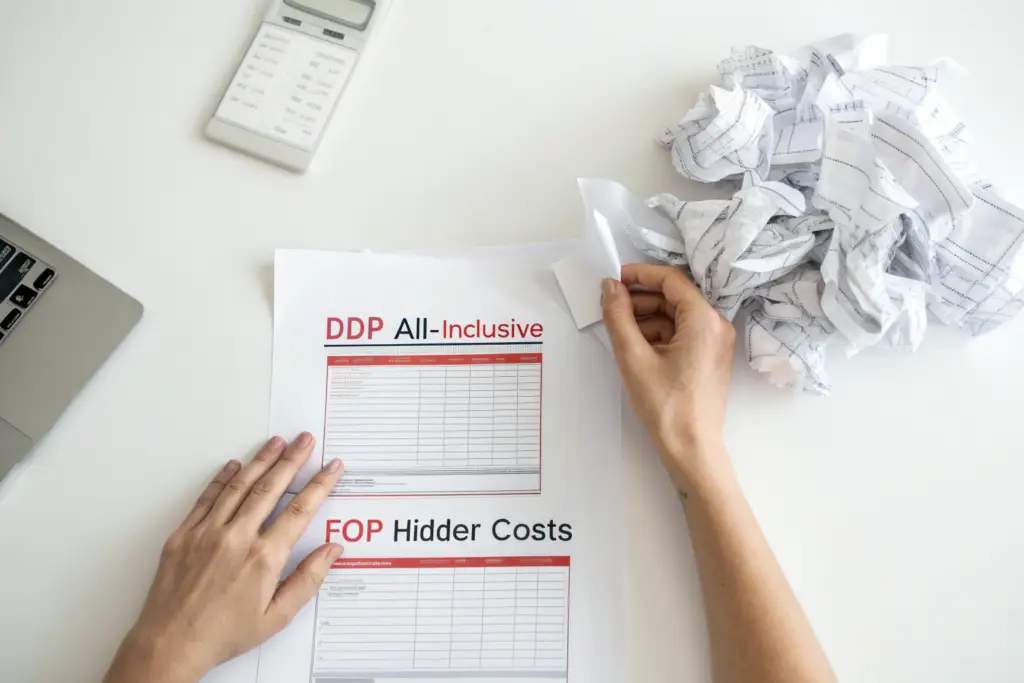
I discussed this in the context of reliability, but it is equally true for cost. The cheapest FOB quote is a trap. It is an invitation to a surprise party where you pay for everything. Indian factories, particularly those catering to export markets, predominantly quote on FOB terms. This leaves you exposed to destination charges, customs brokerage fees, bond fees, and port storage costs at the US port. You cannot compare an Indian FOB price directly with our DDP price. You are comparing an incomplete number with a complete one.
Our DDP model makes us cheaper on a landed-cost basis because we absorb and efficiently manage the destination logistics. We consolidate freight, negotiate lower brokerage fees, and process customs without storage delays. The single DDP price we quote is the final price you pay to your warehouse door. When you compare this against an Indian FOB quote plus all your actual destination receipts, our price is frequently lower.
What Is the "Freight Absorption" Advantage of a DDP Supplier?
When you ship a single Less than Container Load shipment from an Indian FOB factory, you pay the spot freight rate. It is a small-volume, transactional price. When we ship DDP, we consolidate the freight of multiple clients into full container loads. We are a high-volume shipper. We have negotiated annual freight contracts with major carriers.
We essentially act as a wholesale buyer of freight space. We pass these volume discounts through to your landed cost. Your shipment is part of a larger logistics pipeline that drives the per-unit freight cost significantly below what you could achieve on your own. This freight absorption advantage is structural. A single brand shipping 500 units cannot match the freight rate of a factory shipping 50,000 units a month. This is a core reason our all-in DDP price can beat a seemingly lower Indian FOB price.
How Do Hidden Customs Broker Fees Inflate FOB Invoices?
Under FOB, you must hire a US customs broker to file the entry. Brokers charge a set-up fee, a per-customs-entry fee, and sometimes an additional fee for each Harmonized Tariff Schedule line item. A complex apparel shipment with multiple fiber types, trims, and packaging materials can generate a surprisingly large broker bill.
We eliminate this cost entirely for you. Because we ship DDP, we contract the broker directly as part of our internal logistics cost. Our brokerage fees are extremely competitive due to our consistent, high-volume, and clean documentation. We do not mark up the broker fee. It is simply one component of the inclusive unit price we give you. This is another $100 to $300 per shipment that stays in your pocket compared to managing the import yourself. For official guidance on these import costs, you can check CBP importer resources. Our DDP model makes these charges our problem to solve efficiently, not your surprise invoice to pay.
Conclusion
The question of why we are cheaper than Indian factories has a simple core truth. We are cheaper on the metrics that actually hit your bank account: total landed cost, inventory speed, and quality consistency. Our vertical integration removes the trader and subcontractor margins that inflate Indian factory costs. Our location in the world's densest textile and logistics hub shortens transit times and lowers freight rates. Our DDP model consolidates destination costs into a single, efficient pipeline, eliminating the financial ambush of surprise port fees and broker bills.
We do not compete by lowering wages or using inferior materials. We compete by engineering a smarter, faster, more integrated supply chain around your product. The result is a garment that often lands in your warehouse at a lower all-in price than an Indian FOB quote, with superior fabric and faster turnaround. This is the real value equation.
If you are currently sourcing from India or evaluating quotes, I challenge you to send us the specs of your best-selling style. We will send you back a single, all-inclusive DDP landed cost. Compare it line by line with what you actually paid last time, including every freight and customs invoice. I am confident you will see the difference.
Contact our Business Director, Elaine, at elaine@fumaoclothing.com. She will prepare a detailed cost comparison tailored to your specific product and delivery address. Let us show you, with real numbers, why Shanghai Fumao is the smarter choice for your bottom line.