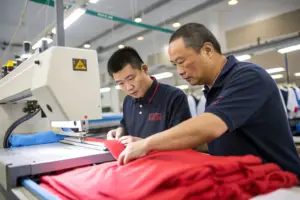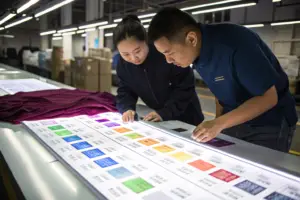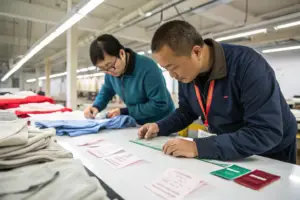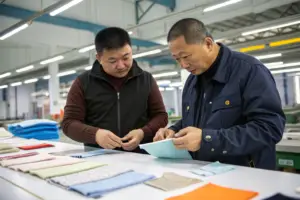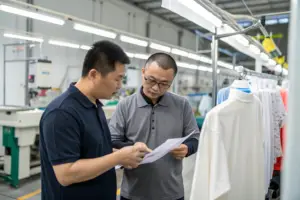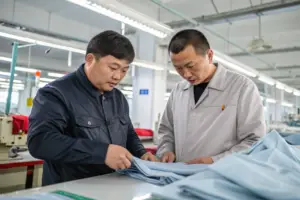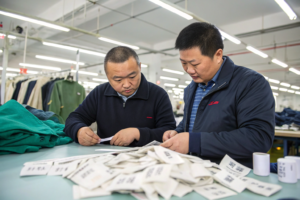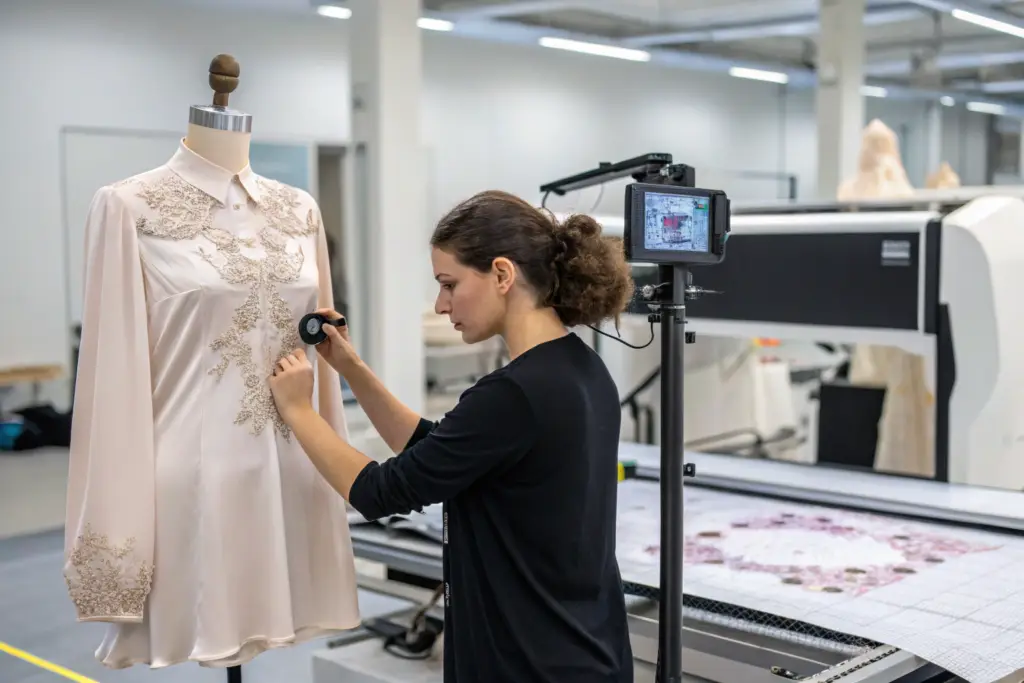
You have designed a beautiful women's dress. The drape is perfect on the sketch. But when the bulk shipment arrives, the bias-cut skirt hangs wrong. The delicate lace trim is shredded by a dull needle. The fit on the size medium is completely different from the size small. This is the tragedy of women's wear manufacturing without the right technology. Women's fashion demands more than basic stitching. It requires managing fluid fabrics, complex drapes, intricate trims, and a fit that must flatter the body. A factory that treats a silk blouse the same way it treats a cotton t-shirt will always fail you.
Shanghai Fumao invests in first-class technology specifically for the unique challenges of women's wear. We use laser cutting for delicate laces, ultrasonic bonding for seamless activewear, and digital 3D fit prototyping to solve sizing issues before cutting. Our machines and our processes are tuned to handle the fine silks, the bias cuts, and the complex constructions that define premium women's fashion.
Why do we treat women's wear as a distinct technical discipline? Because the fabrics are less forgiving. The fit expectations are more demanding. The detailing is more intricate. I want to show you the specific technologies we deploy on our women's wear lines. These are the tools that turn your design vision into a garment that fits, moves, and feels luxurious.
Laser Cutting and Bonding for Delicate Women's Fabrics
Silk, chiffon, and lace are not fabric. They are liquid. They slide, they shift, and they fray at the slightest provocation. A traditional mechanical knife blade drags the fabric. It creates a ragged, frayed edge that requires extra finishing. For high-end women's wear, that rough edge screams "cheap." We removed the knife from the equation. We use light instead.
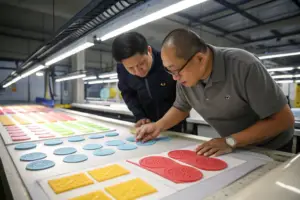
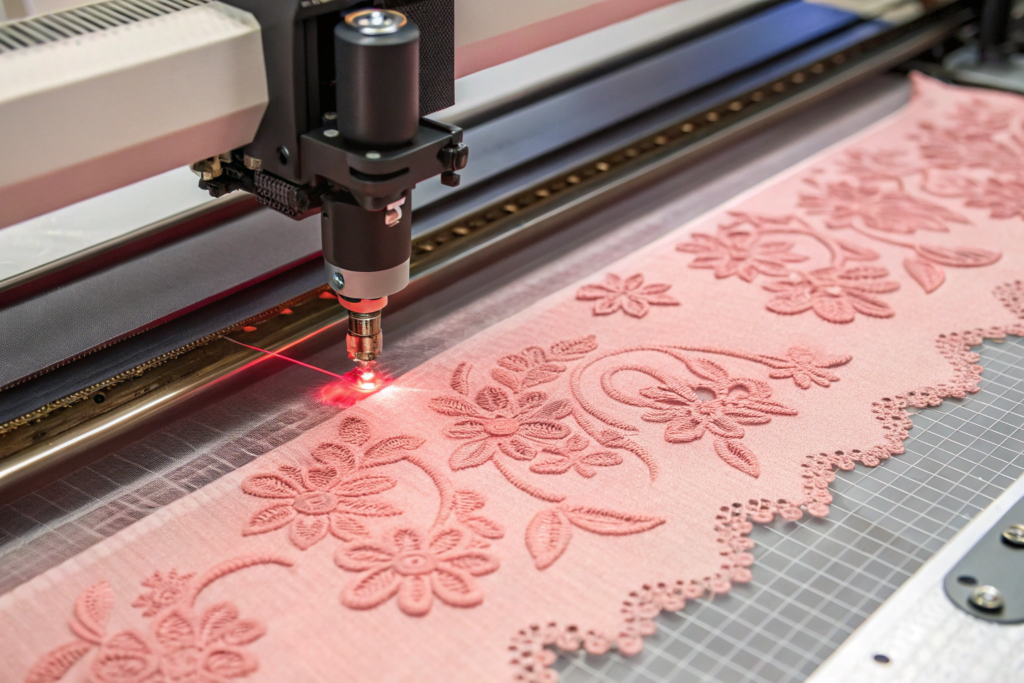
Our women's wear line features automated CO2 laser cutting machines. The laser beam vaporizes the fabric edge as it cuts, sealing the fibers instantly. This eliminates fraying on silks and synthetics and produces an incredibly precise, clean edge. For intricate lace appliqués and delicate chiffon panels, this technology produces perfection that no hand shear can match.
Why Is Laser Cutting Superior for Silk and Chiffon?
Silk chiffon is expensive and unstable. A mechanical blade catches the fibers and pulls them. You get thread pulls, distorted shapes, and a frayed edge that runs. Our laser cutter uses a non-contact beam. Nothing touches the fabric except light. The cutting path follows a digital vector file with a tolerance of 0.1mm.
The heat of the laser seals the cut edge on silk and polyester blends. This means the cut panel is ready for sewing immediately. No overlocking of the edge is needed, which saves time and reduces seam bulk. For a New York-based evening wear brand, we cut a complex paneled georgette gown using the laser. The knife-cut samples from their previous supplier had persistent fraying. Our laser-cut pieces were flawless. The seamstresses told us they had never worked with such clean pieces. This laser fabric cutting technology elevates the entire construction quality of a delicate garment.
What Is Ultrasonic Bonding and How Does It Create Seamless Activewear?
Women's activewear demands seamless comfort. Traditional stitching creates a bulky seam that chafes the skin. It also creates needle holes that can tear under stretch. Ultrasonic bonding uses high-frequency sound waves to fuse synthetic fabrics together. It creates a seam that is flat, flexible, and incredibly strong, without any thread.
Our ultrasonic bonding machines precisely weld fabrics like nylon and spandex. We use this technology for yoga tops, seamless leggings, and sports bra edges. The result is a smooth, second-skin feel. A Los Angeles-based activewear brand switched their core legging program to us specifically for this technology. Their previous stitched leggings had a 6% return rate due to seam chafing. The ultrasonically bonded version dropped that return rate below 1%. This technology, explored in depth by textile bonding innovators, is how we engineer comfort and durability into performance women's wear.
3D Fit Prototyping for Perfect Female Silhouettes
The female body is not a straight line. It has curves, and those curves vary across sizes in complex ways. A size 12 is not simply a scaled-up size 6. The bust, waist, and hip ratios change. A factory that just "grades up" a pattern without understanding these dynamics creates a disaster. You get gaping armholes, pulling bust darts, and a silhouette that flatters no one. We invested in 3D fit prototyping to solve this fundamental sizing challenge before the fabric is cut.
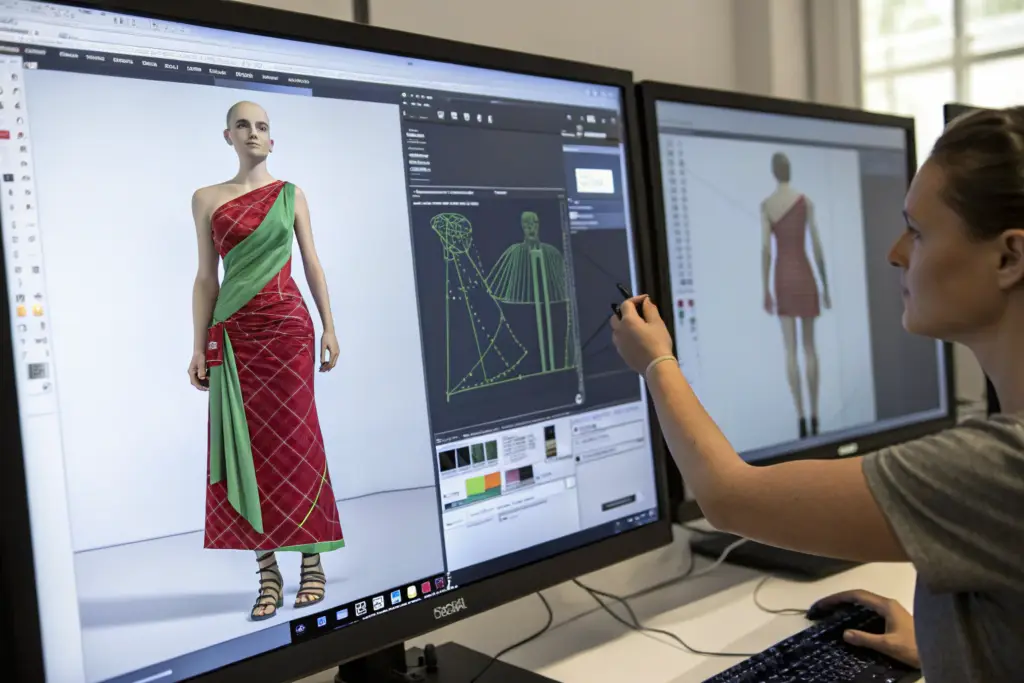
We use Browzwear 3D software to create a digital twin of your garment on a parametric female avatar. You can see the drape, the tension, and the fit on a size 6 and a size 14 before we make a physical sample. This technology allows us to perfect the grading and the bust-dart balance digitally. The result is a physical sample that fits correctly on the first attempt, saving weeks of sampling time.
How Does a Virtual Fit Model Reduce Sampling Iterations?
A traditional sampling process might take three or four physical iterations to get the fit right. Each iteration costs time and money. With 3D prototyping, we use a virtual fit model that is parametric. We can change the bust, waist, and hip measurements of the avatar to match your specific target customer demographic.
We import our digital pattern. The software simulates the fabric properties, such as the weight, stretch, and drape of your chosen silk or jersey. It then drapes the garment on the avatar and generates a heat map. Red areas show high tension, indicating a pull. Green areas show relaxed drape. We adjust the pattern in real-time, and the heat map updates instantly. For a Chicago-based dress brand, this process eliminated two complete sampling rounds. We went from first digital proto to approved physical sample in ten days. This is how 3D apparel design compresses development time and ensures a consistent, flattering fit across your entire size range.
Why Is Automated Dart Placement Critical for Tailored Women's Jackets?
A bust dart is a precise mathematical wedge. It converts a flat piece of fabric into a three-dimensional cup shape. If the dart point is off by even half a centimeter, the jacket front will pucker or collapse. Manual dart marking depends on the operator's eye. It is inconsistent. We now use automated laser projection on our tailoring lines.
A digital projector beams the exact dart shape and drill-hole position directly onto the fabric ply. The operator simply folds along the projected line. This laser-guided accuracy ensures that every single jacket in the run has an identically perfect dart. For a corporate women's suiting brand in London, this technology reduced their tailoring defect rate by 60%. The jackets suddenly looked sharp and consistent across every size. The perceived value increased dramatically. Automation applied to high-skill tailoring tasks is the essence of first-class garment technology.
Advanced Seam Technology for Stretch and Recovery
A beautiful dress that bags out at the elbows or knees after an hour of wear is a return waiting to happen. Women's wear frequently uses stretch fabrics. The seam technology that joins these fabrics must stretch and recover exactly like the material itself. If the seam is too rigid, it snaps. If it is too loose, it ripples. Getting this right requires the right machine, the right thread, and the right stitch type for the specific stretch factor of the fabric.
Our women's wear line is equipped with a full suite of specialized stretch-seam machinery. We use 4-thread overlock for strong, stretchy general seams and 5-thread safety stitches for high-tension areas like armholes and crotches. For truly invisible, chafe-free seams, we deploy flatseaming machines. We match the stitch type to the fabric's stretch percentage to create a seam that moves as one with the garment.
What Is a 5-Thread Safety Stitch and Why Does Activewear Need It?
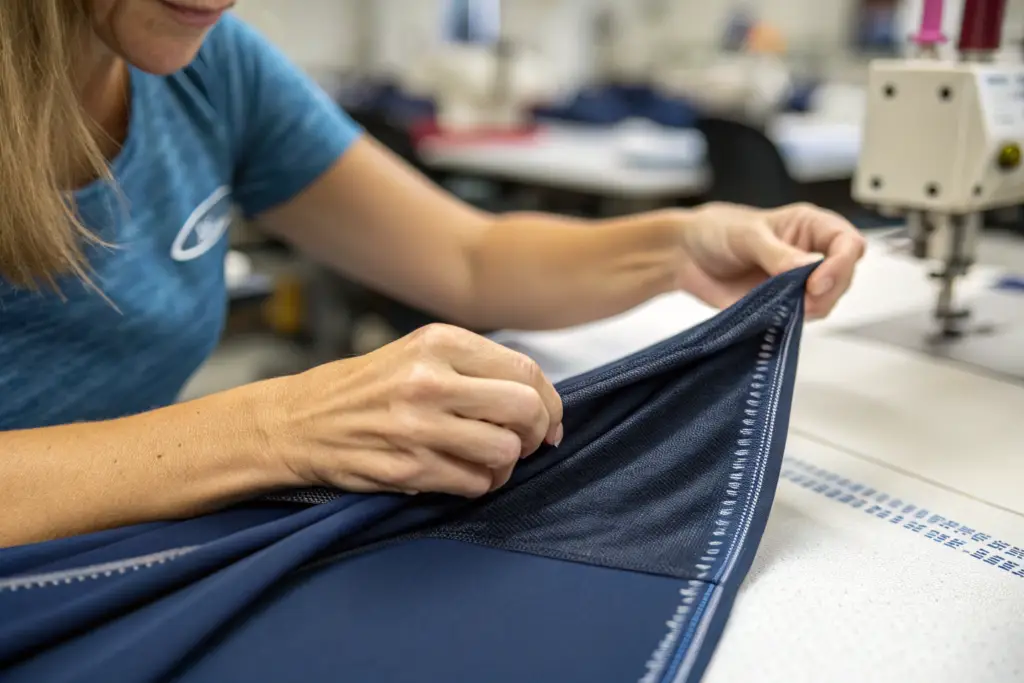
A standard 4-thread overlock seam has roughly 60% of the fabric's stretch. It is fine for a relaxed t-shirt. For high-performance leggings or a bodycon dress that stretches 80%, the 4-thread seam is a failure point. The 5-thread safety stitch combines a two-thread chain stitch with a three-thread overlock. This creates a seam with a 100% stretch capacity.
The safety stitch is virtually indestructible. We use it on the gussets of yoga pants and the underarm of tight-fitting sports tops. A Miami-based swim and activewear brand brought us a crisis project. Their previous supplier's leggings were splitting at the back rise seam. We switched the construction to a 5-thread safety stitch and used a high-tenacity textured polyester thread. The new seam held firm at 50 lbs of pull force on our tensile tester. The brand's product returned to shelves with confidence. You can explore the technical aspects of these stitch classes at stitch classification resources.
How Does a Flatseamer Improve the Luxury Feel of Knitwear?
A bulky seam on the inside of a fine-gauge cashmere or modal sweater ruins the luxury experience. It scratches the skin. It creates a visible ridge on the outside. A flatseaming machine joins the two fabric edges edge-to-edge, not overlapping. It uses a stitch that lays completely flat with zero bulk.
We invested in true flatseamers, not just converted overlockers, for our premium knitwear line. When you run your hand over the inside of a flatseamed silk-blend cardigan, you feel only the fabric. This invisible seam is a hallmark of high-end, ready-to-wear luxury. A Parisian contemporary brand making $400 cashmere blend sweaters uses us for our flatseaming capability. Their customers expect invisible construction. Our machines deliver that seamless luxury feel.
Conclusion
First-class technology in women's wear is not about replacing the human touch. It is about amplifying it. A laser cutter expresses the precision that a pair of hand shears cannot. A 3D fit avatar models the complex geometry of the female form faster than a fit model can change outfits. An ultrasonic bonder creates a seam so smooth it disappears against the skin. These technologies are the silent heroes behind a dress that fits, a legging that doesn't chafe, and a silk blouse that doesn't fray.
At Shanghai Fumao, we deploy this technology specifically to serve the nuanced demands of women's fashion. We respect the fabric. We engineer the fit. We build the seam to perform under stretch and recovery. The result is a garment that makes your customer feel confident, comfortable, and beautiful, which is the ultimate measure of quality for a women's wear brand.
If you are a women's wear brand looking for a manufacturing partner who understands the technical difference between a dress that drapes and a dress that just hangs, I invite you to see our technology in action. Let us run a 3D fit prototype of one of your best-selling styles and show you how our engineering can improve its fit and construction.
Contact our Business Director, Elaine, at elaine@fumaoclothing.com. She can schedule a video tour of our women's wear technology cell and arrange the digital sampling of your design. Let's build a collection that moves women, literally and emotionally.