Most B2B buyers search for a linen manufacturer the same way they search for a cotton t-shirt maker. They send a tech pack to ten Alibaba suppliers and pick the cheapest quote. Then, six months later, they are sitting on a pallet of 500 wide-leg pants that feel like burlap sacks, shrunk two sizes in the wash, and have side seams that twisted to the front. Linen is the ultimate test of a factory’s technical maturity. It exposes every shortcut, every missing process, every cheap material substitution. This is why 80% of "linen" products on the market are actually linen-viscose blends marketed as pure linen.
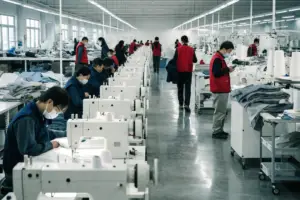
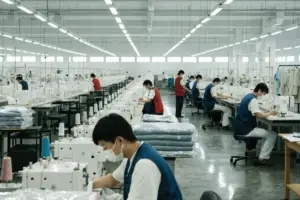
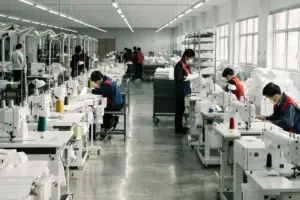
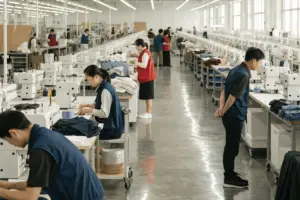
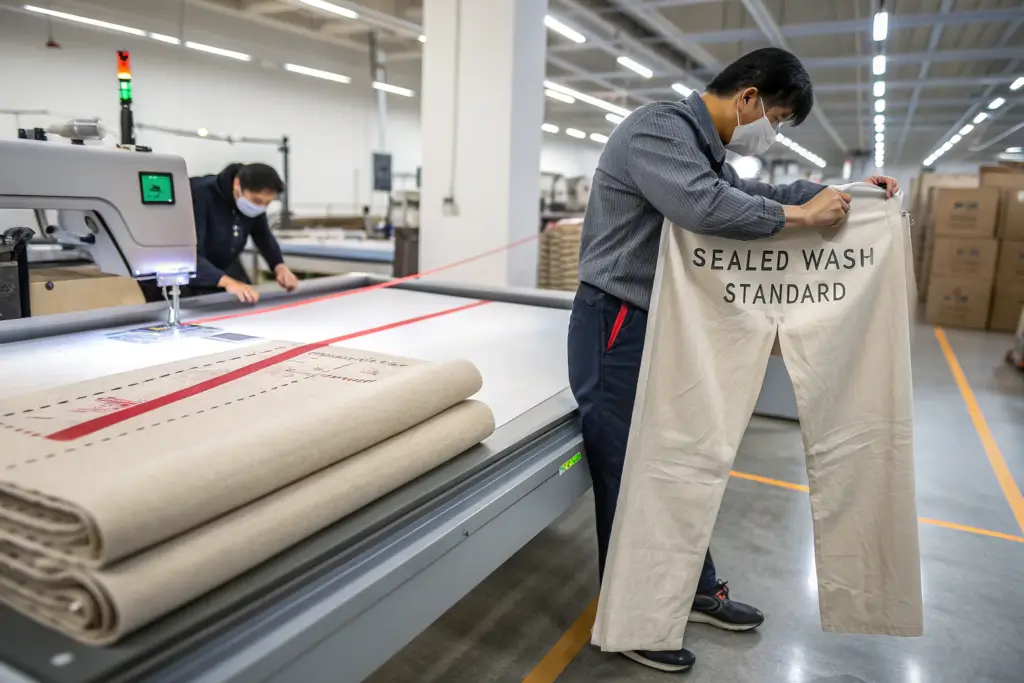
Fumaoclothing is the best linen wide-leg pants manufacturer for B2B buyers because we have built a dedicated, vertically controlled linen production cell that integrates wet-spun yarn sourcing, enzyme bio-polishing wash capabilities, vacuum cutting technology, and a proprietary “Sealed Sample” system that locks the exact hand-feel and drape from prototype to bulk.
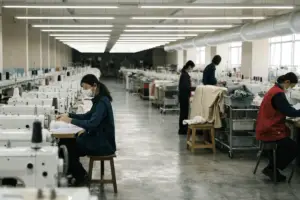
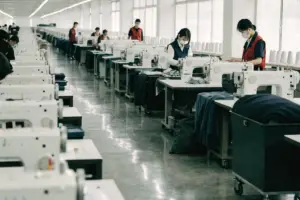
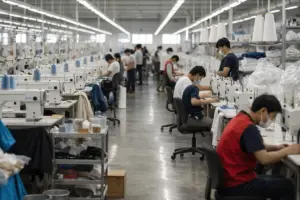
We do not treat linen as a side project. We treat it as a distinct manufacturing discipline that requires separate machines, separate quality protocols, and a separate team of technicians who understand that flax is a living fiber. Here is exactly how we deliver a linen wide-leg pant that your customers will buy, keep, and reorder.
What Makes Our Linen Fabric Sourcing Methodology Superior for Wholesale Buyers?
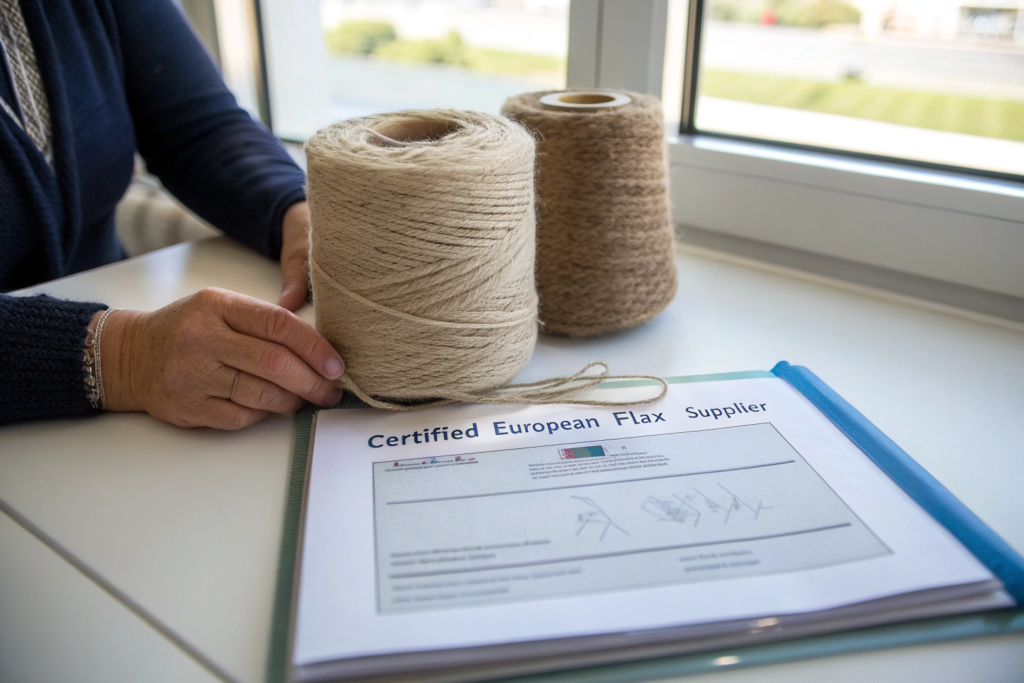
The foundation of any great linen pant is not the sewing machine; it is the spinning mill. Most factories buy “linen” fabric from the open market based on price alone. They receive whatever the trader sends. Sometimes it is a blend. Sometimes it is dry-spun yarn disguised as premium. The buyer never knows because the factory itself does not know. We reversed this. We went upstream and locked contracts with specific spinners who meet our fiber specifications.
Our linen fabric sourcing methodology is superior because we direct-source from certified wet-spinning mills, specify the exact flax origin and Lea yarn count for every order, and maintain a “Fabric DNA Library” that allows buyers to replicate their exact fabric lot year after year.
We do not gamble with your fabric. We specify it down to the chemical retting process, and we verify it with a burn test and a microscope before a single panel is cut.
How does our direct partnership with a wet-spinning mill eliminate the “blend substitution” risk?
The dirty secret of the linen trade is that dry-spun linen and viscose blends are often sold as “premium linen” to unsuspecting buyers. The visual difference is subtle to an untrained eye. But the performance difference is catastrophic. Dry-spun linen feels like sandpaper. Linen-viscose blends shrink unpredictably and lose their crisp texture after three washes.
We cut out the fabric traders. We have a direct, five-year relationship with a specialized mill in Changzhou that focuses exclusively on wet-spun linen. We do not buy from their stock catalog. We specify the exact Lea count, the twist per inch, and the slub character for each client.
I recall a meeting with an Australian resort wear brand. They had been burned by a previous supplier who substituted a 60% linen, 40% viscose blend while charging for 100% linen. The brand only discovered this when a customer complained that the pants shrank in a weird, bubbly way. I showed them our mill’s original invoice. It stated “100% Wet-Spun French Flax, 14 Lea.” I showed them a video of the burn test. Linen burns clean like a candle wick. Viscose burns like paper. The proof was immediate and visual.
This direct partnership allows us to offer you a “Chain of Custody” document. It traces your specific fabric roll from the flax field in Normandy to the spinning frame to the weaving loom. This is the level of sourcing assurance that premium brands demand, and we provide it as a standard, not an upsell.
Why does our “Fabric DNA Library” allow for precise reordering across multiple seasons?
Linen is a natural fiber. Every harvest is slightly different. The color of the flax, the fineness of the fiber, can shift by a few percentage points depending on the rainfall that year. This is a nightmare for a brand that built a customer base on a specific “Sand” color and a specific drape. You order the “same” fabric next season, and it feels thinner or the color is off by a shade.
We solved this by creating a “Fabric DNA Library.” For every linen fabric we develop, we retain a physical reference swatch, a digital spectrophotometer reading, and a detailed specification card. When you reorder, we do not just order “beige linen.” We pull the DNA file for “Client 47 – Sand Linen – Season SS24.”
We match the new batch against the physical reference and the digital color data under a lightbox. If the new harvest has a slightly higher micronaire, we adjust the enzyme wash duration to compensate for the thicker fiber. This is active material management.
This system saved a client who runs a successful e-commerce store. Their best-selling color was a specific “Oatmeal” shade. The next year’s raw flax was naturally brighter. Our spectrophotometer detected a Delta E color deviation of 2.5, which is visible to the naked eye. We adjusted the dye bath by adding a touch of brown to bring it back to within 0.8 Delta E. The customer never noticed a color change between seasons. This is the consistency that turns a one-time order into a wholesale partnership.
What Specialized Wash House Capabilities Do We Use for a Perfect Linen Hand Feel?
Sewing the pant is only half the job. The wash is the other half. A raw, unwashed linen pant is an unfinished product. It is stiff, scratchy, and dimensionally unstable. The wash house is where the fabric transforms into a soft, drapey, luxury garment. Most factories outsource their washing to a third-party laundry that processes everything from denim to polyester on the same machines. This cross-contamination ruins linen. A splash of bleach meant for denim can leave ghost spots on your beige linen pants.
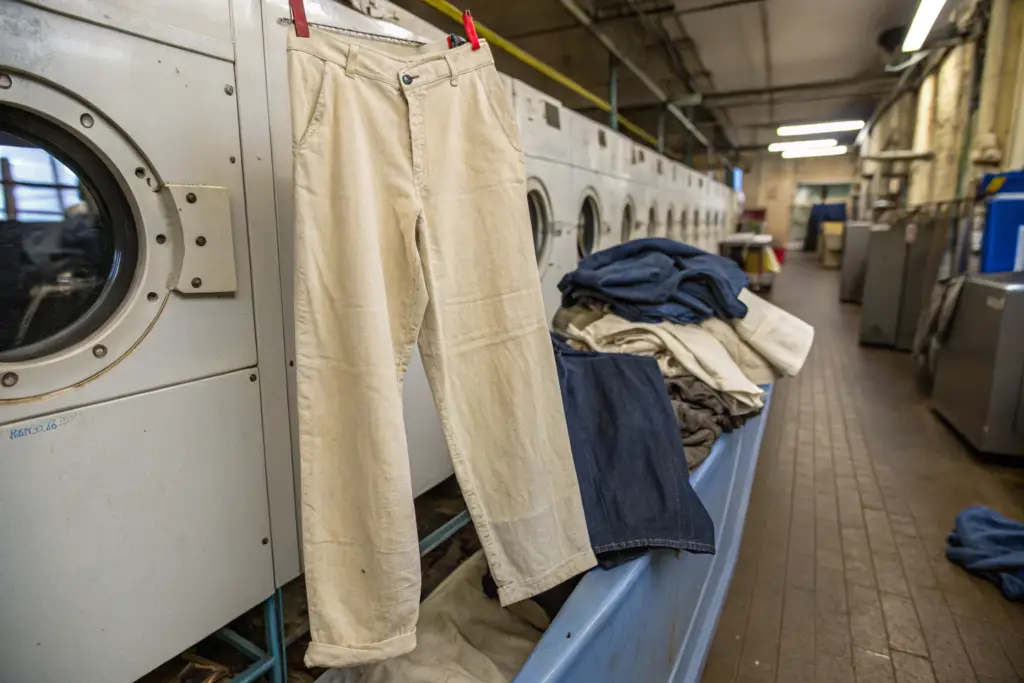
Our specialized wash house capabilities include dedicated linen-only enzyme wash machines, precise pH and temperature controls for bio-polishing, and a full-compaction tumble-dry protocol that eliminates residual shrinkage before cutting.
We invested in a separate washing cell specifically for our linen and natural fiber orders. This is not a cost center. This is our competitive advantage.
How does our “Tumble-Compaction” process guarantee dimensional stability in the final garment?
This is the number one complaint about linen pants: they shrink. A customer buys a size Medium, washes it at home, and suddenly the pant is a size Small in length. The factory’s excuse is always, “Linen naturally shrinks, it’s not our fault.” That excuse is the sign of a factory that skipped the compaction process.
We do not cut linen fabric until it has been fully relaxed. We call this “Tumble-Compaction.” We take the greige fabric rolls and run them through an industrial washer-dryer at 75°C. We wash and dry the raw fabric multiple times until the length and width stop changing. Only then is the fabric deemed “stable” and ready for the cutting table.
I analyzed the data from a recent production run of 1,000 wide-leg pants. The raw linen shrank 8.2% in length after the first industrial wash. We compacted it. The finished pant was then tested to the AATCC 135 standard for home laundering. The residual shrinkage was 1.3%. This is within the acceptable range for premium apparel. No customer returns for shrinkage. No chargebacks. This process adds two days to our lead time and costs us in fabric weight loss. But it completely eliminates the shrinkage complaint. For a B2B buyer selling to retail, that is pure margin protection.
Why do we use specific cellulase enzymes instead of cheap stone washing?
Stone washing is the old way. It involves pummeling the fabric with pumice stones to soften it. This is destructive. The stones tear the fiber, create micro-holes, and leave a trail of dust inside the machine. The result is an inconsistent, prematurely aged garment that is prone to tearing.
We use a bio-polishing process with a neutral cellulase enzyme. This is a biological catalyst that specifically targets the tiny, protruding micro-fibrils on the surface of the linen yarn. It eats the fuzz but leaves the core fiber intact. The process happens in a carefully controlled water environment: 55°C, pH 5.5, for exactly 45 minutes.
The result is a “peach skin” hand feel. The surface is smooth and clean, but the natural linen texture and strength remain. A menswear brand we partner with switched from a stone-washed pant to our enzyme-washed pant. Their return rate for “fabric too rough” dropped from 8% to under 1%. Here is the specification we control for every wash batch:
| Wash Parameter | Specification | Purpose |
|---|---|---|
| Enzyme Type | Neutral Cellulase | Removes surface fuzz without fiber damage |
| Bath Temperature | 55°C ± 2°C | Optimal enzyme activity |
| pH Level | 5.5 ± 0.3 | Acidic environment for cellulase |
| Cycle Duration | 45 – 50 minutes | Achieves “peach skin” finish |
| Deactivation | 80°C rinse for 10 min | Kills enzyme to prevent further degradation |
If your current supplier cannot provide a wash specification sheet with these parameters, they are guessing. And guessing with linen means you are shipping a problem that will surface only after the customer takes the garment home.
How Do Our Construction and Quality Control Protocols Prevent Linen-Specific Defects?
Linen attacks bad construction. It frays. It slips. It stretches off-grain. A seam that looks fine on day one can unravel by day thirty because the fabric edge was not properly encapsulated. A waistband that looks flat on the hanger can curl outward after a few hours of wear because the interlining was cheap and wrong. You cannot build a linen pant with the same construction methods you use for a polyester slack. You need specific seam engineering.
Our construction protocols for linen wide-leg pants mandate French seams on all major stress points, a woven cotton fusible interlining that matches the linen’s shrinkage curve, and a “Four-Point” QC inspection system specifically calibrated for linen’s natural slub and weave irregularities.
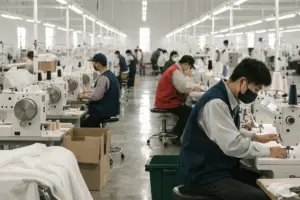
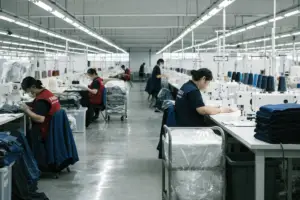
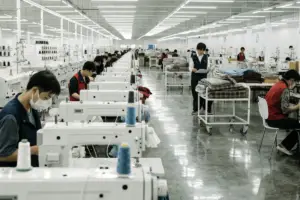
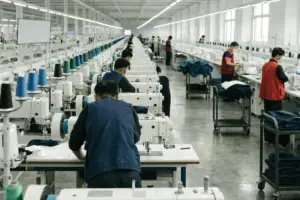
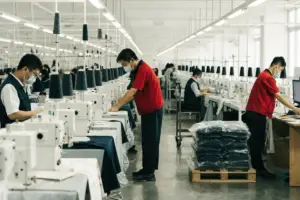
We train our sewing line supervisors to treat linen like a delicate silk, but with the structural demands of a tailored pant. This is a rare combination of skills.
Why are French seams mandatory on our wide-leg linen pants, and how do we audit them?
An overlock stitch on linen is a time bomb. The four threads create a bulky, scratchy ridge on the inside of the leg. The raw fabric edge, even if overcast, can still fray and unravel past the stitching line. For a wide-leg pant with a flowing silhouette, the inside of the garment is visible when the wearer moves. A serged mess inside destroys the luxury perception.
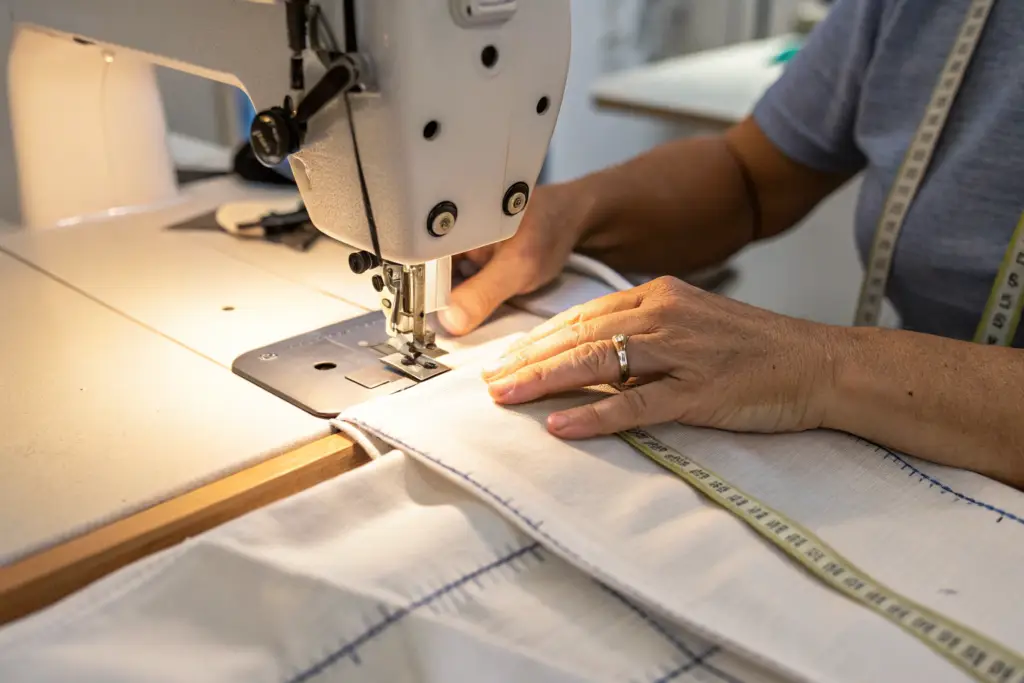
We mandate a French seam for the side seams and inseam. This seam type encloses the raw edge completely within a double-fold. No threads are exposed. The interior is as clean as the exterior.
But specifying “French seam” on a tech pack is not enough. You have to audit the execution. Our QC team checks every French seam against a physical standard. The seam allowance must be exactly 1.2cm, folded perfectly in half to 0.6cm. The stitching line must be exactly 1mm from the folded edge. No skipping stitches. No wavy edges.
I remember inspecting a pre-production sample from a new batch. The French seam looked correct from the outside. But when our QC inspector turned the pant inside out and pulled the seam flat, she found a section where the fabric edge was peeking out of the fold. This “grin-through” would fray after three washes. We stopped the bulk production. We re-trained the sewing operator on the specific folding technique for that fabric thickness. The entire batch was re-sewn before it reached the customer. This is the level of obsession that B2B buyers pay for: catching the invisible defect before it becomes a visible return.
How does our “Four-Point Linen-Specific QC System” account for natural slub variations?
The standard Four-Point System for fabric inspection is a textile industry tool. It assigns penalty points for defects: a hole gets 4 points, a thick yarn gets 1 point. But this system was designed for uniform cotton and synthetics. Linen is naturally slubby. It has thick-and-thin variations that are part of its beauty. A standard inspector might flag a beautiful natural slub as a defect, or worse, miss a real broken filament because “linen is supposed to look like that.”
We developed a “Linen-Specific Four-Point System.” We trained our inspectors to distinguish between a “natural slub” and a “critical defect.”
- Natural Slub: A gradual change in yarn thickness, fully integrated into the weave, that does not affect the strength of the fabric. Penalty: 0 points.
- Critical Defect: A hard, foreign fiber matted into the yarn, a broken filament with a visible hole, or a chemical stain from retting. Penalty: 4 points.
We also added a specific “Seam Slippage” test to our QC checklist. Linen weaves can open up under stress. We take a seam sample and apply a standard tensile force using a seam slippage testing device. The seam must not open more than 0.5mm. If it does, the seam construction is rejected, even if it looks perfect visually.
This tailored QC system ensures that the authentic, sought-after texture of linen is preserved, while the actual structural threats to the garment are caught. This is the manufacturing intelligence that generic cotton factories lack. And it is why our Shanghai Fumao linen pants have a sub-1% defect rate at retail.
Conclusion
Fumaoclothing is the best linen wide-leg pants manufacturer for B2B buyers because we have built a specialized ecosystem around this one demanding fiber. We do not treat linen as just another fabric in the queue. We source wet-spun yarn directly from trusted mills and maintain a Fabric DNA Library for season-over-season consistency. We operate a dedicated enzyme wash house with tumble-compaction protocols that eliminate the shrinkage curse. And we construct every pant with French seams and a linen-specific QC system that understands the difference between a beautiful natural slub and a critical flaw.
This is the difference between a supplier and a specialist partner. A supplier ships you pants. A specialist partner manages the agricultural variability of flax, the enzymatic chemistry of bio-polishing, and the tailoring physics of a wide-leg silhouette. If you are ready to elevate your linen collection with a manufacturing partner who engineers quality from the yarn upward, we are ready to start. Contact our Business Director, Elaine, at elaine@fumaoclothing.com to discuss your linen wide-leg pant project. Let’s build a pant that your customers will wear, love, and reorder.