You scroll through wholesale catalogs. You walk through trade show aisles. Every booth seems to show the same pair of beige linen wide-leg pants. The same elastic waistband. The same straight, unshaped leg. The same safe, forgettable silhouette. Your brand cannot differentiate itself with a commodity. Your boutique accounts are begging for something that feels exclusive, something their customers haven't seen scrolling past fifty times on Instagram. But exclusivity in the wholesale garment industry usually means one of two things: a European factory with a minimum order quantity that would bankrupt you, or a custom design program with a development cost that eats your entire season's margin. You are trapped between generic availability and unaffordable originality.
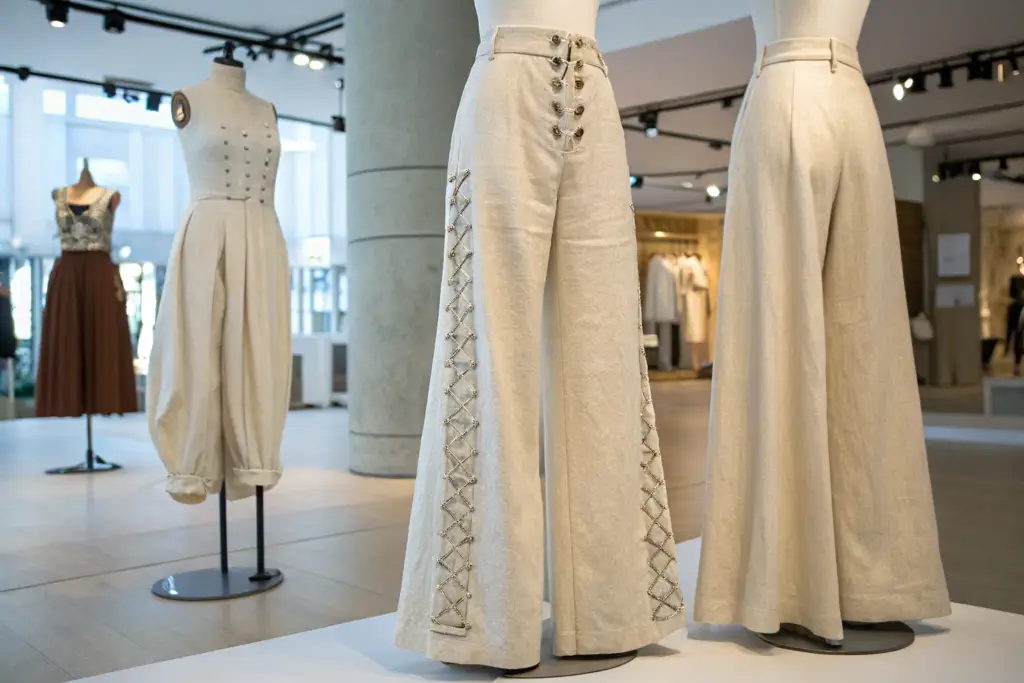
Shanghai Fumao Clothing offers rare linen wide-leg pants designs because we operate a dedicated in-house sample studio that combines traditional pattern-making craftsmanship with textile manipulation techniques usually found only in couture ateliers. We also maintain an exclusive fabric archive of small-batch, artisanal linen weaves sourced directly from specialized mills that do not sell to mass-market factories. This combination means we can produce silhouettes—like sculptural barrel-legs with interior corsetry construction, asymmetric draped panels, and hand-finished raw-edge treatments—that large factories reject as too complex and that small ateliers cannot produce at wholesale volume or price.
My name is Elaine. I am the co-owner of Shanghai Fumao. Before I ran this factory, I trained as a pattern maker. I spent years cutting, draping, and fitting on a dress form. That background shapes how I view our role. We are not a factory that simply copies a tech pack. We are a development partner that can interpret a mood board into a production-ready pattern without losing the design's original soul. I want to show you the specific structural reasons why our designs look different from what you find on Alibaba or at a generic trade show. This is not about marketing language. It is about pattern engineering, fabric access, and a sampling philosophy that treats small-batch complexity as a service, not a nuisance.
What In-House Development Capabilities Create Rare Silhouettes?
Most garment factories do not have a true sample studio. They have a sample sewing machine in a corner of the production floor, operated by the same mechanic who fixes the overlock machines. When you send them a tech pack, they produce exactly what the measurements dictate. If the measurement is impossible, or if the drape does not match the sketch, they do not tell you. They sew it anyway. The sample arrives, stiff and lifeless, and you spend three rounds guessing at how to fix it. This is not design development. It is mechanical reproduction.
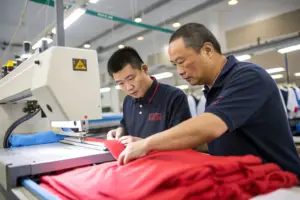
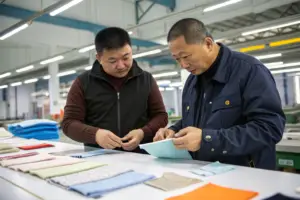
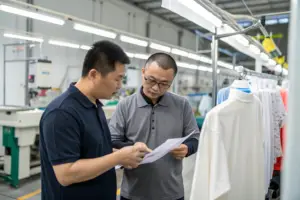
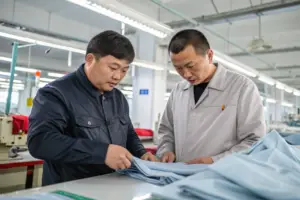
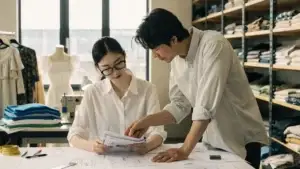
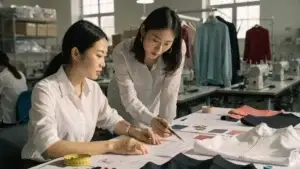
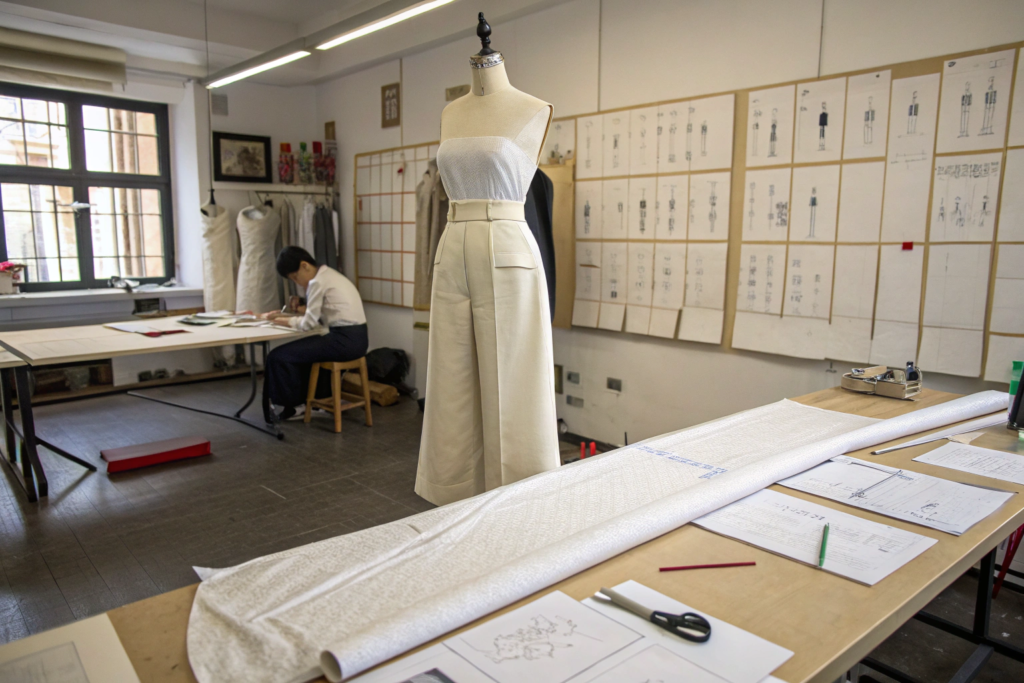
Our in-house sample studio is staffed by a dedicated pattern engineer with twenty years of experience and two full-time sample makers who do not work on production lines. They work directly from your inspiration images, sketching multiple pattern solutions for complex shapes like the barrel-leg curve or a bias-draped panel. They can drape directly on a European-standard dress form in your target size. This capability means we can solve the fit and drape of a rare silhouette before it reaches the production floor, converting a "maybe" design into a "yes" sample in fewer iterations.
How Does Pattern Engineering Differ From Simple Tech Pack Copying?
A tech pack is a set of instructions. It says, "Sew Part A to Part B at 1cm seam allowance." It does not say, "This fabric has a natural stiffness that will resist the curve on the hip, so you need to rotate the pattern piece 15 degrees on the bias grain to let it fall correctly." A tech pack copier does not make that adjustment. They follow the instruction literally. The sample arrives with a puckered hip curve. The designer does not understand why. Three sampling rounds pass. The season deadline approaches. The beautiful, rare design is abandoned for a simple elastic-waist pant because "we couldn't get the fit right."
Pattern engineering is the art of translating a two-dimensional design sketch into a three-dimensional garment that accounts for the specific behavior of the fabric. Linen is not polyester. It has a memory. It resists being forced into shapes that oppose its natural grain. A barrel-leg pant, with its inward-curving hem, wants to twist on the body because the pattern pieces are cut on curves that fight each other. Our pattern engineer, Mr. Chen, solved this for a client last year by developing a "balanced curve" technique. He split the front pant leg into two vertical panels instead of one, each cut on a slightly different grain angle. The seam between the panels acts as an internal stabilizer, holding the curve without adding stiff interfacing. The pant looks like one fluid piece, but the internal architecture manages the stress. This solution is not in a standard pattern-making textbook. It came from twenty years of solving drape problems by hand. The pattern making for complex silhouettes resources that explore advanced techniques describe the difference between cutting for production speed and cutting for design integrity. Large factories prioritize speed. Their pattern makers are measured by how many patterns they complete per day. Our sample studio is measured by how many iterations it takes to achieve the client's vision. Speed in sampling is a false economy if it takes six iterations to get right. Accuracy in the first or second iteration is true efficiency.
What Role Does On-Site Dress Form Draping Play in Rare Designs?
Some designs cannot be created on a flat pattern table. They must be born on a body. An asymmetric draped panel, a cascading side ruffle, a twisted waistband detail—these are sculptural elements that require a dress form and a draper's hands. A factory that only does flat pattern making will reject these designs as "not possible to mass produce." What they really mean is "not possible with our process."
Our sample makers are trained in draping. We keep a full set of Alvanon European and North American standard dress forms in sizes 4 through 18. When a client sends us an inspiration image of a draped detail, we do not guess at the flat pattern. We drape muslin directly on the form. We pin, we gather, we cut, we adjust. We photograph the muslin on the form from multiple angles and send the images to the client for feedback. Once the drape is approved visually, we transfer the muslin to paper, digitize it into our CAD system, and then grade it. This draping-first workflow is standard in high-end European ateliers. It is rare in Chinese export factories because it is time-consuming and requires a different skill set than production sewing. We made a conscious decision to invest in draping capability because it is the only way to faithfully reproduce the organic, sculptural silhouettes that are trending for 2026. A draping versus flat pattern making comparison explains why draped designs retain a fluidity that flat patterns often lose. If your design concept involves anything asymmetrical, bias-cut, or cascading, ask your supplier whether they drape on a dress form or only work from flat patterns. Their answer will tell you whether your rare design will be realized or simplified into something generic.
How Does Exclusive Fabric Access Differentiate Our Linen Pants?
A rare design is not just about the cut. It is about the cloth. A generic, smooth, 180 GSM linen will make even the most innovative silhouette look ordinary. The fabric is the skin of the design. If you cannot access unusual weaves, special finishes, and small-batch textures, you are limited to what the mass market sells. Most factories buy fabric from large, commodity mills. These mills produce five qualities in ten colors, and they sell to everyone. If you want a bark-weave slub linen in a specific mineral-dyed rust tone, the commodity mill says, "Minimum order 3,000 meters." Your order of 400 pants needs 500 meters. You are stuck.
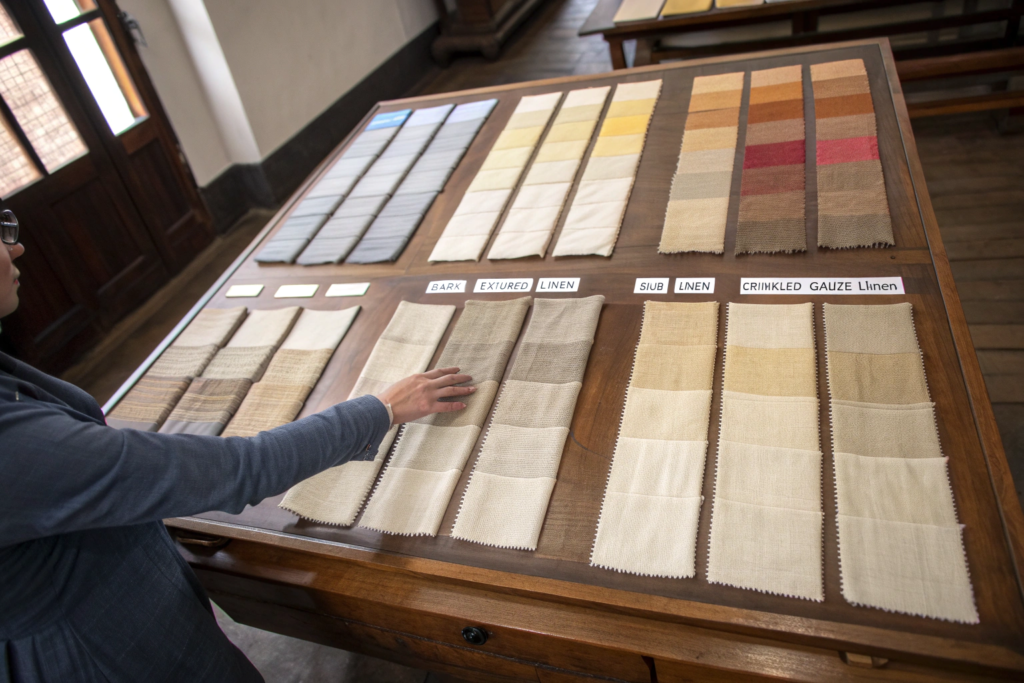
We have spent fifteen years building relationships with specialized, family-owned linen mills in China and Japan that produce small-batch, artisanal weaves. These mills do not exhibit at trade shows. They do not sell to trading companies. They work with a small number of factories that understand their production rhythms and can commit to seasonal greige bookings. Through these relationships, we can access bark-weave linens, paper-touch finishes, crinkle textures, and natural mineral-dyed fabric lots that are invisible to the broader market.
What Is a "Closed Mill" Relationship and Why Does It Matter?
A closed mill relationship means the mill agrees to sell certain qualities exclusively to a limited number of factories or brands within a specific market segment. This is not a legal exclusivity contract enforced by lawyers. It is a relationship-based exclusivity enforced by trust and mutual history. The mill owner knows that we will pay on time, order consistently across seasons, and not share the fabric sample with other mills to copy the weave at a lower price.
One of our most treasured fabrics is a bark-weave linen that we developed with a small mill in Zhejiang province. The mill owner, Mr. Zhou, spent thirty years perfecting a specific loom setting that creates a deeply textured, almost three-dimensional surface on the fabric. He produces only 5,000 meters of this quality per year. He sells it to three garment factories in China. We are one of them. We buy a significant portion of his annual output. A brand that orders wide-leg pants from us in this fabric is effectively buying into a limited-edition cloth that their competitors cannot access. This fabric has become a signature for several of our boutique brand clients. The texture photographs beautifully. It looks expensive on a hanger. It feels unlike any other linen pant the customer has touched. The small-batch textile production models article explains why these artisanal mills are the source of genuine differentiation in a saturated market. Large factories avoid these mills because they cannot supply the massive, consistent volumes required for 50,000-unit programs. We embrace them because our average order size of 500 to 2,000 units matches their production scale perfectly. This alignment of scale is a competitive advantage that is invisible from outside the industry but decisive in the final product.
How Do Our Fabric Archive and Finishing Techniques Expand Your Design Options?
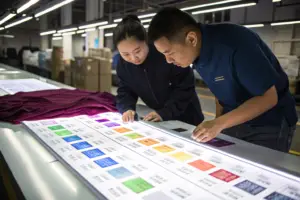
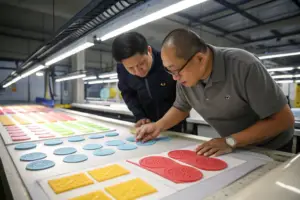
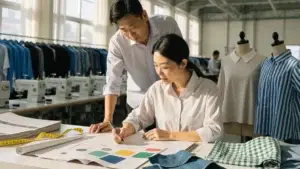
Beyond the weave, the finish of the linen transforms its character. A raw, loom-state linen is stiff and dusty. It takes a series of washing, tumbling, and sometimes coating processes to develop a specific hand feel. We maintain what we call our "Fabric Finish Library," a collection of over sixty finish recipes applied to our core linen qualities. A client can touch a standard linen and say, "I want it to feel softer," and we can pull three variants: enzyme-washed, silicone-softened, and air-tumbled. They can feel the difference immediately and make an informed choice.
One finish we have developed that generates consistent client excitement is what we call the "Paper Touch" linen. It starts as a dense, tightly woven linen twill. After a specific mechanical brushing and a light resin finish, it develops a crisp, paper-like hand that holds a sculptural shape without feeling stiff against the skin. This finish is ideal for the architectural barrel-leg silhouette because it gives the curve structural memory. Another is our "Washed Crinkle" finish, which pre-wrinkles the fabric in a controlled way so the pants look perfectly lived-in from the first wear. These finishes are developed in collaboration with our wet-processing partner, a facility we have worked with since 2009. They are not catalog finishes that any factory can order. They are proprietary recipes developed over years of trial and error. A textile finishing techniques overview describes the complexity of mechanical and chemical finishing. The depth of a factory's finish library is a hidden indicator of its design capability. A factory with one standard "soft wash" is a commodity producer. A factory with a menu of finishes tailored to different silhouettes is a design partner.
What Makes Our Sampling Philosophy Different From Mass Production Factories?
Mass production factories have one response to a design that requires extra steps: "We cannot do this." What they really mean is, "We do not want to do this because it slows down our line and reduces our daily output." Their business model is built on volume throughput. A pant that takes thirty minutes to sew is more profitable than a pant that takes forty-five minutes. A detail that requires hand-finishing, like a raw-edge hem that must be carefully frayed and secured, is rejected because it cannot be automated. The factory's economics filter out everything that is not standard.
Our sampling philosophy is that complexity is a service we sell, not a problem we avoid. We separate our sample production from our bulk production line. Our sample makers are not evaluated on pieces per hour. They are evaluated on fidelity to the designer's vision and problem-solving creativity. This structural separation allows us to develop and produce garments with hand-finished details, interior construction techniques borrowed from tailoring, and mixed-media applications like linen combined with silk trim, all at a wholesale price that reflects the added labor rather than rejecting it entirely.
How Do We Cost and Produce Hand-Finished Details at Wholesale?
The standard industry response to a hand-finished detail is to quote an astronomical price designed to make you give up. The factory does not want the order, so they price it to fail. We approach it differently. We analyze the specific hand operation and ask, "How can we industrialize the setup without losing the artisanal result?"
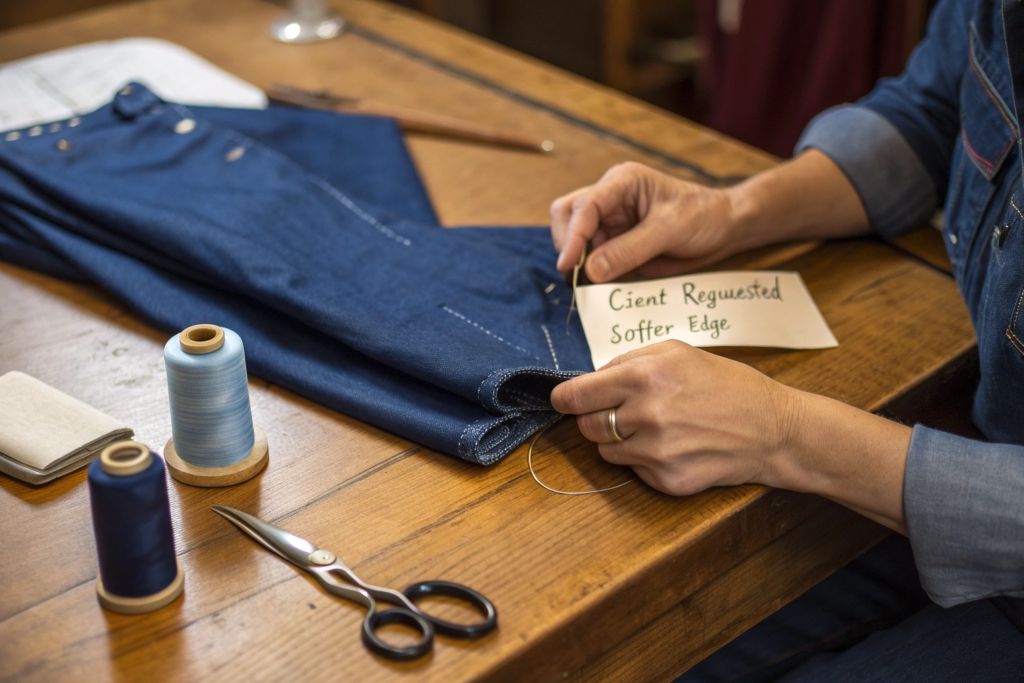
Let me give you a concrete example. A brand client wanted a raw, fringed hem on their wide-leg linen pants. The hem was to be cut, frayed by exactly one inch, and then secured with a visible hand-stitch. A mass factory would say, "Impossible. We can do a standard double-turn hem." We analyzed the process. The fraying could not be automated, but the hand-stitching could be set up as a dedicated workstation with a jig. We created a small team of three workers who specialized in this operation. We timed the process, calculated a fair piece-rate wage, and built the cost into the FOB quote. The added cost was approximately $1.80 per pair. The brand sold the pant for a $25 retail premium because the hand-finished hem was a unique visual feature that their competitors did not have. The detail paid for itself and generated a higher sell-through. This is the economics of differentiation. A value-added garment manufacturing analysis shows that details consumers can see and touch justify significant retail price premiums. The key is having a production system that can isolate the hand-work into a specialized mini-line, rather than forcing it through the main high-speed sewing line. This requires a factory manager who thinks like an industrial engineer and a craftsman simultaneously.
Why Does a Separate Sample Team Protect Your Design's Integrity?
In most factories, the sample maker is also a production sewer. They make samples between production batches, or after hours when they are tired. The sample is rushed. The stitching is adequate but not exemplary. The sample is approved, and the production line, staffed by workers who never saw the original sample, produces a garment that is a degree or two worse than the approved version. This is "sample drift," and it is how a beautiful prototype becomes a mediocre shipment.
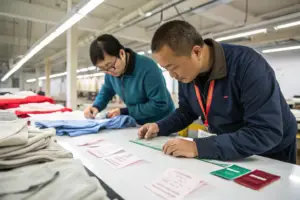
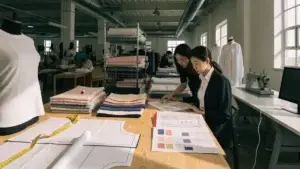
Our sample team is a distinct unit with its own space, its own machines, and its own workflow. They are the most experienced sewers in the company, many with over fifteen years of experience. They work on samples exclusively. When a sample is approved, the sample maker and the production line supervisor hold a one-hour "handover meeting." The sample maker demonstrates the specific construction techniques on the actual sample garment. The production supervisor records a video of the demonstration on a tablet. This video becomes part of the production file, displayed on a screen at the sewing line. The production workers reference the video, not just the written spec sheet. This handover process preserves the tacit knowledge—the specific finger pressure on the fabric, the angle of the seam guide, the speed of the machine—that written instructions cannot capture. I borrowed this concept from the Japanese manufacturing practice of "monozukuri," or artisanal production knowledge transfer. The knowledge transfer in manufacturing principles emphasize that critical skills are often tacit and must be demonstrated, not documented. A factory that does not have a dedicated sample team cannot perform this handover. The sample maker who sewed your prototype is already back on a different production line, and her specific techniques are lost. Your design integrity degrades between sample and shipment. A dedicated sample team preserves it.
How Do We Validate That a Rare Design Is Production-Ready Without Losing Its Soul?
A rare design that looks stunning on the sample room dress form can fail on a production scale. The draped panel that falls perfectly in the sample might twist when cut from a different roll of fabric. The hand-finished hem that looks artisanal on one pair might look inconsistent across 500 pairs. The fear of this gap between prototype and production is what makes many brands retreat to safe, simple designs. They have been burned before. The sample was magic. The shipment was a diluted, inconsistent version of that magic.
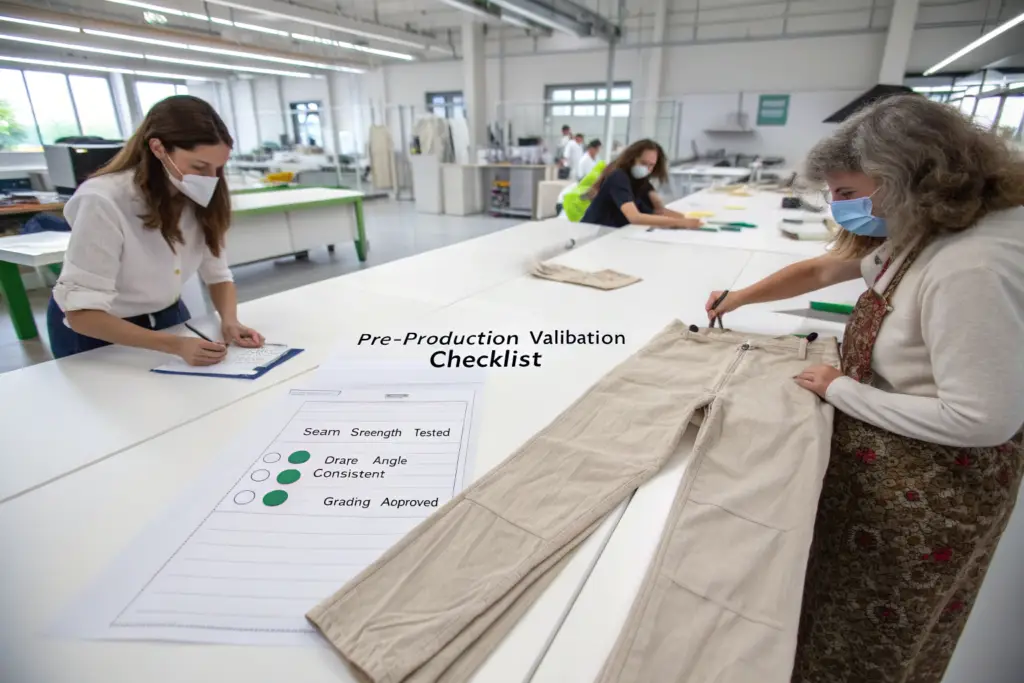
We validate production readiness through a structured "Pre-Production Pilot Run" of 10 to 15 units, cut from the actual bulk fabric and sewn by the actual production line workers who will sew the full order. This pilot run is inspected for consistency of the rare design elements—the drape angle, the hand-finish uniformity, the curve symmetry—and the results are photographed and sent to the client for approval. Only after the pilot run passes do we proceed to bulk cutting. This step catches the production translation problems before they affect 500 units, not after.
What Does a Pilot Run Reveal That a Single Sample Cannot?
A single sample proves the design can be made by the most skilled sewer in the company, working without time pressure, on a single piece of fabric. It proves possibility, not repeatability. A pilot run proves repeatability. It shows whether the average production sewer, working at production speed, can reproduce the rare detail consistently across multiple units.
A pilot run we conducted last year for a complex draped pant revealed a subtle but critical problem. The sample was perfect. The pilot run, however, showed that the drape angle varied by about 5 degrees between the ten units. The variation was caused by a slight difference in fabric stretch between the rolls of bulk linen. Our pattern engineer adjusted the pattern piece by adding a small notch that aligned with a specific yarn in the weave, giving the production sewer a visual reference point on every cut piece. This notch eliminated the variation. Without the pilot run, the variation would have been discovered in the 500-unit shipment, and 500 units would have had inconsistent drapes. The pilot run costs a few hundred dollars in labor and fabric. It saves tens of thousands in chargebacks and lost reorders. The pre-production sampling in garment manufacturing process is the most undervalued quality assurance tool in the industry. Ask your supplier if they conduct a pilot run on the actual production line before bulk cutting. If they do not, they are shipping you a prototype, not a production-proven design.
How Do We Balance Design Integrity With Production Efficiency?
A rare design that takes too long to produce becomes too expensive to sell. The art is in finding the balance point where the visible, differentiating detail is preserved, but the invisible internal processes are optimized. This is where the collaboration between our sample team and our production engineer creates value.
For a recent order of wide-leg pants with a unique interior corsetry-style waistband, the sample team's original construction involved eight separate steps. The waistband was beautiful but took twelve minutes to sew. The production engineer studied the process and proposed a modified construction sequence that reduced the steps to six without changing the external appearance or the function. The sewing time dropped to eight minutes. The per-unit cost dropped by $0.90. The design looked identical. The client was never aware that the internal construction had been optimized, because the visible result was unchanged. This is the kind of invisible engineering that makes rare designs commercially viable. The lean manufacturing in apparel production principles describe this waste reduction without value reduction. A factory that blindly follows a tech pack cannot do this. A factory that separates design development from production engineering cannot do this. It requires both teams to sit at the same table and look at the same garment with both aesthetic and efficiency eyes. Our sample team and our production team share a workspace. They talk to each other daily. This proximity creates the informal communication that solves problems before they become formal issues.
Conclusion
The rare linen wide-leg pants designs we offer are not the result of a single secret. They are the accumulated output of structural choices we have made over fifteen years. We invested in a dedicated sample studio with draping capability because we wanted to say "yes" to difficult silhouettes. We cultivated relationships with closed, artisanal fabric mills because we wanted access to textures our competitors could not buy. We separated our sample making from our production sewing and built a pilot run validation step because we wanted the 500th pant in an order to look like the first one. And we embedded our production engineer next to our pattern makers so that rare designs could be optimized without being simplified into ordinariness.
The result for you, as a brand owner or distributor, is a supply chain partner that does not flinch when you send an inspiration image of a sculptural, draped, hand-finished linen pant. We can interpret it, engineer it, cost it realistically, and deliver it consistently. You get to offer your boutique accounts something they have not seen on every other rack, and you get to sell it at a premium because the visible difference justifies the price.
If you have a design concept that other factories have rejected as "too complex," or if you want to explore what is possible with our exclusive fabric archive and finish library, I would be delighted to begin a conversation. Send me your sketches, your mood board, or just a description of what you envision. My name is Elaine, and my email is elaine@fumaoclothing.com. Let's create something rare together, something your customers will not find anywhere else.