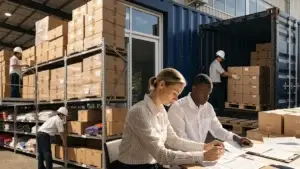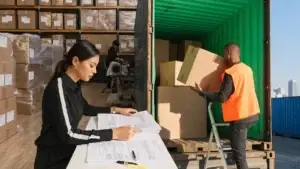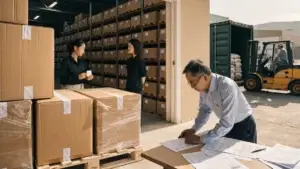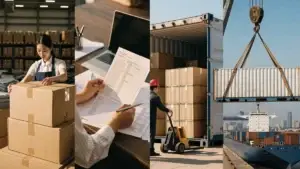
I want to answer this question honestly, and I want to answer it from the perspective of the distributors who wire us money every month. They aren't sentimental. They don't choose a factory because we send a nice Christmas card or because our showroom has good coffee. They choose us because we solve a set of very specific, very painful problems that other factories in their supply chain have failed to solve. I'm Richard, and I own Shanghai Fumao. I've spent the last decade watching North American distributors get burned by late shipments, inconsistent sizing, and factories that vanish after a quality claim. This article is my attempt to explain why a growing number of them have moved their denim production to our lines and stayed there for years.
How Does Fumao Clothing Solve the Consistent Sizing Problem?
If I had to pick the single biggest complaint I hear from distributors about their previous suppliers, it's sizing drift. A distributor lands a big retail account at a department store. The first shipment fits perfectly. The reorder arrives six months later, and suddenly the waist runs an inch small or the leg opening is wider. The retailer is furious. They issue a chargeback. The distributor eats the cost and loses the shelf space. I've heard this story so many times I can recite it in my sleep. Sizing inconsistency is a silent killer of wholesale businesses. It erodes retail trust, and trust is the one asset a distributor cannot afford to lose.
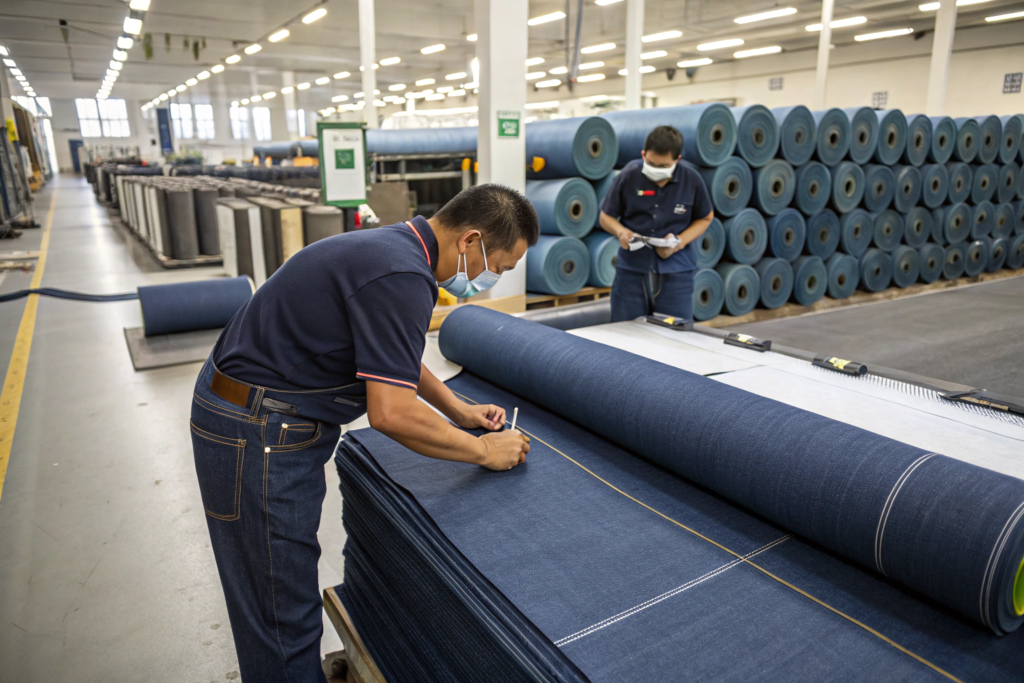
We treat sizing not as a final inspection step, but as a process that starts before the fabric is even cut. The root cause of most sizing drift is fabric shrinkage. Different denim rolls, even from the same mill, can shrink at different rates depending on the cotton batch, the yarn twist, and the tension during weaving. If you don't account for this at the cutting table, you're sewing a pair of shorts that will morph into a different size after the first industrial wash. We solved this years ago by implementing a mandatory shrinkage test on every single roll of denim before it enters the cutting room. It's tedious. It adds a few hours to our pre-production timeline. But it means that the pattern is adjusted roll by roll, and the finished short matches the spec sheet exactly, every time.
A distributor from Toronto told me last fall that his previous supplier in another country was using a single shrinkage allowance for an entire season. They assumed every roll of 12oz indigo denim would shrink 3%. One roll shrank 4.5%, and 200 pairs of shorts were a full size too small. He had to liquidate them at a loss. When he switched to us, he sat in on a video call where I showed him our cutting room log. Each roll had a handwritten shrinkage percentage and a corresponding marker adjustment percentage. He said he'd never seen a factory do that before. It's not a secret technology; it's just discipline. And that discipline translates directly into his bottom line. He hasn't had a sizing chargeback in the twelve months since he moved his denim shorts program to Shanghai Fumao.
Why Does Pre-Washing Fabric Stop Sizing Complaints?
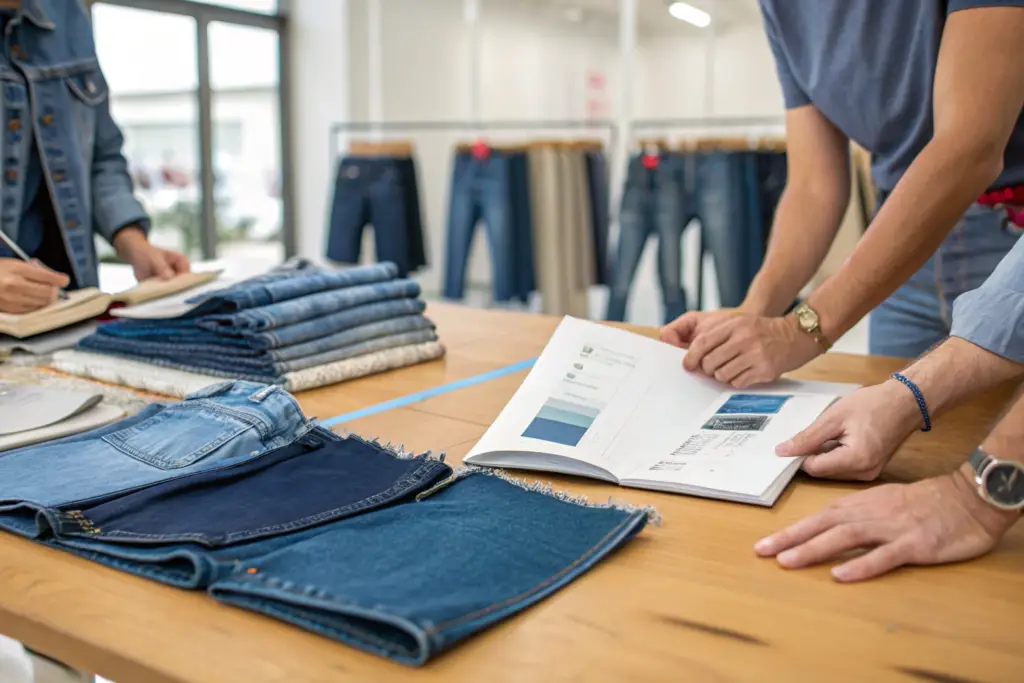
Pre-washing, or sanforization, is the process of mechanically compressing the denim fabric to reduce its potential shrinkage before it's cut and sewn. Many mills do this, but not all of them do it well. And critically, not all denim styles require the same level of compression. A rigid, raw denim short for a streetwear brand needs a different pre-wash treatment than a stretch denim short infused with elastane.
We learned this the hard way on a stretch denim order about three years ago. We received a batch of 98% cotton, 2% spandex denim from a reputable mill. The mill certificate said it was pre-shrunk. We cut and sewed 1,500 pairs of slim-fit shorts for a Vancouver distributor. After the first home laundry simulation, the shorts had shrunk almost 6% in length. The spandex had pulled the cotton fibers tighter during the wash. The distributor was understandably furious. We had to remake the entire order at our cost.
That expensive lesson changed our protocol permanently. Now, for every stretch denim batch, we perform a supplementary pre-wash in our own facility before cutting. We run the fabric through a specific steam relaxation process that fully releases the latent shrinkage in the elastane. We measure the before and after dimensions. We do not release the fabric to the cutting table until we have a confirmed, stabilized shrinkage rate. This extra step costs us about half a day per batch, but it has eliminated the stretch-related sizing complaints that plague so many denim programs. When a distributor partners with us, they are not just buying sewing capacity. They are buying a warranty that the measurements on the tech pack will match the measurements on the landed goods.
How Do We Use Digital Pattern Making to Lock in Your Specs?
We stopped relying solely on physical paper patterns for our long-term distribution partners about four years ago. Paper patterns degrade. They tear at the edges. They absorb humidity and change shape slightly. A master pattern that's been pinned and traced hundreds of times will inevitably drift. It's a slow drift, but over three production cycles, a half-centimeter can creep into the hip measurement.
Now, we digitize every approved sample into a CAD system. The pattern is stored as a precise digital file with every curve and notch defined mathematically. When a reorder comes in, we don't pull a dusty paper pattern off a shelf. We load the exact digital file, and our automatic cutting machines cut the fabric to within a fraction of a millimeter of the approved sample.
This digital lock has a second, often overlooked benefit for distributors. It makes grading across sizes flawless. When a brand needs to extend a short from size 28 through size 42, a manual grader using traditional rules might inadvertently distort the fit in the larger sizes. The rise might get too long, or the pocket placement might look awkward. Our digital grading system uses a validated algorithm that maintains the original fit intention across the full size range. A distributor from Chicago once sent us a complaint that his previous supplier's size 38 shorts fit like a completely different garment from the size 32 sample he had approved. We showed him our digital grade rules and the overlaid pattern comparisons. He switched his entire denim bottoms program to us the following season. The digital file is a promise. And unlike a paper pattern, it doesn't fade.
Can a Chinese Factory Really Deliver Faster Than Vietnam or India?
This is the question I get most often from distributors who are currently sourcing from Southeast Asia or South Asia. There's a widespread assumption that China has lost its speed advantage, that rising labor costs have made us slow and uncompetitive. I'm here to tell you that assumption is outdated. Yes, our labor costs are higher than Vietnam's. But our speed, our supply chain density, and our raw material access are unmatched when the process is managed correctly. I've personally beat delivery timelines from Vietnamese factories by three weeks on comparable denim shorts programs. I know this because distributors who split their production between regions tell me the exact arrival dates.
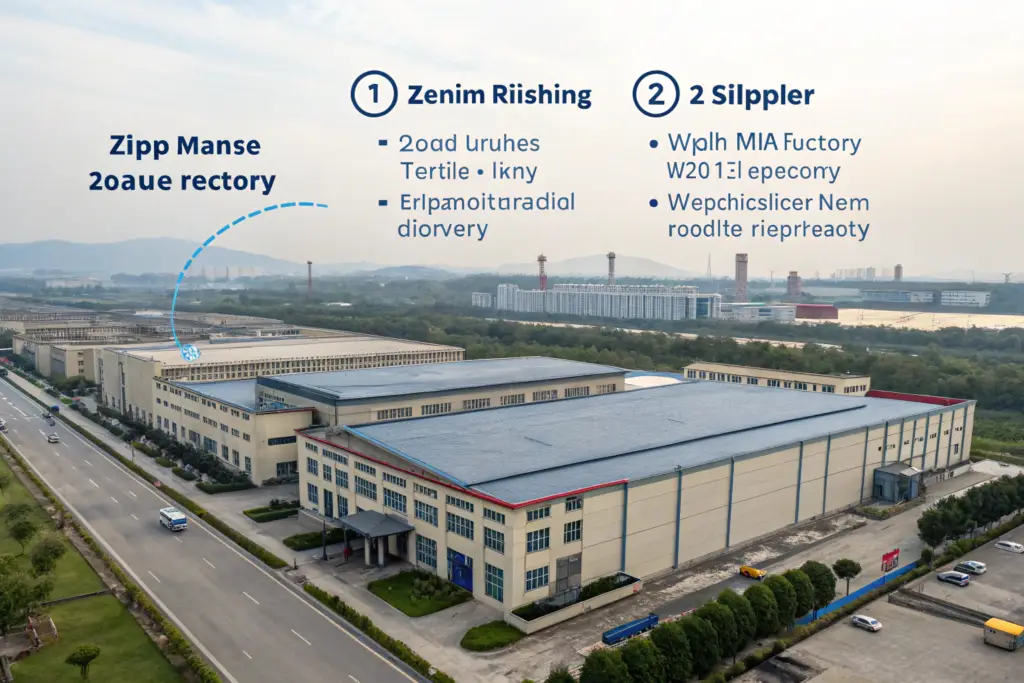
The speed advantage comes from two structural factors. First, China's textile ecosystem is incredibly dense. The denim mill, the zipper factory, the label supplier, and the wash house are often within a 200-kilometer radius of my factory. I don't have to wait three days for a truck to bring buttons from another country. I can have a sample button delivered by courier in three hours. Second, we run a dedicated denim line that doesn't get cannibalized by other product categories. When a distributor's order hits our production schedule, it stays on that line. It doesn't get pushed aside because a bigger knitwear order just landed.
I remember a specific crisis from a New York-based distributor about eighteen months ago. He had a 10,000-unit denim shorts order placed with a factory in India. The shipment was stuck in customs for three weeks due to a documentation error, and he missed his delivery window to a major online retailer. The retailer canceled the order. He was staring at a warehouse full of shorts in India and an empty shelf in the U.S. In a panic, he called us. He needed 3,000 units of a similar short produced and air-freighted within four weeks to salvage the retail relationship. We sourced the denim from a mill seventy kilometers away, ran the cutting and sewing over ten days, pushed the wash through in two days, and got the shipment to the airport. It was expensive for him because of air freight, but he saved the account. He moved his entire denim program to us the next season because he realized that the slightly higher FOB price was an insurance policy against the catastrophic cost of a missed selling window.
What Makes Our Raw Material Sourcing Faster Than Competitors?
I don't have a magic wand. What I have is a network of mills that I've worked with for over a decade. When a new distributor comes to me with a denim short concept, I don't start from scratch. I reach into a library of pre-approved, stocked greige fabrics that my partner mills hold in inventory. Greige fabric is raw, un-dyed denim. It's a blank canvas.
Because I buy greige fabric in volume across multiple programs, the mills reserve capacity for me. When a rush order lands, I can pull that greige stock, dye it to the specific shade the distributor needs, and get it to my cutting table in days, not weeks. A distributor trying to source the same fabric on their own, starting from a mill inquiry, would wait four to six weeks for the yarn to be spun, woven, and finished. That time gap is the difference between hitting the spring break selling window and arriving after the summer clearance sales have already started.
Another speed factor is our in-house testing capability. Many factories send their fabric out to a third-party lab for colorfastness and tensile strength testing. That adds three to five days to the development process. We invested in our own small lab six years ago. We can run a crocking test or a tear strength test in-house and have the results the same day. This doesn't just speed up the initial development; it speeds up problem-solving. If a wash development sample comes out with unexpected color bleeding, I can run a spectro analysis within hours, identify the fixation issue, and reformulate the wash recipe by the next morning. That kind of rapid iteration is impossible if you're waiting on an external lab report.
How Does a Dedicated Denim Production Line Cut Lead Times?
Most multi-product factories run what's called a "batch and queue" system. They sew denim shorts on the same line as woven chino pants and polyester blouses. The line changes over between products, which creates downtime. The mechanics have to reset the machines, the operators have to learn a new operation sequence, and the first few hours of a new batch are always slower.
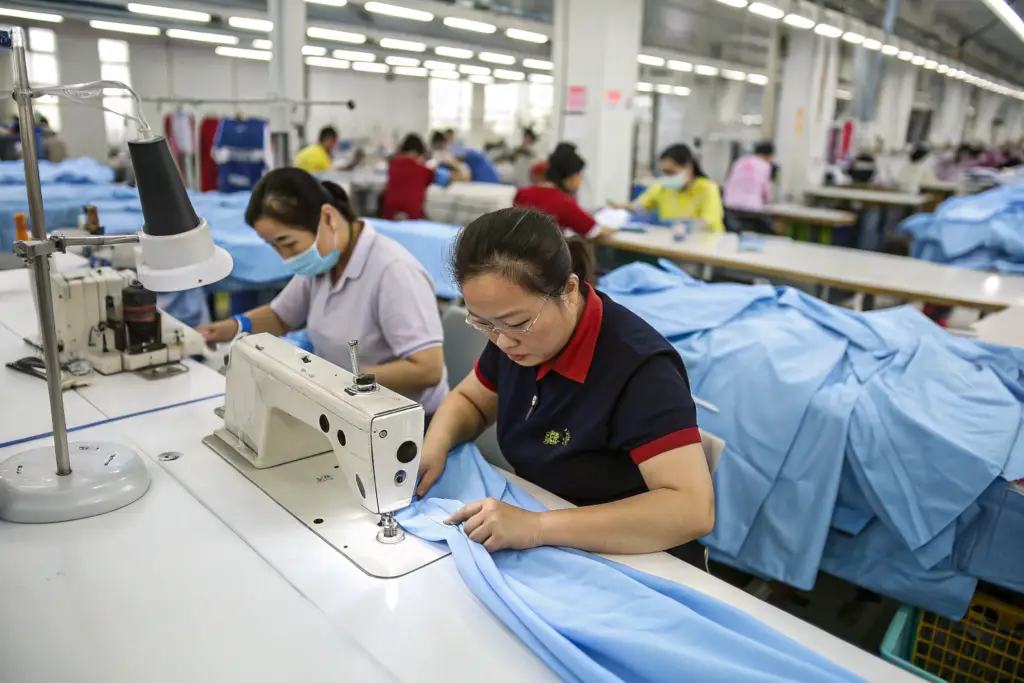
We don't do that for denim. We have a production line that only sews denim shorts and jeans. The machines are set up for heavyweight fabrics permanently. The needle gauges, the thread tension, the presser foot pressure—they are dialed in for denim and they stay that way. The operators on that line have sewn tens of thousands of denim shorts. They can load a five-pocket facing and attach a zipper fly with a speed and precision that a generalist operator simply cannot match.
This specialization shaves days off the production timeline. It also reduces the defect rate. A new operator on a mixed line might make a tension error when switching from a thin blouse fabric to thick denim. That creates a batch of shorts with puckered seams that need to be repaired or rejected. On our dedicated line, the machine settings are constant, the operators are specialists, and the workflow is predictable. For a distributor, this translates to a reliable four-week production window instead of a vague six-to-eight-week estimate that always seems to slip. Predictability is worth more than a slightly lower unit price. I've had distributors tell me they budget their entire seasonal cash flow around our confirmed ex-factory dates because they know we'll hit them.
Why Is Fumao's Quality Control System Different From Other Factories?
Most factories will tell you they have "strict quality control." I've heard it a thousand times. Then you dig in and discover that their QC system consists of one tired inspector at the end of the line, squinting at finished shorts under a dim fluorescent light, flagging the obvious defects and letting the subtle ones pass. That's not quality control. That's a final filter, and a weak one at that. True quality control is a distributed system that catches problems at the point of origin, not at the point of shipment.
My philosophy is that you cannot inspect quality into a garment. You have to build it in. That means the cutting room worker who spreads the fabric is part of the QC system. The sewing machine operator is part of the QC system. The wash house technician is part of the QC system. Everyone on the floor has the authority and the responsibility to flag a problem immediately, not wait for an inspector to discover it three days later.
A distributor from Los Angeles taught me the value of this approach years ago. He visited my factory and watched our finishing line. He pointed to a pair of shorts with a slight zipper waviness—a very minor defect that many inspectors would have passed. He said, "This is the kind of thing that gets a three-star review online. A customer won't return it, but they'll write 'zipper sits weird' and that review lives on the product page forever." That conversation changed how I train my team. We're not just inspecting for returns; we're inspecting for reviews. In the wholesale world, a distributor's retail buyer is looking at the product with the same critical eye as an end consumer reading online reviews. A subtle defect that a retail store manager notices can sour a long-term wholesale relationship.
What Happens During Our Inline Inspection Process?
Our inline inspection happens while the shorts are being sewn, not after they are finished. We place quality checkpoints at specific, high-risk operations. After the front pockets are attached, before the side seams are closed, there's a checkpoint. After the zipper fly is installed, before the waistband is attached, there's another checkpoint. An inline inspector picks up a certain percentage of the bundles flowing through the line and checks the critical measurements and seam integrity at that specific stage.
Catching a defect mid-line is dramatically cheaper and faster than catching it at the end. If the pocket facing is sewn crooked, the inline inspector spots it immediately. The bundle goes back to the pocket operator, who reworks it before the side seam operator even touches the garment. If that same defect reached the end of the line, the entire short would have to be disassembled or downgraded to a B-grade. The wasted labor of completing the garment, only to rip it apart, is eliminated.
We track the data from every inline checkpoint. If we see a spike in defects at the waistband station during the morning shift, we don't just fix the defective shorts. We investigate the station. Maybe the machine timing is off. Maybe a new operator needs retraining. Maybe the fabric batch is behaving differently under the folder. The data points us to the root cause. For our distribution partners, this means the shipment they receive doesn't just pass a final AQL inspection. It was built clean from the first stitch. I once sent a monthly QC data report to a distributor in Seattle, unsolicited. He called me the next day and said it was the first time in twenty years a factory had voluntarily shared internal defect tracking data. He's been our most loyal partner ever since.
How Do We Test Denim Shorts for Real-World Durability?
Laboratory tests are essential. We do tensile strength, seam slippage, colorfastness to light, and crocking tests according to international standards. But I've learned that lab tests don't tell the whole story. A crocking test rubs a white cloth against dry denim under controlled pressure. It's useful. But it doesn't replicate a teenager wearing the shorts to a summer music festival, sweating for eight hours, and sitting on a white leather car seat.
So, we supplement our lab tests with what I call "abuse testing." We take a random sample from each production batch and we abuse it. We wash it five times in hot water and tumble dry it on high heat. We load the pockets with heavy objects and shake the shorts to test pocket bag seam strength. We stretch the waistband repeatedly to see if the elastic loses recovery. This isn't a standardized ASTM protocol. It's a practical, real-world torture test.
A specific example: a Canadian distributor ordered a heavy 15oz denim short for a workwear brand. The lab seam strength test passed easily. But during our abuse test, we noticed that the top button was pulling through the denim after repeated stress on the waistband. The denim was heavy, the button was heavy, and the hole in the fabric was slightly enlarging under load. We caught it before shipping. We reinforced the button attachment area with an additional fusible interlining piece, invisible from the outside, that distributed the stress across a wider area. The distributor never knew there was a potential problem. That's the point. We find the issues so you don't have to. If you're sourcing wholesale denim shorts, ask your factory what their abuse testing protocol looks like. If they don't have one, they're waiting for your customers to do the testing for them.
What Communication Systems Stop Your Order From Going Wrong?
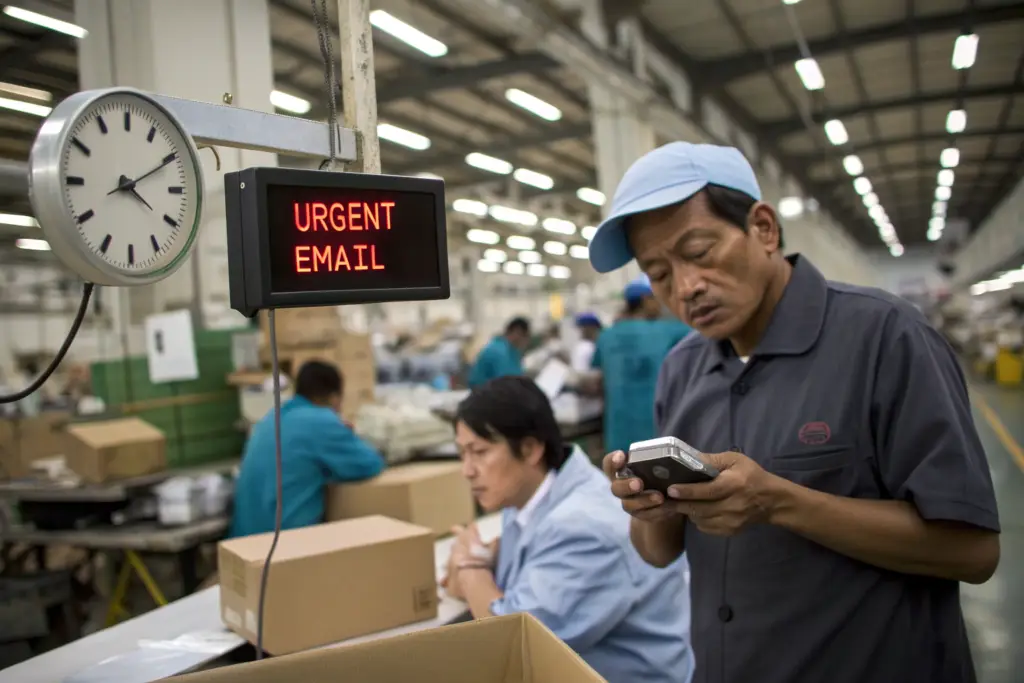
I'll be blunt. The single biggest complaint I hear about overseas factories is not about quality. It's about communication. A distributor sends an urgent email with a spec change. Three days of silence follow. Then a reply comes in broken English that doesn't answer the question. The distributor resends the email with simpler language. Another two days pass. The production deadline is burning, and nobody knows if the change was implemented. The shipment arrives, and the change wasn't made. The distributor explodes. The factory owner apologizes, blames the language barrier, and offers a small discount on the next order. The distributor starts looking for a new supplier.
I've heard this exact story from at least a dozen distributors who eventually found their way to my door. I decided years ago that I would never let communication be the reason I lost a client. It's a completely solvable problem. It requires investment in the right people, the right technology, and a cultural commitment to responsiveness that starts at the top.
Every distribution client at Shanghai Fumao is assigned a dedicated account manager. This person is not a sales rep who disappears after the order is signed. They are a project manager who stays with the order from the initial tech pack review through the final shipment. They are bilingual in English and Mandarin, and they understand garment construction deeply enough to translate a technical comment without distortion. When you email, "The crotch point is too low, can we raise it by 1 cm?" they don't just forward the email to the pattern room. They walk to the pattern room, pull up the digital file, and discuss the change with the pattern maker to confirm it's feasible before they reply to you. That level of internal coordination is what eliminates the back-and-forth delays that kill production schedules.
Why Does a Dedicated Account Manager Prevent Costly Mistakes?
In a typical factory setup, the chain of communication is long and fragile. The buyer emails the sales rep. The sales rep asks the merchandiser. The merchandiser asks the production manager. The production manager tells the sewing supervisor. At each link in the chain, information degrades. A specific instruction about thread color can become a vague note about "darker thread." By the time it reaches the operator, the original intent is lost.
A dedicated account manager shortens this chain. They sit in the same office as the production planning team. They attend the daily production meeting. When you make a change request, they log it into a shared production software system that the cutting, sewing, and finishing teams all access. The change is time-stamped, version-numbered, and visually highlighted in the production file. The sewing supervisor sees a notification on their tablet screen. There's no lost sticky note, no forgotten verbal instruction, no "I thought someone else told them" confusion.
This system saved a massive order for a distributor in Miami earlier this year. He sent a late-stage change request on a Friday evening his time—Saturday morning in China. He wanted the wash formula adjusted to be 20% lighter on 4,000 pairs of shorts that were already in production. Our account manager saw the message on Saturday, called the wash house supervisor, confirmed that the batch had not yet entered the washing machines, and applied the change before Monday's wash shift started. If that communication had waited until Monday morning Shanghai time, the shorts would have been washed in the wrong shade and the entire order would have been delayed by two weeks for re-washing or re-cutting. The distributor told me later that with his previous supplier, that change request would have simply been ignored, and he would have accepted the wrong wash because it was too late to fix.
How Does Real-Time Production Tracking Work for You?
We use a cloud-based production tracking platform that our distribution clients can access at any time. This is not a fancy marketing dashboard with fake numbers. It's a live feed of the actual production milestones. When the fabric arrives at our warehouse, the status updates. When cutting is complete, it updates. When sewing hits 50% completion, it updates. When the wash is finished and the shorts move to finishing for button attachment and pressing, it updates.
This transparency serves two purposes. First, it eliminates the anxiety-driven emails. The distributor doesn't have to send a "just checking in" message every three days because they can see the progress bar moving. Second, and more critically, it acts as an early warning system. If the cutting milestone should have been hit on a Tuesday and the dashboard still shows "pending" on Wednesday morning, both the distributor and our internal production manager see the delay simultaneously. We can't hide a slip. The system forces us to acknowledge the delay, diagnose the cause, and communicate a revised plan immediately.
I had a skeptical distributor from Dallas who told me he didn't believe in "factory software." He'd been burned by a previous supplier who sent him a fake tracking link. I told him to test the system. During his production run, I asked him to check the dashboard at random times and compare it to what I was saying in our weekly calls. He did. He told me that by week two, he stopped asking for status updates entirely. He just checked the dashboard. He said it was like the factory had turned its lights on and let him watch the work happen. That level of trust is what allows a distributor to focus on selling, rather than babysitting a supplier. For the 2026 wholesale denim shorts market, where delivery windows are tight and retail penalties are severe, this kind of visibility is not a luxury; it's a necessity.
Conclusion
North American distributors don't prefer us because we're the cheapest option on an Alibaba search. They prefer us because we solve the specific, money-losing problems that keep them awake at night. We solve the sizing drift that triggers retailer chargebacks, through roll-by-roll shrinkage testing and locked digital patterns. We solve the lead time anxiety that causes missed selling seasons, through a dense local supply chain, pre-stocked greige fabric, and a dedicated denim production line that doesn't get bumped for other products. We solve the quality inconsistency that generates bad online reviews, through inline inspection at every critical operation and real-world abuse testing that catches the failures lab tests miss. And we solve the communication breakdown that turns a simple spec change into a $20,000 mistake, through dedicated bilingual account managers and a real-time production dashboard that you can access from your phone.
If you're a distributor who's been burned before—if you've opened a container and found the sizing off, or spent weeks chasing a reply to a simple email—I want you to know that it doesn't have to be that way. We've built Shanghai Fumao specifically to be the reliable denim partner that North American distributors deserve.
If you'd like to discuss a current or upcoming denim shorts program, I encourage you to reach out to our Business Director, Elaine. She can walk you through our quality protocols, share sample lead times, and arrange a live video tour of our dedicated denim line so you can see the systems I've described with your own eyes. You can contact her directly at elaine@fumaoclothing.com. Let's build a denim program that delivers exactly what it promises, exactly when it's needed.