This is a defining moment for American brand owners. I’m seeing order books open earlier than ever for the Spring/Summer 2027 season. If you are sourcing wholesale denim shorts, you can’t afford to rely on last year’s silhouettes. The market is shifting toward cleaner finishes, smarter sustainability, and construction details that justify a higher retail markup. I’ve put together this guide to break down the fabric innovations, silhouette changes, and supply chain strategies that will define 2026. I’m Richard, the owner of Shanghai Fumao, and I’m writing this from the perspective of a factory floor. We make the garments, we fix the production headaches, and we talk daily to brands looking for an edge. This is not a trend forecast copied from a runway blog. It’s a sourcing blueprint, grounded in real conversations with mills and brand owners preparing for the next cycle.
Why Baggy Denim Shorts Are Dominating Bulk Orders
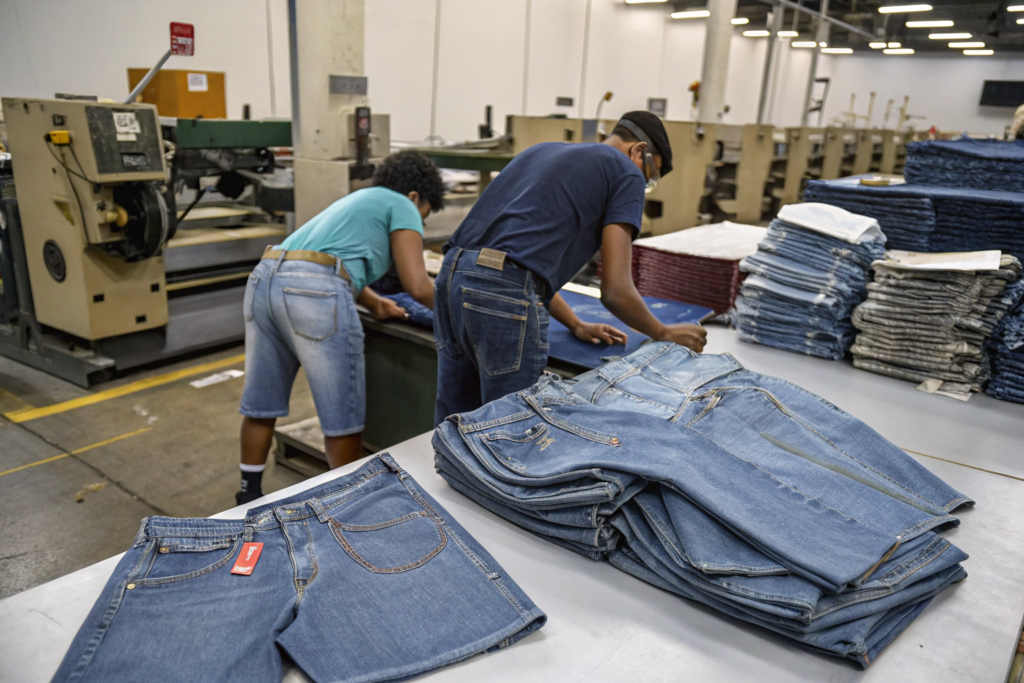
I’m going to be direct: if your wholesale buy sheet for Summer 2026 still leans heavily on skinny or standard slim fits, you’re planning for a customer who has already moved on. I look at my cutting room floor every day. The patterns we are spreading most often right now are not the narrow-leg blocks. The volume is in the wide-leg and baggy silhouettes. This is a global shift driven by the younger demographic who view denim shorts not just as a warm-weather basic, but as a statement of streetwear identity. In February this year, we shipped 8,000 units of a knee-length baggy short for a Miami-based streetwear distributor. He was nervous about leaving the slim-fit comfort zone. By April, he reordered because his initial stock sold out online in ten days. That speed tells me everything I need to know.
The demand is not just about looking oversized. It’s about a specific, engineered volume. You cannot simply take a slim pattern and grade it up. That ruins the crotch point and makes the side seam twist. I learned this the hard way three years ago, and now we draft baggy shorts from scratch. The real test is the silhouette retention after washing. A cheap wide-leg short collapses after a few laundry cycles and looks like a sad skirt. To prevent this, we switched to higher-twist ring-spun yarns for our rigid denim. For stretch-infused baggy fits, we now use a specific crosshatch weave that holds the roomy shape without sagging at the knees. That technical tweak is what separates a premium $68 retail short from a $19.99 fast-fashion dud. Buyers I talk to on Alibaba are specifically searching for "rigid wide leg denim shorts men" and "oversized jorts." The search volume for baggy fits is up, and it’s converting into real purchase orders.
Why Are Stiff Fabrics Making a Comeback in 2026?
I used to think my washing machines would never stop running. Brands wanted the softest denim possible, right out of the box. That is changing fast. We are now producing a lot of raw, rigid denim that feels like cardboard when you first pick it up. Why? The premium market has shifted its perception of quality. The consumer believes that if the fabric starts stiff, it has a longer life. They want to break the shorts in themselves, creating personalized wear patterns around the wallet and phone pockets. This creates a story of ownership.
For a Vancouver-based brand we partnered with last fall, we developed a 13.5oz unwashed Japanese-inspired selvedge short. The profit margin on this product is phenomenal for them. They sell it as a "blank canvas" item.
However, rigid doesn't mean unmanageable. A common mistake distributors make is assuming stiff fabric is scratchy. It shouldn't be. The key is the yarn character. We insist on long-staple cotton. A short fiber creates a rough, itchy hand feel; a long fiber makes the rigid texture crisp but smooth. We also had to solve the shrinkage mystery. Shrinkage is your enemy in the wholesale business because it drives returns. For every rigid program we run, I test the fabric three times before cutting. We do a standard one home laundry simulation. If the shrinkage is over 3%, we adjust the marker. I cannot stress this enough: if your supplier does not pre-shrink or account for mechanical shrinkage in the pattern, you will have chargebacks. If you are planning wholesale denim shorts in stiff fabrics, ask for the shrinkage test report before the knife hits the denim.
How Can You Source Heavyweight Denim Shorts for Streetwear?
The streetwear category is chasing weight like never before. I’m not talking about 12oz denim. I’m talking about 15oz and above. This used to be a niche request from raw denim hobbyists. Now, it’s a mainstream requirement from streetwear brands who want their shorts to stand up straight on a shelf. Heavyweight denim appeals to the customer seeking utility and durability. It links the garment to workwear heritage, which is a massive visual trend right now.
But let me give you a practical warning from the production side. Sewing heavyweight fabric is a nightmare if you don't have the right machines. A standard lockstitch machine will skip stitches on 16oz denim. We had to dedicate a separate production line just for heavy weights. This line has needle-feed machines and reinforced bartack machines.
Here is a quick breakdown of the challenges and solutions I’ve encountered:
| Challenge | Production Solution | Impact on Wholesale Price |
|---|---|---|
| Broken Needles | Use of titanium-coated, 18-gauge needles | Minimal unit cost rise |
| Seam Puckering | Walking foot machines & tension reduction | Labor speed reduction |
| Operator Fatigue | Rotating shifts on heavy-duty line | ~5% higher labor cost |
| Fabric Supply | Sourcing from specific Pakistani/Chinese mills | Variable |
A streetwear brand from New York asked us for a 16oz short in February. During the first sampling stage, the side seams were buckling because the fabric was too heavy for standard thread tension. We switched to a coarser thread and a three-thread overlock stitch to flatten everything out. The margin on these heavy pieces is better for you because the perceived value is so obvious. If you are planning to use heavyweight denim wholesale, your supplier must prove they have dedicated high-density cutting machines, not just standard straight knives. Otherwise, you'll get mismatched leg panels.
What Sustainable Denim Practices Are Reducing Production Costs?
I used to think "sustainable" just meant "expensive." Like many factory owners, I assumed eco-friendly production was a luxury tax that squeezed our thin margins. I was wrong. Over the last two years, I’ve realized that the right sustainable practices don’t just help the planet; they fix broken production lines and save money. The 2026 conversation around denim has moved past simple greenwashing. The buyers I meet at Magic and on Google sourcing sessions ask very specific technical questions. They want to know about water usage, chemical compliance, and circularity. But they also want to know if it keeps the Free on Board (FOB) price competitive. I've seen how sustainable innovation can be a cost-recovery mechanism. It eliminates hidden expenses like excessive water heating, waste-water treatment fines, and wasted raw fabric.
One specific change saved us a fortune: switching from traditional potassium permanganate spray for whisker effects to laser finishing. This wasn't an easy decision. A laser machine is a significant capital expenditure. But let me break down the real math I lived through. The manual spray process required a skilled worker to spend a few minutes per garment, and then we had to wash it heavily to neutralize the chemicals. This was slow and unpredictable. One time, a new operator slightly misbalanced the spray solution on a 3,000-piece order. The fabric turned yellow in patches. We had to reject the whole lot. Since installing the laser, we have eliminated that chemical usage entirely. The finish is precise every time, and we can now push a high-end sample from our design room to the client's inbox in hours, not days. That’s a selling point you can use in your own wholesale marketing.

How Is Laser Technology Replacing Manual Scrubbing?
Laser is not just a fancy gimmick to write your brand name on a back pocket. It’s a production control tool. In 2026, the trend is towards hyper-localized wear patterns. We are not just giving a pair of shorts a uniform wash; we are carving out exactly where a crease sits on the thigh.
I visited a trade show in Shanghai where they showed real-time laser mapping on a live model simulation. Now, we use software to map the exact coordinates of a whisker line.
The dry process of manual scrubbing relies on human elbow grease. A man with an abrasive drill creates the distressed marks. The problem is fatigue. The first fifty shorts look great; the next fifty look slightly different because the worker's hand gets tired. For a brand owner, this inconsistency kills the brand image. The consumer wonders why the floor model had a perfect whisker pattern, but the pair they received in the mail looks blank. Laser eliminates this human drift. The design file is the master. Repeatability is 100%.
However, I must be honest about a new problem this creates: the "burn" mark. If the laser power is too high, it scorches the cellulose in the cotton. This creates a yellow-brown tint that you can't wash out. A client of ours, an e-commerce brand based in Texas, complained that the first batch of laser shorts had a faint singed smell. We fixed it by adjusting the ventilation and lowering the power output while using a post-laser ozone wash. The key takeaway for you: when sourcing laser-finished wholesale denim shorts, ask your factory if they balance the laser with a proper gas or ozone rinse. A bad laser job smells like burnt plastic. A good one has no smell and a clean finish.
Can Recycled Cotton Strengthen Your Supply Chain?
I have a love-hate relationship with recycled cotton. The marketing story is perfect for American consumers. The reality on the spinning floor is trickier. Recycled cotton fibers are shorter than virgin fibers. When you stretch the yarn, it breaks more easily. If you make a pair of 100% post-consumer recycled denim shorts, they might not survive a summer of heavy wear. The crotch seam could blow out. For a brand, this is a catastrophe.
So, what works? A blend. We have found that a 70% virgin cotton and 30% post-industrial recycled cotton blend is the sweet spot for wholesale denim shorts. You get the sustainability tag you want for your marketing, but the shorts keep their durability.
The sourcing advantage here is about pre-consumer waste. We collect clippings from our own cutting tables. This is clean, un-dyed waste. We send it back to a specific recycling partner who shreds and respins it. This creates a closed-loop story that importers love. It also stabilizes a small portion of our raw material cost. By reusing the cutting waste, we are insulating a slice of the bill of materials from volatile cotton futures prices. For a brand owner, this dual-sourcing approach—blending recycled inputs with fresh cotton—can be marketed as "strength meets sustainability." It answers the consumer's need for eco-conscious fashion without sacrificing the ruggedness expected from a wholesale denim short in the 2026 market.
Which Denim Washes Are Driving Online Sales in 2026?
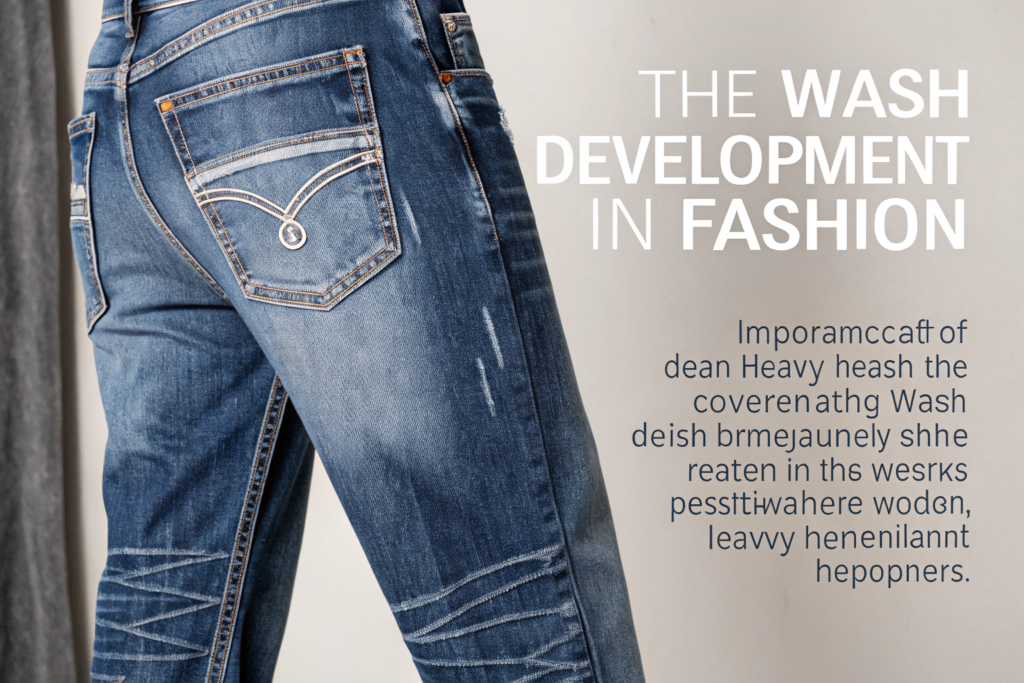
Wash development is where I spend 40% of my pre-production time now. The shape of the short is the skeleton, but the wash is the soul. It’s the first thing a consumer sees in a thumbnail image on Google Shopping or Instagram. If the wash looks dated, the click-through rate drops, and your inventory rots in a warehouse. For 2026, I’m advising my brand partners to think about "texture contrast." The eye wants to see variation. A flat, monotonous indigo looks cheap. We are moving into an era where the wash itself creates depth, even if the garment is a simple five-pocket style. This shift is driven by visual algorithms. Online shoppers swipe past a product in half a second. A heavy contrast wash with a clean, bright weft peeking through creates that "stop scrolling" moment. I’ve produced thousands of pieces that failed simply because the wash photography looked too flat.
Last year, I worked with a boutique brand in San Diego. They were stuck in a rut of "rinse wash" and "light stonewash." I pushed them hard to try a dirty tint spray combined with an acid wash undercoat. The result was a gritty, urban texture that looked like something a vintage dealer spent three years tracking down. That single short generated 40% of their summer revenue. That taught me that online sales don't just rely on the construction of the short; they rely on the chemistry in the washing machine. The specific mix of enzymes, stones, and bleach creates a unique optical texture that cannot be replicated by printing.
Why Is the “Vintage Tint” the Ultimate Middle-Ground Wash?
A true vintage tint is not a solid dye. It’s a subtle cast—usually yellow, green, or ecru—over a worn indigo base. It mimics the look of a 1980s pair of shorts that sat in a dusty attic for decades. This wash works brilliantly for wholesale because it is unisex and spans across age groups. A 20-year-old college kid sees it as "retro aesthetic"; a 45-year-old dad sees it as "the shorts I wore in high school."
The tricky part is the application. You cannot just add yellow dye to the washing machine; it will stain the white pocketing and the brand label. We use a "tint and strip" technique. We first dye the garment with a low-affinity pigment, then we do a light stone wash to knock the pigment off the high abrasion points—the thighs and the seat. This leaves the tint deep in the creases but removes it from the surface. The result is a three-dimensional color profile.
For your wholesale buy, ask for the "potassium permanganate free" tint if you need to meet strict EU or California environmental standards. We developed a peroxide-based tinting method for a Los Angeles client that completely bypasses the spray booth. It costs about 2% more in chemicals but saves them on the logistical nightmare of hazardous material documentation. If you’re looking at wholesale denim shorts for the 2026 season, a vintage ecru cast over a light blue base is the safest, highest-volume bet you can make. It complements both dark graphic tees and simple white linen shirts.
How Do Acid Washes Create Texture Without Damaging Fabric?
The traditional acid wash, or "snow wash," is making a huge comeback, but not in the harsh, 1980s heavy-metal way. The 2026 version is softer. We call it "micro-acid." The goal is a cloudy, marbled surface with a surprisingly soft hand feel. The old way of doing this involved soaking pumice stones in strong bleach and tumbling them dry with the shorts. This was destructive. The bleach often rotted the cotton fibers, and I used to deal with returns where the pocket bags literally disintegrated after five washes because the bleach was not properly neutralized.
Modern micro-acid washing fixes this. We now use a gas-phase bleaching system in a sealed tumbler. Instead of liquid bleach, we introduce a fine vapor of chlorine gas. This method strips the color more evenly from the surface of the exposed ridges without fully saturating and weakening the yarns hidden in the seams. It uses fewer resources and creates a consistent "haze."
But let me give you a warning from a bad experience. Gas bleaching requires an airtight vessel. If oxygen leaks in, you get erratic results. We once had a gasket fail on our machine halfway through a 500-piece order. Half the batch had a beautiful, hazy marble; the other half looked blotchy and unfinished. We had to re-cut and re-make 250 pairs. It was an expensive lesson in maintenance. Now, I only trust this wash for long-run programs. If you are ordering 5,000 units of wholesale denim shorts, a consistent 2% micro-acid haze is achievable. If you order a sample run of 100 pieces, expect the unit cost to be high due to the machine setup time. Quality control for this wash is visual; we look at the shorts under a calibrated lightbox to ensure the haze density matches the approved standard.
How Can Importers Solve the 2026 Price-Quality Paradox?
This is the conversation I have with every new client after their first cup of coffee. They want to know how to get the "good stuff"—the thick fabric, the clean stitching, the premium tags—without paying a premium price that kills their retail margin. I call this the price-quality paradox. You want low cost, but the market demands high quality. In 2026, the paradox is sharper than ever because ocean freight is unpredictable and cotton futures continue to dance around wildly. You cannot simply slash your FOB price without sacrificing something tangible.
My honest answer: you cannot solve the paradox by squeezing the factory. If you squeeze us too hard, we cut corners on thread quality or fabric weight to survive, and then you fail your third-party inspection. The solution lies in value engineering. It’s about redesigning the garment to use less labor while maintaining the look.
I had a long meeting with a New York client about a year ago. He was sourcing from Vietnam but hated the communication lag. He wanted to switch to China but needed the same landed price. We sat down in our sampling room and took apart his competitor’s short. We found three non-essential operations. The inside waistband had a double needle topstitch that the consumer never saw. The fly had a decorative buttonhole that cost $0.15 per garment. By deleting these hidden costs, we saved him $0.45 per piece, which he reinvested into heavier denim. The retail product felt more expensive because the fabric was better, yet his cost of goods remained flat. That is the only way to win.

How Do You Optimize a Design for Efficient Bulk Sewing?
This is the unsexy, technical stuff that makes you money. A design might look beautiful on a sketch, but if it’s engineered poorly, it leaks cash on the sewing floor. In a standard pair of five-pocket shorts, picking up and putting down the piece accounts for 20% of the labor time. The handling time is dead air.
To solve this, we work with brand owners on operation sequencing. We try to reduce the number of specialized machines the fabric has to visit. If you can design a hem that uses the same needle gauge as the side seam, we don't have to move the bundle to another line.
Here is a breakdown of common design choices and their hidden cost implications for 2026 wholesale production:
| Design Element | Labor Impact | My Recommendation for 2026 |
|---|---|---|
| Double Cargo Pockets | Very High | Replace with hidden internal pockets |
| Raw Hem (Frayed edge) | Low (skips hemming) | Trendy & profitable, but must be laser-locked |
| Flat-Felled Inseams | Medium (slow feed) | Use only for heavyweight 16oz+ shorts |
| Traditional Bar Tacks | Medium | Accept the cost; necessary for durability |
A raw, frayed hem is a perfect example of a pro-sourcing hack. It's a massive trend in 2026, and it actually saves you money. You skip the entire double-fold hemming operation. But you must use a laser cutter or a precision grinder to cleanly abrade the edge so it frays in a controlled way during the first home wash. If you just cut the fabric and leave it, the hem will unravel completely, and the short falls apart. I guided a Melbourne brand through this; we switched their 12oz shorts to a frayed hem and reduced their sewing time by 8 minutes per piece. The market liked the look, and they added the saved money to the packaging budget.
Is Combining Multiple Fabric Orders a Viable Cost Strategy?
Yes, but only if you are organized. Minimum Order Quantities (MOQs) are the enemy of a small to mid-sized brand. A denim mill might ask for 3,000 yards of a specific wash, but you only need 1,200 yards for shorts. You’re stuck.
My factory offers a consolidation model that many of our distribution clients have adopted. If you are doing a co-ord set—say, a denim jacket and shorts—or if you are grouping colors across a spring line, we can book the entire 3,000 yards of fabric. We then allocate the yardage across different garment styles under one production schedule. This allows you to hit the mill’s MOQ without carrying dead stock fabric. It’s called a fabric program.
A practical example: a Texas brand wanted a specific mint green selvedge denim. The mill demanded a huge minimum. They only wanted shorts. I suggested they add a matching bucket hat and a small crossbody bag to their line plan. We cut the hats and bags from the same fabric roll. This absorbed the excess yardage and their accessories sold out because the color story was so strong. By thinking across categories, you lower the average cost per yard. You also guarantee that the shade of your wholesale denim shorts perfectly matches the rest of the collection, solving the usual factory problem of batch variation between accessories and mainline garments.
Conclusion
The wholesale denim short market in 2026 is rewarding brands that take risks on silhouette while protecting themselves through smarter sourcing. We've moved past the era where a simple five-pocket short in a generic blue wash would fly off the shelves. The young customer wants baggy fits that hold their shape, stiff denim they can break in, and wash textures—like the vintage tint or the soft micro-acid haze—that stop them mid-scroll on their phone. At the same time, I see these big aesthetic shifts causing real headaches in the supply chain. Heavyweight streetwear fabrics snap cheap needles. Laser finishing, if done wrong, leaves a burnt smell. Rigid denim shrinks unpredictably unless it's tested.
The way to navigate this is through engineering, not just shopping for the lowest price. It’s about locking in the right fabric blend—maybe that 70/30 recycled mix—so your quality promise doesn't unravel. It’s about looking at a frayed hem and seeing the labor cost you saved, which you can then reinvest into a heavier, more luxurious fabric.
If you are reading this as a brand owner or a distributor planning your next season, I want you to see the factory not just as a vendor, but as a design partner. The solutions to the price-quality paradox, the tricky chemical compliance, and the harsh deadlines come from early, transparent planning on the factory floor. We at Shanghai Fumao are that kind of partner. We have the heavy-duty lines ready for the streetwear surge, the laser machinery for the cleanest finishes, and the washing expertise to nail the trendy vintage casts. We want to help you translate these 2026 trends into products that fit your brand language and your budget.
If you’re ready to start developing your collection or if you simply want to talk through the cost implications of these trends, please reach out to our Business Director, Elaine. She is deeply experienced and can give you a direct, no-nonsense assessment of your project. You can contact her by email at elaine@fumaoclothing.com. Let’s make sure you’re not just following the trends, but actually delivering them on time and on budget.