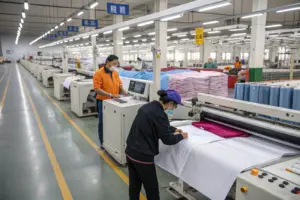
The logistics world is rapidly changing—and so is apparel inventory control. Traditional barcode systems and manual scanning have proven too slow, error-prone, and inflexible for modern fashion supply chains. Now, RFID (Radio Frequency Identification) embedded directly into garments is becoming the ultimate game-changer for real-time inventory visibility and accuracy.
RFID-embedded garments enable apparel brands and retailers to track, verify, and manage stock levels across global warehouses, stores, and even returns—with unprecedented precision.
This transformation has huge implications for how we manufacture, export, stock, and sell fashion. Let’s explore how and why.
How Does RFID Technology Work in Apparel?
RFID stands for Radio Frequency Identification. It uses electromagnetic waves to wirelessly identify and track items tagged with a chip.
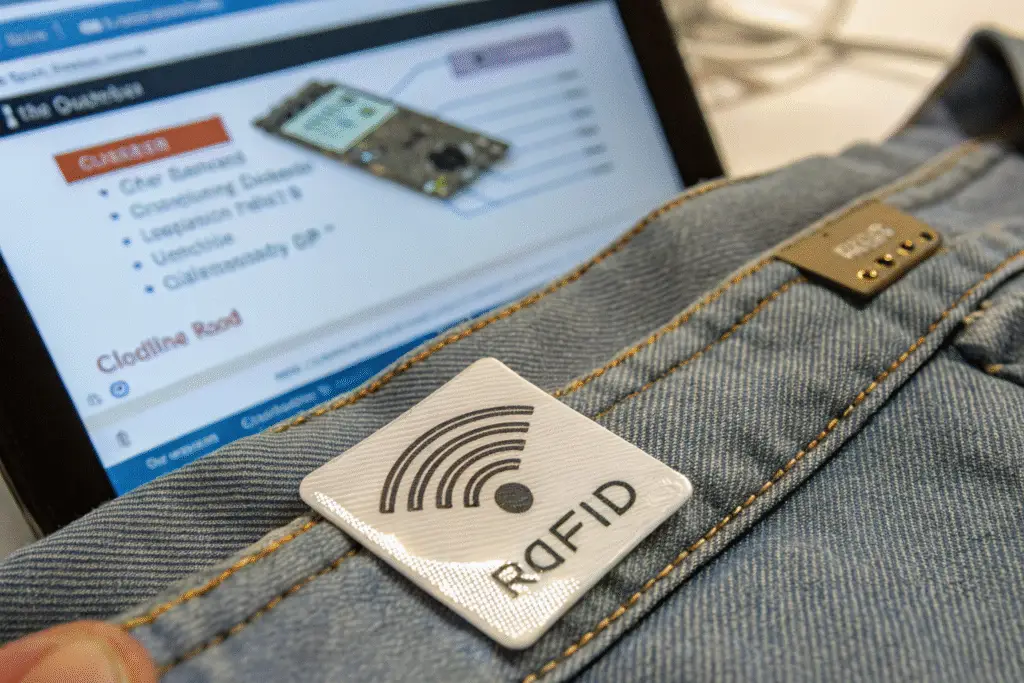
What's Inside an RFID Tag?
An RFID system consists of:
- Tag (transponder): embedded in a garment label or hangtag
- Reader (interrogator): handheld or shelf-mounted devices
- Antenna: receives signal from tag
- Software platform: stores and analyzes data
Unlike barcodes, RFID tags do not require line-of-sight and can be read in bulk and at distance.

Why Is RFID Better Than Barcodes?
| Feature | Barcode | RFID |
|---|---|---|
| Read Range | Close-range | Up to 10 meters |
| Read Multiple Items | No | Yes |
| Line-of-Sight Needed | Yes | No |
| Data Storage | Minimal | High (editable) |
RFID simply offers speed, scalability, and automation.
RFID Journal explains how fashion brands reduce shrinkage and improve tracking with item-level tagging.
What Are the Key Benefits of RFID-Embedded Clothing?
RFID-embedded garments offer massive operational advantages at every step of the supply chain.
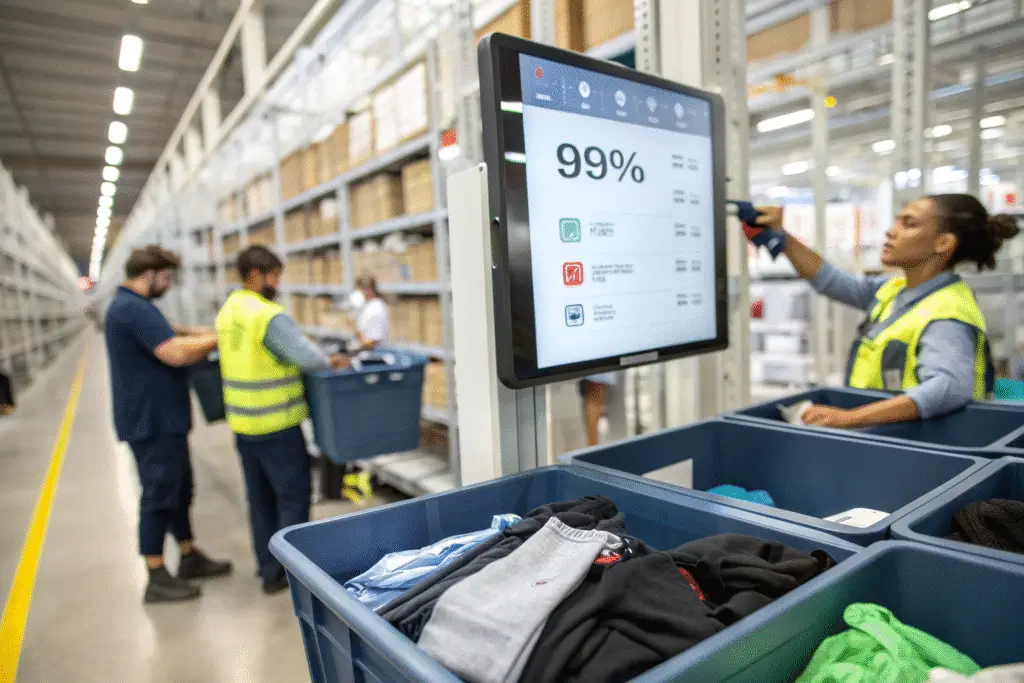
Can RFID Reduce Inventory Errors?
Yes. RFID boosts inventory accuracy to over 98%, compared to just 65-75% in traditional setups.
Benefits include:
- Real-time stock level updates
- Immediate alerts for misplacement or shortages
- Precise shelf-to-shelf location mapping
McKinsey & Company estimates RFID reduces out-of-stock rates by up to 50%.
Does RFID Improve Supply Chain Transparency?
Absolutely. Each garment can be tracked:
- From production
- Through packaging
- During customs clearance
- Into retail stores
This enables DDP tracking, enhanced customs compliance, and reverse logistics if needed.
How Are Global Brands Using RFID in Garments?
Many global fashion leaders are already using RFID at scale.

Which Brands Lead RFID Adoption?
- Zara (Inditex) embeds RFID in all garments
- Nike uses RFID for store-level auto-replenishment
- Levi’s implemented RFID to improve omnichannel fulfillment
- Uniqlo uses RFID POS systems for frictionless checkout
A 2024 case study by Supply Chain Dive reported a 25% rise in fulfillment efficiency using RFID.
What Role Does RFID Play in Omnichannel Retail?
RFID allows:
- Accurate eCommerce fulfillment from stores
- Unified store and warehouse stock data
- Instant pick-and-pack verification
- Auto-alerts for low stock thresholds
For customers, this means “Buy Online, Pick Up In Store” (BOPIS) is faster and more reliable.
What Are the Costs and Challenges of RFID Implementation?
While powerful, RFID still comes with barriers to entry.
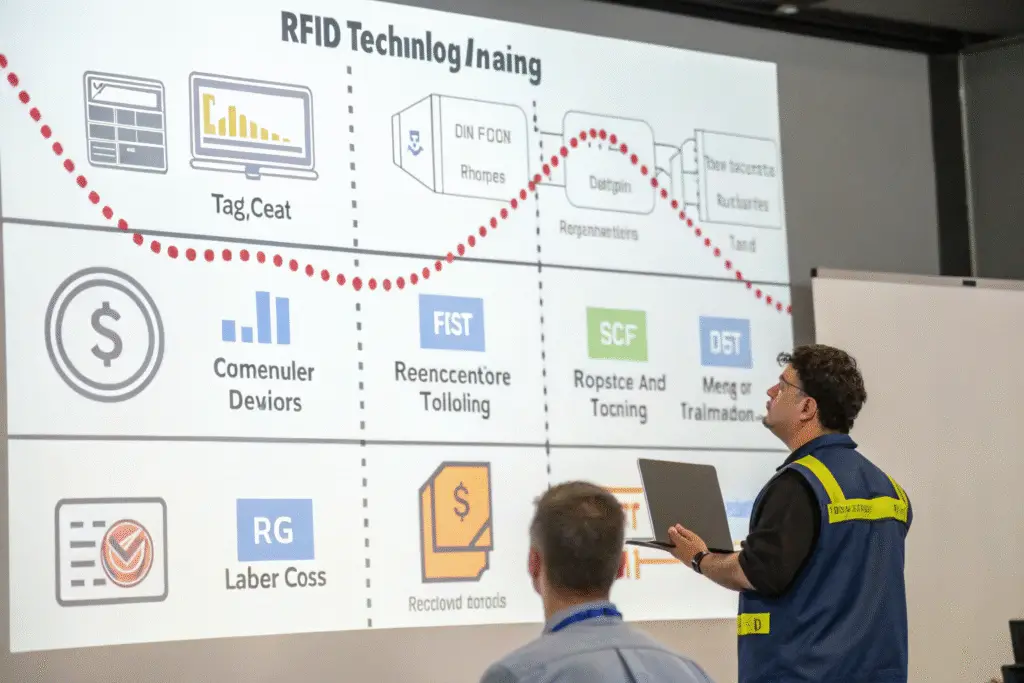
How Much Does RFID Cost Per Garment?
| Component | Cost (USD) |
|---|---|
| RFID Tag (sewn-in) | $0.10–$0.25 |
| Reader Hardware | $500–$5,000 |
| Middleware Platform | Varies (SaaS) |
| Setup & Integration | One-time $2k–$10k |
High volume manufacturers often absorb tag cost into unit price for bulk orders.
What Are Common RFID Adoption Hurdles?
- Initial setup cost
- Staff retraining
- System integration with legacy software
- Regulatory compliance for international shipments
However, many of these are addressed by partnering with RFID-experienced factories or tech providers such as Avery Dennison.
How Can Importers and B2B Buyers Start With RFID?
Even mid-sized businesses can benefit from RFID with the right setup.
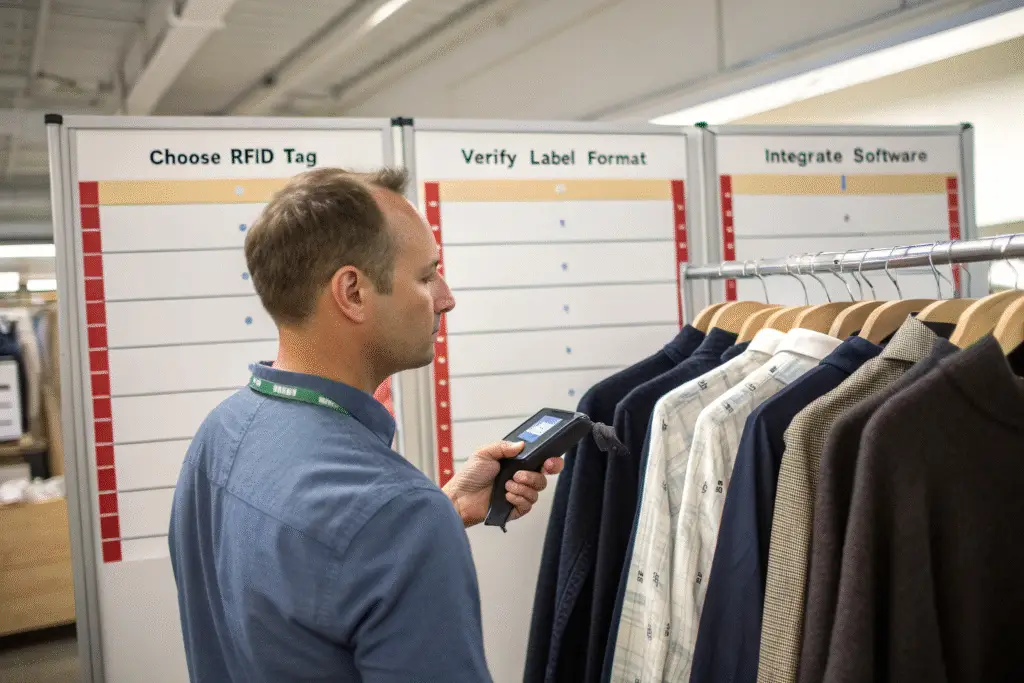
What’s a Good First Step for Garment Importers?
- Choose suppliers already familiar with RFID integration
- Start by embedding passive UHF RFID tags into care labels
- Use handheld readers to test during shipping and receiving
Fashion United highlights how small brands reduce shipping errors with basic RFID implementation.
Should You Ask for RFID-Ready Packaging?
Yes. Ask factories to:
- Pre-label cartons with aggregated RFID data
- Provide digital product passports
- Align label encoding with your inventory system
This enables instant container scans at warehouses or retail DCs—saving thousands in labor hours.
Conclusion
RFID-embedded garments are no longer futuristic—they’re now a core tool for modern fashion logistics. From reducing inventory error to enabling real-time tracking and omnichannel fulfillment, this technology helps apparel importers, distributors, and retailers stay lean, agile, and scalable.
As a clothing manufacturer in China, we offer RFID tag integration as part of our full-package service, helping clients future-proof their apparel supply chain. Whether you're a startup scaling fast or a seasoned buyer looking for efficiency, RFID is the next logical move.
Let’s tag your next order for smart inventory mastery.