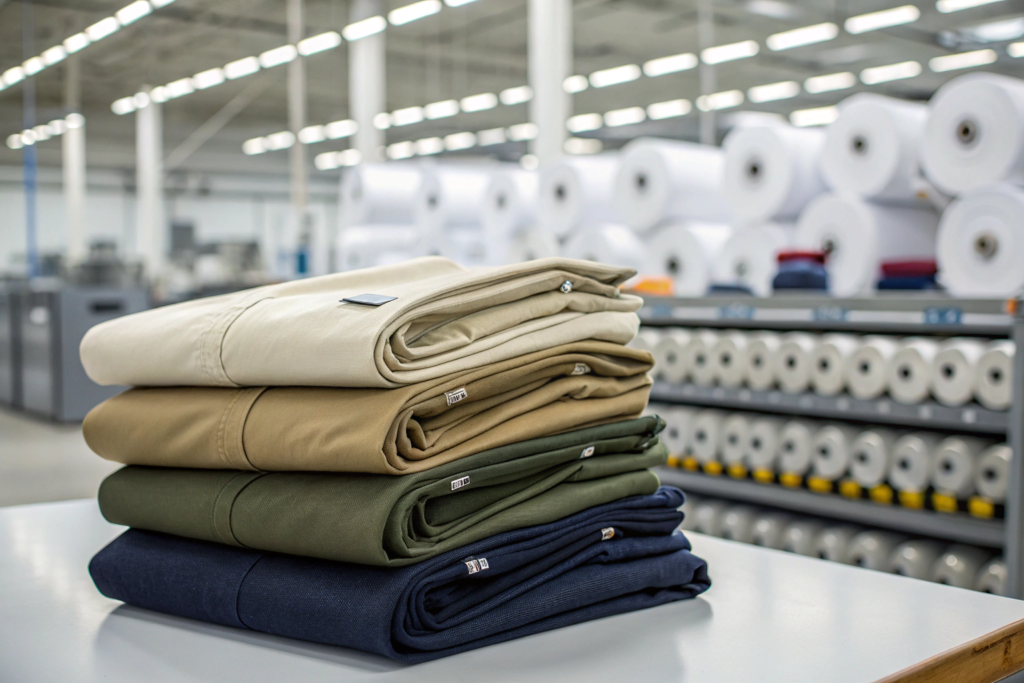
Last spring, a brand owner in Miami called me in a panic. He had ordered 5,000 pairs of trendy micro-shorts with a complex asymmetric cut and a specific eco-friendly button detail. They arrived three weeks late because the die-cutting kept failing on the structured fabric. The delayed shipment meant he missed the early summer window. He ended up selling most of that stock at a 60% discount just to clear warehouse space. I felt his pain. This scenario plays out too often when large orders hinge on overly complicated designs. You do not need to gamble with your core volume. You need a safe harbor that keeps your cash flow steady. For large apparel orders, classic shorts—like the chino, the Bermuda, or the simple drawstring—provide that safety.
Classic shorts minimize production risks, lower defect rates, and ensure on-time delivery, which protects your profit margins much better than high-risk trendy cuts when ordering in bulk.
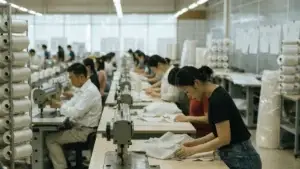
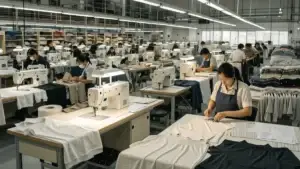
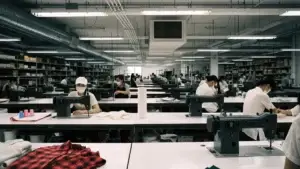
A bulk purchase is not a fashion experiment. It is a financial decision. Every seam, every pocket, and every curve on a pattern increases the potential for error. Over the years, I have learned that the difference between a 2% defect rate and a 12% defect rate often comes down to the complexity of the silhouette. At Shanghai Fumao, we run five dedicated production lines, and they excel when the workflow is streamlined. Let me walk you through why sticking to proven, classic silhouettes will save you stress, time, and money.
How Do Classic Shorts Cuts Reduce Production Defects in Bulk Manufacturing?
A distributor from Texas sent me a desperate email last November. His previous supplier had botched an order of 3,000 curved-hem shorts. The asymmetry of the leg openings was so inconsistent that high-end retailers refused the shipment. He asked me if there was a foolproof silhouette he could rely on. I told him to look at the standard straight-hem chino short. It is boring, maybe. But boring is beautiful when you are counting your money.
Straight-hem and elastic-waist classic shorts drastically cut defect rates because they rely on standardized, automated processes rather than complex manual cutting and uneven stitching.
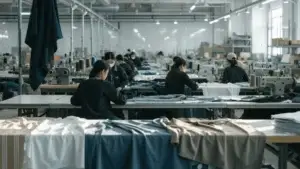
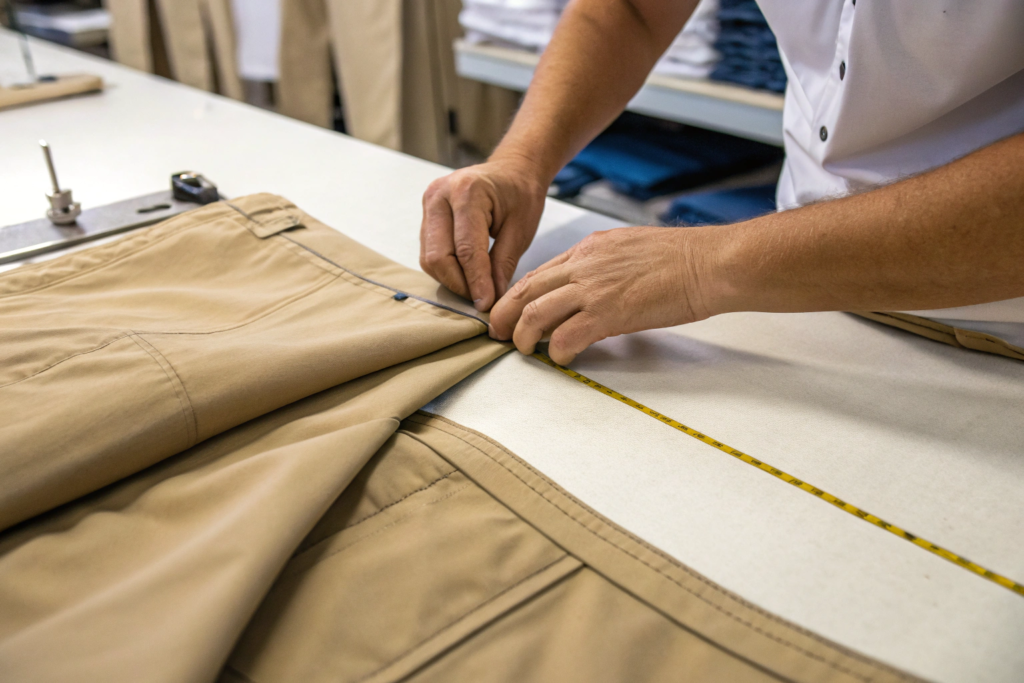
The main reason defects happen is human error during cutting and stitching. Curved, asymmetrical cuts often require manual die-cutting or complex single-ply cutting. This is where measurement drifts happen. A slight shift in fabric tension can ruin the drape.
Why Does Fabric Stability Matter More For Simple Silhouettes?
You need to understand how fabric reacts to a pattern. Heavy twill, which is perfect for structured shorts, does not like sharp, trendy curves. It resists. It frays. It distorts. Simple patterns, like those used for standard cargo shorts or flat-front shorts, work with the fabric’s natural grain. At Shanghai Fumao, when we partner with brands like yours, we always conduct a pre-production risk assessment on the pattern. If a design relies on diagonal bias cuts, the dimensional stability during a 10,000-unit production run drops significantly. You can learn more about the physical properties of garment construction from the AATCC Testing Standards, which we frequently reference. When you stick to a classic cut, you use the straight grain of the fabric. This keeps the side seams straight and the pockets flat. It is a basic physics advantage. Another resource we use to analyze fabric behavior is the Textile Institute, which publishes journals on material stress points. Simple cuts do not fight the material.
Can Standardized Stitching Lower Worker Training Time?
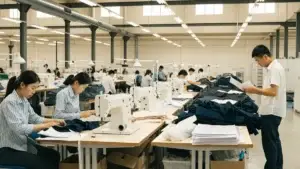
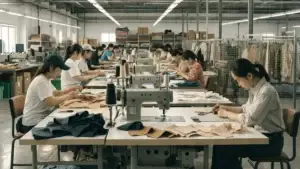
Yes, it can. A skilled sewer might need two weeks to master the consistent flow of a complex utility pocket with multiple darts. But that same worker can nail a clean back welt pocket on a pair of Bermudas in two days. Consistency is what you are buying. When workers repeat the same simple operation, their muscle memory prevents mistakes. This is how we keep defect rates below 1% on classic orders.
Why Do Classic Shorts Deliver Better MOQ Flexibility Than Trendy Designs?
Minimum Order Quantities are a negotiation battlefield. You want the lowest possible MOQ to test the market, but the factory wants high volume to justify machine setup. Trendy cuts inflate MOQs. Classic cuts deflate them. This is not a marketing gimmick; it is a production reality driven by the supply chain for trims and wash consistency.
Classic shorts offer superior MOQ flexibility because they utilize interchangeable, off-the-shelf trims and standardized wash recipes, unlike trendy cuts requiring custom-molded hardware.
The supply chain for a trendy short is a fragile chain of custom parts. If that single custom zipper mold fails, your entire order stops. That is single-point failure, and it terrifies me. I have seen it happen too often.
How Do Generic Trims Shorten Lead Times?
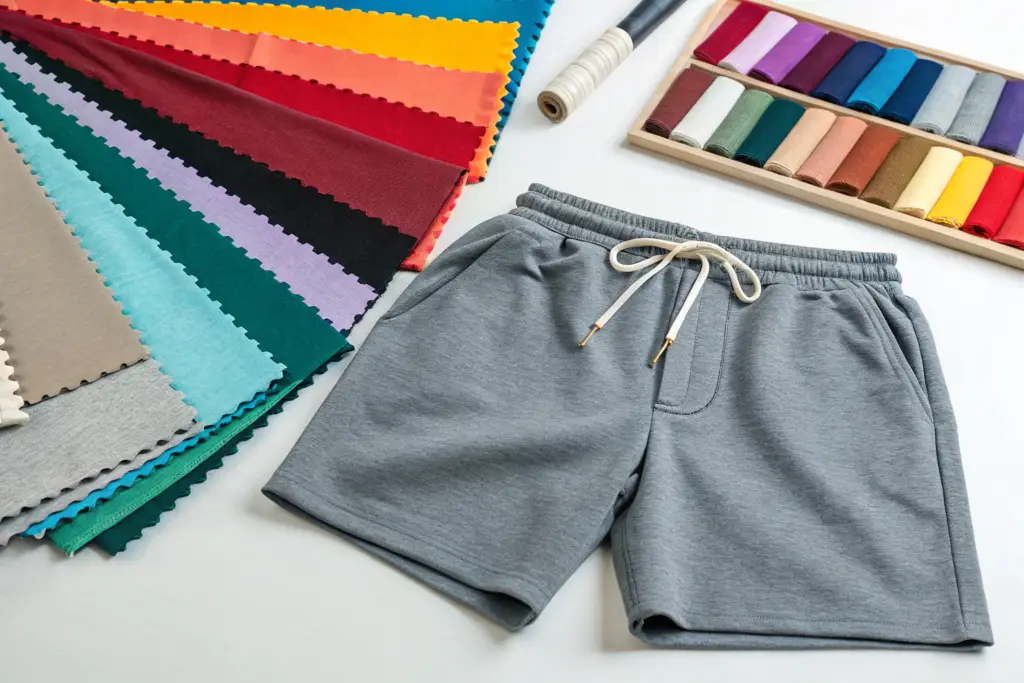
Think about the difference between a custom logo button and a standard horn button. The custom button requires mold creation, sampling, approval, and mass production. That adds 15-20 days. The standard horn button is sitting on a shelf in a trim shop right now. It works for Khakis, for Chinos, for Drawstrings. It is universal. When a client asked us to match a specific vintage metal buckle for a 2,000-unit order, we had to decline unless they paid for the mold and accepted a 60-day delay. If they had chosen a standard metal adjuster, we could have shipped in 30 days. This principle applies across the board. For a deep dive into the lead times for various hardware types, manufacturers often consult the trade data on Thomasnet. Standard trims are a logistics superpower.
| Feature | Classic Shorts (Chino/Basic) | Trendy Cut Shorts (Asymmetric/Micro) |
|---|---|---|
| Trim Complexity | Standard buttons, YKK zippers, basic drawcords | Custom-molded shanks, unique eyelets, novelty tapes |
| Lead Time (Trims) | 3-7 days | 15-30 days (or longer for custom molds) |
| Wash Consistency | High. Standard enzyme or silicon wash | Low. Panel shrinkage varies with cut direction |
| MOQ Driver | Fabric dye lot | Trim minimums (often 10,000+ units for custom) |
Why Is Garment Wash Consistency Higher on Basic Blocks?
Fabric shrinks. It always shrinks. But on a classic block, all the panels are cut on a similar grain line. They shrink at a uniform rate. On a trendy multi-panel design, you might have a cross-grain pocket on a straight-grain front. When you wash those 2,000 shorts in an industrial enzyme wash, the two panels shrink differently. The pocket ripples. It looks cheap. Since we launched our quality control upgrade at Shanghai Fumao in 2023, we have used a predictive shrinkage matrix specifically for classic block patterns, which allows us to guarantee a 0.5% tolerance on post-wash measurements. That guarantee is simply harder to make on trendy shapes.
How Can Classic Shorts Protect Your Brand’s Profit Margins on Repeat Orders?
Profit does not stop at the factory gate. It continues right through the shipping container until the product hits the rack. One of our clients, a mid-western distributor, was stunned when he calculated that his previous trendy shorts cost him an extra $0.85 per unit just in freight because they could not fit efficiently into the master carton. Over a 10,000-unit order, that is $8,500 lost just to inefficient packing. This is what I call the "silent margin killer."
Classic shorts protect margins long-term by maximizing carton cube utilization and minimizing dead stock risk, ensuring your repeat orders compound profit rather than wasting it on logistics.
You make money on a repeat order. The first order pays for development. The second order pays the bills. The third order is pure profit. But only if the product is consistent. If the trendy cut from your first order has a 5% return rate from customers complaining about fit, your profit disappears into return shipping labels.
What Is Carton Cube Optimization and How Does Cut Affect It?
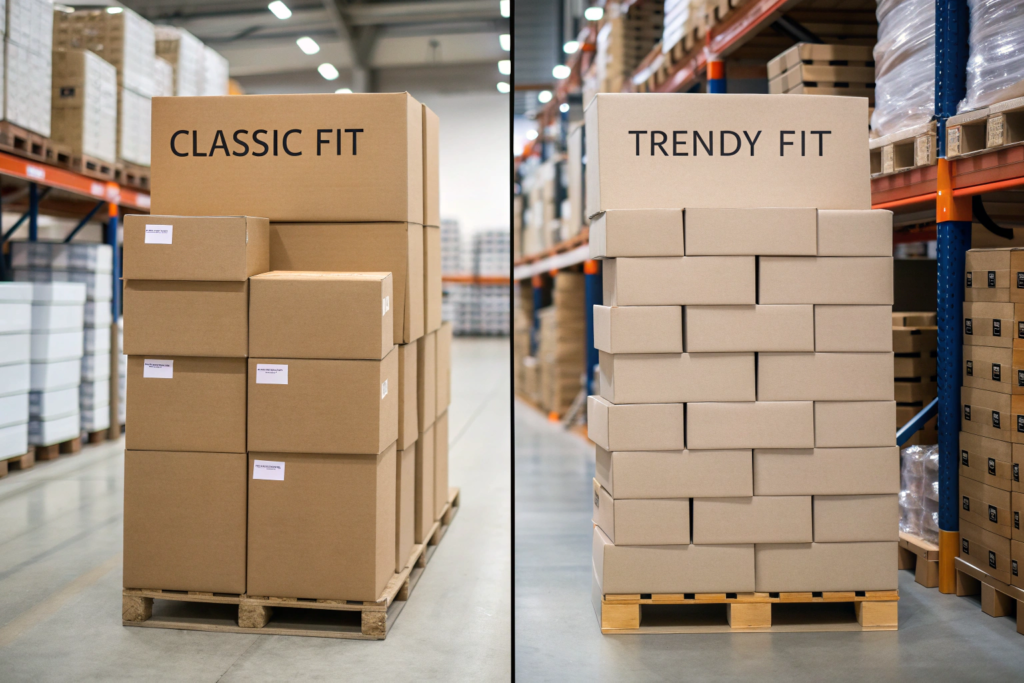
Carton cube optimization simply means stuffing as many shorts into a box as possible without damaging them. A Chino short folds flat into a perfect rectangle. It is a 90-degree angle wonder. It stacks like a brick. A pair of sculptural, trendy shorts with excess straps, flare legs, or rigid structured linings? That folds like a crumpled paper ball. It traps air. Air is the most expensive thing you ship.
Last month, we ran a comparison for a brand evaluating two styles:
- Style A (Classic Straight Fit): We fit 55 units per standard export carton.
- Style B (Trendy Wide-Leg): We could only fit 38 units in the same carton size.
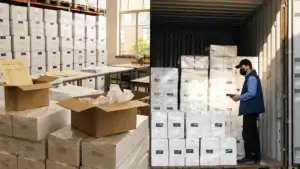
The per-unit ocean freight for Style B was almost 30% higher. The freight cost has zero benefit to the product quality. It is just wasted money. To calculate your own dimensional weight costs, you can use the tools provided by major carriers like FedEx.
How Do Classic Styles Reduce Dead Stock Risk?
Trends die. Last year, those micro-length nylon shorts were in every fast-fashion window. This season, they are on the clearance rack for $9.99. Dead stock is a tax on trendiness. If you buy 5,000 pairs of a specific neon-green curved seam short, you have one customer: the guy who wants that specific micro-trend right now. Miss the selling window, and you own a liability.
A classic navy Chino short lives forever. It sells in April, and if you have 200 left in August, they still sell because it is a core essential. At Shanghai Fumao, we encourage our large-order partners to follow an 80/20 rule: 80% of the volume in classic safety cores, and 20% to test the waters with new lengths. This way, your cash flow is never held hostage by a fad. For more on inventory management strategies that prevent dead stock, the National Retail Federation offers great insights on retail supply chains.
What Makes Classic Shorts a Stronger Guarantee for On-Time Delivery?
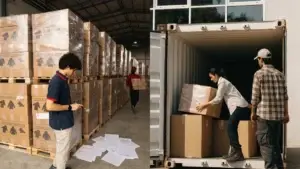
Late deliveries kill brands. I witnessed a particularly sad situation two years ago. A brand in Chicago had locked in a Black Friday promotion with a major department store. Their trendy cargo short shipment was scheduled to hit the warehouse on November 5th. The custom buckle plating failed inspection in China, causing a 10-day stall. The shipment arrived November 26th. The department store canceled the purchase order and fined the brand for missing the floor-set date. The brand owner told me he’d trade a year of his life for a simple button closure at that moment.
Classic shorts offer a stronger delivery guarantee because they bypass the fragile, high-risk supply chain of unique trims and allow for capacity buffering across multiple production lines.
The math of on-time delivery is simple. Complexity equals a higher probability of failure. It is a bell curve of risk. You want to live on the narrow, safe edge of that curve.
Why Is Parallel Sourcing Impossible for Trendy Cuts?
If you order 10,000 pairs of trendy shorts with a single unique curved zipper, you are a hostage to that one zipper supplier. If that supplier's plating machine breaks down, you stop. You cannot go to another supplier because they don’t have your custom mold. This is a serial supply chain. It is fragile.
With classic shorts, you use YKK standard zippers or size 30 horn buttons. These are commodity items. Twenty suppliers in the market have them. If one supplier has a fire, our team at Shanghai Fumao can buy the exact same certified trim from another shelf within an hour. This is parallel sourcing. It is resilient. I always check the material availability forecasts on Material Exchange when planning large programs to ensure we are not accidentally selecting a bottleneck trim. Commodity trims equal schedule certainty.
Can We Buffer Production Capacity on Simple Styles?
Yes. An extra-large order of a trendy cut usually ties up one specific machine—maybe the bartack machine for those complex belt loops. You cannot easily shift that operation to another line without retraining everyone and recalibrating the jigs.
But for classic shorts, the operations are universal. A single-needle lockstitch machine makes the side seam on a Chino just as easily as it does on a Pull-on short. If Line A goes down for maintenance, we seamlessly shift the cut work to Line B. This capacity buffering is how we absorbed a 30% volume increase for a major client during the 2022 peak season without delaying a single box.
Conclusion
Choosing between classic and trendy shorts is a choice between predictable profit and speculative anxiety. A trendy cut might win you a fleeting Instagram moment. But a classic cut builds your business. It keeps your defect rate below the threshold of retail chargebacks. It allows you to scale from 5,000 units to 20,000 units without your supply chain breaking. It ensures your shipment container is filled with value, not trapped air. And most importantly, it lets you sleep at night knowing your shipment will actually arrive in time for the selling season.
The reality is that a warehouse full of unbranded straight-fit Chinos is an asset. A warehouse full of last-season’s jagged-hem streetwear is a crisis. You should be designing your line plan to manage risk first, not chase trends on a hope and a prayer. Stability in stitching, standardization in trims, and reliability in delivery—these are the things that compound into a long-term, profitable partnership.
If you are currently planning your next bulk order and feel unsure about which silhouettes to trust, I invite you to talk to us. At Shanghai Fumao, we do not just stitch clothes; we help you analyze the risk profile of your collection before you commit capital. We can walk you through the production risks of your design library and help you pivot toward profitable, deliverable product. Let’s get your margins back where they belong. Contact our Business Director, Elaine, directly at elaine@fumaoclothing.com to start a discussion on your production timeline.