You have built a brand around a complete lifestyle aesthetic. Your spring collection includes crisp cotton poplin shirts and soft modal jersey dresses. Your fall collection pairs structured twill trousers with cozy cable-knit sweaters. You contact a factory that produces beautiful woven shirts. They cannot handle the knit dresses. You find a knitwear specialist for the dresses. They cannot handle the woven shirts. You are now managing two factories, two quality standards, two shipping schedules, and two sets of minimum order quantities. Your brand’s cohesion is fragmented across a supply chain you must force to work together.
A top clothing manufacture must excel in both knit and woven garment production because the modern apparel brand is category-fluid. Today’s brand launches coordinated collections that mix woven shirts with knit polos, tailored jackets with jersey tees, and structured trousers with sweater knits. A manufacturer that masters both fabric categories provides the brand with a single source for their entire collection, enabling consistent quality, synchronized delivery, and unified branding across every garment type. The operational simplicity and brand consistency this enables are impossible to achieve with separate knit and woven suppliers.
At Shanghai Fumao, we invested in dual knit and woven capability because our brand partners demanded it. They were tired of splitting their collections across factories that did not talk to each other. Let me explain the technical differences between knit and woven production, why most factories specialize in only one, how we built competence in both, and what this dual capability means for your brand’s operations and growth.
What Are the Fundamental Differences Between Knit and Woven Garment Manufacturing?
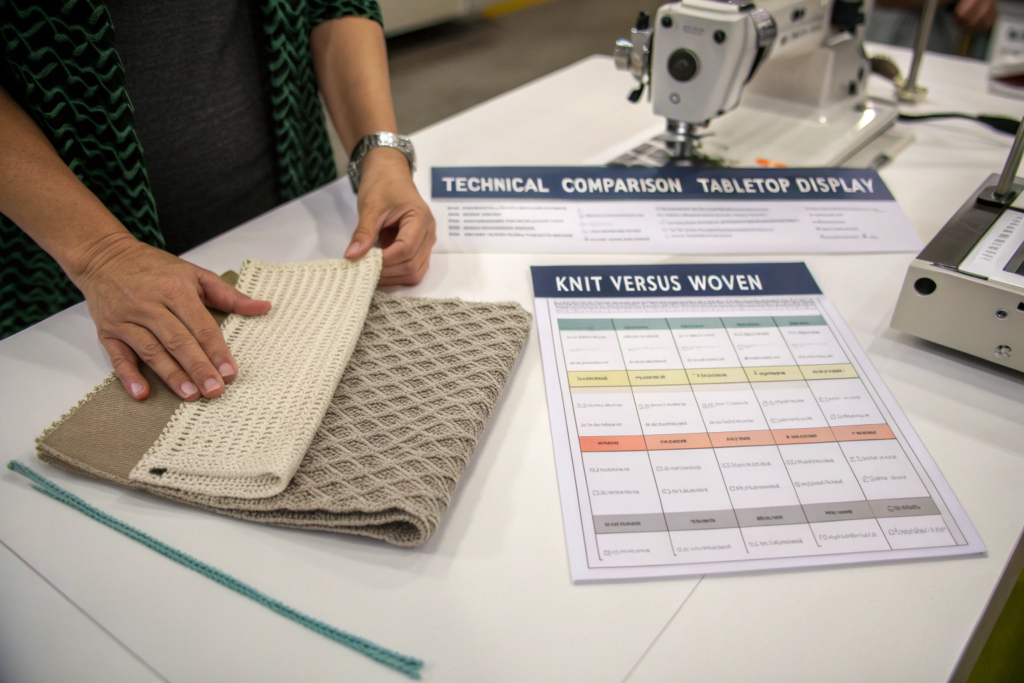
Knit and woven garments may both be called clothing, but from a manufacturing perspective, they are fundamentally different products. The fabric structure, the cutting requirements, the sewing machinery, the thread types, the seam constructions, the pressing techniques, and the quality control checkpoints all differ between the two categories. A factory that treats them interchangeably produces garments that fail. A factory that masters both understands and respects the differences.
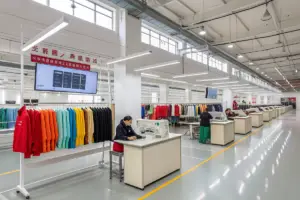
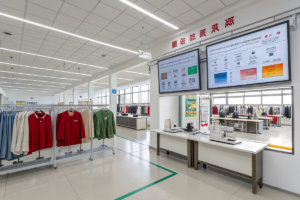
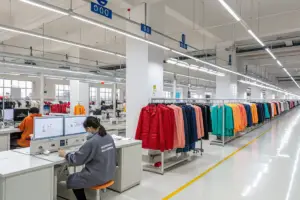
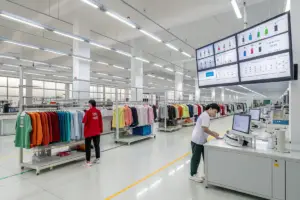
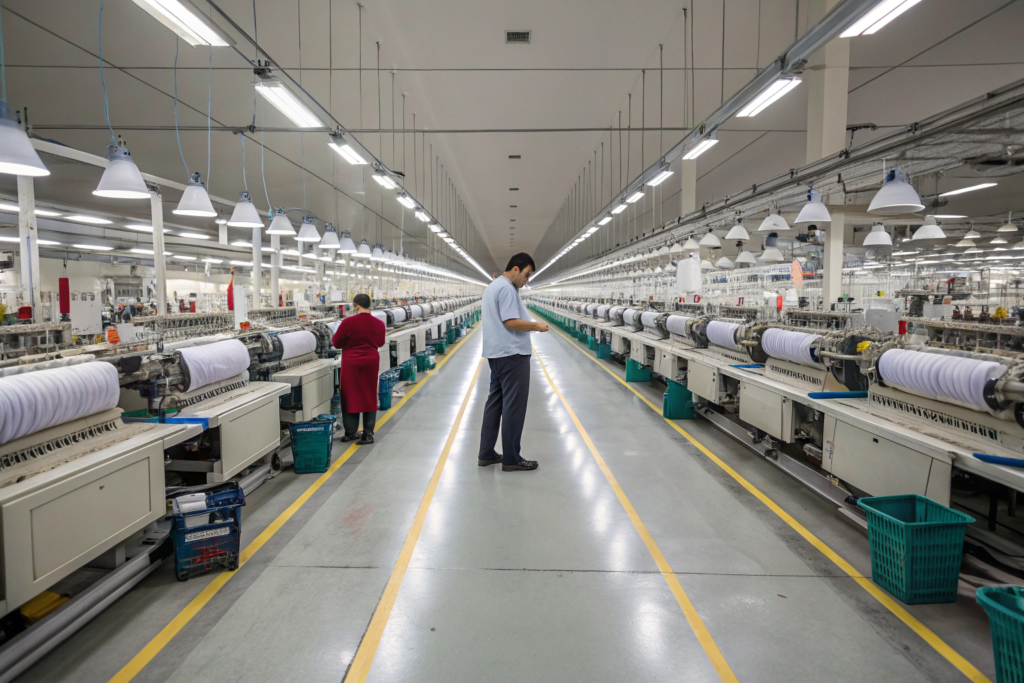
Knit fabrics are constructed from interlocking loops of yarn that create inherent stretch. They require overlock and coverstitch machines that produce seams with elasticity matching the fabric. Woven fabrics are constructed from perpendicular warp and weft yarns that create a stable, non-stretch structure. They require lockstitch machines that produce strong, rigid seams. The machinery, the needle types, the thread tension, the seam allowance, and the finishing techniques are all category-specific. A factory proficient in both maintains separate production lines with specialized equipment and trained operators for each fabric category.
How Do Fabric Structure Differences Dictate Different Production Equipment?
A knitted jersey fabric stretches. If you sew it with a standard lockstitch, the seam will pop when the garment is worn because the stitch has no elasticity. The fabric stretches. The seam does not. The result is broken stitches and an unhappy customer. Knit garments require overlock machines that produce a stretchable seam by wrapping the fabric edge with multiple threads that move with the fabric. Coverstitch machines produce the stretchable hems found on T-shirt bottoms and sleeves.
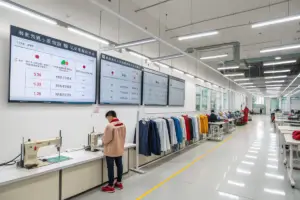
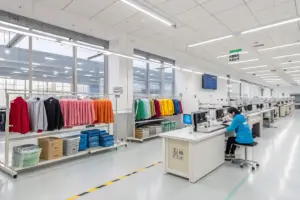
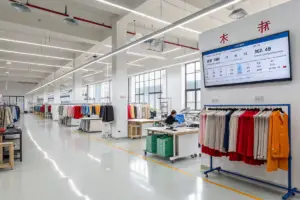
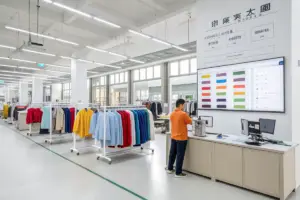
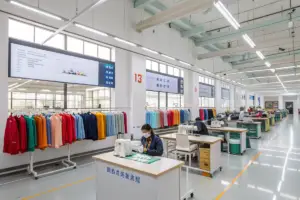
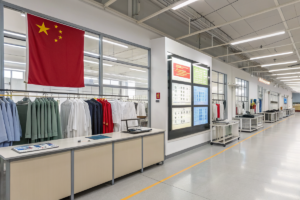
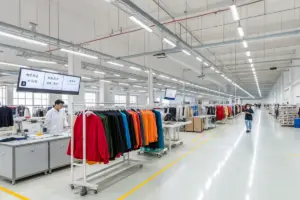
A woven poplin fabric does not stretch. If you sew it with an overlock machine designed for knits, the seam will be bulky, the fabric may pucker, and the clean finish expected on a woven shirt will be absent. Woven garments require lockstitch machines that produce a tight, flat, durable seam with a clean appearance on both sides. The pressing requirements differ as well. Knit garments are often steamed and shaped on forms to avoid pressing marks. Woven garments are pressed flat with heated presses that create crisp creases and collar points. Our Line 2 is equipped with overlock and coverstitch machines specifically for knit production. Our Line 1 is equipped with lockstitch machines and specialized pressing equipment for woven production. The equipment investment was doubled because we committed to both categories. This knit vs woven manufacturing equipment specialization is the physical foundation of dual-category capability.
Why Do Different Seam Constructions Require Different Operator Skills?
A knit garment operator must understand stretch recovery. She must feed the fabric through the overlock machine without stretching it, which would create a wavy, distorted seam. She must adjust the differential feed on her machine to match the specific stretch characteristics of the fabric. A rib knit behaves differently from a single jersey, and both behave differently from a French terry. The operator develops an intuitive feel for fabric handling that only comes from working exclusively with knits.
A woven garment operator must understand seam precision and finish quality. She must sew a straight seam at exactly the specified distance from the fabric edge. She must execute collar setting, cuff attachment, and buttonholing with geometric accuracy. She must handle delicate fabrics like silk charmeuse without snagging or shifting. The skills are different from knit handling, and they atrophy if the operator frequently switches between categories. Our knit line operators work exclusively on knit fabrics. Our woven line operators work exclusively on woven fabrics. This specialization develops deep expertise in each category. A brand’s knit polo and woven shirt both receive the highest quality construction because each is produced by specialists, not generalists. This garment construction specialization is only possible in a factory that has the volume to dedicate lines to specific fabric categories.
How Does Dual Knit and Woven Capability Benefit a Brand’s Operations?
The operational burden of managing separate knit and woven suppliers is invisible until it is eliminated. The brand must coordinate two sampling timelines, two production schedules, two quality standards, two shipping arrangements, and two communication channels. The administrative overhead consumes time that the brand owner should spend on design, marketing, and sales. The risk of misalignment—where the knit sweaters arrive weeks before the woven trousers, or the branding on the knit labels differs from the branding on the woven labels—is ever-present.
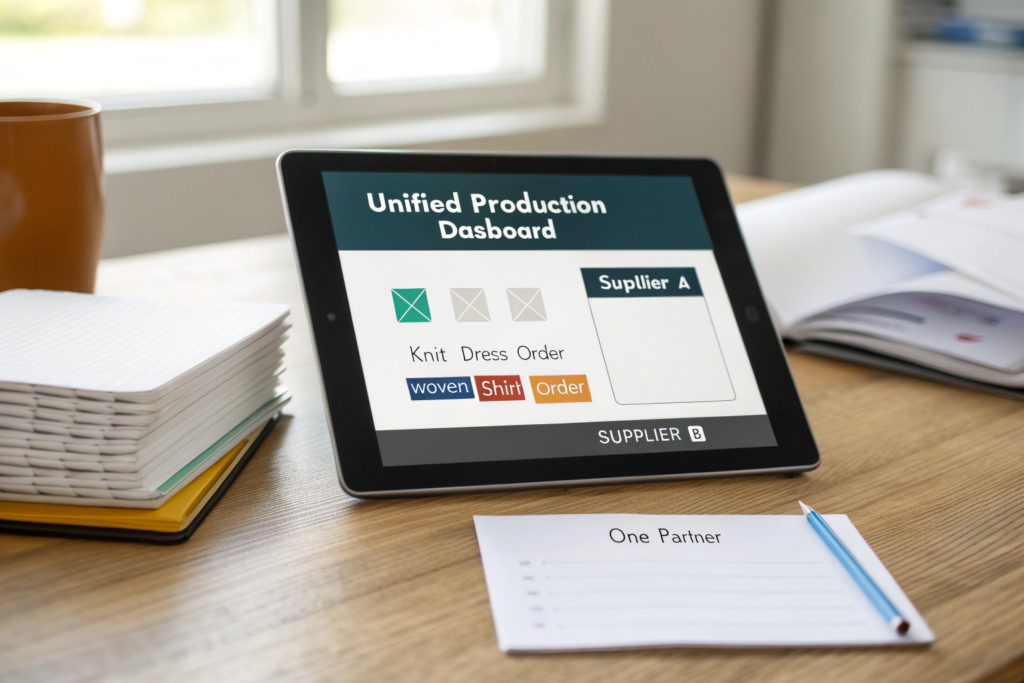
Dual knit and woven capability at a single manufacturer eliminates the operational fragmentation of multi-supplier management. The brand works with one point of contact for their entire collection. Production schedules are coordinated so that knit and woven pieces finish simultaneously for consolidated shipping. Branding materials—labels, hang tags, packaging—are procured and applied consistently across both categories. Quality standards and reporting are unified. The brand owner manages one relationship, one timeline, and one quality conversation.
How Does Unified Scheduling Support Coordinated Collection Drops?
A fashion brand’s collection is designed to be presented together. The knit cardigan is styled with the woven dress. The knit polo is paired with the woven chinos. If the knits arrive in the warehouse in February and the wovens arrive in March, the brand cannot photograph the collection together, cannot ship wholesale orders complete, and cannot launch the e-commerce collection as a unified presentation. The brand’s creative vision is compromised by supply chain fragmentation.
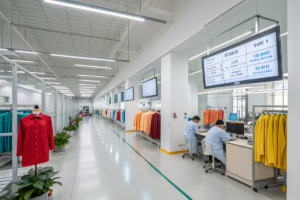
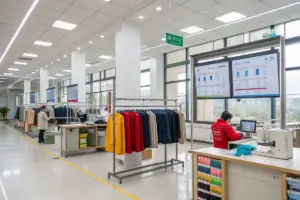
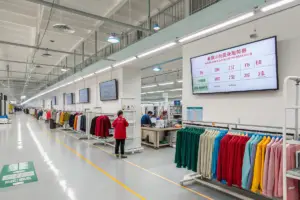
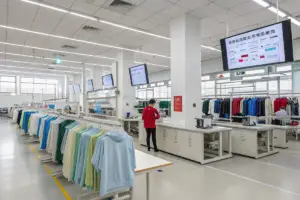
Our centralized production scheduling system manages knit and woven orders from the same brand as a unified project. The planner calculates the production lead time for each garment category, accounting for the different production speeds of knit and woven lines. The start dates are staggered so that both categories complete in the same week. The goods are packed into a single container and shipped together. The brand receives their complete collection in one delivery, ready for unified photography, wholesale fulfillment, and online launch. A contemporary brand we serve launches seasonal collections with coordinated knit and woven pieces. Since consolidating both categories with us, they have eliminated the staggered delivery problem. Their collection launches are complete from day one. This collection launch coordination capability directly impacts the brand’s market presentation and sales momentum.
How Does Centralized Branding Procurement Ensure Cross-Category Consistency?
A woven label on a knit sweater and a woven label on a woven shirt may look different if they come from different label suppliers, or even from different production batches from the same supplier. The thread color, the label dimensions, and the finishing can vary subtly. The customer who purchases both pieces notices the inconsistency, even if they cannot articulate exactly what is different. The brand’s perceived quality diminishes.
When both the knit sweater and the woven shirt are produced by Shanghai Fumao, all branding materials are procured centrally. We order the woven labels, hang tags, and care labels as a single batch from a single supplier. The same label roll is used on the knit line and the woven line. The same hang tag string is attached to both garments. The same polybag sticker is applied to both packages. The result is absolute brand consistency across product categories. The brand owner approves the branding once, not twice. The quality of the branding is controlled by a single inspection process. This brand consistency across product categories is a subtle but powerful benefit of dual-category manufacturing that separate suppliers cannot replicate.
What Quality Control Adaptations Are Required for Each Fabric Category?
A single quality control checklist applied to both knit and woven garments misses critical defects in each category. Knit quality problems are often related to stretch, recovery, and seam elasticity. Woven quality problems are often related to seam precision, pattern matching, and pressing quality. A factory that excels in both categories must operate dual quality control protocols with category-specific checkpoints and inspector training.
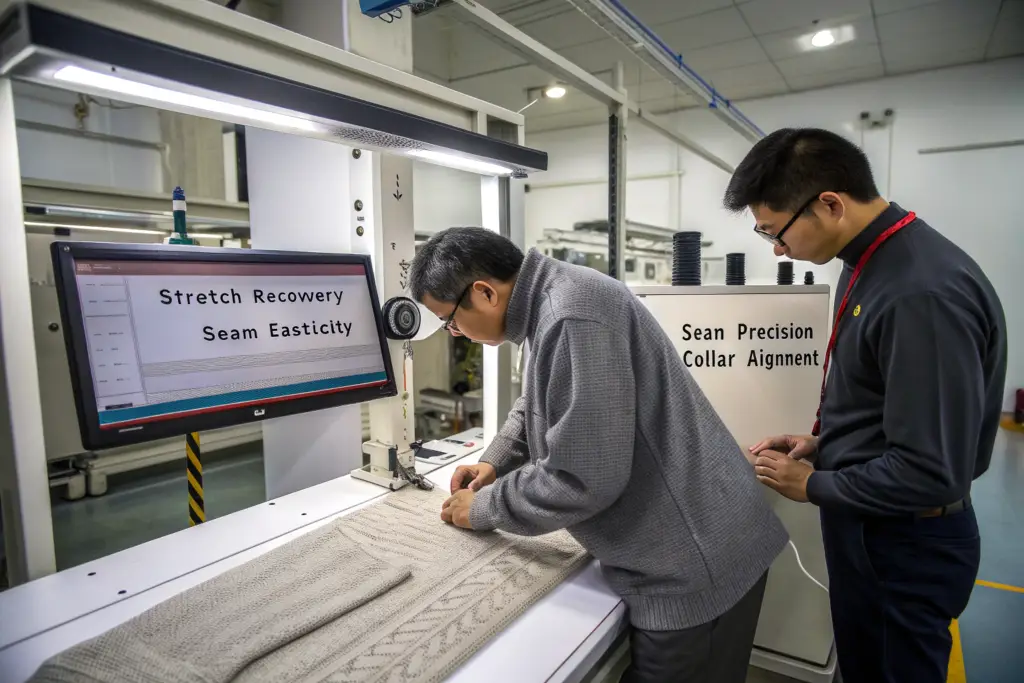
Knit quality control focuses on stretch recovery, seam elasticity, fabric weight consistency, and pilling resistance. Inspectors use tension gauges to test seam stretch and recovery, and fabric thickness gauges to verify consistent weight. Woven quality control focuses on seam straightness, collar and cuff symmetry, pattern matching at seams, and pressing quality. Inspectors use digital calipers for measurement precision and visual alignment tools for pattern matching. Our QC team includes inspectors trained specifically for each category, using checklists and tools appropriate to the fabric type.
What Specific Defects Are Unique to Knit Garment Production?
Knit garments present defects that simply do not occur in woven garments. Needle cutting occurs when the sewing machine needle pierces the yarn rather than sliding between yarn loops, creating small holes that expand during wear. Seam grinning occurs when the overlock seam is stretched, and the threads become visible from the outside. Wavy seams occur when the operator stretches the fabric during sewing, creating a distorted, rippled seam line. Fabric spirality occurs when the knit fabric twists during washing, causing side seams to rotate around the body.
Our knit QC inspectors are trained to identify these category-specific defects. They stretch every seam during inspection to check for needle holes and seam grinning. They measure garments flat and after a wash cycle to detect spirality. They use a fabric thickness gauge to verify that the knit fabric weight matches the approved sample. These inspection points are not on our woven QC checklist because they are irrelevant to woven garments. A factory that uses a single QC checklist for all products will miss knit-specific defects. This knit garment quality control specialization is essential for delivering consistent quality to brands whose collections include knitwear.
What Inspection Points Are Critical for Woven Garment Quality?
Woven garments present different failure modes. Seam puckering occurs when thread tension is too high or the fabric feed is inconsistent, creating a gathered, uneven seam line. Pattern mismatch at seams occurs when plaids or stripes are not aligned during cutting and sewing, creating a visible disruption in the design. Collar point asymmetry occurs when the two points of a shirt collar are not identical in shape and length. Pressing defects include shine marks from excessive heat or pressure and creases in the wrong locations.
Our woven QC inspectors use digital calipers to measure collar point length and symmetry to within 0.5mm tolerance. They use a seam smoothness template to grade seam puckering on a standardized scale. They inspect pattern matching at every seam intersection on plaid and striped garments. They examine pressed garments under angled light to detect shine marks. These inspection points are specific to woven construction and would not appear on a knit garment checklist. This woven garment quality control rigor ensures that the brand’s structured pieces meet the same high standard as their knit pieces, even though the quality criteria are completely different.
How Does Dual Category Expertise Support Brand Growth and Expansion?
A brand that starts with a single product category rarely stays there. The T-shirt brand adds hoodies. The dress brand adds coordinating jackets. The knitwear brand adds woven bottoms. Each category expansion requires new manufacturing capability. If the existing factory cannot support the new category, the brand must either limit its growth to categories the factory can produce, or fragment its supply chain by adding new factories. Both options constrain the brand’s potential.
A manufacturing partner with dual knit and woven expertise removes the supply chain constraint from the brand’s category expansion decisions. The brand can add knit styles to a woven collection, or woven pieces to a knit collection, without qualifying a new factory. The existing partnership, with established quality standards, communication rhythms, and branding consistency, extends seamlessly to the new product category. The brand’s growth is driven by market demand and creative vision, not by supplier capability limitations.
How Does a Brand Transition from Single-Category to Multi-Category Production Smoothly?
A brand that has produced only woven shirts with us for two years decides to launch a knit polo program. In a traditional sourcing model, this triggers a supplier search, sample development with an unfamiliar factory, quality verification, branding coordination, and logistics integration. The process takes months and carries the risk of partnering with an untested supplier.
In our dual-category model, the transition is seamless. The brand’s existing coordinator, who already knows their quality standards, branding specifications, and communication preferences, manages the knit program launch. The knit samples are produced on our Line 2 using the same branding materials already approved for the woven line. The quality standards are consistent because our knit QC team applies the same AQL framework, adapted for knit-specific defects. The knit order ships with the woven order in the same container. The brand launched their knit polo program in six weeks from concept to production, not six months. This multi-category brand expansion speed is only possible when the manufacturing partner has existing, proven capability in the new category.
What New Categories Does Dual Expertise Enable a Brand to Explore?
Dual knit and woven capability opens the entire spectrum of apparel categories to a brand. Knit categories include T-shirts, polos, sweatshirts, hoodies, sweaters, jersey dresses, activewear, and loungewear. Woven categories include dress shirts, blouses, trousers, shorts, skirts, blazers, outerwear, and dresses. Many garments combine both fabric types: a jacket with a woven shell and a knit lining, or a dress with a woven bodice and a knit skirt. A manufacturer with both capabilities can produce these hybrid garments under one roof.
A brand that partners with Shanghai Fumao has access to the full range of knit and woven production. Their product development is not limited by what their factory can produce. They can design any garment their market demands, confident that their manufacturing partner has the equipment, the expertise, and the quality systems to execute it. This full-category apparel manufacturing freedom is the ultimate benefit of dual knit and woven expertise.
Conclusion
A top clothing manufacture must excel in both knit and woven garment production because the modern apparel brand does not live in a single category. The brand that sells T-shirts today will sell shirts tomorrow and dresses next season. The brand that launches with a knit collection will add woven pieces as their customer base expands. The manufacturer that can only handle one fabric category is a temporary partner with an expiration date. The manufacturer that handles both is a long-term partner that grows with the brand.
At Shanghai Fumao, our investment in separate knit and woven production lines, specialized equipment for each category, operators trained exclusively in their fabric type, and category-specific quality control protocols was driven by the recognition that our brand partners deserve a single manufacturing home for their entire creative vision. The operational benefits—unified scheduling, centralized branding, consolidated shipping, and single-point communication—are significant. The strategic benefit—a supply chain that enables growth rather than constraining it—is transformative.
If you are currently managing separate knit and woven suppliers, or if your current factory’s single-category limitation is holding back your product development, let us show you how dual-category manufacturing simplifies your operations and expands your creative possibilities. Contact our Business Director, Elaine, at elaine@fumaoclothing.com. Share your current product mix and your expansion vision. We will demonstrate how our knit and woven lines can produce your complete collection under one roof.