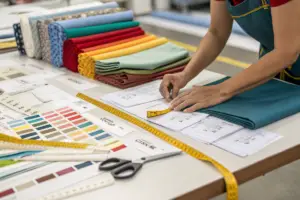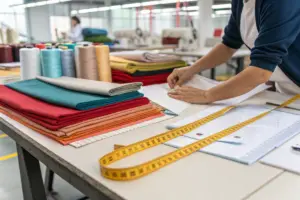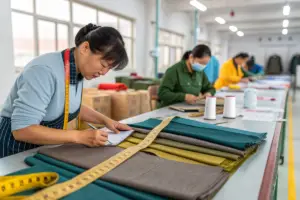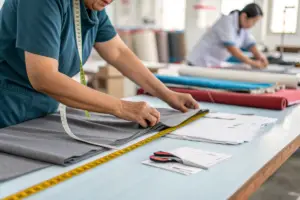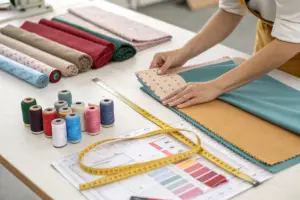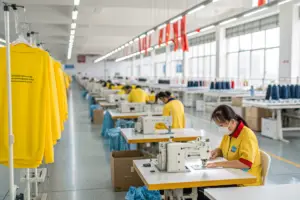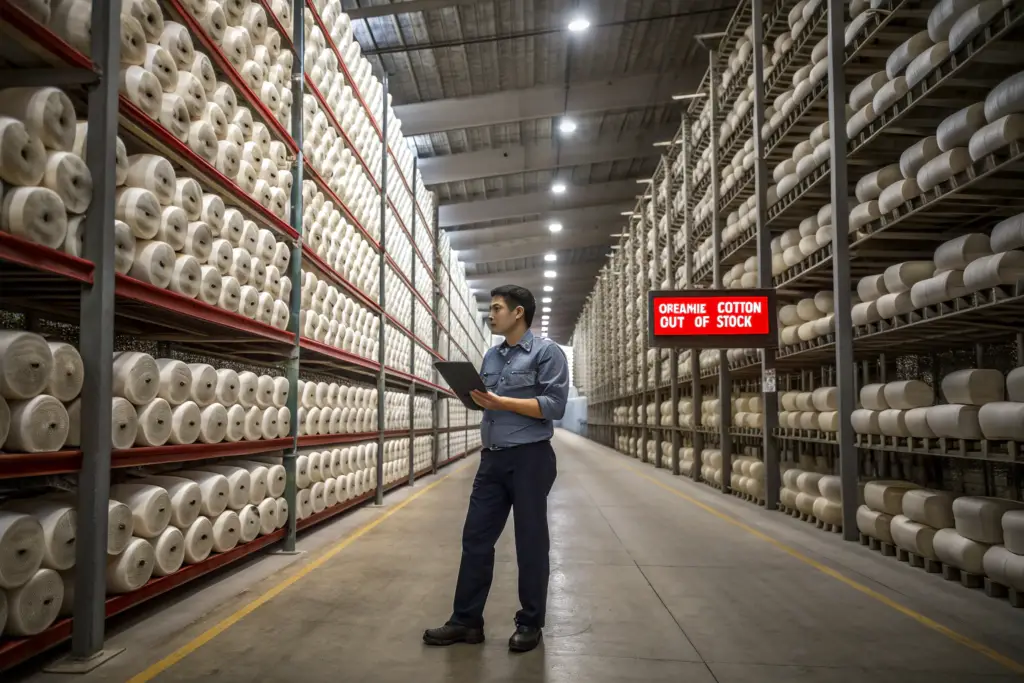
I sat in my office last March staring at a production schedule that had just collapsed. A brand partner had ordered 1,500 units of a best-selling linen blazer. The sewing line was ready. The cutting table was scheduled. The shipping window was confirmed. Everything was in place except the fabric. The mill had promised delivery on the 10th. On the 9th, they emailed to say the greige yarn was stuck at a spinning facility that had lost power for three days due to regional energy rationing. The delay cascaded. The blazers shipped three weeks late. The brand missed a critical wholesale delivery window. The cost of the delay, in air freight and lost reorders, was $11,000. The root cause was not a factory failure. It was not a brand error. It was a single yarn spinner that went dark for 72 hours, and the entire value chain seized up.
Raw material fabric sourcing is the absolute biggest bottleneck in global clothing production because it sits at the intersection of three uncontrollable forces: agricultural volatility, geopolitical energy dependence, and speculative inventory cycles. Unlike cutting and sewing, which are controlled within the factory's four walls, fabric sourcing depends on a fragile chain of farmers, ginners, spinners, and dye houses spread across multiple countries. A drought in Xinjiang reduces the cotton yield. An energy crisis in Zhejiang shuts down the dye houses. A spike in shipping costs makes imported yarn uneconomical. These are not rare events. They are recurring, structural features of the global textile industry. The factory cannot sew what the mill cannot weave, and the mill cannot weave what the spinner cannot spin. The entire $1.5 trillion apparel industry rests on a foundation of agricultural commodities and energy-intensive chemical processes that are far more fragile than most brand owners realize.
Most brand owners think about fabric sourcing as a procurement task. They send a swatch to the factory. The factory orders the fabric. The fabric arrives. That mental model is dangerously incomplete. Fabric sourcing is a risk management discipline disguised as a purchasing function. I want to share exactly why this bottleneck exists, how it impacts your production timeline, and what we do at Shanghai Fumao to build resilience into a fundamentally unstable system.
Why Is the Global Textile Raw Material Supply Chain So Dangerously Fragile?
I visited a cotton farm in Xinjiang five years ago. The farmer told me his yield that year was down 30% because of a late spring frost. He had sold his entire crop before it was harvested, based on futures contracts, to a trading company. That trading company sold the cotton to a spinner. The spinner sold the yarn to a mill. The mill sold the fabric to us. Between the frost in the field and the fabric on our cutting table, there were seven separate transactions, four different companies, and three physical transformations. A problem at any single point in that chain, a frost, a futures contract dispute, a spinning machine breakdown, a dye lot failure, would ripple through the entire system. The chain is not a chain. It is a row of dominoes.
The global textile raw material supply chain is dangerously fragile because it is long, fragmented, and exposed to physical climate risk at its origin. Cotton, the world's most used natural fiber, is an agricultural product subject to drought, flood, pest infestation, and temperature volatility. A single extreme weather event in a major growing region can reduce global supply by 3% to 5%, sending prices into a spike that makes fabric unaffordable for mid-market brands. Synthetic fibers like polyester, while not agricultural, depend on petroleum feedstocks. A geopolitical disruption that drives up oil prices also drives up polyester prices. The dyeing and finishing stages are energy-intensive. A power shortage or environmental regulation that shuts down dye houses creates a chemical bottleneck even when the greige fabric is available. The supply chain is not resilient. It is optimized for cost, not stability. The brands that understand this fragility build buffer stock and diversify their sourcing regions. The brands that ignore it are constantly surprised by the next shortage.
The fragility is not a secret. It is visible in the price charts and the delivery delay data. Yet most brand owners plan their production as if fabric will always be available at the quoted price and lead time. That assumption is the root cause of most seasonal delivery failures.
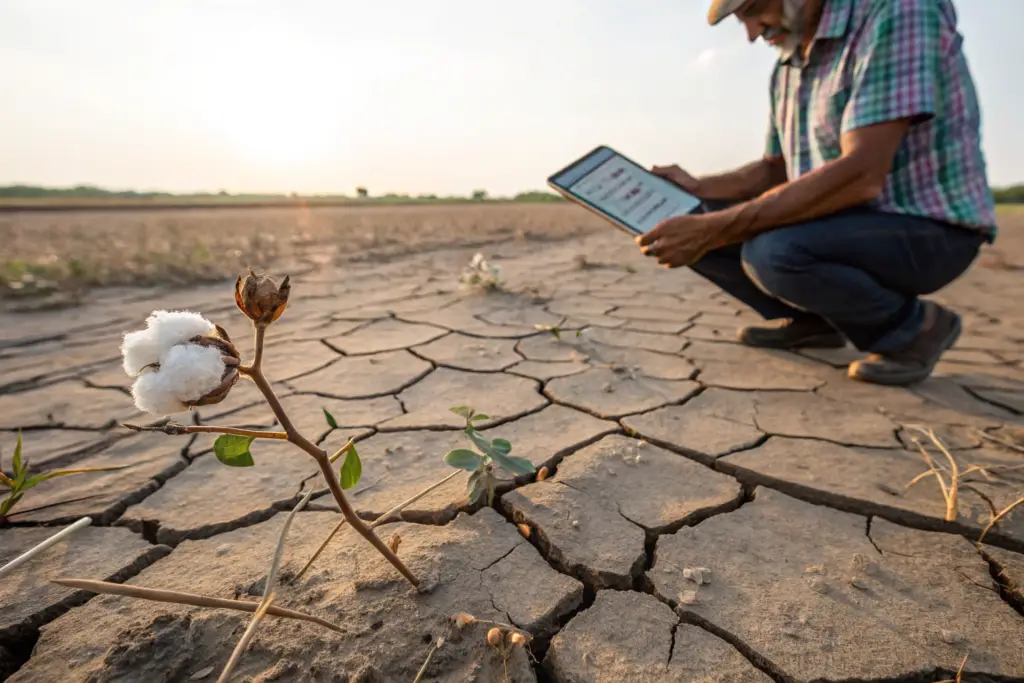
How Does a Single Drought in the Xinjiang Cotton Region Trigger a Three-Month Delay in a Los Angeles Brand's Production?
Xinjiang produces approximately 20% of the world's cotton. A severe drought reduces the harvest by 15% to 20%. The immediate effect is a price spike of 10% to 30% on cotton futures. Spinners, facing higher raw material costs, reduce their inventory and only spin against confirmed orders. This extends yarn lead times from two weeks to six weeks. Mills, waiting for yarn, extend fabric lead times from four weeks to ten weeks. The brand in Los Angeles, who placed their order expecting fabric in 30 days, now faces a 90-day wait. The brand's spring collection, designed to hit stores in March, arrives in May. The selling window is cut in half. Markdowns consume the margin. The drought in Xinjiang created a chain of delays that ended in a Los Angeles clearance rack. The cotton supply chain risk analysis is well documented.
Why Are Synthetic Fiber Prices and Availability Directly Linked to Global Crude Oil and Energy Crises?
Polyester, nylon, and acrylic are synthesized from petrochemicals. The paraxylene used to make polyester is derived from crude oil. When crude oil prices spike, polyester fiber prices spike with a four to six week lag. When an energy crisis causes power rationing, as happened in China in 2021, chemical plants that produce polyester precursors are shut down. The supply of polyester staple fiber drops by 10% to 20%. Mills cannot get the yarn they need. The fabric bottleneck shifts from natural to synthetic fibers. The petrochemical link to textile fiber pricing means that a geopolitical event in an oil-producing region directly impacts the cost and availability of the world's most used textile fiber.
How Do Minimum Order Quantities and Mill Booking Windows Strangle Small and Mid-Size Brands?
A startup brand owner I advised had a brilliant design for a sustainable rain jacket. She needed 300 meters of a specific recycled polyester fabric. The mill that produced the fabric had a minimum order quantity of 3,000 meters. She could not afford to buy and store ten times the fabric she needed. She spent four weeks searching for an alternative. She found a lower-quality stock fabric that compromised her sustainability story. Her launch was delayed by two months. The MOQ barrier almost killed her brand before it launched.
Minimum order quantities and mill booking windows strangle small and mid-size brands because the textile industry is structurally optimized for high-volume, low-mix production. A weaving or knitting mill makes money by running long, uninterrupted batches of the same fabric. Changing the warp on a loom takes hours. Running a short batch of 300 meters is economically irrational for a large mill. The mill protects its margin with MOQs that force the brand to buy more fabric than they need. The brand is left with three bad options: overbuy and tie up cash in dead inventory, pay a steep surcharge of 30% to 50% for a small batch, or compromise on fabric quality by using a stock fabric. The booking window is a second barrier. Mills allocate production capacity to their largest customers first. A small brand that calls in September needs fabric for October delivery. The mill's capacity was fully booked in July by a major retailer. The small brand waits until November. The fashion season is over.
The MOQ and booking window are the structural mechanisms that protect the mill's efficiency at the expense of the small brand's flexibility. There is no malice in this. There is only industrial logic. The brands that thrive despite this are the ones that build creative strategies to work around the system.
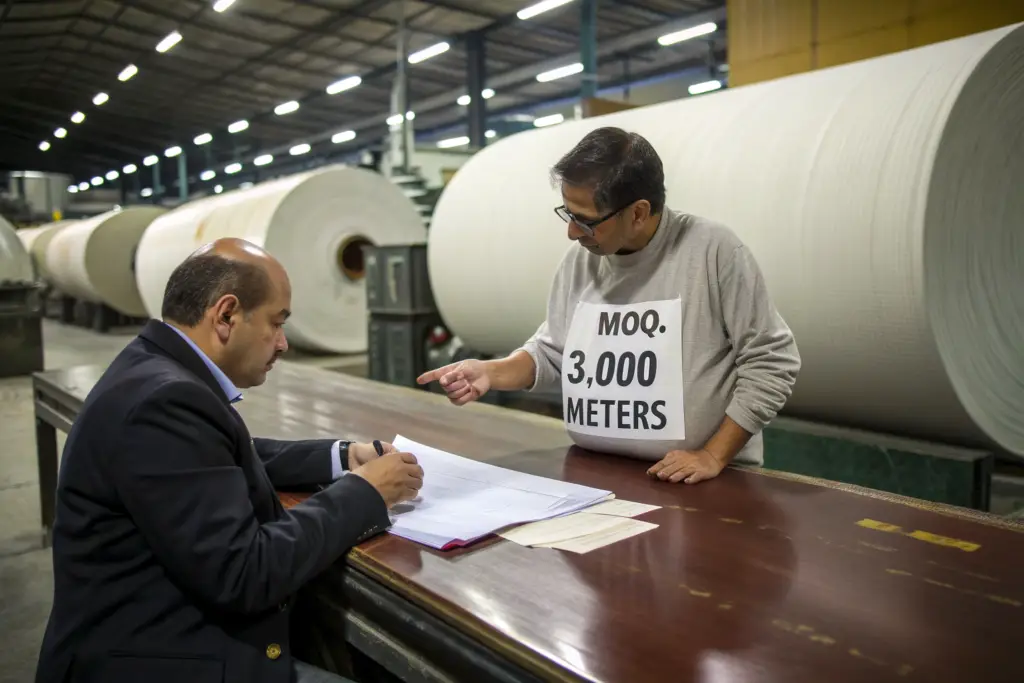
What Strategies Can Small Brands Use to Piggyback on Larger Orders to Avoid the "3,000 Meter" MOQ Wall?
The most effective strategy is the "piggyback" or "caboose" model. The brand partners with a factory that aggregates orders from multiple brands. The factory places a single large order with the mill, combining the requirements of ten small brands into one volume that meets the MOQ. The brand gets the fabric they need at the bulk price, plus a small aggregation fee. This requires a factory that is willing to operate as a fabric consolidator. At Shanghai Fumao, we do this for our brand partners. We combine greige fabric requirements across multiple orders to hit mill minimums, then allocate the fabric to each brand. The brand avoids the MOQ wall and the inventory risk. The piggyback fabric sourcing strategy is the most practical solution for small brands.
How Does "Greige Stock" Reservation Work to Beat the 60-Day Weaving Queue?
A greige stock reservation is a contract where the brand pays a deposit to reserve a specific quantity of un-dyed fabric that the mill or factory holds in inventory. The fabric is already woven. It is waiting in a warehouse. When the brand places an order, the greige fabric is pulled from stock and dyed to the required color. The dyeing and finishing process takes 7 to 14 days instead of the 45 to 60 days required for full production from yarn. The brand avoids the weaving queue entirely. The cost is a slightly higher per-meter price, typically a 10% to 15% premium, and the carrying cost of the deposit. For a brand that needs speed and flexibility, this is an excellent trade-off. We maintain a greige stock library of our most popular fabric qualities for exactly this purpose.
What Is the True Cost of a "Dye Lot Failure" and Why Does It Keep Happening?
A brand owner I work with ordered 500 units of a navy blazer. The pre-production sample was a perfect, deep navy. The bulk fabric arrived. Under the factory's fluorescent lights, it looked navy. The blazers were cut, sewn, and shipped. When they arrived at the retail store, the store's LED lighting revealed the truth: the blazers were not navy. They were a dark, slightly purplish aubergine. The fabric had a metameric failure. The dye looked correct under one light source and completely different under another. The entire 500-unit order was rejected by the retailer. The brand had to liquidate the blazers at 70% off. The $14,000 loss was caused by a dye lot that was not evaluated under the correct lighting conditions.
A dye lot failure is one of the most expensive and preventable bottlenecks in fabric sourcing. It happens because textile dyeing is a complex chemical process with inherent variability. The same dye recipe, applied to the same fabric type, can produce slightly different results depending on the water pH, the dye bath temperature, the dwell time, and even the ambient humidity. A dye lot failure means the bulk fabric does not match the approved lab dip standard. The consequences depend on when the failure is detected. If detected before cutting, the fabric can be rejected and re-dyed, causing a 10 to 14-day delay. If detected after cutting, the entire production run is lost. The cost is the fabric, the labor, and the lost selling window. Dye lot failures are prevented by rigorous lab dip approval under multiple light sources, spectrophotometer verification of the bulk fabric before cutting, and shade band agreements that define the acceptable range of variation.
The dye house is the most chemically complex link in the supply chain. It is also the link most likely to be overlooked by brands that focus exclusively on sewing quality. A brand that does not audit its dye house's color management process is a brand that will eventually suffer a dye lot failure.
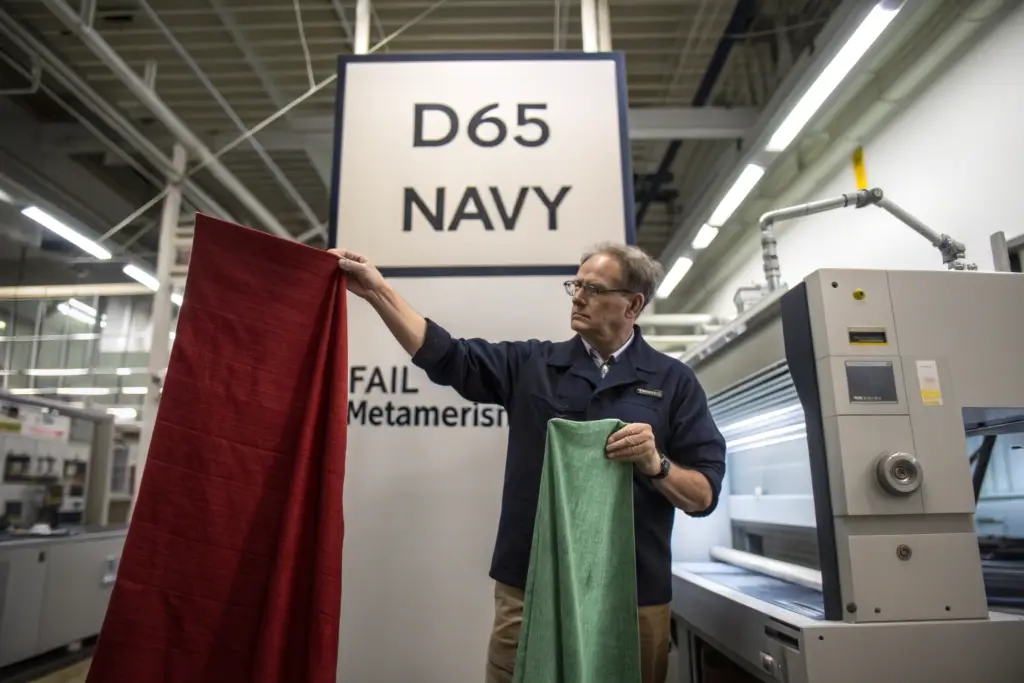
What Is "Metamerism" and Why Must Every Lab Dip Be Evaluated Under Both D65 Daylight and TL84 Store Lighting?
Metamerism is the phenomenon where two colors appear identical under one light source but different under another. A fabric and its Pantone reference may match perfectly under daylight but diverge noticeably under the fluorescent or LED lighting used in a retail store. The customer sees the color in the store. If the color looks wrong in the store, the garment does not sell, regardless of how accurate it was in the dye house. Every lab dip must be evaluated under at least two light sources: D65, which simulates natural daylight, and TL84 or LED, which simulates typical retail store lighting. A lab dip that passes under both is non-metameric and safe to produce. The metamerism in textile color evaluation is a well-understood phenomenon. A dye house that does not evaluate under multiple light sources is not a professional operation.
How Does a Spectrophotometer Reading of Delta E CMC Save a Production Run Before a Single Meter Is Cut?
A spectrophotometer measures the color of the bulk fabric and compares it to the approved lab dip standard. It outputs a Delta E value, which is a numerical representation of the color difference. A Delta E CMC of less than 1.0 means the difference is imperceptible to the human eye. A Delta E of 1.0 to 2.0 is acceptable for most commercial applications. A Delta E above 2.0 means the difference is visible and the fabric should be rejected. The spectrophotometer reading takes five minutes. It is performed on a swatch from the bulk roll before the roll is spread on the cutting table. If the reading fails, the roll is quarantined. The cutting table is saved. The production run continues with a compliant roll. The spectrophotometer color measurement in textile production is the single most effective quality gate in the fabric sourcing process.
Conclusion
Raw material fabric sourcing is the absolute biggest bottleneck in global clothing production because it is a chain of agricultural, chemical, and logistical dependencies that are each individually fragile and collectively unstable. A frost in a cotton field, a power cut at a spinning mill, a dye lot failure at a finishing house, an MOQ wall at a weaving mill, any single failure propagates through the chain and emerges as a delayed shipment, a missed selling window, and a financial loss for the brand at the end of the chain.
The brands that manage this bottleneck successfully are not the ones that avoid every problem. They are the ones that build a sourcing system that is resilient to the inevitable problems. They diversify their fabric suppliers across multiple mills and regions so a single mill's failure does not stop production. They piggyback on aggregated orders to bypass MOQ walls. They pre-position greige stock to beat the weaving queue. They audit their dye houses and verify every dye lot with a spectrophotometer before cutting. These are not expensive strategies. They are operational disciplines.
At Shanghai Fumao, we have built a fabric sourcing infrastructure designed to absorb these shocks and protect our brand partners from the delays and losses that plague the industry. We aggregate orders to meet mill minimums. We maintain a greige stock library of core fabric qualities. We conduct spectrophotometer verification on every incoming dye lot. We audit our dye houses and mills annually for both quality and financial stability. We do this because we know that the factory's reliability is only as strong as the fabric supply chain behind it.
If you are experiencing fabric delays, dye lot failures, or MOQ barriers, we can help you build a more resilient sourcing strategy. At Shanghai Fumao, we will review your current fabric sourcing challenges and recommend specific strategies to reduce your bottleneck risk. We can provide a greige stock availability list and a dye lot verification report sample. Contact our Business Director, Elaine, at elaine@fumaoclothing.com. She can walk you through our fabric sourcing process and show you how we protect our brand partners from the domino effect that starts in a cotton field and ends on a retail rack. Your production schedule should not be at the mercy of a frost or a power cut. Build a sourcing system that can handle the chaos.