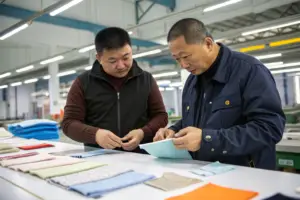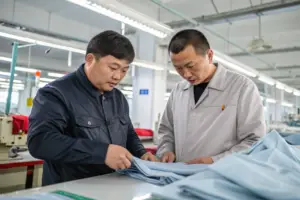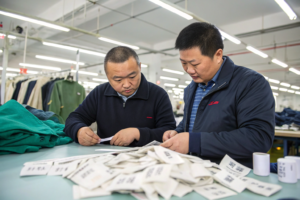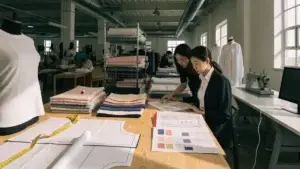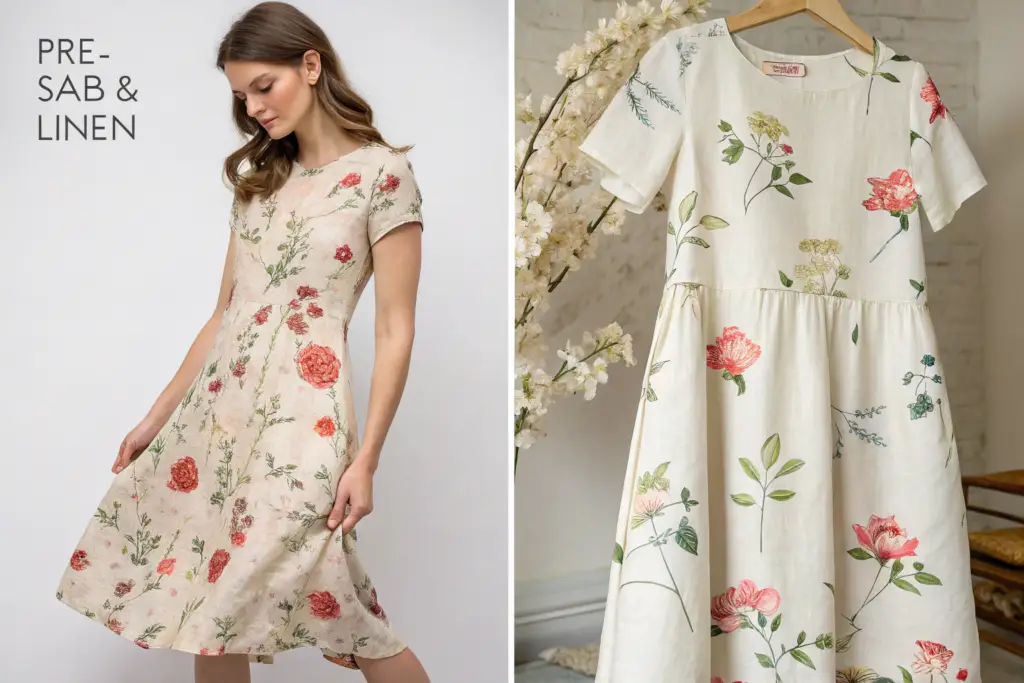
You have designed the dress. The silhouette is an A-line midi with a fitted bodice, a defined waist, and a flared skirt that catches the breeze when the wearer walks. The print is a watercolor floral in sun-bleached coral and sage tones. You can already see it on the rack. Now you face the decision that will determine whether that dress sells at full price or languishes on the clearance rack: the fabric. Choose wrong, and the dress that looked perfect in your sketch will feel clammy in the July heat, cling to the body in all the wrong places, or wilt into a wrinkled mess by 11 a.m. Choose right, and the fabric becomes invisible, doing its work so perfectly that the customer only notices how beautiful, comfortable, and confident she feels.
The best fabric for A-line floral dresses in Summer 2026 is 100% pre-washed European flax linen in the 180 to 200 GSM weight range for its unmatched combination of breathability, natural texture that elevates floral prints, and structural body that holds the A-line silhouette without collapsing. For brands targeting a softer, more fluid drape at a lower price point, a high-quality cotton voile is the next best choice. Both fabrics are natural, breathable, take digital floral prints beautifully with reactive inks, and align with the consumer's demand for sustainable, plant-based materials. The specific choice between them depends on whether your customer values the textured, artisanal look of linen or the smooth, romantic drape of cotton voile.
My name is Elaine. I am the co-owner of Shanghai Fumao. I have spent over fifteen years working with woven fabrics for dresses. I have tested hundreds of fabric qualities on our pattern tables and dress forms. I have seen the returns data that correlates specific fabric choices with specific customer satisfaction outcomes. I know which fabrics hold a hem, which fabrics print beautifully, and which fabrics feel like a sauna on a humid August afternoon. In this article, I will give you a definitive comparison of the two best fabric choices for your Summer 2026 A-line floral dresses, plus guidance on the specific weights, finishes, and print considerations for each. I will also tell you which trending fabrics to avoid, despite what you may have read in trend reports.
Why Is 100% Linen the Best Fabric for High-End A-Line Floral Dresses?
Linen is not just a fabric choice. It is a positioning choice. When a customer touches a linen dress, she instantly knows it is a natural fiber. The slight irregularity of the slubs, the cool hand feel, the visible weave structure—these are sensory signals of quality, authenticity, and a connection to the natural world that no synthetic or heavily processed fabric can replicate. For a high-end A-line floral dress, linen is the fabric that justifies the premium retail price. It feels expensive because it is expensive, and the customer can feel the difference in the first second of contact.
Linen is the best fabric for premium A-line floral dresses in Summer 2026 because it provides physical comfort through superior breathability and moisture-wicking, structural integrity that holds the A-line flare without collapsing even in high humidity, aesthetic depth through its natural slub texture that adds dimension to floral prints, and sustainability credentials that align with the values of the fiber-literate consumer. A 100% European flax linen in the 180 to 200 GSM weight, pre-washed for softness and shrinkage control, is the optimal specification. It prints beautifully with reactive digital inks, sews cleanly with French seams, and ages gracefully, becoming softer with each wash rather than degrading.
How Does Linen's Breathability and Moisture Management Outperform Cotton?
The primary complaint customers have about summer dresses is feeling hot, sticky, and sweaty. A dress that traps heat and moisture against the skin is a dress that gets returned. Breathability and moisture management are not luxury features. They are the minimum requirements for a summer dress that will actually be worn.
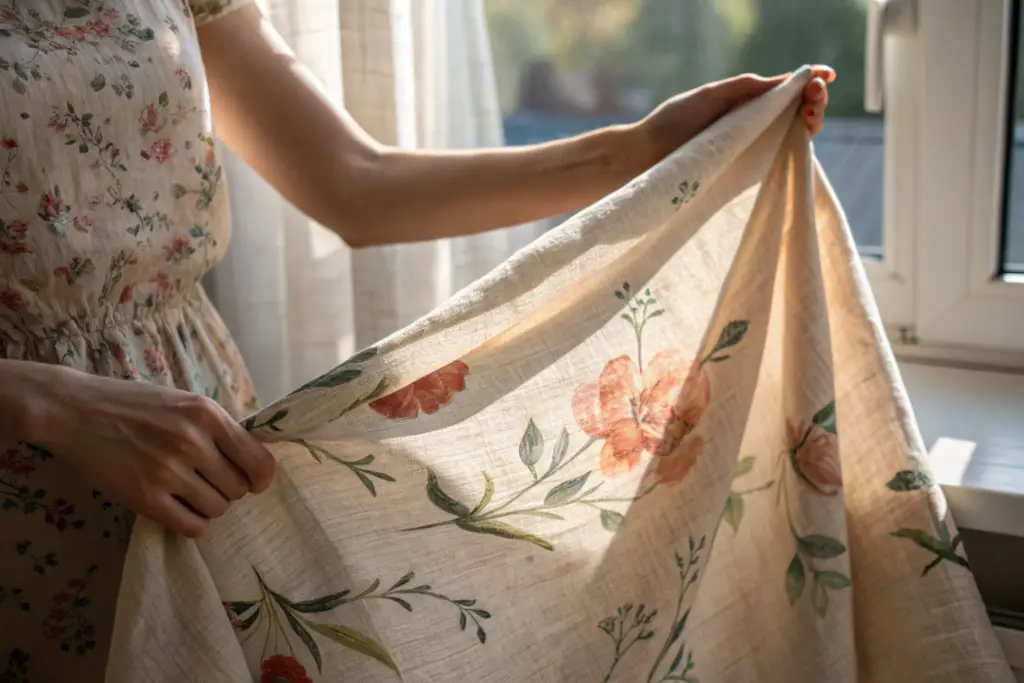
Linen outperforms cotton on both metrics. Flax fibers are hollow, creating natural capillary action that wicks moisture away from the skin and into the air. Linen can absorb up to 20% of its weight in moisture before feeling damp to the touch. Cotton, in comparison, absorbs moisture but holds it, feeling damp and clinging to the body. Linen's thermal conductivity is approximately five times higher than cotton's, meaning it transfers body heat away from the skin much more efficiently. The wearer feels objectively cooler in linen than in cotton of the same weight. This is measurable, not subjective. A customer wearing a linen A-line dress on a 90-degree day will feel significantly more comfortable than a customer wearing an identical dress in cotton poplin. She will be less likely to return the dress. She will be more likely to wear it repeatedly and buy another linen dress from your brand. The thermal properties of linen versus cotton fabrics article provides the scientific data behind linen's superior cooling performance. For a summer dress category where heat is the primary enemy of customer satisfaction, linen is the optimal fiber choice.
What Weight and Finish of Linen Is Ideal for the A-Line Silhouette?
Not all linen is the same. A 100 GSM handkerchief-weight linen will be beautifully airy but will collapse around the body, failing to hold the A-line shape. A 280 GSM heavy linen twill will hold a dramatic sculptural shape but may feel too warm and too stiff for a summer dress. The ideal linen weight for an A-line floral dress balances drape, structure, and breathability.
The optimal weight range is 180 to 200 GSM. At 180 GSM, the linen is lightweight enough to feel airy and comfortable in high summer temperatures, but substantial enough to hold the A-line flare and prevent the skirt from clinging to the legs. At 200 GSM, the linen has a slightly more substantial hand feel, a more pronounced drape, and excellent opacity, meaning the dress does not require a lining. The pre-washing finish is equally critical. Linen in its raw, loom-state form is stiff and will shrink significantly on first washing. A garment-washed or fabric-washed linen has been pre-shrunk and softened. The wash process removes the natural pectin and waxes from the flax fiber, leaving a soft, supple hand that feels pleasant against the skin from the first wear. At Shanghai Fumao, our standard linen for A-line dresses is a 200 GSM pre-washed European flax linen. It has been enzyme-washed for softness and dimensional stability. It prints with excellent color penetration and vibrancy. It sews cleanly and holds a French seam beautifully. It is the fabric I recommend for any brand whose customer expects a premium, durable, comfortable summer dress. The linen weight and finishing guide for apparel designers provides additional detail on weight selection by garment type. The A-line dress, with its structured yet flowing silhouette, is perfectly served by the mid-weight linen range.
When Is Cotton Voile the Better Choice for Your Brand's A-Line Floral Dress?
Linen is the premium choice. It is not the right choice for every brand or every customer. Linen's natural slub texture, while prized by the artisanal and contemporary market, reads as "wrinkled" or "unfinished" to a customer segment that prefers smooth, polished, traditionally feminine aesthetics. Linen's price point, driven by the cost of European flax and the specialized manufacturing it requires, may not fit the margin structure of a brand positioned in the upper-mid tier rather than the premium tier. For these brands, cotton voile is not a compromise. It is the strategically correct choice.
Cotton voile is the best fabric choice for A-line floral dresses when your brand aesthetic prioritizes a smooth, fluid, romantic drape over a textured, artisanal look, and when your target retail price point is $68 to $88 rather than $98 to $138. A high-quality, long-staple 100% cotton voile in the 70 to 90 GSM range offers exceptional softness, a beautiful translucent quality that works beautifully with layered or tiered A-line silhouettes, and excellent print clarity due to its smooth surface. It is more affordable than linen at the raw material level, allowing a lower retail price or a higher margin. It is not a lesser fabric. It is a different fabric for a different brand positioning.
How Does Cotton Voile's Drape Differ From Linen's, and Why Does It Matter for the A-Line Shape?
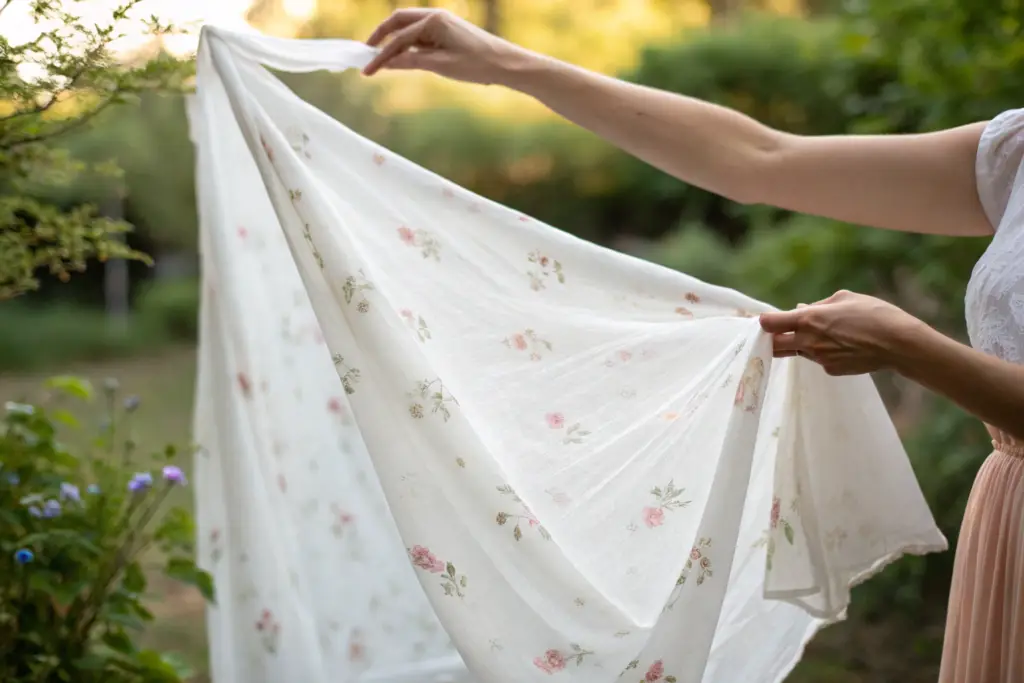
The A-line silhouette depends on a fabric that flares outward from the body and holds that flare while allowing gentle movement. Linen achieves this through its natural body and stiffness. Cotton voile achieves it through a completely different mechanism: lightness and fluidity. A tiered A-line maxi dress in cotton voile will float and billow in a way that linen cannot, because the voile is lighter and more easily moved by air. A fitted-bodice A-line midi in cotton voile will have a softer, more romantic drape than the crisper, more architectural drape of linen.
The choice between these two drape characteristics is an aesthetic decision, not a quality decision. A brand with a bohemian, romantic, or ultra-feminine aesthetic may find that cotton voile expresses their brand identity more authentically than linen. A brand with a minimalist, artisanal, or coastal aesthetic may find that linen is the more authentic choice. The fabric should serve the brand's visual language, not the other way around. The cotton voile properties and apparel applications article describes the fabric's drape characteristics. When you are evaluating fabric options, drape a sample of each fabric over a dress form and observe how it falls. Photograph both. The difference will be immediately visible. Choose the fabric whose drape matches the emotional response you want your customer to have when she sees the dress moving on a body.
What GSM Cotton Voile Provides Sufficient Opacity for an Unlined Dress?
Cotton voile is lightweight and semi-sheer by nature. At a very light weight, it requires a lining to be commercially viable as a dress. A lining adds cost, labor, and complexity. For an unlined A-line dress, the voile must be substantial enough to provide opacity while retaining the airy, fluid quality that makes voile desirable.
A cotton voile in the 80 to 90 GSM range, in a tight, high-quality weave, provides sufficient opacity for most prints and colors without requiring a lining. Lighter voiles, in the 50 to 70 GSM range, are beautiful but semi-transparent. They are best used in tiered, gathered, or layered styles where the multiple layers of fabric provide coverage, or in dresses that are designed to be worn with a slip. Darker prints on lighter voiles may still show through. A white-ground floral on a 70 GSM voile will be more translucent than a dark-ground floral on the same fabric. When selecting voile, always hold the printed fabric sample up to natural daylight and place your hand behind it. If you can clearly see your hand silhouette, the fabric needs a lining or a different print choice. The fabric opacity testing for apparel design guide provides a simple methodology. At Shanghai Fumao, we offer an 85 GSM cotton voile that balances opacity, drape, and breathability. It is our recommended voile weight for unlined A-line dresses.
What Fabrics Should You Avoid for Summer 2026 A-Line Floral Dresses?
Trend reports may tell you that a particular synthetic or blended fabric is "emerging" or "innovative." Trend reports are not responsible for your return rate. The customer who buys a summer dress expects to feel cool, comfortable, and beautiful. She does not expect to feel like she is wrapped in plastic. Certain fabric choices will undermine the A-line floral dress, regardless of how beautiful the print is or how well the silhouette is engineered.
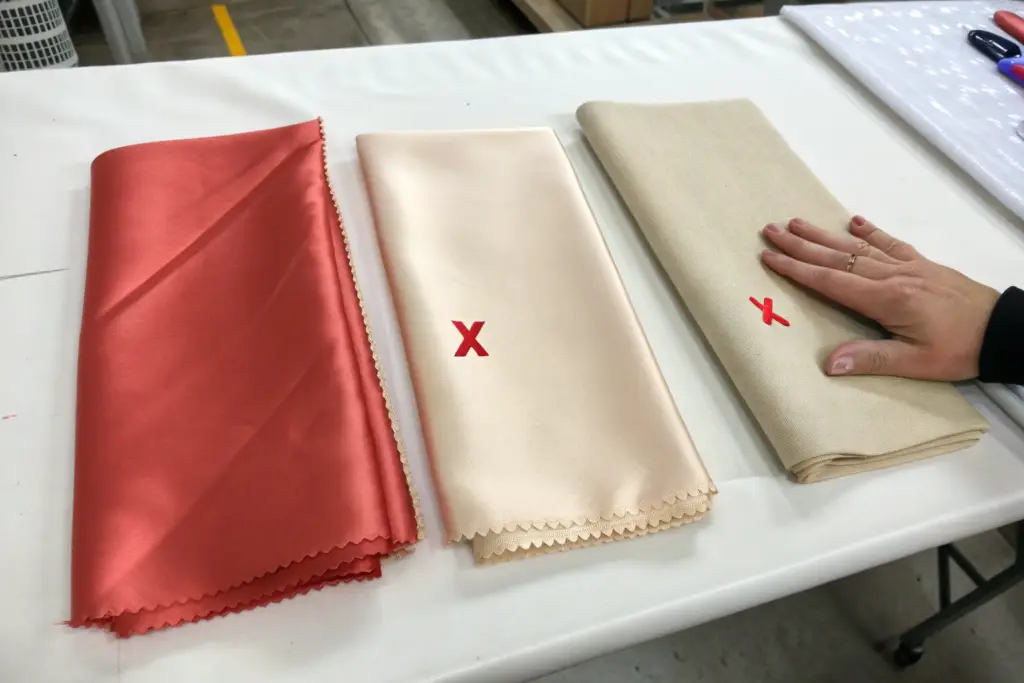
Avoid polyester and high-percentage poly-blend fabrics for summer A-line floral dresses, regardless of price or printability. Polyester does not breathe. It traps heat and moisture against the skin, creating the exact discomfort that drives summer dress returns. Avoid heavy, unwashed, or stiff linens above 250 GSM. They will not drape correctly for the A-line silhouette and will feel heavy and hot. Avoid loosely woven or low-quality linens that fray excessively. These will fail at the seams after minimal wear and washing. Avoid rayon and viscose fabrics that are not explicitly labeled as high-quality, pre-shrunk, and from a reputable mill. Cheap viscose shrinks unpredictably, loses strength when wet, and can twist and distort in ways that ruin the A-line shape. If a fabric feels unpleasant against your skin in a showroom, it will feel unpleasant on your customer. Trust your tactile response.
Why Is Polyester Still Common in Floral Dresses Despite Its Poor Summer Performance?
Polyester dominates the low-cost dress market for three reasons, none of which benefit the end customer. It is cheap. Polyester fabric costs a fraction of linen or quality cotton. It prints easily and vibrantly with sublimation printing, which produces bright, colorfast prints at low cost. It resists wrinkles, which photographs well online and looks neat on the hanger.
These advantages are real but they serve the manufacturer and the product photographer, not the wearer. The customer who buys a polyester floral dress for a summer event will feel hot, sticky, and uncomfortable. She may not immediately attribute her discomfort to the fabric. She may simply decide the dress is "not right" and return it, or wear it once and never again. The low FOB price of the polyester dress is negated by the return rate and the absence of repeat purchases. A brand that builds its reputation on polyester summer dresses is building on sand. The customer may try the brand once, but she will not become loyal. The polyester versus natural fiber consumer satisfaction in summer apparel research shows that natural fiber garments significantly outperform synthetics on comfort and satisfaction metrics in warm-weather categories. Choose polyester if your business model depends on a single transaction with each customer. Choose natural fibers if your business model depends on repeat purchases and brand loyalty.
What About "Sustainable" Viscose and Lyocell Blends?
Viscose and lyocell, including branded versions like TENCEL Lyocell, are marketed as sustainable, breathable alternatives to both synthetics and conventional cotton. They are derived from wood pulp and can be produced in closed-loop processes with lower environmental impact than conventional viscose. They are not inherently bad fabrics. They are fabrics that require careful sourcing and specific construction knowledge to perform well in a summer dress.
The challenge with viscose and lyocell in A-line dresses is dimensional stability. These fibers can shrink, stretch, and distort when washed, particularly if the fabric was not properly pre-shrunk at the mill. A viscose A-line dress that shrinks unevenly will have a twisted hem, a distorted side seam, and an A-line shape that no longer hangs symmetrically. This is a difficult problem to detect in QC because the distortion may only appear after the first home wash. If you choose to use a viscose or lyocell fabric, you must work with a mill and a manufacturer who can provide verifiable shrinkage test reports and who pre-wash the fabric before cutting. The fabric must be sourced from a reputable mill, not a commodity supplier. At Shanghai Fumao, we work with natural fibers—linen and cotton—because we have deep expertise in their behavior and established supply chains for quality-verified materials. We do not currently offer viscose or lyocell floral dresses. The viscose and lyocell fabric performance in woven garments article provides a balanced technical comparison for brands considering these fibers.
How Do You Match the Fabric to the Specific Floral Print Style?
The fabric and the print are partners. A print that looks spectacular on one fabric can look disappointing on another. The fabric's texture, absorbency, and base color all interact with the print to produce the final visual result. A designer who selects a fabric and a print independently, without considering their interaction, is leaving the outcome to chance. A designer who understands how fabric and print work together can create combinations that are greater than the sum of their parts.
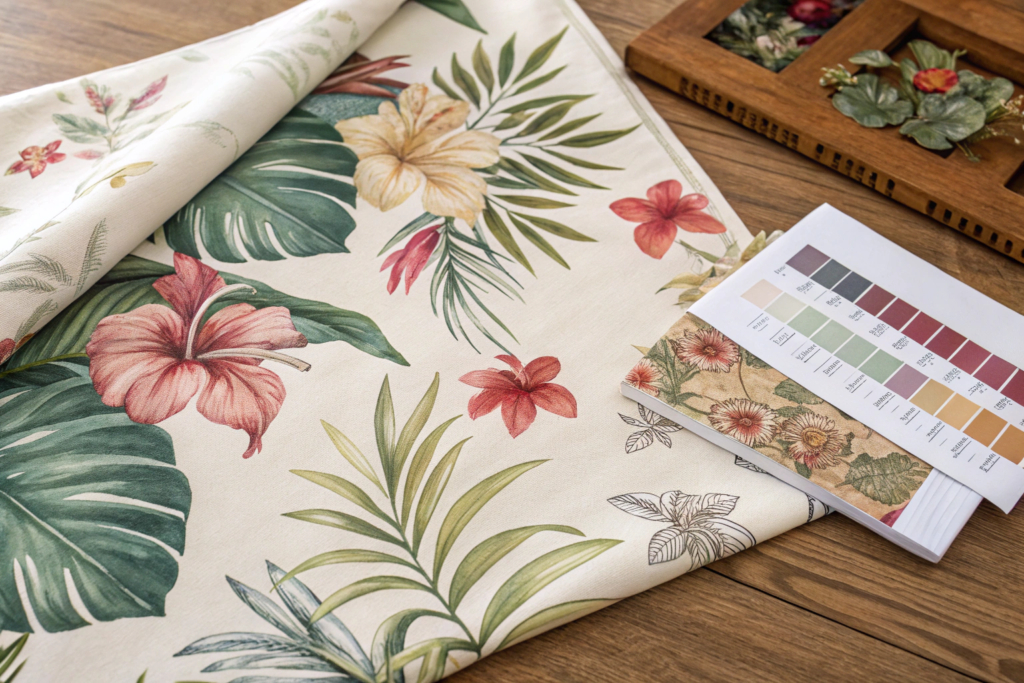
Match the print style to the fabric base deliberately. Smooth, tightly woven fabrics like cotton poplin and cotton voile maximize print clarity and are ideal for bold, graphic, or highly detailed florals with fine lines. Textured fabrics like linen soften print edges and add an organic, vintage quality to the print, making them ideal for watercolor florals, muted tonal florals, and romantic, faded-looking prints. The base color of the fabric also matters. Linen has a natural warmth and a slight beige undertone, even in its bleached white state, which subtly warms any print applied to it. Cotton voile and poplin can be optically whitened to a pure, cool white. The same coral floral print will look slightly warmer and more muted on linen and slightly cooler and brighter on cotton. Both results are beautiful. Neither is right or wrong. The right choice is the one that matches your brand's visual identity.
How Does Linen's Texture Interact With Different Floral Print Styles?
Linen's slub texture is not a neutral canvas. It actively shapes the character of the print. Small, highly detailed florals can lose some of their fine detail on heavily slubbed linen, as the ink settles differently on the thick and thin areas of the yarn. The result is a print with a softer, more atmospheric quality, where the individual petals are slightly blurred and the overall effect is painterly. This is beautiful when the design intent is a vintage, romantic, or artistic floral. It is problematic when the design intent is a crisp, botanical-illustration-style floral that requires razor-sharp detail.
Large-scale, bold florals with generous color blocks work exceptionally well on linen. The print's boldness compensates for the fabric's texture. The linen's texture adds depth and interest to what could otherwise be a flat, graphic print. Watercolor florals and tonal, tone-on-tone florals are perfectly suited to linen. The fabric's organic texture harmonizes with the soft, blended quality of the watercolor technique. The overall effect is cohesive, intentional, and premium. The fabric texture and print style compatibility guide explains the visual interaction between substrate texture and print design. If you are developing a floral print specifically for linen, choose a print style that works with the fabric's character rather than fighting against it. Your result will be a dress where the fabric and the print feel like they belong together, which is the definition of a premium product.
When Is Cotton Poplin the Better Substrate Than Voile for a Specific Print?
Cotton voile and cotton poplin are both smooth, flat-weave cotton fabrics, but they have different weights, different drape characteristics, and different print results. Voile is lightweight, semi-sheer, and fluid. Poplin is heavier, crisper, and more structured. The choice between them affects both the garment silhouette and the print appearance.
Cotton poplin, typically 120 to 150 GSM, is the better substrate when the A-line dress design requires a crisper, more structured silhouette, or when the print requires maximum sharpness and color saturation. The tighter weave and smoother surface of poplin produce the sharpest possible print edges and the highest color saturation, making it the best choice for highly detailed, graphic, or photographically realistic floral prints. Voile, being lighter and slightly more textured, produces a slightly softer print result and a much softer, more fluid garment drape. A tiered maxi dress in voile will float. The same dress in poplin will hold its shape more assertively. The cotton poplin versus cotton voile comparison for dressmaking explains the differences in structure, drape, and print compatibility. Choose poplin when the dress design and the print style demand structure and sharpness. Choose voile when they demand fluidity and softness.
Conclusion
The best fabric for A-line floral dresses in Summer 2026 is the one that aligns with your brand's aesthetic, your customer's expectations, and your margin structure. For premium and contemporary brands whose customers value natural texture, artisanal quality, and exceptional summer comfort, 100% European flax linen in the 180 to 200 GSM weight is the definitive choice. It breathes, wicks moisture, holds the A-line shape, ages beautifully, and adds a dimension of texture to floral prints that smooth fabrics cannot replicate. For brands with a softer, more romantic aesthetic or a target retail price point in the upper-mid tier, a high-quality 100% cotton voile in the 80 to 90 GSM range is the strategic alternative. It offers a fluid, feminine drape, excellent print clarity, and a lower raw material cost that supports a different margin model. Avoid polyester and synthetic blends, regardless of their price or printability. The summer dress customer demands comfort, and synthetics cannot deliver it. Match your print style to your fabric texture, using the fabric's character to enhance rather than undermine the print design.
At Shanghai Fumao, both our 200 GSM pre-washed European flax linen and our 85 GSM long-staple cotton voile are in stock in our greige bank, ready for custom print development and production for Summer 2026. If you would like to receive fabric swatches of both qualities, or discuss which fabric is the better match for your specific print and silhouette, I am ready to help. Contact me, Elaine, at elaine@fumaoclothing.com. Send me your print concept and your silhouette sketch, and I will provide a fabric recommendation, a cost estimate for both fabric options, and a sample development timeline. Your fabric choice is your brand's handshake with the customer. Let's make sure it is the right one.